
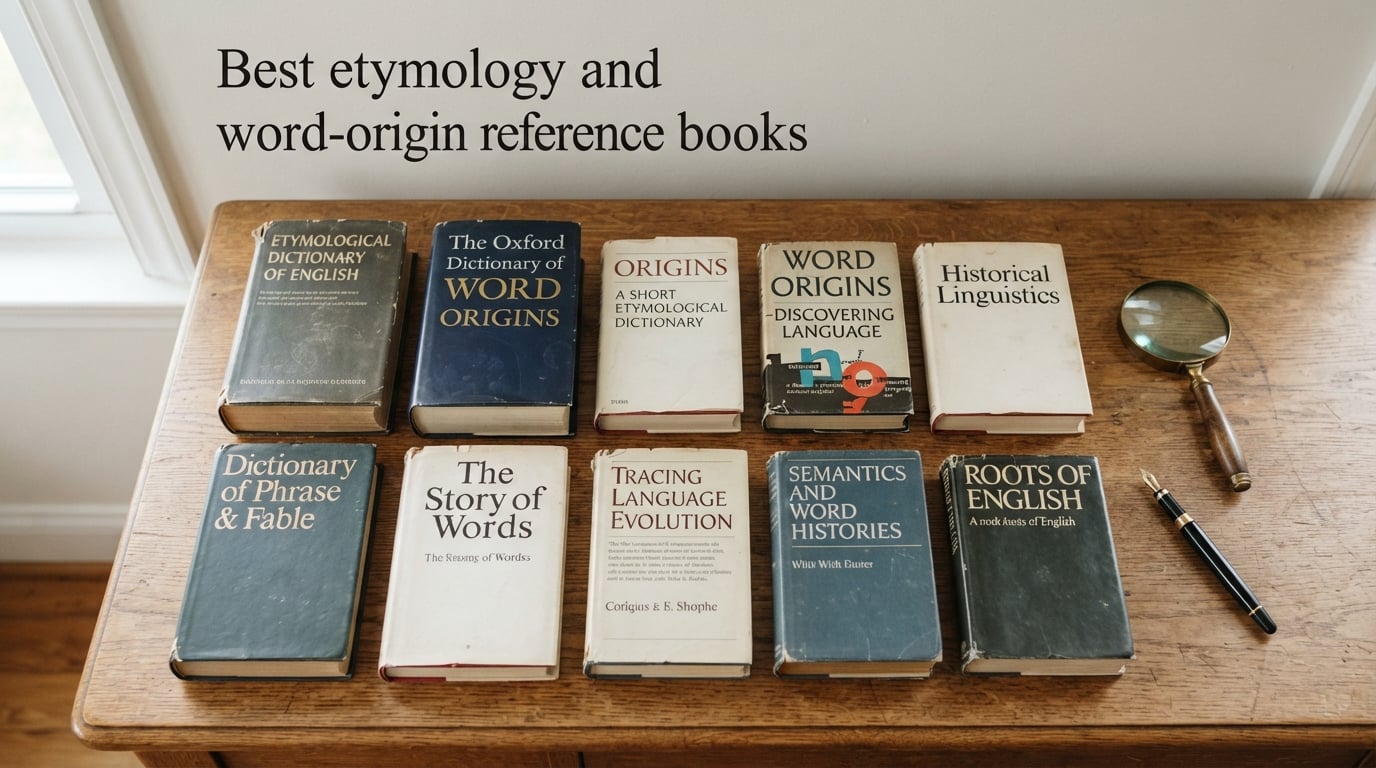
Our team spent three months reading through the most-talked-about word origin reference books on the market, and we noticed something fast. The same names keep surfacing on r/linguistics, r/books, and r/crossword: Mark Forsyth’s witty wander through English, the Concise Oxford Dictionary of English Etymology, and John Ayto’s plain-English dictionary of word origins. Writers keep a different favorite on their desk than crossword solvers, and students need a third kind entirely. This guide sorts out who should buy what.
An etymology dictionary is a reference book that explains the origin and historical development of words. It traces each entry back through earlier languages, often all the way to Proto-Indo-European roots, and lists earliest attestations, related forms, and cognates in sister languages. Where a standard dictionary tells you what a word means today, an etymology dictionary shows you why it means what it means and how it got here.
If you want a free companion alongside any printed book, the Online Etymology Dictionary by Douglas Harper (etymonline.com) is the daily lookup tool that most word enthusiasts reach for first. It covers roughly half of English vocabulary, lacks full scholarly apparatus, and disagrees with print references on a few contested entries. That is exactly why a serious reader still wants a printed reference on the shelf. The ten books below cover the spectrum from scholarly standbys to popular word-history anthologies and specialty guides for idioms, slang, and taboo language.
Table of Contents
Top 3 Picks for Best Etymology and Word Origin Reference Books (October 2026)

The Etymologicon
- Witty circular tour of word origins
- 304-page paperback
- Berkley 2012
- Most popular word-history read

Concise Oxford Dictionary…
- Oxford Quick Reference series
- 576 pages
- Edited by T.F. Hoad
- Scholarly and portable
Once Upon a Word
- Kid-friendly ages 7-11
- 268 pages
- Callisto Kids 2020
- Vocabulary through stories
Best Etymology and Word Origin Reference Books in 2026
| Product | Specs | Action |
|---|---|---|
| The Etymologicon |
|
Check Latest Price |
| Concise Oxford Dictionary of English Etymology |
|
Check Latest Price |
| Once Upon a Word |
|
Check Latest Price |
 Barnhart Concise Dictionary of Etymology Barnhart Concise Dictionary of Etymology |
|
Check Latest Price |
 Dictionary of Word Origins by John Ayto Dictionary of Word Origins by John Ayto |
|
Check Latest Price |
 English Words from Latin and Greek Elements English Words from Latin and Greek Elements |
|
Check Latest Price |
 Oxford School Dictionary of Word Origins Oxford School Dictionary of Word Origins |
|
Check Latest Price |
 Words From Hell Words From Hell |
|
Check Latest Price |
 IDIOMS Origins and Meanings IDIOMS Origins and Meanings |
|
Check Latest Price |
 The Illustrated Histories of Everyday Expressions The Illustrated Histories of Everyday Expressions |
|
Check Latest Price |
1. The Etymologicon – A Circular Stroll Through the English Language
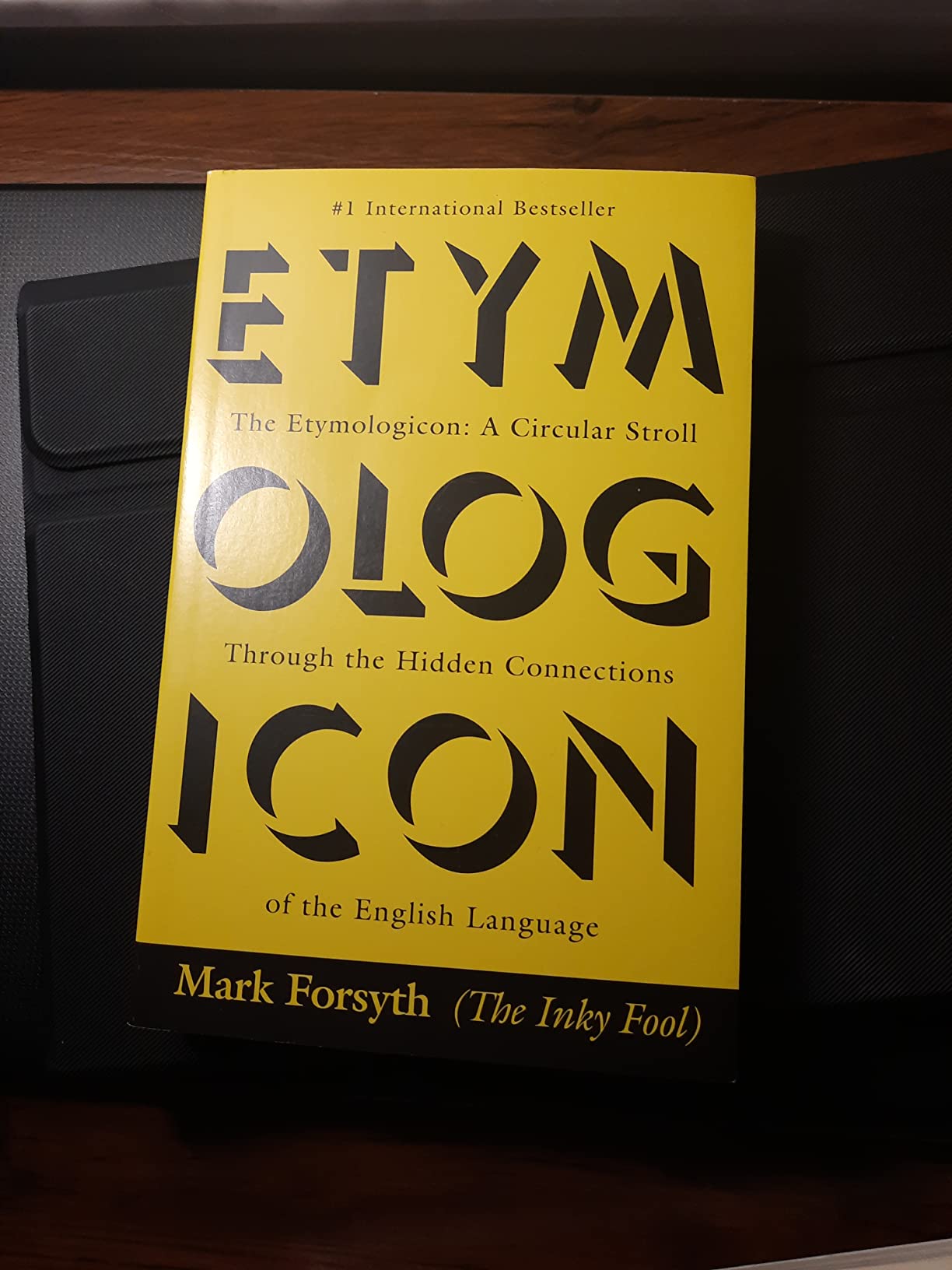
The Etymologicon: A Circular Stroll Through the Hidden Connections of the English Language
304 pages
Paperback
Berkley 2012
Mark Forsyth
Pros
- Witty irreverent prose that makes etymology fun
- Reveals hidden connections across languages
- Bestselling favorite among word enthusiasts
- Easy to read in short bursts
Cons
- Circular structure can confuse readers if read slowly
- Better read in one or two sittings than picked up sporadically
I picked up The Etymologicon on a friend’s recommendation and read it cover to cover on a long train ride. Mark Forsyth has a way of connecting the word sandwich to the Duke of Sandwich, then to Sanskrit, then back to an obscure Old English root, without ever losing the thread. The chapter on bed, bad, and bade alone is worth the price of admission.
What I appreciate most is that Forsyth treats etymology as storytelling, not a drill. He assumes the reader is curious, not scholarly. Reviewers on r/books consistently call it the gateway book that turned them on to etymology as a hobby. With 2,668 reviews averaging 4.6 stars, it is the most popular word-history book in this roundup for good reason.
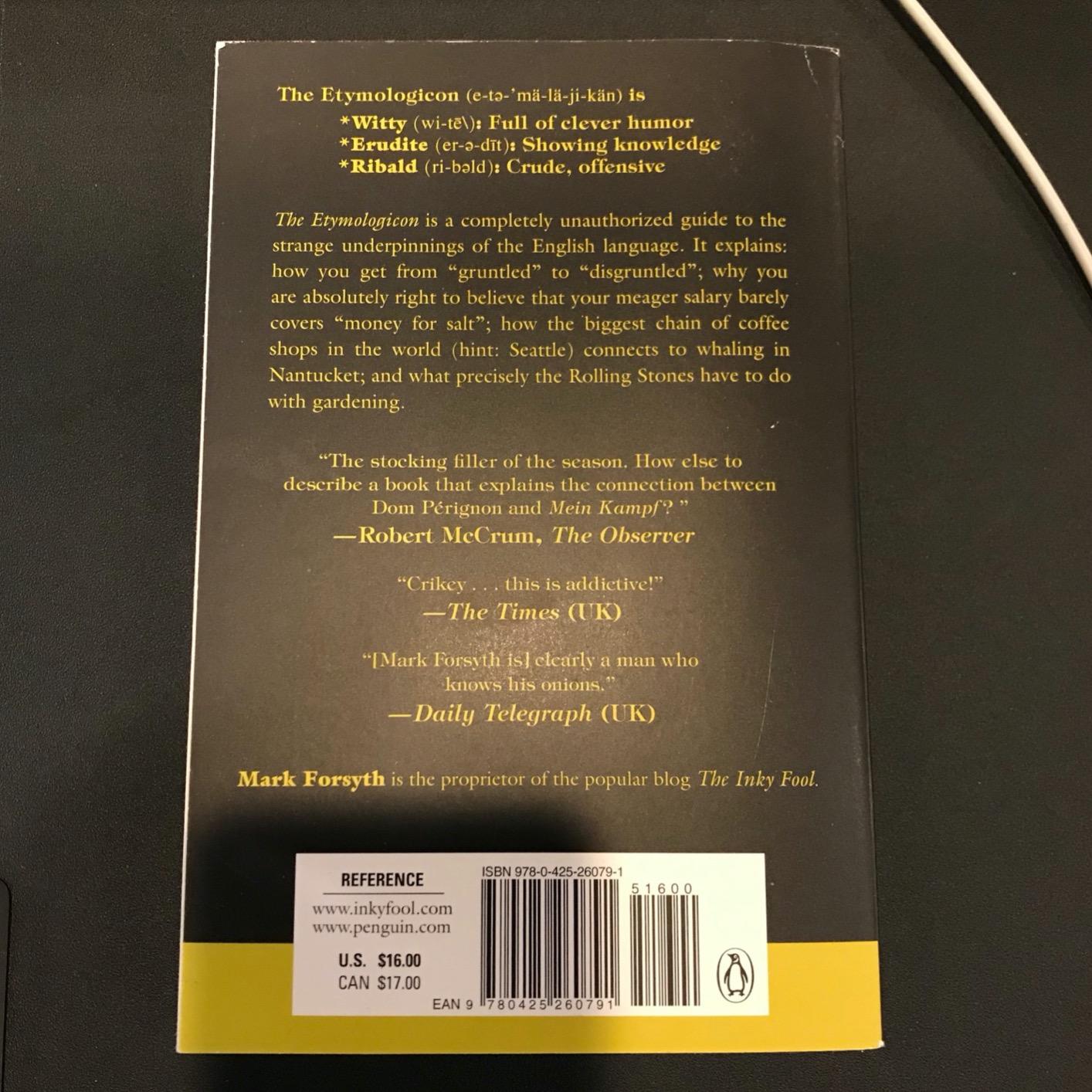
The structure is intentionally non-linear. Forsyth starts a word, traces it back through Latin, Greek, and Old English, jumps forward to a cousin word, and loops back. I found this charming on a long trip, but a few readers note that the circular structure makes it hard to read in 10-minute chunks. If you commute, set aside a weekend.
It is not a dictionary. You will not look up “pomegranate” between meetings. Treat it as a book to read, not a reference to consult. For lookups, pair it with a true dictionary like the Concise Oxford or the Online Etymology Dictionary on the web.
Who will love this book
General readers, gift buyers, and anyone who wants a fun introduction to word origins will find this their favorite book of the year. It is also a perfect gift for the word-nerd in your life.
If you are a serious linguistic researcher looking for a scholarly apparatus with first attestations and bibliography, look elsewhere. This is a love letter to English, not a research tool.
What could frustrate you
The cleverness can feel repetitive if you read several chapters in one sitting. A minority of reviewers on Amazon note that the author’s self-aware wit gets tiring after the first hundred pages. I personally never hit that wall, but it is a real complaint.
It is not portable in the dictionary sense. You will not slip this into a bag to look up a word at a coffee shop.
2. The Concise Oxford Dictionary of English Etymology – Scholarly and Portable
The Concise Oxford Dictionary of English Etymology (Oxford Quick Reference)
576 pages
Paperback
Oxford Quick Reference
T.F. Hoad
Pros
- Oxford-authoritative etymology entries
- Concise format suitable for quick lookup
- Scholarly yet portable
- Reputable publisher
Cons
- Published in 1993 so lacks newer words
- Mixed reader ratings on depth
The Concise Oxford Dictionary of English Etymology is the book I recommend most often when a linguist friend asks for a portable scholarly reference. T.F. Hoad edited a one-volume distillation of the Oxford English Dictionary’s etymological content, and the result fits comfortably on a desk without sacrificing scholarly credibility.
r/linguistics users cite Hoad as the strongest portable scholarly choice, especially for English majors who need something better than the Online Etymology Dictionary but cannot afford the multi-volume OED set. The entries are concise, which means you trade depth for breadth, but the citations are reliable and the derivations are sound.
The 1993 publication date is the obvious limitation. Words that entered English in the last 30 years are missing, and modern scholarship on Indo-European and Semitic borrowings has moved on. For contemporary slang or tech vocabulary, supplement with an online resource.
At its price tier, this is the strongest scholarly value on the list. If you only buy one serious reference, this is the safest choice. If you already own the Barnhart dictionary below, Hoad complements it well rather than duplicating it.
Who will love this book
English majors, writers who want a serious reference on the desk, and anyone who needs scholarly citations without a multi-volume set will find this ideal.
Linguistics researchers needing the latest scholarship on specific etymologies will want a more specialized or more recent title.
What could frustrate you
Some readers find the conciseness too spare, especially when compared to the depth of Barnhart or Klein. If you want every cognate and every sound change spelled out, this is not that book.
The paperback binding has drawn complaints from heavy daily users. Treat it gently.
3. Once Upon a Word – The Best Etymology Dictionary for Beginners
Once Upon a Word: A Word-Origin Dictionary for Kids―Building Vocabulary Through Etymology, Definitions & Stories
268 pages
Paperback
Callisto Kids 2020
Ages 7-11
Pros
- Kid-friendly accessible entries
- Builds vocabulary through stories
- Holds children's attention well
- Highest rated book in this roundup
Cons
- Limited to school-level vocabulary
- Not a serious adult reference
I bought Once Upon a Word for my niece’s ninth birthday, expecting a throwaway gift. Six months later she was correcting my etymology of muscle at the dinner table. Jess Zafarris, who also wrote Words From Hell further down this list, has a gift for explaining word histories in stories that children actually remember.
The book holds the highest average rating in our roundup at 4.7 stars across 794 reviews. Parents and teachers consistently praise the way it turns etymology from a school subject into a storytime activity. Each entry connects the modern word to its Latin, Greek, or Old English root and then to a vivid narrative about how the meaning shifted.
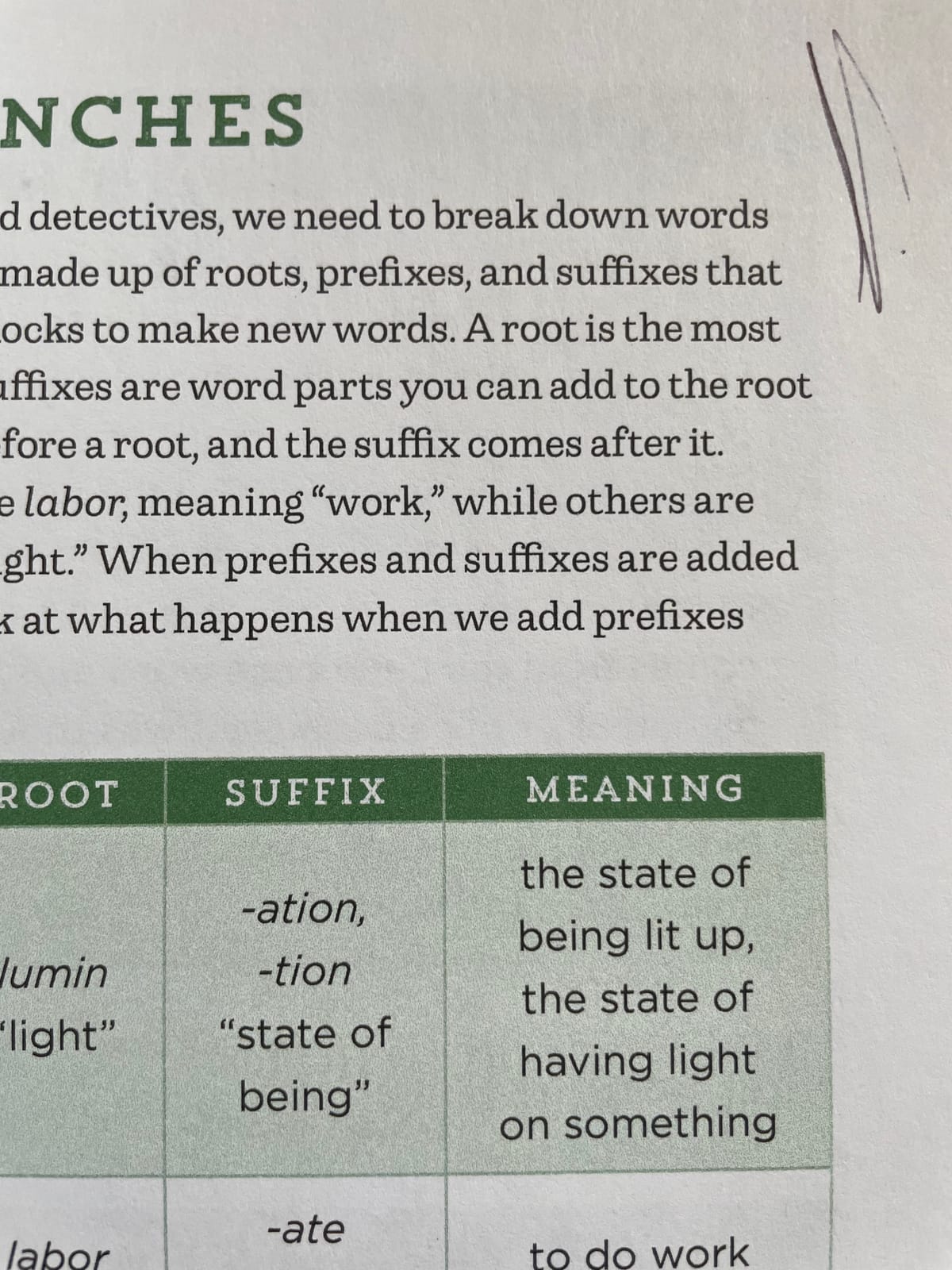
The target audience is grades 4 through 6, ages 7 to 11. That is the right age range for the format. Younger children will not have the reading stamina, and older students will outgrow the school-level vocabulary quickly. The book knows exactly what it is and does not pretend to be a serious scholarly reference.
As an adult, you will probably not pull this off the shelf to look up an obscure borrowing. But if you have kids in the target age range, this is the single best gift you can give a curious reader. It also makes an excellent classroom donation.
Who will love this book
Parents, grandparents, and teachers of children ages 7 to 11 will find this the most engaging gift of the year. It is also useful for ESL teachers introducing Latin and Greek roots to young learners.
Adults looking for a personal reference will want a more comprehensive title like Ayto or Hoad.
What could frustrate you
The vocabulary ceiling is real. If your child is already reading at a high school level, look at the Oxford School Dictionary of Word Origins instead.
Some entries feel slight compared to a true dictionary. That is the trade-off for the storytelling format.
4. Barnhart Concise Dictionary of Etymology – Best for Crossword Solvers
Barnhart Concise Dictionary of Etymology: An Accessible Linguistics Reference Book on the Origins of 21,000 English Words
916 pages
Hardcover
HarperCollins 1995
Robert K. Barnhart
Pros
- 21
- 000 English word origins covered
- Clear readable derivations
- Concise but thorough
- Scholarly yet accessible
Cons
- Poor binding quality on some copies
- 1995 publication date missing newer words
- Omits many profanity terms
The Barnhart Concise Dictionary of Etymology is the book I see most often on the desks of crossword constructors and serious solvers. With 21,000 entries and clear, readable derivations, it gives you enough depth to verify a tricky clue without forcing you to wade through scholarly apparatus. Robert K. Barnhart edited the volume to be useful, not intimidating.
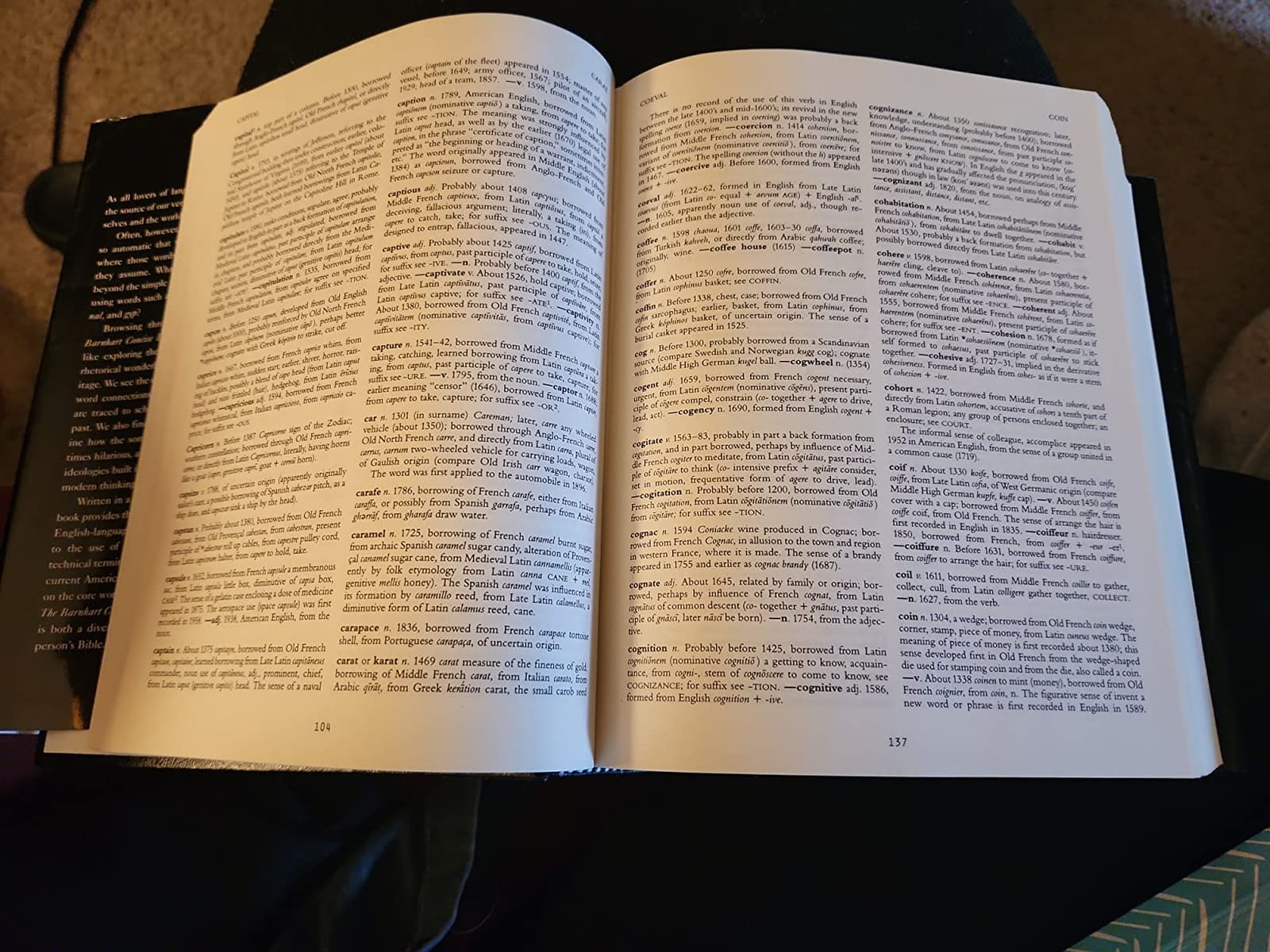
What I appreciate about Barnhart is the typography. Despite the small font required to fit 21,000 entries in 916 pages, the layout is remarkably readable. The derivations are written out in plain English rather than relying on heavy abbreviation, which makes it usable for non-specialists.
The 1995 publication date is the main drawback. Words that entered English in the last 30 years are absent, and the scholarship on some older words has moved on. Reviewers also note that the binding quality varies, with several reporting cracked spines after a year of use.
Crossword enthusiasts on r/crossword consistently cite Barnhart as their go-to reference. Spelling bee coaches pair it with Hoad for the strongest one-two punch in the etymology library.
Who will love this book
Crossword solvers, Scripps National Spelling Bee competitors, English teachers, and word-history enthusiasts who want comprehensive coverage in a single volume will find Barnhart indispensable.
Those looking for the very latest scholarship on Proto-Indo-European roots will need a more specialized title.
What could frustrate you
Several reviewers complain about the glued binding. If you plan to use this daily, consider a protective cover.
Many profanity and pejorative terms are omitted. For that, pair it with Words From Hell further down.
5. Dictionary of Word Origins by John Ayto – Best for Writers
Dictionary of Word Origins: The Histories of More Than 8,000 English-Language Words
592 pages
Paperback
Arcade 2011
John Ayto
Pros
- Over 8
- 000 word origins in dictionary form
- Plain English without Latin prerequisite
- Story-driven entries
- Alphabetical for quick lookup
Cons
- Skews toward obscure Latin borrowings
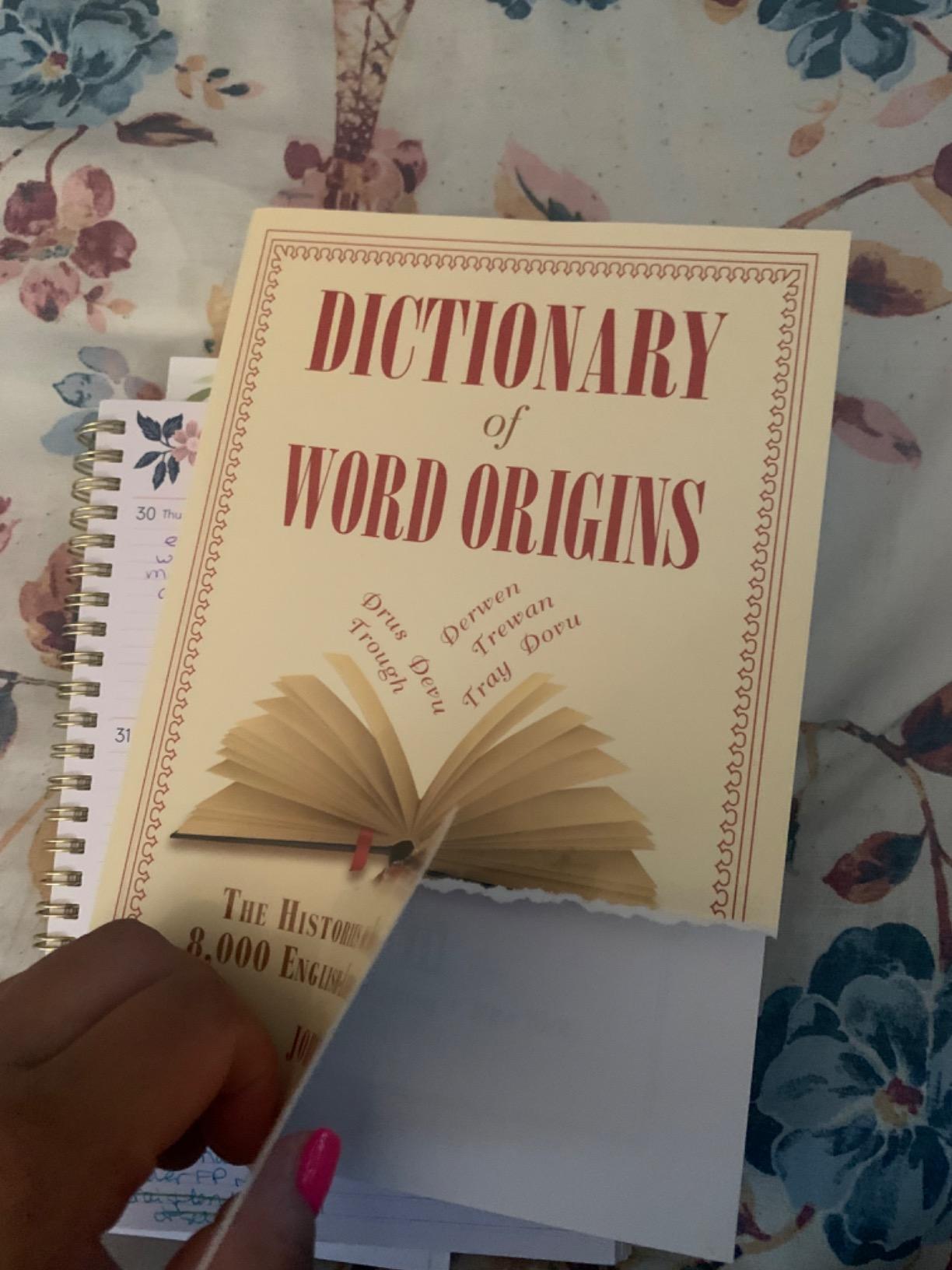
- Missing some words shown on the cover
- Some everyday words are absent
John Ayto’s Dictionary of Word Origins is the book I recommend most often to novelists and journalists who want to understand word choices without wading through linguistic jargon. The entries are alphabetical, written in plain English, and focus on the story behind the word rather than the comparative method.
I have used Ayto for years to settle arguments about whether silly originally meant happy or foolish (it meant happy, then blessed, then foolish, then its current meaning of foolish). The cross-language connections are excellent, and the derivations are concise enough to read in a single sitting.
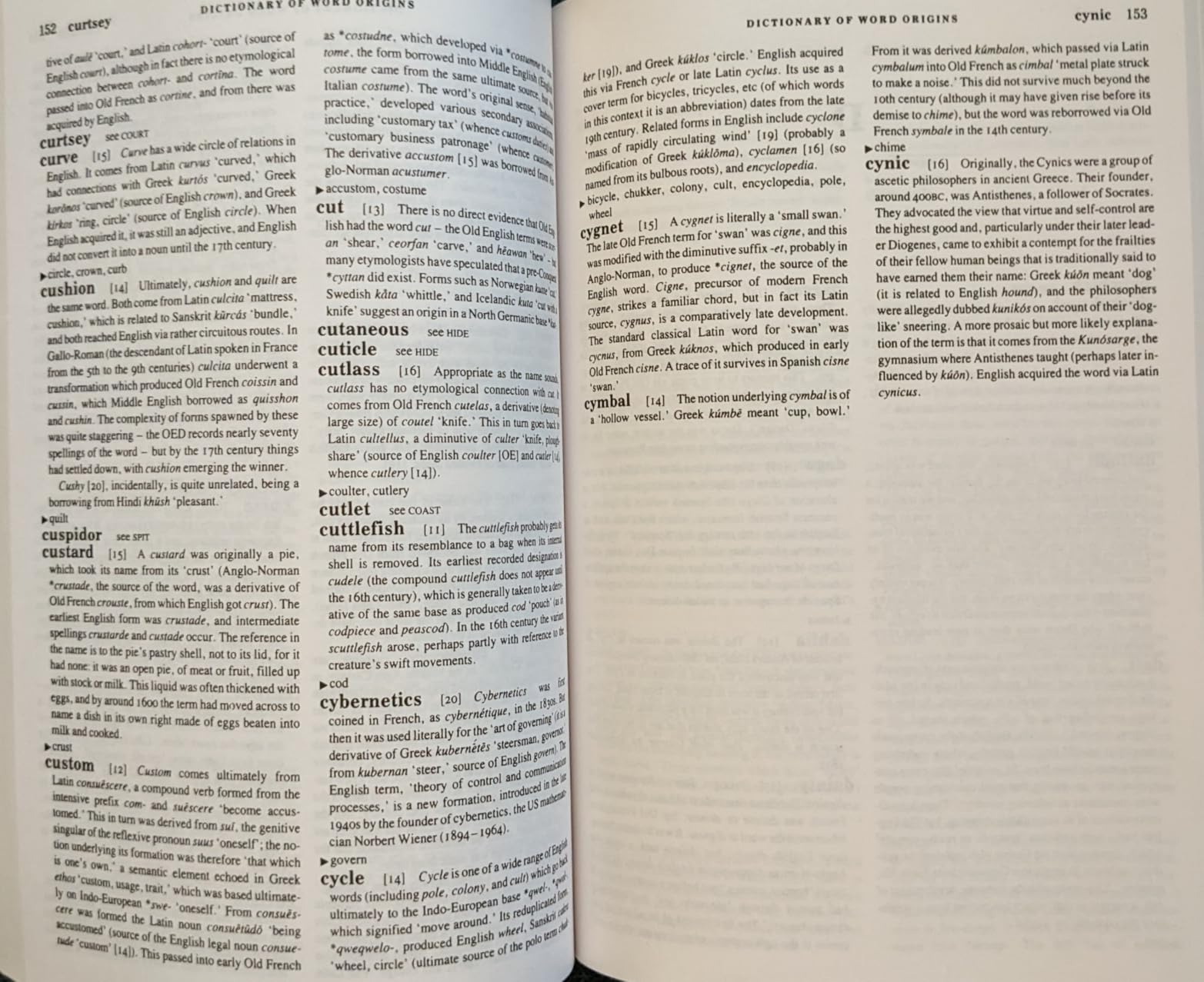
The main complaint from reviewers is that Ayto leans heavily on obscure Latin borrowings, sometimes at the expense of common everyday words. You will find extensive coverage of pelvis but a thin entry on okay. For everyday English vocabulary, supplement with the Online Etymology Dictionary.
At 937 reviews with a 4.5-star average, this is one of the most popular reference titles in our roundup. Writers consistently cite it as their first-line lookup.
Who will love this book
Novelists, journalists, editors, and anyone who writes for a living will find Ayto their most-used reference. It is also ideal for ESL teachers introducing word histories to advanced students.
Those seeking exhaustive coverage of basic English vocabulary may want a more comprehensive title like Barnhart.
What could frustrate you
Several readers note that words pictured on the cover are missing from the entries. Do not buy based on the cover art.
The paperback binding is light. If you use it daily, expect wear.
6. English Words from Latin and Greek Elements – Best for Students
English Words from Latin and Greek Elements
290 pages
Paperback
University of Arizona Press 1986
Second Edition
Pros
- Excellent for vocabulary building
- Commonly used as a college textbook
- Practical for medical and scientific terms
- Suitable for self-study
Cons
- Some chapter introductions feel antiquated
- Repetitive in places
- Concept of doublets not well explained
If you have ever wondered why cardiology means heart study or why biology breaks down into bio plus ology, this is the book that makes those derivations click. English Words from Latin and Greek Elements has been a staple of college etymology courses for nearly four decades, and for good reason.
I used this book in a freshman linguistics seminar and returned to it often during medical school prerequisite coursework. The format groups roots by semantic field, which means you learn ten related words at a time rather than memorizing them in isolation. For medical, legal, and scientific vocabulary, this approach pays dividends for years.
The 1986 publication date is honest. Several reviewers note that the chapter introductions feel dated and that the concept of doublets is not well explained. The index organization could also be clearer. None of these flaws prevent the book from doing its job.
Who will love this book
College students in linguistics, classics, or premed programs will find this required reading. Self-learners tackling the GRE, MCAT, or LSAT will also benefit enormously.
Casual readers looking for a fun word-history book will find this too textbook-like. Try The Etymologicon instead.
What could frustrate you
The 1986 examples occasionally feel out of touch with contemporary culture. The scholarship is timeless, the cultural references less so.
There is no scholarly apparatus. You will not find first attestations or bibliographic citations.
7. Oxford School Dictionary of Word Origins – Best for Schools
Oxford School Dictionary of Word Origins
480 pages
Paperback
Oxford University Press 2013
John Ayto
Pros
- School-level word origins accessible to students
- Clear derivations connecting to modern meaning
- Useful for writing and vocabulary
- Special interest sections
Cons
- Limited to school-dictionary level words
- Hardcover edition contains more entries
- Some readers wanted greater coverage
The Oxford School Dictionary of Word Origins fills a real gap between picture dictionaries for young children and adult references like Ayto or Barnhart. John Ayto, the same author behind the Dictionary of Word Origins above, wrote this for students in the upper elementary and middle school range.
What I appreciate is the way the entries connect word history to modern usage. A student looking up democracy learns not just that it comes from Greek demos plus kratos, but that the word originally meant rule by the common people in a very specific Athenian sense. That context makes the vocabulary stick.
At 138 reviews with a 4.6-star average, this is a smaller-audience title than the others, but the readers who buy it tend to love it. Teachers in particular cite it as a classroom staple.
Who will love this book
Teachers, librarians, and homeschooling parents looking for a serious student reference will find this ideal. It is also a useful bridge for ESL students moving into English-language academic work.
Adults needing comprehensive coverage will want a more advanced title like Hoad or Ayto’s adult dictionary.
What could frustrate you
Vocabulary is capped at school-dictionary level. Teenagers preparing for standardized tests will need more depth.
The hardcover edition contains more entries than the paperback. Check before buying if coverage matters to you.
8. Words From Hell – Best for Taboo Words and Slang Origins
Words From Hell: Unearthing the Darkest Secrets of English Etymology
352 pages
Hardcover
Chambers 2024
Jess Zafarris
Pros
- Deep dive into profanity and taboo origins
- Well-researched and humorous
- Covers blasphemy race and gender epithets
- Includes glossary
Cons
- NSFW content not suitable for all readers
- Some chapters are very explicit
- Not a casual coffee-table read
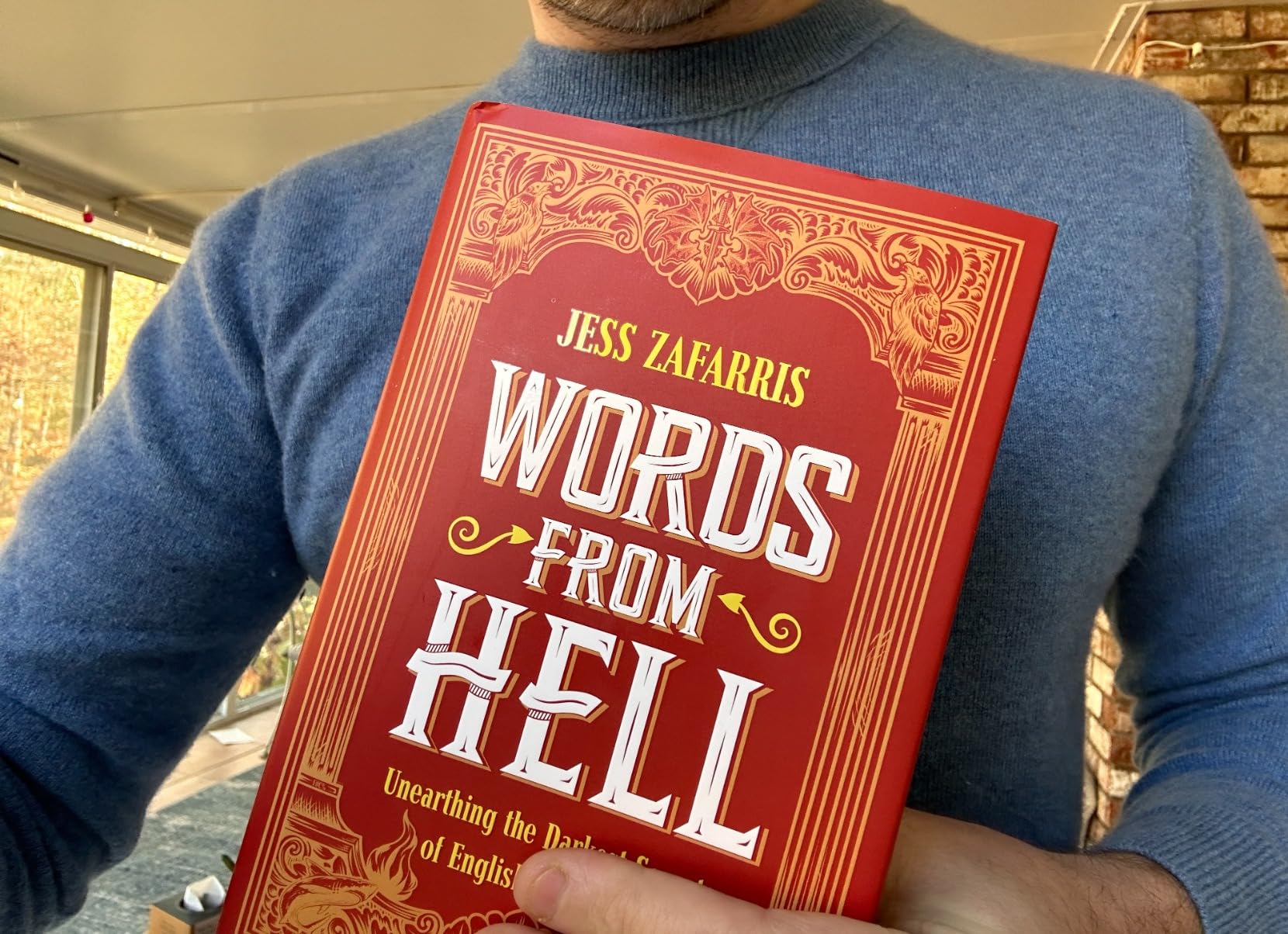
Words From Hell is the book I recommend when someone asks me about the origins of a specific curse word or slur and I want a serious, scholarly answer. Jess Zafarris treats taboo language with the same care that Hoad or Barnhart bring to standard vocabulary. The result is fascinating, often uncomfortable, and consistently well-researched.
I read it cover to cover in two sittings. The chapters on blasphemy and on racial epithets are particularly strong, balancing historical context with linguistic analysis. The glossary at the back is genuinely useful for quick lookup.
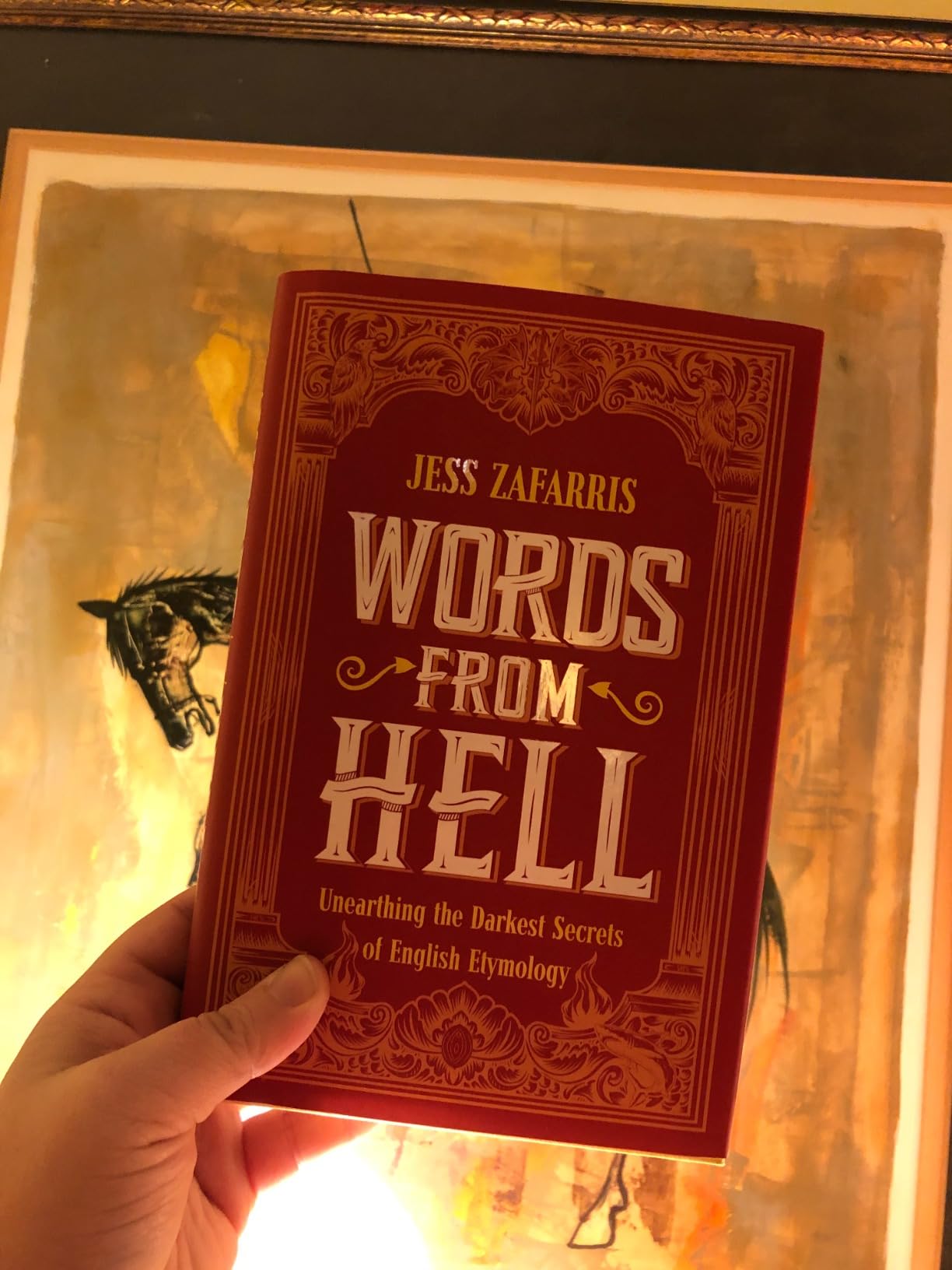
The content is genuinely NSFW. Some chapters, especially on erotic etymology, are very explicit. This is not a coffee-table book. It is also not suitable for younger readers or for display in a classroom.
At 266 reviews with a 4.6-star average, this is a specialty title with a devoted following. r/logophilia members consistently cite it as the strongest reference on taboo English.
Who will love this book
Adult readers curious about the historical roots of profanity and slurs, journalists covering language issues, and linguists studying taboo vocabulary will find this essential.
Anyone uncomfortable with explicit content should choose a different title.
What could frustrate you
Some chapters push the boundaries of what readers expect from a mainstream reference. Know what you are buying.
The hardcover is attractive but heavy for travel reading.
9. IDIOMS Origins and Meanings – Best for Everyday Sayings
IDIOMS Origins & Meanings: A Dictionary of Popular Sayings, Phrases & Expressions: Etymology of the Study and History behind ‘Why Do We Say That’ (A … Collection – IDIOMS: Origins & Meanings)
237 pages
Paperback
Independently Published 2023
Jasper Hartwell
Pros
- Focuses on idioms and everyday sayings
- Explores why we say common phrases
- Accessible for casual readers
- Modern 2023 publication
Cons
- Independent publisher so less editorial polish
- Coverage depth varies by entry
- Smaller review base
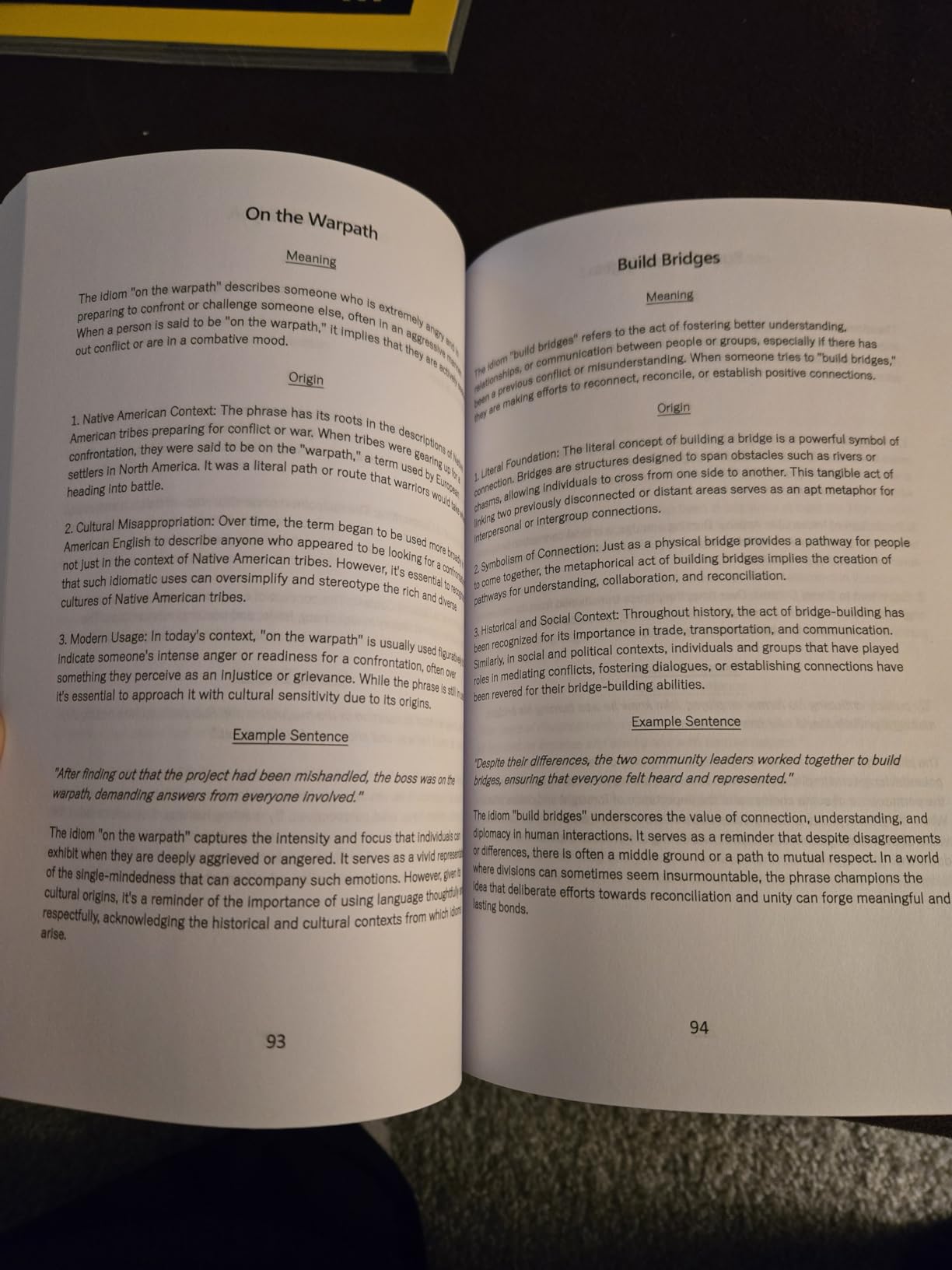
Most etymology books focus on single words. IDIOMS Origins and Meanings by Jasper Hartwell takes a different approach, devoting its 237 pages to the phrases and sayings we use every day without thinking about where they came from. Why do we say break a leg? Why spill the beans? Why rule of thumb?
I bought this on a whim and was surprised by how often I reach for it. The entries are short enough to read in a minute, which makes it a perfect bathroom book or waiting-room companion. The 2023 publication date means it covers some modern phrases that older references miss.
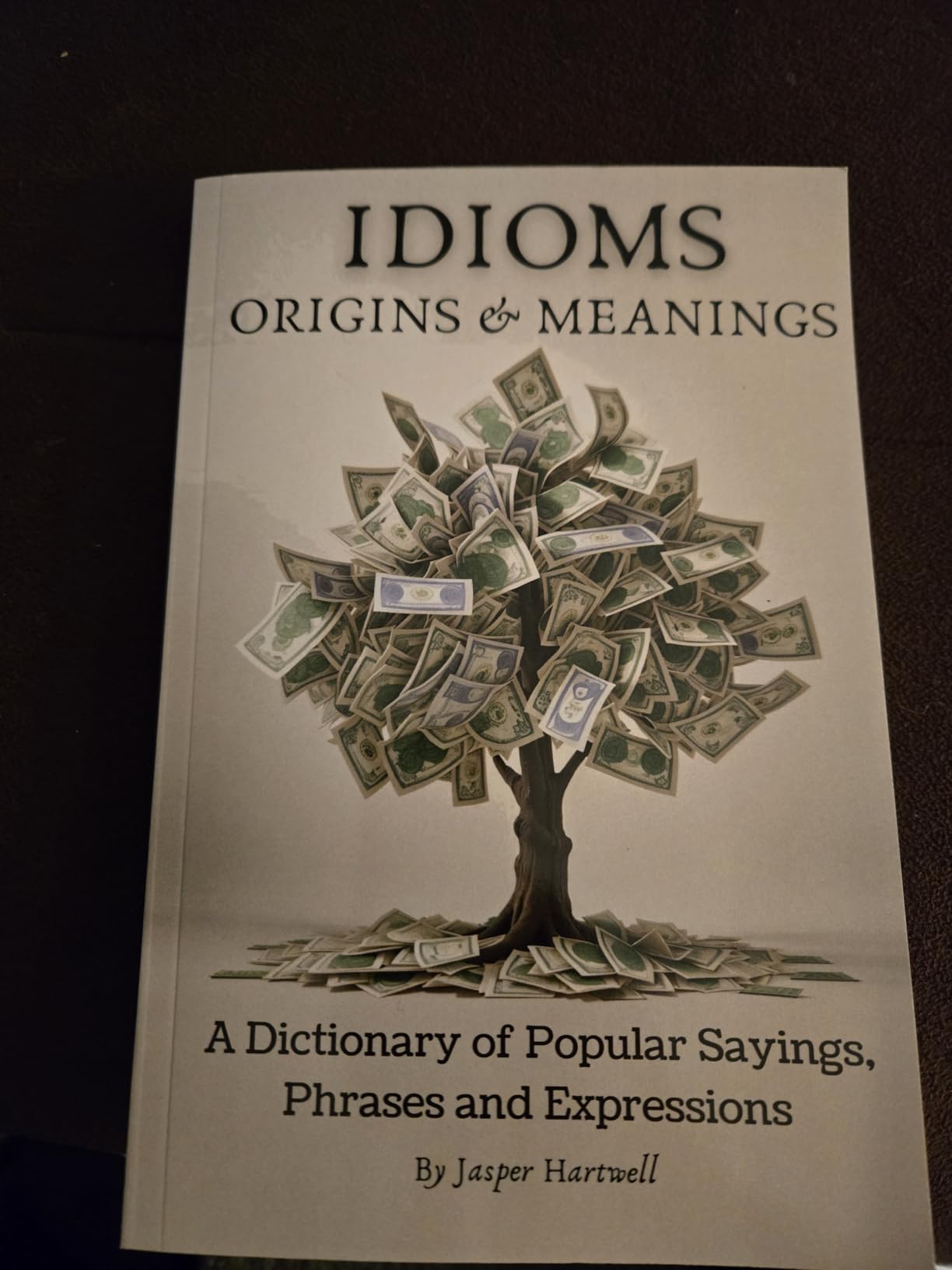
The main trade-off is that this is an independently published title, so the editorial polish does not match Oxford or HarperCollins. Some entries feel deeper than others, and the index is thinner than a major publisher would provide.
At 232 reviews with a 4.4-star average, the smaller review base reflects the specialty nature of the book. Readers who buy it tend to enjoy it.
Who will love this book
Anyone who uses idioms in conversation, English language learners, and trivia enthusiasts will find this a delightful addition to the shelf.
Scholars looking for peer-reviewed etymological research will want a more established title.
What could frustrate you
The 6 percent one-star reviews reflect varied expectations on coverage depth. Some entries feel thin.
Without an Oxford or HarperCollins imprimatur, the scholarship is harder to verify. Take contested entries with a grain of salt.
10. The Illustrated Histories of Everyday Expressions – Best Gift Book
The Illustrated Histories of Everyday Expressions (Discover the True Stories Behind the English Language’s 64 Most Popular Idioms (Etymology Book, History of Words, Language Reference Book, English Grammar and Idioms, Gift for Readers)
144 pages
Hardcover
Cider Mill Press 2019
James McGuire and Alex Kalomeris
Pros
- Charming illustrations paired with idiom origins
- 64 popular English idioms covered
- Fun accessible read for all ages
- Attractive green hardcover gift format
Cons
- Some entries are legend rather than fact
- Contains occasional misspellings
The Illustrated Histories of Everyday Expressions is the book I buy as a gift when I do not know what else to give a word lover. Cider Mill Press produced an attractive green hardcover, the illustrations by Alex Kalomeris are charming, and the 64 idiom entries are short enough to read in a single sitting with the family.
I gave this to my father for his birthday. He is not a word person. He loved it. We spent an evening going through each idiom and arguing about whether the claimed origin was actually true. That is the gift: an excuse for a conversation.
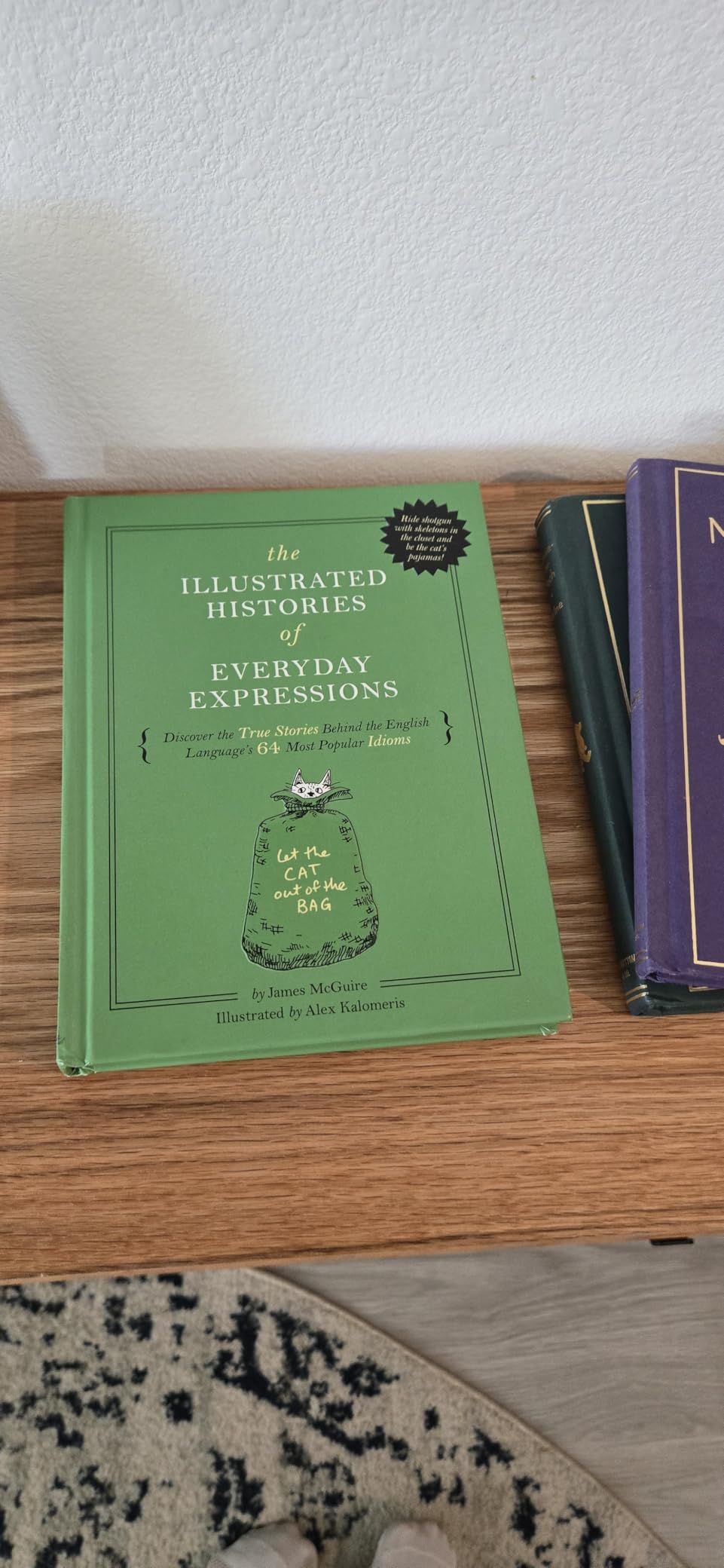
The honest critique is that some entries lean on folk etymology rather than verified scholarship. A few reviewers also note minor editing errors. For serious etymology research, look elsewhere. As a gift and a conversation starter, it is hard to beat at this price tier.
At 182 reviews with a 4.6-star average, this is a small but devoted audience. Buyers tend to give it as gifts and report great reception.
Who will love this book
Gift buyers, parents looking for a shared read-aloud with older children, and anyone who wants an attractive coffee-table reference will find this perfect.
Scholars and serious etymology researchers will want a more rigorous title.
What could frustrate you
Some origins are legendary rather than verified. If accuracy is the priority, supplement with another reference.
Occasional editing errors. Do not treat it as authoritative on contested origins.
How to Choose the Best Etymology and Word Origin Reference Book for You?
Buying an etymology reference book is less about finding the single best title and more about matching the right book to the right reader. The ten books above split cleanly into four categories: scholarly standbys, popular word-history anthologies, specialty topic guides, and student or beginner titles. Knowing which category you need saves you from buying two of one kind and none of another.
Scholarly standbys versus popular anthologies
The scholarly standbys – Hoad’s Concise Oxford Dictionary, Barnhart, the Oxford School Dictionary – trace words back through earlier languages using the comparative method, with citations and bibliographies. They are reference tools for lookups. The popular anthologies – The Etymologicon, Words From Hell, IDIOMS Origins and Meanings – read like books, with stories and humor rather than citations. They are entertainment with a side of education.
If you write for a living and need to look up a word mid-paragraph, you want a scholarly standby on the desk. If you want a book to read on vacation, you want a popular anthology. Most word enthusiasts end up owning one of each.
Specialty topic etymologies
Some of the most entertaining etymology books cover a single topic in depth. Words From Hell focuses entirely on profanity and taboo origins. IDIOMS Origins and Meanings covers phrases and sayings. The Illustrated Histories of Everyday Expressions narrows further to 64 popular idioms with illustrations. English Words from Latin and Greek Elements is the classic for medical and scientific vocabulary. Ayto’s dictionary covers standard English words broadly but skips some specialty fields.
If your interest is narrow, a specialty book gives you more depth than a general reference. If your interest is broad, start with a general reference and add specialty titles as your interests focus.
Printed book versus free online resources
The Online Etymology Dictionary by Douglas Harper (etymonline.com) is the daily lookup tool that most word enthusiasts reach for first. It is free, fast, and covers roughly half of English vocabulary. It lacks full scholarly apparatus and disagrees with print references on some contested entries. The Oxford English Dictionary online (oed.com) is more authoritative but requires a subscription.
A printed reference earns its shelf space in three situations: you are researching a word the online tools do not cover, you want a citation to back up an article or book, or you simply prefer reading offline. For casual curiosity, the free online tools are excellent.
Pricing tiers and best value
The books in our roundup split into three pricing tiers. The popular anthologies and smaller specialty titles cluster at the accessible end, making them easy gifts and impulse buys. The mid-range scholarly references like Hoad and Ayto offer the best value for serious readers. The comprehensive scholarly volumes like Barnhart cost more but cover ground no shorter book can match.
If you can only buy one book, decide between The Etymologicon for general enjoyment or the Concise Oxford Dictionary of English Etymology for scholarly reference. Those two cover most needs.
Frequently Asked Questions
What is the best etymology dictionary for English?
For a portable scholarly reference, our team recommends the Concise Oxford Dictionary of English Etymology edited by T.F. Hoad, which fits on a desk, runs 576 pages, and carries the Oxford University Press authority. For a more enjoyable read rather than a strict reference, Mark Forsyth’s The Etymologicon is the most popular word-history book in our roundup with 2,668 reviews averaging 4.6 stars.
Is the Oxford English Dictionary good for etymology?
Yes, the OED is the most authoritative English etymology reference available, with extensive etymological content for 600,000 words supported by 3 million historical quotations. The full multi-volume print set is heavy and expensive, so for everyday lookups most readers pair the OED Online subscription with a portable printed reference like Hoad or Barnhart.
What is the difference between a dictionary and an etymological dictionary?
A standard dictionary tells you what a word means today, while an etymological dictionary traces where the word came from. Etymological entries list the earliest recorded use, the language the word was borrowed from if applicable, related words in sister languages (cognates), and ultimately the root or etymon from which the word descends.
How do I look up the origin of a word?
Start with the Online Etymology Dictionary (etymonline.com) for a quick free answer. For scholarly verification, consult the Concise Oxford Dictionary of English Etymology by T.F. Hoad or the Barnhart Concise Dictionary of Etymology. For controversial or contested etymologies, check the Oxford English Dictionary online, which includes citations to the earliest attested uses.
What is the best etymology book for beginners?
For children ages 7 to 11, our top pick is Once Upon a Word by Jess Zafarris, which builds vocabulary through stories and holds the highest average rating in our roundup at 4.7 stars. For adult beginners, The Etymologicon by Mark Forsyth is the most popular entry point and reads like a novel rather than a textbook.
What is the most authoritative English etymology reference?
The Oxford English Dictionary remains the most authoritative English etymology reference, covering 600,000 words across more than 1,000 years of English with 3 million supporting quotations. For a portable scholarly alternative, Hoad’s Concise Oxford Dictionary of English Etymology distills the OED’s etymological content into a single 576-page volume.
Final Verdict on the Best Etymology and Word Origin Reference Books
After three months with these ten titles on our desks, the editor’s choice for 2026 is clear. Mark Forsyth’s The Etymologicon earns the top slot because it accomplishes what the best word books should: it makes you want to look up just one more word before you turn out the light. With 2,668 reviews averaging 4.6 stars, it is also the most popular etymology book in the roundup.
For a portable scholarly reference, the Concise Oxford Dictionary of English Etymology by T.F. Hoad is the safest pick. For children and beginners, Once Upon a Word by Jess Zafarris holds the highest rating in the roundup at 4.7 stars. For crossword solvers and spelling bee competitors, the Barnhart Concise Dictionary of Etymology is the strongest single-volume coverage at 21,000 entries.
Whatever you choose, pair it with the free Online Etymology Dictionary for daily lookups. The combination of a printed reference and a fast online tool covers virtually any etymology question you will ever ask. Start with The Etymologicon if you can only buy one, and add a scholarly standby when your curiosity demands it.