
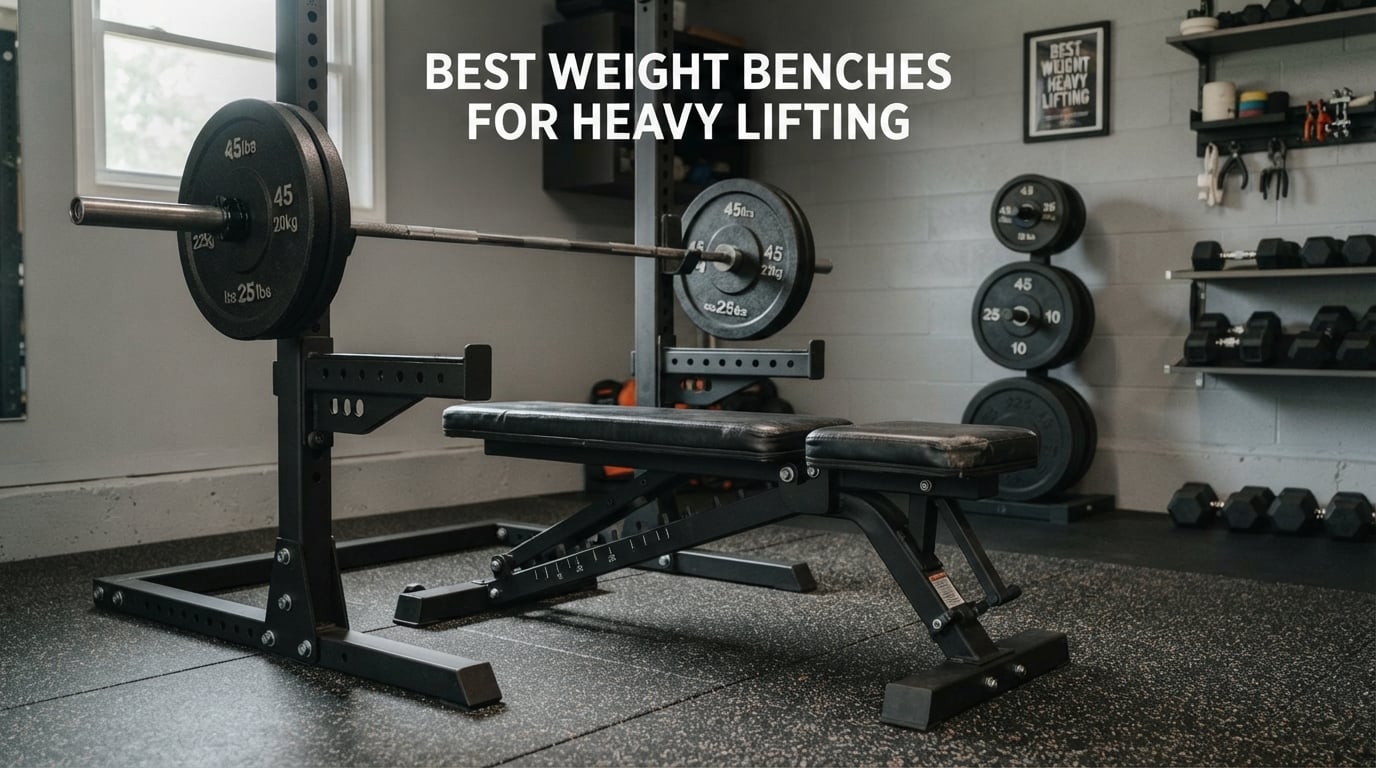
A bench press bench has one job when the weight gets serious: hold you, the bar and the plates without flexing, rocking or quietly shifting under a locked-out set. Most cheap flat benches are built for dumbbells and light barbell work. The best weight benches for heavy lifting are a different category, and in 2026 that category is still dominated by two numbers — the rated capacity and the steel gauge behind it.
We compared 10 benches that clear the bar for real barbell work, reading the published specifications and the buyer feedback behind each rating. Six of them list an ASTM-certified capacity. The rest print a manufacturer-stated figure, and those numbers range from 1,000 lb to 1,870 lb depending on how the seller counts. That distinction matters more than the headline number, and we flag it on every pick below.
The list is grouped the way heavy lifters actually shop — by capacity tier rather than by brand. Start with the worked capacity arithmetic a few sections down if you want to know the number you need before you read a single spec, because most people in this category buy a bench rated well below their real need and then upgrade a year later.
Table of Contents
Top 3 Picks for Heavy Lifting (October 2026)
Our Editor’s Choice is the FLYBIRD WB5, the highest-volume bench in this group with an ASTM-certified 800 lb rating. YOLEO’s 827 lb bench is the value pick for anyone who wants a certified frame without a long assembly. The Keppi FID bench is the one to look at once your working loads pass 300 lb, with a welded commercial frame and an IPF-standard bench height.

FLYBIRD WB5 Foldable Bench
- ASTM-certified 800 lb
- 144 positions from -30 to 90 degrees
- 30 inch extended backrest
- Folds to a 9.06 inch wide profile

YOLEO 827 lb ASTM Bench
- ASTM-certified 827 lb capacity
- 98% pre-assembled in about a minute
- 84 positions across back and seat
- Folds to 31.5 inches at 23.2 pounds

Keppi 1200 lb FID Bench
- ASTM-certified 1200 lb
- Fully welded 70x50mm steel frame
- 17.3 inch IPF standard bench height
- 36 inch backrest with decline foot catch
All 10 Heavy-Duty Benches Compared in 2026
The table below lists every bench in the roundup with its stated capacity, frame material, the rating source where we could confirm one, and the use case it fits best. Read the capacity column as the manufacturer or standard states it, then run your own arithmetic against the section further down.
| Product | Specs | Action |
|---|---|---|
| FLYBIRD WB5 Adjustable Bench |
|
Check Latest Price |
| YOLEO ASTM 827 lb Bench |
|
Check Latest Price |
 MARCY Olympic Bench MD-857 MARCY Olympic Bench MD-857 |
|
Check Latest Price |
 FF Finer Form Foldable Flat Bench FF Finer Form Foldable Flat Bench |
|
Check Latest Price |
 FF Finer Form Multi-Functional FID Bench FF Finer Form Multi-Functional FID Bench |
|
Check Latest Price |
 YOLEO 6-in-1 Bench and Rack Set YOLEO 6-in-1 Bench and Rack Set |
|
Check Latest Price |
| Keppi FID Adjustable Bench |
|
Check Latest Price |
 JOROTO MD80MAX FID Bench JOROTO MD80MAX FID Bench |
|
Check Latest Price |
 FLYBIRD WB7 Adjustable Bench FLYBIRD WB7 Adjustable Bench |
|
Check Latest Price |
 MAJOR FITNESS 1300 lb Bench MAJOR FITNESS 1300 lb Bench |
|
Check Latest Price |
1. FLYBIRD WB5: the foldable bench that heavy lifters keep
FLYBIRD WB5 Weight Bench, ASTM-Certified 800LBS Adjustable Weight Bench Workout Bench Foldable for Home Gym, 90° to -30° FID and 30in Extended Backrest for Bench Press Strength Training Exercise
ASTM 800 lb
144 positions -30 to 90 degrees
30 inch backrest
Folds to 9.06 inch wide
Pros
- ASTM-certified 800 lb rating with dual-triangle frame and double locking
- Folds flat to a 9.06 inch profile for storage
- Spring lock changes backrest and seat angles in about a second
- 30 inch backrest supports head and spine under load
- 1-year frame replacement and 3-year parts coverage
Cons
- Sits 2-3 inches higher than a standard bench
- Padding is firm rather than plush
- Upright position stops short of a full 95 degrees
More than 26,000 buyers have rated this bench, and that volume is the reason it leads our list. A spec sheet tells you little about how a frame behaves after a year of heavy pressing, but a review base that size tells you a lot about consistency, because the complaints that show up are ergonomic rather than structural.
The 800 lb figure is ASTM-certified, which puts it in a different class from the manufacturer-stated numbers printed by several other benches here. The dual-triangle structure and double locking mechanism are what buyers consistently describe as planted under load. The spring lock on both the backrest and seat is the quiet hero in a home gym, since you can change angles between sets without hunting for a pin.
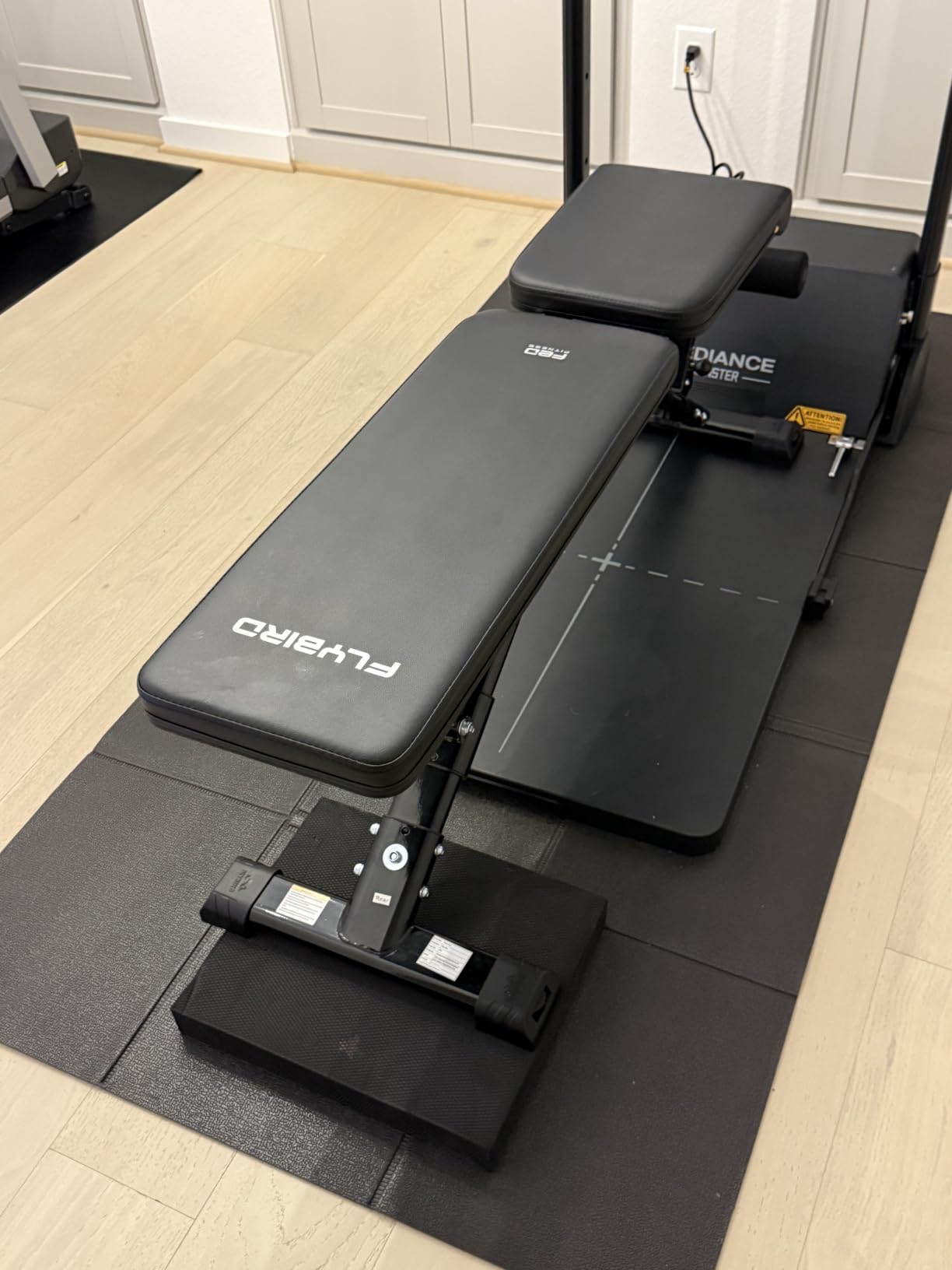
The 30 inch extended backrest is longer than most competitors in this class and it makes a real difference above 250 lb, because your head and upper back are supported rather than hanging off a short pad. Buyers also like the 15.7 inch seat pad for heavy barbell work and the fact that the whole unit folds down to a 9.06 inch width in three steps.
Our one reservation is height. At roughly 2 to 3 inches taller than a standard bench, shorter lifters report struggling to plant their feet flat, and that changes how you drive the bar. A small number of owners also report the upright position stopping short of a full 95 degrees, and a few report rubber foot caps detaching from the leg tubes.
Who this bench suits
This is the bench for someone training in a spare room or a converted garage who presses seriously and still wants the floor back at the end of the session. If your working weight plus your bodyweight sits under 800 lb, the certified rating gives you real headroom and the fold solves a problem no fixed bench can.
It also works as a second bench. Two people using one gym, or a lifter who trains dumbbells on one day and barbell on the next, gets two stations out of a footprint that is small when stored.
Who this bench does not suit
Skip it if you are already above 800 lb combined and want margin, or if you are under about 5’5″ and need your feet flat on the floor for pressing. The firm padding is also a genuine preference split — people who like a hard surface for heavy barbell work love it, and people who train heavy dumbbells find it unforgiving.
2. YOLEO 827 lb ASTM bench: the one-minute assembly pick
YOLEO Adjustable Weight Bench, ASTM-Certified 827LBS, 98% Pre-Assembled
ASTM 827 lb
330 lb maximum user weight
84 positions
98% pre-assembled
Pros
- ASTM-certified 827 lb with a stated 330 lb maximum user weight
- Arrives nearly complete with only two pins to insert
- 13 inch seat and 28 inch backrest with dense foam
- 23.2 pounds with a built-in transport handle
- Folds to 31.5 x 12.6 x 13 inches
Cons
- Feels slightly wobbly unloaded and firm once loaded
- Some buyers report no true decline position
- Screw-in ankle pad must be removed before folding
This bench carries the highest average rating in the roundup from a review base large enough to trust, at 4.6 stars across more than 9,400 verified buyers. It also publishes one of the clearest capacity statements in the category: 827 lb ASTM-certified with a stated 330 lb maximum user weight. That pairing lets you check your own bodyweight against the number instead of guessing.
The assembly story is the reason it ranks first in its Amazon category. It arrives 98% complete and you insert one ring pin and one ball pin, which means you can be pressing the same afternoon it arrives rather than an hour into a hardware bag. For anyone putting a bench together in a rented flat, that is not a small detail.
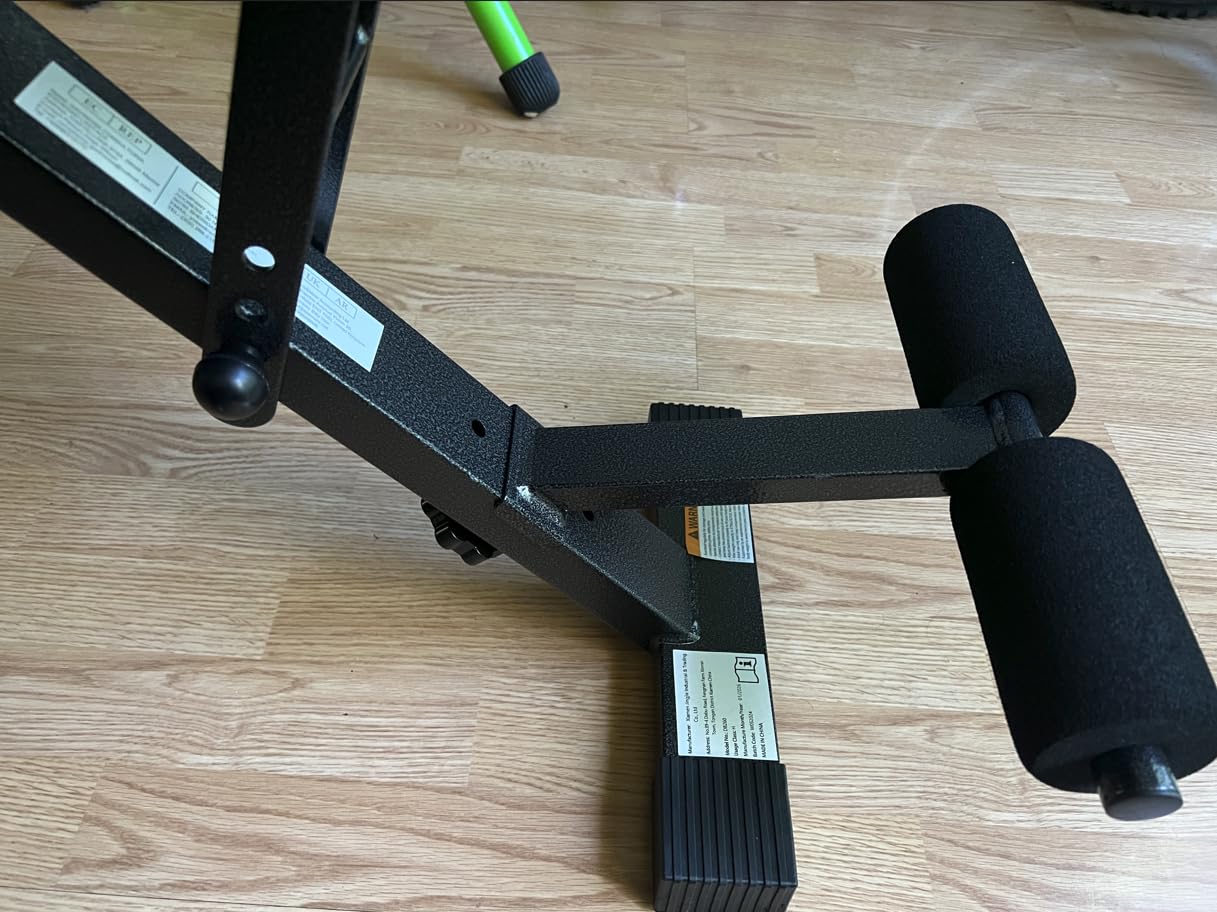
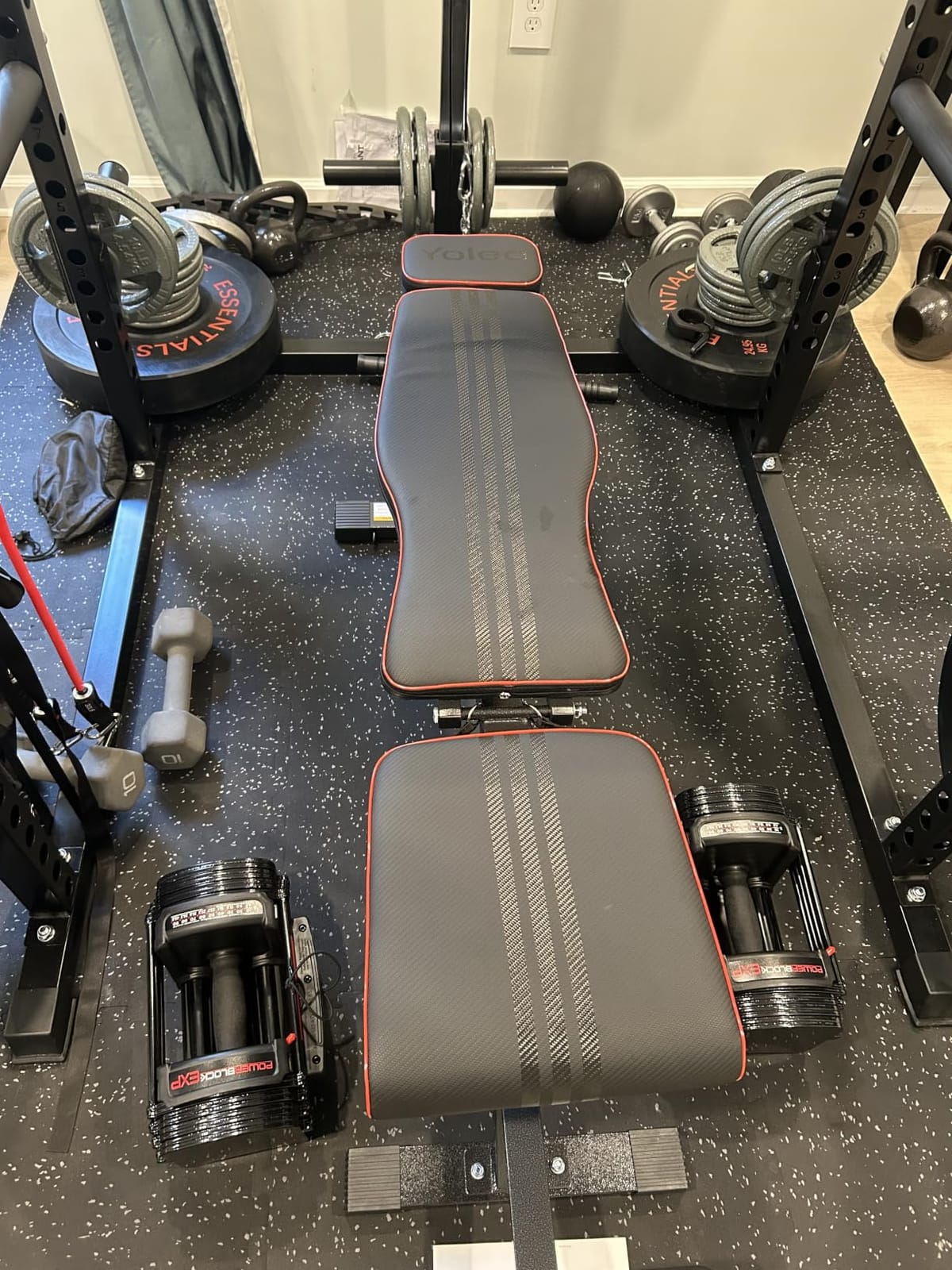
Stability is the surprise. Buyers describe wide flat feet that stay planted on laminate and carpet, and one common observation is that the bench feels slightly mobile when empty but firms up the moment you sit on it. The ladder-lock adjustment handles both the backrest and the seat quickly, and the dense foam with a PU leather cover holds up well for the price bracket.
At 23.2 pounds with a built-in handle, one person can move it between rooms. The XL variant also adds a 3.1 inch thigh pad for decline and leg-drive work, though that pad has to be unscrewed before the bench folds.
Who this bench suits
This suits a lifter who wants a certified frame, a real angle range and almost no setup time. The 84 positions come from 7 back, 4 seat and 3 leg settings, which covers flat, incline, decline and upright without a fiddly mechanism.
It is a strong choice for a first serious bench, for a shared family gym, and for anyone training on carpet or laminate where a wide foot base matters more than a slim profile.
Who this bench does not suit
Several reviewers report that the advertised decline is shallow or absent in practice, so check the angle against your programming before buying. Taller lifters report short head clearance on the XL size, and the low overall height limits foot room. Buyers who frame it as a maximal lifter’s bench tend to be disappointed; it reads more as a mid-to-light home duty bench that is well certified.
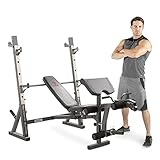
3. Marcy Olympic MD-857: the all-in-one station
Marcy Olympic Weight Bench for Full-Body Workout MD-857
600 lb combined capacity
Preacher curl and leg developer
Integrated plate storage
103 pound fixed frame
Pros
- Holds steady under heavy loading with owners benching 170 to 200 lb
- Sliding seat and back pad track for multiple angles
- Integrated plate posts accept standard and Olympic plates
- Removable preacher pad and leg developer lock out of the way
- Generous seat width for dumbbell work
- Hardware labeled in blister packs with a spare parts set
Cons
- Very large footprint that needs garage-sized space
- Preacher pad sits low for lifters 6'2 and taller
- Limited bar-rest peg holes for tall lifters
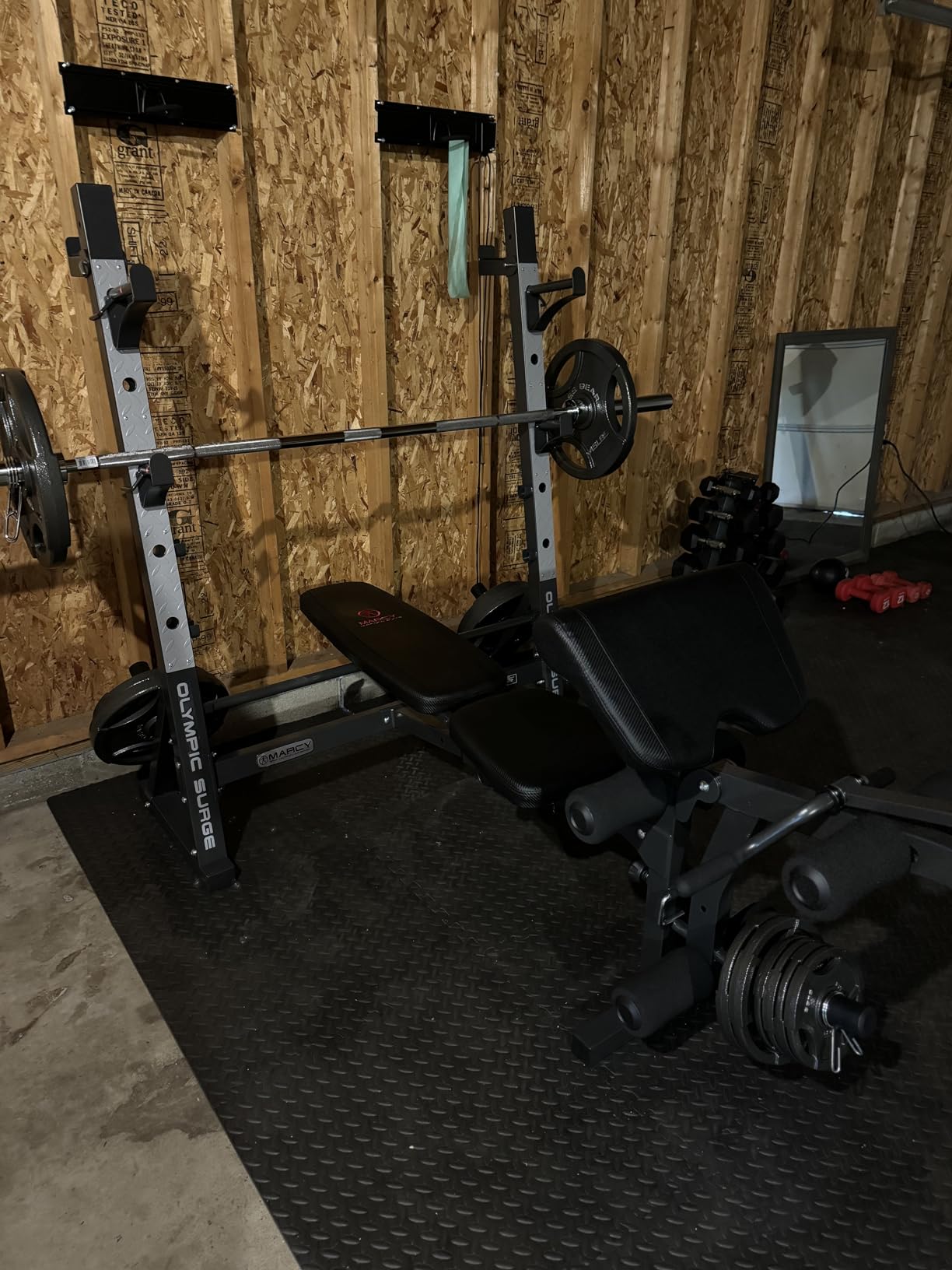
Everything in this roundup that is bolted to the floor of a gym came from an idea like this one station covering pressing, leg work, curls and plate storage. The MD-857 is the clearest example, and long-term owners consistently report it handling 170 to 300 lb of barbell work and squat storage without structural complaints across more than 4,000 reviews.
The 600 lb capacity is stated as combined user and lifting weight, so it is the smallest rating in the roundup. That still works for a lot of people, but it is the number to check first if you are near 250 lb on the bar. The sliding seat and back pad track use a spring-loaded threaded pin, which gives several incline and decline angles from one frame.
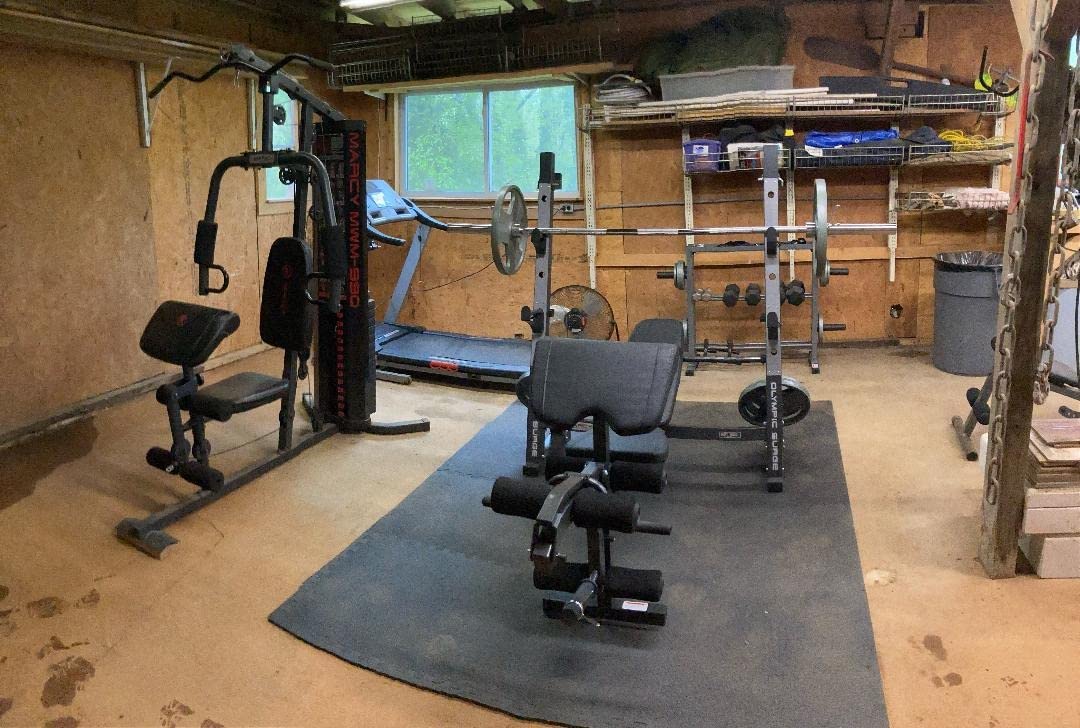
The dual-function pivot leg developer locks for abdominal work, and the preacher curl pad is removable and adjustable in height. Both accept the same plates you already own, and the integrated storage posts take standard or Olympic plates, so the bench doubles as the place plates live between sets.
Size is the honest trade-off. Owners suggest needing close to an 8 by 12 foot area, and at 103 pounds it is not something you reposition casually. Several reviewers also report scratched paint and chipped finish on arrival, plus a seat slide that can feel loose until the bolts are checked.
Who this bench suits
Pick this if your garage gym has to cover legs, arms, chest and core without buying four machines. The all-in-one footprint and integrated plate storage make it popular with multi-user family gyms and with anyone training two people at once.
It is also a good fit for lifters who want a bench, a squat rack and a plate tree in one purchase and have the floor area to justify it.
Who this bench does not suit
It is the wrong pick for a small room and for anyone whose loads are heading past 600 lb combined. Lifters around 6’2″ and taller report the preacher pad running low and the bar-rest peg holes running out, which means starting each rep from a lower rack position. If heavy barbell pressing is the goal rather than full-body variety, a dedicated FID bench is a better use of the same floor.
4. FF Finer Form foldable flat bench: the top-rated flat option
Finer Form Foldable Flat Weight Bench for Home Gym, 1,000 lb Capacity
1000 lb manufacturer-stated
4-way steel frame
Flat only
Folds to 18 inches tall
Pros
- Highest average rating in the roundup at 4.7 stars
- 4-way steel frame gives a wide wobble-free base
- Folds flat to 18 inches for closet or under-bed storage
- Extra-thick cushion pad suits long dumbbell sessions
- Minimal assembly with a free exercise chart
Cons
- Flat bench only with no incline or decline
- Not a barbell-focused station compared with adjustable models
- 1000 lb figure is manufacturer-stated rather than certified
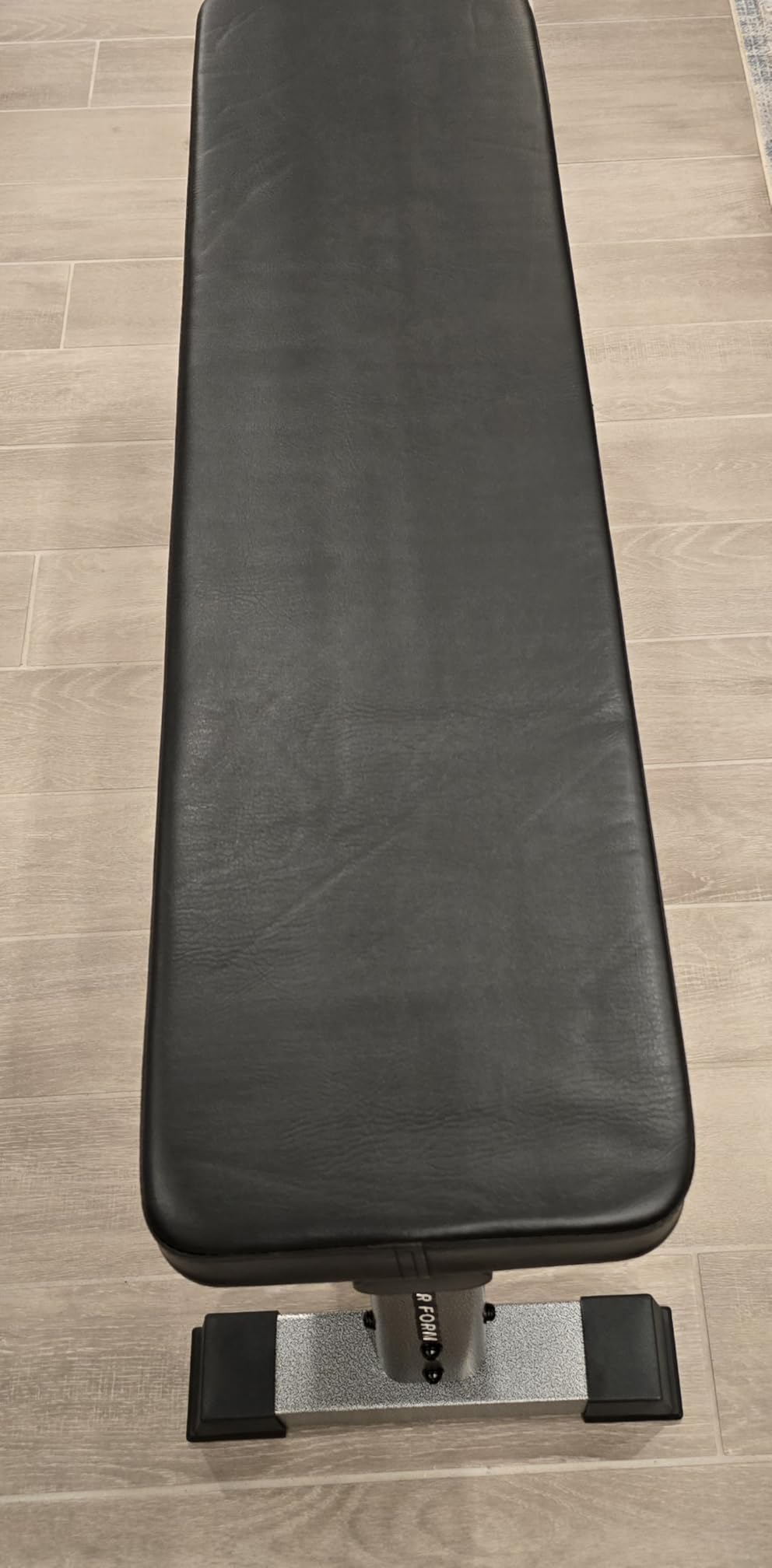
This flat bench has the highest average rating in the set at 4.7 stars, with 82% of buyers at five stars across just under 3,000 reviews. That combination of a high rating and a substantial review count is why it earns a place even though it does less than most of the adjustable benches here.
The 4-way steel frame is the reason buyers describe it as wobble-free. Instead of the usual two-foot H shape, the frame spreads out on four sides, which gives a wide base for dumbbell pressing, hip thrusts and rows. The 1,000 lb rating is manufacturer-stated rather than ASTM-certified, so treat it as a claim backed by a good review history rather than a tested figure.
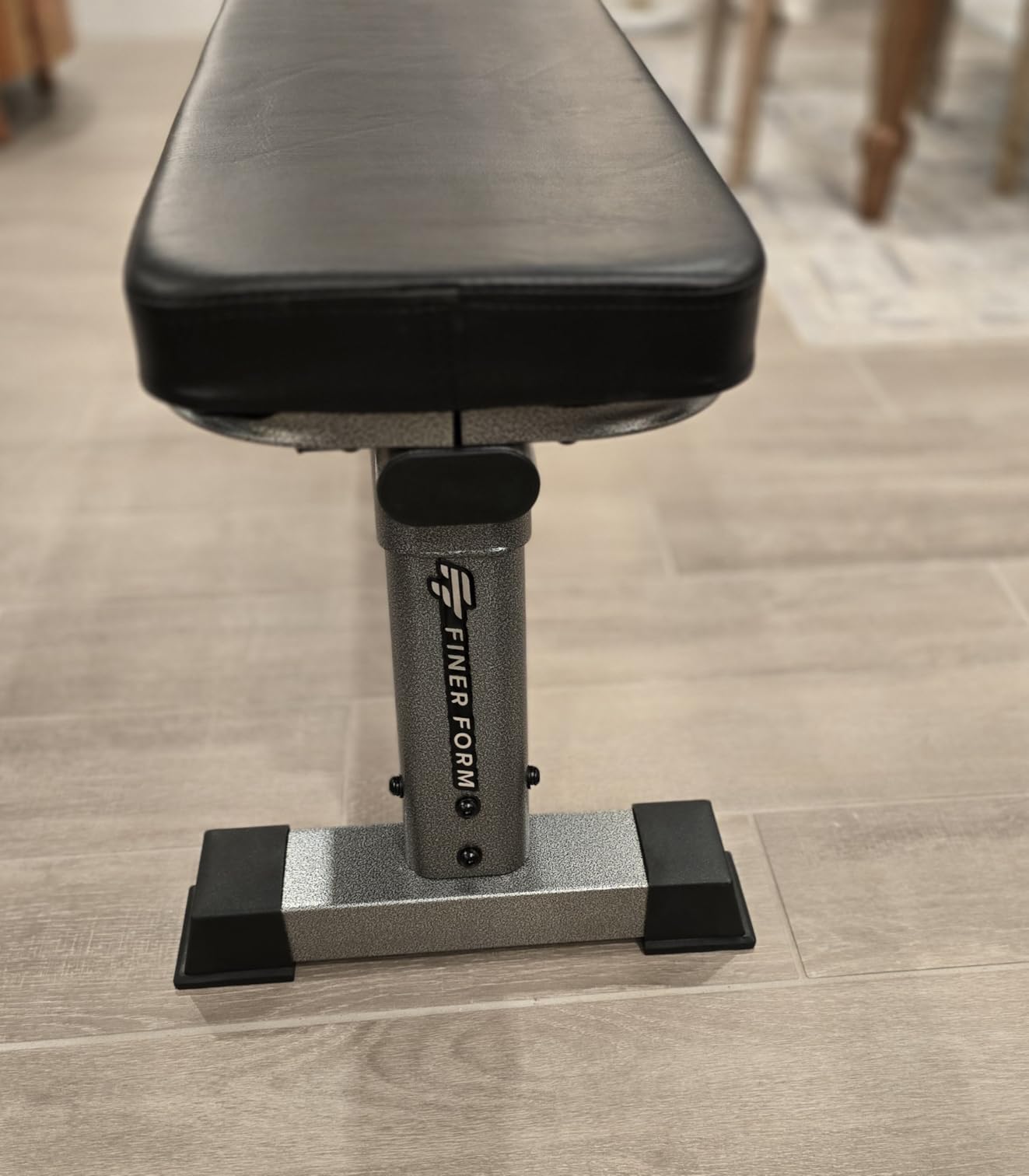
The extra-thick cushion pad is the other repeated highlight. For dumbbell work and hip thrusts, the load is spread rather than concentrated on a narrow pad, and it stays comfortable through long sessions. It folds flat to 18 inches tall and weighs 27.7 pounds, so it disappears into a closet or slides under a bed.
The honest limitation is angle coverage. This is a flat bench. If your programming includes incline pressing, rows against an angled pad or decline work, you will need a second piece of equipment or a different bench entirely.
Who this bench suits
It suits dumbbell-focused training, hip thrusts, core work and leg work in a small space. People building a first home gym often start here because it covers the movements that matter most and costs nothing in floor area while it is being used.
It is also a good second station in a two-person gym, since a flat bench takes up far less room than a full FID unit.
Who this bench does not suit
Skip it for heavy barbell pressing, incline work or decline work. The 1,000 lb figure is manufacturer-stated and the design has no incline geometry to load, so the number tells you less about pressing performance than it does about dumbbell and hip thrust work.
5. FF Finer Form multi-functional FID bench: the full-body station
Finer Form Multi-Functional Adjustable FID Weight Bench and Roman Chair
1000 lb manufacturer-stated
23 settings
Roman chair and hyperextension
5 foot floor footprint
Pros
- Converts between incline
- decline
- flat
- preacher curl and hyperextension
- 23 settings across backrest
- seat
- pad height and calf
- Owners bench 200 to 250 lb without instability
- Transport wheels and a handle for moving the unit
- Supports 100-plus exercises from one machine
Cons
- Does not collapse for closet storage and only repositions on wheels
- Back pad runs about an inch short when vertical for taller users
- Preacher pads are narrow for barbell curls
- Thin PU leather raises long-term durability questions
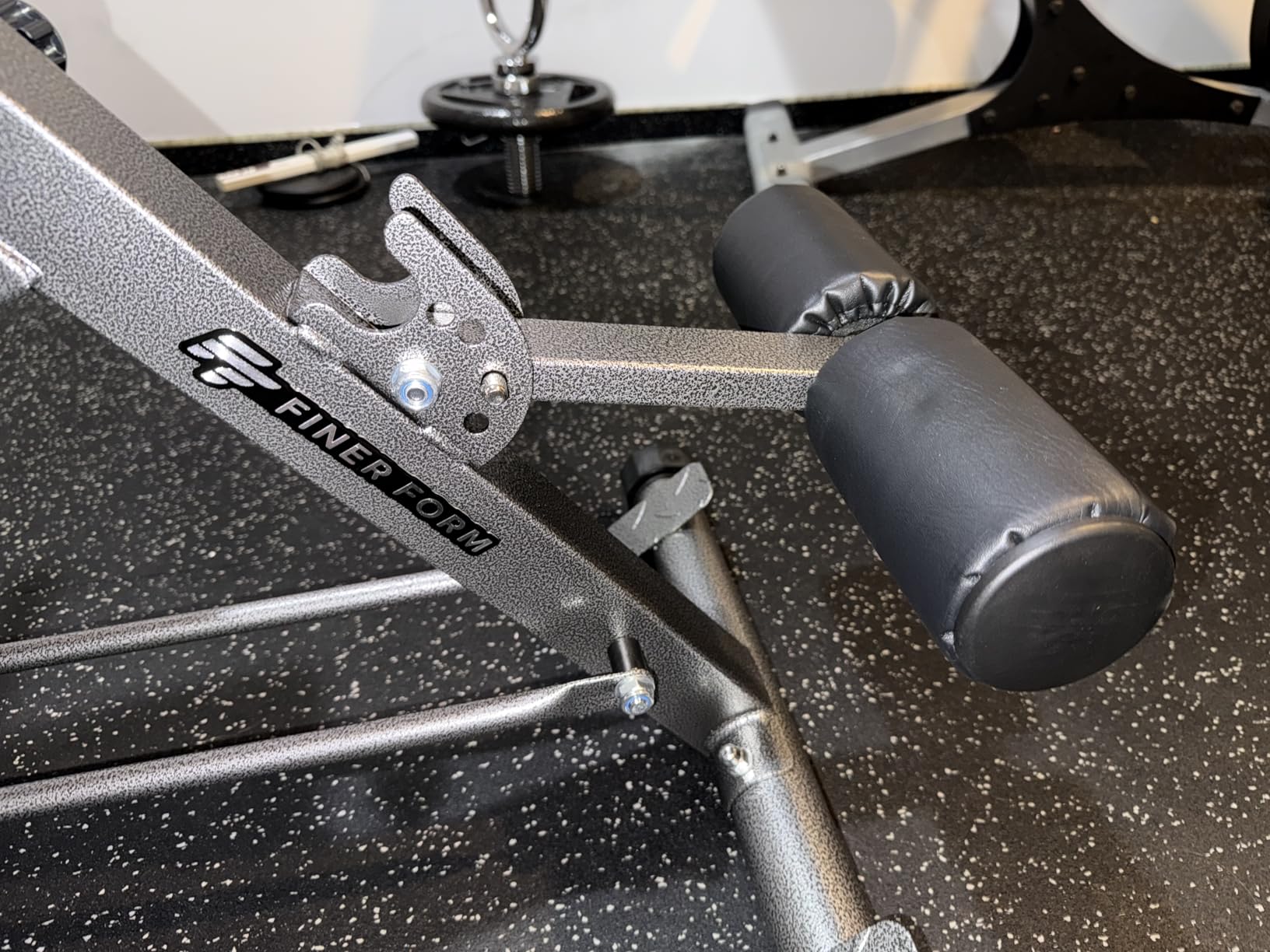
This is the same brand’s answer to a different question. Where the flat bench covers pressing and hip thrusts, this one converts between incline, decline, flat, preacher curl, Roman chair and hyperextension, and owners use it for rows, sit-ups and back extensions as well. For a home gym with one corner of floor to spare, that is a lot of movement from one frame.
The 1,000 lb rating is manufacturer-stated, and at 21 kilograms the frame is heavy enough that buyers report stability up to 200 and 250 lb of barbell work without complaint. The 23 settings come from 8 backrest, 3 seat, 8 support pad and 4 calf positions, which is finer control than most competitors in this price bracket offer.
Assembly is straightforward with well-packed hardware and clear labeled instructions, and the support team is repeatedly praised for sending replacement parts after shipping damage. A few buyers have reported cracked pads or missing parts on arrival, which is exactly the situation where fast replacement support matters.
The fit complaints are consistent enough to plan around. Users around 6’1″ and taller report the back pad runs about an inch short when vertical, and the preacher pads are narrow and fixed in width, which is awkward for barbell curls. The back section also retains a slight wobble after tightening the bolts, and the PU leather is thin.
Who this bench suits
It suits anyone building a full-body home gym on a single platform, especially people who want core and lower-back work alongside pressing. The 5 foot floor footprint and transport wheels mean it moves between rooms rather than sitting permanently in one spot.
It works well as a second station for a family gym where one person presses and another does rows and leg extensions on the same frame.
Who this bench does not suit
It is not the right bench for a small flat where you need the corner back, because it does not fold, only repositions. Lifters over 6’1″ doing heavy incline barbell work should check head support first, and anyone planning long-term durability should plan for pad cover replacement.
6. YOLEO 6-in-1 bench, rack and curl pad set: the station with a rack attached
YOLEO 1+X Heavy Duty Olympic Weight Bench, 1870LB Bench Press System
880 lb bench capacity
1870 lb system total
40 inch grip
Foldable frame
Pros
- 1870 lb total system capacity across rack
- bench and attachment
- 40 inch grip supports close-grip and wide-grip pressing
- Built-in rack fits 6 to 7 foot Olympic bars
- Folds up for storage in limited floor space
- Quick-dry breathable contoured backrest
Cons
- Assembly is not tool free and takes more than a few minutes
- At 68 pounds it is heavy to reposition despite the fold
- Some owners report upholstery splitting at a seam
- Bench sits high and does not fully straighten for overhead work
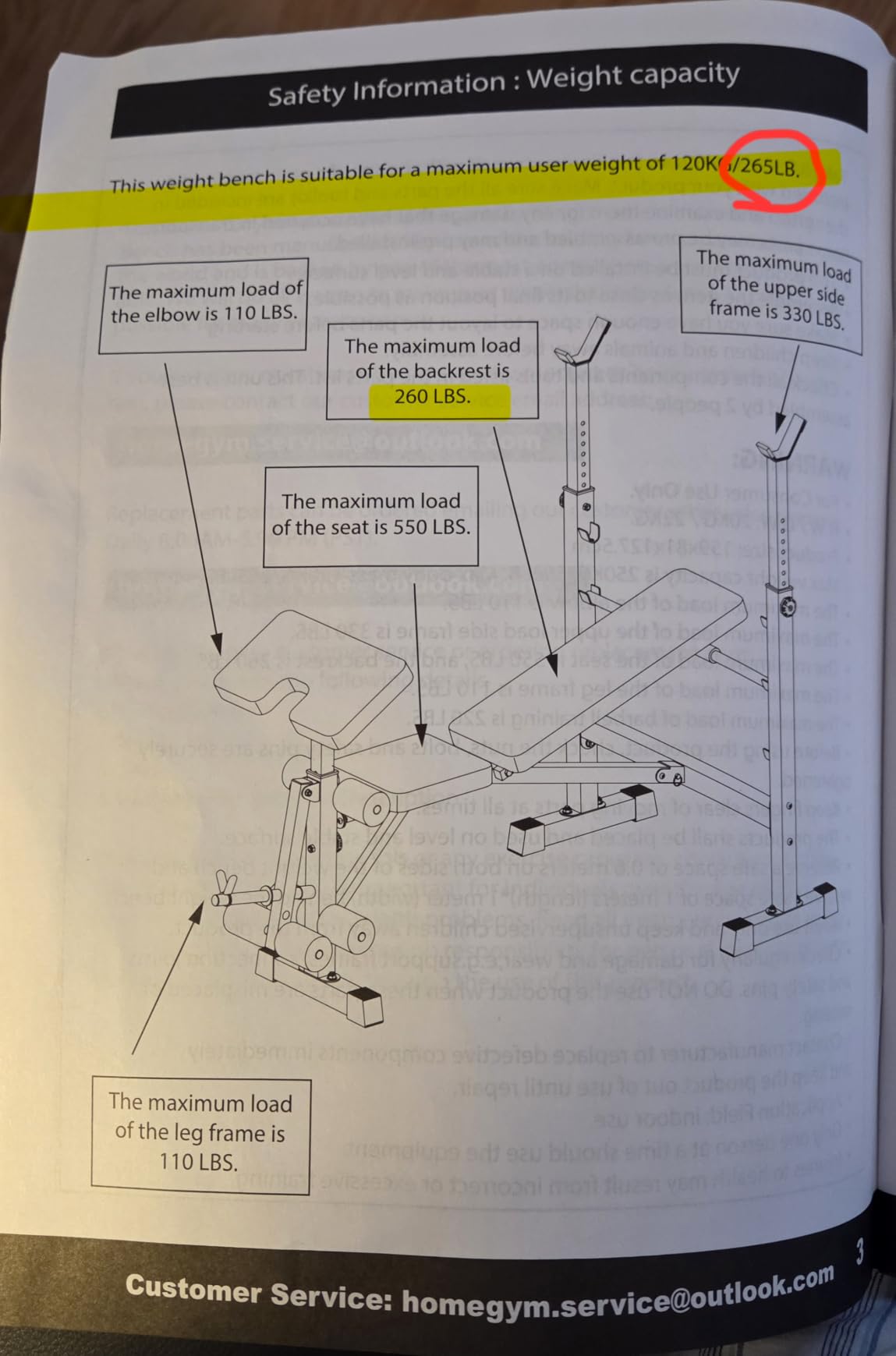
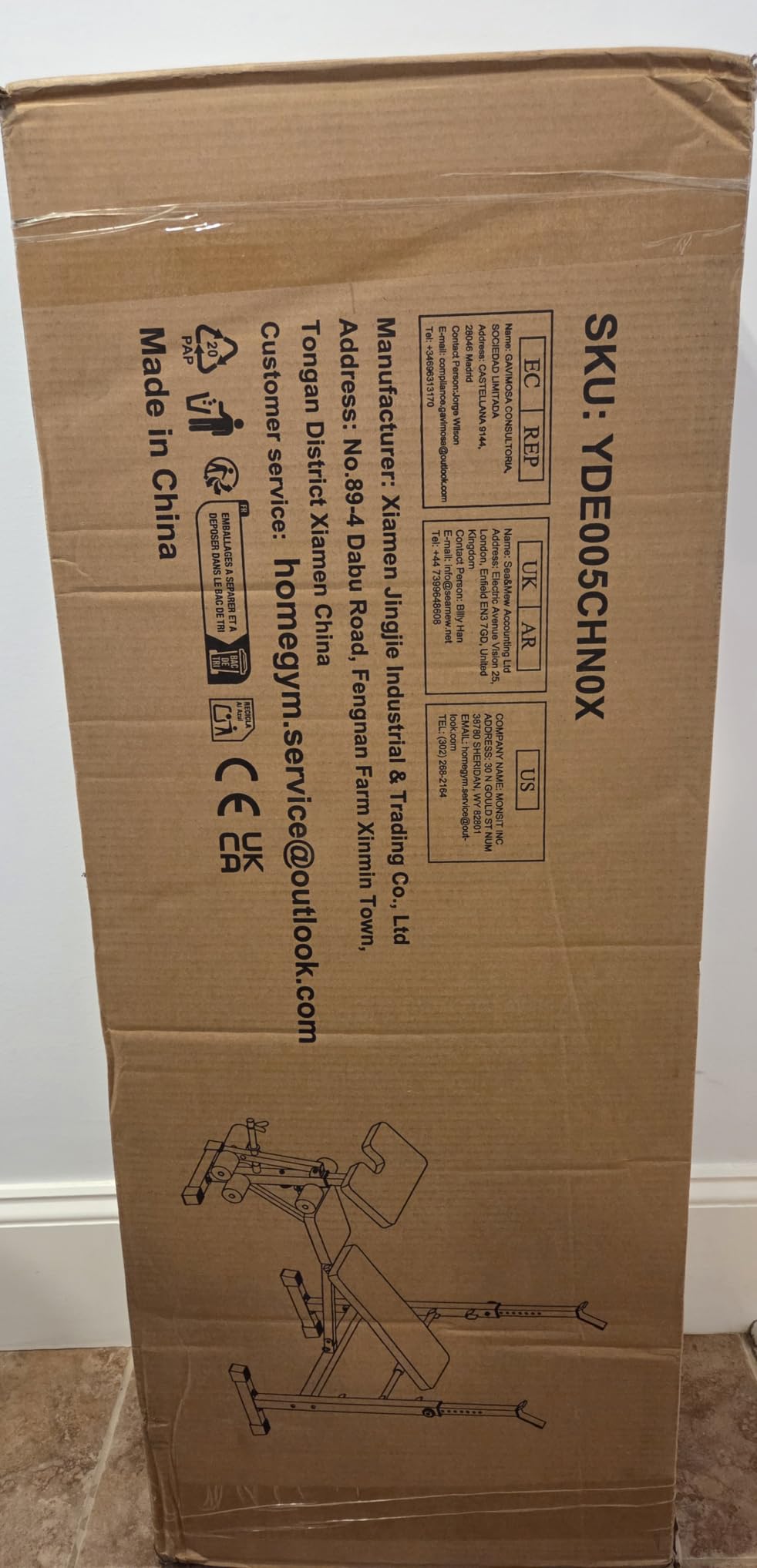
This is the only unit here that includes a rack, which changes the calculation for anyone without a squat rack. The published capacity is 1,870 lb across the whole system: 660 lb on the rack, 880 lb on the bench and 330 lb on the preacher attachment. Read the bench number, not the headline, when you are sizing it for pressing.
The 40 inch grip is unusual and genuinely useful. A wider stance lets you rerack a loaded bar solo without a spotter, and it supports close-grip and wide-grip pressing from the same uprights. Buyers consistently report no wobble during heavy pressing once assembled.
The catch is honest and consistent across reviews: assembly is not tool free despite some marketing claims, and the bolts need tightening throughout the build. Hardware is labeled screw by screw and the instructions are clear, so plan for a proper session rather than a minute.
Two other themes appear repeatedly. Some owners report the upholstery splitting at a seam after limited use, and several find the bench sits high off the ground and does not fully straighten for overhead pressing. The uniform 40 inch width also means the shoulder area does not narrow.
Who this bench suits
It suits a home gym that needs rack, bench and curl pad in one footprint without buying a separate squat rack. The folding frame is the standout for limited floor space, and the Olympic bar compatibility makes it relevant for lifters already training with 6 or 7 foot bars.
It also makes sense for solo training, where reracking a heavy bar without a spotter is the difference between a safe set and a dropped plate.
Who this bench does not suit
Skip it if you need overhead pressing at full extension, or if you move your gym setup regularly, since 68 pounds is awkward to reposition. The seam-splitting reports are worth weighing if you press heavy and often, and the tool-free assembly claim does not hold up in practice.
7. Keppi FID bench: the welded frame for powerlifters
Keppi FID Adjustable Weight Bench,1200LBS Workout Bench for Home Gym
ASTM 1200 lb
Fully welded 70x50mm steel
17.3 inch IPF height
36 inch backrest
Pros
- ASTM-certified 1200 lb on a fully welded commercial-grade frame
- 17.3 inch IPF standard height keeps feet planted
- 36 inch backrest supports head and neck through decline
- Adjustable foam-roller foot catch for decline and sit-ups
- 98% pre-assembled with wheels and a handle
Cons
- Wider and deeper footprint than a compact home bench
- At 59 pounds it needs the wheels or two people to move
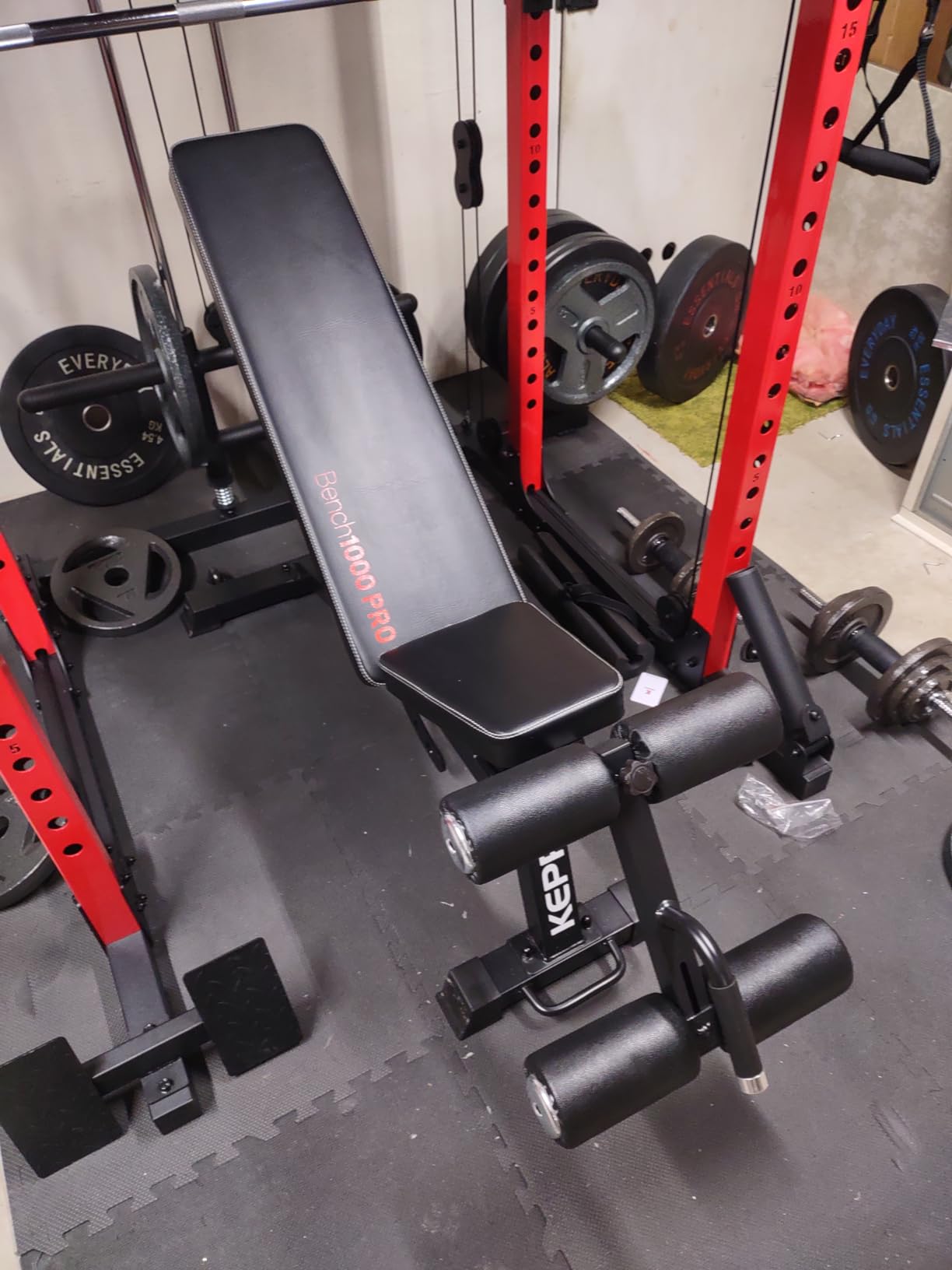
If your working weight plus your bodyweight passes 300 lb, this is the bench in the roundup built for that specific number. It carries an ASTM-certified 1,200 lb rating on a fully welded 70x50mm commercial-grade steel frame, and it is the only pick where the certification and the frame specification together tell you the whole story.
The 17.3 inch bench height is worth pausing on. That is the IPF standard competition height, and reviewers repeatedly say it is the reason the bench feels planted and lets you drive through with flat feet. A lot of budget benches sit 22 to 24 inches high, which forces you onto your toes at the bottom of a rep and cuts the load out of the mid-chest.
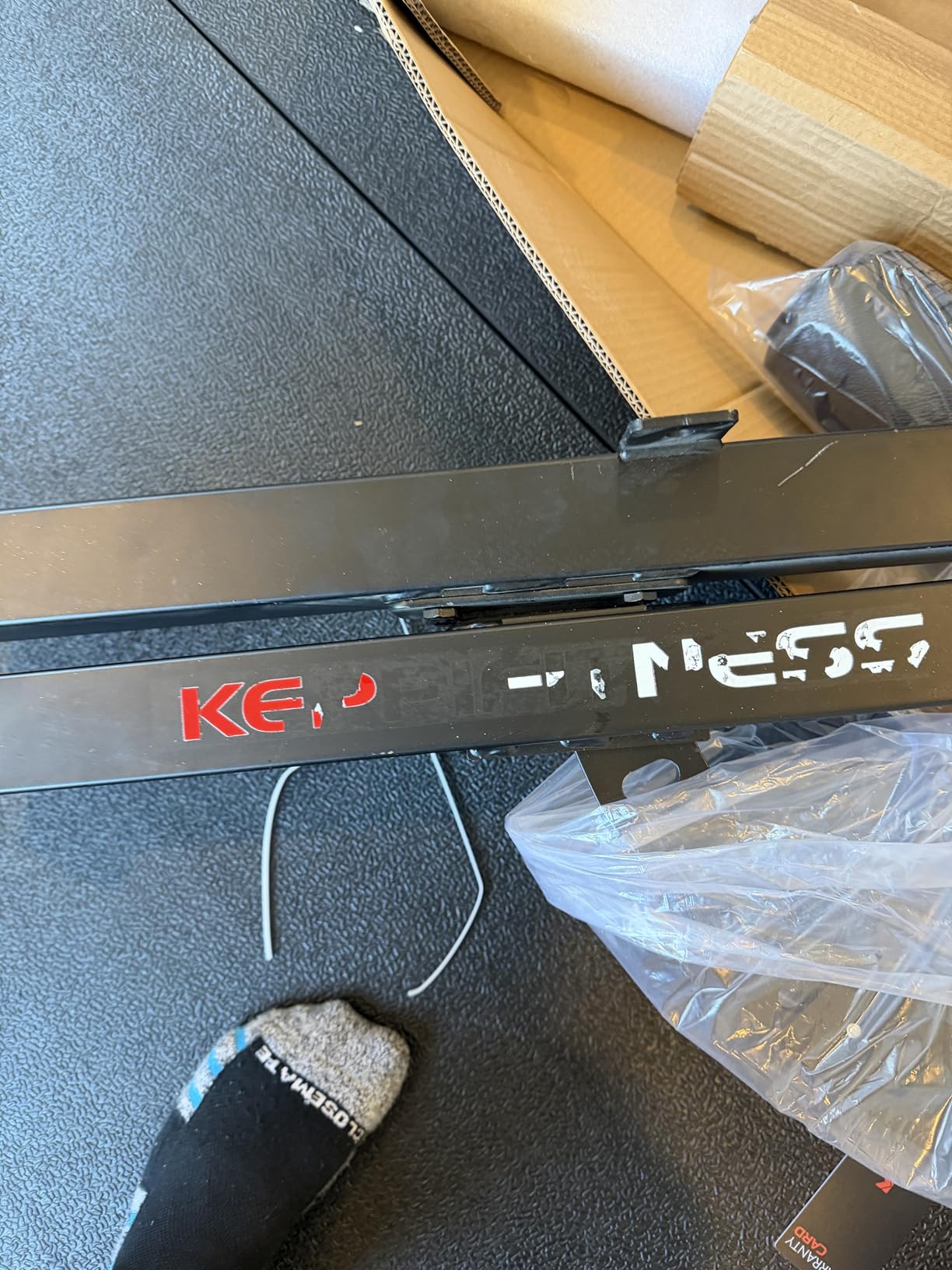
The 36 inch backrest is the longest in this group, which is what makes decline work practical rather than awkward. Combined with the adjustable foot catch and soft foam rollers, it lets you set up for decline presses and sit-ups on the same frame rather than bolting a separate bench to the floor.
The trade-off is size and mass. At 59 pounds and more than 58 inches long, this is built for a dedicated gym floor rather than a closet, which is why it includes transport wheels and a handle. Reviewers still flag the wider, deeper footprint as the main adjustment for anyone coming from a compact bench.
Who this bench suits
It suits powerlifters and anyone whose combined bodyweight and load approaches the 600 lb mark. The certified 1,200 lb rating leaves genuine margin, the IPF height fixes pressing form, and the long backrest plus foot catch cover decline programming properly.
It is also the right choice for a garage gym with a rack you press out of, because the height matches competition standard rather than fighting it.
Who this bench does not suit
It is wrong for a small room or for anyone who moves their bench weekly, since the footprint and the 59 pound frame are both substantial. If you train exclusively with dumbbells, most of this frame is overhead you are not using.
8. JOROTO MD80MAX: the 1300 lb capacity leader
JOROTO FID Adjustable Weight Bench 1300LBS Capacity for Home Gym
1300 lb rated and tested to 1500 lb
34 inch backrest
9 angle settings
42 pounds with wheels
Pros
- 1300 lb rated capacity on a frame tested to 1500 lb
- Reinforced triangular alloy steel design
- 34 inch widened backrest supports head and shoulders
- Built-in wheels and handles at only 42 pounds
- High-density foam holds shape under heavy pressing
Cons
- Only 7 backrest and 2 seat positions limit angle variety
- Review base of 929 is thinner than the category leaders
- 1300 lb figure is manufacturer-stated rather than ASTM-certified
This is the highest rated bench in the roundup alongside the Finer Form flat, at 4.7 stars from 929 buyers with 80% at five stars. It is also the only unit claiming a 1,300 lb rating tested to 1,500 lb, which makes it the most interesting capacity story here even though the rating itself is manufacturer-stated.
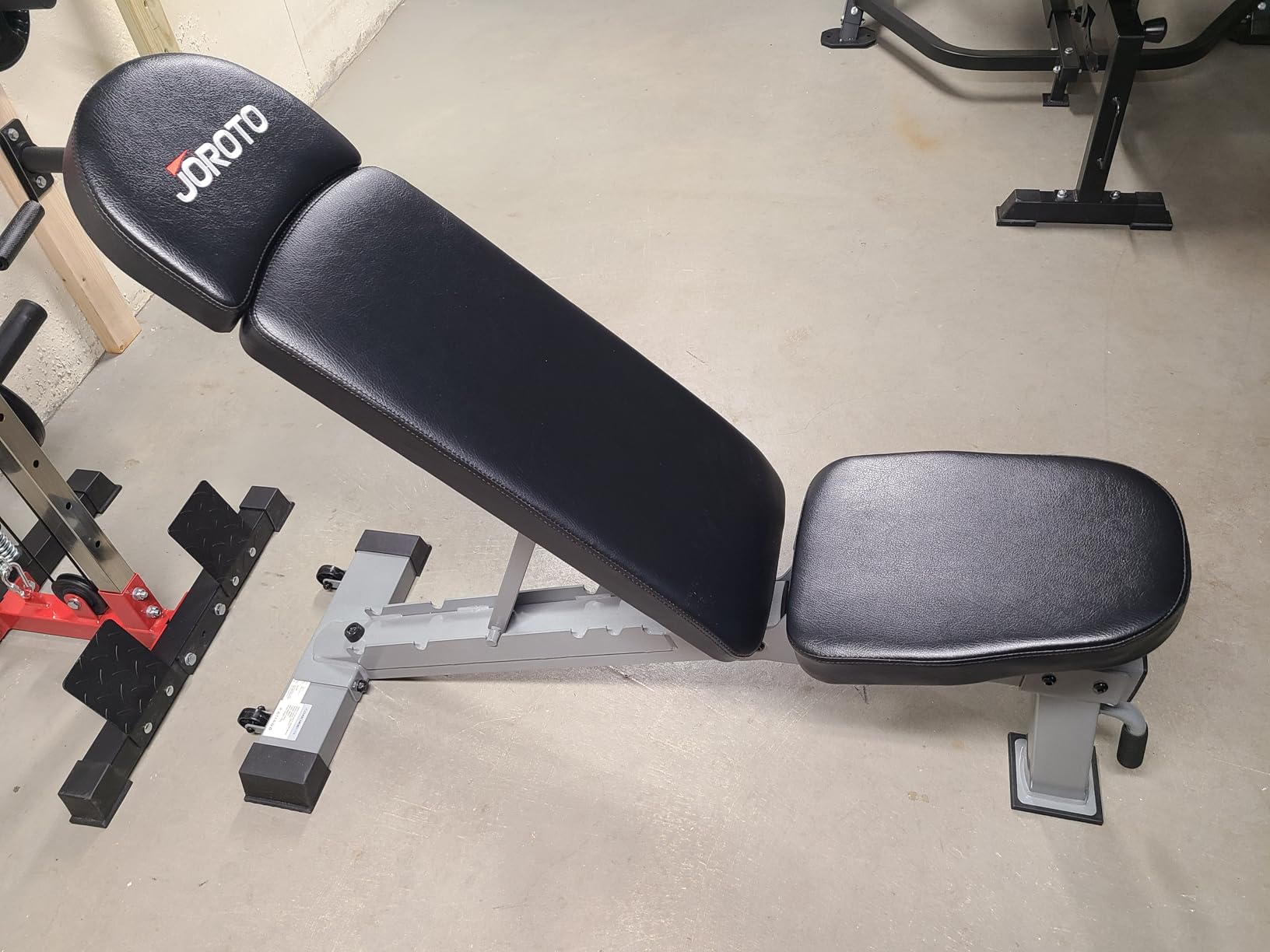
The practical strengths buyers name are the reinforced triangular alloy steel frame, the 34 inch widened backrest and the built-in transport wheels. At 42 pounds it is the lightest of the heavy-capacity benches in this list, and the wheels and handles mean you can reposition it without a second person, which matters in a single-car garage.
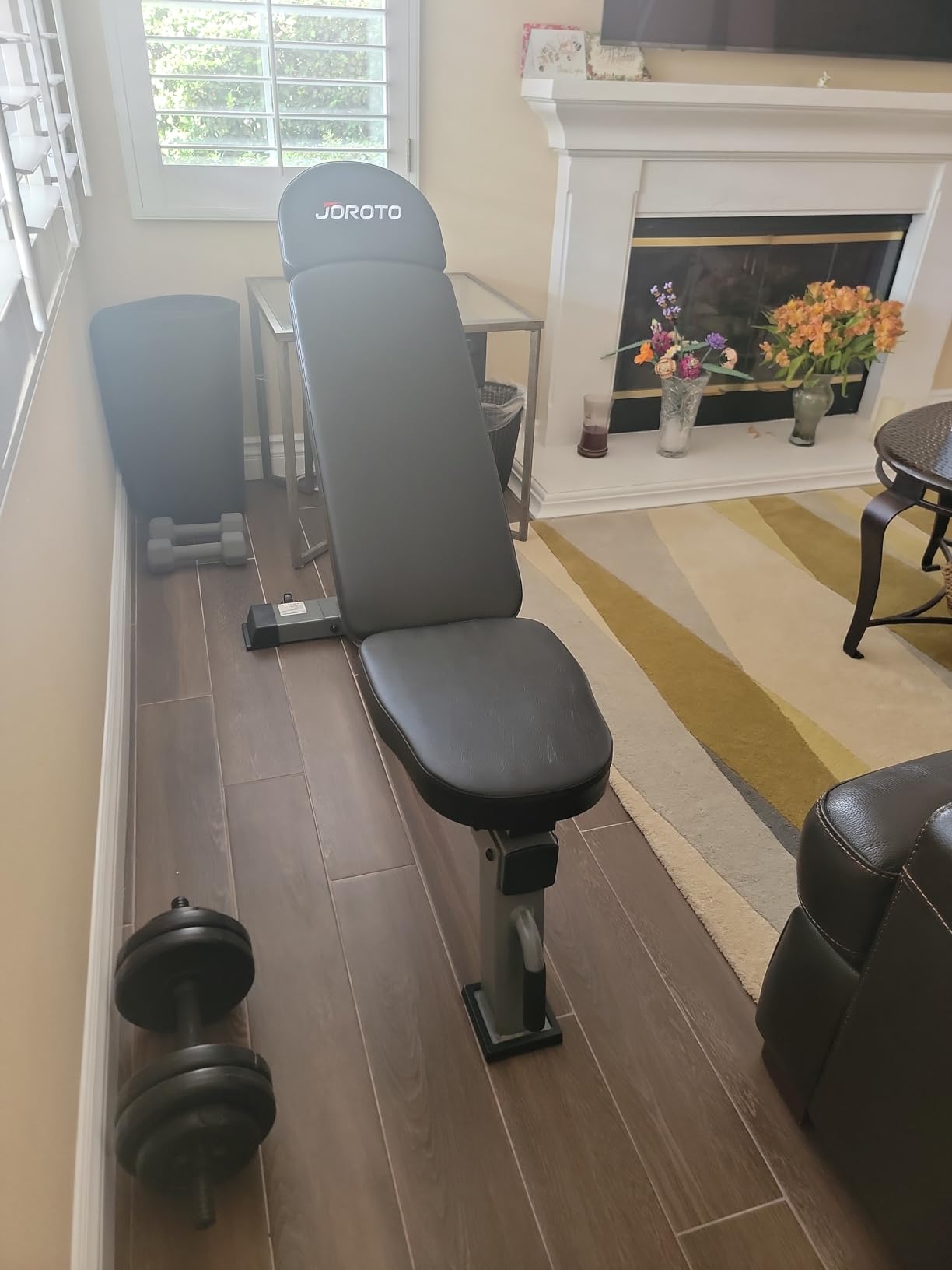
The 17 inch seat height suits most users and helps leg drive, and the high-density foam is reported to hold its shape under heavy pressing rather than compressing until you feel the board through the pad. The trade-off is adjustment range: 7 backrest angles and 2 seat settings give 9 combinations, well short of the 36 offered by the Keppi or the 84 on the YOLEO.
Be honest about the review base. 929 verified buyers is a real signal and the 80% five-star share is impressive, but it is thinner than the 26,000-review bench at number one, and it means the long-term track record is less established than the category leaders.
Who this bench suits
It suits a garage gym where floor space is tight but the loads are not, since 42 pounds with wheels is the most movable bench at this capacity level. The 34 inch backrest suits lifters who need full head and shoulder support, and the 17 inch height works for most users.
If you want a high stated capacity without a heavy frame or a large footprint, this is the one to look at first.
Who this bench does not suit
Skip it if your programming needs many small angle changes, because 9 combinations will not cover a full incline or decline range in fine increments. Treat the 1,300 lb figure as a manufacturer claim rather than a certified rating, and weigh the thinner long-term record against the best-reviewed options if you are buying for a decade of use.
9. FLYBIRD WB7: the long-backrest bench for tall lifters
FLYBIRD WB7 Weight Bench, 1300LBS Commercial Adjustable Weight Bench, Workout Bench for Home Gym, Flat Incline Bench Press Bench with 34” Extra-Long Backrest and Easy-Roll Wheels – Black
1300 lb tested
34 inch backrest
17.7 inch IPF height
6 backrest and 3 seat settings
Pros
- Stable in every direction with owners reporting 400 lb total load without movement
- Long section fully supported by two full-length beams
- 34 inch backrest suits lifters over 6 feet
- IPF standard 17.7 inch bench height for pressing form
- QuickShift C-shaped buckle changes angles in about a second
Cons
- No foot pads or anchor posts so decline work is awkward
- Transport wheels are small for the 48.5 pound frame
- Upholstery is soft and thin for a heavy-duty bench
- Only 623 reviews for a 1300 lb claim
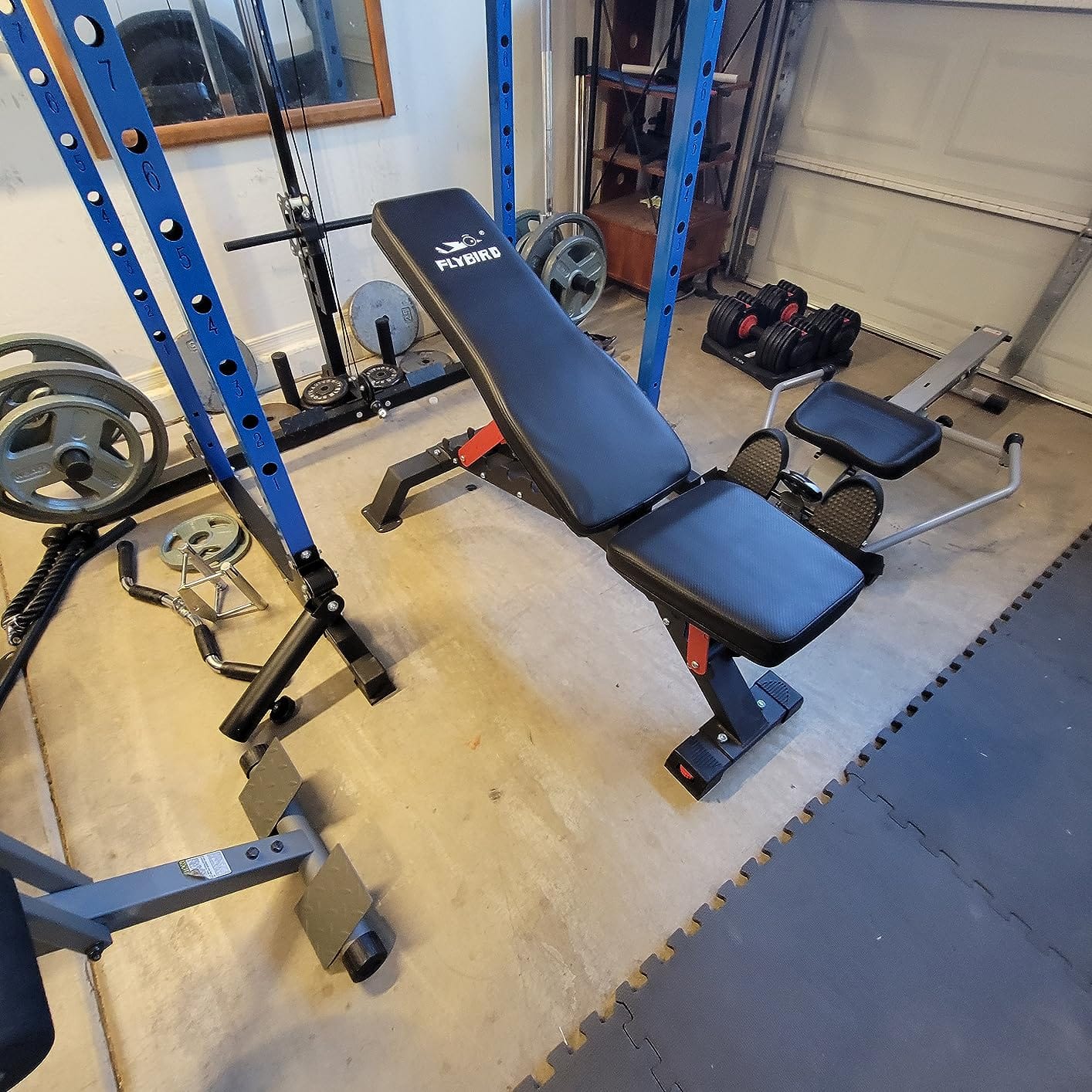
The WB7 is the same brand as our top pick, aimed at a different problem: long torsos. It carries a 1,300 lb tested capacity on 3.2 x 1.6 inch tubular steel with a triangle-reinforced frame, a 34 inch backrest and an IPF standard 17.7 inch bench height, which is the combination that tall lifters keep recommending to each other.
The frame detail that matters most is the 25 inch extended rear tube. Instead of cantilevering the pad, two full-length metal beams support the entire long section, and that is why owners report no wobble in any direction even at 400 lb of total load. Long-term owners also report the upholstery holding up over a year and a half of regular use without tearing.
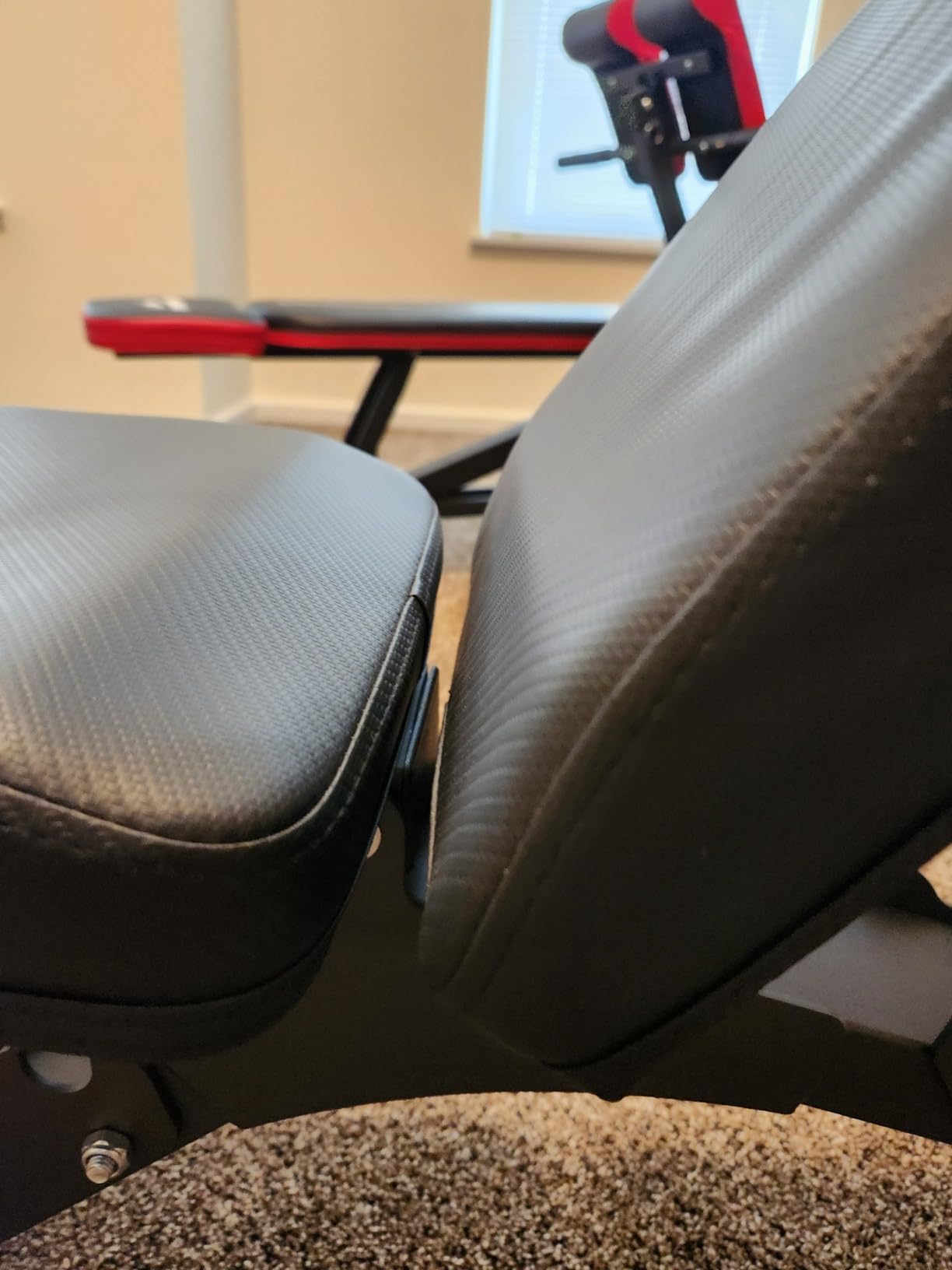
The QuickShift C-shaped buckle changes angles in about a second across 6 backrest and 3 seat positions, covering 0 to 90 degrees on the back and 0 to 25 on the seat. Seventy-five percent of the parts arrive pre-installed, and dual wheels with a handle handle the 48.5 pound frame.
There is one real functional gap and reviewers are clear about it: there are no foot pads or anchor posts. That makes decline bench press and decline sit-ups awkward, because nothing holds your feet. The upholstery is also on the soft and thin side for a bench this heavy, and 623 reviews is a thinner base than the WB5 has.
Who this bench suits
It suits lifters over 6 feet who have run out of backrest on shorter benches. The 34 inch pad with full-length beam support, the 17.7 inch competition height and the 1,300 lb tested capacity cover the two things tall heavy pressers ask about: head support and whether the frame moves.
It is also a strong flat-and-incline specialist if decline work is not part of your programming.
Who this bench does not suit
Skip it if decline presses or decline sit-ups are in your program, because the lack of a foot anchor makes both awkward to set up safely. If you want the widest angle range, 6 backrest and 3 seat settings is modest, and buyers wanting a firmer pad under heavy barbells report the padding as thin.
10. MAJOR FITNESS 1300 lb bench: the fastest lock changes
Major Fitness Weight Bench – 1300LBS Weight Capacity and 36 Adjustable Positions Strength Training Bench for Garage and Home Gym Workouts (Black)
1300 lb capacity
C-shaped lock catch
36 angle combinations
59 pounds with wheels
Pros
- Owners report wobble-free pressing at 345 lb
- C-shaped lock catch adjusts without fumbling for pins
- Dual-track backrest support bar adds stability under load
- PU leather wipes clean and has not cracked or shrunk
- Handle and wheels move the 59 lb frame easily
Cons
- Back pad runs short for lifters around 6'4
- Shoulder width on the pad feels narrow for broader frames
- Incline rows feel awkward because of base height
- Only 431 reviews for a 1300 lb claim
The MAJOR FITNESS bench has the highest share of five-star ratings in the roundup at 81%, from 431 buyers. The detail that separates it from the other 1,300 lb benches here is the C-shaped lock catch, which changes angle without pulling and dropping a pin into a tray of plates, and reviewers call it a clear upgrade over pin systems.
The 1,300 lb capacity sits on a triangular structure in commercial-grade square steel, with a dual-track backrest support bar underneath the pad for stability under load. One owner benches 345 lb with no movement, and once the bolts are tightened there is no side-to-side wobble reported.
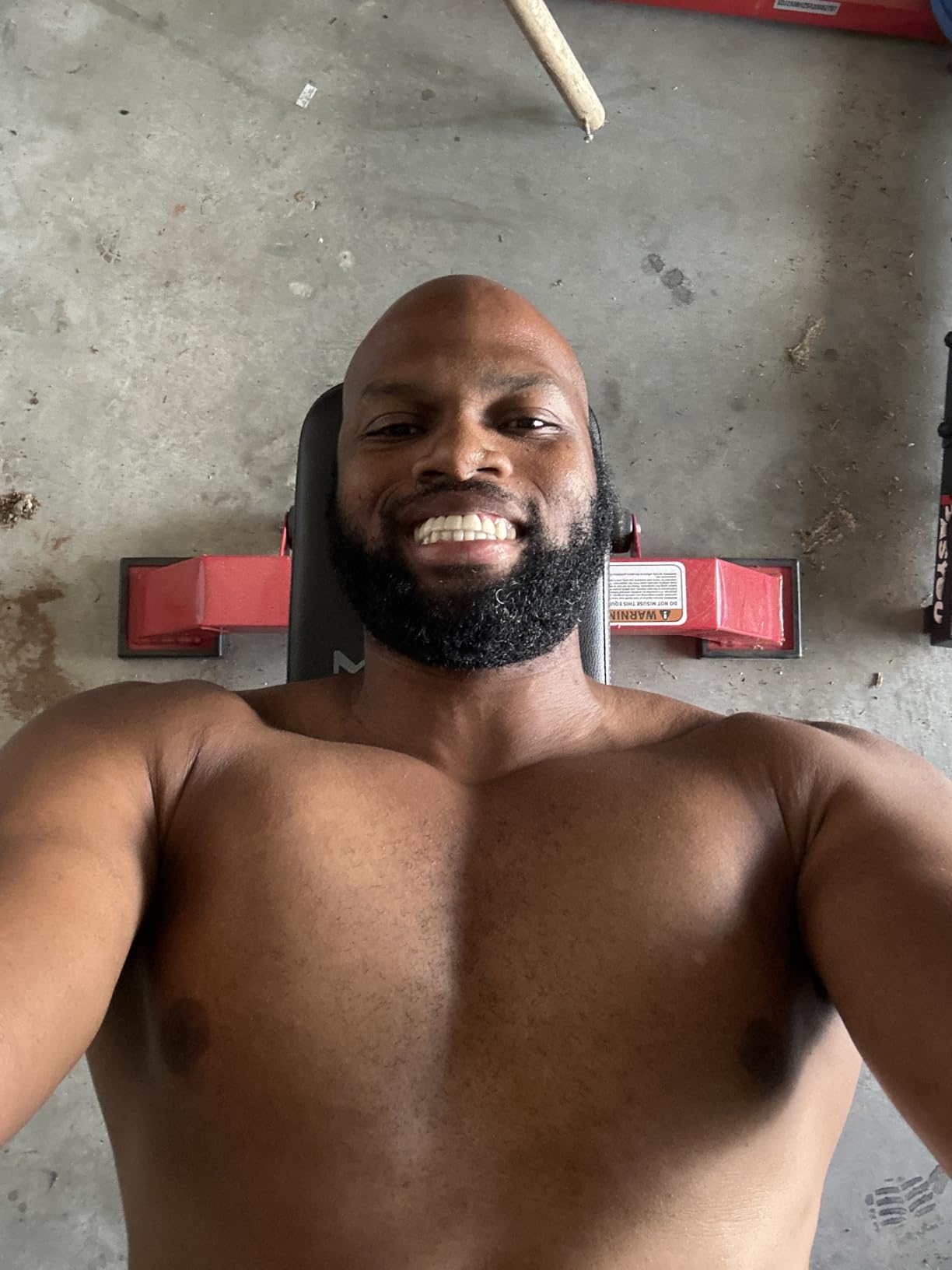
Nine backrest and four seat positions give 36 combinations including a full 90 degrees, which is far more angle coverage than the 1,300 lb JOROTO. The PU leather covering is described as waterproof and wear-resistant, and it has not cracked or shrunk for owners. Assembly takes about 30 minutes with the included tools.
Fit is the recurring theme. Reviewers 6’2″ and up like the length, but users around 6’4″ report the 31.5 inch backrest stops short of supporting the head and the shoulder area feels narrow for a wide frame. Incline dumbbell and barbell rows also feel awkward because of the base height and adjustment layout.
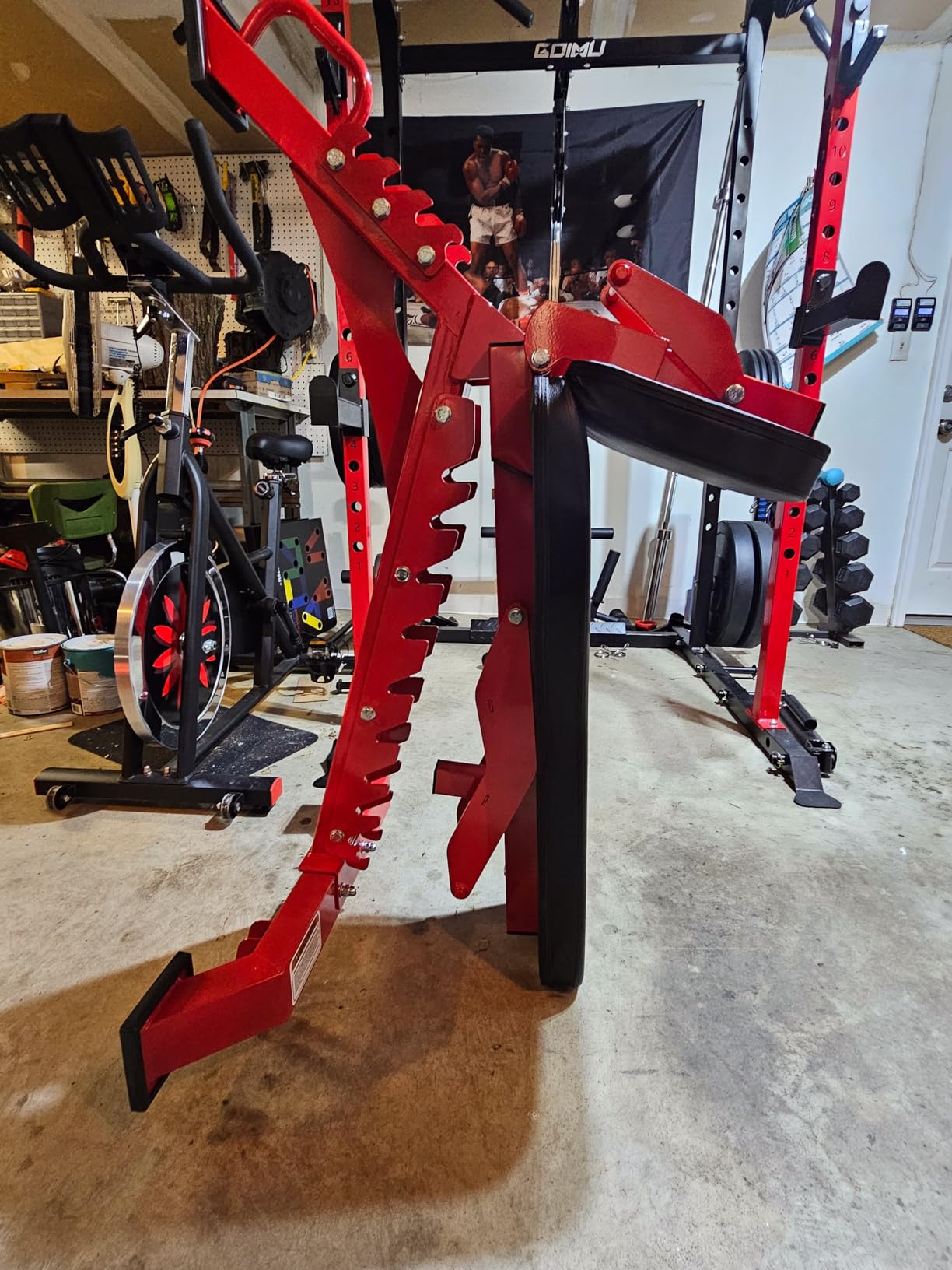
Who this bench suits
It suits garage gym lifters who change angles constantly and are tired of hunting for loose pins between sets. With 36 combinations including a full 90 degrees, it also covers more programming than most benches at this stated capacity.
The 1-year component replacement warranty and 24-hour email support are worth noting if you are buying for a shared gym where things get knocked.
Who this bench does not suit
Skip it if you are around 6’4″ or wider through the shoulders, because the 31.5 inch backrest and narrow pad width are the most repeated complaints. The 1,300 lb figure is manufacturer-stated rather than certified, and at 431 reviews it has the smallest evidence base in this roundup.
How Much Bench Capacity Do You Actually Need?
Capacity ratings are confusing because they count different things. The cleanest way to size a bench is to add up three numbers and then leave yourself margin, rather than reading a headline figure and hoping it covers you.
The arithmetic, in order:
Your bodyweight. You are part of the load. A 200 lb lifter contributes 200 lb before a plate is touched.
The bar. A standard Olympic bar is 45 lb, a light bar is 25 lb, and a specialty bar can be more.
The plates. Your heaviest single set, not the total of everything on your gym floor.
Margin. Add 25 to 50 percent so the bench is not working at its limit on your top set.
Worked example: a 200 lb lifter pressing 275 lb on a 45 lb bar is at 520 lb of combined load. With a 50 percent margin you want a bench rated at roughly 780 lb, which puts an 800 lb ASTM-certified bench right at the line. A 200 lb lifter pressing 225 lb is at 470 lb combined, and an 827 lb bench covers that with room to progress to about 300 lb on the bar.
Now the part most listings bury. Some capacities are ASTM-certified, meaning the bench was tested against a published standard. Others are manufacturer-stated, meaning the seller asserts a number without an independent test behind it. We call out which is which on every pick here, because a certified 800 lb bench is a stronger bet than an uncertified 1,300 lb one.
Frame and Steel: What Actually Stops a Bench From Wobbling
Steel gauge is the spec that separates real heavy-duty benches from marketing language, and the numbering runs backwards from what most people expect. A lower gauge number means thicker steel, so 8-gauge tubing is heavier than 11-gauge, which is heavier than 13-gauge. Look for the actual tube dimensions where they are published, as this roundup’s WB7 does with 3.2 x 1.6 inch tubing and the Keppi does with a 70x50mm welded frame.
Frame geometry is the second factor. A dual-triangle structure resists the side-to-side rack that single-leg or H-frame designs show at heavy loads, and a fully welded frame has fewer joints to flex than one held together by bolts. Footprint width follows from that geometry: the wider the base, the harder the bench rocks when you load one side of the pad unevenly.
The locking mechanism is the part buyers thank or blame years later. Pin systems work but the pin gets dropped; ladder locks are fast; a C-shaped buckle like the MAJOR FITNESS bench changes angle without any loose hardware at all. What matters is that the mechanism holds zero play after a year of repeated changes, because that is where benches actually start to fail.
Bench Types Explained: Flat, Incline, FID, No-Gap and Fixed
A flat bench does one thing and does it cheaply. Dumbbell pressing, hip thrusts and straight barbell work only. The Finer Form foldable bench in this list is the best-rated example, and it is the right call for small spaces.
An incline bench adds shoulder-press angles but usually stops short of decline. More position options means a longer backrest, more moving parts and more weight, which is the trade you accept for versatility.
A FID bench covers flat, incline and decline from one frame, either by moving the seat or by moving the backrest through the horizontal. That is what the Keppi, the JOROTO and the Finer Form multi-functional bench do. If you press heavy and program all three angles, this is the type that earns its floor space.
A no-gap bench closes the space between the seat and backrest so nothing digs into your lower arch. It matters most for heavy barbell work with an arched back. A fixed bench welds the angle in place, which removes the adjustment mechanism entirely and removes the component that most often develops play, at the cost of a single training angle.
Where Heavy-Duty Benches Actually Fail Over Time
Almost nobody reports a heavy-duty frame snapping. What ends a bench is the adjustment mechanism developing play, and the upholstery. Forum discussion about benches in this category circles the same three complaints repeatedly, so plan for them.
First, play at the adjustment point. Ladder and pin mechanisms rattle after a year of angle changes because the holes wear oval. A welded or lever-based lock holds its geometry longer, which is the main argument for spending more on a fixed or welded frame.
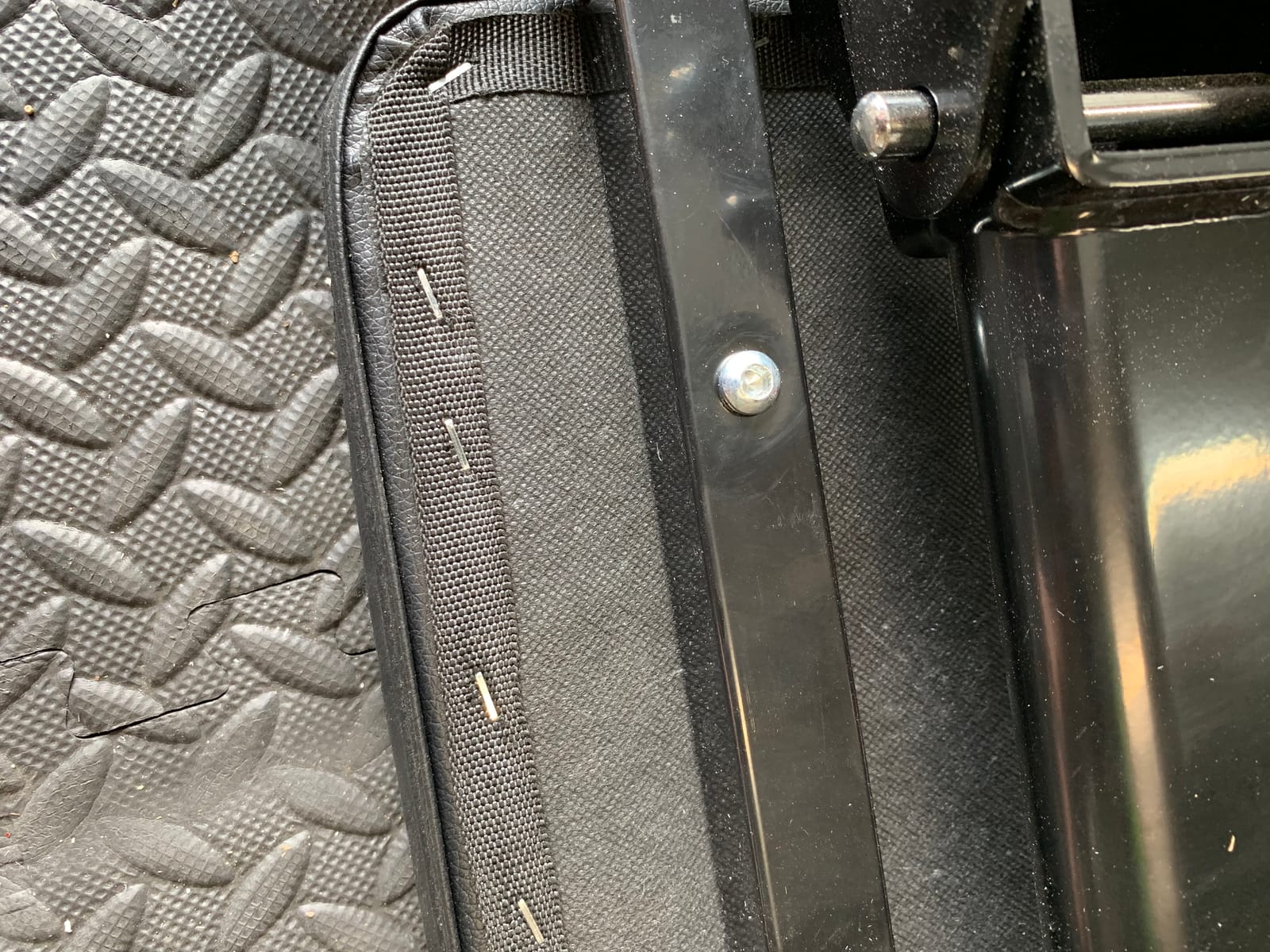
Second, upholstery splitting at the seams. Several owners of benches in this roundup report seams tearing within weeks of regular use, usually where the pad is stitched under load. Inspect the seams on arrival and keep the packing material, because most of these brands replace damaged pads quickly.
Third, foam compression. The board starts to feel through the pad after a few years of heavy use, and no amount of bolt tightening fixes it. Firm dense foam rated for heavy pressing lasts longer than plush foam, which is why reviewers of the foldable bench in this list often describe its padding as firm rather than soft.
Heavy Pressing Setup: Safeties, Bench Height and Foot Placement
Bench height is the dimension buyers most often skip and the one that ruins a press setup. A 24 inch bench is too tall for most lifters: you end up on your toes at the bottom of the rep, your shoulders rotate forward, and the load lands high on the chest. The IPF standard competition height is 17.7 inches, and the Keppi at 17.3 inches sits right there, which is why reviewers single it out for form.
Measure the bench against your rack before you buy. The bench should meet the bottom of the rack uprights without the bar racking at an angle, and your safeties should sit just below the bar’s lowest position. If the bench is too tall, you rack the bar above your chest and un-rack with a press on every rep.
For heavy sets, set safeties just under your bottom position, plant both feet flat on the floor with the shins vertical, and pull your shoulders down and back into the pad before unracking. Set up in a position you can get out of: the most common way people get hurt on a bench press is a spotter or safeties set too wide. If your gym is a shared family gym, agree on the safety setup before a heavy set instead of after.
Frequently Asked Questions
What weight benches are best for heavy lifting?
The best weight benches for heavy lifting carry an ASTM-certified capacity of 800 lb or more, a welded steel frame and a long backrest. Our top pick is the FLYBIRD WB5 at 800 lb ASTM with 26,094 reviews. For loads above 300 lb on the bar, the Keppi FID at 1,200 lb ASTM and an IPF-standard 17.3 inch height is the stronger choice.
How much weight capacity do I need for heavy lifting?
Add your bodyweight, the bar weight and your heaviest set of plates, then add 25 to 50 percent margin. A 200 lb lifter pressing 275 lb on a 45 lb bar needs about 520 lb of combined capacity, which points to an 800 lb rated bench. Most people in this category underestimate because they forget their own bodyweight counts.
Does weight bench capacity include my bodyweight?
It depends on the listing, which is exactly why you have to read the spec. Some manufacturers rate the bench as a static load of everything on it, so your bodyweight is included. Some, like the YOLEO 827 lb bench, publish a separate maximum user weight of 330 lb alongside the capacity figure. If no separate user weight is stated, assume your bodyweight is included.
What type of weight bench is best?
A FID bench that covers flat, incline and decline is the most useful single type for heavy lifting, because barbell programming moves between all three angles. A flat bench suits dumbbell and hip thrust work in small spaces. A fixed welded bench removes the adjustment mechanism, which is usually the component that develops play, but locks you into one angle.
Is 24 inches too tall for a bench?
For most lifters, yes. IPF standard competition bench height is 17.7 inches, and sitting above that forces you onto your toes at the bottom of a rep with your shoulders rotated forward. A 24 inch bench also racks the bar high, so you press it on every unrack. Check the listed bench height and measure against your rack uprights before you buy.
The Bottom Line: Which Bench for Heavy Lifting
The FLYBIRD WB5 is our pick for the best weight benches for heavy lifting in 2026 because it pairs an ASTM-certified 800 lb rating with the largest review base in the category, a 30 inch backrest and a fold that stores in 9 inches. Buy the Keppi FID if your combined load approaches 600 lb, the YOLEO 827 lb if assembly speed and a certified frame matter most, and the Finer Form flat bench if you train dumbbells in a small room.
Run the arithmetic before you spend anything, then check that the bench height suits your rack. Everything else in this roundup is preference.