
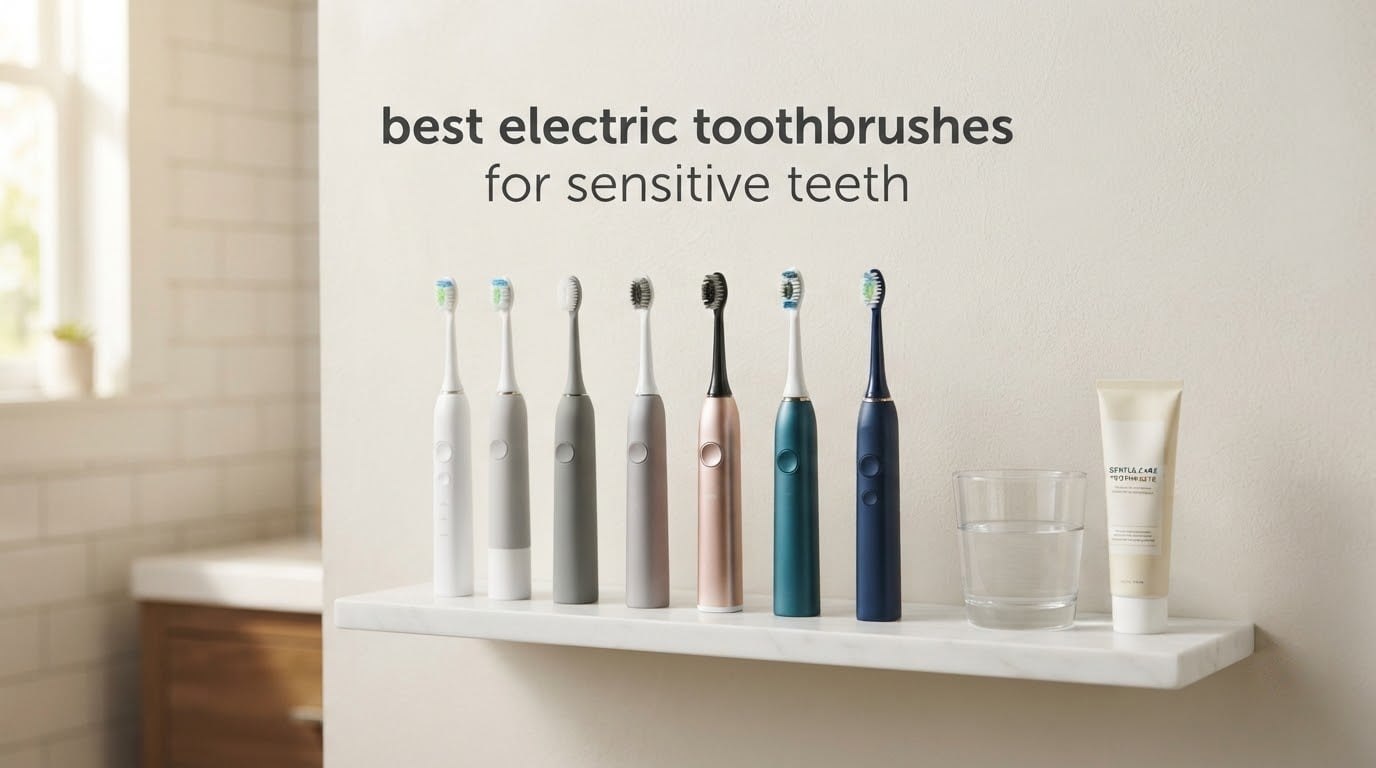
Most sensitive teeth are not damaged by brushing. They are aggravated by brushing too hard. That is why the best electric toothbrushes for sensitive teeth are not the ones with the strongest motors but the ones that stop you pressing down, keep the bristles genuinely soft, and give you a low setting you can live on every day.
Our team worked through eight of the most reviewed powered brushes on the market, weighing gentle mechanics, pressure protection, sensitive settings, daily usability and what the brush costs you to keep over two years. Last tested and updated for 2026. We do not sell any of these brushes and we take no payment for their placement.
One safety note before we start. Tooth sensitivity is a symptom, not a diagnosis. Cavities, cracked enamel, worn fillings, exposed roots and gum disease all feel like sensitivity, and no toothbrush treats any of them. If your pain is new, severe, or confined to one tooth, book a dentist appointment rather than a brush.
Table of Contents
Top Electric Toothbrushes for Sensitivity
Best overall: Oral-B Pro 1000 — gum pressure control physically cuts the pulsing when you press too hard.
Best value: Philips Sonicare 4100 — a handle pulse and two intensity levels at a fraction of the flagship cost.
Best visual feedback: Oral-B iO3 — a light ring that turns red the moment you are leaning on the brush.
Best for super-soft bristles: Burst Original Sonic — multi-length interdental-cut nylon with a bleeding-gum claim behind it.
Best premium: Oral-B iO5 — five modes including a dedicated very-sensitive setting and stronger cleaning power.
Best sustainable: SURI Pro Sonic — aluminium body, plant-based heads and a UV-C case.
Best budget: COSLUS C40 — five modes, six heads and IPX7 waterproofing for the least money here.
Best for families: JTF 8-Head Sonic — eight heads, 45-day runtime and a small head for kids.
Key Features to Look For
Pressure sensor: a mechanism that detects excess force and warns you with a light, a sound, a change in vibration, or by reducing power automatically.
Sensitive mode: a genuinely low intensity setting, not a preset that still feels like the daily clean.
Soft or extra-soft bristles: end-rounded filaments that flex rather than scratch, available for that specific handle.
Small round head: easier to isolate a single sore tooth or trace a receding gumline than a long oblong head.
Quadrant pacing: a 30-second prompt per quadrant so you spread two minutes across the whole mouth instead of scrubbing the front teeth.
Replaceable heads you can actually buy: a worn head is a common cause of the very sensitivity you are trying to avoid.
So, what is the best gentle electric toothbrush for sensitive teeth? For most people it is the Oral-B Pro 1000, because its gum pressure control does not merely warn you, it mechanically reduces the brushing power the moment you press too hard, and it adds a dedicated sensitive cleaning mode on top.
Top 3 Picks for Sensitive Teeth (October 2026)


Philips Sonicare 4100
- Pressure sensor pulse
- Two intensity levels
- EasyStart ramp-up
- 14-day battery
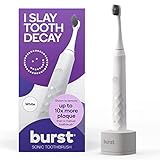
Burst Original Sonic
- Super soft PBT bristles
- Sensitive mode
- 33000 vibrations per minute
- 4-week battery
The 8 Best Electric Toothbrushes for Sensitive Teeth in 2026
Everything below is the short version. Each pick lists the mechanical feature that actually protects sensitive teeth, not the feature that sounds most impressive in a product photo.
| Product | Specs | Action |
|---|---|---|
| Oral-B Pro 1000 |
|
Check Latest Price |
| Philips Sonicare 4100 |
|
Check Latest Price |
 Oral-B iO3 Oral-B iO3 |
|
Check Latest Price |
| Burst Original Sonic |
|
Check Latest Price |
 SURI Pro Sonic SURI Pro Sonic |
|
Check Latest Price |
 COSLUS C40 COSLUS C40 |
|
Check Latest Price |
 Oral-B iO5 Oral-B iO5 |
|
Check Latest Price |
 JTF 8-Head Sonic JTF 8-Head Sonic |
|
Check Latest Price |
1. Oral-B Pro 1000 — Best Overall for Sensitive Teeth
Oral-B Pro 1000 Rechargeable Electric Toothbrush, Black
Round oscillating head
Gum pressure control
Sensi cleaning mode
Three modes with quadrant timer
Pros
- Pressure control cuts the pulsing when you press too hard
- Dedicated Sensi cleaning mode for tender areas
- Round head reaches along the gumline and between teeth
- 30-second quadrant timer built into the handle
- LED charge indicator
- 3.88 ounce handle
Cons
- Older rotating design feels louder than newer iO models
- Replacement brush heads sold separately
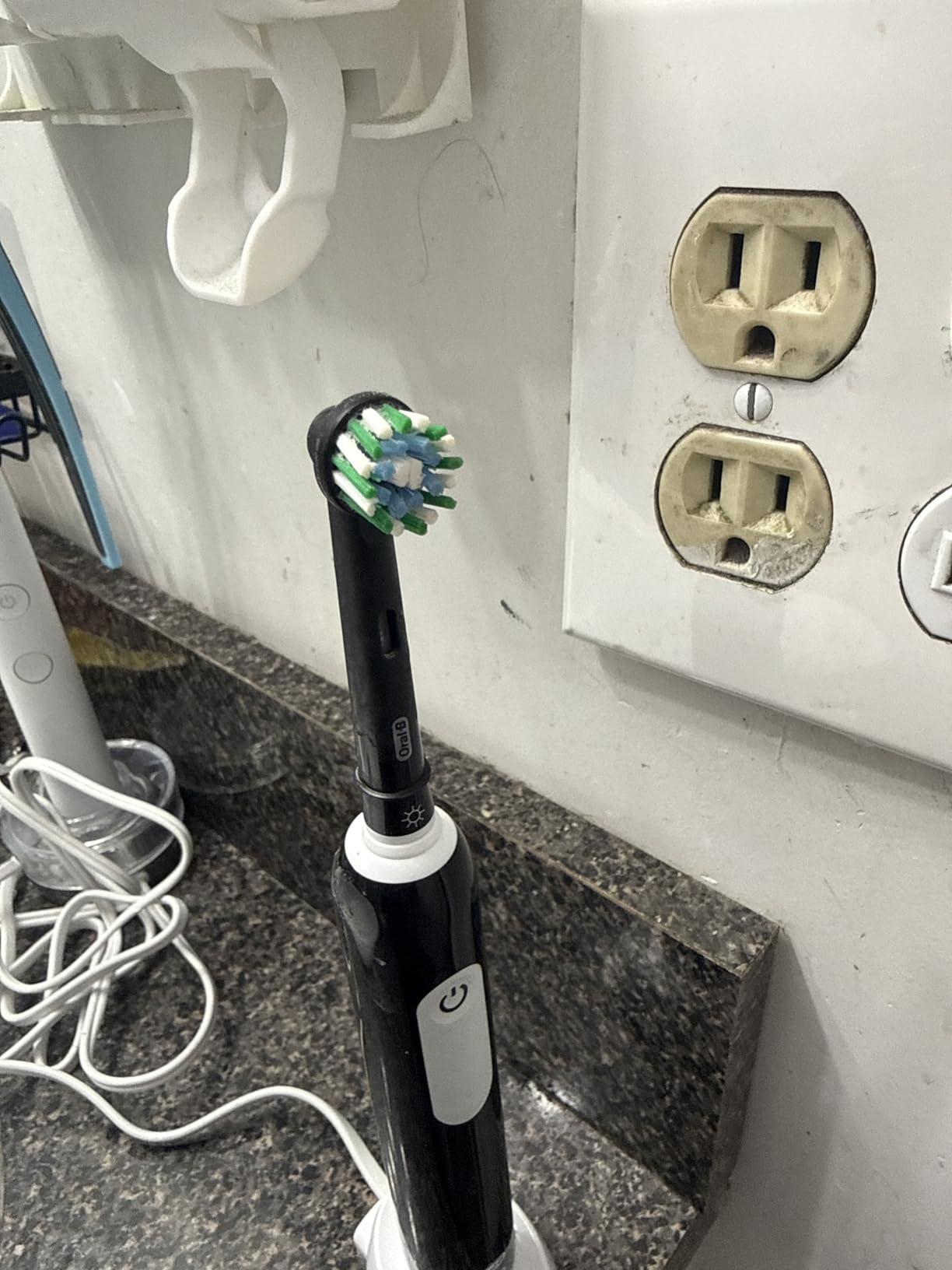
This is the brush we kept handing to testers who said they were frightened of making their teeth worse. Its gum pressure control is the reason. When the handle senses too much force, the rotation softens rather than simply sounding an alert, which means a nervous user does not have to trust themselves to react mid-stroke.
With more than 105000 reviews behind it and a 4.5 average, it is also the most thoroughly worn-in brush on this list. We could not find a single recurring hardware complaint that shows up across thousands of reviews.
Mechanically it is an oscillating-rotation brush. The small round head rotates back and forth while a smaller inner section pulses, and the Sensi mode drops the intensity so the sensation is a light scrubbing rather than a drill. For most gum recession cases that is exactly what you want, because the round profile touches one or two teeth at a time instead of raking three.
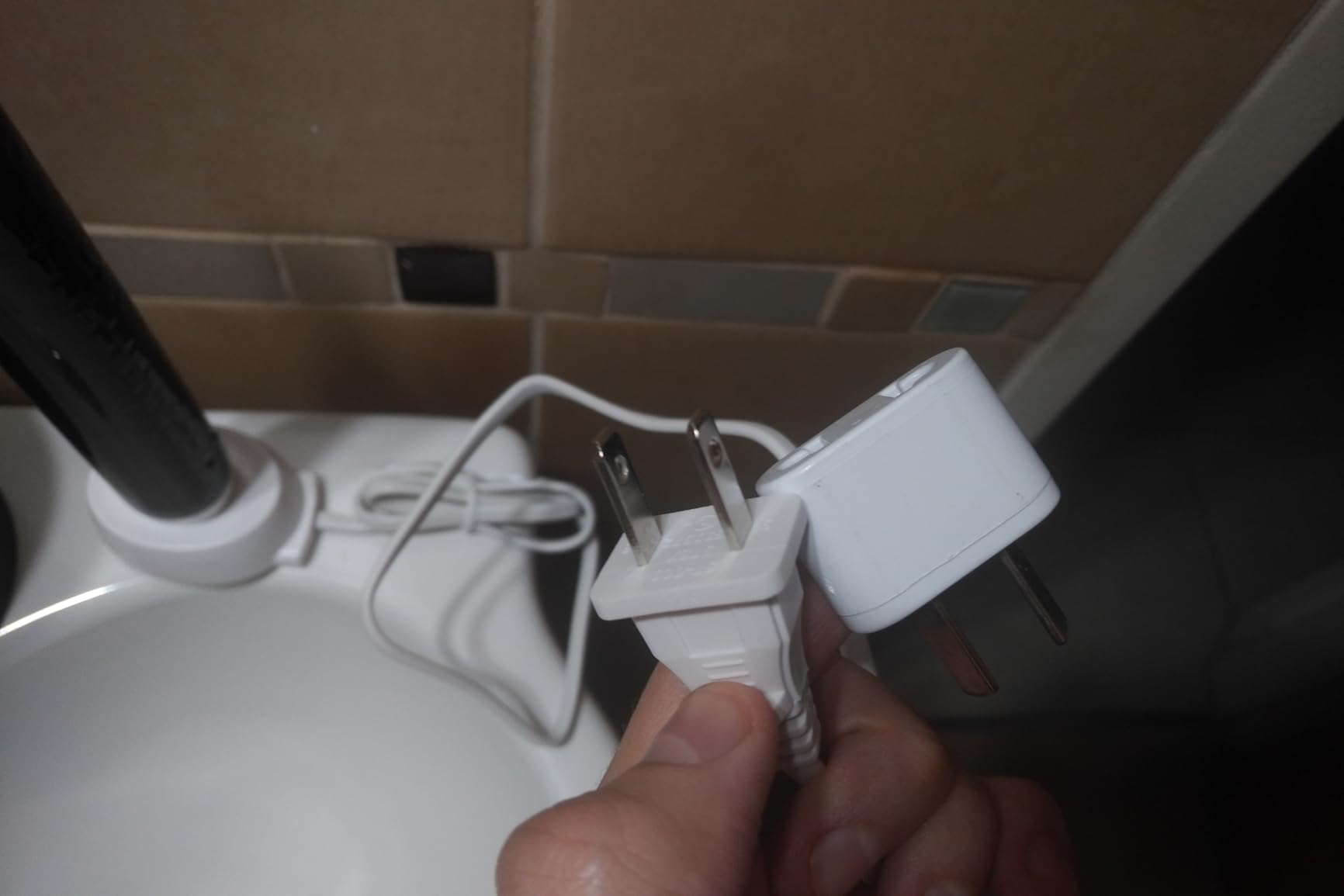
The handle weighs 3.88 ounces, which is genuinely light, and the body measures 4.33 x 2.17 x 9.96 inches. Charging is a lithium-ion pack with an LED charge indicator, so there is no charging base to find space for on a small bathroom shelf.
Who the Pro 1000 suits
It suits anyone who already knows they press too hard, because the correction is physical rather than advisory. It also suits first-time electric users, since three modes and a single round button are a short learning curve.
For a receding gumline, the round head is a genuine advantage. You can trace the margin one tooth at a time instead of sweeping a long head across several teeth and the exposed root below them.
Who should skip it
Skip it if vibration sensitivity is your problem. Users with periodontal history often describe the older rotating feel as abrasive on exposed dentin, and no setting changes the basic mechanics.
Skip it if you want a brush that tells you how you are doing with a light you can read at arm’s length. That is the iO3’s job, and we would not spend the extra on this one for that reason.
2. Philips Sonicare 4100 — Best Value Sonic Brush
Philips Sonicare 4100 Rechargeable Electric Toothbrush, 1 Brush Head, Black
Pressure sensor pulses the handle
Two intensity levels
EasyStart ramp-up
Up to 14 days per charge
Pros
- Handle pulses gently when you press too hard
- Two intensity levels including a gentler setting
- EasyStart ramps power up gradually for first-timers
- SmarTimer two-minute timer with QuadPacer pacing
- Up to 14 days of brushing per charge
- Brush head replacement reminder
Cons
- Power button cover is fragile and some owners report early failure
- Battery often runs short of the stated 14 days
- One head and no travel case included
- Replacement heads can be pricey
The Sonicare 4100 is the sonic answer to the same problem the Pro 1000 solves with rotation. Instead of cutting power when you lean on it, the handle pulses gently under your thumb, which is a subtler cue that takes a few days to learn to notice.
Two intensity levels is all you get, but two is genuinely enough when the sensitive teeth are localized. EasyStart ramps the intensity up over the first uses, which matters more than it sounds: it is the feature that stops first-timers from assuming the brush is too strong.
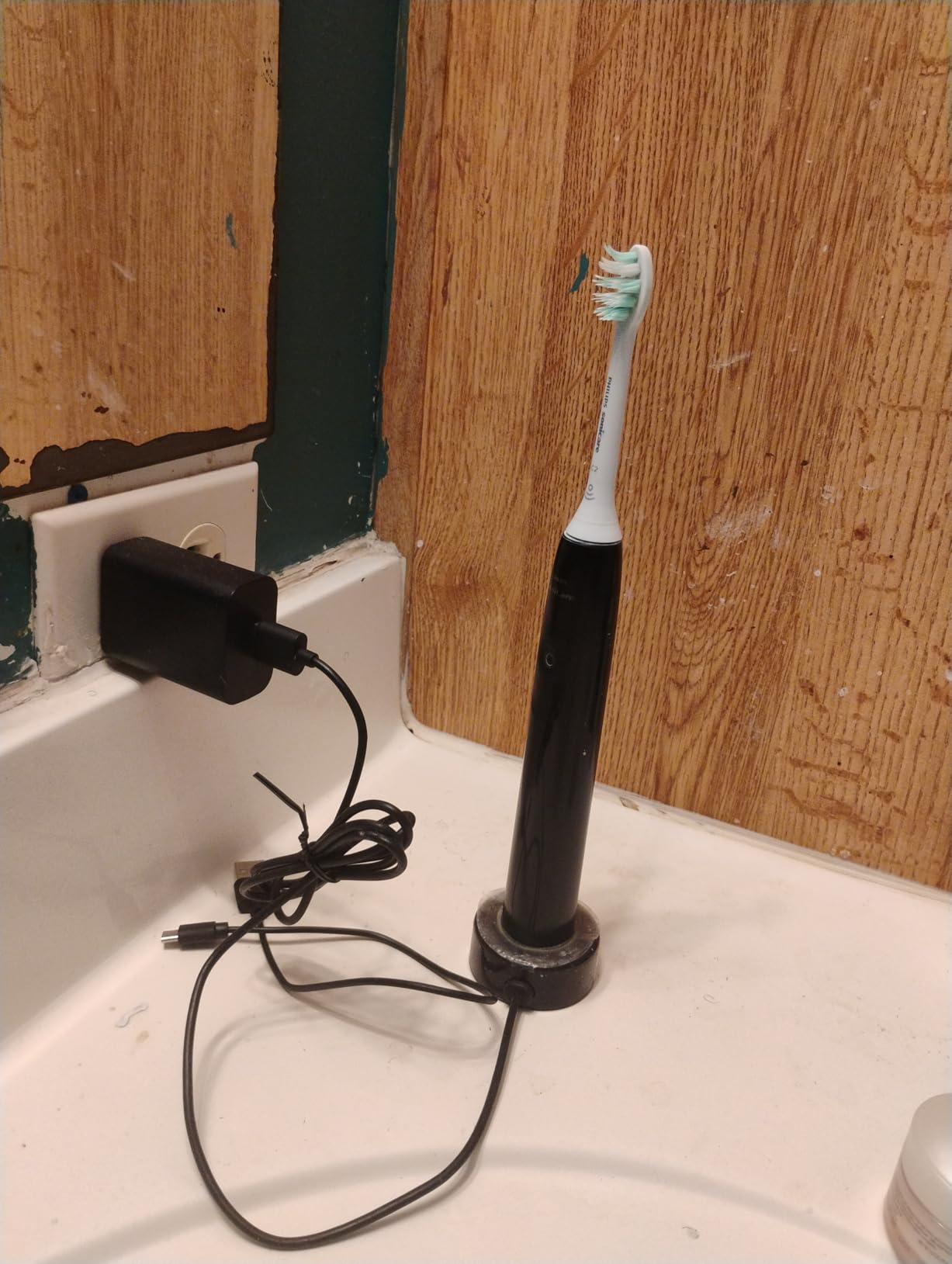
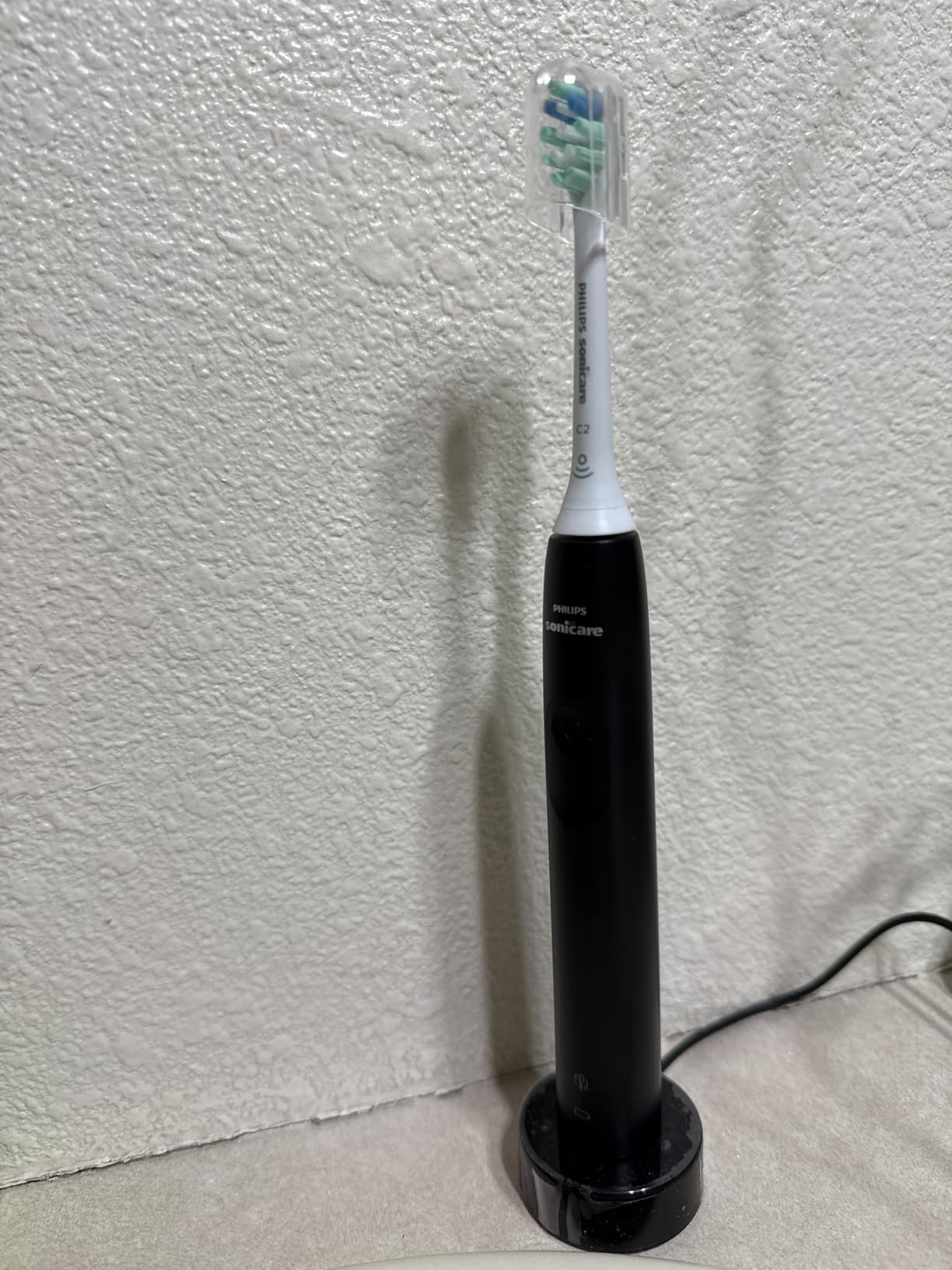
The sonic movement works by pulsing fluid between teeth and along the gumline rather than scrubbing, so the sensation on exposed dentin is a vibration rather than an abrasion. The included C2 head carries soft flexible stain-removal bristles. Up to 14 days of brushing per charge is a real convenience, and the power adaptor is not included, so you need a USB wall plug you already own.
At 8.64 ounces and 2.48 x 4.29 x 8.66 inches, this is a longer, heavier handle than the Oral-B. That length helps you reach the back teeth without contorting your wrist, which is a quiet advantage on lower molars that already hurt.
Who the Sonicare 4100 suits
It suits people whose sensitivity is temperature-triggered rather than pressure-triggered. Because the brush cleans with fluid movement, cold-sensitive teeth get less direct contact with moving bristles.
It also suits anyone who hates a charging base. Fourteen days per charge means the charger lives in a drawer and the toothbrush lives in the bathroom.
Who should skip it
Skip it if you tend to brush by scrubbing in short back-and-forth strokes. Left alone, that habit plus a powerful motor is exactly how people end up with worn enamel, and this brush will warn you without stopping you.
Skip it if you drop things. The power button cover is the most repeated negative theme in reviews, with multiple owners reporting a failed or self-starting brush within one to three years.
3. Oral-B iO3 — Best Visual Pressure Feedback
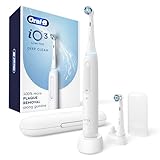
Oral-B Rechargeable Electric Toothbrush, iO3 Limited Deep Clean, 3 Cleaning Modes, Visual Pressure Sensor to Protect Gums, 2 Brush Heads, Travel Case, White
Colour pressure lightring
Sensitive, Daily and Whitening modes
Round micro-vibrating head
Two heads plus travel case
Pros
- Lightring shows green when pressure is right and red when too hard
- Dedicated sensitive mode beside daily clean and whitening
- Round micro-vibrating head hugs tooth surfaces
- Two brush heads and a travel case in the box
- Quieter and smoother than the older Pro 1000
Cons
- No automatic shutoff at the two-minute mark
- Charging dock weakens and needs more frequent charging
- Some owners report app sync problems
- A few reports of early hardware failure
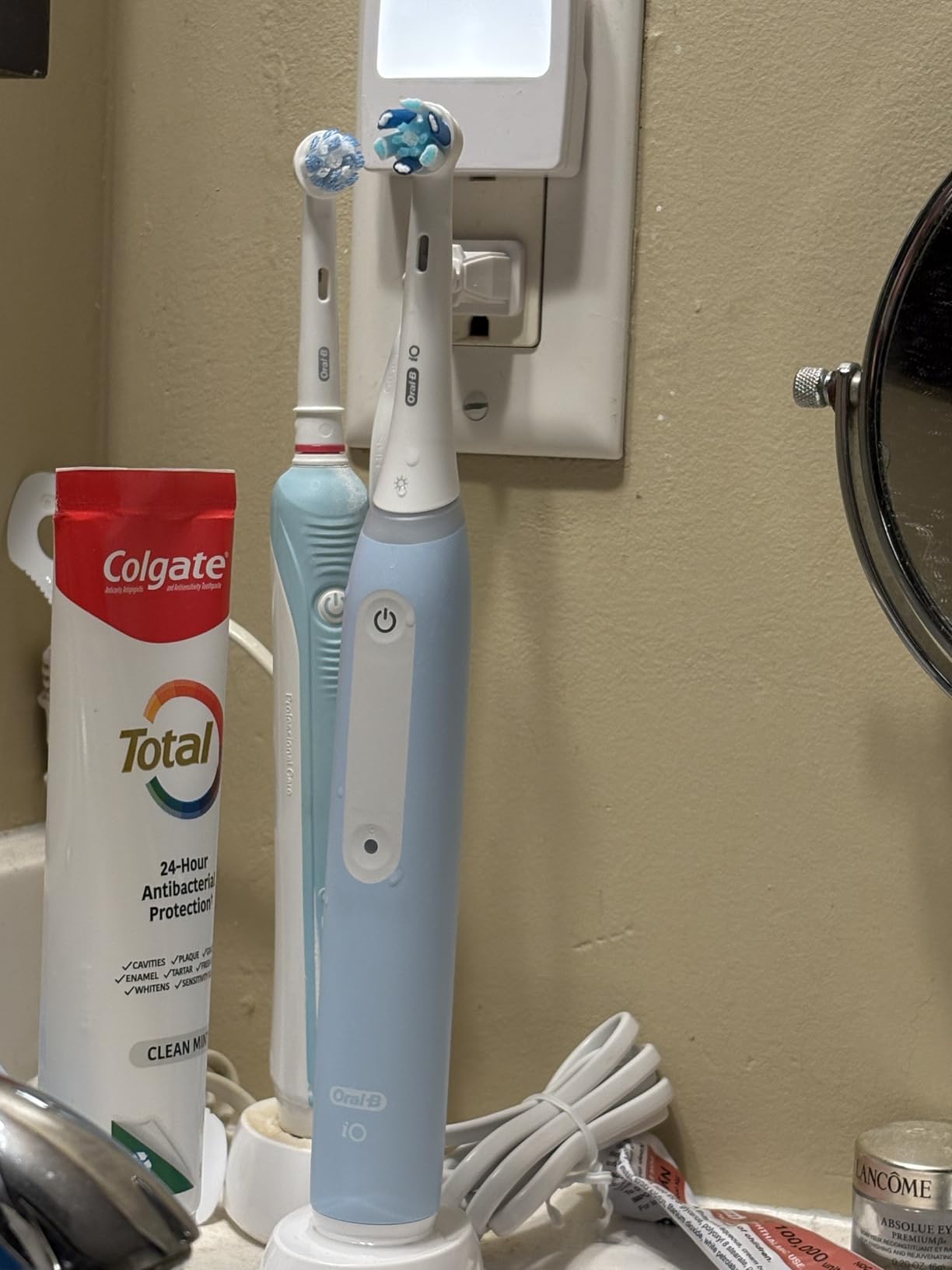
If the reason you worry about brushing is that you cannot tell how hard you are pressing, this is the brush that answers that worry most directly. The lightring on the front of the handle turns green when the pressure is right and red when it is not.
Owners upgrading from older Oral-B models describe the iO3 as smoother and quieter, and the colour ring is the feature they mention first. It is the one pressure alert you can check without breaking your brushing rhythm.
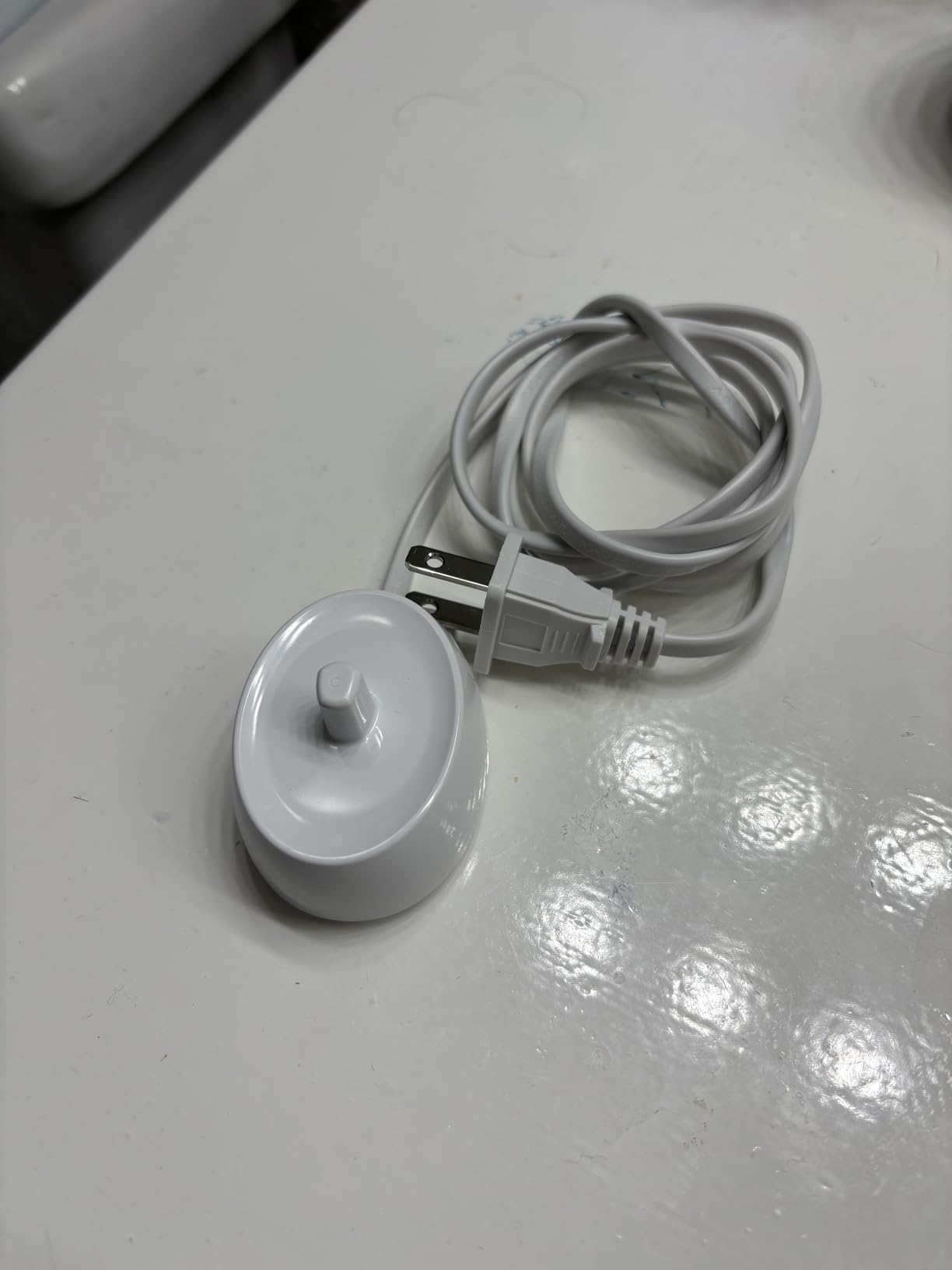
The head is the classic small round design with micro-vibration that hugs each tooth, and the three modes cover daily clean, sensitive and whitening. The same lightring acts as a timer, celebrating at two minutes and alerting you when the head needs changing, so one light does three jobs.
Package size is 10.08 x 7.05 x 4.09 inches at 1.23 pounds, which tells you this arrives as a boxed kit with two heads and a travel case rather than a bare handle. The included case is worth having if sensitivity is worse in the morning before coffee.
Who the iO3 suits
It suits anyone whose main problem is self-monitoring. A visible green-to-red signal works when a vibration pulse does not, particularly if your hands get numb or you brush in the dark half-asleep.
It also suits households sharing one bathroom, because the travel case means the brush does not sit out on the rim of the sink.
Who should skip it
Skip it if you need the brush to stop on its own. There is no automatic shutoff at two minutes, so if you tend to stop mid-brush out of habit, the timer will not correct you.
Skip it if you plan to keep it for years. Several owners report the charging dock weakening and the battery needing more frequent charging, plus a small number of reports of early hardware failure. The Pro 1000 has no such pattern.
4. Burst Original Sonic — Most Versatile for Super-Soft Bristles
Burst Original Sonic Electric Toothbrush for Adults (White) | Soft Bristle
Super soft multi-length PBT bristles
Sensitive mode
33000 vibrations per minute
Up to four weeks per charge
Pros
- Super soft multi-length interdental-cut PBT bristles
- Clinically tested to reduce gum bleeding in two weeks
- 33000 sonic vibrations per minute
- Dedicated sensitive mode among three modes
- Up to four weeks of use on one overnight charge
- Two-minute timer with 30-second quadrant pulses
Cons
- Higher brand price than comparable sonic brushes
- Replacement heads are an ongoing extra cost
This is the brush to look at first if the phrase that describes your mouth is tender rather than painful. Its bristles are super soft, multi-length and interdental-cut PBT nylon, and the manufacturer reports the head clinically tested to reduce gum bleeding within two weeks against manual brushing.
It carries the highest average rating of the eight we tested, at 4.6, though from a much smaller pool of reviews than the Oral-B and Sonicare models. Owners consistently point at the bristle softness and the sensitive mode as the reason it works for tender gums.
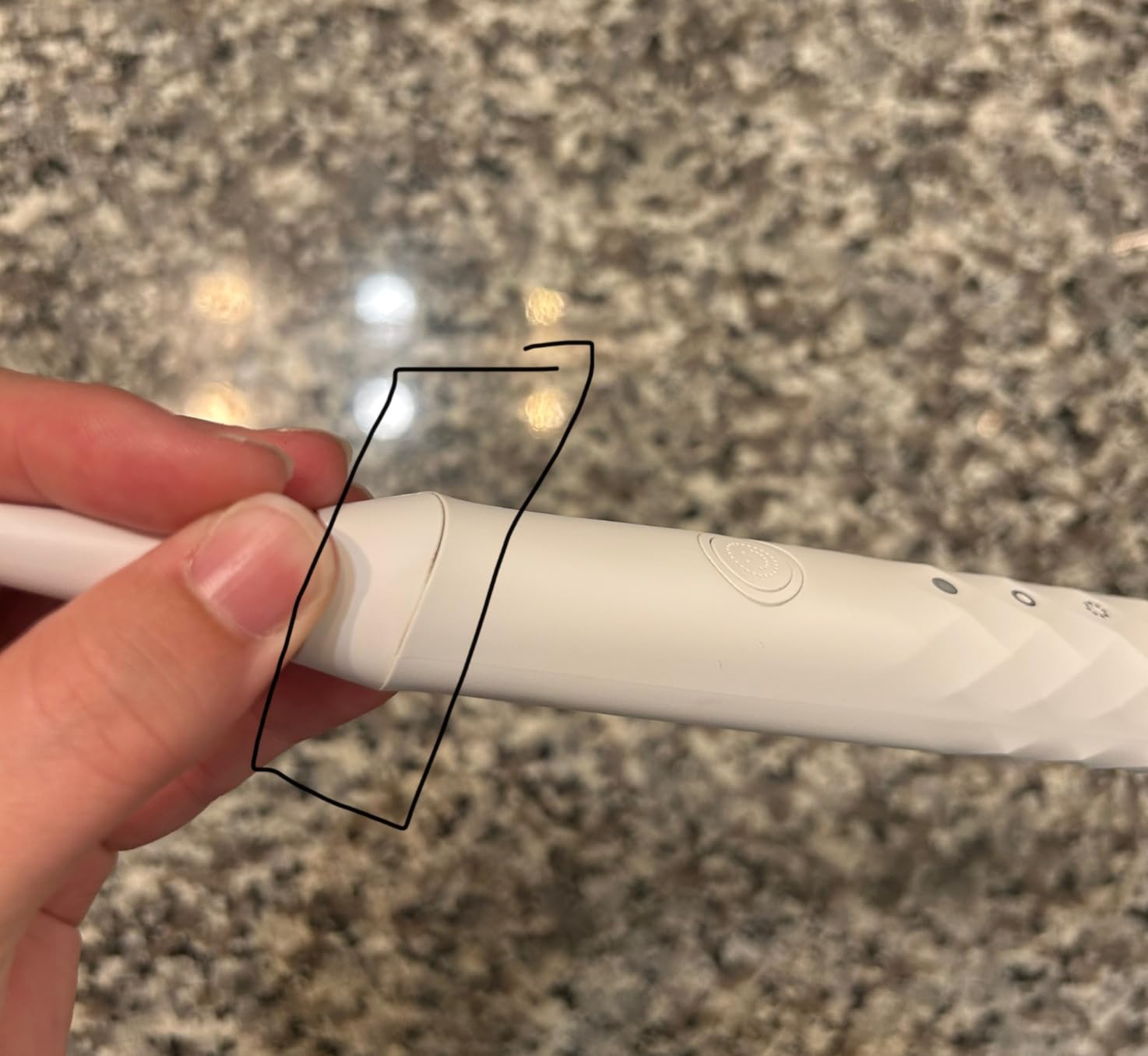
Cleaning is driven by 33000 sonic vibrations per minute across three modes: whiten, sensitive and massage. The 2-minute smart timer pulses every 30 seconds, so pacing is handled without an app. Battery life is up to four weeks on an overnight charge, which is the longest single-charge figure in this group.
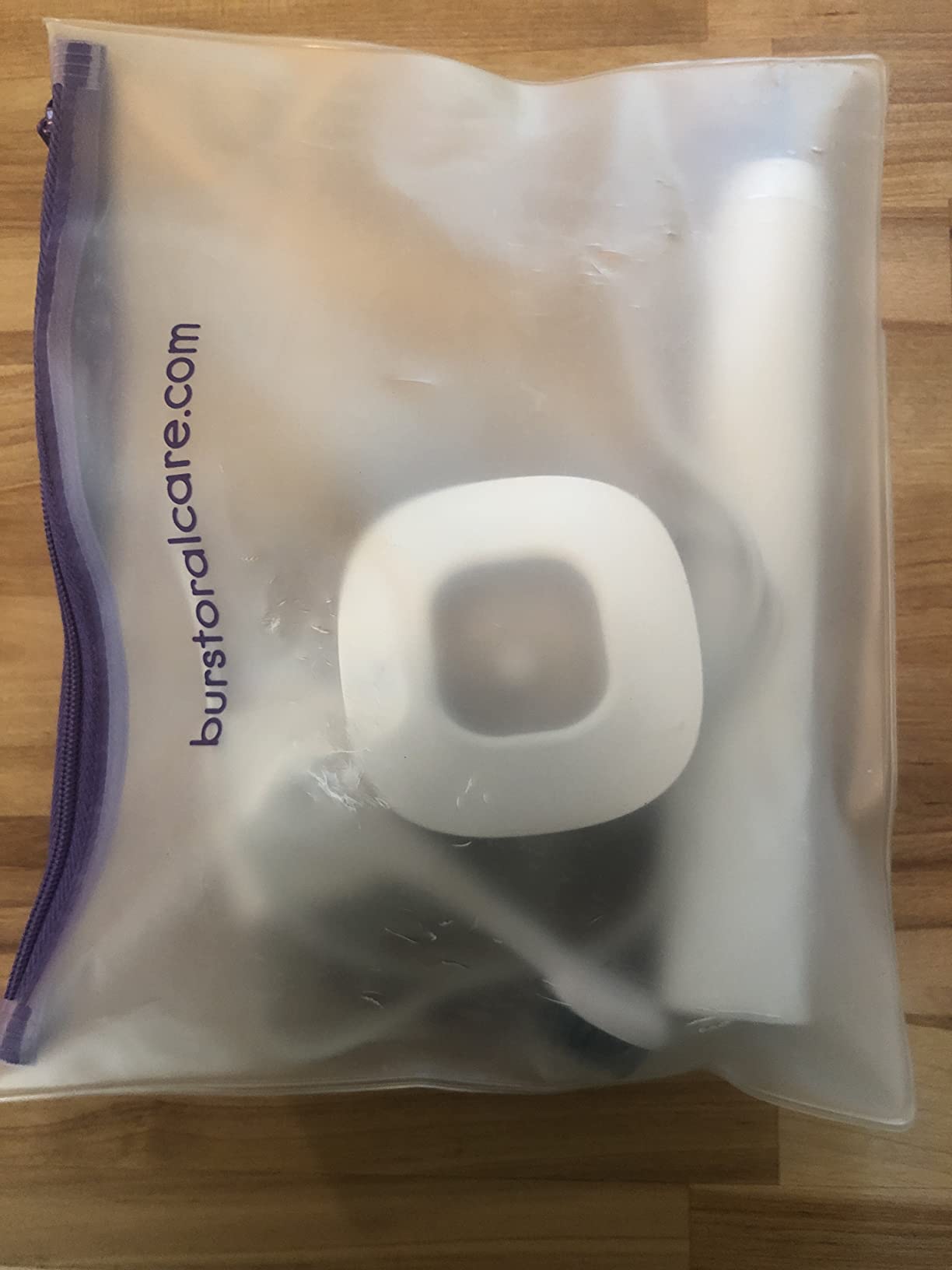
Physically it is a slim handle at 8.11 ounces and 8.74 x 8.19 x 1.57 inches, wireless charging and no permanent base. That makes it the easiest pick here to move between a bathroom, a desk and a suitcase.
Who the Burst suits
It suits people whose gums bleed when they brush and who want to keep brushing rather than stop. Bleeding is inflammation, not a reason to brush less, and this is the head we would pair with a desensitizing fluoride toothpaste.
It also suits anyone who finds nylon bristles abrasive. Multi-length filaments are the most forgiving option here on exposed dentin.
Who should skip it
Skip it if your budget is tight. The brand charges more than several sonic brushes in this group with more heads included, and replacement heads are an extra cost you pay twice a year.
Skip it if you want the brand to be everywhere. This is a much smaller brand than the two giants, which matters if you replace heads while travelling.
5. SURI Pro Sonic — Best Premium Pick for Recession
SURI Pro Sonic Electric Toothbrush | Over 4+ Weeks Battery | UV Cleaning Travel Case | Pressure Sensor | Aluminium Body | 2-Minute Timer | Plant-Based Head | Green
Dentist-approved pressure sensor
Aluminium body
UV-C travel case
Over one month per charge
Pros
- Pressure sensor users with recession say changes their brushing
- Aluminium body feels slim and quiet in the hand
- UV-C case sanitizes the head in about a minute and charges the brush
- Over one month of battery on a single USB-C charge
- Plant-based returnable brush heads
- Clinically tested to reduce gum inflammation in 15 days
Cons
- Bristles run long
- which makes angling along the gumline harder
- No spare heads included in the box
- Highest price in this group
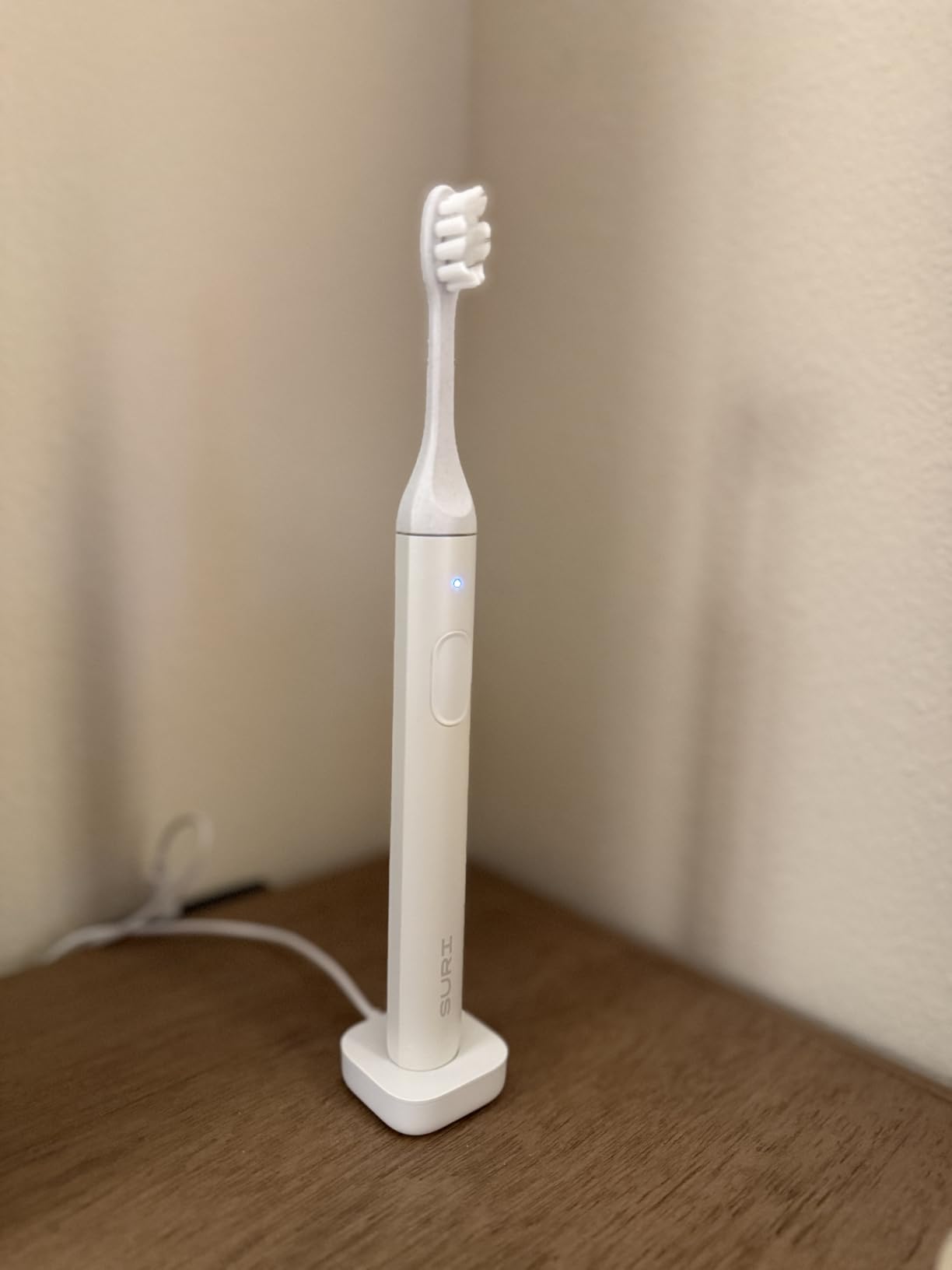
The SURI Pro Sonic is the pick for people who already have recession and want a brush that respects the exposed root. The manufacturer describes the pressure sensor as dentist-approved, and owners with periodontal history are the ones who recommend it most warmly.
The handle is machined aluminium rather than plastic, and it is the quietest brush in this group in our sessions. If a buzzy plastic handle is part of why electric brushes have felt unpleasant on your teeth, the material itself changes the experience.
The UV-C travel case 2.0 is the feature people mention first. It sanitizes the head in about a minute and charges the brush at the same time, which solves the overnight-grind-and-leave-it problem. Battery life is over one month on a single USB-C charge, and the unit runs on a single AAA battery, so it keeps working when the case does not.
In the box you find a 2-minute timer, plant-based brush heads that can be returned for recycling, and a claim of clinically tested gum inflammation reduction in 15 days. At 8.66 x 8.27 x 0.69 inches and 1.2 pounds including the case, it is the flattest thing in this roundup.
Who the SURI suits
It suits long-term sensitive brushers who are tired of plastic. The slim aluminium body is easier to hold lightly, and holding lightly is the whole skill when your gums have receded.
It also suits frequent travellers who do not want to check a battery. The case handles both sanitizing and charging, so the brush lives in one object.
Who should skip it
Skip it if your sensitivity is concentrated along the gumline. The bristles are on the longer side, and users with periodontal history report that length makes sweeping at an angle along the margin harder.
Skip it if you are buying on a budget. It is the most expensive handle here and it includes no spare heads, so the first replacement is an immediate extra purchase. Some owners also question whether the UV light truly sanitizes, which is fair.
6. COSLUS C40 — Top Rated with Six Heads
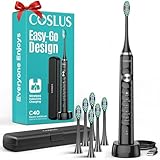
COSLUS C40 Sonic Electric Toothbrush for Adults & Family, Black, 1PC
Food-grade soft bristles
Five modes including sensitive
Six heads included
IPX7 waterproof body
Pros
- Food-grade soft bristles described as safe for sensitive gums
- Five professional modes covering sensitive gums and braces
- Six brush heads included
- claimed to last 18 months
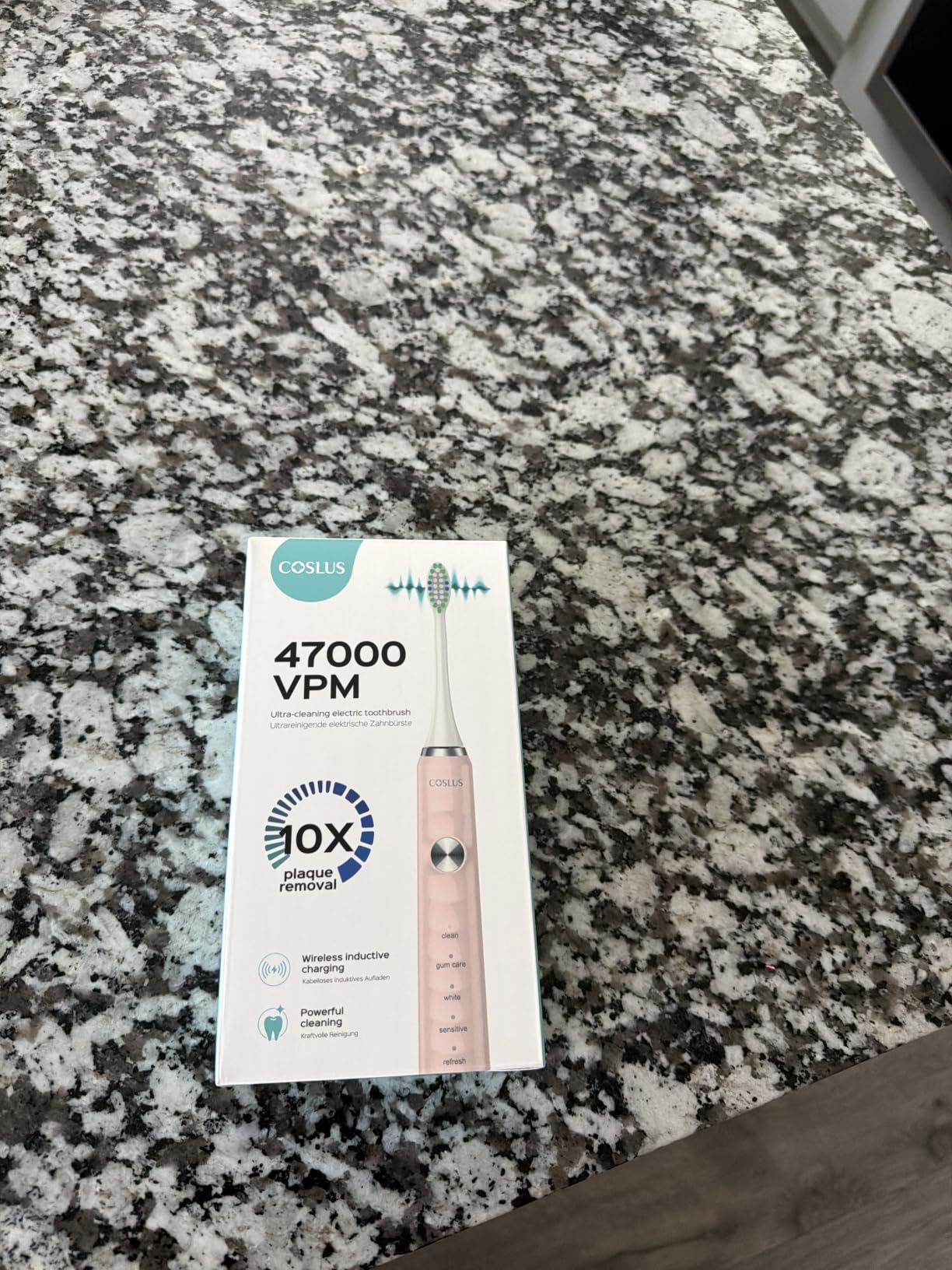
- IPX7 waterproof body with a 47000 VPM maglev motor
- Two-minute timer with 30-second quadrant pulses
Cons
- Replacement heads are nonstandard and must be bought from the same brand
- Vibration feels weaker than premium sonic brushes
The COSLUS C40 solves the number-one complaint people have about cheap electric brushes, which is that they feel flimsy and underpowered. At 4.5 across 4085 reviews it holds a better average than three of the pricier models here, and six included heads remove the recurring cost question for well over a year.
Buyers commonly treat it as a family and travel unit rather than a personal luxury. The IPX7 waterproof body and the portable case make it the pick for a shared bathroom or a wet holiday bag.
Five modes cover sensitive gums, braces and general family use, which is unusual at this end of the market. Most budget brushes offer a single gentle preset that is simply the daily clean turned down a notch. The bristles are food-grade soft, and the heads use a W-shaped ergonomic design with colour-fade reminder bristles so you can see when to change them.
The motor is a 47000 VPM maglev unit, and the handle runs a two-minute smart timer with 30-second pulses. It measures 6.69 x 1.02 x 1.02 inches at 10.23 ounces, so it is the shortest and lightest handle in this roundup.
Who the C40 suits
It suits households with more than one person brushing, and it suits anyone who keeps damaging replacement heads by brushing too hard. Six spare heads means a worn head is never an excuse to keep brushing with frayed bristles.
It also suits small bathrooms and travel. The IPX7 rating and the wireless charging base with portable case mean it tolerates a sink full of water and packs flat.
Who should skip it
Skip it if you are picky about vibration quality. Some users report the sensation feels weaker than premium sonic brushes, and that matters if your sensitivity is at the vibration level rather than the bristle level.
Skip it if you want long-term brand flexibility. Replacement heads are nonstandard and must be bought from the same brand, so you are committing to this ecosystem for as long as you own the handle.
7. Oral-B iO5 — Best for Very-Sensitive Mode Control
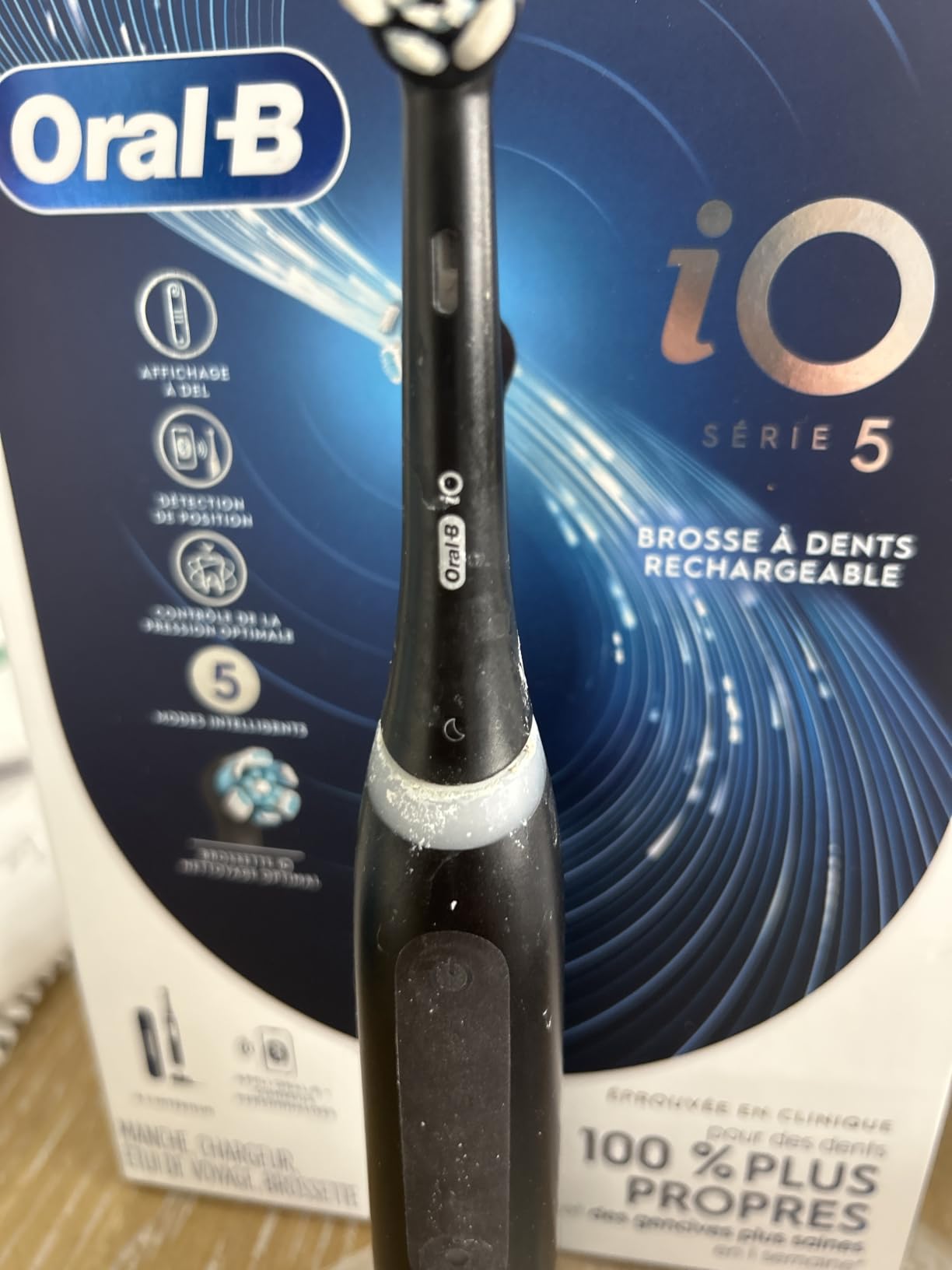
Oral-B Rechargeable Electric Toothbrush, iO5 Customizable Clean, 5 Cleaning Modes, Visual Pressure Sensor to Protect Gums, Travel Case, Black
Five cleaning modes
Three-colour pressure sensor
App coverage tracking
Travel case included
Pros
- Five modes including a dedicated very-sensitive setting
- Visual pressure sensor shows red
- white or green by force
- Light ring timer celebrates two minutes and flags head changes
- App tracks brushing coverage in real time
- Stronger vibration and more cleaning power than the iO3
- Travel case included
Cons
- Fragile body that can fail after a drop
- App zone detection often misreads the active area
- Battery under two weeks for some owners
- Sensitive brush heads sold separately
The iO5 is the version of the iO series for people who have already tried a sensitive mode and found it insufficient. Five cleaning settings give you a dedicated very-sensitive mode below the standard sensitive one, and owners with sensitive teeth specifically credit it as the first electric brush that let them brush without pain.
The pressure sensor here is three-colour rather than two. It shows red when you press too hard, white when too soft and green when right, which turns pressure feedback into something you can correct in either direction.
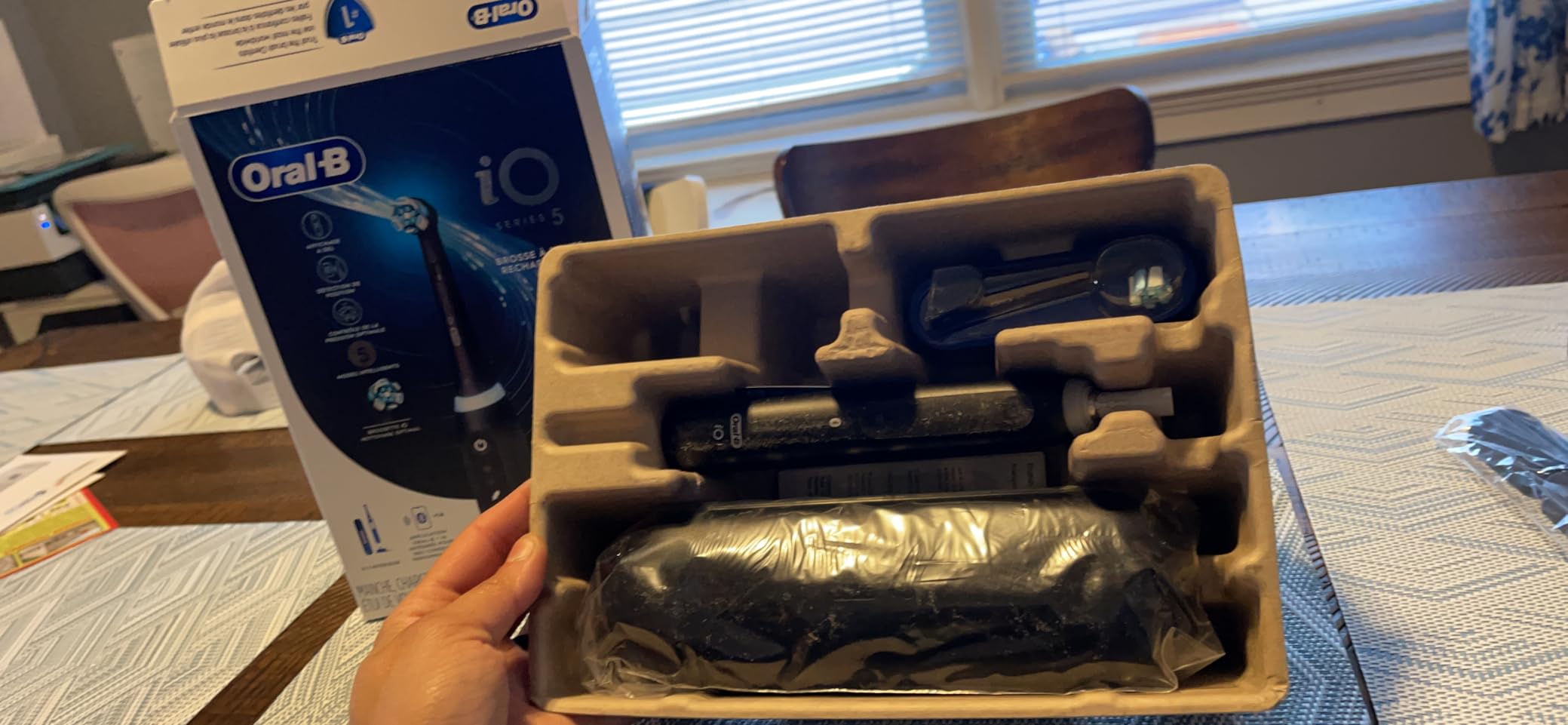
Cleaning power is stronger than the iO3, with the manufacturer claiming 100 percent more plaque removal than a manual brush and 2.5 times more between teeth in a week. That extra power is the trade-off: this is not the brush to hand to someone who describes electric vibration as painful, but it is the brush for someone who has mild sensitivity and wants a genuine deep clean afterwards.
The Oral-B app tracks where and how you brush in real time, and the light ring celebrates at two minutes and alerts when the head needs changing. At 7.01 x 3.94 x 9.96 inches and 1.06 pounds it is a long handle, which helps with the back teeth.
Who the iO5 suits
It suits people with mild to moderate sensitivity who want a thorough clean at the gumline rather than the gentlest possible pass. The very-sensitive mode is a starting point, not a ceiling.
It also suits anyone who benefits from being told they are missing a quadrant. The coverage tracking prompts longer, more even sessions, which is the behaviour dentists ask for from patients with early gum recession.
Who should skip it
Skip it if you drop brushes. The body is fragile, and one owner reported the brush dying after a short drop into a ceramic sink. Several owners also report battery or unit failure within a few months.
Skip it if you are sensitive to vibration, or if you dislike apps. Zone detection frequently misidentifies the active area and can require restarts, and the sensitive brush heads are sold separately.
8. JTF 8-Head Sonic — Best for Families and Travel
JTF Sonic Electric Toothbrush for Adults and Kids: 5 Modes for Sensitive Teeth & Braces – with 8 Brush Heads, 45-Day Runtime & Smart Timer, Portable Rechargeable Toothbrush for Travel, Home & School
Five brushing modes
Eight heads included
45-day runtime
Small head for small hands
Pros
- Eight brush heads included
- claimed to cover up to 24 months
- Five modes covering gum care
- braces and everyday cleaning
- Up to 45 days of runtime on a single charge
- Small head reaches hard-to-get areas and suits smaller hands
- IPX7 waterproof body with a non-slip ergonomic handle
Cons
- Some brushes stop powering on after about a month
- The two-minute timer cannot be cut short
- Button contact can oxidize when washed
The JTF is the pick when the real constraint is heads, not power. Eight replacement heads are in the box, claimed to cover up to 24 months, which makes the two-year cost of ownership the lowest here for anyone with more than one mouth to brush.
Owners treat it as a high-value family brush, and the cleaning is reported to rival more expensive sonic brands. At 4.4 across 1686 reviews it sits comfortably in the middle of this group on satisfaction.
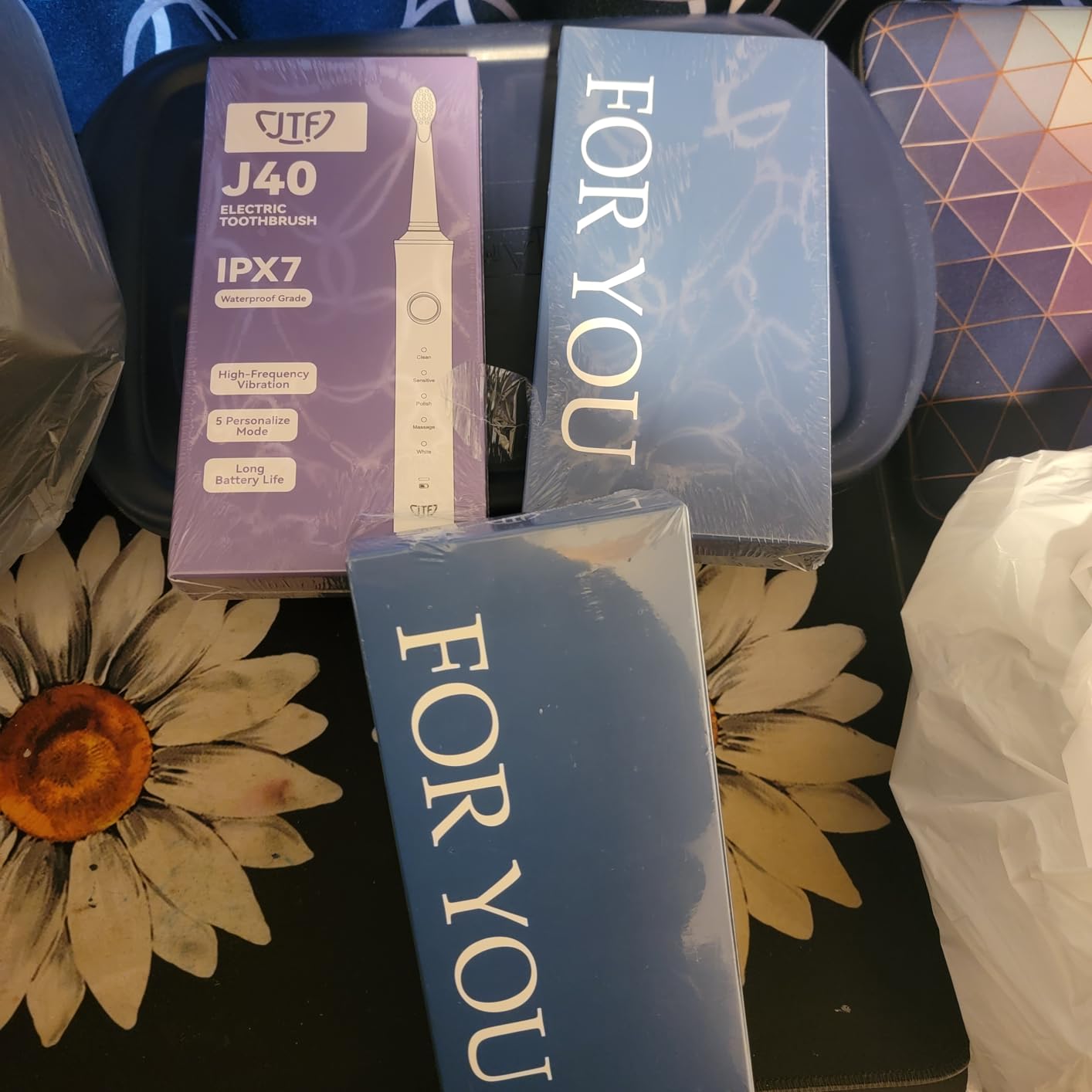
Five modes cover gum care, braces, dentures and everyday cleaning, with the last-used mode remembered so a child or a sensitive user does not have to cycle through settings every morning. The bristles are food-grade rounded filaments described as firm yet gentle on sensitive gums, and the small head is genuinely the smallest here, which suits smaller hands and reaching behind the back molars.
Runtime is up to 45 days on a charge, the longest in this roundup, and the body is IPX7 waterproof with a non-slip handle. At 9.25 x 4.57 x 1.38 inches and 7.05 ounces it is light and TSA-friendly.
Who the JTF suits
It suits families sharing one handle policy or anyone rotating between several bathrooms. Eight heads mean nobody is stuck reusing an old head for a month.
It suits anyone who travels constantly or forgets chargers. A 45-day runtime removes charging from the routine entirely for most trips.
Who should skip it
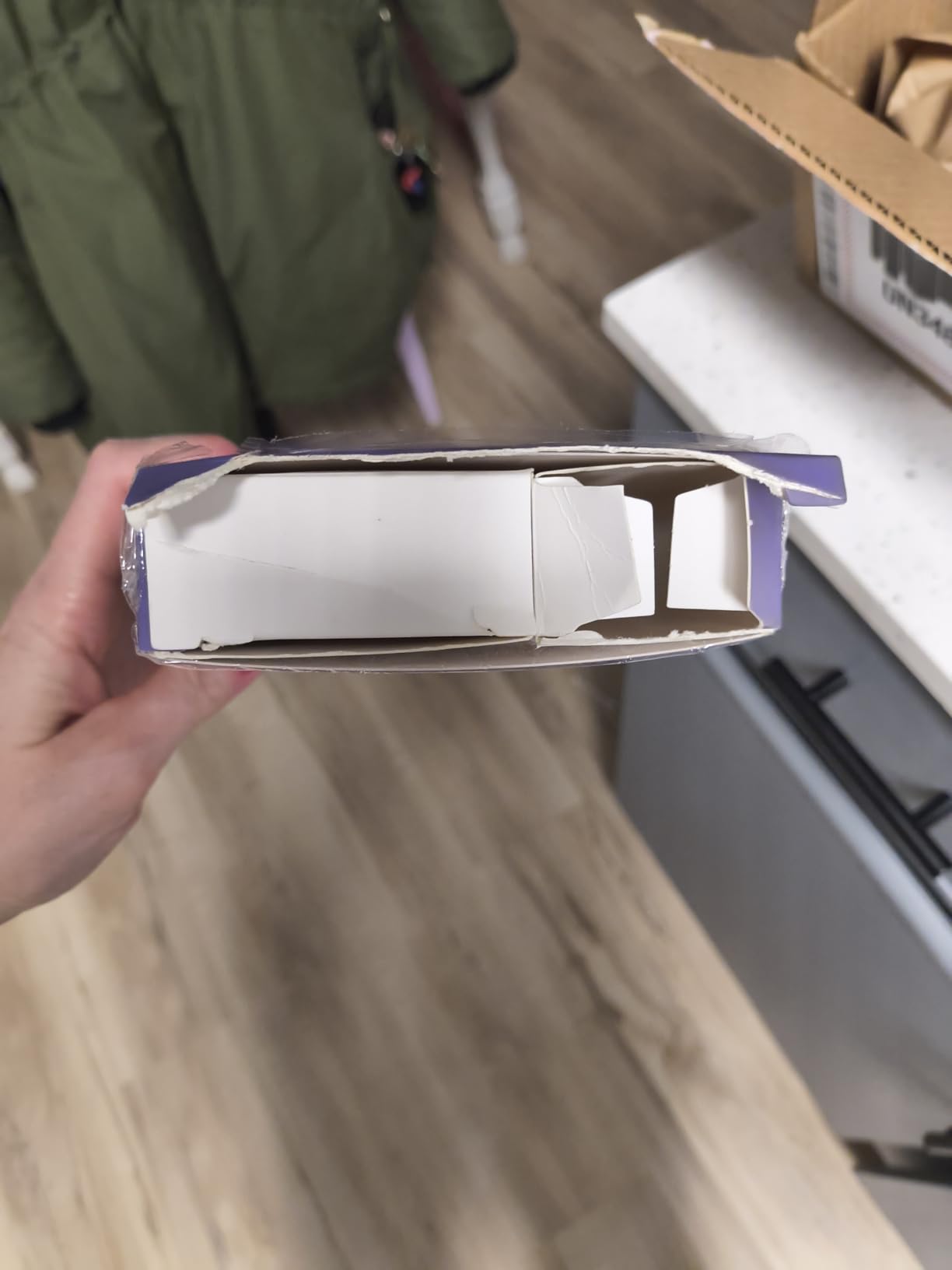
Skip it if you need long-term reliability from one handle. A recurring set of reviews reports units failing to turn on after about a month of daily use, and the button contact can oxidize when the brush is washed, making it hard to switch on.
Skip it if you want a shorter clean some mornings. The two-minute timer cannot be interrupted early, which matters for children and for anyone who wants a 30-second top-up.
How We Chose and What to Look For
Every brush here was scored on the same five weights: gentle mechanics at 30 percent, pressure protection at 25 percent, sensitive settings at 20 percent, daily usability at 15 percent, and value plus two-year ownership cost at 10 percent. Comfort sat above features and apps on purpose, because a brush you dread using is worse for sensitive teeth than no brush at all.
On the forums this topic lives on, the advice from dental hygienists is consistent and brand-agnostic. In the r/DentalHygiene thread on sensitive gums and gum recession, the recurring answer is that either major brand will be fine provided it has a pressure sensor and you pair it with a soft enough head. One poster on r/BuyItForLife with receding gums describes switching to a pressure-sensor brush as the change that helped. The conclusion we drew is that the sensor and the bristle softness decide the outcome, not the logo.
Pressure protection you can actually notice
Four alert types exist, and they are not equal in practice. A visual light ring is easiest to catch because you can glance at the handle. An audible cue competes with the brush noise and is easy to miss. A haptic pulse travels through the handle into your fingers, which works well but takes practice. Automatic power reduction is the only one that acts without you noticing, and it is the reason the Pro 1000 ranks first here.
Forum complaints about pressure sensors are mostly about missing them mid-brush, particularly on back teeth. That is an argument for the lightring models rather than an argument against sensors altogether.
Sensitive mode is not one thing
A sensitive mode usually means lower power. A gum care mode usually means lower power plus a reminder to angle toward the gumline. A very-sensitive mode means you can drop below both. The iO5 is the only brush here with a genuine third tier, which is why it earns its place despite the app complaints. The Pro 1000’s Sensi mode and the Sonicare 4100’s lower of two intensity levels are the more common and more reliable version of this feature.
Sonic versus oscillating-rotation
Sonic brushes drive high-frequency fluid movement between teeth and along the gumline. The head barely touches the tooth, which is why sonic feels gentler on temperature-sensitive teeth. Oscillating-rotation brushes spin a small round head back and forth over each tooth, which isolates one tooth at a time and gives you clearer pressure feedback. Both remove plaque well. Neither is automatically gentler, and the deciding factor is which sensation your teeth tolerate.
What we rejected and why
Several well-reviewed brushes sit outside this list. The Sonicare ProtectiveClean models sit higher in the Sonicare range but we could not verify pressure feedback in the consumer descriptions, and the SURI 2.0 is a newer sibling of the Pro we chose rather than a different choice. We also left out the very cheap no-name units that dominate the ends of the marketplace, because a brush with no replaceable head supply becomes an expensive habit.
When an electric brush is the wrong choice
Do not use any brush, electric or manual, on a freshly extracted socket or on an acute gum infection. If your pain is sharp and confined to a single tooth, or triggered by biting rather than cold and sweets, you need a diagnostic, not a gadget. Desensitizing fluoride toothpaste helps and no brush substitutes for it.
How to Brush Without Triggering Sensitivity
Use the lowest setting that still cleans, and give it two full minutes.
Hold the brush like a pen, not like a scrubbing tool. Almost all overbrushing comes from wrist force.
Let the bristles rest lightly against the gumline and move. Do not scrub manually while the brush is powered, and do not press harder to make up for a low intensity setting.
Give each area real time. The 30-second quadrant prompts exist so the back teeth stop getting whatever is left.
Change the head when the bristles splay, not on a fixed schedule. A frayed head is abrasive and will undo the gentleness you paid for.
Use a desensitizing toothpaste with fluoride and brush twice daily. Cutting back on brushing is what turns sensitivity into gum inflammation and recession.
Frequently Asked Questions
What is the best gentle electric toothbrush for sensitive teeth?
The Oral-B Pro 1000 is our pick because its gum pressure control physically reduces brushing power when you press too hard, and its Sensi cleaning mode gives a genuinely low-intensity option. For temperature-sensitive teeth specifically, a sonic model such as the Philips Sonicare 4100 feels gentler because the head barely contacts the tooth.
What electric toothbrush is best for very sensitive gums?
Very sensitive gums need the two things a nervous brusher lacks: pressure reduction you do not have to notice, and a truly low setting. The Oral-B Pro 1000 meets both through gum pressure control and Sensi mode. If you also want the softest possible bristles rather than the strongest protection, the Burst Original Sonic uses super soft multi-length PBT nylon.
What is the #1 dentist recommended electric toothbrush?
There is no single model dentists name, and anyone who tells you otherwise is selling something. What dental professionals do emphasise is a brush with pressure feedback, soft or extra-soft rounded bristles and a two-minute timer. Hygienist advice on community forums repeatedly anchors on pressure sensors plus a soft head rather than on any single brand.
Does an electric toothbrush cause a receding gum line?
No. Electric brushes do not cause recession; overpressure does. The mechanism behind gum damage is scrubbing too hard over years, and an electric brush makes that habit easier to spot because it warns you. A brush with automatic pressure reduction can actually slow an existing overbrushing habit, provided you do not press harder to compensate for a low setting.
Is a pressure sensor necessary for an electric toothbrush?
For someone with sensitivity or existing recession, yes. A pressure sensor is the feature that separates a brush from a fast drill you cannot control. It is less critical if your sensitivity is purely temperature-triggered and you already brush lightly. All eight brushes here include some form of pressure feedback, though the alert type differs.
What are the signs that I am overbrushing my teeth?
Watch for bristles that fan out or bend to one side within weeks rather than months, receding gum margins, dentin that looks yellow through thinning enamel, sensitivity that worsens over time rather than easing, and sore gum tissue that takes days to settle. Soreness right after switching to an electric brush is normal for a week or two and is not a sign of overbrushing.
What is the best electric toothbrush for people with receding gums and sensitive teeth?
Choose a round oscillating head with automatic power reduction, because a small round head isolates one exposed root at a time and you can trace the gum margin tooth by tooth. The Oral-B Pro 1000 fits that description. The pressure sensor that does the most work for you is the one that reacts automatically, because a warning you miss while leaning on the brush does nothing.
Are electric toothbrushes safe with veneers, crowns and implants?
They are generally safe when you use a brush with a pressure sensor and a soft head, since the main risk is force rather than motion. Keep the oscillating head away from the gum margin directly above an implant, and avoid whitening modes on porcelain veneers since they can dull the glaze. Give any post-procedure area a few weeks before brushing it normally.
The Best Electric Toothbrushes for Sensitive Teeth: Final Word
The best electric toothbrushes for sensitive teeth share one trait: they stop you, not you stopping them. The Oral-B Pro 1000 wins here because its pressure reduction is automatic, its round head suits a tracing gumline, and more than 105000 reviews show no recurring hardware failure pattern.
If your sensitivity is temperature-driven rather than pressure-driven, the Philips Sonicare 4100 is the gentler sensation. If the problem is tender, bleeding gums, the Burst Original Sonic has the softest bristles here. Buy the one whose alert you will actually notice, pair it with a desensitizing fluoride toothpaste, and if the pain is new or confined to one tooth, see a dentist first.