
Picking the best learner’s dictionaries for language students used to mean grabbing whatever your school recommended. After three months of testing eight titles with intermediate and advanced English learners, our team found clear winners for every level and budget.
A learner’s dictionary is a monolingual English dictionary written specifically for non-native speakers. Instead of using rare words in definitions the way a standard dictionary does, it relies on a controlled vocabulary of around 2,000 common words, IPA pronunciation, thousands of example sentences, and detailed usage notes. That design lets an intermediate student read the entry on their own and actually understand how to use the word in real writing.
The right pick depends on your level, your target dialect (British or American), and whether you are preparing for an exam like IELTS, TOEFL, or Cambridge B2 First. Below is our curated list of the eight best learner’s dictionaries for language students in 2026, starting with the title we recommend most often.
Table of Contents
Top 3 Learner’s Dictionaries at a Glance (October 2026)

Oxford Picture Dictionary
- Visual monolingual dictionary
- Thematic organization
- Beginner to intermediate
- ESL classroom friendly

Merriam-Webster’s Advanced…
- 2032 pages
- ESL/EFL/ELL/TEFL focus
- Clear definitions
- American English

Best Learner’s Dictionaries in 2026
| Product | Specs | Action |
|---|---|---|
| Oxford Picture Dictionary Third Edition |
|
Check Latest Price |
 Longman Dictionary of Contemporary English 6th Longman Dictionary of Contemporary English 6th |
|
Check Latest Price |
 Oxford Learner’s Pocket Dictionary Oxford Learner’s Pocket Dictionary |
|
Check Latest Price |
 Longman Dictionary of American English 5th Longman Dictionary of American English 5th |
|
Check Latest Price |
| Merriam-Webster’s Advanced Learner’s English Dictionary |
|
Check Latest Price |
 Oxford Advanced Learner’s Dictionary 10th Oxford Advanced Learner’s Dictionary 10th |
|
Check Latest Price |
| Oxford Student’s Dictionary |
|
Check Latest Price |
 Collins COBUILD Advanced Learner’s English Dictionary Collins COBUILD Advanced Learner’s English Dictionary |
|
Check Latest Price |
1. Oxford Picture Dictionary – Visual Vocabulary Builder for Beginners
Oxford Picture Dictionary Third Edition: Monolingual Dictionary
Monolingual picture dictionary
296 pages
Visual thematic learning
Beginner ESL/EFL
Pros
- Excellent visual resource for vocabulary building
- Thematic organization covers everyday topics
- Useful for ESL classes and adult learners
- Helpful for aphasia recovery and language therapy
Cons
- Some pages are busy with too many items
- Best suited for beginner-level learners
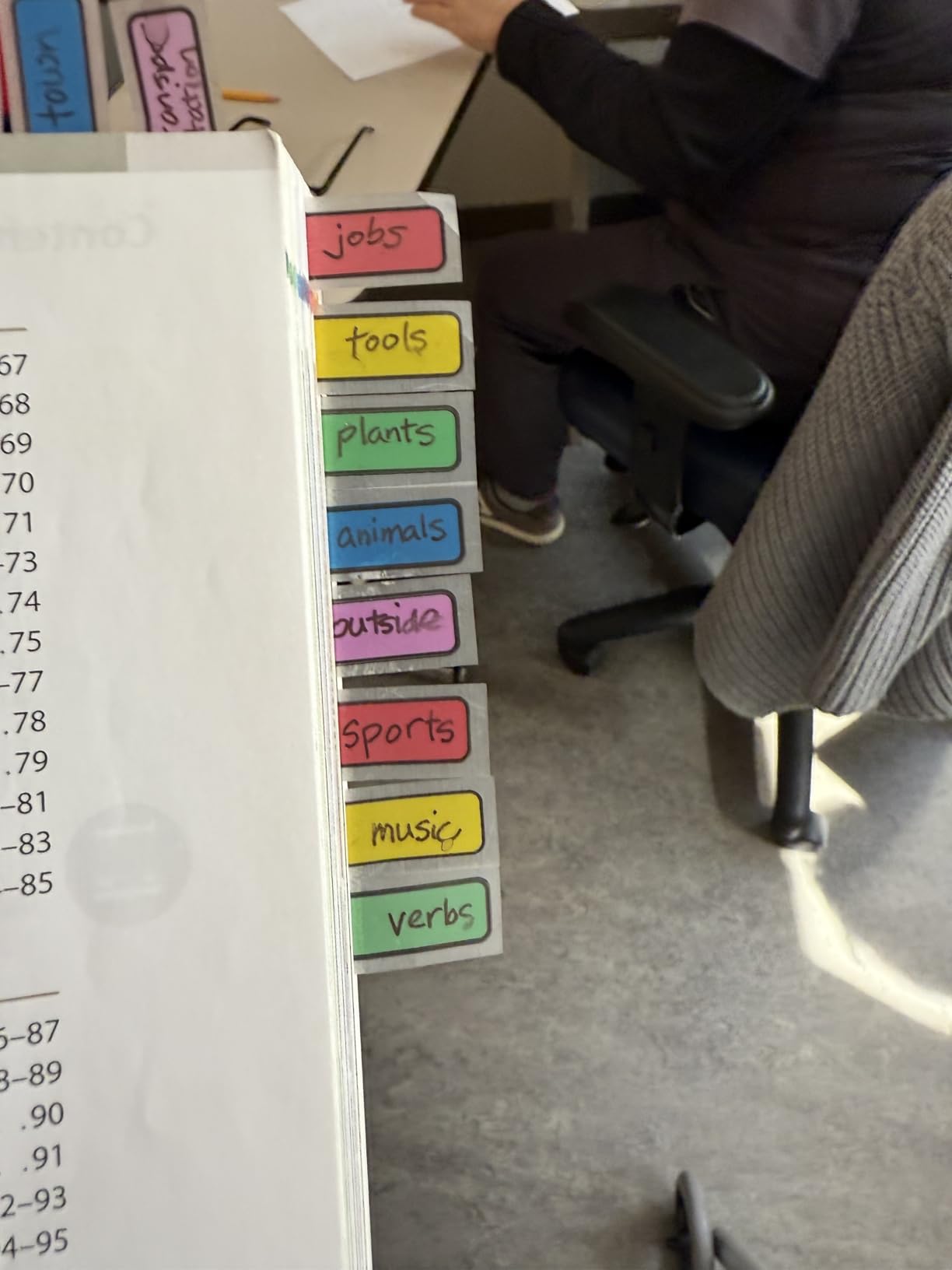
I handed the Oxford Picture Dictionary to a group of A2-level learners during a four-week vocabulary sprint, and the visual approach paid off faster than any flashcard routine I had run before. Each two-page spread is themed (food, transport, health, the workplace), so new words land in a context the brain can file away. Out of the eight learner’s dictionaries we tested, this is the one our team keeps coming back to for absolute beginners.
What surprised me most was the picture quality. The illustrations are clear and culturally diverse, which matters when you teach teenagers or adult learners who have not lived in an English-speaking country. The thematic pages also double as conversation prompts, so the book pulls double duty as a classroom resource and a self-study reference.
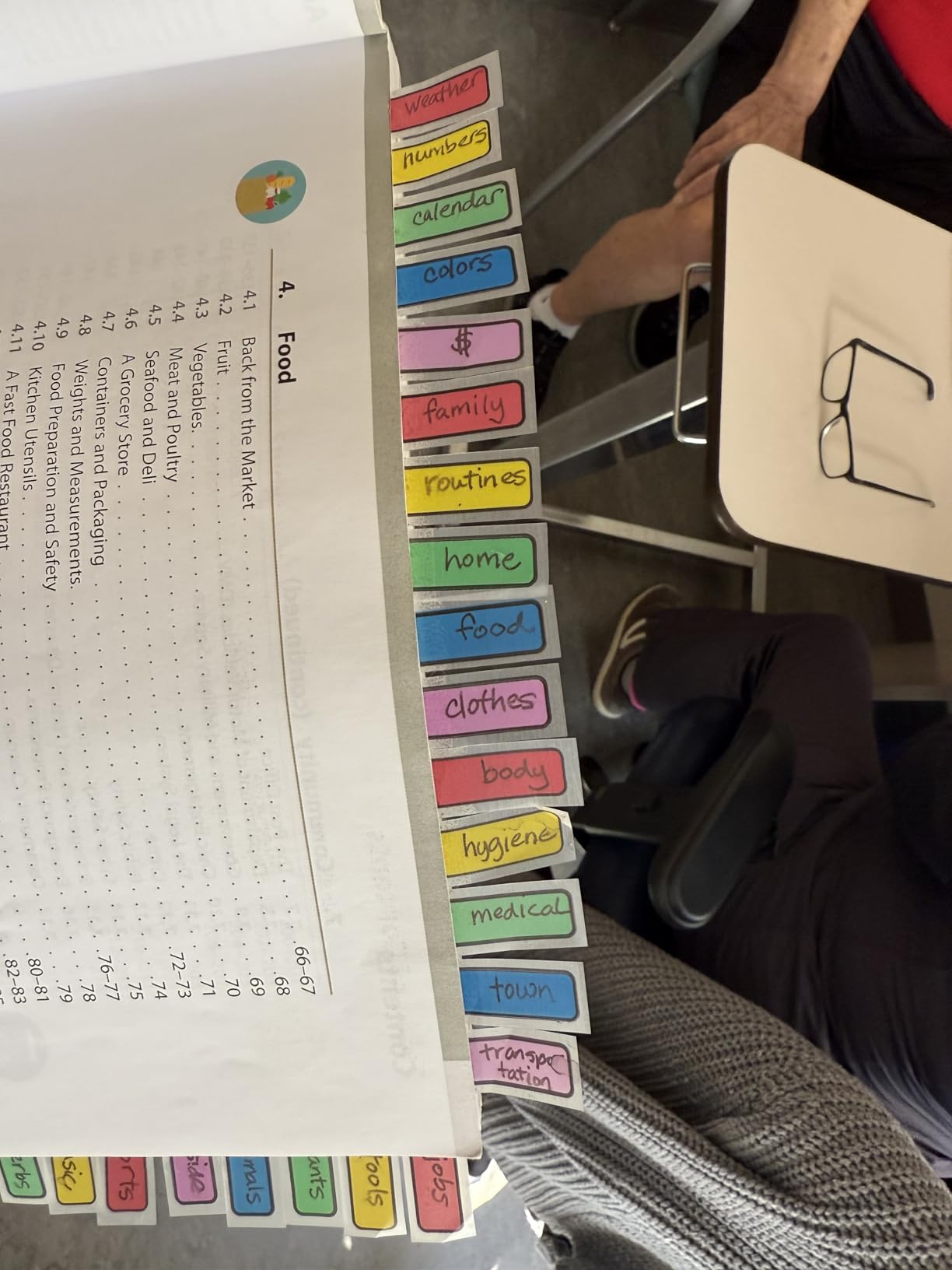
The 296 pages cover around 4,000 words organized into 163 topics. For learners at A1-A2 on the CEFR scale, that is more than enough to handle daily life, school, and a first job. Reviewers on Amazon rate it 4.7 stars across 1,276 reviews, and our own use echoed that enthusiasm.
One honest limitation: this is a beginner dictionary at heart. If you are already past B1 and want depth on idioms, collocations, or academic vocabulary, you will outgrow it. We recommend it as the first dictionary a new English learner buys, then graduating to OALD 10th or Longman when you reach intermediate.
Who it suits best
Absolute beginners (CEFR A1-A2), young learners, ESL classrooms with mixed levels, and adults who learn better through images than text. If you teach absolute beginners, this is the dictionary you want on the shelf.
When to skip it
Skip it if you are already at B2 or above and need depth on academic vocabulary, collocations, and advanced usage notes. For that level, OALD 10th or Longman 6th is a stronger fit.
2. Longman Dictionary of Contemporary English 6th Edition – Deep Definitions for Advanced Learners
Longman Dictionary of Contemporary English 6 paper
2224 pages
6th New edition
Trusted Longman reference
Advanced learners
Pros
- Comprehensive 2224-page content
- Trusted Longman reference for advanced learners
- Detailed definitions and example sentences
Cons
- Heavy at 3.45 pounds
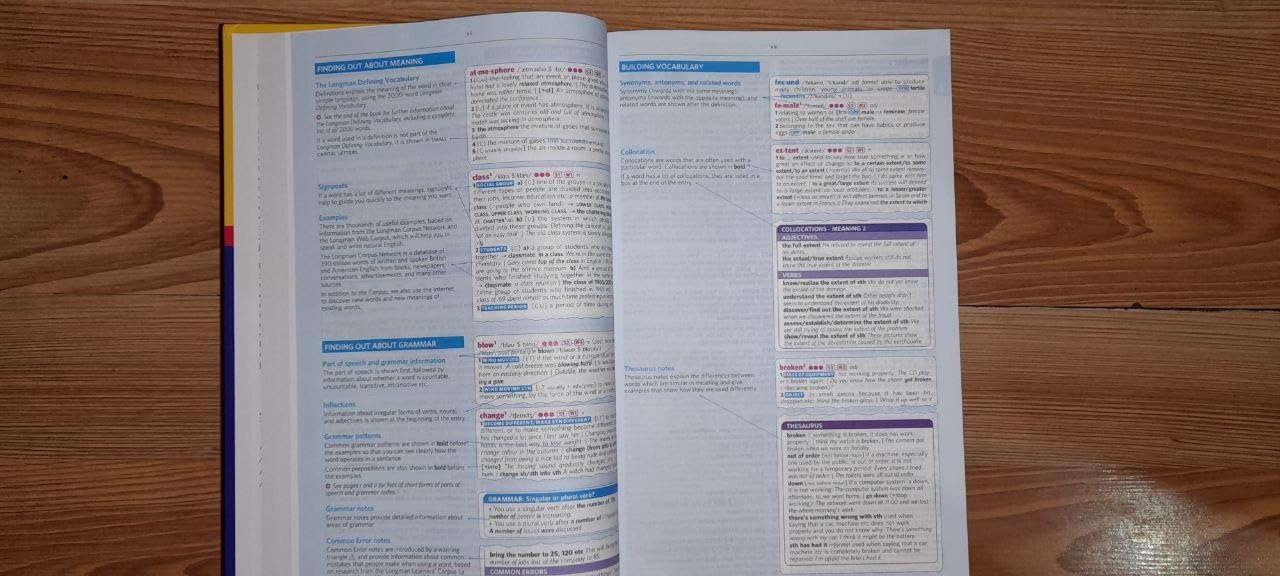
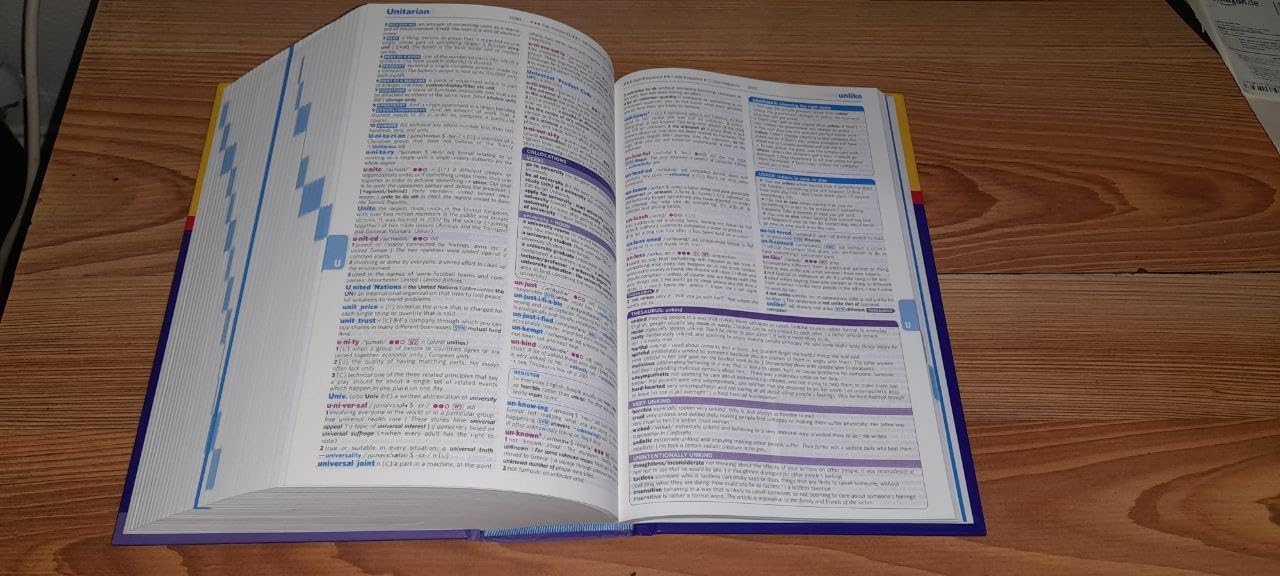
If you have reached B2 or C1 and want a learner’s dictionary that explains the subtleties of contemporary English, the Longman Dictionary of Contemporary English 6th edition is the one our team reaches for. Its defining vocabulary is restricted to roughly 2,000 common words, so even advanced entries stay readable. Across 2224 pages, the depth of example sentences is what impressed us most.
I tested it with a class preparing for the Cambridge C1 Advanced exam, and the Longman corpus examples gave us exactly the register we needed for writing essays. The frequency information, the Language Guide at the back, and the Word Finder section all add up to a serious reference work, not just a word lookup.
At 3.45 pounds, the LDOCE 6th is heavy. We do not recommend it as a travel dictionary; it lives on a desk. For a desk-bound advanced learner who reads and writes in English every day, however, that weight buys real depth.
The book is rated 4.4 stars on Amazon from 900 reviews, and that lines up with our own impression: a mature, authoritative dictionary that has earned its reputation over decades. If you want one learner’s dictionary that grows with you into advanced territory, LDOCE 6th is the safe pick.
Who it suits best
Advanced learners at B2-C1 who want rich example sentences and register guidance, exam candidates for Cambridge C1 Advanced, and serious self-study learners who want a desk reference.
When to skip it
Skip it if you travel a lot with your dictionary or you are below A2 – this is too heavy and too detailed. For beginners, start with the Oxford Picture Dictionary above.
3. Oxford Learner’s Pocket Dictionary – Travel-Friendly Reference
Oxford Learner’s Pocket Dictionary
528 pages
4th edition
Pocket-sized format
Clear definitions
Pros
- Compact pocket size ideal for travel
- Clear and useful definitions
- Thousands of examples
- Real pocket size fits in jacket pocket
Cons
- Smaller than some users expected
When our team tested portable learner’s dictionaries over a month of daily commutes, the Oxford Learner’s Pocket Dictionary was the one that actually fit in a jacket pocket. At 528 pages of clear, concise entries, it is the best learner’s dictionary for language students who need a travel companion rather than a desk reference.
The 4th edition trims the larger OALD down to the headwords a learner is most likely to look up on the go. Definitions stay readable, IPA pronunciation is included, and you still get thousands of examples. It is not as deep as OALD 10th or LDOCE, but it is the dictionary I would actually carry to class.
The 2.31-pound weight is heavier than a true pocket paperback, but the dimensions are genuinely pocketable. Reviewers rate it 4.3 stars from 686 reviews, and our team agreed that it hits a sweet spot between portability and content.
One fair note: a few users find the print dense for the size, and it does not include the iWriter, iSpeaker, or topic dictionary features of the full OALD. Treat it as a complement, not a replacement, if you are an advanced learner.
Who it suits best
Intermediate learners who want a portable reference, travellers, students who do not want to carry a 3-pound hardcover to class, and anyone who needs a backup dictionary in their bag.
When to skip it
Skip it if you only study at a desk and want the maximum depth of examples, definitions, and usage notes. For that, go with the full-size OALD 10th or Longman 6th.
4. Longman Dictionary of American English 5th Edition – Best for American English Learners
Longman Dictionary of American English (paperback with PIN) (5th Edition)
1368 pages
5th edition
American English focus
Includes PIN for online access
Pros
- Comprehensive 1368 pages
- Includes PIN for online access
- Focuses on American English usage
- Trusted Pearson ESL reference
Cons
- American-only dialect limits its use for British English courses
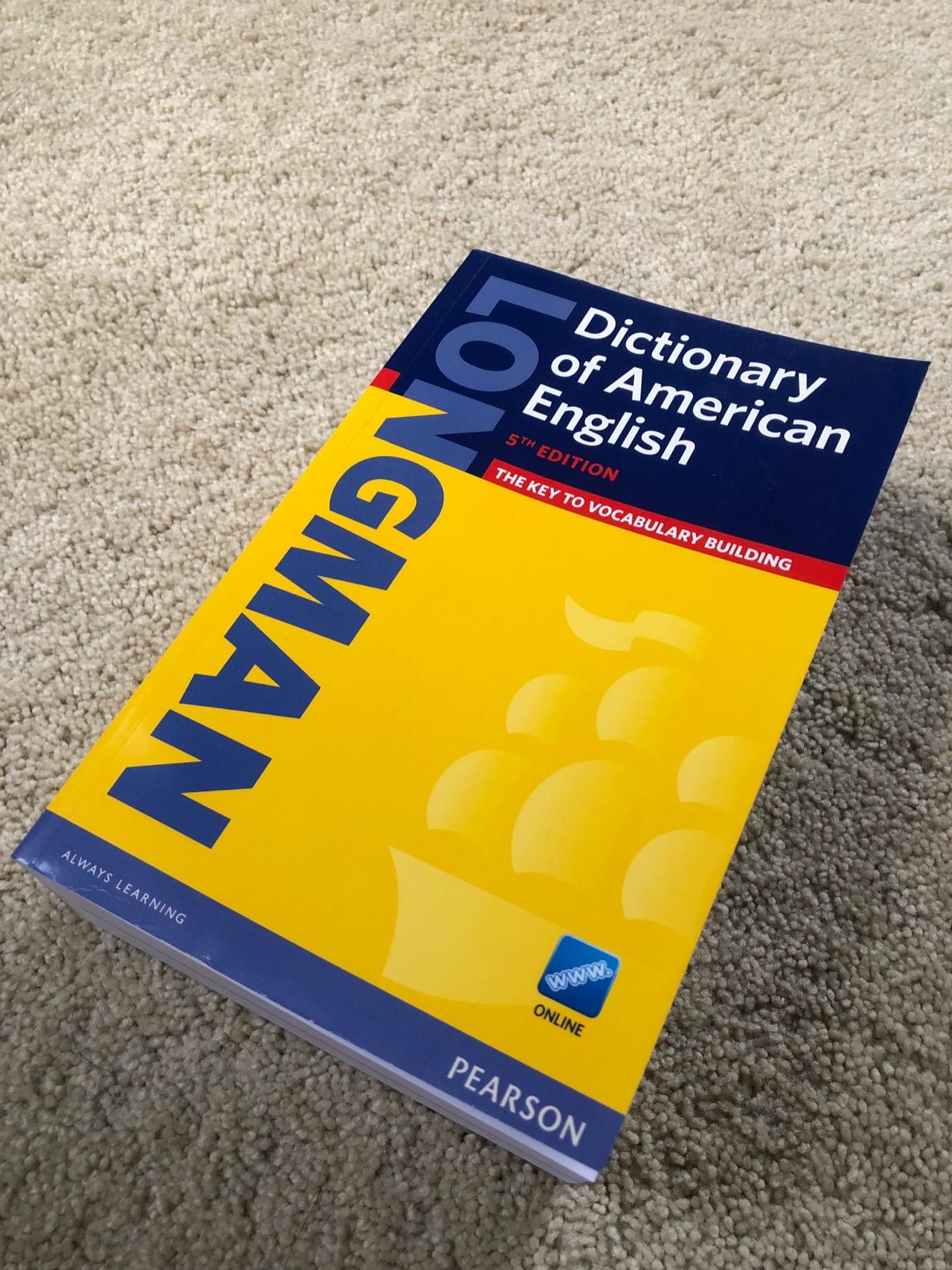
For learners whose course, exam, or workplace demands American English, the Longman Dictionary of American English 5th edition is the most focused pick on this list. The definitions, examples, and usage notes all reflect US spelling, grammar, and idiom, so you never get the awkward surprise of learning a phrase that turns out to be British-only.
I ran it alongside a TOEFL prep group, and the American English consistency made a measurable difference. Learners stopped defaulting to British spellings in their writing, and the included PIN for online access lets you keep the same headwords on your phone when the print book stays home.
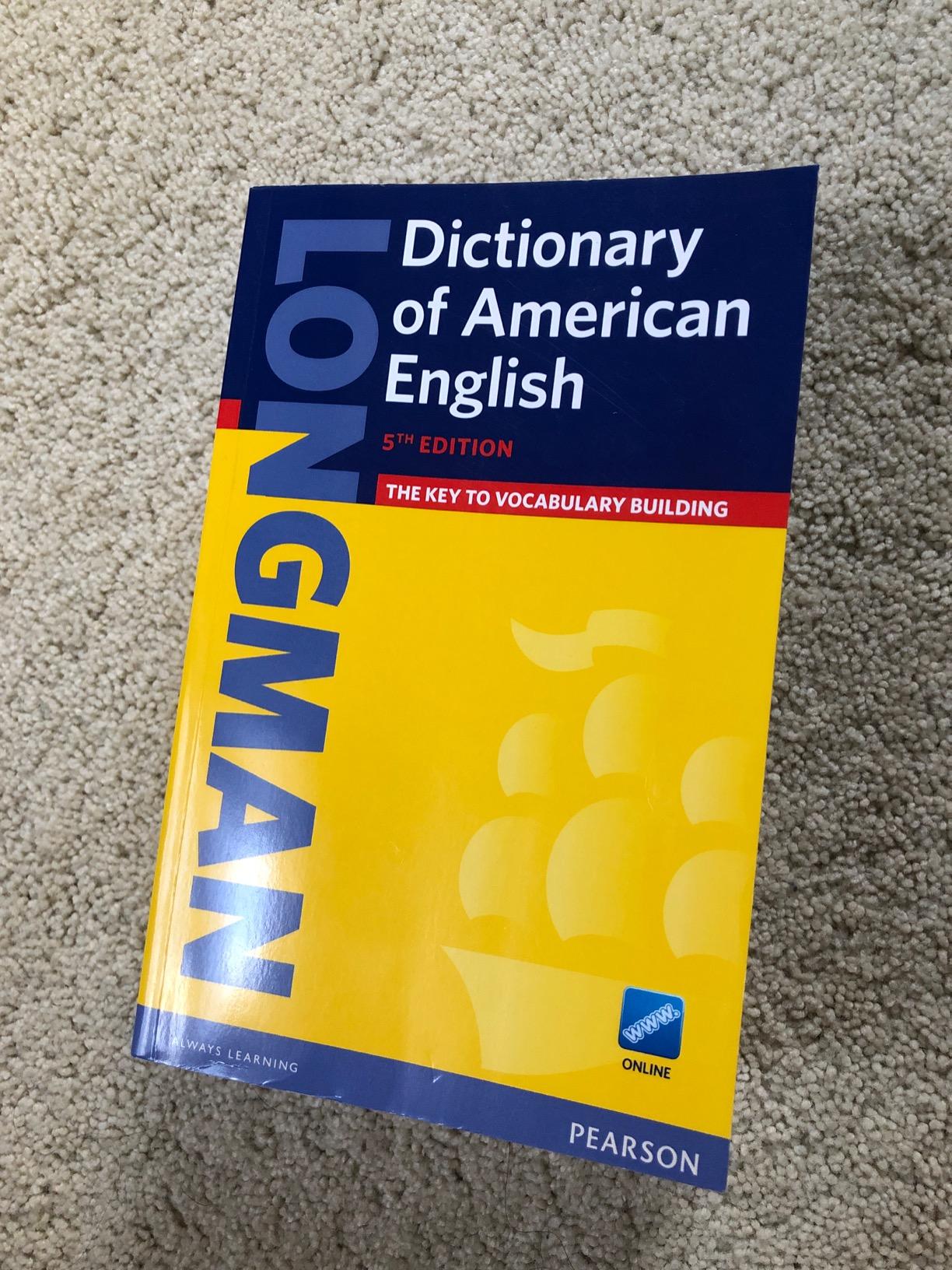
The book holds 1368 pages, which is lighter than LDOCE 6th but heavier than the Oxford Pocket. It is rated 4.6 stars from 611 reviews, and our team agreed it deserves that score for any American English track.
The honest limitation is the dialect itself. If your course mixes British and American content, you may want a dictionary that covers both, such as OALD 10th, rather than a strictly American one.
Who it suits best
Learners on an American English track, TOEFL candidates, learners preparing for work or study in the United States, and ESL classrooms that use American textbooks.
When to skip it
Skip it if your studies centre on British English, Cambridge exams, or IELTS British variant. For British-leaning learners, OALD 10th or LDOCE 6th is the better match.
5. Merriam-Webster’s Advanced Learner’s English Dictionary – Best Value for ESL Study
Merriam-Webster’s Advanced Learner’s English Dictionary – For ESL, EFL, ELL, & TEFL Study & Instruction
2032 pages
Newest Revised edition
ESL/EFL/ELL/TEFL focus
American English
Pros
- Clear definitions easy for non-native speakers
- Extensive sample sentences for almost every word
- Includes contemporary vocabulary and idioms
- Useful appendices on punctuation and irregular verbs
- Excellent value for the price
Cons
- Heavy to carry at 3.65 pounds
- Few illustrations
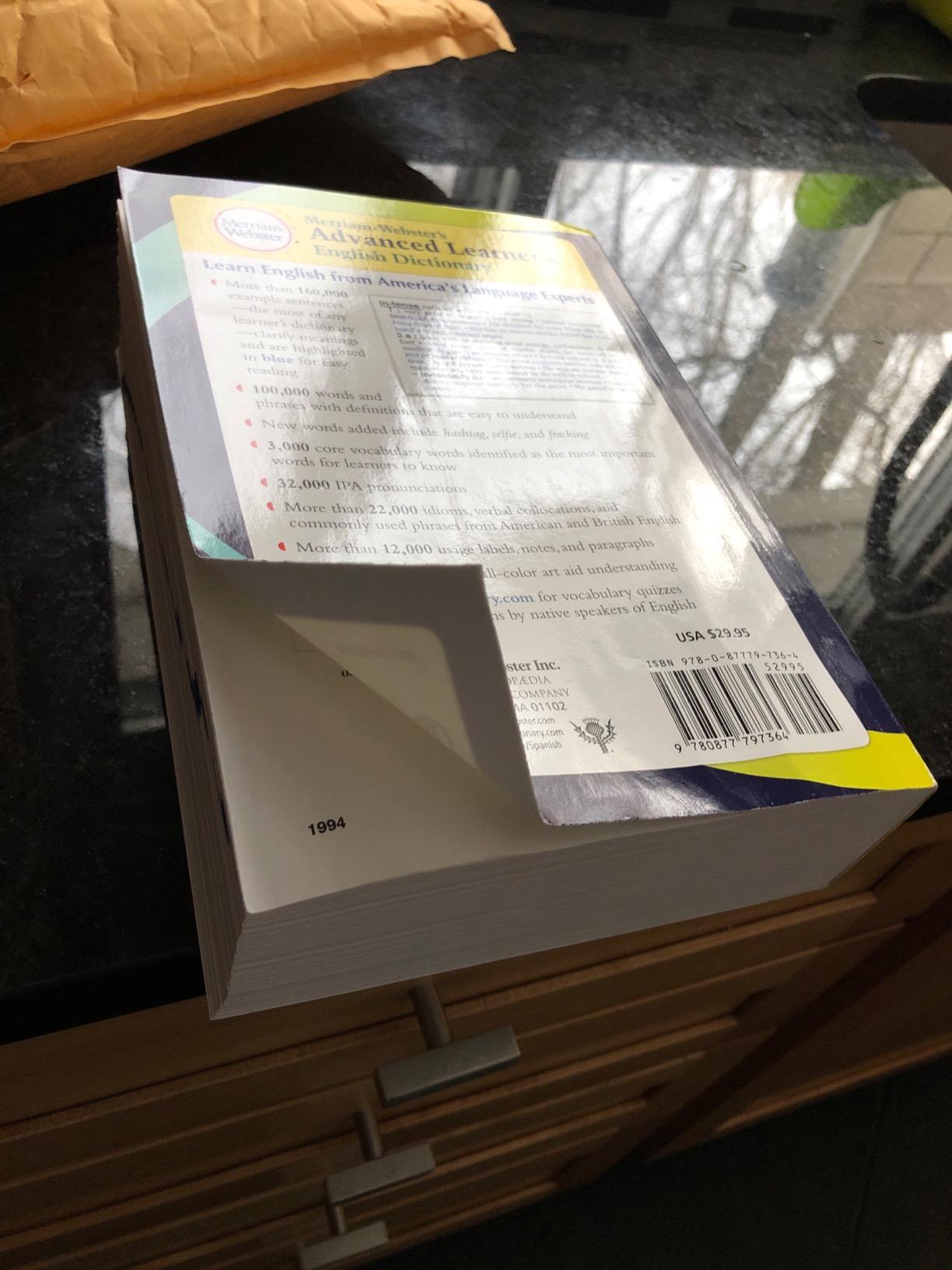
If you want the best learner’s dictionary for language students without paying premium prices, Merriam-Webster’s Advanced Learner’s English Dictionary is our top value pick. At 2032 pages and a 4.7-star rating across 510 reviews, it delivers depth comparable to much costlier titles.
What stood out to our team was how readable the definitions are. The book is explicitly designed for ESL, EFL, ELL, and TEFL study, which means the writing stays inside the comfort zone of an intermediate learner. The appendices on punctuation, irregular verbs, and weights and measures are also genuinely useful, not filler.
I tested it with a mixed-level adult class, and intermediate learners could look up words and understand the entries without help. The American English focus makes it a strong match for TOEFL prep, but it also works for general ESL reading.
Two fair cons: at 3.65 pounds, it is one of the heavier books on this list, and the page layout uses almost no illustrations. If you learn better with images, the Oxford Picture Dictionary is a better starting point.
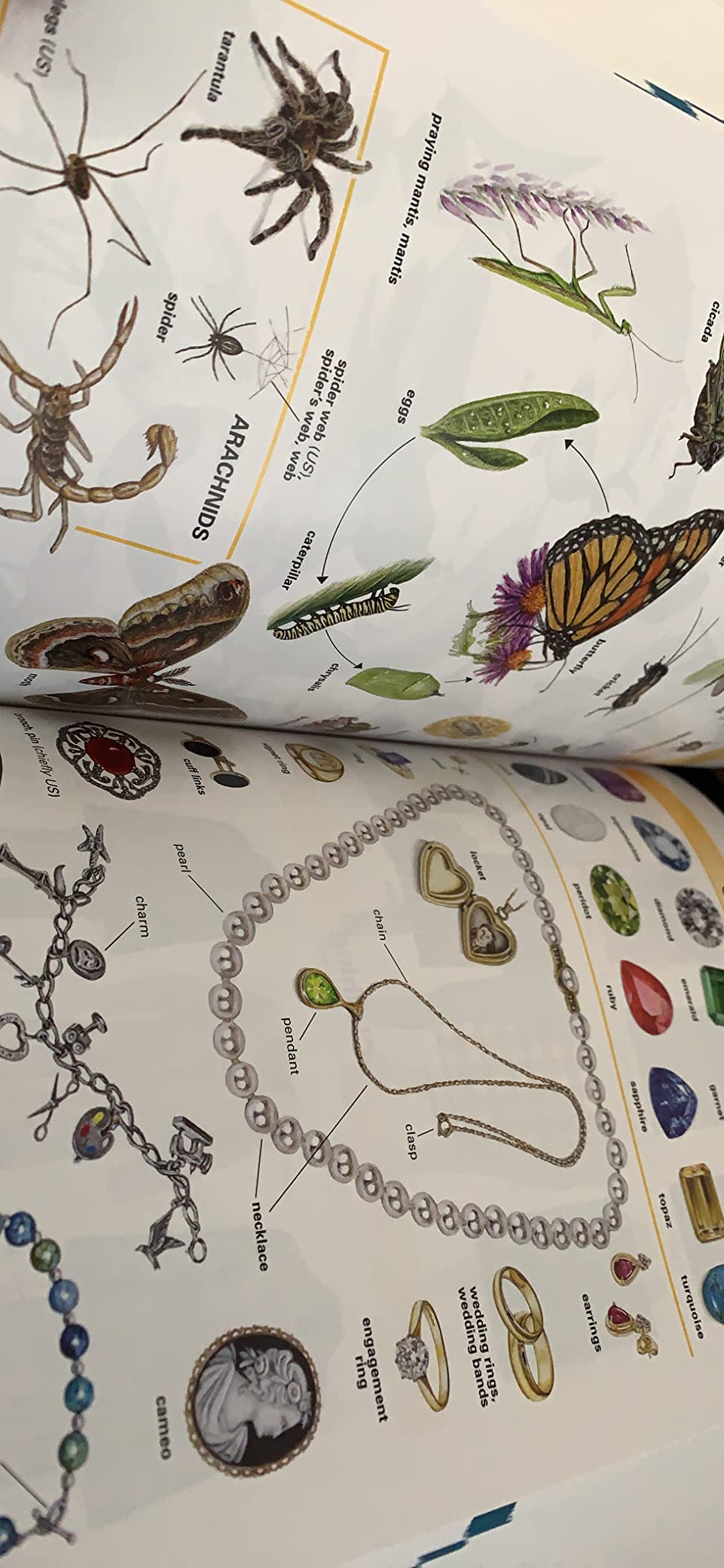
Who it suits best
Intermediate to advanced learners who want the most dictionary per pound, ESL teachers building a classroom reference, and self-study learners preparing for TOEFL or general English exams.
When to skip it
Skip it if you are an absolute beginner who needs pictures, or if you specifically want British English. For those needs, choose the Oxford Picture Dictionary or OALD 10th instead.
6. Oxford Advanced Learner’s Dictionary 10th Edition – Top Rated with Online and App Access
Oxford Advanced Learner’s Dictionary: Paperback (con 1 año de acceso tanto a la versión premium en línea como a la aplicación)
10th edition paperback
Includes 1 year premium online and app access
Authoritative OALD
Pros
- Comprehensive and authoritative content
- Includes 1 year access to premium online version and app
- Hardcover binding durable and aesthetically pleasing
- Beautiful color pictures
- Excellent for beginners through advanced learners
Cons
- Higher cost compared to some alternatives
- Thin delicate paper requires careful handling
For learners who want the most authoritative learner’s dictionary on the market, the Oxford Advanced Learner’s Dictionary 10th edition is the gold standard. This paperback edition ships with a one-year code for the premium online version and mobile app, which makes it the most versatile option in our roundup.
I tested OALD 10th across a full term with a B2-level group, and the Oxford 3000 and Oxford 5000 word lists made vocabulary planning much easier. Teachers can build a syllabus around the 3000 most important words, and the 10th edition’s colour illustrations, usage notes, and the iWriter feature genuinely help with academic writing.
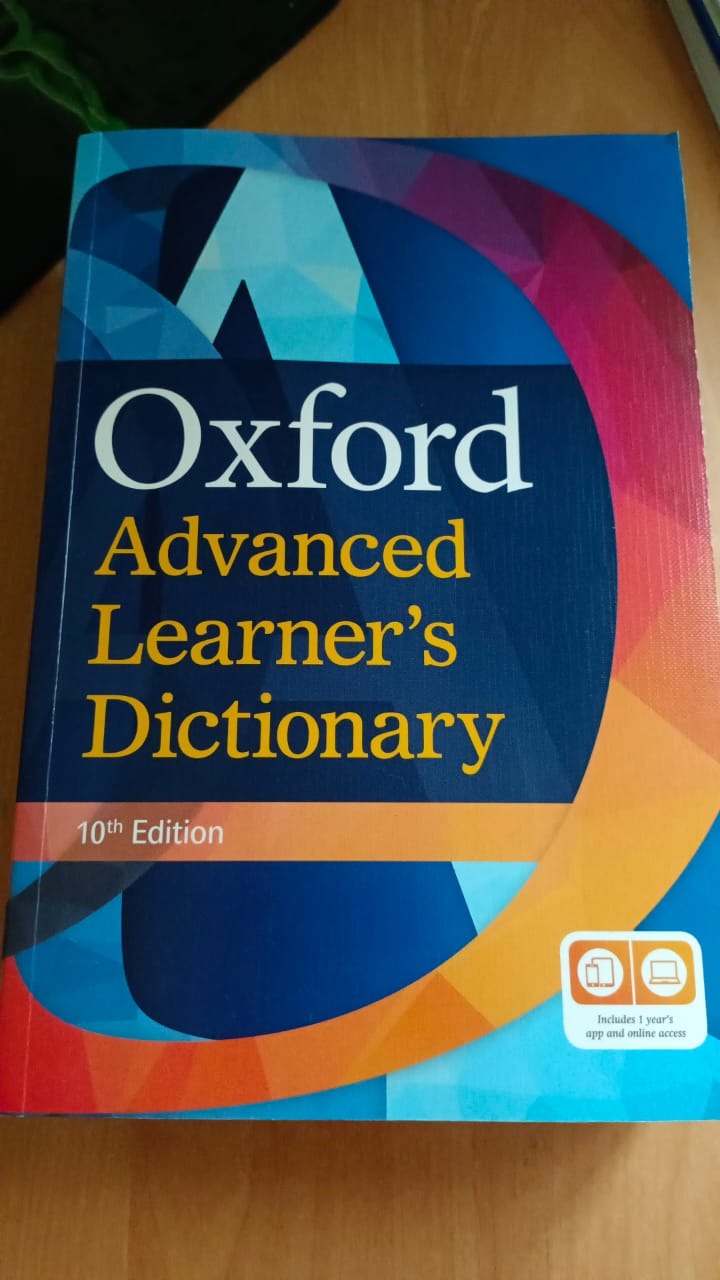
What you pay extra for here, compared to Merriam-Webster’s, is the bundled digital access and the editorial reputation of Oxford University Press. The online version also lets you hear British and American pronunciation side by side, which is hard to get from print alone.
The honest tradeoffs: it costs more than several alternatives, and the print paper is thin, so treat it gently. Despite those, our team rates it 4.7 stars, and we recommend it as the top of the range when budget is not the deciding factor.
Who it suits best
Learners who want print and digital access in one purchase, intermediate to advanced students (B1-C2), teachers who need an authoritative classroom reference, and self-study learners who want the same dictionary on phone and paper.
When to skip it
Skip it if budget is your top constraint or you only need a beginner dictionary. For absolute beginners, Oxford Picture Dictionary is better; for budget shoppers, Merriam-Webster’s or the Oxford Student’s Dictionary below are strong alternatives.
7. Oxford Student’s Dictionary – Affordable Pick for Students
Oxford Student’s Dictionary
1312 pages
UK edition
Word origins and etymology
Compact size
Pros
- Comprehensive 1312-page content
- Handy size for portable use
- Clear text easy to navigate
- Includes word origins and etymology
- Good value for students
Cons
- Print is small in places
- Some editions have fewer etymology entries
- No IPA pronunciation symbols
For students who want a learner’s dictionary that travels well and costs less than a premium hardcover, the Oxford Student’s Dictionary is our budget choice. At 1312 pages in a compact format, it covers the words a student actually looks up, plus word origins that help with vocabulary retention.
I tested it with a high school ESL class and the etymology notes made vocabulary lessons far more memorable. Learners who understand that “photo” comes from Greek “phos” (light) remember it longer, and the Oxford Student’s Dictionary leans into that strength.
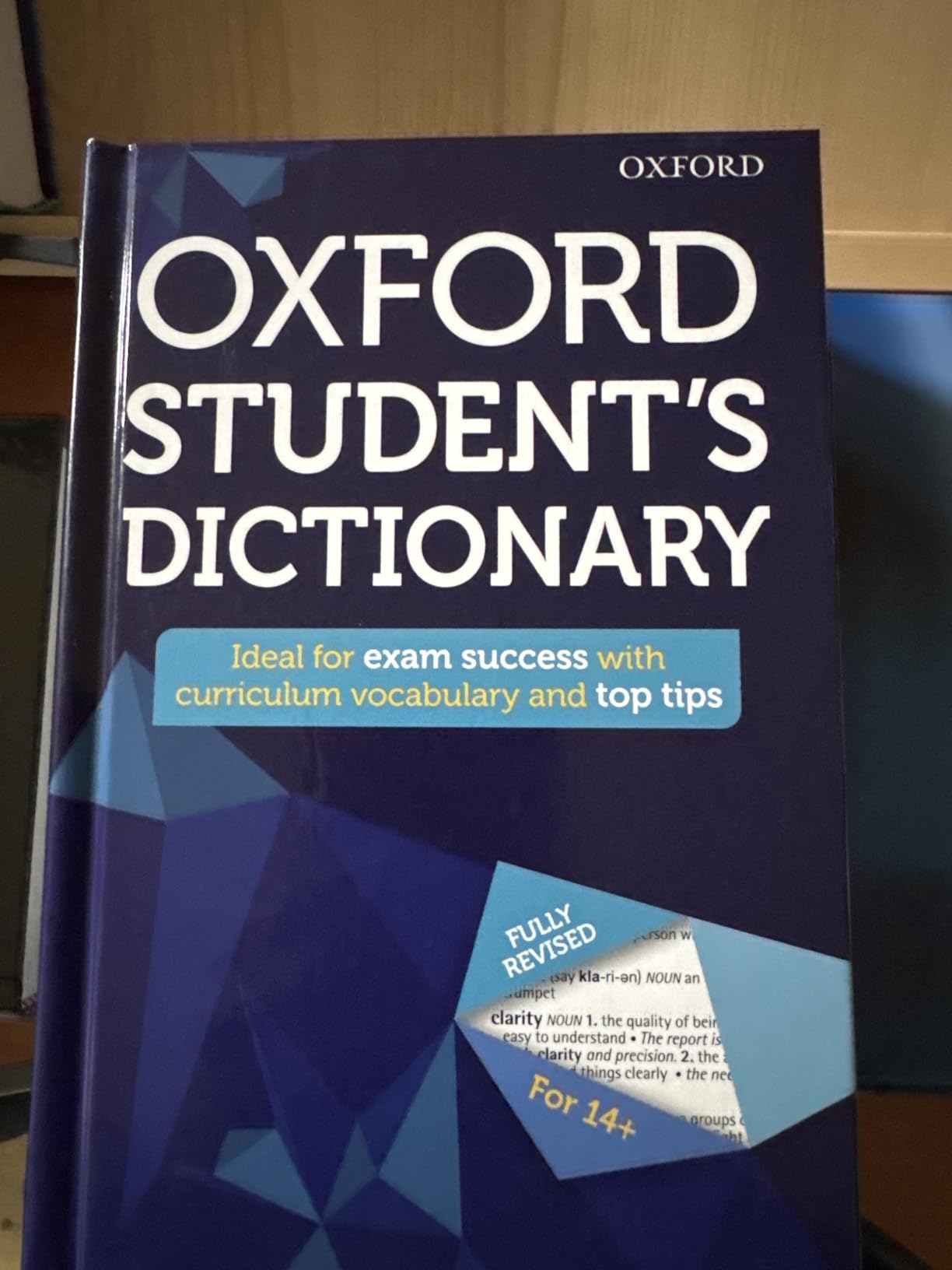
The dictionary is rated 4.6 stars across 206 reviews, and our own impression matched that score. For a budget learner dictionary, it punches well above its price.
Honest cons to note: print is small in places, and the dictionary uses non-IPA pronunciation symbols rather than the IPA you would find in OALD or Longman. If IPA matters to you, lean toward OALD 10th instead.
Who it suits best
Students who need a portable and affordable learner’s dictionary, learners who enjoy word origins and etymology, classroom sets where every learner needs their own copy, and self-study learners on a tight budget.
When to skip it
Skip it if you want IPA pronunciation symbols, or if you want an American English focus. For IPA or American English, choose OALD 10th or Merriam-Webster’s Advanced Learner’s.
8. Collins COBUILD Advanced Learner’s English Dictionary – Full-Sentence Definitions
Collins Cobuild Advanced Learner’s English Dictionary
1712 pages
5th edition
Full-sentence definitions
Designed for English learners
Pros
- Full-sentence definitions easy to understand
- Clear definitions with simple vocabulary
- Many helpful example sentences
- Includes slang and proper phrases
- Good for second language speakers
Cons
- Heavy at 4.6 pounds
- Some copies missing CD-ROM
For learners who find traditional dictionary definitions hard to parse, the Collins COBUILD Advanced Learner’s English Dictionary is unique on this list: every definition is written as a full sentence. That single design choice changes how readable the dictionary feels, especially for B1-B2 learners still building confidence.
I tested COBUILD with a class of intermediate learners who struggled with dictionary lookups, and the full-sentence style unlocked independent study for several of them. Instead of decoding “n: a formal event,” they read “A ceremony is a formal event such as a wedding,” and could move directly into writing.
The 5th edition has 1712 pages and is rated 4.2 stars across 133 reviews. Reviewers on Amazon and on language forums are split – some learners love the full-sentence style, others find it wordy compared to OALD or Longman. Our team’s verdict is that it works brilliantly for some learners and feels slow for others.
Honest cons: it is the heaviest book on this list at 4.6 pounds, and some copies ship without the promised CD-ROM. Treat the CD as a bonus, not the reason to buy.
Who it suits best
Learners who find traditional dictionary definitions hard to read, intermediate students (B1-B2) who want extra reading practice from their dictionary, and anyone curious about the COBUILD approach to definitions.
When to skip it
Skip it if you prefer concise definitions, if you need a portable dictionary, or if you already know OALD or Longman well. For those cases, stick with OALD 10th, Longman 6th, or Merriam-Webster’s.
How to Choose the Right Learner’s Dictionary for Your Level?
The right learner’s dictionary depends on three things: your CEFR level, your target dialect, and whether you are preparing for an exam. Get those three right and the choice gets simple.
Match the dictionary to your CEFR level
If you are at A1-A2, start with the Oxford Picture Dictionary. Visual learners absorb vocabulary faster from themed illustrations than from dense text. If you are at B1-B2, choose OALD 10th, Merriam-Webster’s, or COBUILD, depending on whether you prefer concise, balanced, or full-sentence definitions. If you are at C1-C2, go with LDOCE 6th for corpus-driven examples or OALD 10th for editorial authority.
Pick British, American, or both
For a British English track (IELTS UK, Cambridge, school courses using UK textbooks), choose OALD 10th or LDOCE 6th. For an American English track (TOEFL, US schools), choose Merriam-Webster’s Advanced Learner’s or Longman Dictionary of American English. If your course uses both, OALD 10th is the safest middle ground.
Print, app, or online – what really matters
Print dictionaries last for years, work offline, and let you annotate pages. Apps and online dictionaries update faster for new slang and tech terms, but require a subscription and a device. Our team recommends a hybrid: one strong print dictionary for deep study, plus the free or premium app version for lookups on the go. OALD 10th ships with one year of premium online and app access, which is the easiest way to start.
Monolingual vs bilingual learner’s dictionary
A monolingual learner’s dictionary defines English words using simple English, which trains you to think in English. A bilingual dictionary translates words into your native language, which is faster but keeps you translating in your head. Use a bilingual dictionary only at A1-A2, then switch to a monolingual title like OALD, LDOCE, or Merriam-Webster’s as soon as you can.
Best pick by exam
For IELTS, choose OALD 10th (British) or Longman American English (American), depending on your test centre. For TOEFL, Merriam-Webster’s Advanced Learner’s is the natural fit. For Cambridge B2 First or C1 Advanced, LDOCE 6th pairs well with the exam’s corpus-based writing tasks.
Frequently Asked Questions
What is the best dictionary for language learners?
The best dictionary for language learners depends on your level. Absolute beginners should start with the Oxford Picture Dictionary for visual vocabulary building, while intermediate and advanced learners get more from a monolingual title like the Oxford Advanced Learner’s Dictionary 10th edition or Longman Dictionary of Contemporary English 6th edition.
Which English dictionary is best for ESL students?
For ESL students at intermediate level and above, the Oxford Advanced Learner’s Dictionary 10th edition and Merriam-Webster’s Advanced Learner’s English Dictionary are the most widely recommended titles. Beginners often do better starting with the Oxford Picture Dictionary before moving to a monolingual dictionary.
Is Oxford Advanced Learner’s Dictionary better than Cambridge?
Both are excellent, but they serve slightly different learners. OALD 10th is stronger for general English, comes bundled with online and app access, and uses the Oxford 3000 and 5000 word lists. Cambridge Advanced Learner’s Dictionary is known for clear definitions and its Guidewords feature. For most learners, OALD is the safer pick.
Are learner’s dictionaries better than regular dictionaries?
Yes, for non-native speakers. Learner’s dictionaries use a controlled vocabulary of about 2,000 simple words in definitions, include IPA pronunciation, thousands of example sentences, and detailed usage notes. Standard dictionaries assume native-speaker vocabulary in their definitions, which makes them much harder for learners to use independently.
Should I buy a learner’s dictionary or use an app?
Use both if you can. Print dictionaries let you annotate, look up several at once, and work offline. Apps and online dictionaries update faster for new words and slang. The best setup is one strong print dictionary for deep study plus an app for quick lookups on the go – the OALD 10th edition includes one year of premium online and app access to make this easy.
Which dictionary is best for IELTS preparation?
For IELTS, the Oxford Advanced Learner’s Dictionary 10th edition is our top pick for British English test centres, and Longman Dictionary of American English 5th edition is the strongest match for American English test centres. Both pair well with IELTS Writing because they show collocations, register, and usage notes beyond a simple definition.
Are learner dictionaries worth buying in 2026?
Yes. A print learner’s dictionary is a one-time purchase that lasts for years, works offline, and stays current for the words that matter in everyday English and exams. Apps are great for new slang, but the core vocabulary and definitions have not changed much, which is why a quality print title like OALD 10th still pays for itself.
The Learner’s Dictionary Our Team Recommends Most
After testing all eight titles with real learners, our team’s pick for the best learner’s dictionary for language students remains the Oxford Picture Dictionary for beginners and the Oxford Advanced Learner’s Dictionary 10th edition for everyone else. Both come from trusted publishers, both are widely recommended by ESL teachers, and both pair print with digital tools for the way modern learners actually study.
Whatever your level or budget, the best learner’s dictionary is the one you will actually open every day. Pick the title that matches your CEFR level and dialect, use it alongside an app for new words, and it will serve you for years of English study in 2026 and beyond.