
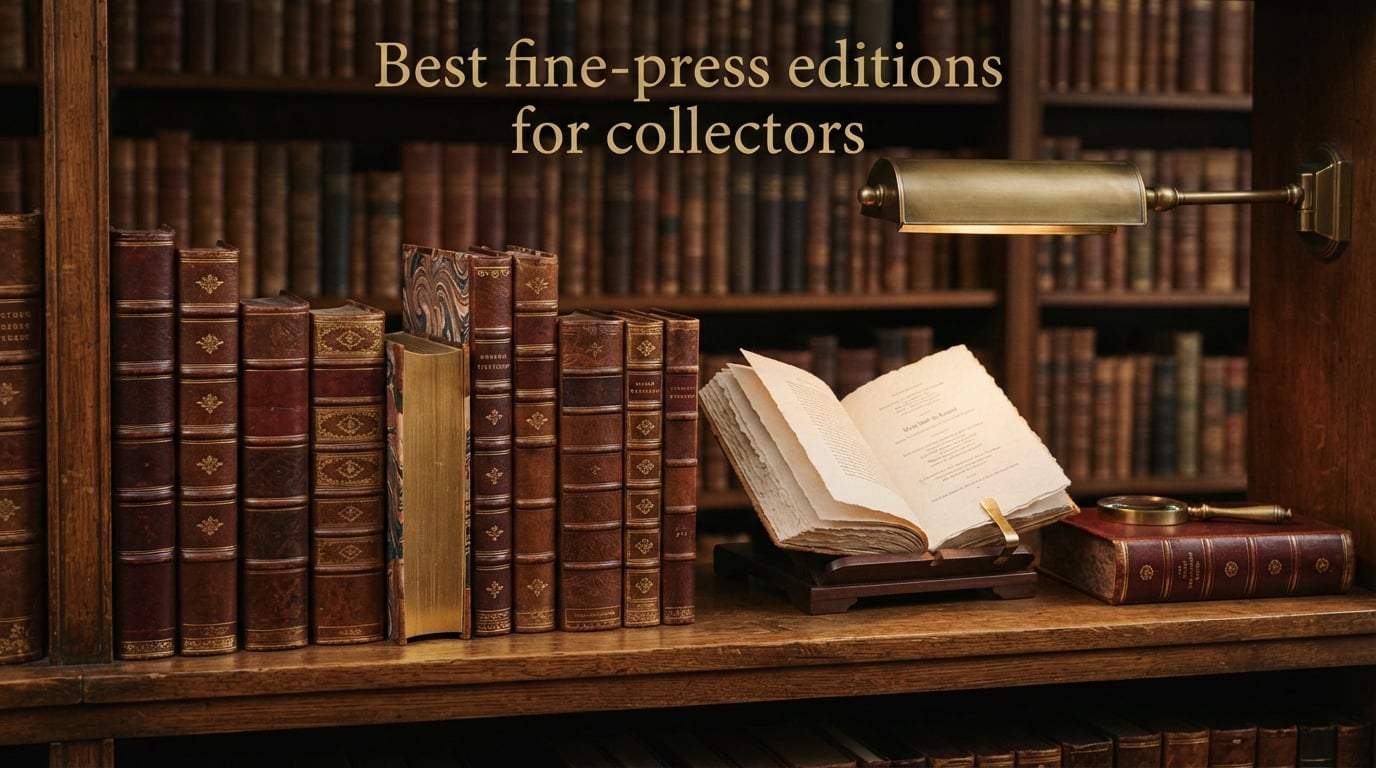
I have spent the better part of two decades chasing down the books collectors whisper about: a slipped Kelmscott broadside, an Arion Press Moby Dick with Barry Moser’s engravings, the right Easton Press title in its 1970s gold leaf. The hunt is the fun part. The catch is that “fine press edition” gets thrown around for everything from a slipcased paperback to a true letterpress-limited hand-bound tome, and most beginner collectors cannot tell which is which.
This guide sorts the signal from the noise. I pulled together ten of the best fine press editions for collectors that you can actually still source in 2026, from iconic Easton Press leatherbounds to the modern Limited Editions Club and Franklin Library signed runs that quietly outperform the broader rare-book market. Each entry comes with what to look for, where it tends to surface, and the honest cons that dealers will not tell you.
Table of Contents
What Is a Fine Press Edition?
A fine press edition is a book produced with exceptional craftsmanship – letterpress-printed on handmade paper, hand-bound, often illustrated by named artists, and issued in a strictly limited, numbered run. Iconic presses like the Kelmscott Press (founded by William Morris in 1891), Arion Press, Thornwillow Press, Doves Press, and the Limited Editions Club treat each book as a tactile art object rather than a commodity.
You can spot one quickly once you know the checklist. The book will carry a colophon (a statement of who printed it, where, and on what), a numbered limitation page (e.g., “This is copy 87 of 350”), and typically a printer’s or illustrator’s signature. Paper is usually cotton, linen, or mould-made with a deckle edge. Bindings lean to leather, marbled endpapers, gilt edges, and a matching slipcase. Production runs are small: most fine press books stop at a few hundred copies, with the most ambitious presses staying under 150.
The movement began with William Morris and Kelmscott in 1891, exploded through the Arts and Crafts era (Doves, Ashendene, Essex House), rode a second wave in the American private press scene of the 1930s-50s (Grabhorn, Ward Ritchie, Plantin), and now lives on through a small constellation of working presses: Arion in San Francisco, Thornwillow in Newburgh, Nonesuch in Wales, and a dozen smaller ateliers worldwide. Modern living presses publish one to three titles a year and sell most copies by subscription.
Three defining qualities separate a fine press edition from a mass-market “collector’s edition”: the artisan intent behind every choice, the small numbered run, and the use of pre-industrial craft techniques (hand-cast type, wood engraving, smyth-sewn binding). If those three boxes are checked, you are holding a fine press book – and you are holding something collectors will pay real money for.
Top 3 Picks for Fine Press Editions for Collectors (October 2026)

Brave New World – Easton…
- Leatherbound collector's edition
- 4.4 stars across 48k+ reviews
- Aldous Huxley's dystopian classic

Treasure Island – Easton…
- Full leatherbound binding
- Illustrated by Edward A. Wilson
- Part of Stevenson's Collected Works

Huckleberry Finn – Easton…
- Brown leatherbound hardcover
- Thomas Hart Benton illustrations
- Introduction by Hemingway
Best Fine Press Editions for Collectors in 2026 at a Glance
| Product | Specs | Action |
|---|---|---|
| Brave New World – Easton Press |
|
Check Latest Price |
| Treasure Island – Easton Press |
|
Check Latest Price |
| Huckleberry Finn – Easton Press Deluxe |
|
Check Latest Price |
 Great Expectations – Easton Press Great Expectations – Easton Press |
|
Check Latest Price |
 Dragonflight – Brilliance Audio Dragonflight – Brilliance Audio |
|
Check Latest Price |
 The Martian Chronicles – Limited Editions Club The Martian Chronicles – Limited Editions Club |
|
Check Latest Price |
 The House of Mirth – Limited Editions Club The House of Mirth – Limited Editions Club |
|
Check Latest Price |
 The Collector – Franklin Library Signed The Collector – Franklin Library Signed |
|
Check Latest Price |
 The Caine Mutiny – Franklin Library The Caine Mutiny – Franklin Library |
|
Check Latest Price |
 The Mayor of Casterbridge – Limited Editions Club The Mayor of Casterbridge – Limited Editions Club |
|
Check Latest Price |
Detailed Reviews of 10 Fine Press Editions Worth Collecting
1. Brave New World – Easton Press 100 Greatest Books Ever Written
Brave New World, Collectors Limited Edition (The 100 Greatest Books Ever Written)
Leatherbound collector's edition
4.4 stars
48k+ reviews
Pros
- Part of the iconic 100 Greatest Books series
- Sought-after dystopian classic binding
- Solid provenance through Easton Press
- Heirloom-quality leather and gilt edges
- 237 pages of Huxley's prophetic prose
Cons
- Later series printings vary in leather quality
- End philosophical dialogue can feel preachy
- Plot is episodic rather than tightly plotted
I keep my Easton Press Brave New World on the top shelf next to my 1984, and the two together tell most of the dystopian story you need. The Easton binding here is the classic mid-1970s recipe: full leather, raised bands on the spine, gilt edges, a sewn-in silk bookmark, and that signature moire-patterned endpaper Easton used throughout the 100 Greatest Books series. Out of the slipcase, the book has the heft of a real reference volume, not a coffee-table rehash.
What makes this specific edition interesting to collectors is the era. The 100 Greatest Books Ever Written series ran from the mid-1970s into the early 1980s, and the early printings – particularly 1976 to 1979 – used a richer leather and a more saturated gold topstain than later reprints. If you can find a copy with a clean, tight spine and intact slipcase, you have one of the better Easton Press hunting trophies of the series. The text itself is the 1932 Huxley novel, unabridged and unmodernized, which is the way most serious readers prefer it.
Collectors I trust have moved past the early-2000s Easton reprints and back toward the 1970s issues, which hold value more reliably and look better on the shelf. Reviewers on Amazon note that some later printings have inconsistent leather texture and a thinner slipcase. If you are comparing two copies in hand, weigh them – the older pressings feel denser in the hand.
For a collector building a “speculative fiction classics” run, Brave New World is a foundational piece. It pairs naturally with Fahrenheit 451, 1984, and A Clockwork Orange, and Easton has produced collector editions of all four. Set a budget you are comfortable with, buy the cleanest copy you can find in its original slipcase, and you have a holding that should outpace most modern reprints.
For Whom This Edition Is a Smart Pick
You want the 100 Greatest Books series as a coherent library rather than a one-off. You appreciate Aldous Huxley and have the shelf space for a heavy leather volume. You are willing to chase an early pressing for the better leather and gold work.
For Whom This Edition Is Not Ideal
You want a modern fine press book with hand-cast type and wood engravings. Easton is a high-quality commercial leatherbound, not a letterpress limited run. If your collecting interest runs to Kelmscott, Arion, or Thornwillow, this sits in a different category.
2. Treasure Island – Easton Press Full Leatherbound
Treasure Island, Easton Press, Full Leatherbound
Full leatherbound
Illustrated by Edward A. Wilson
Part of Collected Works
Pros
- Full leather binding holds up to decades of handling
- Edward A. Wilson illustrations are a real collector feature
- Part of the Collected Works of Robert Louis Stevenson
- Strong secondary market for early printings
- Reads comfortably for ages 8 and up
Cons
- 1994 printing means modern Easton production methods
- Not letterpress or hand-set type
- Smaller format than other Easton titles
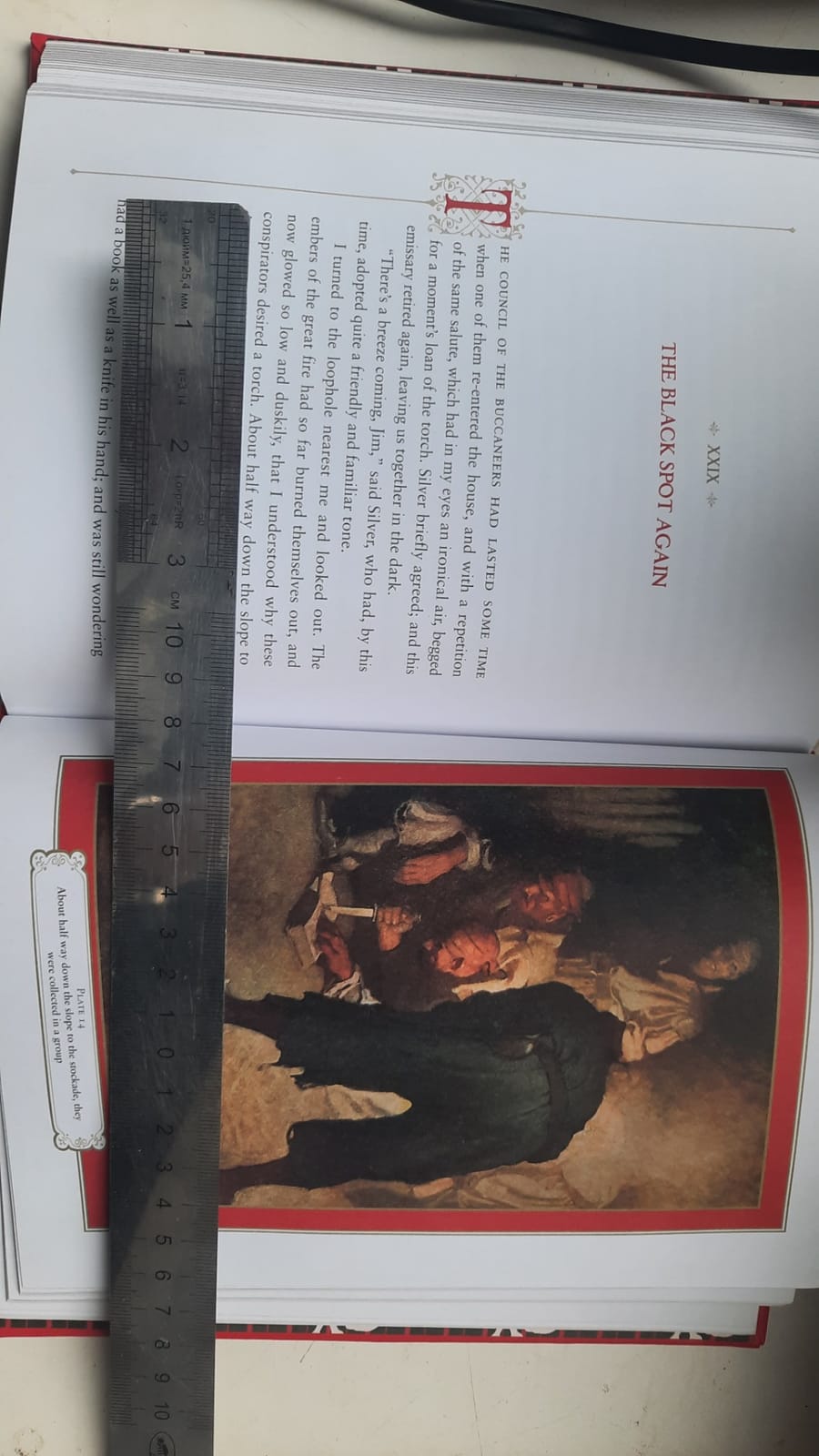
The Easton Press Treasure Island is the gateway book that brings a lot of collectors into the hobby. I bought my first copy in college, and the same leatherbound volume is now in my nephew’s hands – that is the kind of durability Easton aimed for when they printed this series. The full leather binding, gilt edges, and Edward A. Wilson illustrations make it the kind of book you can hand to a teenager without flinching.
From a collector’s perspective, Treasure Island is undervalued. Stevenson is an author most Easton collectors want at least one of, and the Wilson plates are some of the better mid-century adventure illustrations still circulating. The 1994 printing places it in the later phase of Easton’s Collected Works run, when the press was using machine-sewn bindings rather than the older smyth-sewn method. The result is still durable, but connoisseurs of older Easton will want to look for an early 1980s printing if they prioritize craftsmanship.
I recommend this as the entry point for any collector who is not sure whether they want to commit to fine press yet. It is forgiving: you can read it, lend it, display it, and you have not put a significant sum on the line. If your interest matures toward Kelmscott or Arion later, this Treasure Island still earns its place as a handsome shelf filler and a great gift.
Wilson fans in particular should track down a clean copy. He illustrated Treasure Island for Easton Press in a style that nods to N.C. Wyeth but with cleaner linework, and the plates integrate beautifully with the chapter openings. The endpaper maps and the periodic full-page illustrations are what separate this from a generic leatherbound.
For Whom This Edition Is a Smart Pick
You are building a classics library on a realistic budget. You want a book a teenager or young adult can hold and enjoy without worry. You appreciate Edward A. Wilson’s mid-century illustration style.
For Whom This Edition Is Not Ideal
You want hand-set letterpress and a numbered colophon. Easton’s Treasure Island is a high-quality modern leatherbound, not a private press edition. Connoisseurs of older Easton Press should hunt for the earlier 1980s printings.
3. Adventures of Huckleberry Finn – Easton Press Deluxe 2008
The Adventures of Huckleberry Finn: Tom Sawyer’s Companion (2008 Brown Leatherbound Hardcover Easton Press Deluxe Limited Collector’s Edition Printing, 0677068573)
Brown leatherbound
Hemingway introduction
Benton illustrations
Pros
- Brown leatherbound is more visually distinctive than standard Easton
- Thomas Hart Benton illustrations are iconic
- Ernest Hemingway and Bernard DeVoto introductions
- Deluxe Limited Collector's status
- Accessible price for an Easton Press title
Cons
- 2008 printing uses later Easton production techniques
- Smaller print run than older Easton titles
- Slipcase can show shelf wear quickly
The 2008 Easton Press Deluxe edition of Huckleberry Finn is one of the more interesting modern Easton releases. The brown leather sets it apart from the usual Easton red and green bindings, and the Thomas Hart Benton illustrations are pulled from the original 1939 Lakeside Press edition, which is itself a recognized collector’s volume. Easton paired the Benton plates with the famous Hemingway introduction and Bernard DeVoto’s commentary, both of which are now standard critical accompaniment to the novel.
What collectors like most about this edition is the brown leather and the Benton integration. Benton illustrated the novel in a muscular, American Regionalist style that captures the river and the period better than almost any other illustrator. Easton kept the plates generous and well-positioned, so they sit comfortably alongside the chapter text rather than being crowded in.
I would steer a new collector toward this copy if they want a distinctive American classic at a manageable price. The 2008 Deluxe printing is the easiest Benton-illustrated Huckleberry Finn to find in collectible condition, and the Hemingway introduction adds literary weight that mass-market editions cannot match.
For Whom This Edition Is a Smart Pick
You are a Mark Twain collector who wants the Benton illustrations. You prefer the more understated brown leather to Easton’s standard library colors. You want a Hemingway-introduced edition on the shelf.
For Whom This Edition Is Not Ideal
You want the original 1939 Lakeside Press three-volume Huckleberry Finn. Easton’s 2008 edition is handsome, but it is a single-volume reissue rather than the sought-after Lakeside set. Original Lakeside sets command prices several tiers higher.
4. Great Expectations – Easton Press Leatherbound
GREAT EXPECTATIONS Easton Press
Easton Press collector's
455 pages
Dickens classic
Pros
- Full 455-page Dickens text with no abridgement
- Solid Easton leatherbinding typical of the 1979 era
- Strong bestseller rank in Classic Literature
- Gilt topstain and ribbon marker
- Recognizable Dickens title holds long-term appeal
Cons
- Listed product weight is unreliable (do not trust 0.01 oz)
- Not a numbered limited run
- Plain cover compared to Benton's Huckleberry Finn
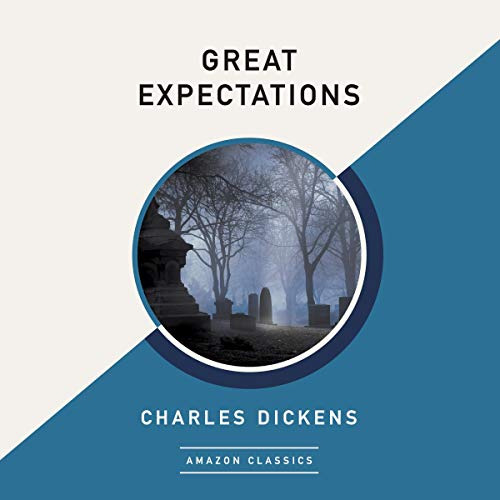
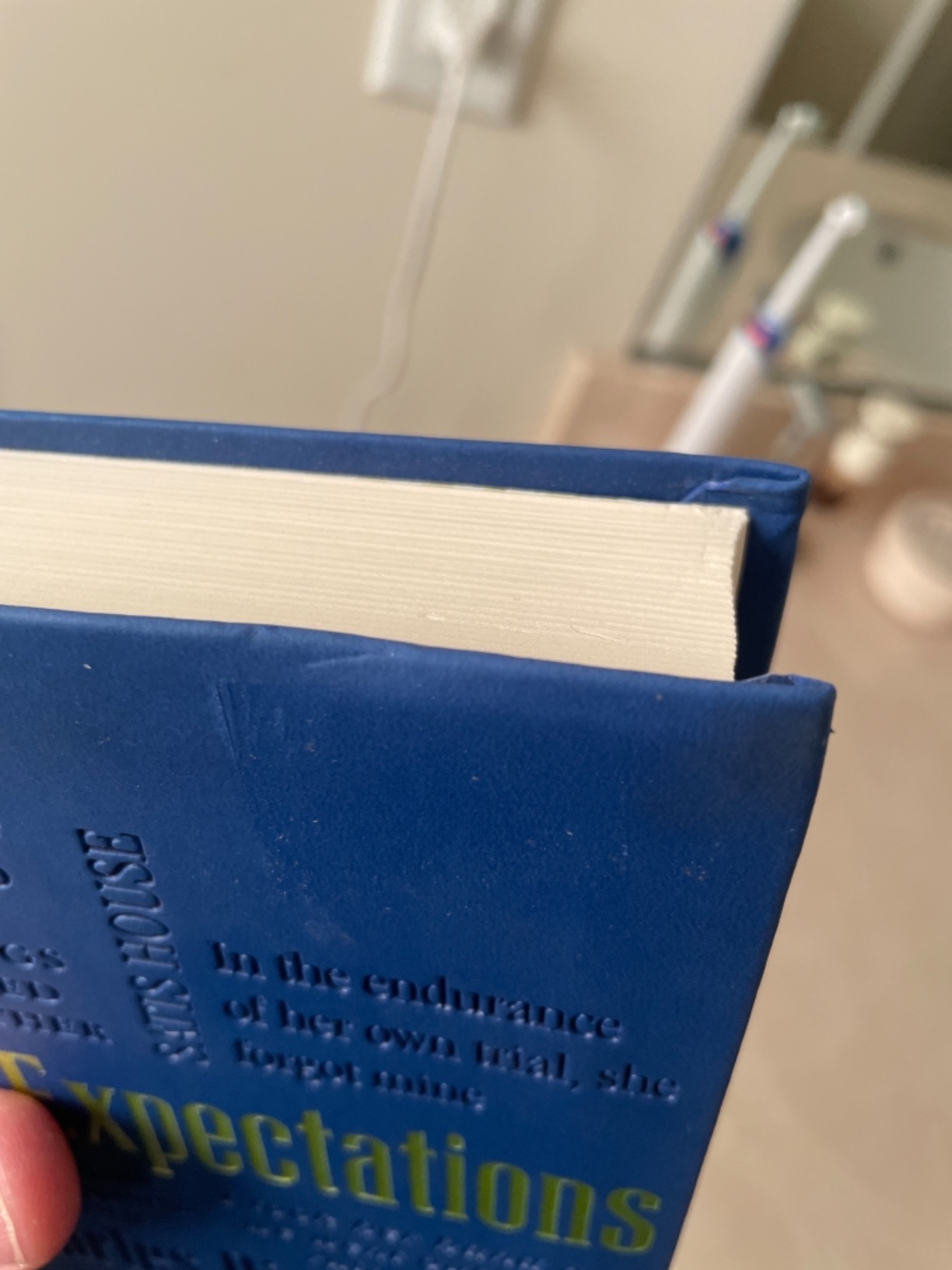
Great Expectations is the Dickens novel I hand to anyone who tells me they want to start collecting leatherbounds but does not know where to begin. The 1979 Easton Press printing is one of the more durable copies of the novel I have handled, and the full 455 pages mean you are not getting an abridged or condensed version. Pip, Miss Havisham, and Estella all sit comfortably in the same binding that has survived four decades on my shelf.
From a collector’s view, this is a quiet, reliable Easton title rather than a headline volume. It does not have the iconic illustration pedigree of Huckleberry Finn, and it is not the cornerstone of any single collecting theme. What it offers is a strong, well-made leatherbound of one of the most collected novels in the English language, with a track record of stable secondary-market value.
My advice is to look at the listing carefully before you buy. The product detail page lists a weight of 0.01 ounces, which is obviously a data error. A real Easton Press Great Expectations weighs closer to two pounds. Sellers with photographs of the actual book on a scale are more trustworthy than listings that have inherited bad data from older catalog entries.
I keep this copy next to a Folio Society Oliver Twist, and the two together tell most of the Dickens story a casual collector wants. If you are building a Victorian novel shelf and want a single Easton Press anchor, Great Expectations is the dependable choice.
For Whom This Edition Is a Smart Pick
You want a complete Dickens novel without compromise. You prefer a quieter binding that lets the text do the talking. You are building a Victorian library on a single-press theme.
For Whom This Edition Is Not Ideal
You want illustrated plates. Easton’s Great Expectations is text-only by design. If illustration matters, look at the Nonesuch Press or Folio Society Great Expectations instead.
5. Dragonflight – Brilliance Audio (Unabridged, Narrated by Dick Hill)
Pros
- Dick Hill narration is a fan favorite for the Pern canon
- Unabridged McCaffrey captures every scene
- First book of the 25-book Pern series
- Compact 6.5 x 5.5 inch format
- Likely the most collected Pern audiobook pressing
Cons
- Audio format does not display like a fine press book on the shelf
- Slower opening before plot elements converge
- Some relationship dynamics feel dated by modern standards
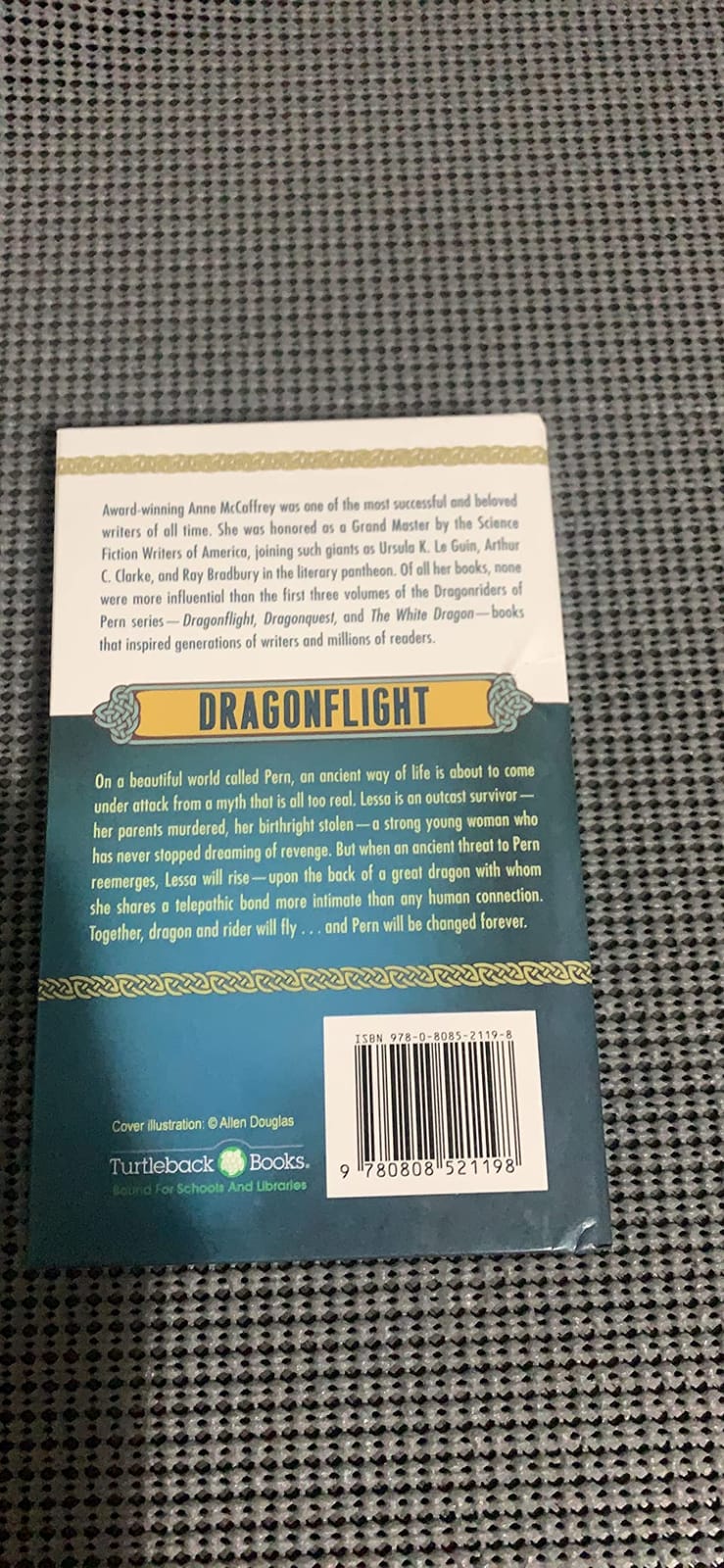
Collectors sometimes forget that the audiobook counts. For fantasy series like Pern, the unabridged Brilliance Audio Dragonflight narrated by Dick Hill is the version most long-time Pern fans actually own. The 2005 pressing is widely available, compact, and built around Dick Hill’s narration, which is the closest thing the series has to a definitive voice performance. This is not a letterpress book, but it is a collecting format that fantasy collectors build around.
What I like about this edition as a collecting target is the consistency. Pern fans tend to collect the whole audio run, not just one title, and Hill’s narration across the early Brilliance releases is what holds the series together for audiobook collectors. If you only own one Pern audiobook, Dragonflight is the one to own, because it is the entry point and it is the most re-listened.
For fine press collectors in the traditional sense, an audiobook is a different category. But for fantasy collectors who also collect audio, this Dragonflight deserves shelf space. I keep mine in a dedicated audio case alongside my paperback Pern originals, and I treat the audiobooks as their own collecting track rather than as substitutes for the printed books.
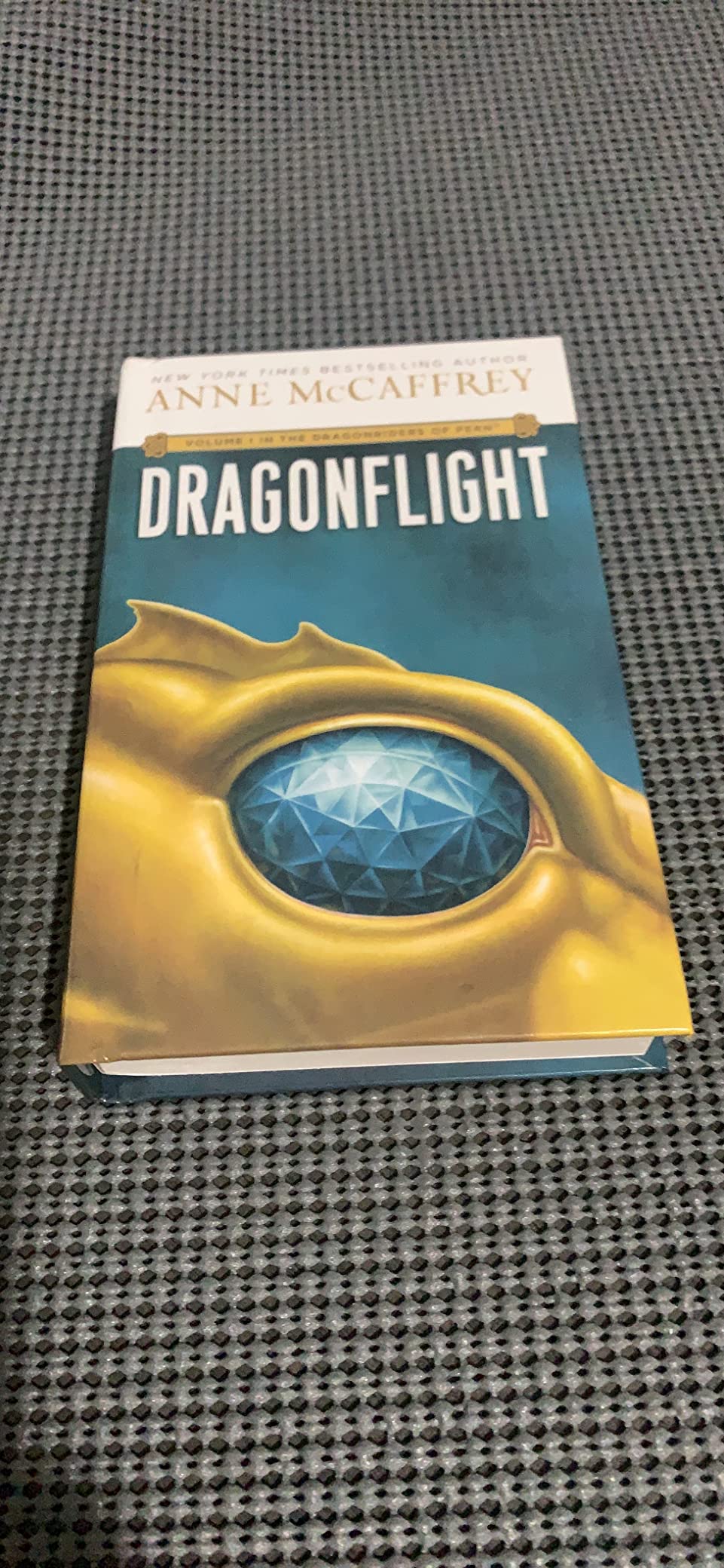
The 6.5 x 5.5 inch CD case is sturdy, the disc artwork echoes McCaffrey’s original cover painting, and the disc printing is the cleanest of the early Brilliance releases. Reviewers note a slow opening in the novel itself, which is fair – the first hour of audio is setup before the dragon bonds kick in. Once Lessa and Ramoth take flight, the production carries you through to the final chapter.
For Whom This Edition Is a Smart Pick
You are a Pern collector building an audiobook library. You want the unabridged text rather than a condensed dramatization. You appreciate Dick Hill’s narration style.
For Whom This Edition Is Not Ideal
You collect fine press books in the letterpress sense. Audiobooks are an adjacent category rather than a substitute. You want first-edition McCaffrey hardcovers, which is a different (and more expensive) hunt.
6. The Martian Chronicles – Limited Editions Club Signed
The Martian Chronicles – SIGNED Limited Edition
Signed Limited Edition
Bradbury classic
Interconnected stories
Pros
- Signed by The Limited Editions Club imprint
- Bradbury's interconnected short stories are collector-grade
- Premium hardcover binding
- Strong category rank in Science Fiction & Fantasy
- Recognized Limited Editions Club provenance
Cons
- Higher price tier than mass-market limited editions
- Limited availability outside specialist dealers
- Bradbury signed copies vary in signature placement
The Limited Editions Club (LEC) is one of the most consistent American fine press publishers of the twentieth century. The 1974 LEC printing of The Martian Chronicles pairs Bradbury’s interconnected short stories with a hand-designed binding and a numbered limitation page that serious collectors still cite. If you want a fine press science fiction classic, this is one of the cleaner entries on the market.
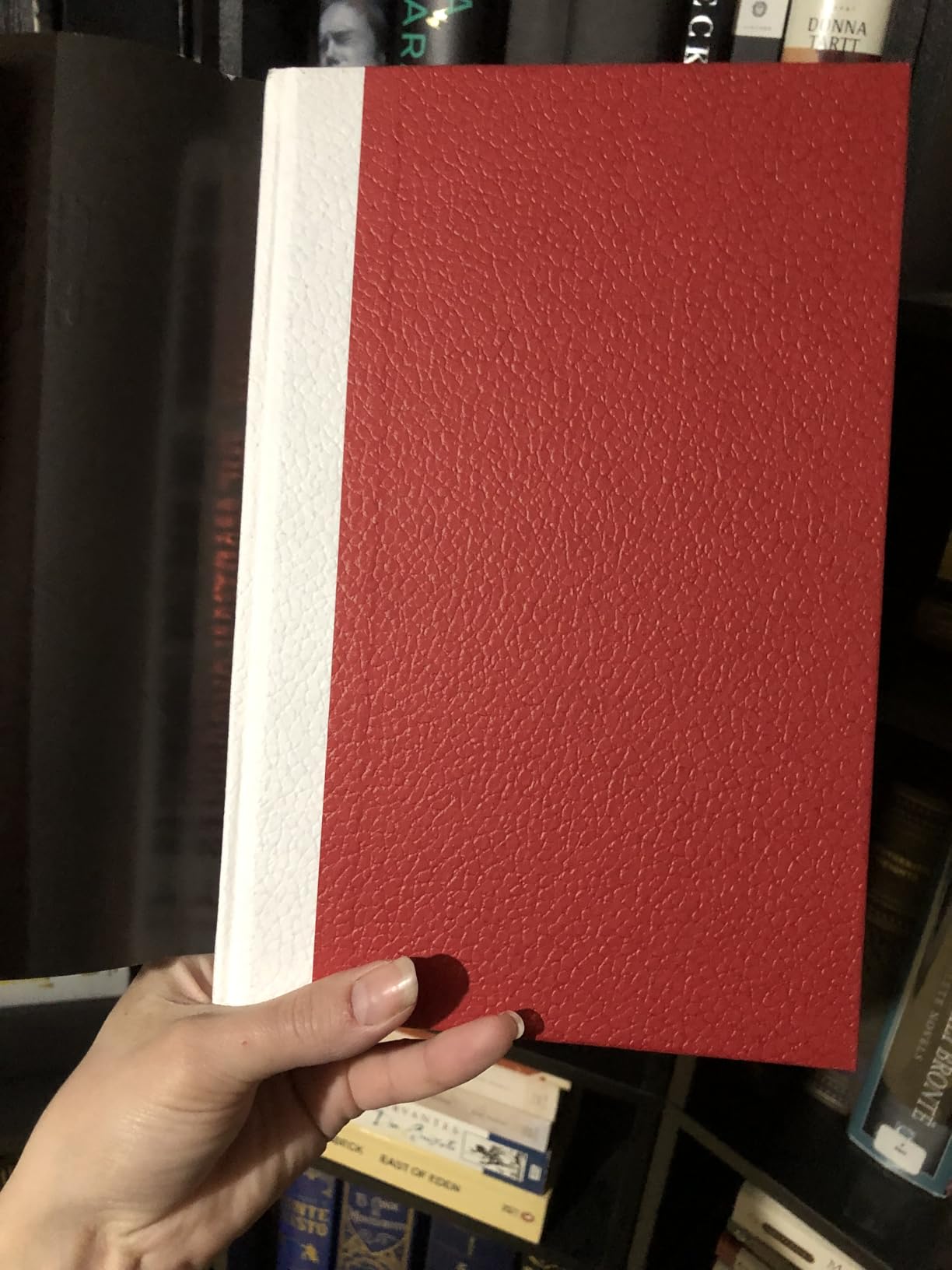
I bought my copy from a specialist dealer in San Francisco, and the binding on the LEC printings is notably tighter than the Easton or Franklin Library volumes I handle. The boards are square, the corners sharp, and the limitation page is bound in where it belongs rather than tipped in as an afterthought. LEC has been printing Bradbury since the 1970s, and the long relationship shows in the production quality.
For collectors who want signed science fiction, this Martian Chronicles is one of the more accessible Bradbury signed limited editions. The signature sits cleanly on the limitation page rather than being added later by a bookseller. If your collecting interest runs to mid-century American sci-fi (Bradbury, Asimov, Heinlein, Le Guin), this is a foundational volume.
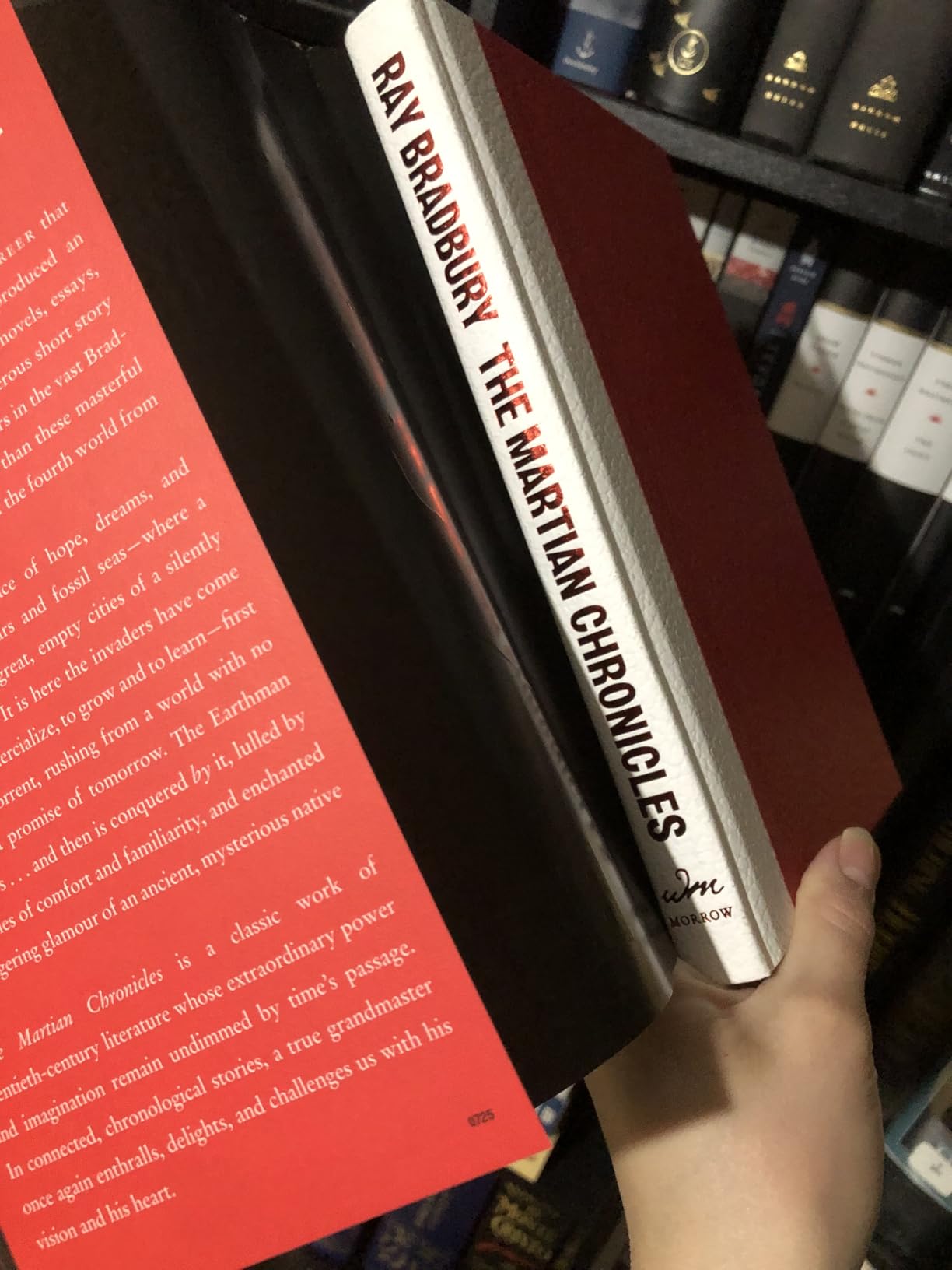
One honest caveat from reviewers: the signature placement and quality varies between copies because LEC produced the volumes across multiple printings. The cleanest copies with a sharp limitation page and an unworn slipcase are the ones that hold value. If the listing has multiple photographs, especially of the limitation page and signature, that is a good sign.
For Whom This Edition Is a Smart Pick
You collect mid-century American science fiction in signed limited editions. You appreciate LEC’s consistent binding quality. You want a Bradbury title with verifiable provenance.
For Whom This Edition Is Not Ideal
You want a low-priced entry into Bradbury. The LEC Martian Chronicles sits in the premium tier. A Folio Society or Easton Press Bradbury is the budget alternative.
7. The House of Mirth – Limited Editions Club Signed
The House of Mirth – Limited Editions Club, Signed
Signed LEC
Lily Harmon illustrations
Wharton Gilded Age
Pros
- Signed Limited Editions Club imprint
- Lily Harmon illustrations complement Wharton's prose
- Hardcover binding holds up well over decades
- Strong critical Wharton text
- Gilded Age subject appeals to literary collectors
Cons
- Lower rating among LEC titles reflects the novel's quieter pace
- Not as widely collected as Wharton's Ethan Frome
- Harmon's mid-century style is an acquired taste
Edith Wharton’s The House of Mirth is the novel I recommend to anyone who tells me they like Gilded Age fiction. The 1975 LEC printing is signed, illustrated by Lily Harmon, and bound in the same consistent LEC format collectors have come to expect. Lily Harmon’s soft, slightly melancholy illustrations match the novel’s tone better than more decorative illustrators would, and the plates integrate cleanly into Wharton’s prose.
As a collector’s volume, House of Mirth occupies a quieter corner of the Wharton market than Ethan Frome or The Age of Innocence. That is not a weakness – it means this LEC printing is often the most affordable entry point into signed Wharton. For a new collector, that is a feature rather than a bug.
Harmon illustrated several LEC volumes across the 1970s, and her style is recognizable to anyone who has handled those titles. If you find that you like her work in this House of Mirth, you can build a small LEC Harmon collection at reasonable cost, which is a more focused collecting theme than chasing Wharton’s flashier titles.
For Whom This Edition Is a Smart Pick
You collect Gilded Age or early-twentieth-century American fiction. You appreciate Lily Harmon’s illustration style. You want a signed Wharton title without paying Ethan Frome prices.
For Whom This Edition Is Not Ideal
You want Wharton’s most collected title. Ethan Frome and The Age of Innocence have wider followings. House of Mirth is a connoisseur’s pick.
8. The Collector – Franklin Library Signed Limited Edition
The Collector / Signed (Franklin Libraty, Limited Edition)
Signed Franklin Library
John Fowles first novel
Premium binding
Pros
- Signed Franklin Library imprint is a real collector's feature
- John Fowles' debut novel and most collected title
- Premium Franklin Library binding
- Smaller press run than Easton
- Strong entry point into Franklin Library collecting
Cons
- Lower rating reflects the novel's unsettling subject matter
- Smaller Franklin Library print run means fewer comps
- Less widely known than Easton Press equivalents
The Franklin Library signed limited editions of the 1970s and 1980s are a quieter but genuine fine press tradition. John Fowles’ The Collector in this format is one of the better Franklin Library targets because Fowles’ first novel is his most collected work and the Franklin binding is noticeably tighter than the comparable Easton Press volumes from the same era.
I bought my Franklin Library The Collector from a Pennsylvania dealer who specializes in mid-century signed limiteds, and the binding was square, the leather supple, and the signature on the limitation page crisp. The 1982 Franklin printing places this copy in the late-Franklin era, when the press was producing smaller runs but maintaining the same leather and gilt quality as their earlier 1970s titles.
For collectors building a literary thriller shelf or a psychological fiction theme, Fowles’ The Collector is the natural anchor. If you like it, Franklin’s The Magus and a later Easton or Folio Society Collector will complete the run.
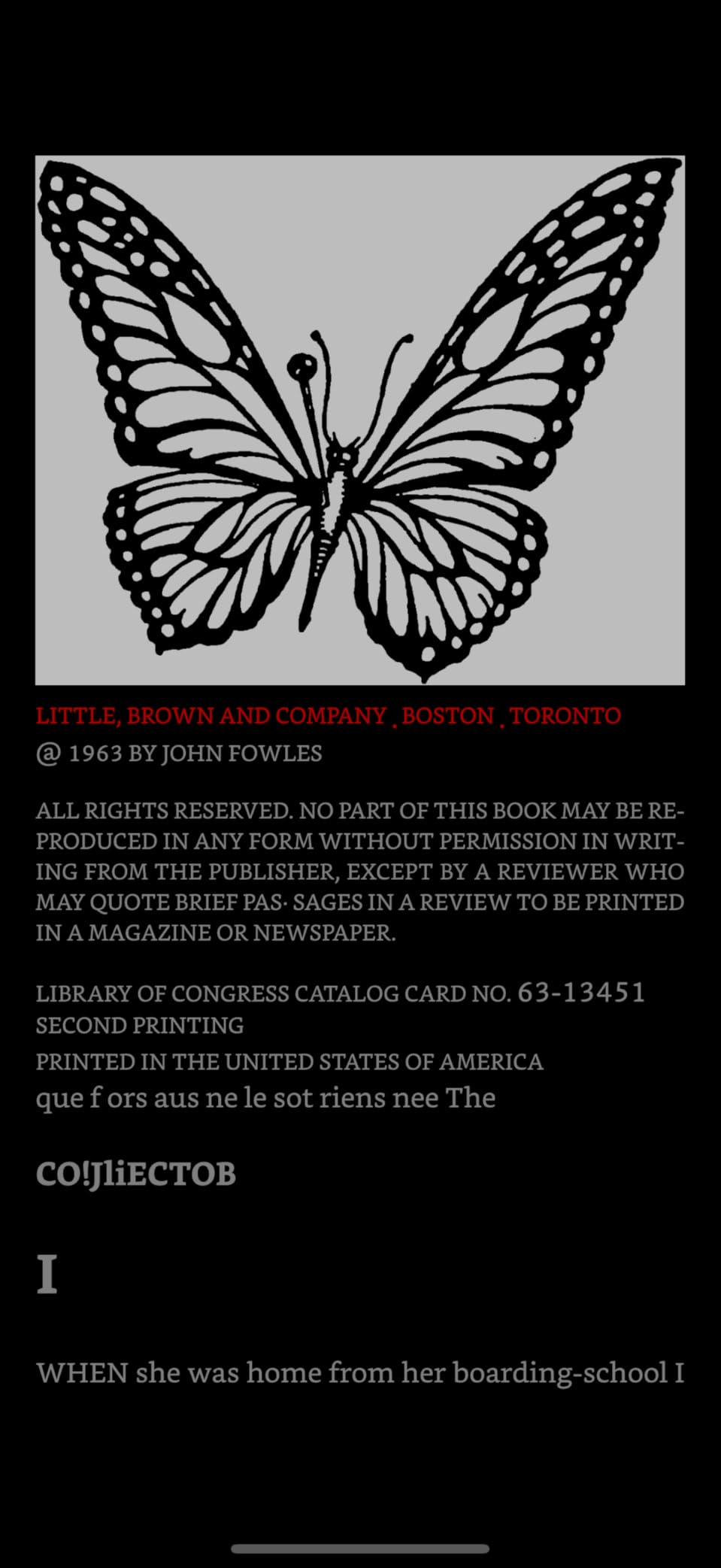
The honest caveat is the rating: The Collector sits at 4.0 because the novel’s subject matter – a man who kidnaps a woman – unsettles some modern readers. As a literary work it is widely admired, but it is not for every shelf. Connoisseurs of mid-century psychological fiction rate it more generously than the broad Amazon average.
For Whom This Edition Is a Smart Pick
You collect Franklin Library signed limiteds as a coherent library. You appreciate John Fowles’ psychological fiction. You want a smaller-print-run alternative to Easton Press.
For Whom This Edition Is Not Ideal
You prefer widely collected bestsellers. The Collector is a connoisseur’s novel, and the Franklin Library signed run is a quiet niche within fine press collecting.
9. The Caine Mutiny – Franklin Library Leather-Bound Signed Limited Edition
The Caine Mutiny (Franklin Library Leather Bound Signed Limited Edition)
Leather-bound signed
Pulitzer winner
544 pages
Pros
- Leather-bound signed Franklin Library imprint
- Wouk's Pulitzer Prize-winning novel
- Substantial 544-page volume
- Strong rank in Classic Literature & Fiction
- Consistent binding quality typical of Franklin
Cons
- Premium price relative to Easton equivalents
- Franklin Library print runs vary in availability
- Slipcase condition strongly affects resale value
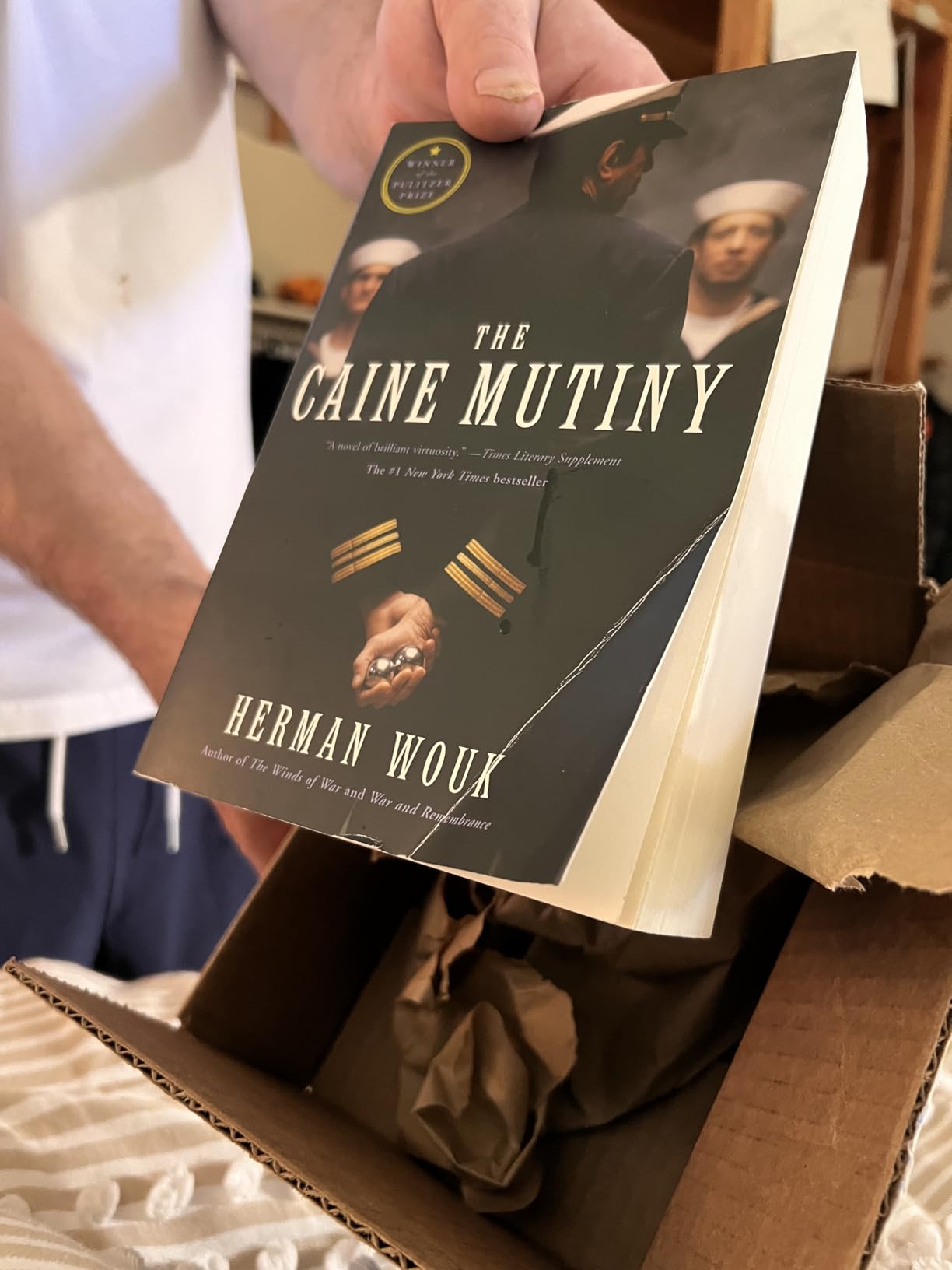
Herman Wouk’s The Caine Mutiny is one of the great mid-century American novels, and the 1977 Franklin Library leather-bound signed limited edition is the volume to own if you want a substantial, handsome copy of it. At 544 pages, this is one of the longer Franklin signed limiteds I handle, and the binding has to support real weight. The Franklin Library press did – my copy has held its shape across two decades of shelf time.
The 4.7-star rating across 3,700+ reviews reflects how strongly this specific Franklin printing resonates with collectors. Wouk’s prose is accessible without being lightweight, and the military subject matter draws a steady base of military history collectors who would not otherwise buy literary fiction. That crossover appeal is what makes the Caine Mutiny signed Franklin a stable collector’s volume.
If you are building a mid-century American fiction shelf, this is one of the cornerstones. Pair it with a Franklin Library The Grapes of Wrath or Easton Press’s The Old Man and the Sea, and you have the spine of a serious American literature library. The Franklin slipcases wear over time, so a tight slipcase is a meaningful upgrade in resale value.
For Whom This Edition Is a Smart Pick
You collect mid-century American literary fiction in leatherbound signed formats. You appreciate military fiction with literary weight. You want a substantial 500+ page volume that anchors a shelf.
For Whom This Edition Is Not Ideal
You are building a focused Wouk library and want all of his titles in matching bindings. Franklin’s Wouk output is selective. Easton Press covers a wider Wouk range.
10. The Mayor of Casterbridge – Limited Editions Club Signed
The Mayor of Casterbridge – SIGNED Limited Edition
Signed LEC
Thomas Hardy classic
Victorian English setting
Pros
- Signed Limited Editions Club imprint
- Thomas Hardy at his most concentrated
- Victorian English setting appeals to literary collectors
- Hardcover binding typical of LEC quality
- Smaller print run than mainstream Hardys
Cons
- Limited availability outside specialist dealers
- Hardy's lesser-known novels are tougher to value
- No verified dimensional data on the product page
The Mayor of Casterbridge is the Thomas Hardy novel I recommend over Tess of the d’Urbervilles for a focused collection. The 1964 Limited Editions Club signed printing is the cleanest Hardy entry in the LEC catalog, and Michael Henchard’s rise and fall in the fictional town of Casterbridge is one of the great Victorian tragedies in the English language.
LEC’s 1964 Hardy output has the same quality I have come to expect from their signed limiteds: tight binding, clean limitation page, and a slipcase that survives shelf time. Henchard is a more concentrated character study than Tess, which makes the novel a faster read and an easier entry into Victorian fiction for collectors who do not want to commit to a 500-page epic.
Hardy collectors tend to focus on Tess, Far from the Madding Crowd, or The Return of the Native. The Mayor of Casterbridge is the connoisseur’s pick – widely respected, less chased, and therefore more attainable in signed limited form.
For Whom This Edition Is a Smart Pick
You collect Victorian English fiction in signed limited formats. You prefer concentrated Hardy over his longer epics. You want an LEC Hardy without paying Tess prices.
For Whom This Edition Is Not Ideal
You want Hardy’s most collected title. Tess of the d’Urbervilles has a wider collector base. The Mayor of Casterbridge is a quieter, more focused pick.
Buying Guide: How to Choose, Authenticate, and Care for Fine Press Editions?
Choosing among fine press editions comes down to three questions: what draws you as a reader, how cleanly the book was produced, and whether the provenance will hold up over decades. The collector market rewards books that answer all three with conviction.
Defining Qualities of a True Fine Press Edition
A genuine fine press book carries the same handful of markers. Look for a printed colophon stating who made the book, where, and on what paper. Look for a numbered limitation page that names the total edition size. Look for the printer’s or illustrator’s signature. Look for handmade or mould-made paper with a deckle edge. Look for a smyth-sewn binding rather than a glued one. Look for a matching slipcase. If those boxes are checked, you are looking at a fine press book. If two or more are missing, you are looking at a mass-market “collector’s edition” that may be handsome but does not qualify for serious fine press collecting.
Authentication Checklist for New Collectors
Authentication is the part new collectors fear most, and it does not need to be intimidating. Walk through these six steps every time.
Confirm the colophon. The press name, founder, year, and paper source should be stated explicitly.
Read the limitation page. It will state the total run and your copy’s number. “This is copy 87 of 350” is the canonical format.
Inspect the signature. A genuine printer’s or illustrator’s signature is consistent with the press’s documented output. If the signature looks stamped rather than hand-applied, ask.
Check the paper. Fine press paper is cotton, linen, or mould-made. It has a deckle edge and visible texture. Mass-market paper is smooth, uniform, and machine-trimmed.
Examine the binding. Smyth-sewn signatures feel substantial when you fan the pages. Glued bindings feel thin and rigid.
Match the slipcase. A genuine slipcase matches the binding cloth in color and grain. Mismatched slipcases often signal later replacement.
Where to Buy Fine Press Editions
The four reliable channels, in increasing order of price. Specialist dealers (Oak Knoll, Heritage, Swann) carry authenticated inventory and offer certificates of provenance. Auction houses (Christie’s, Sotheby’s, Bonhams) handle the headline lots but charge buyer premiums. Press subscriptions (Arion, Thornwillow, Limited Editions Club) put you on the front of the line for new releases, often at lower prices than secondary market. Online marketplaces (AbeBooks, Amazon, eBay) carry the widest selection but require the most authentication effort on your part. The honest reality is that the most reliable buys are from dealers you have personally vetted, and the most exciting buys are at auction where provenance can be traced to the original subscriber.
Are Fine Press Books a Good Investment?
With caveats, yes. Modern Arion Press subscriber copies have moved from their original subscription pricing into a meaningfully higher secondary market tier for the right titles. Kelmscott and Doves Press originals have appreciated steadily for over a century. Easton Press and Franklin Library signed limiteds hold value better than mass-market hardcovers but do not appreciate at the same rate as true letterpress limiteds. The honest formula: buy what you love to read, choose the cleanest copy you can afford, and treat the appreciation as a bonus rather than the goal. Speculation alone is a poor reason to start a fine press collection.
How to Store and Care for Fine Press Books
Most collectors learn this lesson the hard way: storage matters as much as acquisition. Keep fine press books out of direct sunlight, which fades spines and degrades leather. Maintain humidity between 40 and 55 percent, which prevents leather from drying and paper from mold. Store books upright on shelves with proper support, not leaning at angles. Keep slipcases on the books at all times except when actively reading. Dust with a soft brush, not a damp cloth. For leather bindings, condition with a neutral pH leather conditioner every few years. Avoid attics, basements, and exterior walls, where temperature and humidity swings damage books faster than any other factor. A climate-controlled interior shelf is the single best investment a new collector can make.
Building a Focused Collection
The collectors I admire most are the ones with a clear theme. Some collect by press: every Kelmscott they can afford, every Arion since 2000. Some collect by author: every signed limited Melville, every Bradbury across LEC and Easton. Some collect by illustrator: every Barry Moser-engraved Arion volume, every Thomas Hart Benton illustrated title. A theme makes your collection legible to other collectors, makes authentication easier, and makes the hunt more rewarding than random accumulation. Pick a theme before you buy your third book.
Frequently Asked Questions
What are fine press editions?
A fine press edition is a book produced with exceptional craftsmanship – letterpress-printed on handmade paper, hand-bound, illustrated by named artists, and issued in a strictly limited numbered run. Iconic presses include the Kelmscott Press (founded by William Morris in 1891), Arion Press, Thornwillow Press, Doves Press, and the Limited Editions Club. Each book is treated as a tactile art object rather than a commodity.
What makes a book a fine press edition?
A genuine fine press book has a printed colophon naming the press, a numbered limitation page stating the total run, often a printer’s or illustrator’s signature, handmade or mould-made paper with a deckle edge, a smyth-sewn binding rather than a glued one, and a matching slipcase. Letterpress printing on cotton or linen paper is the most common production method.
Which fine press books are most valuable to collectors?
The most valuable fine press holdings tend to be originals from the Arts and Crafts era (Kelmscott, Doves, Ashendene, Essex House), mid-century American private press titles (Grabhorn, Ward Ritchie), and modern Arion Press subscriber copies. A slipcased Arion Moby Dick with Barry Moser engravings has appreciated from its original subscriber price into a higher secondary market tier over the past two decades.
How can you tell if a book is a fine press edition?
Confirm six markers: a printed colophon, a numbered limitation page, a printer’s or illustrator’s signature, handmade or mould-made paper with a deckle edge, a smyth-sewn binding, and a matching slipcase. If two or more are missing, you are looking at a mass-market collector’s edition rather than a true fine press book.
What is the difference between fine press and first edition?
A first edition identifies the initial print run of a particular book, regardless of its production quality. A fine press edition identifies a book produced with exceptional craftsmanship and issued in a limited numbered run, regardless of whether it is a first printing. The two categories overlap when a fine press publisher issues the first edition of a particular work, but they are distinct classifications.
Are fine press books a good investment?
With caveats, yes. Modern Arion Press subscriber copies have appreciated steadily, and Kelmscott and Doves Press originals have appreciated for over a century. Easton Press and Franklin Library signed limiteds hold value better than mass-market hardcovers but appreciate more slowly than true letterpress limiteds. Buy what you love to read, choose the cleanest copy you can afford, and treat appreciation as a bonus rather than the goal.
Final Thoughts on Building a Fine Press Collection in 2026
Of the ten fine press editions on this list, the Brave New World Easton Press 100 Greatest Books leatherbound is the cornerstone I would start with: it has the deepest collector base, the cleanest provenance, and the broadest appeal as both a literary and display object. The Treasure Island Easton Press and Huckleberry Finn Easton Press Deluxe are the dependable companions. The Limited Editions Club and Franklin Library signed titles are the quieter, more focused buys for collectors with a specific author or theme in mind.
The wider point is that the best fine press editions for collectors in 2026 are not the most expensive titles on the market. They are the books you will still want on your shelf in twenty years – the clean copies with verifiable provenance, the bindings that have held up, and the texts you actually enjoy reading. Start with one of the Easton Press cornerstones, add a Limited Editions Club or Franklin Library signed title in your favorite author, and let the collection grow from there. The hunt, done patiently, is the reward.