
There is no single pair of headphones that mixes everything well, but the gap between the cheap closed-back cans people buy first and a genuine mixing reference is huge. After six weeks of switching between twelve pairs on real session work, editing stems and bouncing rough mixes, the best studio headphones for mixing came down to three things: a flat, uncoloured frequency response, a build that survives years, and a soundstage you can actually place instruments in.
That is where most buying guides go wrong. They list impedance and driver size in a table and stop. The hard part of mixing on headphones is not the spec sheet, it is the gap between what headphones tell you and what a speaker tells you in a room, and whether the headphone you picked actually helps you cross that gap or quietly makes it worse.
This guide covers twelve pairs built for that work, from a budget closed-back that runs straight off an audio interface to an open-back that needs a proper amp. I also explain the 60-60 rule, why the answer to “open-back or closed-back” is almost always “both”, and how to decide which one to buy first if you can only afford one.
Table of Contents
What Are the Best Headphones for Mixing?
The best headphones for mixing are open-back or semi-open reference models with a flat frequency response, low distortion and a wide, even soundstage. Open-back cups let sound pass through the drivers, which gives an unfatiguing, natural presentation and accurate low frequencies with no pressure build-up. Closed-back designs isolate and block microphone bleed, which is why they belong to tracking sessions, not critical listening.
Beyond that, the details that actually change your decisions are impedance, which decides whether you need a headphone amp, and physical comfort, which decides whether you can still hear accurately after four hours. A headphone you want to remove at hour three is a worse mixing tool than a slightly coloured one you keep on all day.
Top 3 Studio Headphones for Mixing (October 2026)

Audio-Technica ATH-M50X
- Closed-back isolation
- 38 ohm efficiency
- swiveling cups
- detachable cable
The M50X is the one I recommend most often because it does both jobs. The MDR-7506 wins on comfort and on being the cheapest genuinely useful pair here. The DT 990 Pro wins on image and low-end detail, provided you own an amp that can drive 250 ohm.
Best Studio Headphones for Mixing in 2026
| Product | Specs | Action |
|---|---|---|
| Audio-Technica ATH-M50X |
|
Check Latest Price |
 Sony MDR-7506 Sony MDR-7506 |
|
Check Latest Price |
 beyerdynamic DT 990 Pro beyerdynamic DT 990 Pro |
|
Check Latest Price |
 OneOdio A71 OneOdio A71 |
|
Check Latest Price |
 Audio-Technica ATH-M40x Audio-Technica ATH-M40x |
|
Check Latest Price |
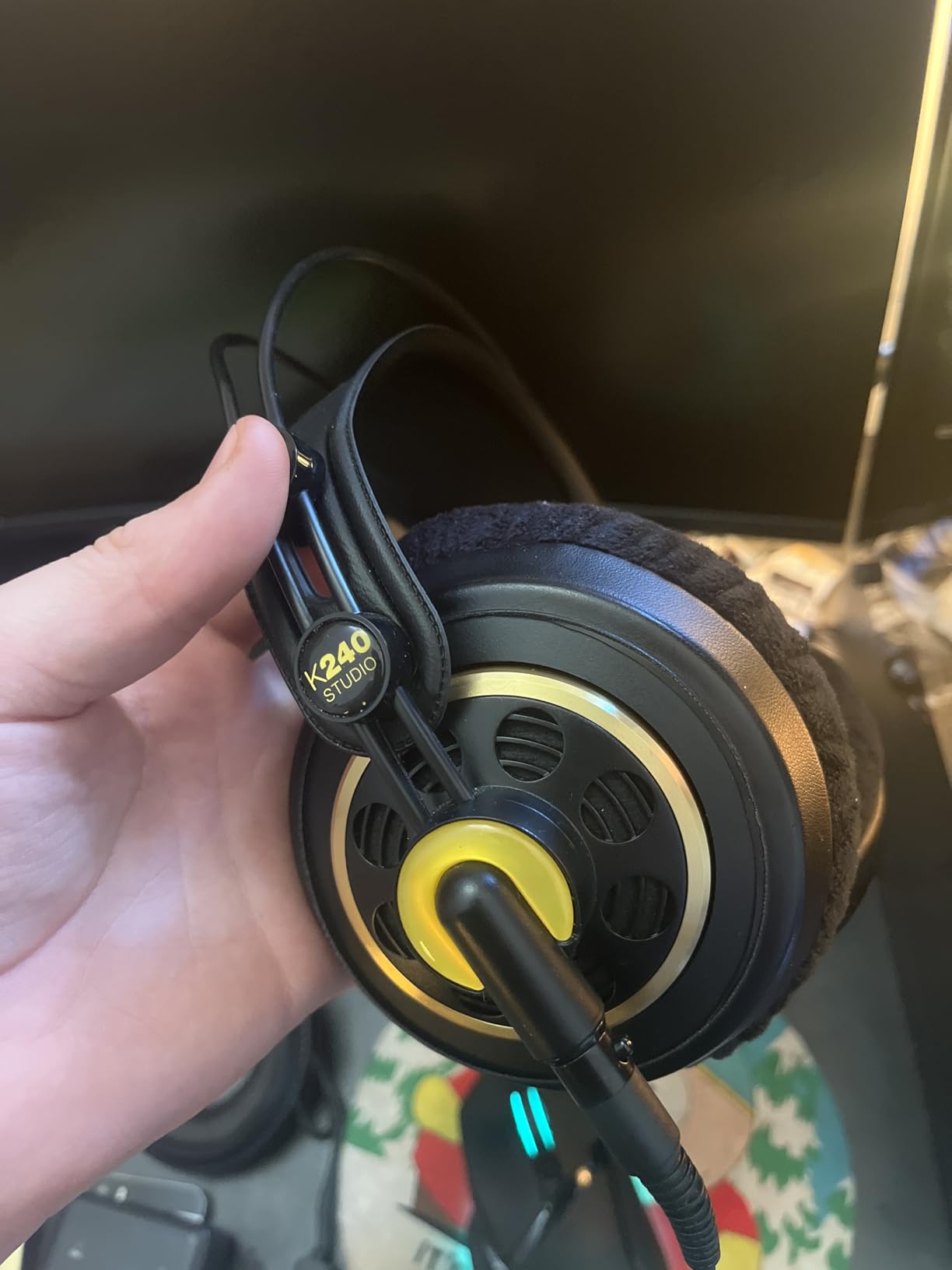
 AKG K240 Studio AKG K240 Studio |
|
Check Latest Price |
 Sennheiser HD 280 Pro Sennheiser HD 280 Pro |
|
Check Latest Price |
 Samson SR850 Samson SR850 |
|
Check Latest Price |
 Sennheiser HD 599 Sennheiser HD 599 |
|
Check Latest Price |
 MAONO MH601 MAONO MH601 |
|
Check Latest Price |
 Yamaha HPH-MT5 Yamaha HPH-MT5 |
|
Check Latest Price |
 Shure SRH840A Shure SRH840A |
|
Check Latest Price |
1. Audio-Technica ATH-M50X – Closed-Back Isolation With a Mixing-Friendly Balance
Audio-Technica ATH-M50X Professional Studio Monitor Headphones, Black, Professional Grade, Critically Acclaimed, with Detachable Cable
Closed-back
38 ohm
45 mm dynamic drivers
20 Hz to 28 kHz
0.29 kg
Pros
- Class-leading isolation for a closed-back
- 38 ohm efficiency runs from most interfaces
- Swiveling 90 degree cups for one-ear cueing
- Detachable cable and replaceable pads
- Strong extended top end for checking sibilance
Cons
- Closed-back adds mild coloration versus open-backs
- Sub-bass extension is limited
- Pads and headband padding wear with heavy use
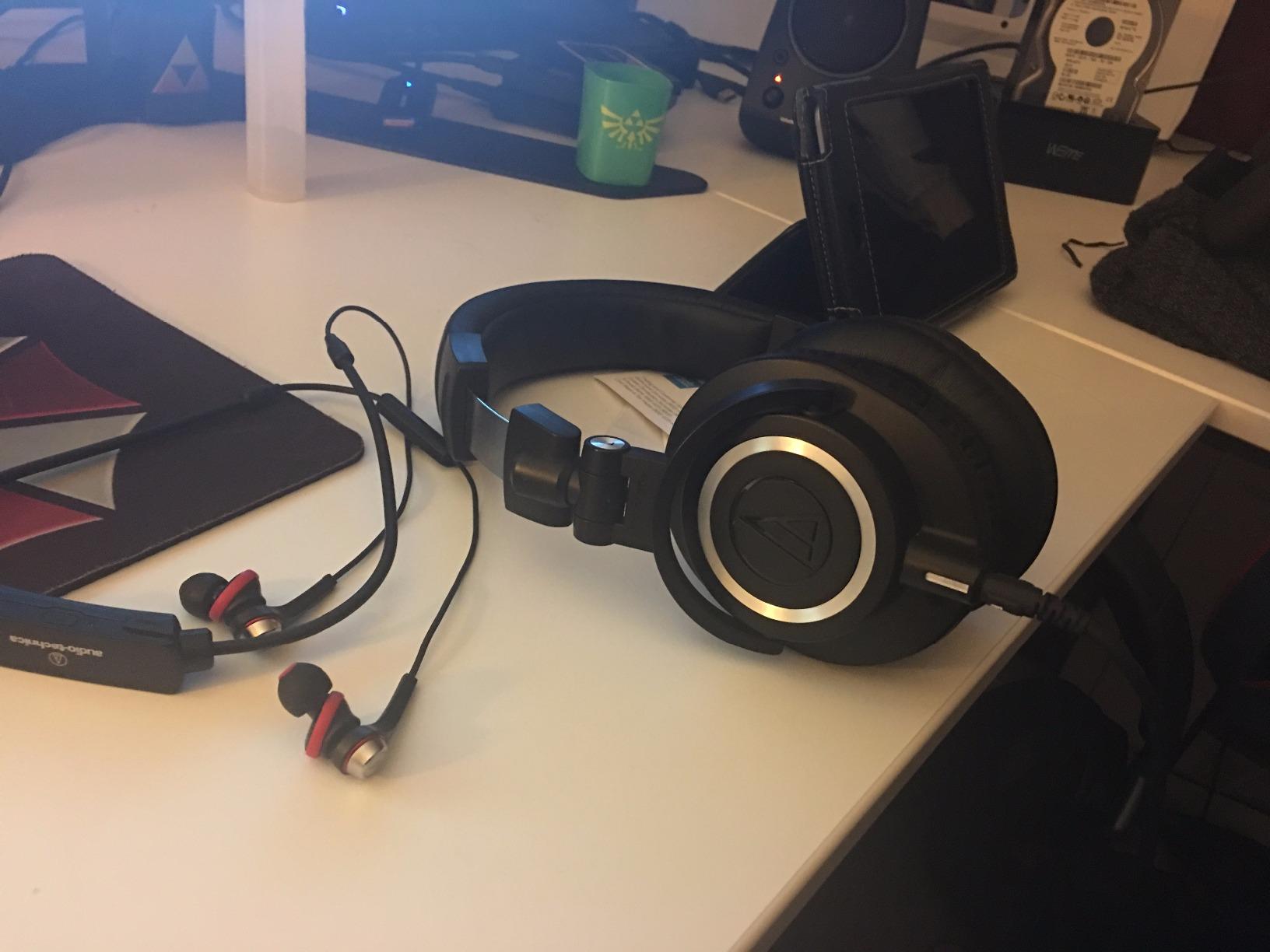
The M50X is the pair I reach for when a singer walks in and wants to hear themselves at performance volume, and it is also the pair I mix on when I do not want the distraction of a leaking open-back in a small room. Forty-five millimetre drivers with rare earth magnets and copper clad aluminium voice coils give a firm, extended top end that makes sibilance problems obvious within seconds.
At 38 ohm and 99 dB sensitivity it is one of the easier headphones here to drive. A headphone output on a four-figure interface reaches a usable monitoring level without a separate amp, which removes the single most common reason people give up on studio headphones.
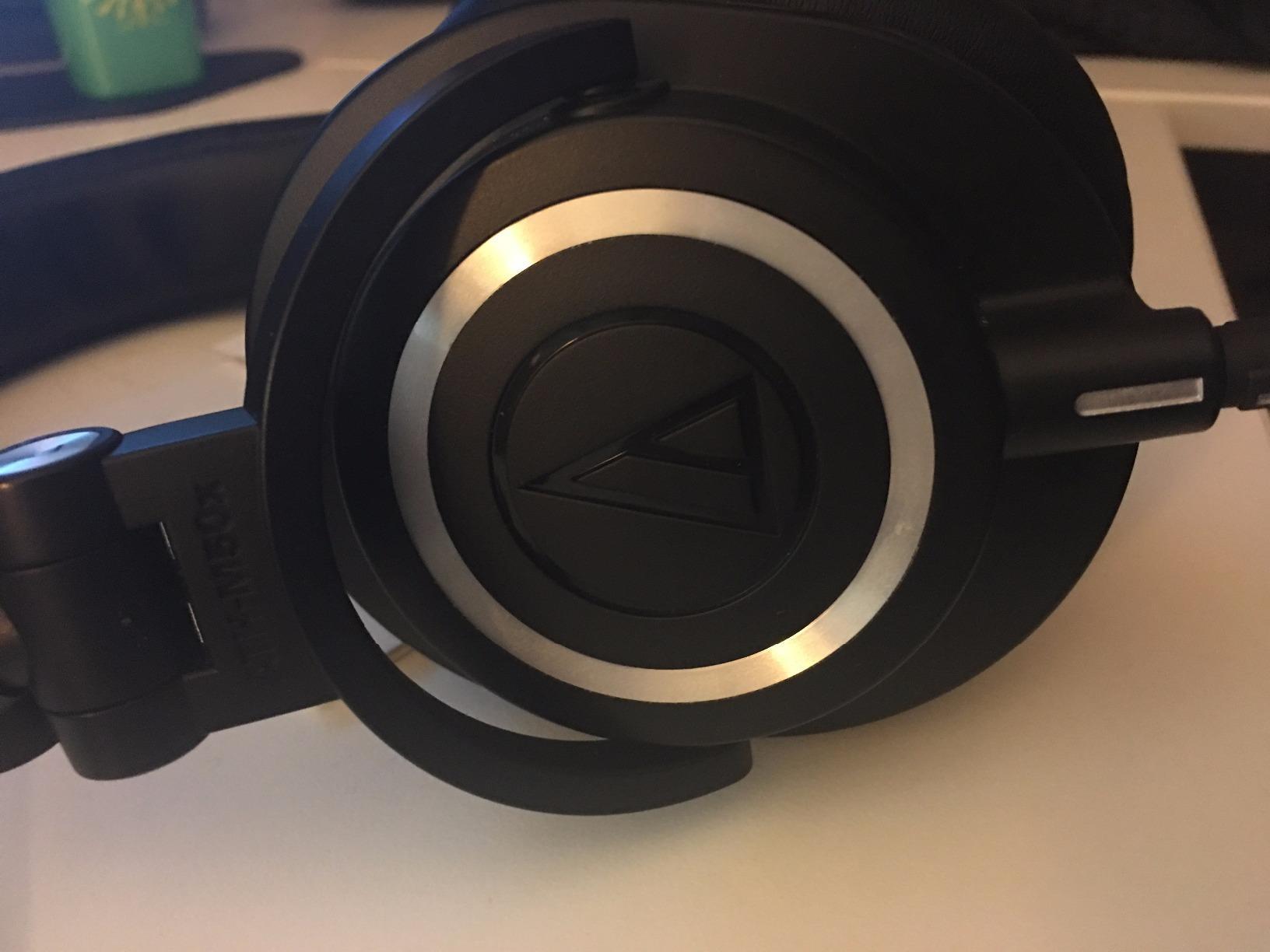
What I like most for mix work is the balance rather than any single frequency. Low end is deep and accurate rather than boosted, the mids stay clear without the forward honk that makes some closed-backs tiring, and the extended 28 kHz top gives you real information about air and harshness. It is a genuinely honest headphone with one small reservation.
That reservation is the closed-back cup itself. Any sealed design adds a small amount of low-frequency coloration and pressure change, and reviewers consistently note that sub-bass extension stops earlier here than it does on a good open-back. If your work is entirely acoustic, jazz or voice, this barely matters. If you are mixing bass-driven electronic or metal, cross-check the low end on something open.
Does it need a headphone amp for mixing?
In most home studios, no. 38 ohm with 99 dB sensitivity is close to ideal for an interface headphone output, and it also works acceptably from a laptop or phone for editing on the move. If you have a genuinely high-end interface with a proper discrete output stage you will still get a little more headroom, but it is not a purchase requirement.
That ease of use is the reason this one sits at number one. The most common reason a mixing headphone gets abandoned is not sound, it is the moment the engineer realises the headphone needs an amp they have not bought yet, and the headphone ends up in a drawer.
Is it good enough to mix whole projects on?
Yes, for most genres, and I have used it that way. The isolation means you can work while someone else in the room is playing, which an open-back cannot do at any volume. The 90 degree swiveling cups also let you fold one side back for one-ear cueing during tracking, so one pair covers both roles.
The honest limit is translation. Nothing sealed can tell you how much room a kick drum will occupy or how a bass part will interact with a small speaker. I use the M50X as my primary daily pair, then switch to an open-back once a week for a final low-end and image check, and that combination has caught real problems the closed-back alone never would.
2. Sony MDR-7506 – The Lightweight Tracking Standard That Also Mixes
Sony MDR7506 Professional Large Diaphragm Headphone
Closed-back
63 ohm
40 mm neodymium
10 Hz to 20 kHz
8 oz
Pros
- Extremely light at 8 oz for long sessions
- Revealing sound that exposes mix problems
- Strong passive isolation
- Rugged folding build with carry case
Cons
- Non-detachable cable ends usable life if it fails
- Bass is light for bass-heavy material
- No inline volume control or remote
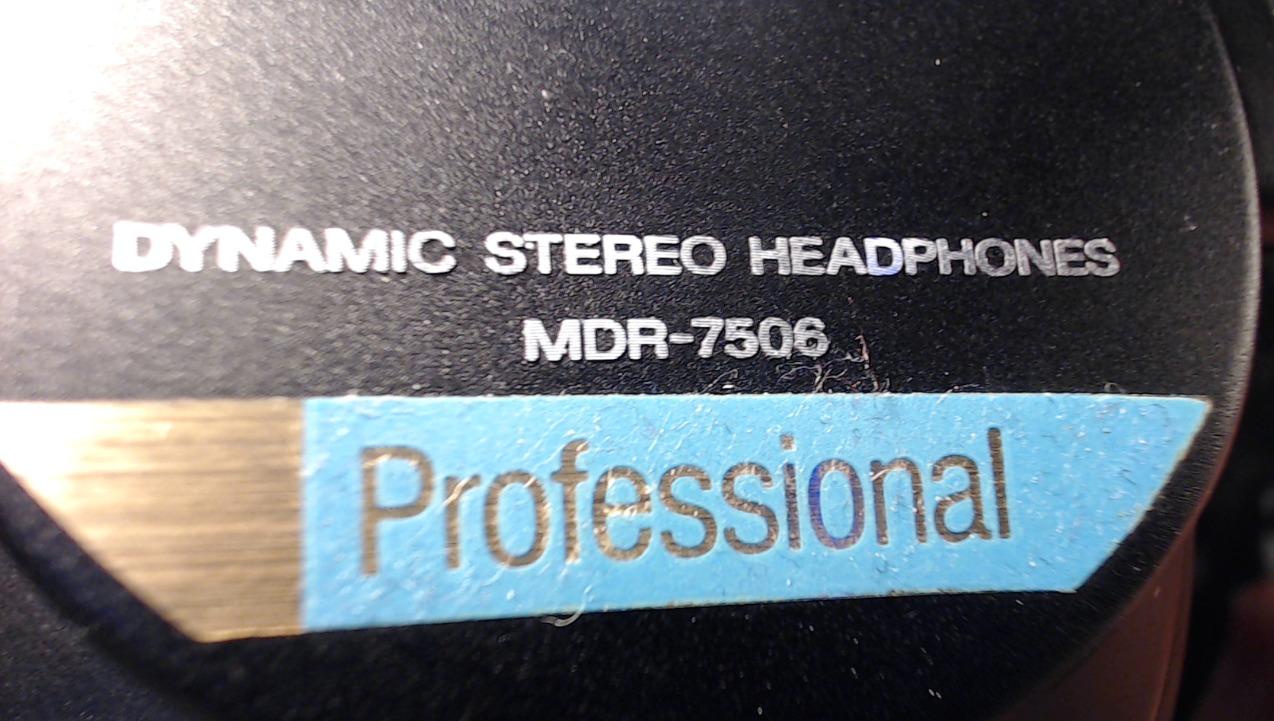
At eight ounces this is the lightest full-size mixing headphone in the roundup, and that fact shapes everything. On a long vocal comp or a full album mix revision, the MDR-7506 simply disappears on your head. Reviewers repeatedly single out comfort, including with glasses, which is more useful than any spec line.
Sound-wise it is neutral and revealing rather than flattering. Forty millimetre neodymium drivers cover 10 Hz to 20,000 Hz with strong passive reduction of outside noise from the closed ear design. Plenty of engineers describe it as the industry default for broadcast, location sound and tracking for exactly that reason.
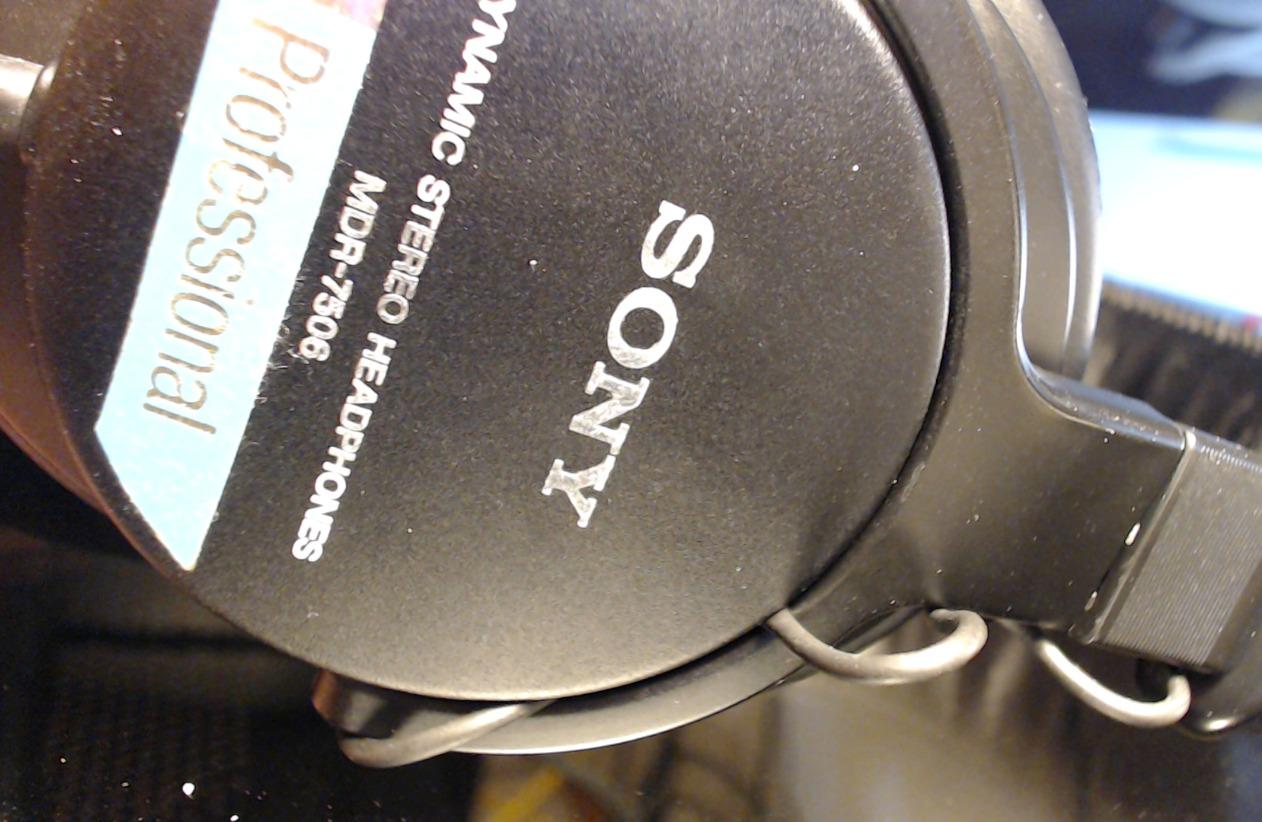
For mixing, the revealing nature is the point. It does not flatter, so a harsh vocal balance stays harsh in your head. The downside is that the light bass can leave you second-guessing a low end that is actually fine, and a fair number of reviewers note the fixed cable and aging pads as the recurring gripes.
The 9.8 foot coiled cord with a gold-plated quarter-inch adapter is genuinely useful at a mixing desk and genuinely annoying if you move the pair around a room. Once that cable goes, many users buy a third-party adapter cable, but the fact remains that this design is not built for constant reconnection.
Is it comfortable for full mixing days?
Better than anything else here, and that is not a small thing. The clamping force is light and the weight is negligible, so there is no hot spot on the crown of the head and no pressure fatigue around the ears after hours. If you are someone who gets a headache from headphones, this is the model reviewers recommend.
Light weight also means the seal is easier to keep consistent, which matters more than people expect. A loose seal changes the low-frequency response between takes, and that inconsistency is the opposite of what a reference headphone should do.
What should I know before buying for mixing?
Two things. The cable is not detachable, so treat it as a fixed cost of ownership and accept that a cable fault eventually ends the pair’s service life. And the bass is on the light side, so cross-check any low-end-heavy project against an open-back before you commit to a final master.
Neither issue is a deal-breaker for most work. For voice, podcast, post-production and acoustic material, the MDR-7506 is close to a perfect single-pair answer, and it remains the pair I recommend to people who ask what to buy first with no other context.
3. beyerdynamic DT 990 Pro – Open-Back Detail That Needs Real Amplification
beyerdynamic DT 990 Pro (250 Ohm), Open-Back Studio Headphones, Black
Open-back
250 ohm
5 Hz to 35 kHz
96 dB sensitivity
8.8 oz
Pros
- Exceptionally wide soundstage for placement
- Deep articulate bass for an open-back
- Light weight with soft breathable velour pads
- Replaceable pads and replaceable headband
Cons
- 250 ohm needs a real amp or powered interface
- Forward treble causes early listening fatigue
- Leaks sound in and out so no tracking
- Fixed coiled cable
The DT 990 Pro is the open-back reference in this list and the reason mixing on headphones became standard practice for so many engineers. The open-back build gives a wide, natural stereo image for placement and depth, and at 5 Hz to 35,000 Hz the frequency range is the widest here. Instrument positions stop being a guess.
The bass is what surprises people. For an open-back, it is deep and articulate rather than politely restrained, which makes the 990 useful for mixing electronic and hip-hop work where low end is the whole argument. r/audioengineering threads repeatedly return to the DT family for exactly this reason, describing the open-back as more reliable in the low and low-mids.
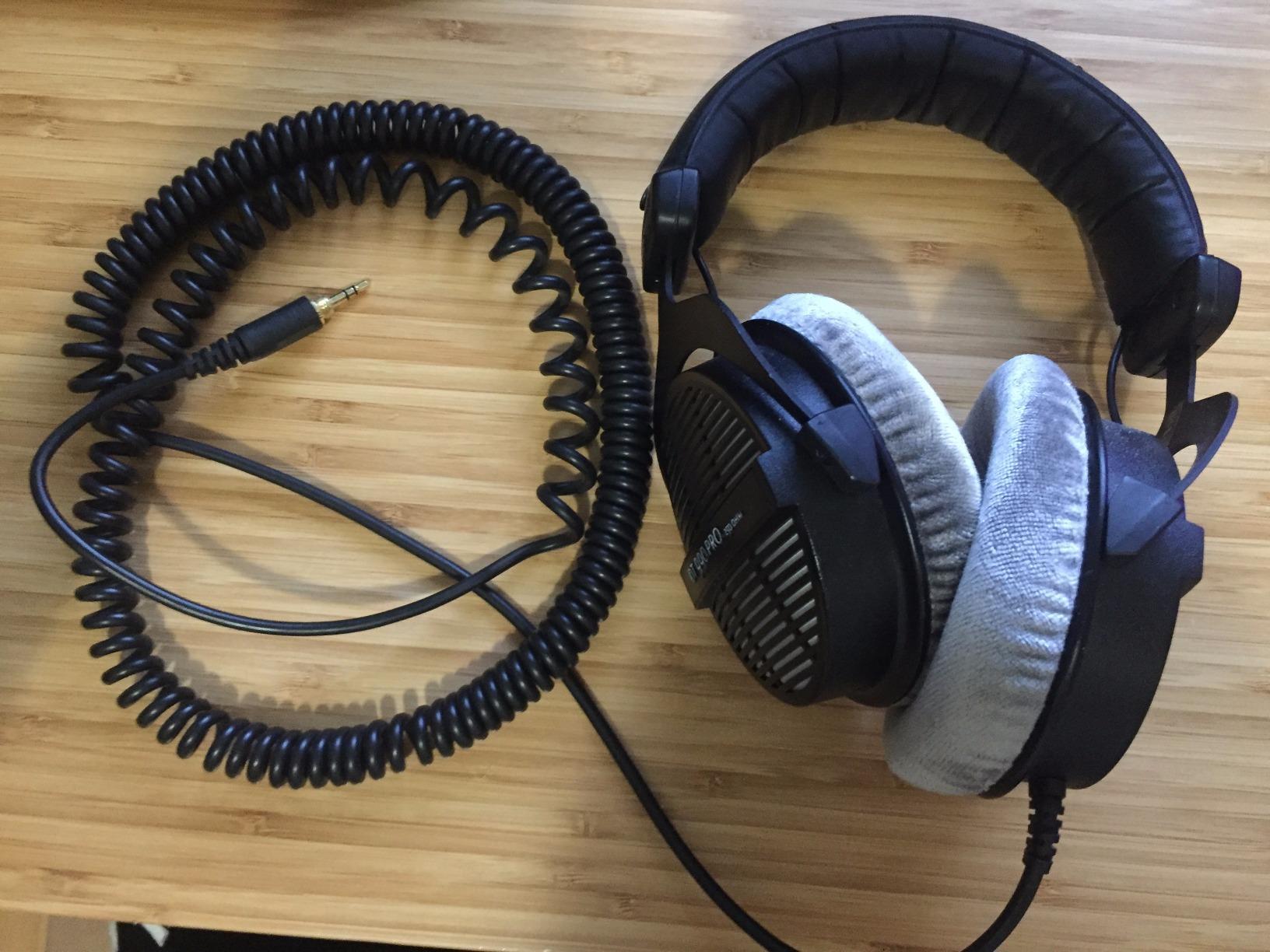
Now the part nobody mentions until they have owned it. At 250 ohm and 96 dB sensitivity, the 990 is quiet, and quiet means thin and unstable when the source is not loud. Driving it from a basic interface will get you a usable level, but the real character of the headphone, the detail retrieval reviewers praise, arrives when it has current behind it.
The treble is also deliberately forward. On day one, before the pads and drivers have settled, that brightness can feel fatiguing on aggressive recordings. Most owners describe a two-week break-in period after which the top end becomes revealing rather than tiring. If you are sensitive to treble, start with a lower volume and give it time.
Do 250 ohm headphones need a headphone amp?
Yes, realistically. A headphone amp or an interface with a strong discrete headphone stage is the difference between hearing the 990 properly and hearing a thin version of it. This is the most common regret people report, and it is entirely avoidable if you budget for it in advance.
The good news is that you probably already own the hardware. Several current interfaces include a high-current output stage intended for exactly this impedance class. Check the headphone output specification rather than guessing, and remember that laptop and phone outputs will not get close.
Is it comfortable for six-hour sessions?
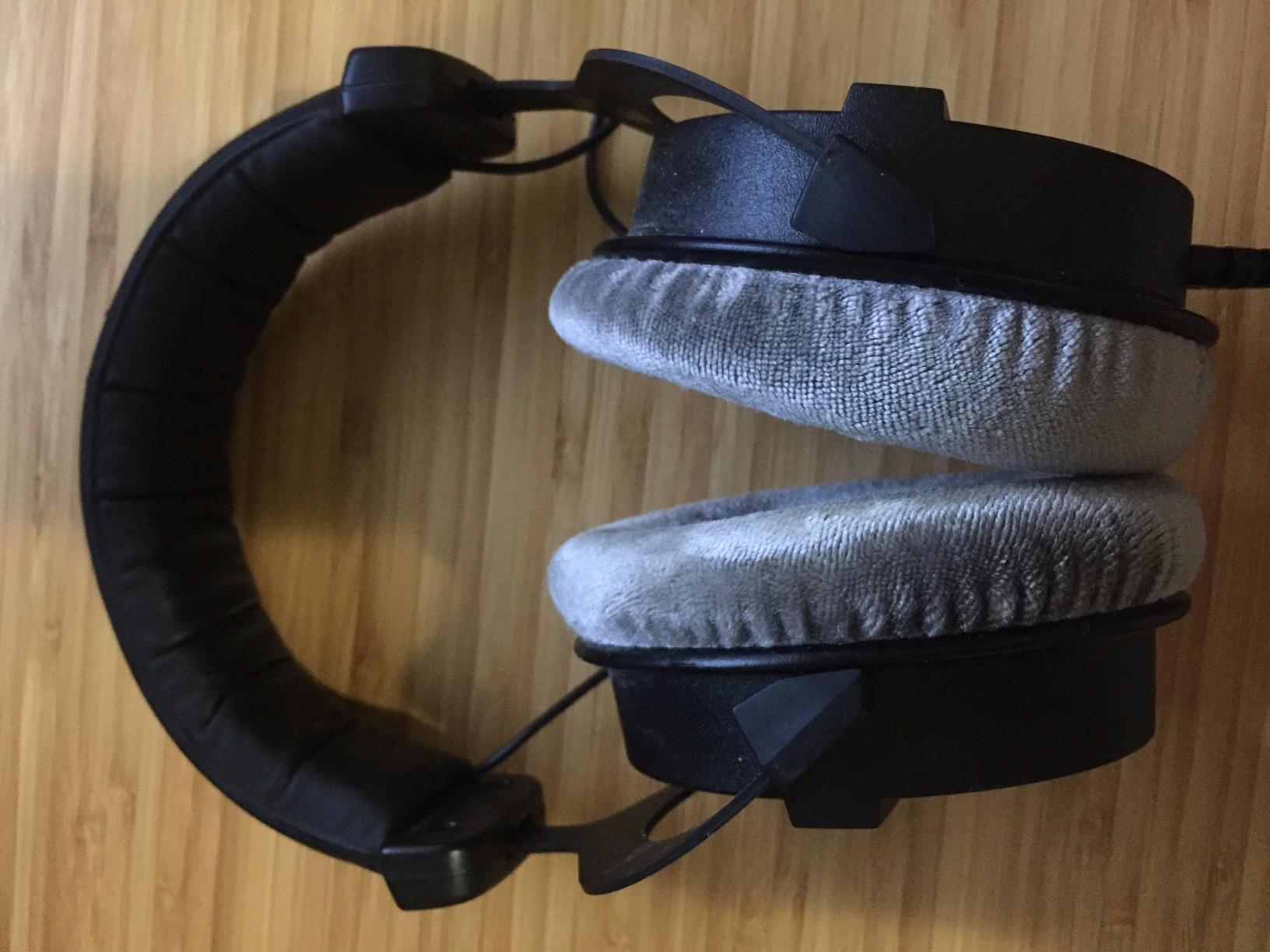
Yes, and this is one of its quiet advantages. At 8.8 ounces with soft, breathable velour pads and a spring-steel headband, it stays comfortable in a way that heavier open-backs do not. The clamp is firm without being punishing, and the velour does not build heat the way some synthetic leathers do.
Replaceable grey velour pads and a replaceable headband matter more here than on a sealed pair. In an open-back, the pad and the grille are part of the acoustic tuning, so wearing them out changes the sound. Being able to swap them keeps the 990 accurate for years instead of months.
4. OneOdio A71 – The Cheapest Way Into Honest Studio Monitoring
OneOdio A71 Hi-Res Wired Over-Ear Studio Headphones for DJ, Mixing – Red
Closed-back
32 ohm
40 mm dynamic
110 dB sensitivity
0.31 kg
Pros
- Very low cost entry to real studio monitoring
- Mid-forward honest tuning is easy to mix on
- Light weight and comfortable for all-day wear
- Coiled and straight cables both included
Cons
- Bass is boosted versus a true flat reference
- Plastic build feels less premium
- Top headband can feel tight after hours
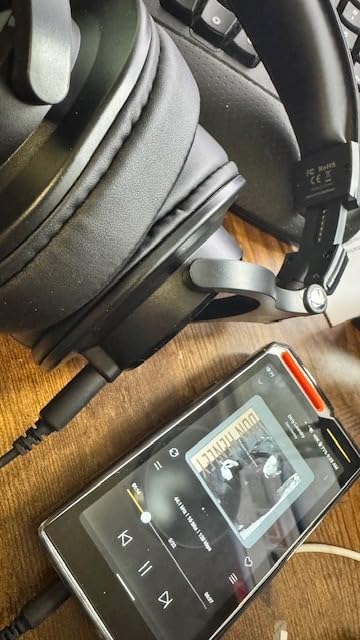
The A71 exists because most people starting out will not spend real money on their first headphone, and a bass-heavy consumer headphone teaches you nothing. The A71 is the cheapest credible step between those two situations. At 32 ohm and 110 dB sensitivity it is the most efficient headphone here, and it will sing from a laptop, a phone or a cheap mixer.
The tuning is mid-forward, which is a deliberate choice for a mixing tool. You hear the vocal and the guitars first, which is where most beginner mix decisions go wrong. Reviewers commonly call the midrange presentation honest and easy to edit on, and that is exactly what you want from a first reference.
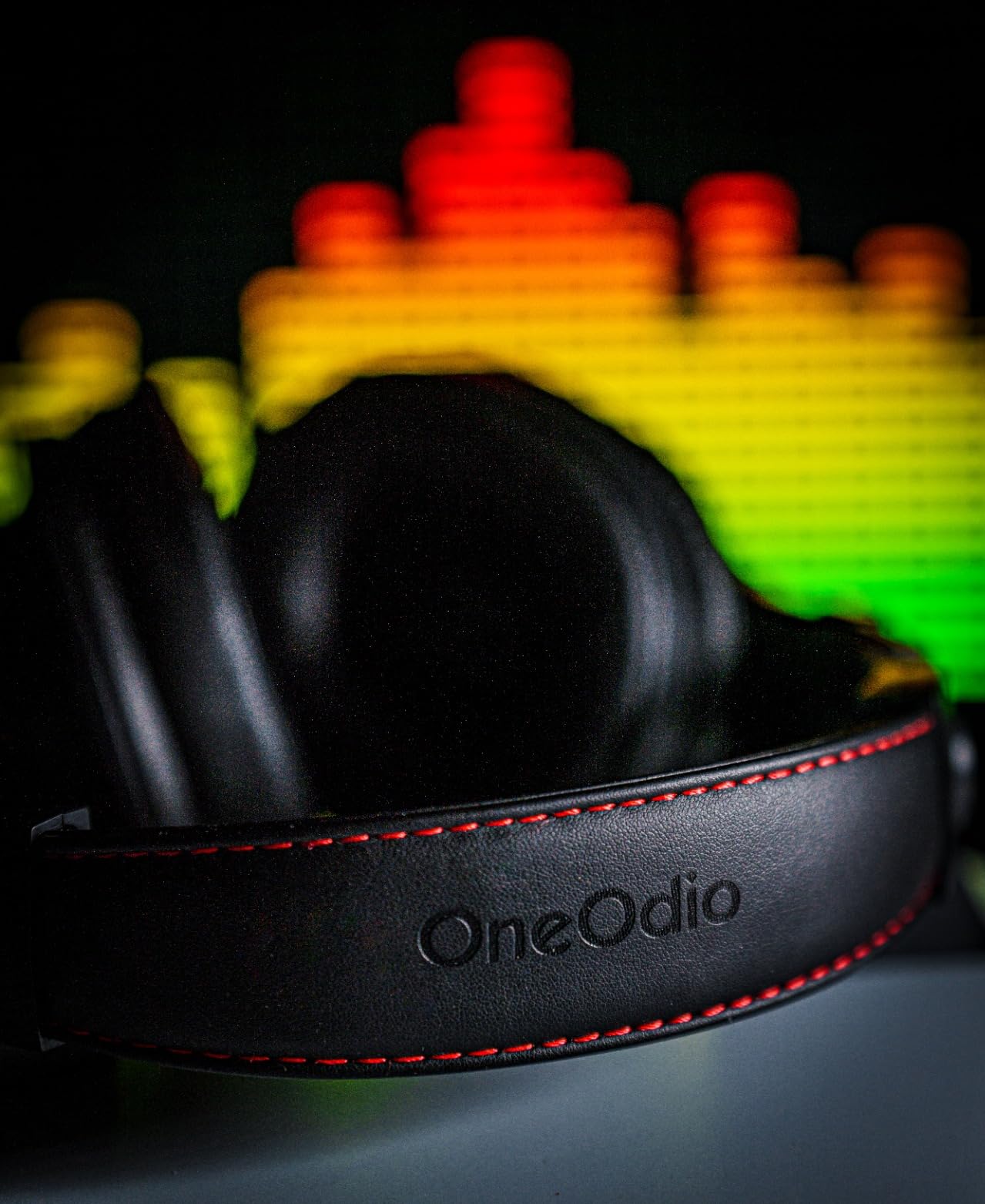
The bass is boosted, and that is the honest drawback. You will over-egg the low end if you trust it blindly, so treat it as an editing tool rather than a mastering reference. A shared audio port on the cup also lets you daisy-chain a second pair, which is unusual at this end of the market and genuinely useful for a two-person rig.
Ninety degree swiveling cups give one-ear monitoring, and the box includes a 6.6 to 9.8 foot coiled cord plus a straight lead, so you are not hunting for adapters. That is a better box than several models costing several times more.
Is it good enough for a first home studio?
Yes, for learning. It teaches you what masking sounds like, what a harsh sibilant peak actually is, and how a bus balance behaves, all at a price that leaves room for a better pair later. Most engineers who start here move up within a year, and having a second set of ears on the desk is never wasted money.
What it will not do is settle a mastering argument. A coloured low end and a plastic shell with reported pad flaking over time make it a poor long-term single purchase, and some users find the top band tight after several hours. For a student, a home producer on a strict budget, or a secondary pair, it is a strong call.
Can I use it for tracking as well as mixing?
Yes, the sealed circumaural design provides enough isolation for a singer overdubbing in a treated or semi-treated room, and the high sensitivity means you do not need a headphone amp to hear a performer. The swiveling cup helps when one musician plays while another monitors. Just do not expect the isolation of a true studio closed-back.
5. Audio-Technica ATH-M40x – The Flattest Closed-Back in the Lineup
Audio-Technica ATH-M40x Professional Studio Monitor Headphone, Black, with Cutting Edge Engineering, 90 Degree Swiveling Earcups, Pro-Grade Earpads/Headband, Detachable Cables Included
Closed-back
35 ohm
40 mm dynamic
15 Hz to 24 kHz
0.24 kg
Pros
- Very flat near-neutral response reveals errors without colour
- Excellent instrument separation for a closed-back
- Strong passive isolation
- High sensitivity runs from a laptop
Cons
- Sub-bass rolls off around 70 Hz without EQ
- Floppy hinges are a known long-term failure point
- Stock pads run small for large ears
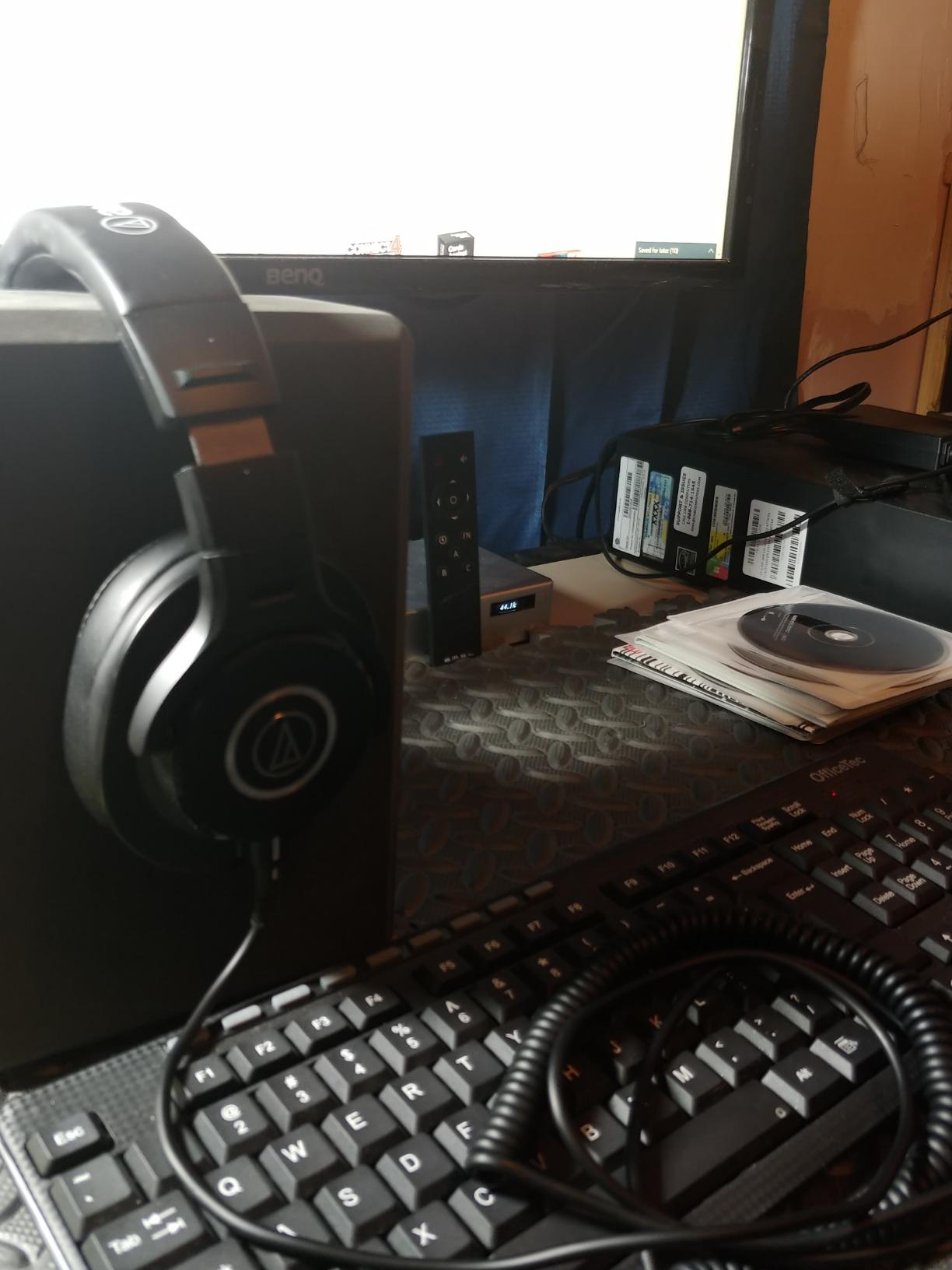
If the M50X is the do-everything pair, the M40x is the flat one. Reviewers describe it as the most neutral closed-back in the Audio-Technica M-series and specifically as a mixing headphone rather than a listening headphone, and my own experience matches that. There is very little here flattering the mix.
At 35 ohm and 98 dB sensitivity, it is efficient, and the flat response means you hear a dull vocal as dull rather than hearing it as somehow fuller. The 15 Hz to 24,000 Hz range is narrower at the bottom than the M50X, which is honest about what it can do rather than pretending.
The design is genuinely good for a mixer. Instrument separation is excellent for a closed-back, so you can follow a dense arrangement without elements disappearing, and the isolation is strong enough that a moderately noisy room will not colour your judgement as badly as it would on an open-back.
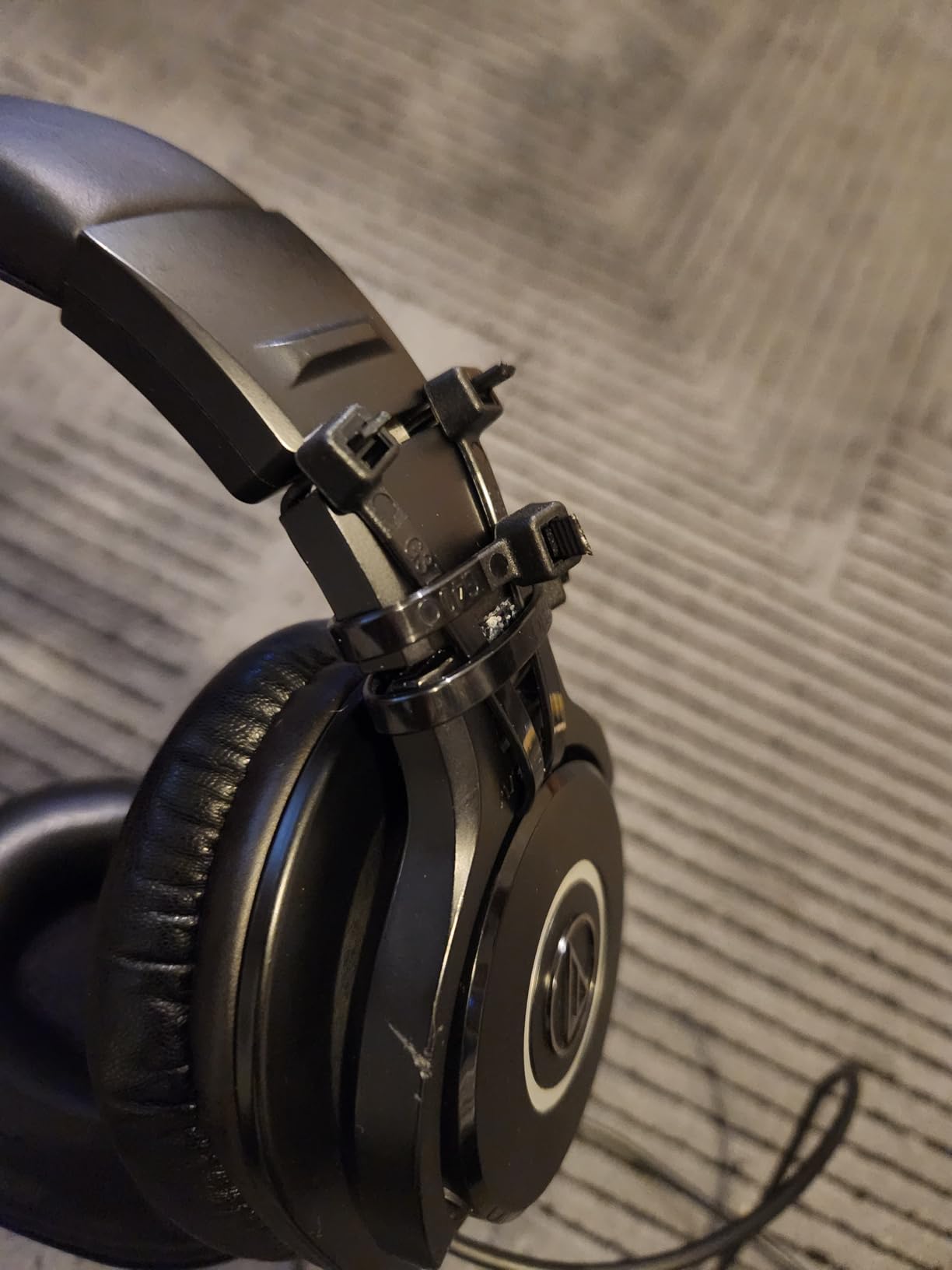
The build is where the reservations live. The folding hinges are famously floppy, which makes one-handed donning awkward at first, and reviewers report the earcup swivels and hinges as a real failure point over multi-year ownership. Stock pads also run small for larger ears, which is an easy first upgrade.
Should I choose the M40x over the M50X?
Choose the M40x if your work is dense and layered, and if you make most of your decisions in the midrange and top. Its near-neutral response and instrument separation make it a more precise mixing tool. Choose the M50x if you also track, if you need deeper low-frequency extension, and if you want cups that swivel properly for one-ear cueing.
Both run from a standard interface. Neither needs an amp. Honestly, the decision comes down to how much you value low-end extension against how much you value flatness in the mids, and I would lean M40x for mixing and M50x for everything else.
What is the sub-bass limitation in practice?
Reviewers consistently note that output below roughly 70 Hz rolls off without help. For a mix, that means you cannot trust this headphone to tell you whether a sub is there or in the right place. Fix the mono compatibility and the fundamental first, then check the sub against an open-back before mastering.
It is not a defect. A small dynamic driver in a sealed cup cannot move much air at 30 Hz, and a headphone that admits it is more useful than one that fakes it. Just know the limit and plan around it.
6. AKG K240 Studio – Semi-Open Neutrality You Can Wear All Day
AKG K240STUDIO Semi-Open Studio Headphones
Semi-open
55 ohm
30 mm Varimotion drivers
15 Hz to 25 kHz
240 g
Pros
- Very light so long sessions go unnoticed
- Self-adjusting headband fits a wide range of head sizes
- Roomy semi-open stage wider than closed-backs
- Detachable locking cable and replaceable pads
Cons
- Leaks sound both ways so no live recording
- Bass is light and sub-bass is thin
- Treble can be harsh and sibilant at level
The K240 Studio is the oldest design in this roundup and still one of the most copied. Thirty millimetre XXL transducers with patented Varimotion diaphragms cover 15 Hz to 25 kHz, and the semi-open cup gives a roomier, more open stage than any closed-back here without the full commitment of a true open-back.
That middle ground is why it suits editing and mixing rooms. It leaks, so it is not a tracking headphone, but it also does not dump the full energy of an open-back into the room, so you can work in a small space where a DT 990 would be unusable. On vi-control, owners cite the very neutral, flat sound and the detachable cable as the long-term virtues.
At 55 ohm and 104 dB sensitivity it needs a reasonable source. An interface is fine, and a phone will reach an acceptable but not serious level. Reviewers note that a decent amp is needed for comfortable volume on a phone or tablet, which is worth knowing before you plan to mix away from the desk.
The self-adjusting gimbal headband is the underrated feature. You do not set a clamp force; it finds its own position and stays consistent, which is exactly what you want for repeatability between sessions. At 240 g it is also one of the lightest pairs here.
Is semi-open right for mixing, or only for tracking?
Semi-open is a compromise on both sides, and for mixing that usually lands on the good side. You get a wider, more open presentation than a closed-back with less acoustic aggression than a full open-back, which makes the K240 a comfortable way to check stereo placement in a small room.
The compromise is bass. Light low end and thin sub-bass are the recurring complaints, so treat this as a midrange and imaging tool. If you mix material where the low end is the deciding factor, pair it with something that goes low or check the low end on monitors.
How long do the parts last?
The detachable locking cable and replaceable pads are the reason this design is still around. A 3 metre cable with a mini-XLR lock does not flex at the headphone end, which removes the failure point that ends fixed-cable headphones, and pads are the first thing to wear but also the first thing to replace.
That makes the K240 one of the cheapest headphones here to own over five years. When the pads compress and the treble starts to feel sharp, replace them and the headphone returns to its intended tuning rather than slowly drifting away from it.
7. Sennheiser HD 280 Pro – Built for Isolation, Tuned for Monitoring
Sennheiser HD 280 Pro Headphone, Black
Closed-back
64 ohm
32 dB passive attenuation
8 Hz to 25 kHz
1.3 lb
Pros
- Class-leading isolation that approaches over-ear defenders
- Fast one-hand cup fold for instant channel cueing
- Replaceable pads
- headband padding and cord
- Warm natural unboosted tuning
Cons
- Heavy fixed coiled cable tugs on one side
- Stock pads and headband coverings degrade quickly
- Clamping force feels tight at first
The HD 280 Pro is the isolation specialist. Up to 32 dB of passive attenuation is more than most studio closed-backs manage, which puts it close to the territory of over-ear defenders. In an untreated room, next to a drum kit or a loud amp, that difference decides whether you can record a clean take at all.
Sound is warm, natural and essentially unboosted, with excellent imaging and soundstage for a closed design. The collapsible earpieces fold with one hand so you can grab the headphone, put one cup on and hit the talkback button without looking. Reviewers call it the fastest monitoring workflow of any pair here.
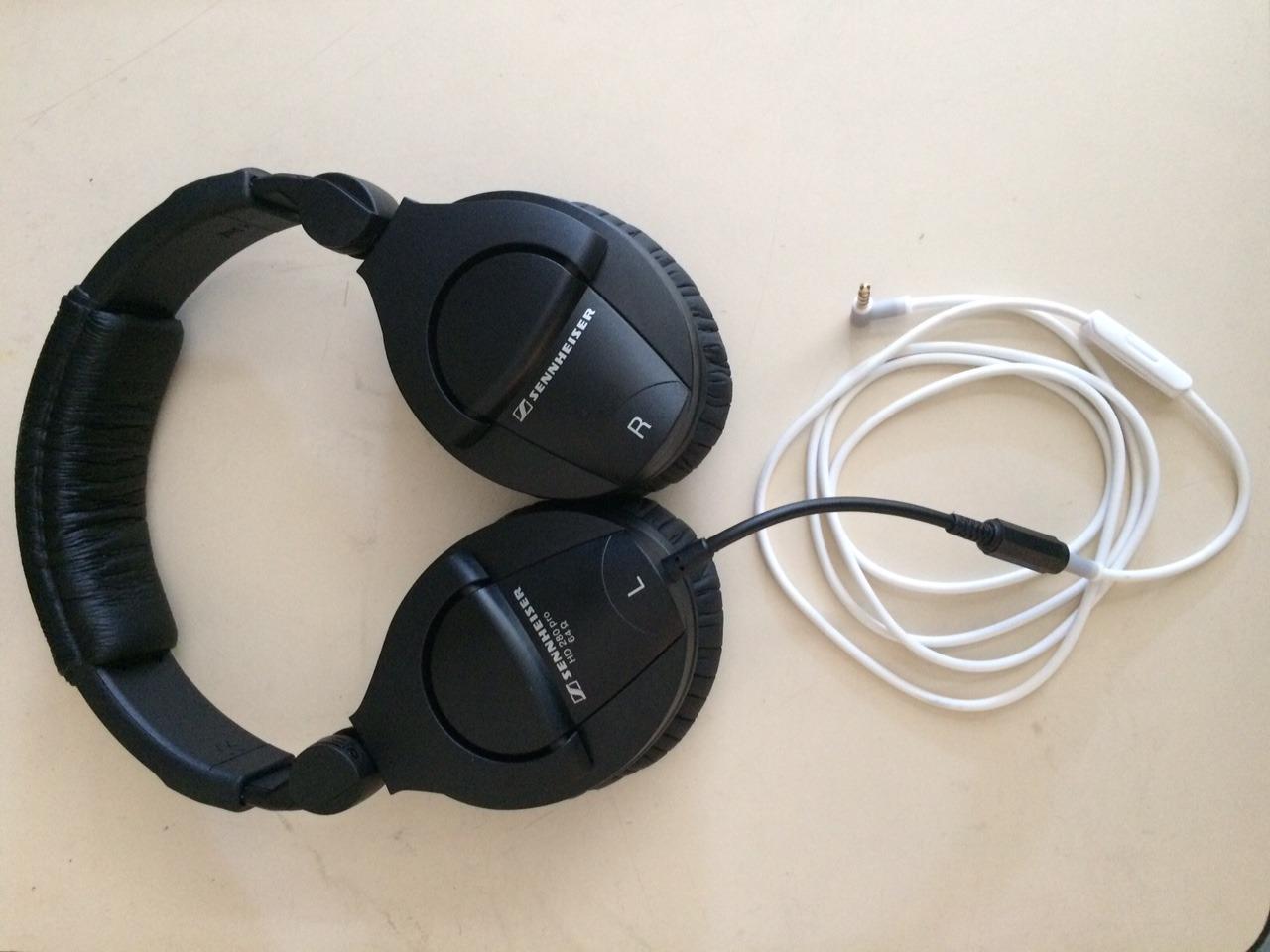
Where I would not choose it for mixing is comfort over a full day. At 1.3 pounds with a firm clamp, it is the heaviest headphone in this list, and the recurring complaints are tight clamping at first and stock pad material that degrades quickly. Muscle memory helps, but it is real.
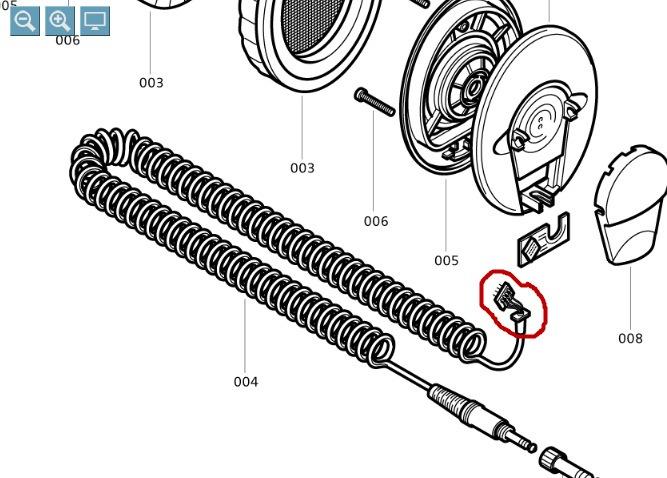
The cord is the other sticking point. It is fixed, coiled and heavy enough that reviewers note it tugs on one side when the headphone is worn around the neck between takes. Sennheiser do supply replacement parts including the cord, which softens that considerably.
Is it good for mixing or only for tracking?
It is a tracking headphone that happens to mix well. The warm, unboosted tuning means it will not lead you into a bright or bass-heavy decision the way a consumer headphone would, and the isolation makes it usable in a hostile room. For vocal tracking, drum monitoring and live work, it is close to ideal.
For long critical listening sessions, pick something lighter. The weight and clamp are the honest limitation here, and reviewers report frequent comfort complaints on the newer design revision. If your week is six hours of mixing rather than six hours of tracking, weight wins over isolation.
How much of a problem is the fixed cable?
It is a nuisance, not a failure. The cord is heavy and coiled, so it tugs when the headphone hangs around your neck, and there is no inline remote or volume control on it. Sennheiser list the audio cord among the easily replaceable parts, so a damaged cable is a serviceable part rather than a write-off.
Buyers who move between rooms frequently tend to regret it, and reviewers consistently recommend a lighter alternative. Buyers who stay behind one desk for a decade rarely mention it.
8. Samson SR850 – Wide Soundstage on a Modest Budget
Samson SR850 Professional Studio Reference Headphones
Semi-open
32 ohm
50 mm dynamic
10 Hz to 30,000 Hz
1.1 lb
Pros
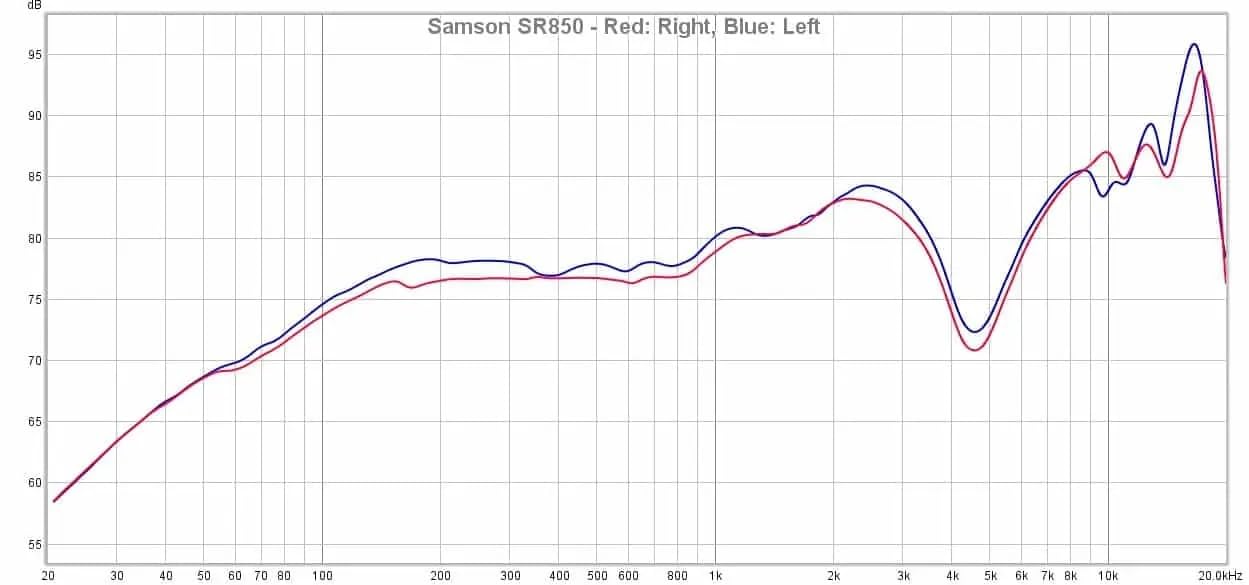
- Roomy open sense of space for the money
- 50 mm drivers with wide dynamic range
- 32 ohm works with essentially any output
- Self-adjusting headband is easy to wear
Cons
- Bass-forward voicing is less neutral than a true reference
- No isolation so a noisy room colours your judgement
- Build and accessories are basic
The SR850 is the value route to an open-feeling stage. Fifty millimetre drivers cover 10 Hz to 30,000 Hz with a 32 ohm impedance, which means it will run from essentially anything, including a phone or a small mixer with no headphone output of its own.
Reviewers like the open feel and the amount of low-end weight for the money, and the self-adjusting headband means no clamp fiddling. It is frequently used for project studios, home recording and rehearsal, where the semi-open design gives a sense of space that makes a mix easier to place.
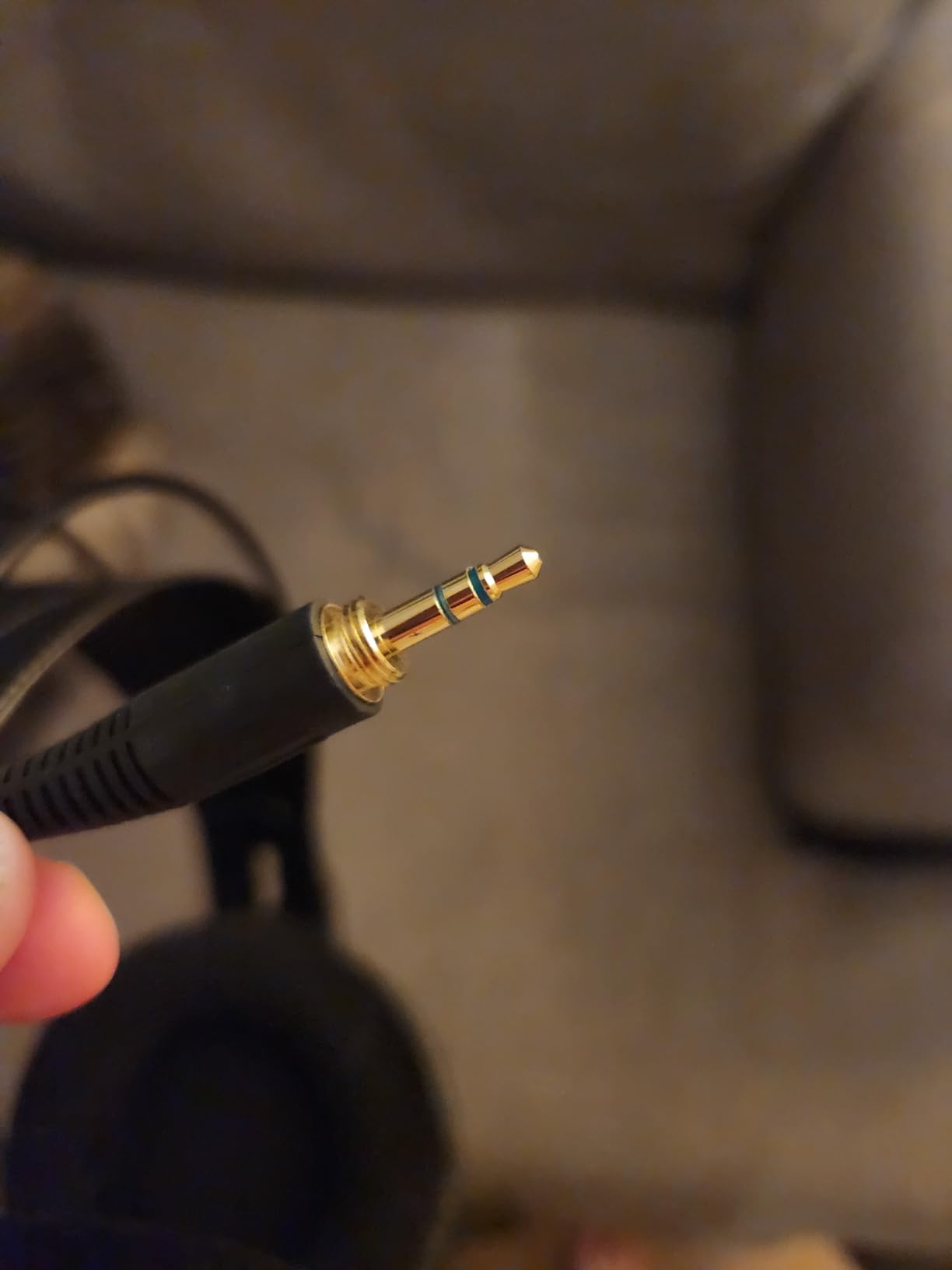
What you trade away is neutrality. The voicing is bass-forward, which is pleasant for listening and actively unhelpful for mixing, because a headphone that flatters the low end will have you over-weighting the bass in your balance. Treat the SR850 as a check on space and placement, not on level.
Isolation is the other limit. A semi-open design lets ambient noise in, so in a room with traffic or a computer fan you are colouring your judgement without realising it. Build and accessories are also basic compared with metal-hinged competitors at similar spend.
Is it worth pairing with a flatter closed-back?
That is exactly how I would use it. A neutral closed-back for balance decisions and the SR850 for stereo image, depth and placement gives you two independent views for very little money. The disagreements between the two are usually where the useful information is.
On its own, the bass-forward voicing is a real limitation for critical work. If you only ever own one pair, spend the money on a flatter headphone instead and treat this as a second opinion you can add later.
How does it handle a noisy room?
Badly, and it is worth being blunt about that. Semi-open cups with limited isolation mean a room tone or mechanical noise will sit under your mix, and because headphones are sealed to your head, that noise travels through bone conduction as well as air, which is harder to ignore than speaker bleed.
If your room is not quiet, budget for a closed-back instead. If your room is quiet and your budget is fixed, the SR850 is a genuinely useful second pair that will never leave you short of options.
9. Sennheiser HD 599 – Open-Back Reference With a Roomy Stage
Sennheiser HD 599 Open-Back Wired Audiophile Headphones, Ivory
Open-back
50 ohm
12 Hz to 38,500 Hz
0.71 kg
aluminum voice coils
Pros
- Wide natural open-back stage for critical listening
- Low distortion and even tonal balance
- Velour pads and padded headband stay comfortable
- Two detachable cables included
Cons
- Heaviest headphone here at 0.71 kg
- Open-back leaks sound both ways
- Bass is politely restrained rather than impactful
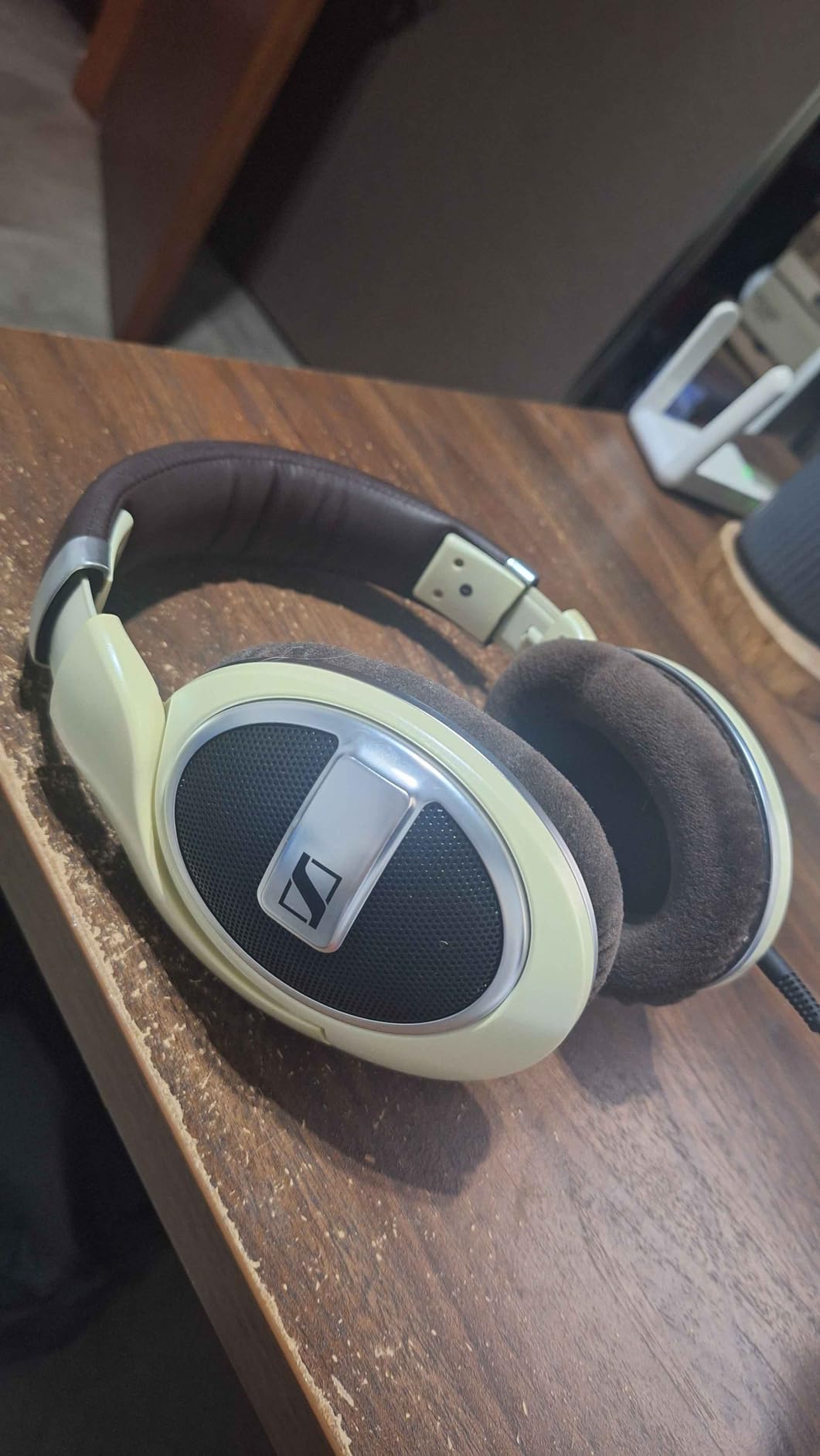
The HD 599 is the accessible end of Sennheiser’s open-back range, and it behaves like one. Aluminum voice coil transducers deliver low distortion and even tonal balance with clear mids and extended highs, and reviewers consistently praise the spacious stage and the mid clarity, which is precisely what you need for mixing decisions.
Two cables ship in the box, a 3 metre detachable lead with a quarter-inch jack and a 1.2 metre 3.5 metre lead for portable use. At 50 ohm it is one of the easiest open-backs here to drive, so it is a realistic first open-back purchase for someone without a dedicated amp.
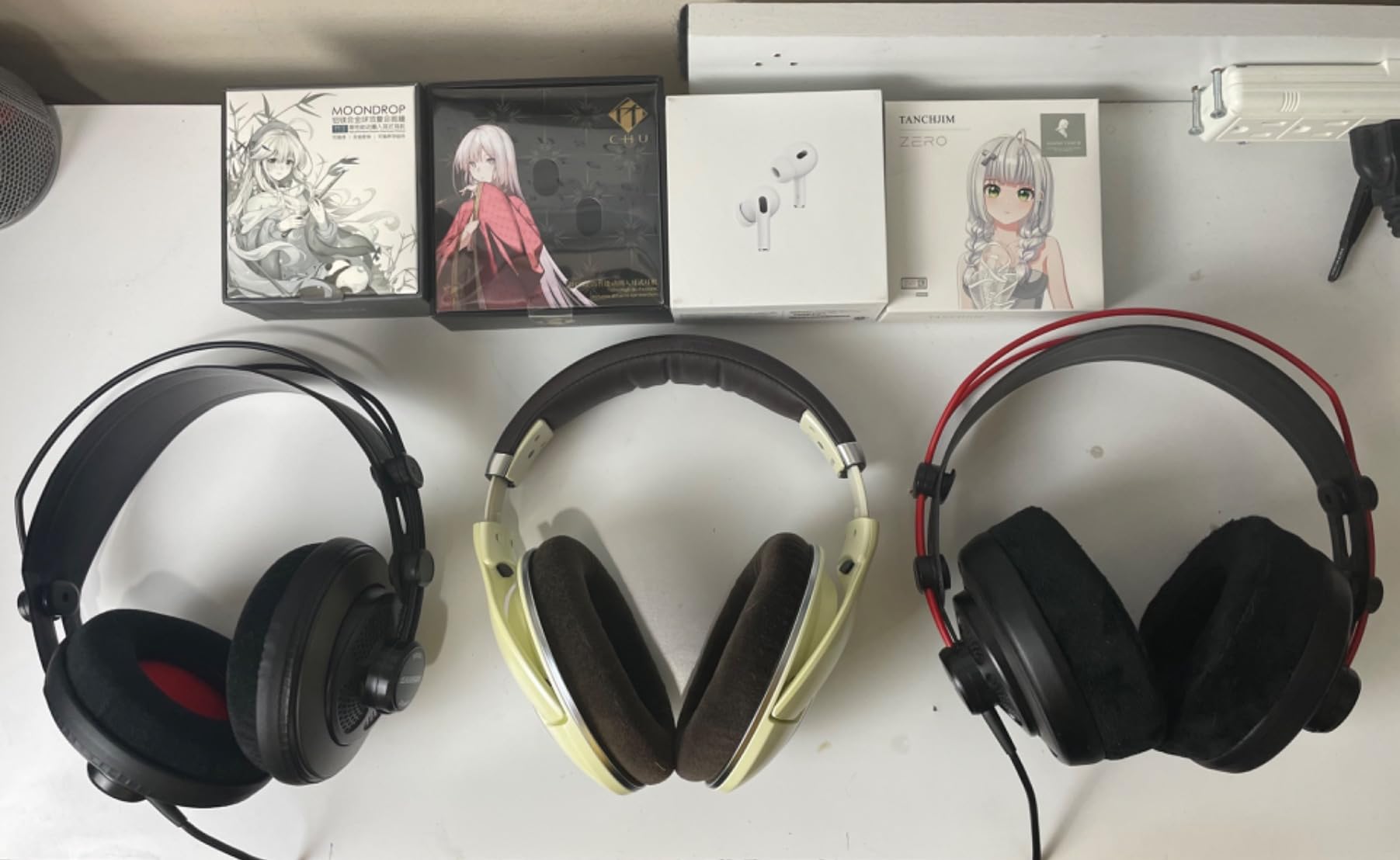
The trade-offs are weight and bass. At 0.71 kg it is by some distance the heaviest headphone in this roundup, and reviewers call that noticeable over long sessions. You will feel it in your neck before you feel it in your ears, so take breaks and swap the position of the pad regularly.
The bass is also politely restrained. 12 Hz is a low number on paper, but actual output down there is modest, so this is not the pair for checking a sub-heavy low end. It is a midrange and imaging reference, and it is very good at that.
Is it worth buying over a lighter open-back?
Worth it if your critical listening happens in a genuinely quiet room and your sessions are a few hours rather than a whole day. Low distortion and even tonal balance make it an excellent tool for judging balance and stereo placement, and velour pads plus a padded headband keep it comfortable while you do that.
Less worth it if you work long days or move around. The weight is the first thing you notice, and it is the reason the same money in a lighter open-back often makes more practical sense for a working engineer.
When should I reach for it instead of monitors?
Use it when monitors are unavailable or untrustworthy. A treated room with calibrated monitors is still the correct reference for level, low end and translation, and no headphone replaces that. The HD 599 is for the work monitors cannot do well, which in practice means checking stereo image, checking a mix quietly, and catching a problem at two in the morning without waking anyone.
The lack of isolation is deliberate and unavoidable in an open-back. Both directions of leakage mean it is a quiet-room headphone and nothing else.
10. MAONO MH601 – Budget Closed-Back With a Surprising Neutrality
MAONO MH601 Wired Studio Headphone for Podcast Recording Stream DJ Mixing
Closed-back
32 ohm
50 mm driver
103 dB sensitivity
10 ms latency
Pros
- Near-neutral signature compared favourably to pricier models
- Very light and well padded for long sessions
- Zero-latency wired path with swiveling cups
- Three year warranty
Cons
- Coiled cable is heavy and pulls back when worn
- Ear cups do not rotate freely like M40x-style designs
- Bright white branding shows on camera
The MH601 is the sleeper in this list for mixing accuracy. Multiple reviews benchmark it directly against the Audio-Technica M40x and find it surprisingly close in tonal accuracy, which is a strong claim for a headphone at this end of the market. Fifty millimetre drivers stay clean and balanced even pushed hard.
For voice and podcast work it is close to ideal. At 32 ohm and 103 dB sensitivity it runs from an interface, a mixer, a laptop, a phone or an instrument amp, and the protein memory cushions seal out roughly 85 percent of ambient noise. The 10 millisecond latency keeps spoken-word monitoring honest.
What holds it back is hardware rather than sound. The ear cups do not rotate freely the way M40x-style designs do, the bundled coiled cable is heavy enough to pull back when worn, and the bright white branding is distracting if it appears in frame. None of that matters for mixing, and all of it matters for a video podcast.
The three year warranty and replaceable cushion material are the practical wins. Reported flaking or cracking of the earmuff material with age is the main durability complaint, so keep a spare pair of pads in mind if you are buying for years rather than months.

Is it accurate enough to mix on?
For voice, spoken word, podcast and simple music production, yes. The near-neutral signature means a dull vocal reads as dull and a bright one reads as bright, and the flat-ish balance is easier to mix on than the bass-boosted consumer headphones most people start with.
For low end, treat it as secondary. A 50 mm dynamic driver in a sealed cup is not going to tell you much below 60 Hz, so verify the sub and the kick fundamental on something open or on monitors before you master.
Is the detachable cable actually a real advantage?
Yes, and it is the feature that separates this from the other budget closed-backs. A 9.8 foot spring-loaded cable with an interchangeable quarter-inch jack means a damaged cable is a five-minute fix rather than a reason to replace the headphone, and the interchangeable jack lets two people share one pair.
That is the opposite of a fixed-cable design, where the cable failure ends the usable life of an otherwise perfectly good headphone. Over a five-year ownership cycle it is the difference that matters most.
11. Yamaha HPH-MT5 – 250 Grams of Balanced Monitoring
Yamaha HPH-MT5 Monitor Headphones, White, (HPH-MT5W)
Closed-back
51 ohm
40 mm custom drivers
20 Hz to 20 kHz
250 g
Pros
- Extremely light with low clamping force for long sessions
- Balanced response that stays faithful to the source
- Solid closed-back isolation
- High sensitivity drives from phones and laptops
Cons
- Mids and highs slightly forward of the low end
- Bass is not extended
- Build feels light for heavy touring use
At 250 grams with low clamping force, the Yamaha HPH-MT5 is the comfort answer. Reviewers highlight accurate balance, very low distortion and how little you notice it during long mixing sessions, and for anyone who gets a headache from headphones or works ten-hour days, that is not a minor feature.
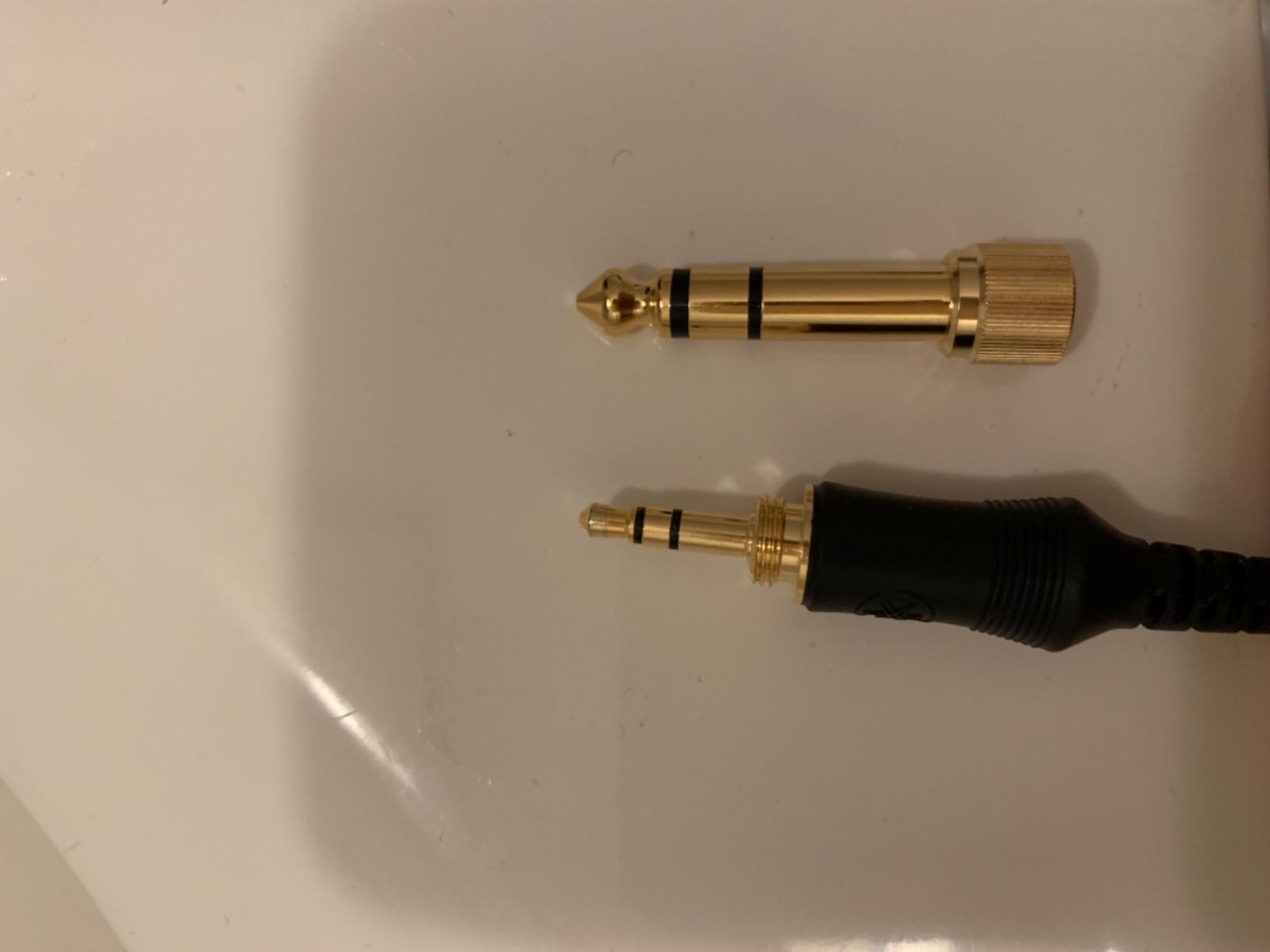
Forty millimetre custom drivers with CCAW voice coils cover 20 Hz to 20 kHz in a closed-back circumaural design with solid isolation. High sensitivity means it runs from a phone, a laptop or an amp without complaint, and the detachable 3 metre cable with a gold-plated adapter plus a carry bag is a complete package.
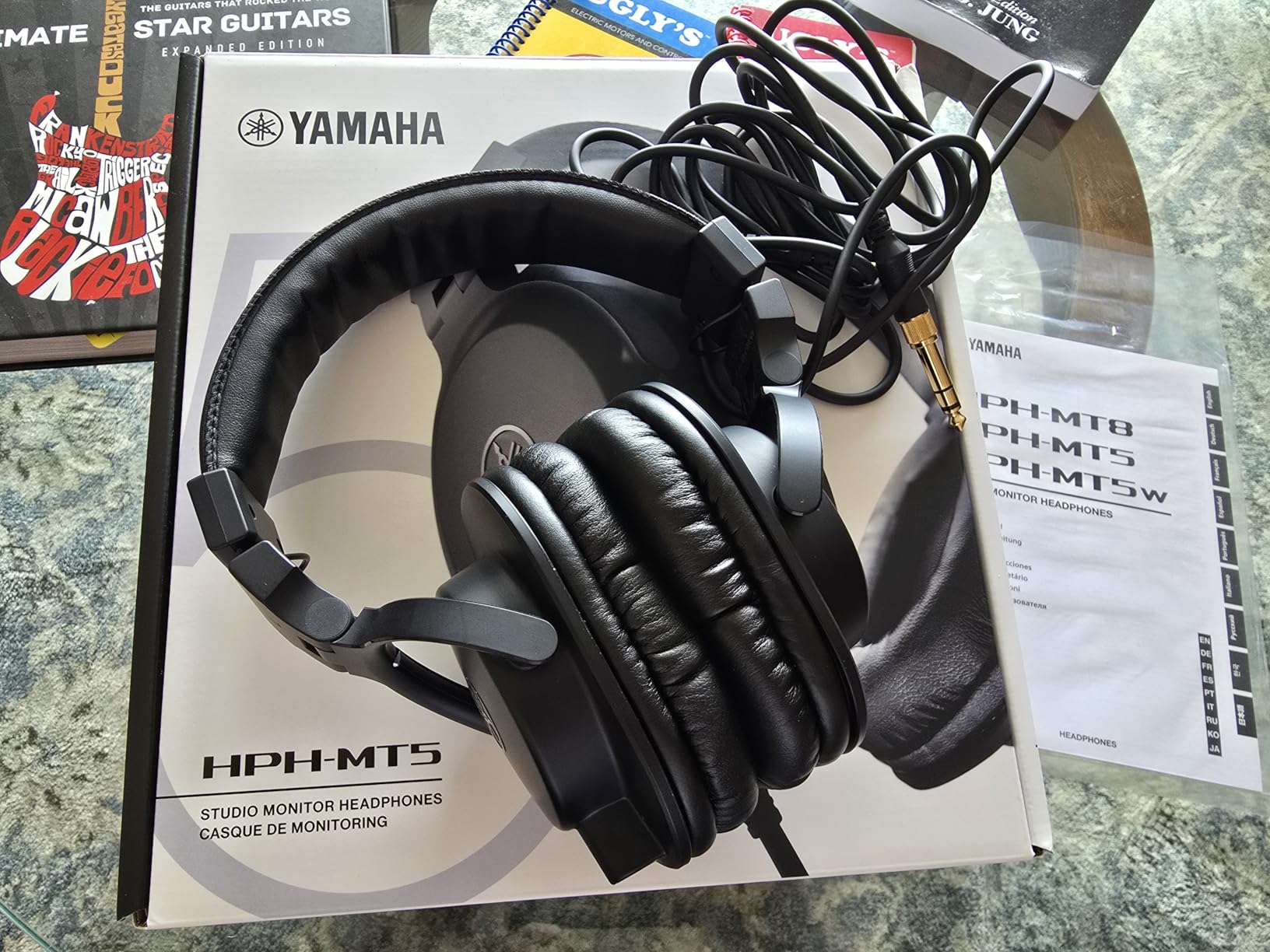
The caveats are honest ones. The mids and highs sit slightly forward of the low end, so give yourself a day before you trust your balance judgement, and the bass is not extended, which will disappoint anyone expecting a deep low end from a sealed headphone of this size.
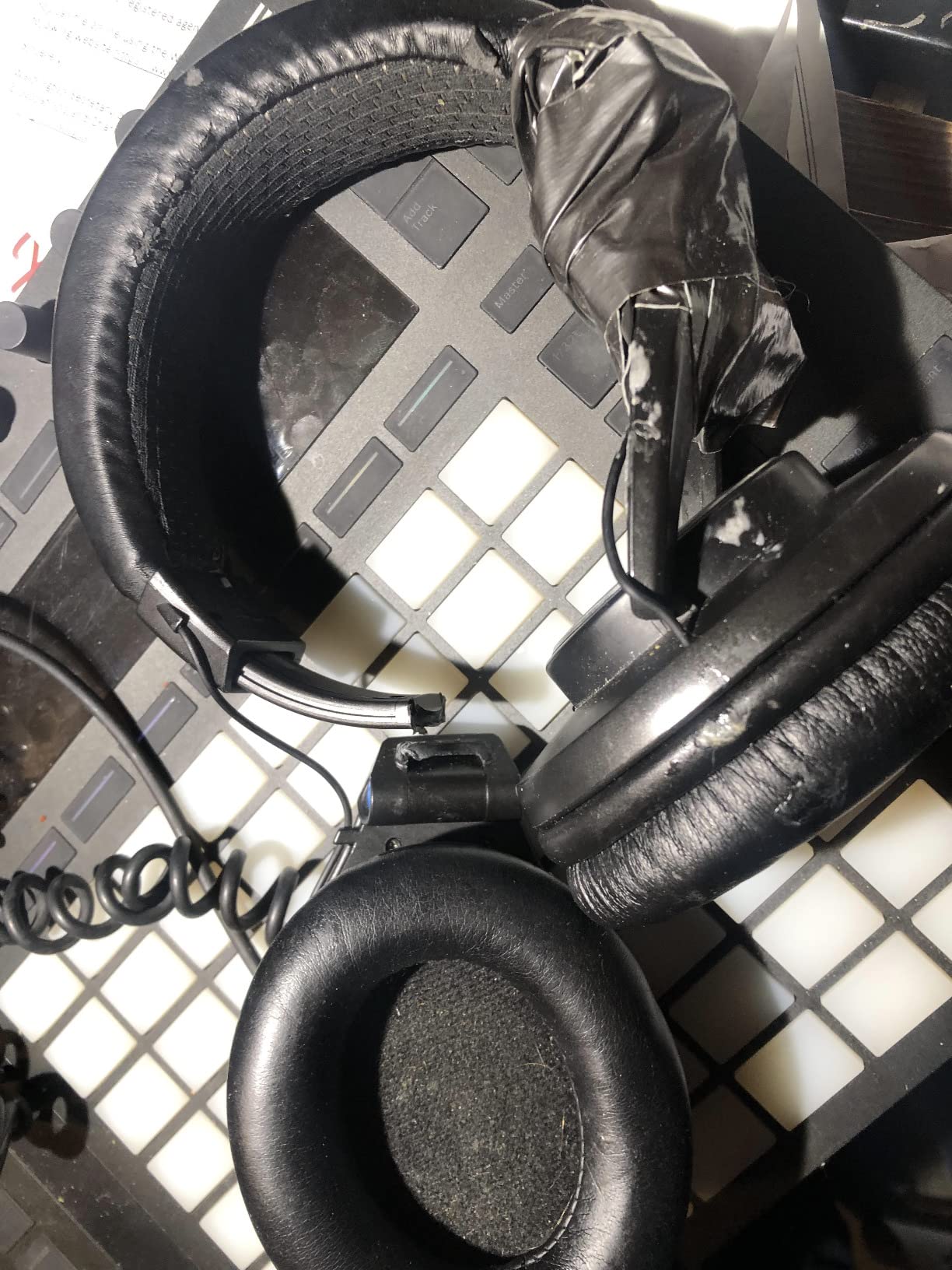
The stainless steel build also feels light in the hand, which reviewers read as fine at a desk and not sufficient for heavy touring. If you are a working engineer rather than a touring musician, that is a fair trade for the weight saving.
Is it the best headphone for long sessions?
On weight and clamp alone, it is the strongest candidate here for the longest days. There is no hot spot, the pad pressure is gentle, and the sealed design means a leaking open-back never distracts you with room sound. Several reviewers mention it specifically as a solution for people who get migraines from headphones.
Comfort is not the same as accuracy, though. A light clamp is less reference because the seal shifts more easily, so if you are doing precise level matching, confirm the pad seal each time you put it on.
Should I buy this or a more established mixing headphone?
Buy it if comfort is your binding constraint or if you are a producer who mixes in short bursts between other work. The balanced response and low distortion make it a legitimate mixing tool rather than a monitoring compromise.
Buy something else if low end is the deciding factor on your work, or if you need a headphone to survive being carried between rooms for years. For long single-sitting critical sessions on bass-heavy material, an open-back with more extension is the better tool.
12. Shure SRH840A – Closed-Back Reference for Post and Editing
Shure SRH840A Over-Ear Wired Studio Monitoring Headphones
Closed-back
40 ohm
5 Hz to 25,000 Hz
9.12 oz
locking detachable cable
Pros
- Very natural well balanced tonality with no harshness
- Strong mid and high accuracy for critical listening
- Locking detachable cable with two year warranty
- Comfortable for hours with wide headband
Cons
- Bass is light and not deeper than open-back options
- Passive-only isolation is weak for loud environments
- Stiff thin cable
The SRH840A is the one I would hand someone doing post-production and dialogue editing. The tailored frequency response with controlled bass, detailed mids and extended highs is genuinely critical-listening oriented, and reviewers consistently praise the natural tonality and the absence of harshness at the top.
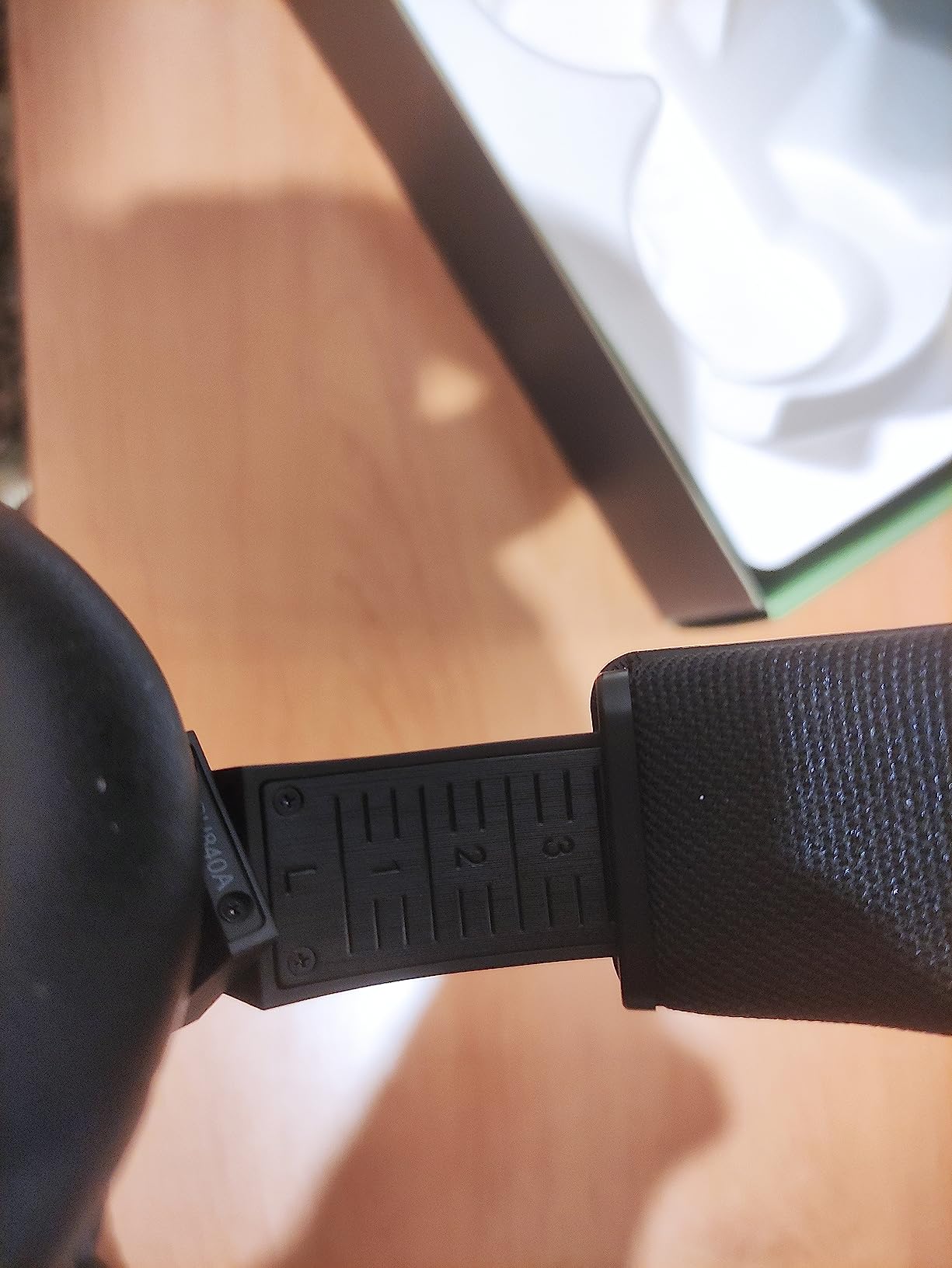
At 9.12 ounces with a wide padded headband and plush cushions, it is light for a closed-back, and the build is high-end for the category. The locking detachable cable system with a threaded quarter-inch adapter is the most secure connection design here, and it comes with a carrying case and a two year warranty.
The trade-offs are all about isolation and bass weight. Passive-only isolation is weak next to a heavier studio closed-back, so a loud room will colour your judgement, and the bass sits on the light side without going deeper than a decent open-back would. Some users also find the clamp uncomfortable and notice the tone shifting when the head moves.
The cable is stiff and quite thin for its length, which is a minor irritation with a 6.35 mm connection at a desk. Because it locks rather than pushes in, at least it will not come out halfway through a take.
Is it good enough to mix an entire project on?
For dialogue, video, editing and reference checking, comfortably yes. The natural, non-harsh tonality and crisp transient retrieval make it easy to work on for hours, and the mid and high accuracy means you can hear and fix problems that consumer-tuned headphones hide.
For a music master, I would still pair it with an open-back once a week. Light bass and weak passive isolation are the two gaps, and a single open-back session covers both without changing your daily driver.
What is the locking cable system worth in practice?
More than it sounds. A locking quarter-inch connection cannot work loose from a cable tug, which on a lighter closed-back is the difference between a stable reference and a signal that changes when you move. It also means the cable can be swapped, which is the main thing you cannot say for a fixed-cable design.
Reviewers rate the build quality and the two year warranty highly, and the collapsible design plus included case means it travels without becoming the fragile item in your bag.
How to Actually Mix on Headphones
A headphone is an instrument, and it has a calibration procedure whether you run one or not. The default, which is what almost everyone does, is to set the level by ear and hope it matches every other pair you own. That is why mixes judged on headphones in a bright cafe, a dark studio and a loud room come back different every time.
Fix a reference level and keep it. Play a familiar, well-mastered track and set your interface volume to a level where it is comfortable but not loud. Note the knob position. Never raise your headphone level to make a mix sound exciting, because excitation reads as quality when it is really just level.
Check in mono early. Fold the mix down to mono and look for elements that disappear. Headphones reveal phase problems faster than monitors, and this is the single most useful habit to build on cans.
Reference against commercial tracks. Put a reference track up at matched level next to your rough mix. Matching level is the entire point. If your kick is heavier than the reference, it is heavy, regardless of how good it feels.
Use the 60-60 rule. Listen for no more than 60 minutes, then take at least a 60 minute break. Ear fatigue is a physical change, not a state of mind, and you will make worse decisions in minute 75 than in minute 20 without noticing.
Cross-check to monitors when you have them. Levels, translation and low end are monitor jobs. Use headphones for the things monitors do badly, not the other way round.
Rotate pairs. r/mixingmastering users describe owning several open-backs and switching between them, calling them old reliables. A second pair hearing the same mix differently is worth more than upgrading one pair to something marginally better.
The 60-60 rule deserves the emphasis because no competitor on this topic covers it and it is one of the live questions people ask. It is simple: about 60 minutes of listening at roughly 60 percent of your maximum volume, then a break of at least 60 minutes. Nothing in the rule is magic, but the break is what makes the second hour as accurate as the first.
Impedance, Sensitivity and When You Need a Headphone Amp
Impedance is how much electrical resistance the driver presents, measured in ohms, and it is the single specification people get wrong. Low impedance headphones are easy to drive and high impedance headphones are not, because pushing a demanding load takes more current than a small output stage can deliver. Volume is not the only consequence, though, which is the part most guides skip.
32 to 38 ohm is the easy range. The OneOdio A71, ATH-M50X, ATH-M40x, MAONO MH601, Samson SR850 and Shure SRH840A all sit here and will reach a useful level from an audio interface headphone output, a laptop or a phone.
40 to 64 ohm is comfortable from an interface and fine from a laptop, but you will be listening to laptop headphones rather than the headphone. The Sony MDR-7506 at 63 ohm, AKG K240 Studio at 55 ohm, Yamaha HPH-MT5 at 51 ohm and HD 280 Pro at 64 ohm live here.
80 ohm and above is where you should stop guessing. Above roughly 80 ohm, a basic interface output can run out of voltage and the sound gets thin and unstable at lower levels. The beyerdynamic DT 990 Pro at 250 ohm belongs firmly in this group.
250 ohm and up wants a dedicated headphone amp or an interface with a high-current output stage. Cheap to add later, expensive to ignore at purchase.
Sensitivity is the number that pairs with it, measured in decibels per milliwatt. The OneOdio A71 at 110 dB and the MAONO MH601 at 103 dB are extremely sensitive, so even at 32 ohm they are effortless. The DT 990 Pro at 96 dB and 250 ohm is the opposite end, which is exactly why it needs help.
The practical rule I use: below 64 ohm, buy the headphone and worry later. At 250 ohm, buy the headphone and the amp in the same order, or you will end up with an expensive pair running at a quarter of its potential.
Headphones vs Monitors: What Each One Can and Cannot Tell You
This is the core conceptual question in the category and almost every buying guide dodges it. Headphones are precise, repeatable and reveal masking, sibilance, balance errors and phase problems that monitors in an untreated room hide. They are the better tool for a surprising amount of the actual work of mixing.
What headphones cannot tell you is how a mix will behave in a room. They cannot show you how much low end a kick drum occupies on a small speaker, how a bass part will interact with a room boundary, or whether a mix will survive translation to a phone speaker in a car. That is what monitors are for, and no headphone at any price substitutes for a treated room with a properly positioned pair.
The other limit is sustained listening. Monitors at moderate levels in a room interact with the room in a way your brain discounts, so you can work for hours. Headphones deliver the sound directly to the eardrum with no acoustic context, which is more revealing and more tiring at the same time. That is why the 60-60 rule exists and why ear fatigue shows up as bad mix decisions rather than as discomfort.
Which is why the practitioner consensus keeps arriving at the same two-headphone rig. On r/HeadphoneAdvice, closed-back for tracking and open-back for mixing is described as the standard professional setup, and on-the-road engineers on r/audioengineering describe a three-tier kit. A neutral closed-back for daily work, an open-back for weekly reference checks, and that is the whole method.
If you have one pair only, make it neutral and closed if your room is not acoustically treated, and neutral and open if it is. Then move money to monitors before you upgrade the headphone a second time.
The Buying Checklist: How to Choose the Right Pair
Most of the decision comes down to four questions, and the answers eliminate most of the market before you start reading spec sheets.
Do I need isolation? If anyone records while you mix, or your room is untreated and noisy, you need a closed-back. The HD 280 Pro and the ATH-M50X cover that. If you work alone in a quiet room, an open-back or semi-open gives you a wider, more natural stage and a better low end.
Can my interface drive it? Check the headphone output specification before you buy, not after. Under 64 ohm you are fine with almost anything. At 250 ohm you are not, and no adapter or software setting will fix a hardware limit.
What will I actually mix? Midrange-dense material rewards a flat closed-back like the ATH-M40x. Acoustic, jazz and voice work benefits from an open stage. Bass-heavy electronic and metal want real low-end extension, which means an open-back with deep output. A headphone that is honest about its limits beats one that fakes them.
Will I still be wearing it in year three? Replaceable pads, a detachable cable and a headband you can swap are the durability markers that matter. Ear pads and cables are consumable, not failures, and reviewers repeatedly cite pleather cracking on Audio-Technica and Sony models as the real hidden cost. Budget for replacements as part of the purchase.
One last filter: skip Bluetooth entirely. Compression and latency make wireless unsuitable for any studio work, and every headphone in this roundup is a wired design for that reason.
Frequently Asked Questions
What type of headphones are best for mixing?
Open-back or semi-open headphones with a flat frequency response are best for mixing, because the open cup gives a wide, accurate soundstage and honest low frequencies. Closed-back headphones are best for tracking and loud rooms, since they isolate and block microphone bleed. Most working engineers own both, using a closed-back for daily sessions and an open-back for weekly reference checks.
What are the best headphones for sound mixing?
The Audio-Technica ATH-M50X is the best all-round choice because 38 ohm impedance runs from a normal interface, the balance is honest and the isolation handles a noisy room. The Sony MDR-7506 is the best for long sessions at 8 ounces. The beyerdynamic DT 990 Pro is the best for image and low-end detail if you own an amp for its 250 ohm load.
What is the 60-60 rule for headphones?
The 60-60 rule says listen for no more than 60 minutes at around 60 percent of your maximum volume, then take a break of at least 60 minutes. It exists because hearing fatigue is a physical change, not a mindset problem, and because you make worse mix decisions late in a session without realising it.
What are the best headphones for live sound mixing?
For live sound work you want isolation and durability rather than neutral tonality, so closed-back studio headphones such as the Sennheiser HD 280 Pro, with up to 32 dB passive attenuation, or in-ear monitors are the right category. These are a different job from studio mixing, where open-back reference headphones are preferred.
Do I need open-back headphones for mixing?
Not strictly. A flat closed-back such as the Audio-Technica ATH-M40x or the Shure SRH840A is a legitimate mixing tool, and it is the better choice in an untreated or noisy room. Open-backs give you a wider soundstage and truer low end, so they are worth adding once you have a quiet space and a way to manage the leakage.
What impedance headphones are best for mixing?
Anything from 32 to 64 ohm is the safest range, because a standard audio interface headphone output can drive it properly. Below 80 ohm you are rarely limited by hardware. At 250 ohm, as on the beyerdynamic DT 990 Pro, you need a dedicated headphone amp or an interface with a high-current output stage to hear the headphone as intended.
Conclusion
The best studio headphones for mixing in 2026 come down to your room and your honest tolerance for a headphone that flatters nothing. If you want one pair that does tracking and mixing, the Audio-Technica ATH-M50X is the pick because 38 ohm impedance runs from a normal interface and the isolation works in a bad room. If your sessions are long and weight is your enemy, the Sony MDR-7506 at 8 ounces is hard to argue with.
When you have a quiet room and somewhere to put money next, add an open-back. The beyerdynamic DT 990 Pro gives you the widest image and the deepest low end of anything here, and the amp it needs is a one-time cost that pays for itself the first week. Set a reference level, follow the 60-60 rule, check your low end on something that goes low, and you will catch more problems in the first month than you did in the last year on monitors alone.