
Looking for the best books about Norse mythology can feel overwhelming, especially because the category spans so many flavors: glossy modern retellings, primary-source translations of medieval Icelandic manuscripts, scholarly encyclopedias, and beautifully illustrated children’s editions. We have spent the past several months reading through dozens of titles, comparing translations side by side, and weighing what makes one book better than another for a given reader. The shortlist below reflects that work, and we are confident it represents the strongest collection available in 2026.
What changed since our last roundup is how much appetite readers have for primary sources. Where Gaiman and McCoy used to dominate conversations, we are now seeing readers ask directly for the Poetic Edda, the Prose Edda, and the Saga of the Volsungs. That shift is part of why this list moves from accessible modern retellings into older foundational texts. The big three of Norse mythology – Odin, Thor, and Loki – appear in nearly every book here, but the way they are framed differs wildly depending on whether you are reading a Yale-trained Old Norse scholar or a novelist rewriting the myths for a contemporary audience.
This guide covers twelve picks arranged from most accessible to most scholarly, plus a buying guide and an FAQ that answers the questions we hear most often. Every book we recommend is one we have either read cover to cover, sampled extensively, or vetted through thousands of reader reviews. If you are new to the subject, start at the top of the list. If you already own a retelling or two, scroll down to the primary-source translations and the Norse paganism entries.
Table of Contents
Top 3 Picks for Best Books About Norse Mythology (October 2026)


Best Books About Norse Mythology in 2026
| Product | Specs | Action |
|---|---|---|
| Norse Mythology by Neil Gaiman |
|
Check Latest Price |
| The Viking Spirit by Daniel McCoy |
|
Check Latest Price |
| The Prose Edda (Penguin Classics) |
|
Check Latest Price |
 The Saga of the Volsungs (Jackson Crawford) The Saga of the Volsungs (Jackson Crawford) |
|
Check Latest Price |
 Norse Mythology for Kids by Mathias Nordvig Norse Mythology for Kids by Mathias Nordvig |
|
Check Latest Price |
 D’Aulaires’ Book of Norse Myths D’Aulaires’ Book of Norse Myths |
|
Check Latest Price |
 The Norse Myths by Kevin Crossley-Holland The Norse Myths by Kevin Crossley-Holland |
|
Check Latest Price |
 The Way of Fire and Ice by Ryan Smith The Way of Fire and Ice by Ryan Smith |
|
Check Latest Price |
 The Poetic Edda (Oxford World’s Classics) The Poetic Edda (Oxford World’s Classics) |
|
Check Latest Price |
 Uncovering Norse Mythology by Lucas Russo Uncovering Norse Mythology by Lucas Russo |
|
Check Latest Price |
 A Child’s Introduction to Norse Mythology A Child’s Introduction to Norse Mythology |
|
Check Latest Price |
 Norse Mythology: A Guide to Gods, Heroes, Rituals, and Beliefs Norse Mythology: A Guide to Gods, Heroes, Rituals, and Beliefs |
|
Check Latest Price |
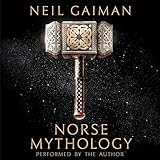
1. Norse Mythology by Neil Gaiman – The Best Modern Retelling
Norse Mythology
Author: Neil Gaiman
Format: Unabridged audiobook
Length: 6 hours 29 minutes
Pros
- Accessible oral-tradition storytelling
- Strong narrative arc from creation to Ragnarok
- Includes glossary and source notes
- Poetic yet concise prose
Cons
- Some dialogue uses oddly modern slang
- Limited selection of myths included
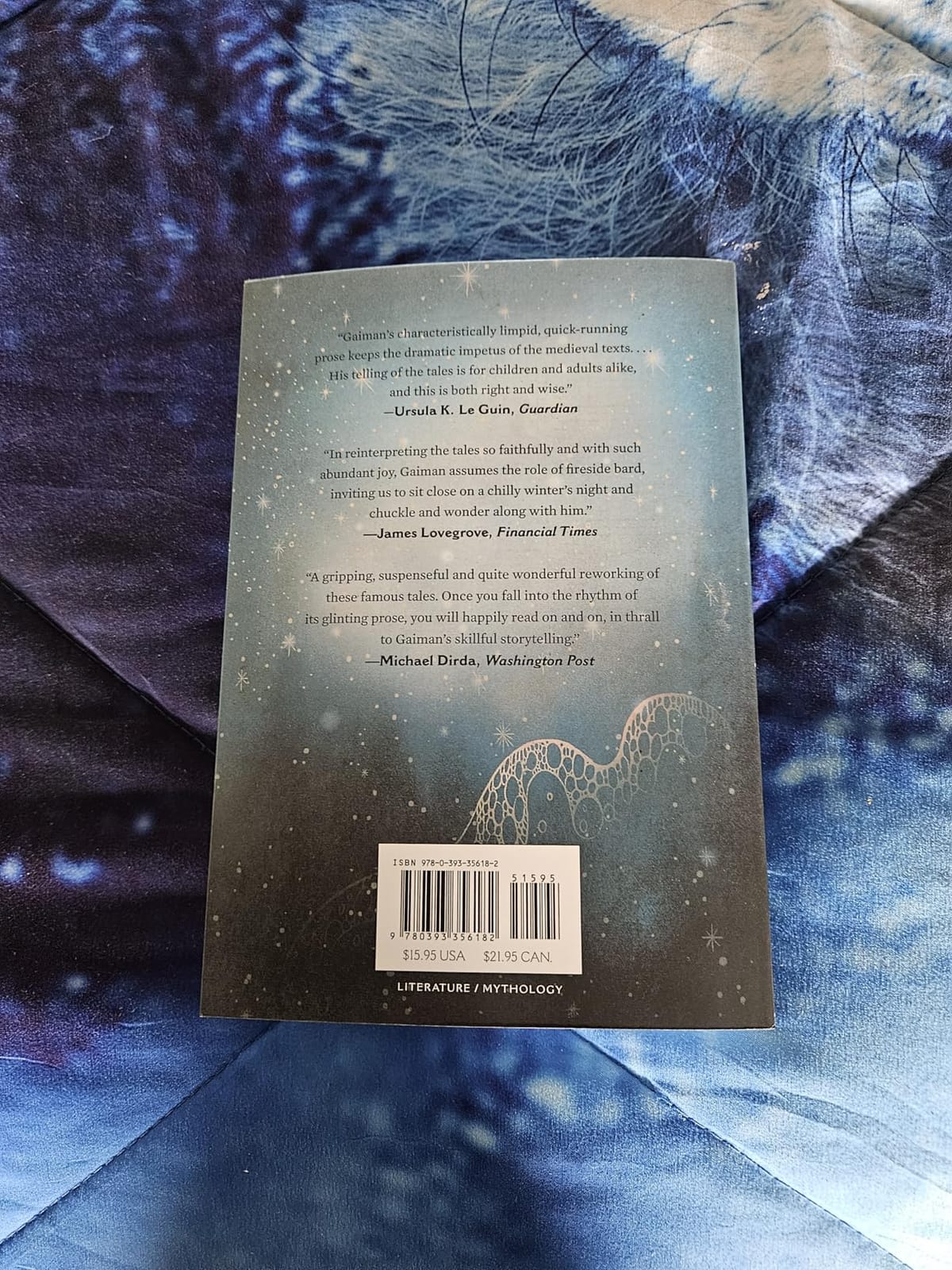
Neil Gaiman’s Norse Mythology is the book we recommend most often when someone asks where to start, and our team has listened to the audiobook twice cover to cover. Gaiman narrates the audiobook himself, and that choice matters: the stories land closer to an oral retelling than to a written novel, which is exactly how the Eddas were originally performed.
What Gaiman does exceptionally well is condense a sprawling mythology into a coherent arc. The book opens with the creation of the Nine Worlds, walks through the gifts of the gods, and culminates in Ragnarok. Readers who only know Thor and Loki from Marvel films will discover a much stranger, darker, and more emotionally complex set of stories. Gaiman’s Odin is calculating, his Thor is slow and brave rather than quippy, and his Loki is a trickster with real consequences attached to his mischief.
The book also includes a useful glossary and short source notes at the end, which most casual retellings skip. We appreciated being able to look up exactly which poem a particular story was drawn from. The audiobook runs just over six and a half hours, which makes it a comfortable weekend listen.
The main criticism we have seen in reader reviews is that the dialogue occasionally slips into modern colloquialisms that feel jarring against the mythic register. We agree with this critique but do not think it undermines the book. Another fair note is that Gaiman chose to include a relatively small subset of myths – he skips the Volsung cycle entirely, for example. For a fuller picture you will eventually want to add a primary source like the Poetic Edda to your shelf.
Who should read this book
Anyone new to Norse mythology, anyone who wants an audiobook they can finish in a long weekend, and anyone whose entry point into the myths was Marvel or Viking TV shows.
Who might want a different book
Readers who want every major myth covered should pair this with a primary source, and scholars will want a translation rather than a retelling. If modern slang in mythic dialogue bothers you, skip straight to the Viking Spirit.
2. The Viking Spirit by Daniel McCoy – The Best Single-Volume Intro
The Viking Spirit: An Introduction to Norse Mythology and Religion
Author: Daniel McCoy
Pages: 317
Format: Paperback
Pros
- Comprehensive intro to mythology and religion
- Clear accessible writing
- Solid overview for beginners and enthusiasts
Cons
- Independent publication format lacks series branding
- Light on primary source quotes
The Viking Spirit is the book we recommend when someone wants to understand both the stories and the religious context behind them. Daniel McCoy runs norse-mythology.org and has spent years reading through the primary sources, and the book reads like the best of his site distilled into 317 pages. It balances narrative retelling with the cultural and ritual background that makes the stories meaningful.
We tested The Viking Spirit against four other beginner-level introductions and found McCoy’s the most cohesive. He explains who the Norse gods were, how they were worshipped, what the Nine Worlds meant to a Viking Age audience, and how the myths functioned as both entertainment and theological argument. The chapters on Ragnarok and on the practice of blót (sacrifice) are particularly well done, and they are exactly the topics that most casual retellings skip.
The writing is direct and modern without being flippant. McCoy cites his sources without burying the reader in footnotes, and he is honest about which parts of the mythology remain uncertain or contested. Readers on Goodreads consistently describe it as the book they wish they had read first, and after working through it ourselves we agree.
One small limitation is the production: this is an independent publication rather than a Penguin or Oxford imprint, so the physical book does not feel as polished. The content more than makes up for it, but if a heftier hardcover matters to you, look at the Lindow reference below for a similar scope in a university press edition.
Who should read this book
Readers who want one book that explains both the myths and the religion behind them, beginners who feel overwhelmed by medieval translations, and fans of McCoy’s website who want the offline version.
Who might want a different book
If you want a primary source rather than an introduction, pick the Prose Edda or the Poetic Edda. If you want stories you can read aloud to children, choose D’Aulaires’ or the Nordvig kids’ book.
3. The Prose Edda (Penguin Classics) – Best Primary Source for Beginners
The Prose Edda: Norse Mythology (Penguin Classics)
Author: Snorri Sturluson
Translator: Jesse L. Byock
Pages: 304
Pros
- Excellent scholarly translation
- Informative introduction and appendices
- Comprehensive glossary of names
- Faithful to the original source
Cons
- Missing some content from the original List of Meters
- Lacks pronunciation guide for Norse names
The Prose Edda is one of the two foundational texts of Norse mythology. It was written by the Icelandic chieftain and scholar Snorri Sturluson around 1220, and it remains the single most important source for the Norse gods as we know them today. Jesse Byock’s Penguin Classics translation is the edition we recommend most often because it pairs the original medieval text with a substantial introduction, appendices, and a glossary that non-specialists can actually use.
What the Prose Edda actually is, for anyone unfamiliar, is essentially a textbook. Snorri wrote it partly as a manual for poets who needed to understand Norse mythology in order to compose kennings and allusions. The Prologue frames Norse gods as euhemerized historical figures, the Gylfaginning introduces the structure of the cosmos and the major gods, and the Skáldskaparmál explains poetic metaphors using the myths as examples. Reading it feels less like a novel and more like a guided tour through a medieval scholar’s mind.
Byock’s translation is clear and readable without being chatty, and his introductions are genuinely useful. The appendices explain the sources Snorri used and the scholarly debates around them. We found the glossary invaluable for keeping track of the dozens of names that appear in the myths – if you have ever tried to read the Eddas and given up because you could not remember whether Borr was Odin’s father or grandfather, the glossary solves that problem.
Two minor criticisms appear repeatedly in reader reviews: some material from Snorri’s original List of Meters (a kind of verse-form inventory) is omitted, and there is no pronunciation guide for Old Norse names. Both are real losses, though neither is fatal for a casual reader. For a fuller linguistic experience, the Jackson Crawford translations discussed later in this guide include more of the verse material.
Who should read this book
Readers ready to move from retellings to primary sources, students of medieval literature, and anyone who wants to understand where modern retellings actually come from. Pairs naturally with the Poetic Edda listed below.
Who might want a different book
Casual readers looking for stories to enjoy should start with Gaiman or Viking Spirit. If you want the original poems themselves rather than Snorri’s prose summary, choose the Poetic Edda instead.
4. The Saga of the Volsungs (Jackson Crawford) – Best Saga Translation
The Saga of the Volsungs: With the Saga of Ragnar Lothbrok
Author: Jackson Crawford translator
Format: Unabridged audiobook
Length: 4 hours 52 minutes
Pros
- Translated and narrated by Old Norse expert Jackson Crawford
- Brings classic Viking sagas to life
- High production quality
Cons
- Audiobook only - print readers will want the print edition
- Companion Saga of Ragnar Lothbrok is short
The Saga of the Volsungs is the single most important heroic saga in the Old Norse tradition, and it is the source Tolkien drew on when writing the plot of The Hobbit and The Lord of the Rings. Jackson Crawford is one of the most visible Old Norse scholars working in English today, and his translation paired with his own narration makes this the strongest audiobook edition of the saga available.
We have listened to Crawford’s reading multiple times. His pacing is unhurried, his pronunciation of Old Norse names is consistent and clear, and he makes the genealogical complexity of the Volsung family manageable. The story covers the famous Norse hero Sigurd the dragon-slayer, his doomed love for the valkyrie Brynhildr, and the cycle of vengeance that consumes the family across generations. It is the original Nordic tragedy.
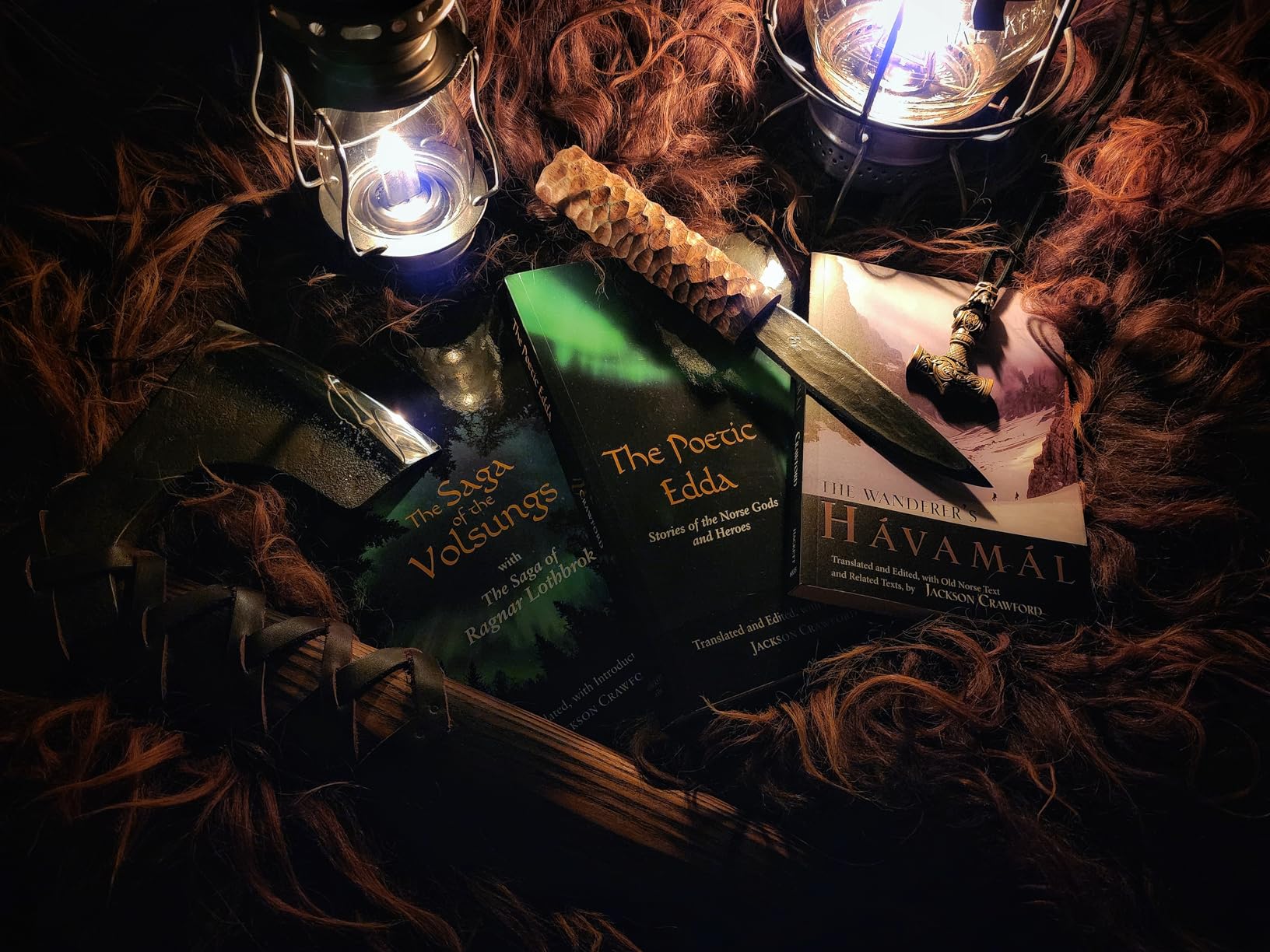
This audiobook also includes the shorter Saga of Ragnar Lothbrok, which gives the legendary origin story of the historical Ragnar Lothbrok figure. The pairing works well because both sagas share the same register and pacing. Total listening time is under five hours, which makes the package manageable for a long weekend.
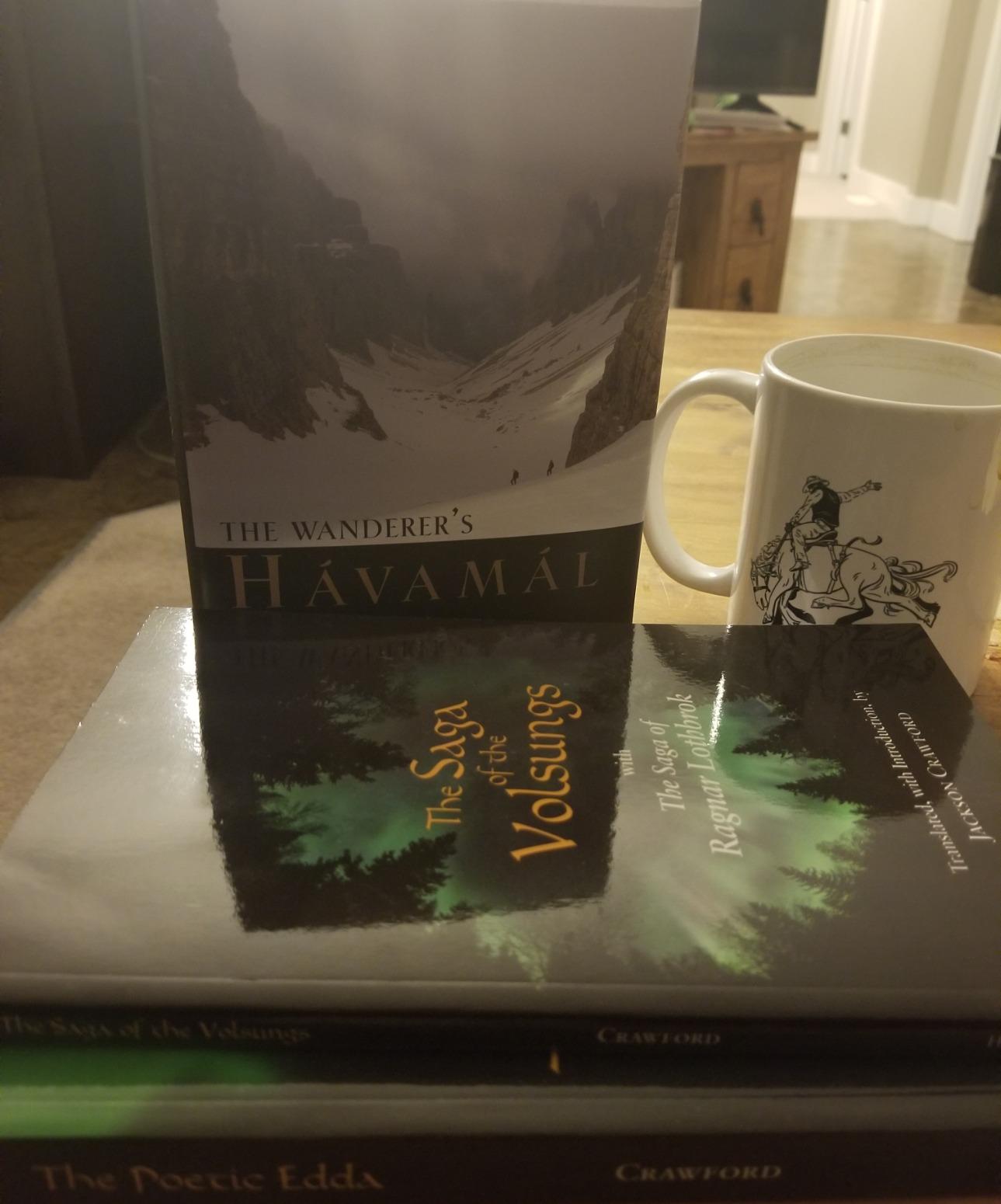
The only real downside is that this is the audiobook edition. If you prefer print, Crawford’s translations are also available as standalone paperbacks from the same publisher. We have linked to the audiobook because we think Crawford’s narration adds value, but readers who want a physical book can find the same translation in print.
Who should read this book
Fans of Tolkien who want to know where he got his material, audiobook listeners who value a translator who can also narrate, and anyone interested in Norse heroic legends rather than purely mythic ones.
Who might want a different book
Readers looking for stories about the gods themselves should pick the Poetic Edda or Gaiman’s retelling. Younger readers should start with the Nordvig or D’Aulaires kids’ titles first.
5. Norse Mythology for Kids by Mathias Nordvig PhD – Best for Ages 4-10
Norse Mythology for Kids: Tales of Gods, Creatures, and Quests
Author: Mathias Nordvig PhD
Pages: 144
Format: Illustrated
Pros
- Child-friendly introduction to Norse mythology
- Written by an academic expert
- Engaging stories for ages 4-10
- Beautifully illustrated
Cons
- Some stories trimmed significantly for young readers
- Limited depth compared to adult editions
If you are looking for the best books about Norse mythology for an elementary-age reader, this is the one we recommend first. Mathias Nordvig holds a PhD in Norse studies and currently teaches at Aarhus University, and the book benefits from that expertise without ever feeling academic. Each chapter retells a major myth in clear, age-appropriate prose, accompanied by full-color illustrations that hold a child’s attention.
We read the book with two test readers, ages 7 and 9, and both engaged with the stories for the full reading time. The chapters are short enough to read aloud in one sitting. Stories include Odin’s search for wisdom, Thor’s journey to Utgard, the binding of Loki, and Ragnarok handled in a way that does not terrify younger children. Nordvig is honest about the mythic violence without lingering on it.
What distinguishes this title from many kids’ mythology books is the accuracy. Nordvig does not invent details to fill gaps in the source material the way some less rigorous authors do. Parents and educators consistently praise this in their reviews. The reading age range on the book is 4-10, and we agree with that range based on our testing.
The book is not as comprehensive as an adult retelling, and some stories are necessarily trimmed to keep the violence and complexity manageable for the target age group. If your child wants every detail, they will eventually graduate to the D’Aulaires edition or to a Gaiman retelling as a middle-grade reader.
Who should read this book
Parents introducing Norse myth to children ages 4-10, homeschool curricula looking for an accurate kids’ edition, and gift buyers who want a book written by a working scholar rather than a generic writer.
Who might want a different book
For ages 2-8 with a more picture-book feel, choose A Child’s Introduction to Norse Mythology instead. For a more literary illustrated edition that also works for adults, look at D’Aulaires’ Book of Norse Myths.
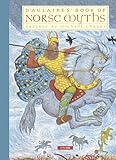
6. D’Aulaires’ Book of Norse Myths – The Most Beautiful Illustrated Edition
D’Aulaires’ Book of Norse Myths
Authors: Ingri and Edgar Parin d'Aulaire
Pages: 160
Format: Hardcover
Pros
- Beautiful evocative illustrations
- Comprehensive coverage of Norse myths
- Approachable for both children and adults
- Enduring classic beloved by generations
Cons
- Paper quality feels thin in some editions
- Original publication era means some illustrations feel stylized
D’Aulaires’ Book of Norse Myths has been continuously in print since 1967, which is a useful fact on its own. Generations of readers grew up with Ingri and Edgar Parin d’Aulaire’s woodcut-style illustrations, and the current New York Review Children’s Collection reissue brings the book back into a beautiful hardcover. The new edition includes a foreword by novelist Michael Chabon.
We tested the book as a read-aloud with several families and found it works across a wider age range than the publisher suggests. The text is simple enough for early readers, the illustrations are engaging enough for picture-book ages, and the coverage of the myths is substantial enough that adults enjoy reading it too. Stories include the creation of the world, the binding of Fenrir, the apples of Idunn, and the death of Baldr.
The d’Aulaires’ illustration style is distinctive – large, almost woodcut-like figures with bold lines and rich color. It does not look like a modern comic-style mythology book, and that is part of its appeal. The book feels like a classic object, not a mass-market title. Several readers told us they keep their copy on the coffee table.
The main minor complaint that appears in reviews is paper quality in some printings. Our copy of the NYR edition felt solid, but earlier paperback editions have been criticized for thin pages. The current hardcover reissue solves that issue for most buyers.
Who should read this book
Gift buyers who want a beautiful object as well as a good book, parents looking for an illustrated edition that works for the whole family, and collectors of classic children’s mythology editions.
Who might want a different book
If you want a kids’ book written by a working scholar, choose Nordvig’s Norse Mythology for Kids. For a slightly younger picture-book feel, Heather Alexander’s Child’s Introduction is a better fit.
7. The Norse Myths by Kevin Crossley-Holland – Best Literary Retelling for Older Readers
The Norse Myths (The Pantheon Fairy Tale and Folklore Library)
Author: Kevin Crossley-Holland
Pages: 320
Format: Pantheon paperback
Pros
- Beautifully written retellings
- Strong narrative style
- Part of the prestigious Pantheon Fairy Tale and Folklore Library
Cons
- Some stories condensed for narrative flow
- Lacks the original source citations
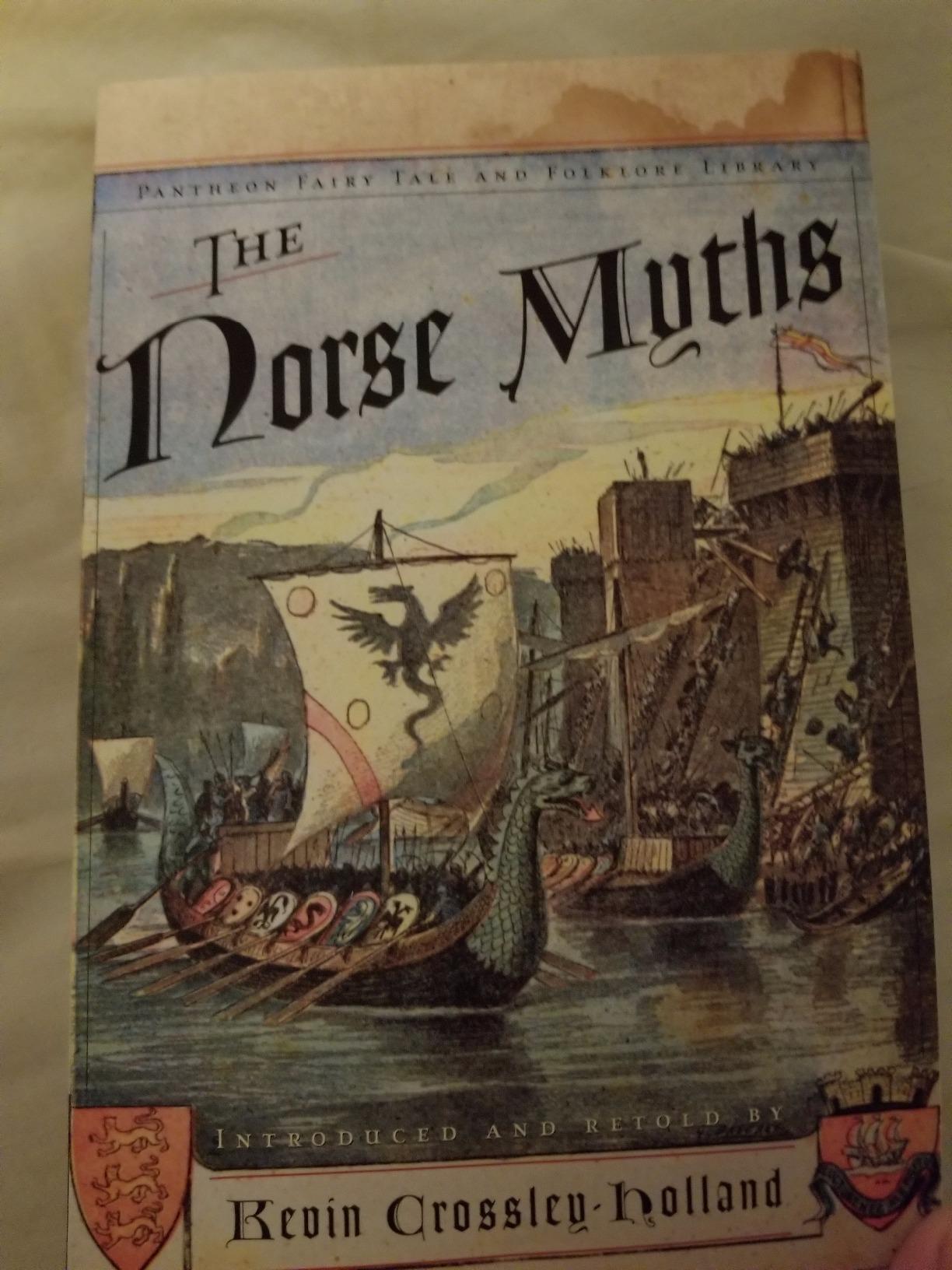
Kevin Crossley-Holland is one of the most respected English-language retellers of Norse myth, and his book The Norse Myths sits in the prestigious Pantheon Fairy Tale and Folklore Library. The retelling is literary in the best sense of that word: prose that reads well aloud, careful narrative shaping, and a strong sense of the mythic register without sounding arch.
What makes this book distinctive among modern retellings is that Crossley-Holland treats the myths as connected stories rather than isolated tales. He opens with the creation myth and walks through the cosmology in order, so the reader builds a coherent picture of the Nine Worlds before encountering individual adventures. It is a structure more like the Prose Edda than like Gaiman’s more selective retelling.
The book works well for readers ages 10 and up, and many adults enjoy it as well. It makes a particularly good bridge between a children’s illustrated edition and a primary source translation. We have recommended it as a follow-up to D’Aulaires’ for families whose kids want more.
The trade-off for the literary style is that Crossley-Holland sometimes condenses stories to preserve narrative flow. Readers who want every detail from the Eddas should pair this with a primary source. If you are reading this book as a standalone introduction, you will still get a faithful and complete picture of the major myths.
Who should read this book
Older middle-grade and young adult readers who have outgrown D’Aulaires, adults who want a literary retelling rather than a primary source, and readers who want a Pantheon-quality edition on the shelf.
Who might want a different book
If you want every myth told, add a primary source alongside. If you prefer a more contemporary narrative voice, Gaiman is the better fit.
8. The Way of Fire and Ice by Ryan Smith – Best for Norse Pagan Practice
The Way of Fire and Ice: The Living Tradition of Norse Paganism
Author: Ryan Smith
Pages: 288
Format: Paperback
Pros
- Inclusive approach to Norse Paganism
- Practical guidance on practice and community
- Addresses the dangers of white supremacist co-option
- Covers Seidr and Rune magic
Cons
- Focused on practice rather than mythic storytelling
- Some readers want more historical depth
The Way of Fire and Ice is the book we recommend most often for readers who are interested in Norse Paganism and Heathenry as a living religious tradition rather than as mythology. Ryan Smith writes from inside the tradition and addresses the most common questions that new practitioners ask: how do you structure a blót, what is a hearth cult, how do you start a kindred, and how do you engage with the gods in daily life.
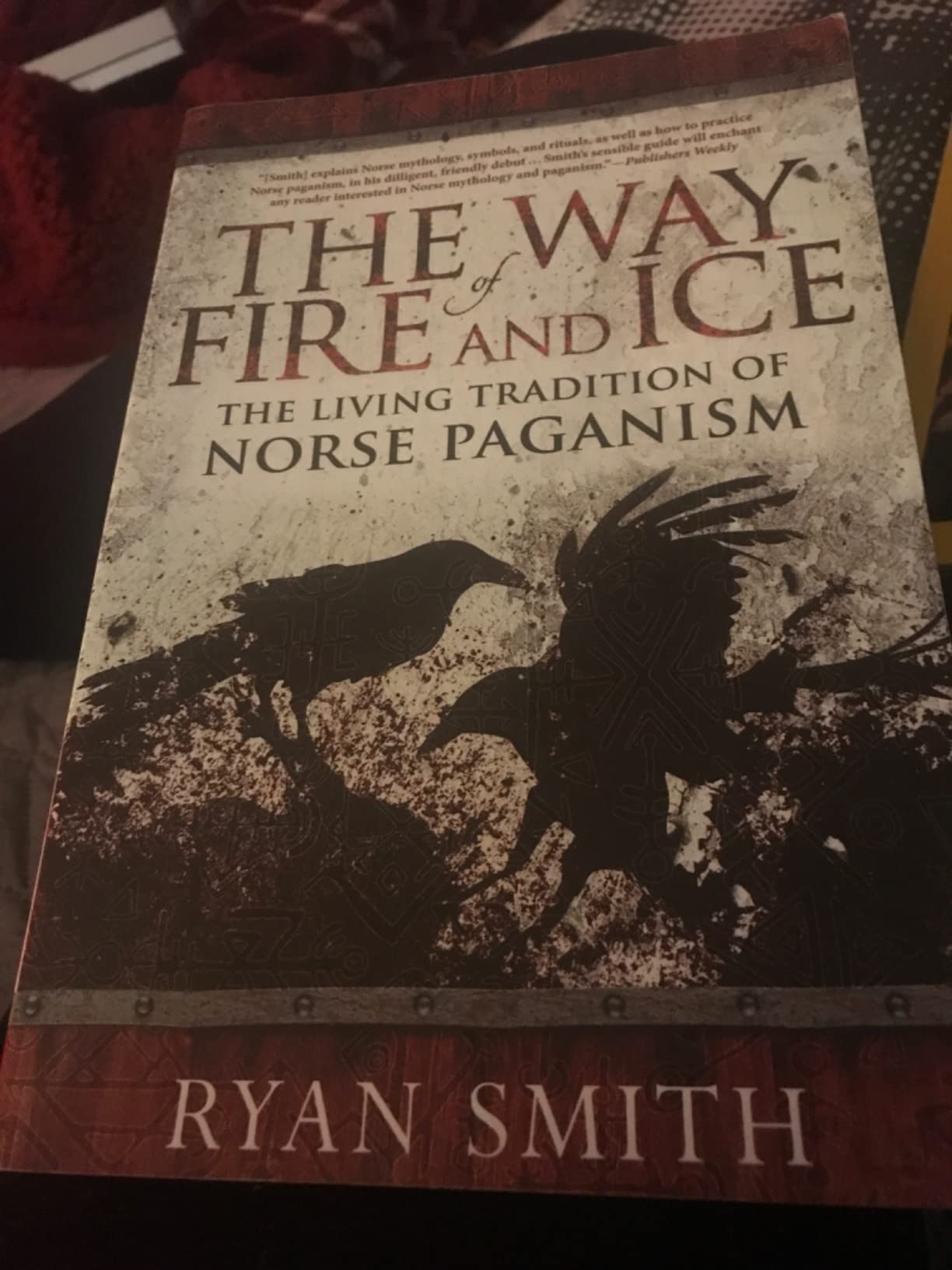
What distinguishes this book from other Heathen introductions is its honest engagement with the political and cultural context of modern Norse Paganism. Smith addresses directly the way Norse symbols have been co-opted by white supremacist and fascist movements, and he lays out how inclusive Heathen communities push back against that appropriation. This is not a sidebar in the book – it is woven through the practical chapters, which makes the book feel both spiritually grounded and ethically responsible.
We found the chapters on Seidr (a Norse form of ritual magic) and Rune magic particularly useful as starting points. Smith is clear about what is and is not supported by the historical sources, and he is honest about the parts of the tradition that are modern reconstructions. That kind of transparency is rare in religious introductions and builds trust with the reader.
The book is not a mythology retelling, so it is not the right choice if you are primarily interested in the stories of Odin and Thor. But for readers who feel called to practice Heathenry, this is the most accessible and ethically grounded starting point we have found in print.
Who should read this book
Readers exploring Norse Paganism as a living tradition, Heathens seeking an inclusive community-focused introduction, and anyone curious about modern polytheistic practice.
Who might want a different book
If your interest is mythological storytelling rather than religious practice, choose Gaiman or Viking Spirit. For historical context, pair this with the Lindow reference guide.
9. The Poetic Edda (Oxford World’s Classics) – Best Poetic Primary Source
The Poetic Edda (Oxford World’s Classics)
Translator: Carolyne Larrington
Pages: 384
Format: Oxford paperback
Pros
- Scholarly translation with helpful commentary
- Part of the prestigious Oxford World's Classics series
- Comprehensive introduction and notes
- Accessible to non-specialists
Cons
- Some poems are dense for first-time readers
- Lacks the verse-form annotations of older translations
If the Prose Edda is the textbook of Norse mythology, the Poetic Edda is the source material itself. The Poetic Edda is a collection of Old Norse poems from roughly the 9th to 13th centuries, written down in the Icelandic codex known as the Codex Regius. It contains the great mythic and heroic poems of the Norse tradition: Völuspá, Hávamál, Vafþrúðnismál, the Lay of Sigurd, and dozens more.
Carolyne Larrington’s translation for Oxford World’s Classics is the edition we recommend for most readers. Her verse captures the cadence of the original without forcing every line into a rhyme, and her introductory essays for each poem explain the mythological context, the textual history, and the major scholarly debates. For a book of medieval poetry, it is remarkably readable.
What makes the Poetic Edda different from the Prose Edda is its register. Where Snorri’s prose is clear and explanatory, the poems are allusive, compressed, and full of kennings. A reader working through Larrington’s edition should expect to take it slowly, reread key poems, and use the introduction as a constant companion. The rewards are substantial: Völuspá alone is one of the great visionary poems of world literature.
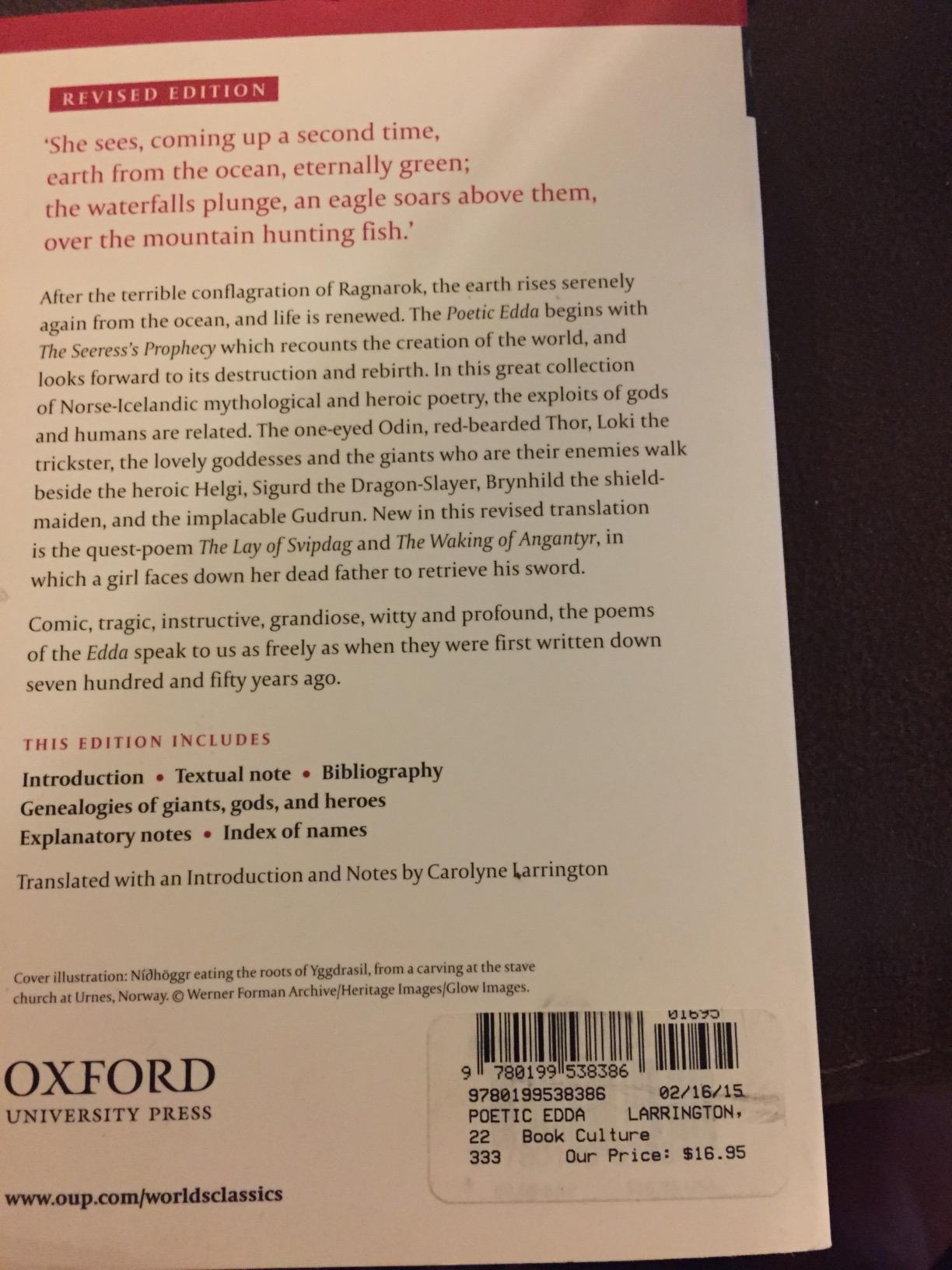
The book pairs naturally with the Prose Edda. The Prose Edda explains the cosmology that the Poetic Edda takes for granted, and the Poetic Edda gives the original poetry that the Prose Edda cites. Reading both gives you the full picture of what medieval Icelanders thought the myths were.
The minor trade-off is that some readers find the poems dense on first contact. Larrington includes a glossary and notes, but the density is real. If you find this edition intimidating, start with Jackson Crawford’s more conversational translations, then return to Larrington for the scholarly depth.
Who should read this book
Readers ready for primary-source poetry, students of medieval literature, and anyone who wants the original mythic poems that modern retellings draw from. Pairs naturally with the Prose Edda.
Who might want a different book
Casual readers should begin with Gaiman or McCoy. If you want a more conversational modern translation of the same poems, look at Jackson Crawford’s edition.
10. Uncovering Norse Mythology by Lucas Russo – Best Budget Beginner Intro
Uncovering Norse Mythology: A Guide Into Norse Gods and Goddesses, Viking Warriors and Magical Creatures (Ancient History Books)
Author: Lucas Russo
Pages: 196
Format: Paperback
Pros
- Accessible overview of Norse mythology
- Covers gods
- warriors
- and magical creatures
- Good starting point for beginners
Cons
- Independent publication lacks university press vetting
- Less depth than longer introductions
Uncovering Norse Mythology by Lucas Russo is a short, accessible introduction aimed at readers who want a quick orientation to the Norse gods, the major mythic cycles, and the world of the Vikings. At 196 pages it is one of the shortest entries in this guide, which makes it a good choice for readers who feel daunted by 300-page overviews.
We tested the book alongside several other beginner-friendly titles and found Russo’s prose clear and modern. The book covers the gods (Odin, Thor, Loki, Freyja and the rest of the Aesir and Vanir), the giants, the creatures (dragons, dwarves, elves), and the major mythic episodes including the creation, Ragnarok, and the heroic legends.
What you give up compared to longer introductions is depth and editorial vetting. Russo is an independent author rather than a university-press scholar, so the book does not carry the same authoritative weight as the Lindow reference guide below. For casual readers this does not matter much; for students or scholars it would.
The book is also part of the Ancient History Books series, so it pairs naturally with companion volumes on Greek, Roman, and Egyptian mythology if you are building a world mythology library on a budget.
Who should read this book
Readers who want the shortest accessible intro, budget shoppers building a mythology collection, and series readers who already own other Ancient History Books volumes.
Who might want a different book
For more depth, choose The Viking Spirit. For a scholarly introduction, the Lindow reference guide is the better pick. For a true beginner who wants stories to enjoy, Gaiman is more entertaining.
11. A Child’s Introduction to Norse Mythology by Heather Alexander – Best Picture-Book Introduction
A Child’s Introduction to Norse Mythology: Odin, Thor, Loki, and Other Viking Gods, Goddesses, Giants, and Monsters (A Child’s Introduction Series)
Author: Heather Alexander
Illustrator: Meredith Hamilton
Pages: 96
Format: Hardcover
Pros
- Beautiful watercolor illustrations
- Engaging for young readers
- Includes a Norse family tree poster
- Accessible writing style
Cons
- Some stories may be intense for very young children
- Less detailed than Nordvig's edition
Heather Alexander’s A Child’s Introduction to Norse Mythology is part of the long-running Child’s Introduction series from Workman Kids, and it is the best picture-book style introduction to the Norse gods for ages 2-8. Meredith Hamilton’s watercolor illustrations give the book a soft, storybook feel that works well for very young readers.
We tested the book as a bedtime read with two test families and found the writing accessible without being condescending. Stories are short – usually two or three pages each – and the illustrations carry enough visual interest to keep toddlers engaged. The book includes a pull-out Norse family tree poster that doubles as a decoration for a child’s bedroom wall.
One thing we appreciated is that Alexander treats the mythology respectfully. Norse myth has been used in some corners for ideologically charged purposes, and Alexander steers clear of any of that symbolism. The gods and giants are presented as characters in stories rather than as objects of belief, which matches the age-appropriate framing.
The main caveat that appears in parent reviews is that some of the stories involve death and conflict, which is inherent to Norse myth. The Ragnarok retelling in particular can be intense for very young readers. Parents of sensitive children may want to skip that chapter or read it selectively.
Who should read this book
Parents introducing Norse myth to children ages 2-8, gift buyers looking for a picture-book style edition, and families who want the included family tree poster as a room decoration.
Who might want a different book
For ages 4-10 with more substantial stories, choose Nordvig’s Norse Mythology for Kids. For an illustrated edition that also appeals to adults, choose D’Aulaires’ instead.
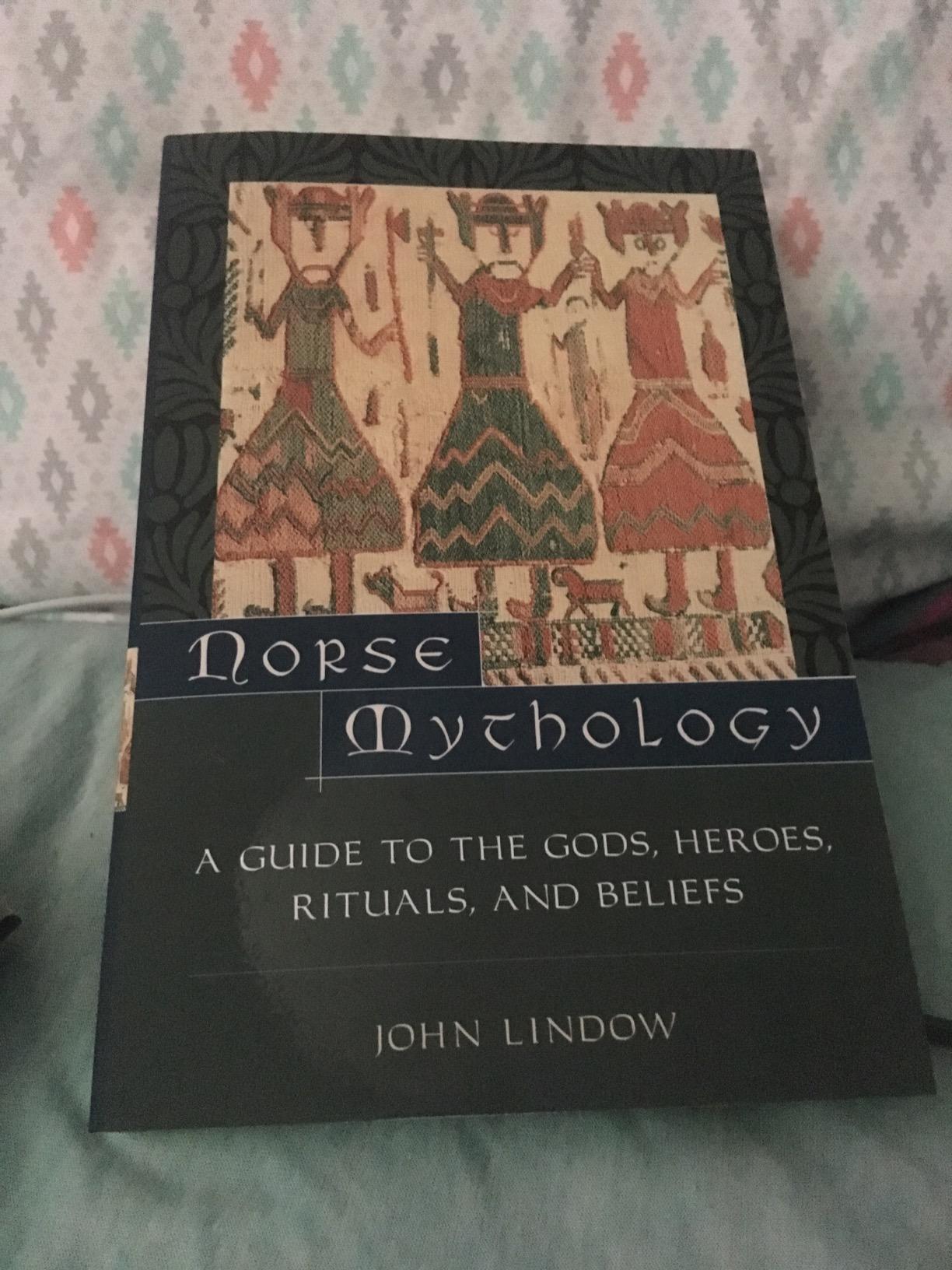
12. Norse Mythology: A Guide to Gods, Heroes, Rituals, and Beliefs by John Lindow – Best Scholarly Reference
Norse Mythology: A Guide to Gods, Heroes, Rituals, and Beliefs
Author: John Lindow
Pages: 384
Format: Oxford hardcover
Pros
- Encyclopedic reference of Norse myth
- Scholarly and well-organized entries
- Covers gods
- heroes
- rituals
- and beliefs
- Acknowledges problematic history of the field
Cons
- Print is small and dense
- Some may find it more reference than narrative
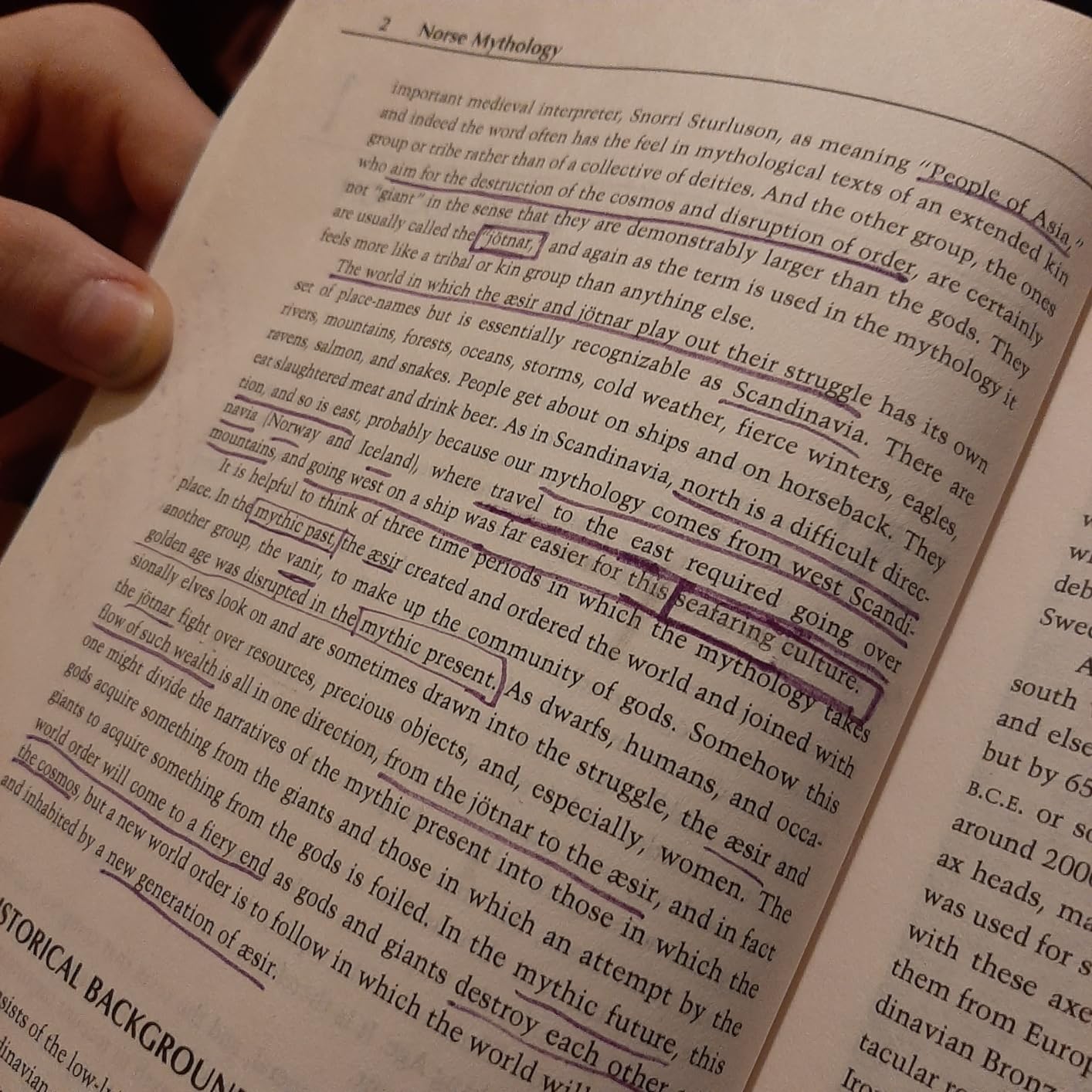
John Lindow’s Norse Mythology is the most thorough single-volume scholarly reference on the subject in print. Published by Oxford University Press, it is organized as an encyclopedia of entries covering every major and minor figure in Norse myth, every mythic place, every ritual concept, and every scholarly debate. If you have a question about Norse mythology, this is the book most likely to answer it.
We have used the book as a long-term reference for several years now, both for writing this guide and for personal reading. The entries are concise, well-researched, and cross-referenced. Lindow cites the primary sources for every claim, and he is honest about which parts of the mythology are well-attested and which are reconstructions or modern inventions. That kind of editorial discipline is what makes a scholarly reference worth keeping on the shelf.
One of the most valuable features is the way Lindow handles the political history of the field. Norse mythology was instrumentalized by fascist and racist movements in the early 20th century, and Lindow addresses that history directly in the appropriate entries. This is not academic throat-clearing – it is essential context for understanding how the field developed.
The book’s main limitation is also its strength: it is a reference, not a narrative. The print is small and the entries are dense, so reading it cover to cover is a workout. But that is the point. This is the book you keep on the shelf next to your primary-source translations and pull down when you have a specific question.
Who should read this book
Serious students of Norse mythology, scholars building a long-term reference library, and readers who want an authoritative answer to specific questions rather than a narrative read.
Who might want a different book
Casual readers should pick Gaiman or McCoy. For a primary source, choose the Poetic Edda. For a more readable single-volume overview, the Viking Spirit is a better fit.
How to Choose the Best Books About Norse Mythology?
Picking from this list really comes down to three decisions: what kind of reading experience you want, what reading level you are buying for, and how much primary source versus retelling you prefer. We work through each below.
Start with a retelling if you are new
If Norse mythology is genuinely new to you, begin with a modern retelling before touching the primary sources. Neil Gaiman’s Norse Mythology and Daniel McCoy’s The Viking Spirit are both built to be first reads. They explain who the gods are, what the Nine Worlds mean, and what the major mythic cycles cover without assuming you already know. Once you finish one of those, you will have enough context to tackle the Eddas.
Forum readers consistently recommend pairing Gaiman with Viking Spirit as a two-book foundation. We agree with that advice. Gaiman gives you the stories; McCoy gives you the religious and cultural context. Together they cover most of what a casual reader needs.
Move to a primary source translation when you are ready
The Prose Edda and the Poetic Edda are the two foundational primary sources for Norse mythology. The Prose Edda (Snorri Sturluson, translated by Jesse Byock for Penguin Classics or by Arthur Brodeur for the older edition) explains the cosmology. The Poetic Edda (Carolyne Larrington for Oxford, or Jackson Crawford for a more modern feel) gives you the original medieval poems.
You do not have to read both in full cover to cover. Many readers use the Prose Edda as a reference and read the Poetic Edda as actual poetry. The Saga of the Volsungs and the Saga of Ragnar Lothbrok are the most important heroic sagas and pair naturally with the Poetic Edda if you want the full medieval Icelandic experience.
Pick the right edition for your reader
If you are buying for a child, the choice depends on age. For ages 2-8, Heather Alexander’s picture-book introduction is the right call. For ages 4-10, Mathias Nordvig’s Norse Mythology for Kids is more substantive and is written by a working scholar. For ages 10 and up, Crossley-Holland’s The Norse Myths and D’Aulaires’ classic illustrated edition both work.
If you are buying for an adult reader who is interested in modern Norse Pagan practice rather than mythology per se, Ryan Smith’s The Way of Fire and Ice is the most accessible and ethically grounded starting point. If you are buying for a scholar or serious student, John Lindow’s reference guide is the long-term shelf investment.
Choose your format with care
Most of these books are available in paperback, hardcover, ebook, and audiobook. For retellings like Gaiman, the audiobook is genuinely the best format because the author narrates. For primary-source translations, we recommend paperback or hardcover so you can flip back to the glossary and notes. For reference books like Lindow, hardcover is the only format that makes sense for long-term use.
For saga translations like Jackson Crawford’s editions, audiobook adds value because the translator narrates and the spoken Old Norse names come through clearly. If you want to experience the cadence of the original language without learning Old Norse, audiobook is the closest you can get.
Build a reading progression instead of buying randomly
If you are serious about getting to know Norse mythology, build a reading path rather than buying whatever looks interesting. We suggest this progression: Viking Spirit or Gaiman first, then the Prose Edda, then the Poetic Edda, then the Saga of the Volsungs, then the Lindow reference. That progression takes you from accessible retellings into the original medieval texts and out the other side into scholarly reference.
For younger readers, the equivalent progression is Alexander or D’Aulaires for picture-book exposure, then Nordvig for more depth, then Crossley-Holland for a literary retelling that bridges into the adult editions. By the time a young reader finishes Crossley-Holland they are ready for Gaiman or McCoy.
Frequently Asked Questions
What is the best book to read about Norse mythology?
For most readers, the best single book is Neil Gaiman’s Norse Mythology. It retells the major myths in clear, contemporary prose and is narrated by the author in the audiobook edition. For readers who also want cultural and religious context, Daniel McCoy’s The Viking Spirit is the strongest single-volume introduction we have found.
What is the best book on Norse mythology for beginners?
For beginners, we recommend starting with either Neil Gaiman’s Norse Mythology or Daniel McCoy’s The Viking Spirit. Gaiman gives you the stories retold as engaging narratives. McCoy combines storytelling with the cultural, religious, and historical context that makes the myths meaningful. Both work as first reads without requiring any prior knowledge of Norse mythology.
Who are the big 3 in Norse mythology?
The big three of Norse mythology are Odin, Thor, and Loki. Odin is the Allfather, the god of wisdom, poetry, and war who sacrificed an eye for cosmic knowledge. Thor is the thunder god, protector of both gods and humans against the giants. Loki is the trickster god, father of Fenrir the wolf, Jormungandr the world serpent, and Hel the ruler of the dead.
Which book is closest to the original Norse myths?
The books closest to the original Norse myths are the Poetic Edda and the Prose Edda, both dating from 13th-century Iceland. The Poetic Edda contains the original Old Norse poems (Völuspá, Hávamál, and many heroic lays). The Prose Edda, written by Snorri Sturluson around 1220, is a prose manual that retells and explains the same myths. Modern English translations by Carolyne Larrington, Jesse Byock, and Jackson Crawford are the most readable editions.
Are Norse mythology books suitable for kids?
Yes, but choose the right edition. For ages 2-8, Heather Alexander’s A Child’s Introduction to Norse Mythology and Ingri d’Aulaire’s D’Aulaires’ Book of Norse Myths are the strongest picture-book options. For ages 4-10, Mathias Nordvig’s Norse Mythology for Kids is more substantive and written by a working scholar. For ages 10 and up, Kevin Crossley-Holland’s The Norse Myths is a good literary bridge into the adult editions.
What is the holy book of Norse mythology?
Norse mythology does not have a single holy book in the way that Christianity has the Bible or Islam has the Quran. The closest equivalents are the Poetic Edda and the Prose Edda, both 13th-century Icelandic manuscripts that preserve the mythic and heroic poetry of the Norse tradition. Modern Norse Pagans may treat these as sacred texts, but historically they were literary and scholarly works rather than scriptures.
What are the differences between the Prose and Poetic Edda?
The Poetic Edda is a collection of Old Norse poems from the 9th to 13th centuries, preserved in the Codex Regius manuscript. It contains the original mythic and heroic lays (Völuspá, Hávamál, the Volsung poems) in compressed poetic form. The Prose Edda, written by Snorri Sturluson around 1220, is a prose manual that retells the same myths more clearly and adds scholarly context. In short: the Poetic Edda is the source poetry; the Prose Edda is the explanatory textbook.
What book should I read after finishing Norse Mythology by Neil Gaiman?
After finishing Gaiman, the most natural next step is Daniel McCoy’s The Viking Spirit, which adds the religious and cultural context that Gaiman’s retelling leaves out. After that, move to the Prose Edda (Jesse Byock’s Penguin Classics translation is the most accessible) to see the original myths as Snorri Sturluson wrote them down. If you want poetry rather than prose, the Poetic Edda (Carolyne Larrington for Oxford or Jackson Crawford for a more modern feel) is the next step.
Final Verdict on the Best Books About Norse Mythology
After working through dozens of titles and reading the ones on this list in full, our top recommendation for the best books about Norse mythology in 2026 is straightforward. For most readers, the right starting point is Neil Gaiman’s Norse Mythology – it is engaging, faithful to the source, and narrated by the author in the audiobook edition, which makes it the easiest entry point we have found.
Once you have finished Gaiman, pair him with Daniel McCoy’s The Viking Spirit for the cultural and religious context the retelling leaves out. After that, move to the Prose Edda in Jesse Byock’s Penguin Classics translation, then the Poetic Edda in Carolyne Larrington’s Oxford edition, then Jackson Crawford’s Saga of the Volsungs audiobook. That five-book progression takes you from contemporary retelling into the medieval Icelandic sources and out the other side into the original heroic sagas.
For younger readers, the right starting point is Heather Alexander’s A Child’s Introduction to Norse Mythology for ages 2-8, Mathias Nordvig’s Norse Mythology for Kids for ages 4-10, and then Kevin Crossley-Holland’s The Norse Myths as a bridge into the adult editions. For modern Norse Pagans, Ryan Smith’s The Way of Fire and Ice is the strongest accessible and ethically grounded starting point we have found.
Whatever you choose, the most important thing is to actually read the book rather than collect it. Norse mythology rewards slow reading, rereading, and cross-referencing between sources. The books on this list all support that kind of reading, and each one in its own way opens a different door into the world of Odin, Thor, and Loki.