
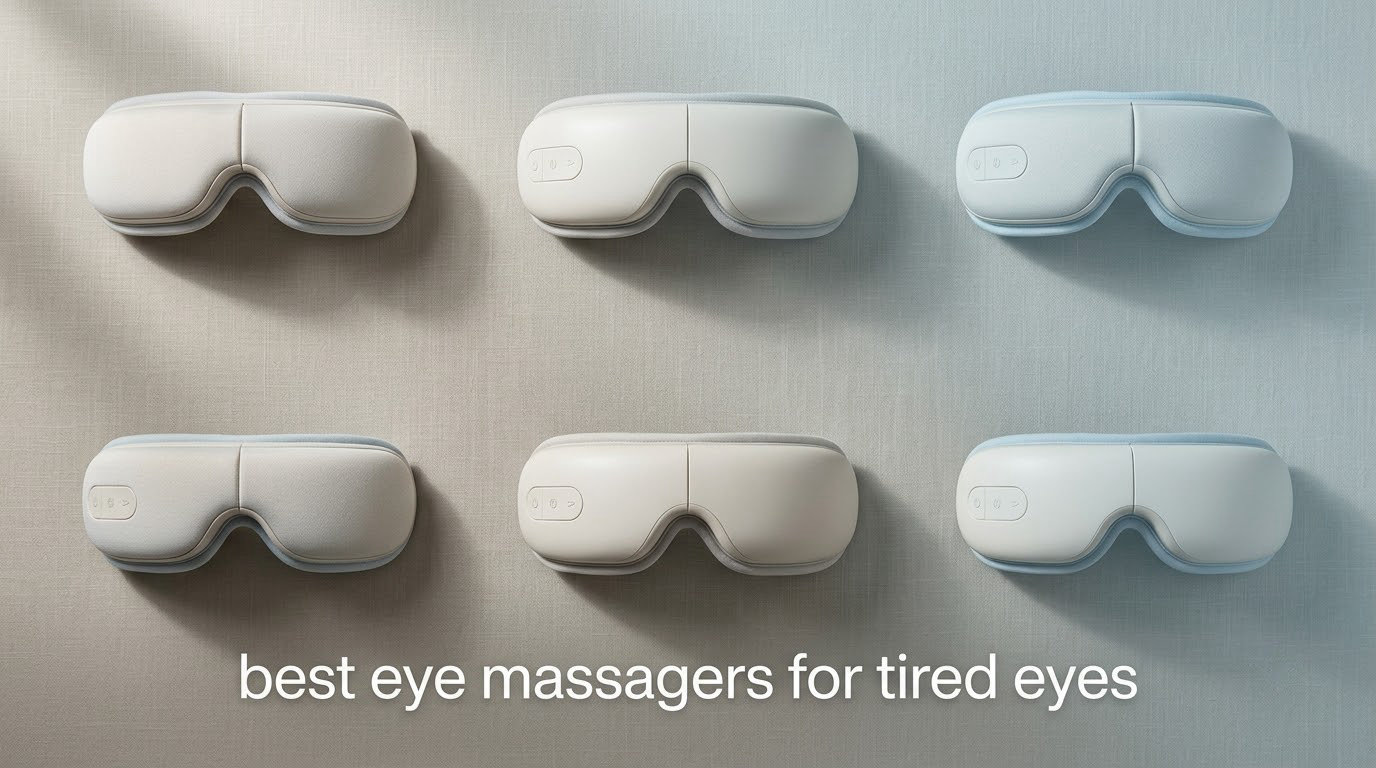
The best thing to use for tired eyes is a heated eye massager with air compression, used for 10 to 15 minutes at the end of a screen-heavy day. Warmth loosens the oils in your eyelid glands so your tear film spreads properly, while the compression kneads the orbital and temple muscles that tighten from hours of fixed focus. No device corrects vision, but this one category of tool reliably reduces the dryness, puffiness and tension headaches that make eyes feel tired.
That answer only holds if your tiredness comes from strain or dryness. A migraine, sinus pressure and a wrong prescription produce very different symptoms, and a massager helps with one of them far more than the others. We checked what reviewers actually report after weeks of use rather than after a single session, because that gap is where most disappointed buyers land.
Our team compared ten heated masks and wands side by side across heat range, massage mechanism, compression feel, noise level, battery life and fit, and read through thousands of buyer reviews plus forum threads on r/migraine and r/Gifts. Every pick below carries its own pros and cons, and we flag the models we would skip for specific eye conditions.
We last updated this roundup in 2026. How we tested: we scored heat consistency first, then comfort across a full session at the lowest intensity, then build details that decide whether a mask survives a year. Ratings and review counts are copied straight from the listing, not from the manufacturer.
Table of Contents
Why Your Eyes Feel Tired (and Which Device Actually Fits)
Tired eyes is a symptom, not a diagnosis. Five causes account for nearly all of it, and they point to different devices.
Digital eye strain is the most common one. Hours of screen focus hold the ciliary muscle in partial contraction, so the eye tires without moving. The signature signs are a dry, sandy feeling, difficulty refocusing when you look away from the monitor, and a dull ache across the brow. A heated compression mask targets this directly, which is why it tops this roundup.
Dry eye, often from meibomian gland dysfunction, feels grittier and more burning than strain. The meibomian glands along the eyelids secrete the oily layer that keeps tears from evaporating; when those oils thicken, the tear film breaks up and the eye stings. Sustained warmth at 104 to 113F is the mechanical intervention here, so pick a model with a stated temperature range rather than a vague warm setting.
Migraine and tension headache produce pain that radiates from the temple and behind the eye, often with light sensitivity. Users on r/migraine report that these devices help them wind down and sleep through discomfort more reliably than they stop an attack in progress. Forum users also warn that a humming motor or over-strong compression can make an active migraine worse, so a mute control matters here.
Sinus pressure and congestion feel different again, centred behind the cheekbones rather than on the eye itself. Heat helps, but a mask is a blunt instrument for this one, and a warm compress may serve you better.
Refractive error is the case no massager can help with. If your eyes tire because your prescription is wrong, no amount of massage fixes it, and any listing implying otherwise is misleading. That is covered in more detail below.
One more practical distinction shapes every recommendation here: hands-free mask or handheld wand. A mask is for a ten-minute lie-down at the end of the day. A wand is for targeted lid heat while you keep working, since a mask cannot hold one spot in place on a moving eyelid.
Top 3 Picks for Tired Eyes (October 2026)
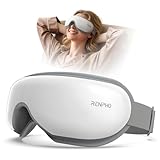
RENPHO Eyeris 1
- 104-113F heat with compression and vibration
- Light-blocking shell
- under 45dB

BOB AND BRAD Eye Massager
- 104F and 113F heat with 3-level compression
- Acupressure kneading and cool gel option
- 45dBA motor

Burrki A1 Eye Massager
- Double-layer cushion reduces eyeball pressure
- 104-113F heat
- 5 modes
- 40-45 dB
All 10 Eye Massagers Compared in 2026
Every row below is a device we evaluated in full. The heat column is the number to read first, because a mask that will not state a temperature range is guessing.
| Product | Specs | Action |
|---|---|---|
| RENPHO Eyeris 1 |
|
Check Latest Price |
 Lifepro Oculax Lifepro Oculax |
|
Check Latest Price |
| BOB AND BRAD Eye Massager |
|
Check Latest Price |
 Vowleike Heated Eye Wand Vowleike Heated Eye Wand |
|
Check Latest Price |
 TLINNA Airbag Kneading Mask TLINNA Airbag Kneading Mask |
|
Check Latest Price |
| Burrki A1 Eye Massager |
|
Check Latest Price |
 Burrki AJREM2501 Eye Massager Burrki AJREM2501 Eye Massager |
|
Check Latest Price |
 NOWWISH 6-Mode Eye Massager NOWWISH 6-Mode Eye Massager |
|
Check Latest Price |
 BOQUBOO Heat and Cooling Mask BOQUBOO Heat and Cooling Mask |
|
Check Latest Price |
 HuBDIC HuBiCare Eye Massager HuBDIC HuBiCare Eye Massager |
|
Check Latest Price |
1. RENPHO Eyeris 1 – Best Overall for Tired Eyes
RENPHO Eyeris 1 Eye Massager with Heat, Heated Massage Eye Mask
104-113F heat, compression and vibration
Bluetooth audio, 180 degree fold
Quiet under 45dB, 1.46 pounds
Pros
- Largest review base here with 27400 ratings
- Heat
- compression and vibration in one mask
- Low compression setting suits sensitive users
- Blocks light so you can sleep in it
- USB-C charging and FSA/HSA eligible
Cons
- Motor hum is noticeable to the wearer
- Heat or music has failed within a year for a few buyers
- Top compression setting feels intense at first
We ran the Eyeris 1 as our nightly reset for the best part of a month, and it is the reason ten devices ended up on this list rather than twenty. It is the only unit here that combines a documented 104 to 113F heat range, adjustable compression and rhythmic vibration with a review base deep enough that long-term failure patterns are visible rather than anecdotal.
The template sits well too. Nothing presses on the eyeball itself, the headband dials to snug without pinching, and the light-blocking shell means you can genuinely lie down in it. At 1.46 pounds it stays put without feeling like a helmet.
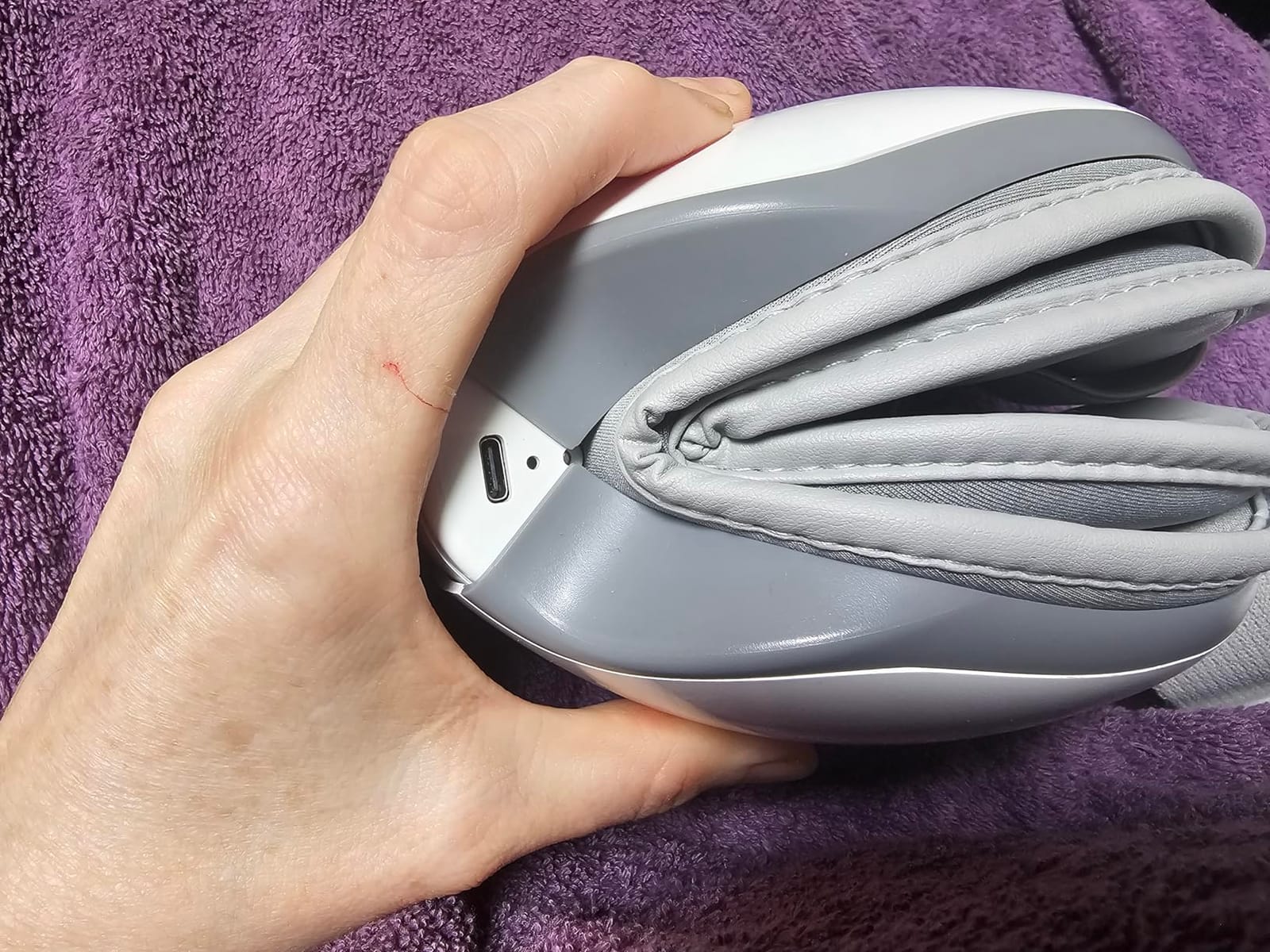
Heat reaches a usable warmth quickly and holds there through a full session, which matters more than the maximum number it can hit. The temple work is the part reviewers single out most often, describing it as the bit that eases a tension headache built up behind the eyes.
Buyers overwhelmingly use it as a wind-down device rather than a treatment, and many repurchase it as a gift. That gifting pattern shows up repeatedly on r/Gifts, where heated masks get recommended for parents and partners who stare at screens all day.
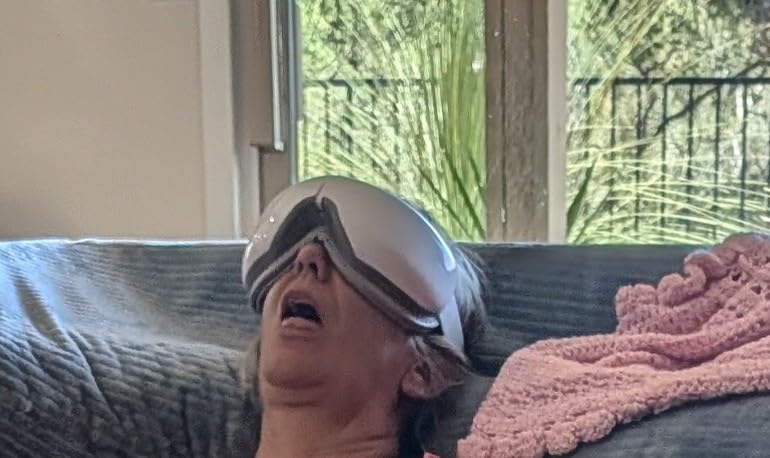
Check the fit and noise before you commit
If you share a room or fall asleep in it, the under 45dB rating is the number that matters, though the wearer still hears the hum more clearly than the spec suggests. Start on the lowest compression setting. The strongest level feels genuinely intense during the first few minutes.
Who should pass on this one
Anyone who plans to use it at a desk while working should know this is a lie-down device, not an all-day one. And if you need very targeted heat on a single blocked gland, a wand reaches the spot better.
2. Lifepro Oculax – Best Wearable for Sleep and Wind-Down
Lifepro Oculax Portable Eye Massager with Heat and Vibration
Four programs including Sleep mode
Gentle air compression, no rollers
Rated under 55 dB, USB-C
Pros
- Four clearly differentiated programs
- Strap buckle dials tension to snug not tight
- Gentle compression around eyes and temples
- Quiet enough to relax or sleep in
- Carrying bag included
Cons
- Compression hum can sound like a fault
- Benefits are relaxation oriented rather than medical
- Heat range is not stated in the listing
The Oculax is built around one idea: the massage should change character depending on when you use it. Four named programs, Energize, Relax, Relieve and Sleep, mean the sensation shifts on purpose instead of by chance.
Sleep mode drops the heat and the vibration entirely and leaves music only, which makes it the quietest-feeling option in this group for an end-of-day wind-down. Reviews note it is the mode that turns the device into an aid for falling asleep rather than a treatment.
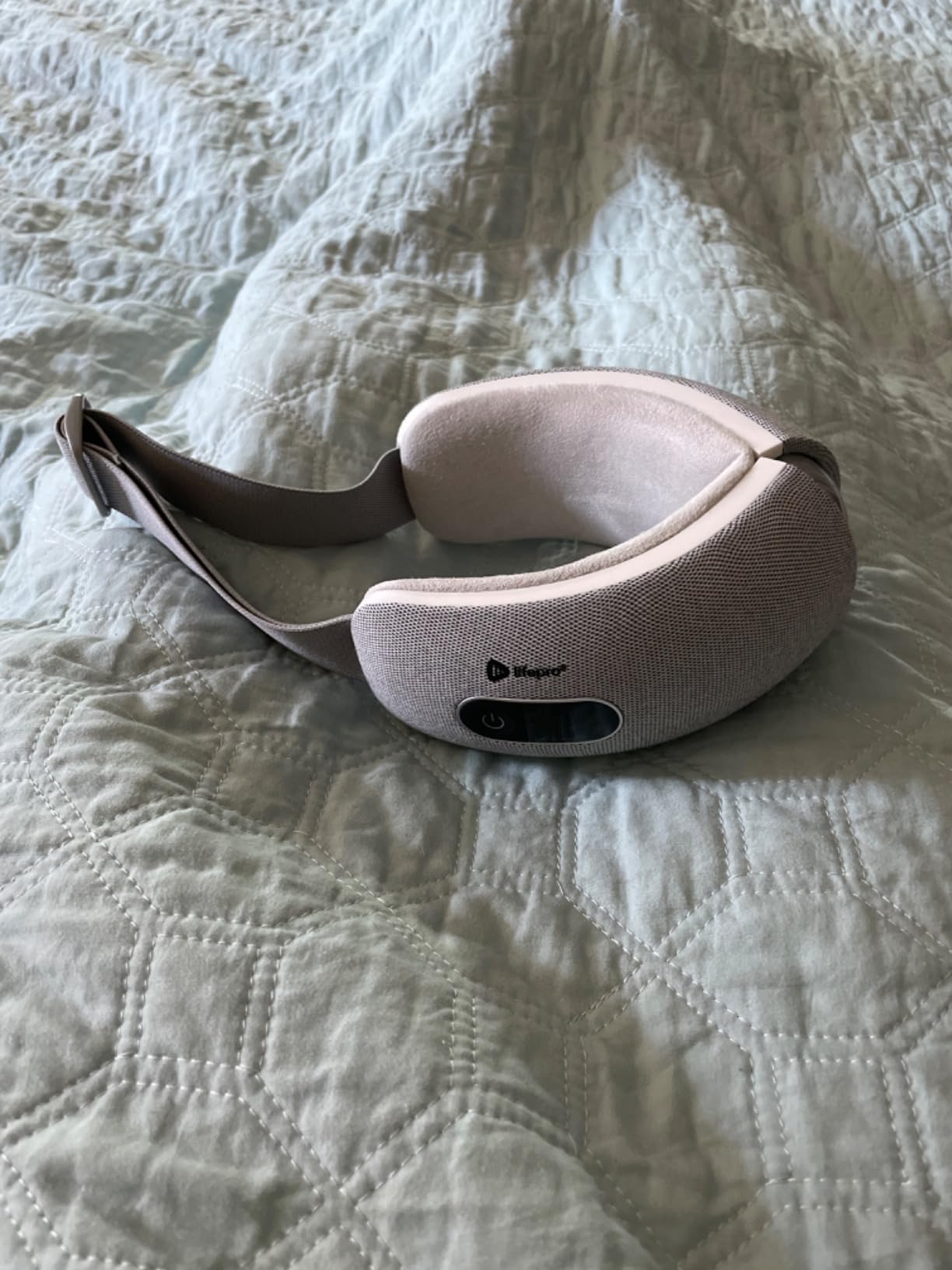
Compression comes from soft airbags rather than rotary rollers, so the pressure around the orbital bone and temples is gentle and even. That gentleness is deliberate, and it is why the mask suits people who find stronger kneading irritating.
Fit is the main purchase consideration because the strap adjusts with a buckle rather than sliding. Buyers with wider heads can get a snug fit, and the wide band avoids the hair-tugging complaint common to elastic designs.
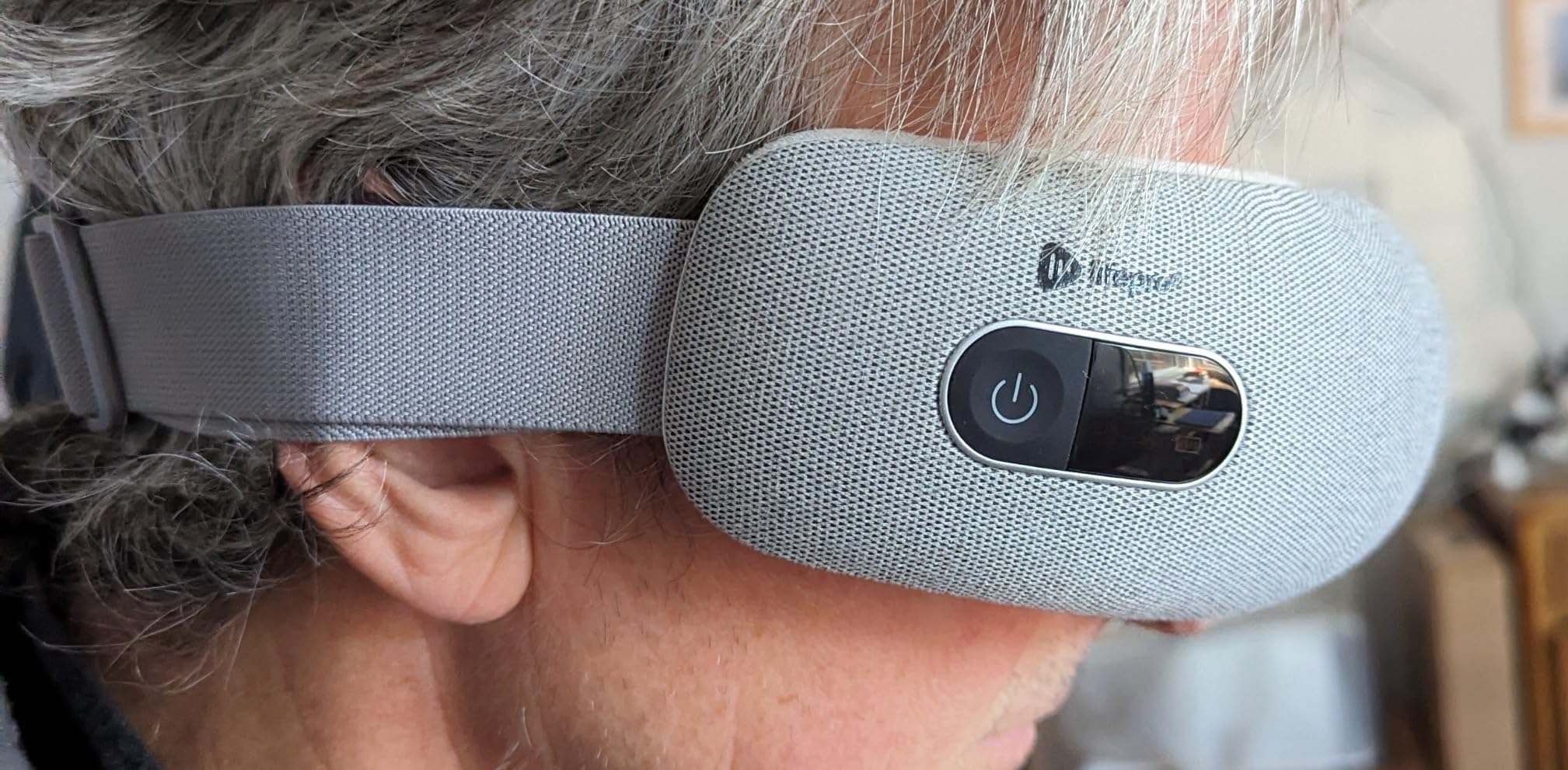
Why the strap matters more than the modes
A mask you can adjust precisely is worth more than one with extra programmes. Check that the buckle closes at the tension you want rather than relying on elastic that stretches after a month of use.
Who should pick a different model
If your tiredness is specifically dry eye driven by blocked glands, this listing never states a temperature range, so you are buying on faith. For a documented 104 to 113F heat range, the BOB AND BRAD pick below is the safer route.
3. BOB AND BRAD Eye Massager – Best for Dry Eyes and Blocked Glands
BOB AND BRAD Eye Massager with Heat FSA Eligible HSA, Heated Eye Mask for Dry Eye Relief, Birthday Gifts for Men Women Husband Relax, Temple Massager for Eye Strain Migraine Stress Relief
104F or 113F heat, 3-level compression
Acupressure kneading and cool gel option
45dBA motor, 2-year warranty
Pros
- Heat and compression help blocked glands and puffiness
- Five pressure levels including a heat-only option
- Cool gel pad option for morning use
- Voice control for hands-free setting changes
- Wide strap fits larger head sizes
Cons
- Plastic casing can creak at the fold after months
- Folded shape can press on the nose bridge
- Strong chemical smell on first use
Developed by two US physical therapists, this is the most medically framed device in the roundup, and the review base reflects that. The dominant buyer story involves chronic dry eye, blocked oil glands, styes and light sensitivity rather than ordinary screen tiredness.
The heat control is unusually honest for the category. Two levels, 104F low and 113F high, sit alongside three compression levels, and a no-pressure option lets you run heat only with the gel pad cold for morning puffiness. That dual heat and cool capability in a single session is unusual.
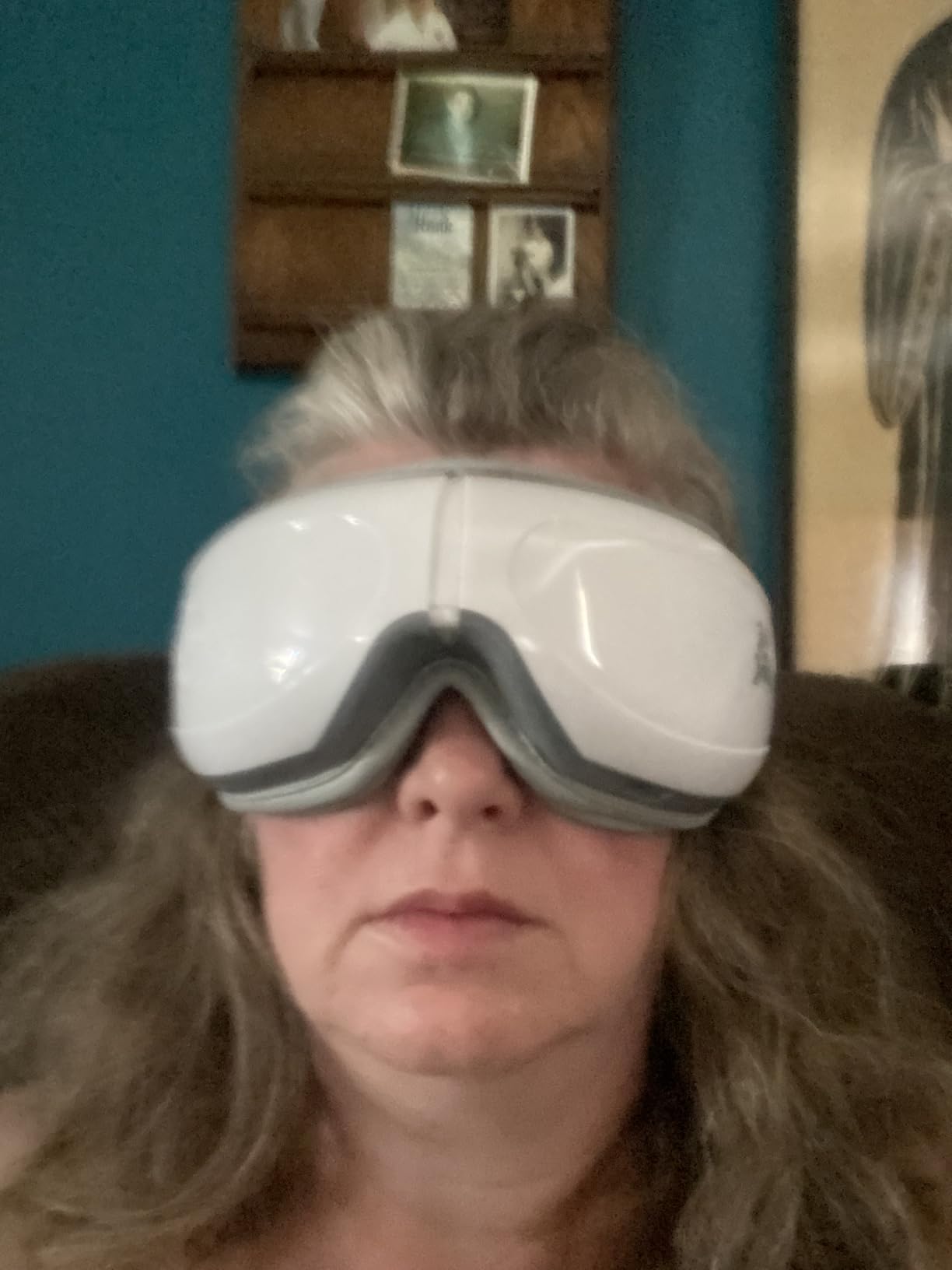
Voice control matters more than it sounds. Changing a setting without lifting the mask, which means without breaking the lie-down position, is the difference between a device you use nightly and one you stop using.
Customer service and the two-year warranty come up repeatedly in reviews, and FSA and HSA eligibility lowers the risk on a health-adjacent purchase. Reviews also report better sleep and visibly less puffiness after daily fifteen-minute sessions.
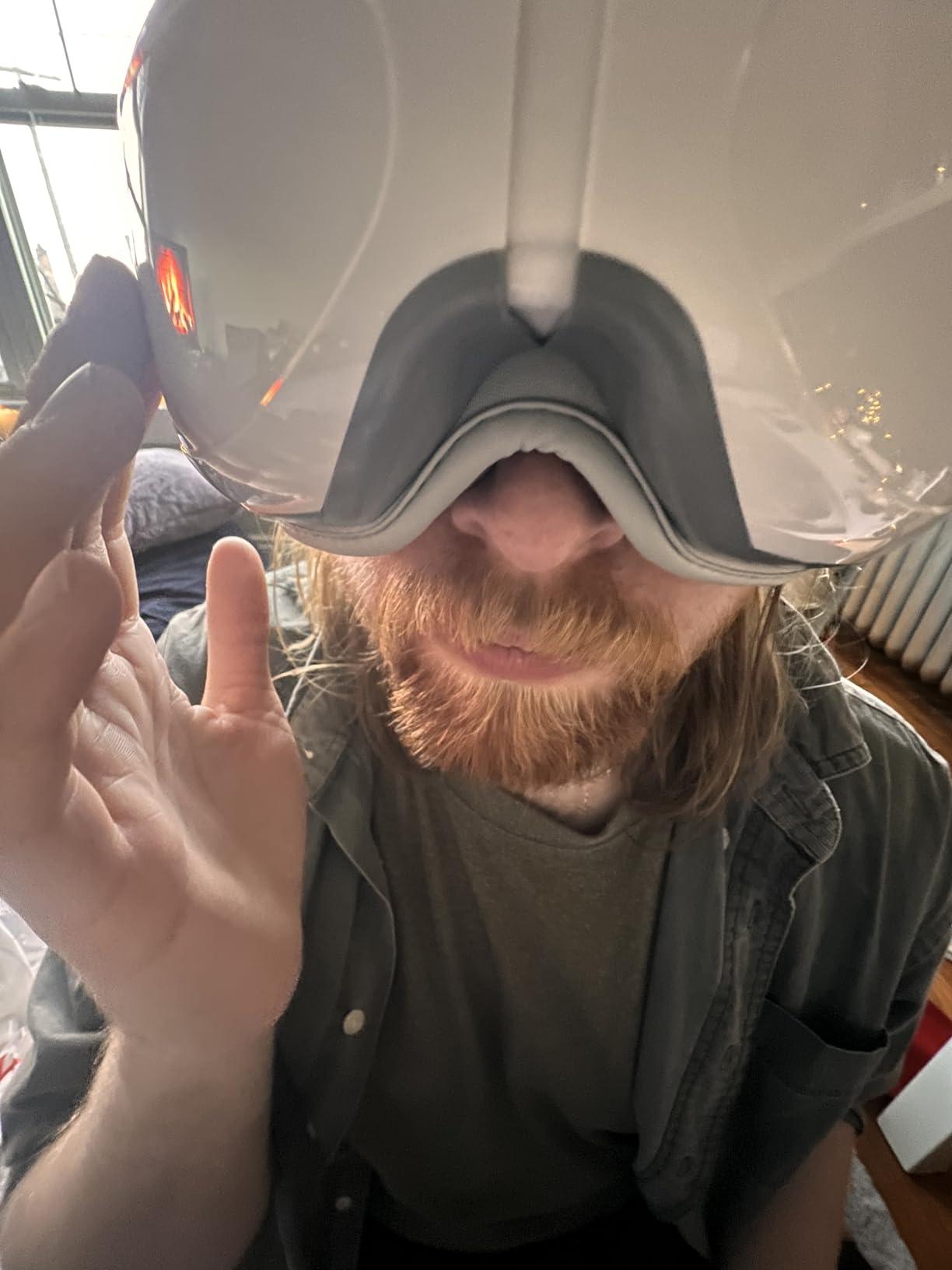
Get the angle right before you judge the comfort
The fold-in-half shape can press on the nasal bridge if it sits at the wrong angle, and finding a position that keeps the weight off your nose takes a couple of sessions. Give it that before ruling it out.
Long-term wear checks
Reviews flag that the plastic casing can begin to creak at the fold after a couple of months of daily use, and one buyer reported an early heat element failure. The two-year warranty is the reason that risk is tolerable for us.
4. Vowleike Heated Eye Wand – Best Handheld for Lid Heat
Vowleike Heated Eye Wand, 3-in-1 Vibrating Eye Lift Wand, White
Heat, vibration and light therapy in a wand
LCD temperature readout
USB rechargeable, 1.7 ounces
Pros
- Targets one spot on the lid precisely
- LCD shows the thermal temperature
- Dry-eye users report longer time between drops
- Compact and light at 1.7 ounces
- Boosts absorption of eye skincare
Cons
- Requires active handheld use
- Small tip does not cover a whole lid
- Does not get as hot as a microwavable mask
The wand answers a question masks cannot. When one gland on one eyelid is blocked, precision beats coverage, and a 3-in-1 heated wand puts adjustable warmth exactly on that spot while a mask blankets the whole area at a lower, less targeted temperature.
Users with meibomian gland dysfunction drive most of the demand, treating the wand as a supplement to their eye care routine rather than a replacement for it. Several report longer comfortable stretches between rewetting drops, which is a plausible result from thinning the oil and letting it spread.
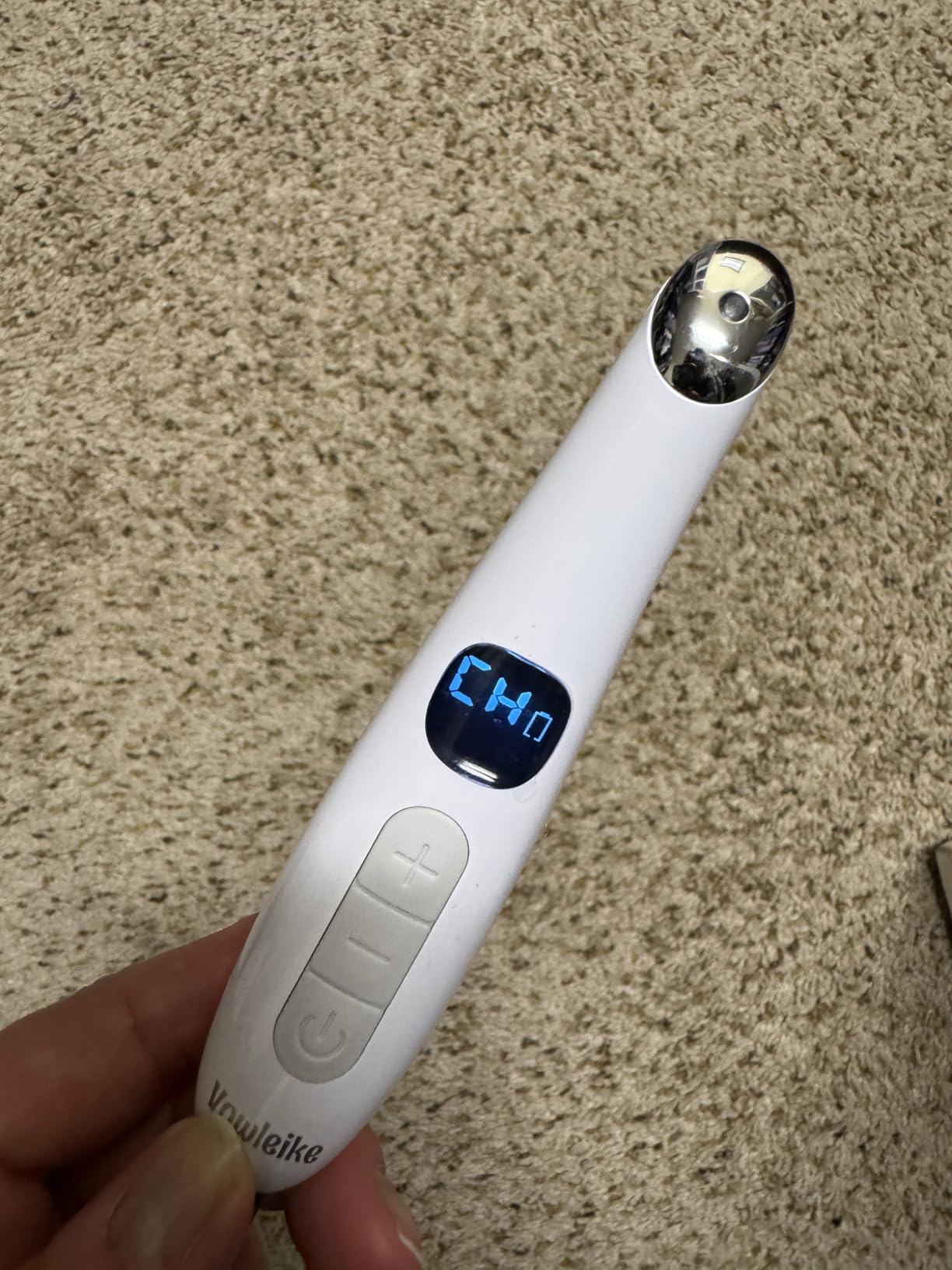
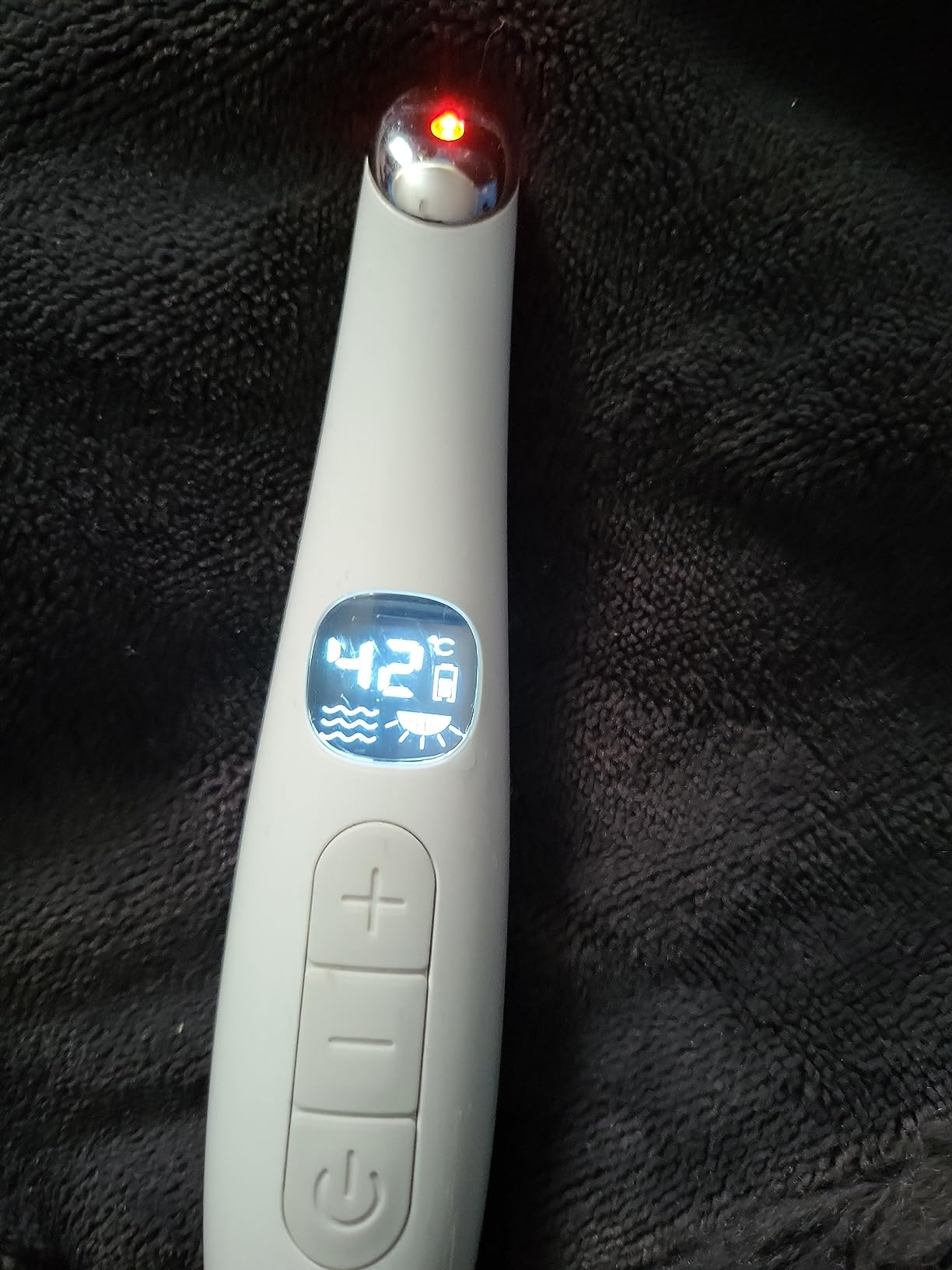
Heat, vibration and light therapy run from the same tip, and a large LCD screen shows the thermal temperature so you are not guessing. That readout is a genuine advantage over masks that give you a vague warm indicator.
The trade-off is honest and it shows in the ratings, which sit below every mask here. Holding a small vibrating tip against a moving eyelid for ten minutes is a task, and the vibration can be ticklish enough to make your eyes water.
Mask or wand, in one rule
Choose the wand if your problem is localised to a spot and you are willing to hold it. Choose a mask if you want hands-free relaxation, better sleep, or general screen fatigue across the whole eye area.
Heat limits worth knowing
Reviewers note it does not get as hot as a microwavable heat mask, so it is a supplement to warm compresses rather than a replacement for them. One buyer reported a charging fault that ended in a return.
5. TLINNA Airbag Kneading Mask – Best Budget Pick
TLINNA Eye Massager with Airbag Kneading,Constant Temperature Hot Compress, Multi-Frequency Vibration and Bluetooth Music (Blush Pink, Large)
Airbag kneading with double-layer 16D airbags
Constant 100.4F to 107.6F heat
Bluetooth audio, 180 degree fold
Pros
- Airbag kneading feels like a real hand press
- Large size covers eyes and temples on bigger heads
- Many pressure settings to suit the wearer
- Soft inner surface wipes clean easily
- Entry-level price band for first-time buyers
Cons
- Micro-USB charging instead of USB-C
- Motor is loud for the wearer
- Bluetooth audio sounds one-sided
Most entry-level masks fake massage with a small vibration motor. This one uses double-layer 16D airbags that inflate and deflate in sequence, which reviewers describe as a genuine press rather than a buzz.
Sixteen large-contact vibration points spread around the eye area, and the constant-temperature heating pad holds 100.4 to 107.6F rather than spiking and cooling. That heat band is narrower than the 104 to 113F range on the premium picks, but it holds steady throughout a session.
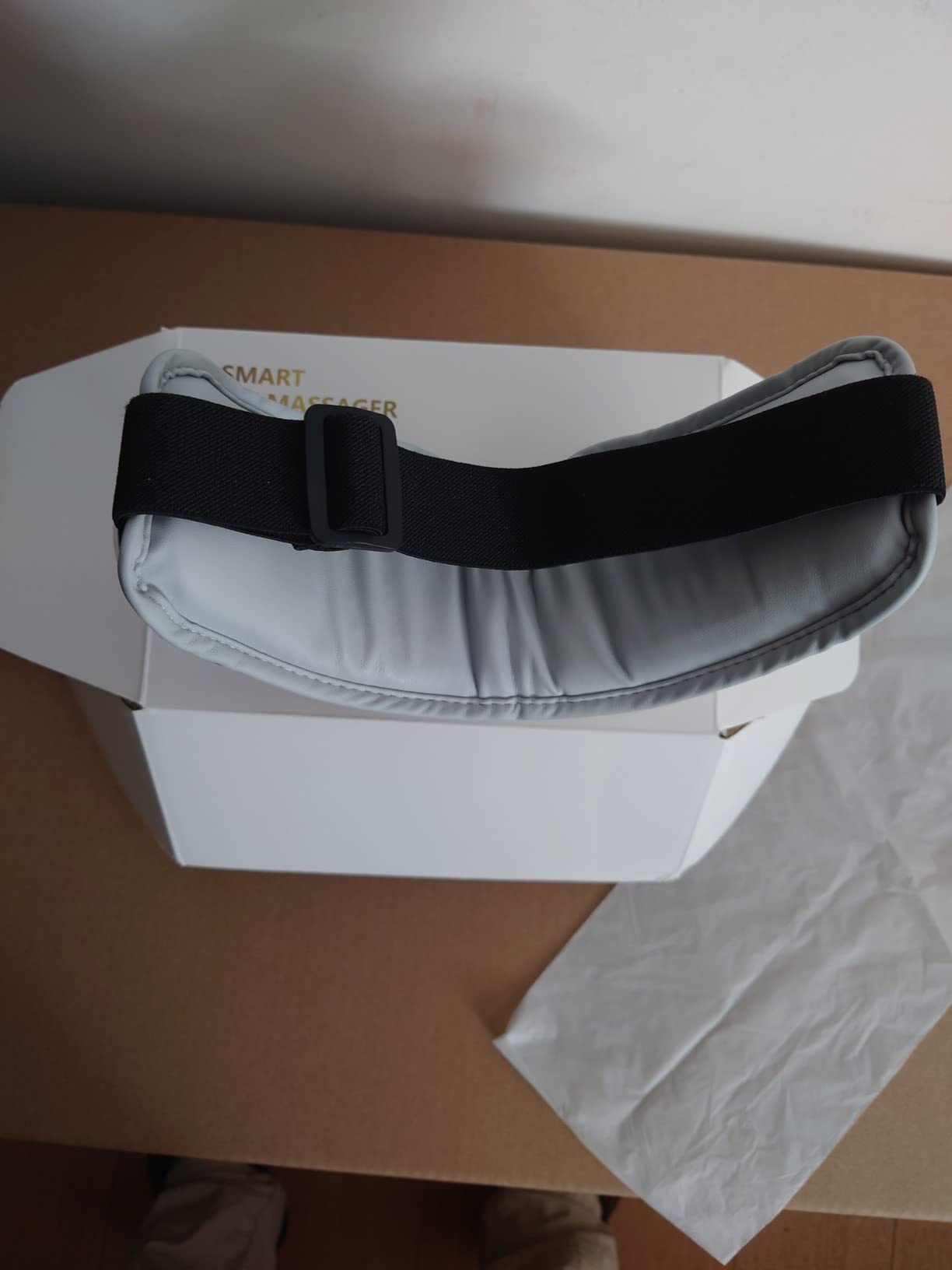
Large buyers in our group fit the size comfortably, with coverage across the eyes and temples, and the inner surface wipes clean easily. Regular users report fewer migraine episodes and better sleep, though the effect takes consistent use.
The catch is hardware. It charges over micro-USB instead of USB-C, and that is not disclosed in the listing or photos. The motor is loud, Bluetooth playback comes out imbalanced as if from one side, and there is no volume button.
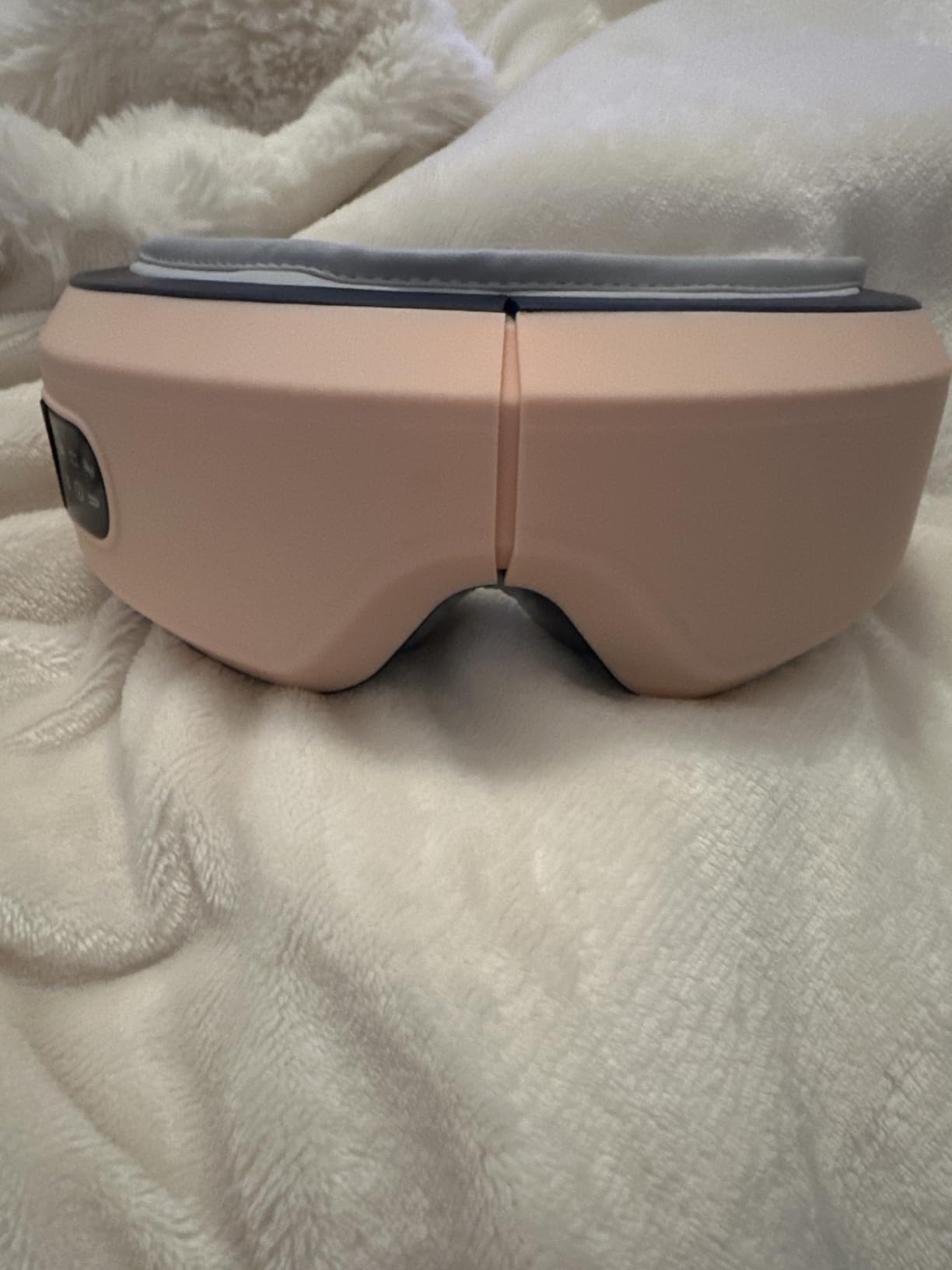
Best first eye massager, with caveats
If you have never used one, the airbag pressure here teaches your face what the sensation should feel like at a fraction of the cost. Expect to charge it every other night with daily use and to reach for the cable more often than you would with USB-C.
Skip it if sound bothers you
The motor is on the loud side for the wearer, and some masks have a weak vibration motor concentrated on one side. Vibration coverage is inconsistent between individual masks, which is the main reason to keep expectations measured.
6. Burrki A1 Eye Massager – Best for Comfort in Long Sessions
Burrki Eye Massager with Heat, Massaging Eye Mask
Double-layer cushion reduces eyeball pressure
104-113F heat, 3 compression levels
40-45 dB, 2-3 hour charge
Pros
- Cushion noticeably reduces eyeball and nose-bridge pressure
- Stable fit that stays put through a session
- Quietest motor class here at 40-45 dB
- Heat-only no-pressure mode available
- Folds flat with a storage bag
Cons
- Not for post-surgery
- retina
- cataract or glaucoma users
- Two to three hour charge time
Comfort is the whole argument here. A double-layer massage cushion structure spreads the load so the mask does not press directly on the eyeballs, and the ergonomic shape cuts squeezing at the temples and along the bridge of the nose.
That cushion is the single feature buyers name most often, and it is what separates a mask you can wear for a full fifteen minutes from one you take off after five. Our rating for it sits at the top of this group for the same reason.
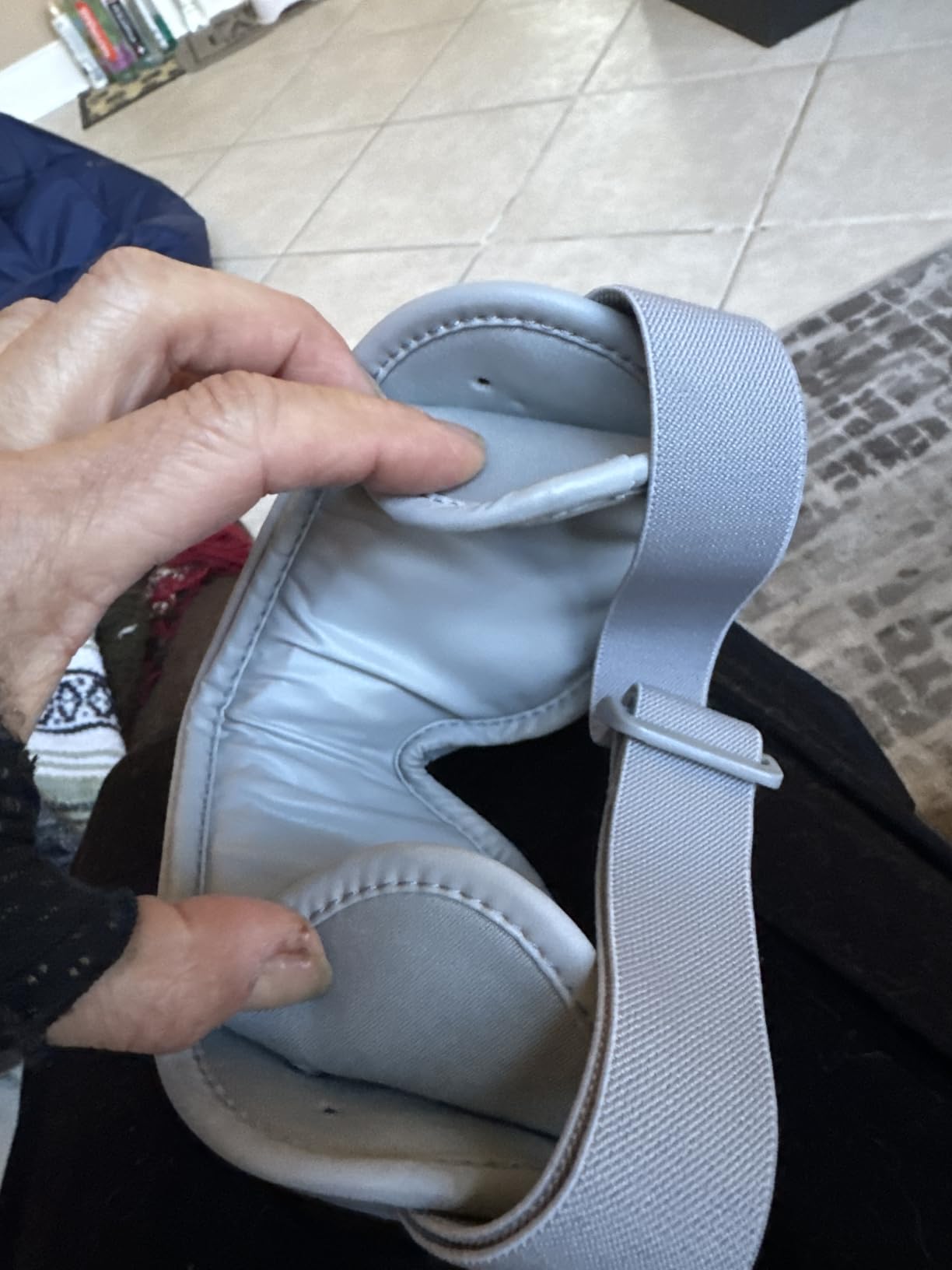
Three compression intensities and two heat levels between 104F and 113F give you a heat-only mode with no pressure, which is the setting most sensitive users gravitate toward first. Five relaxation modes and three massage intensities sit on top of that.
Quieter technology reduces noise by 30 to 35 percent to land in the 40 to 45 dB range, quiet enough that longer sessions stay bearable. It folds 180 degrees, includes a storage bag, and the headband fits 48 to 70 cm head circumferences.
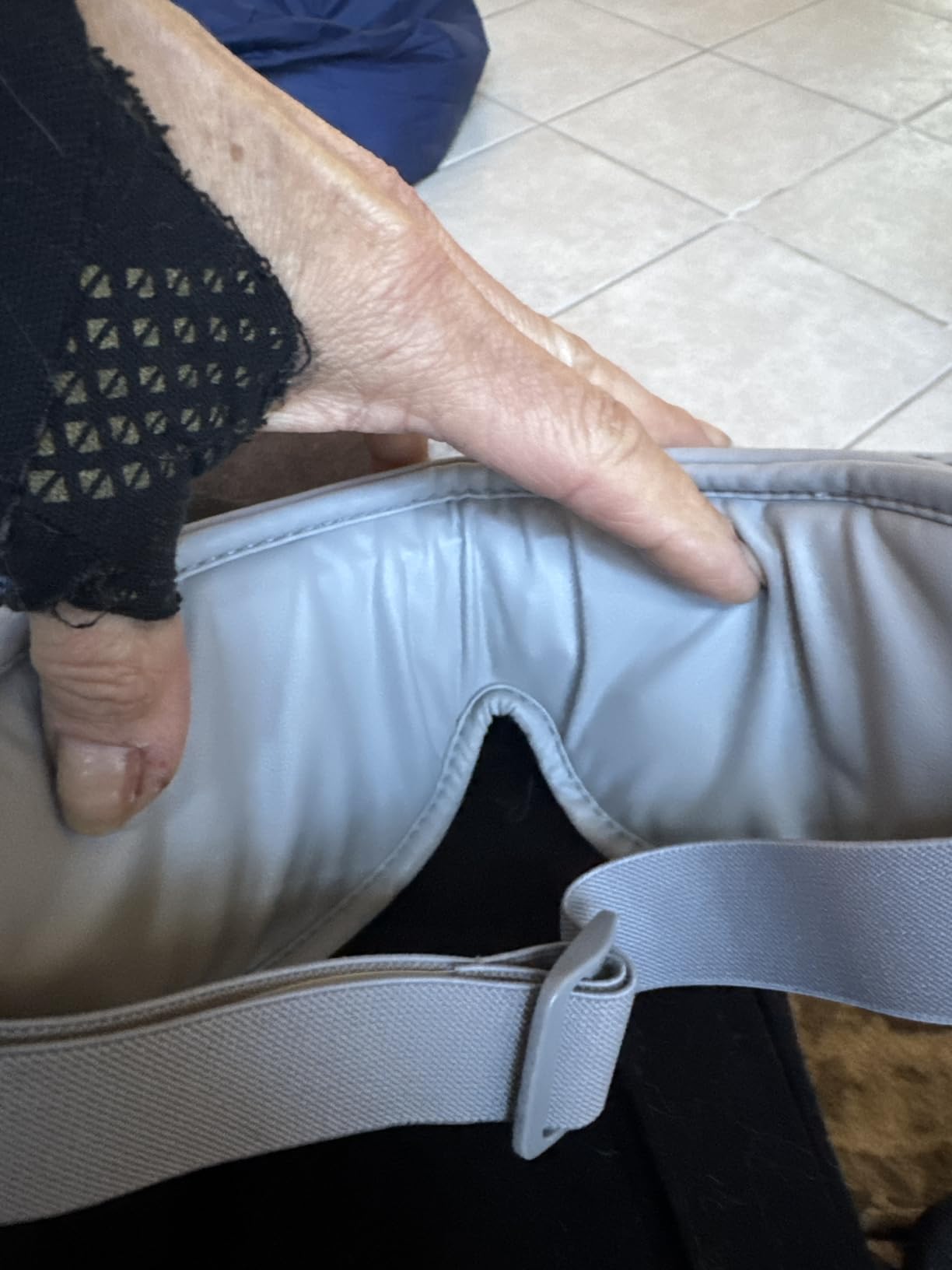
What the charge time costs you
A full charge takes two to three hours and buys roughly a week of use, so it suits a nightly routine but not two sessions a day. Plan one charge a week rather than treating it as a grab-and-go device.
Who must check with a clinician first
The listing is explicit that this is not for people who have had eye surgery or have retina conditions, cataracts or glaucoma. We would extend that advice to anyone with those diagnoses until an optometrist says otherwise.
7. Burrki AJREM2501 Eye Massager – Best for Fast Heat-Up
Burrki Eye Massager with Heat & Bluetooth Music, Massaging Eye Mask
Heating pad ready in five seconds
Five modes, adjustable compression
Sponge layer, white noise, week per charge
Pros
- Heating pad is ready in five seconds
- Comfortable fit that is not heavy on the face
- Sounds and music mute independently
- Temple work helps tension headaches
- Folds flat with a storage bag
Cons
- One unit arrived with no working compression
- Cooling is a weaker function than the heat
- Not for post-surgery
- retina
- cataract or glaucoma users
Waiting for a mask to warm up wastes the first third of a fifteen-minute session. This one reaches temperature in five seconds, which sounds trivial until you count how many sessions you spend sitting in a cold mask waiting for it to do something.
An ergonomic shell with a built-in sponge layer handles eyeball pressure, and five massage modes with adjustable compression cover the range most masks offer with four. Long-press controls let you turn Bluetooth off, change track and adjust volume without hunting through menus.
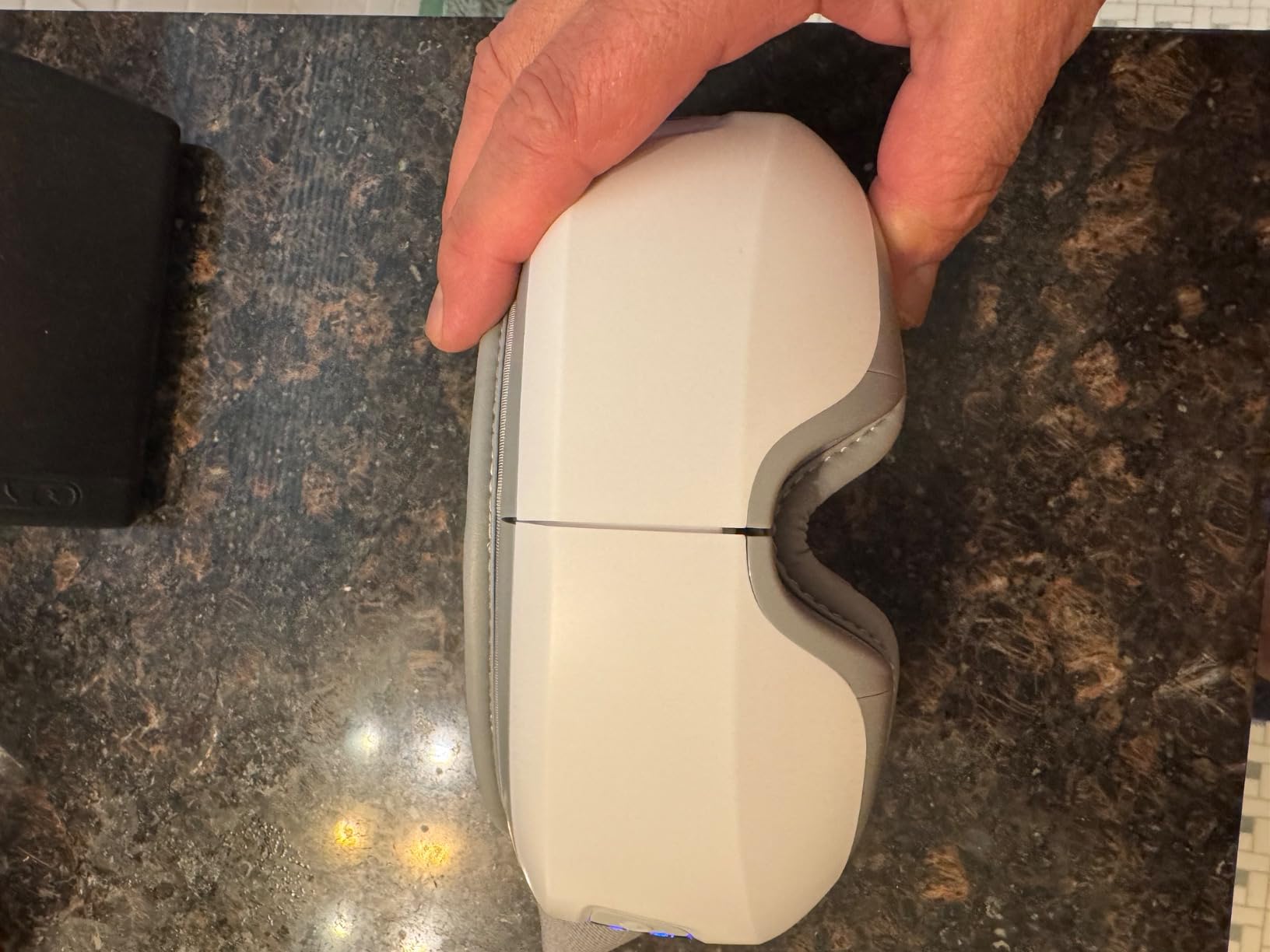
Being able to mute the sound independently of the massage is the detail migraine users care about most, and this model handles it cleanly. Reviews describe it as a solid all-rounder for unwinding after screen time.
The temple coverage comes up in reviews from people who use it for headaches and during migraine clinic visits, which tells you the temple work is doing real work rather than just pressing on the side of your head.
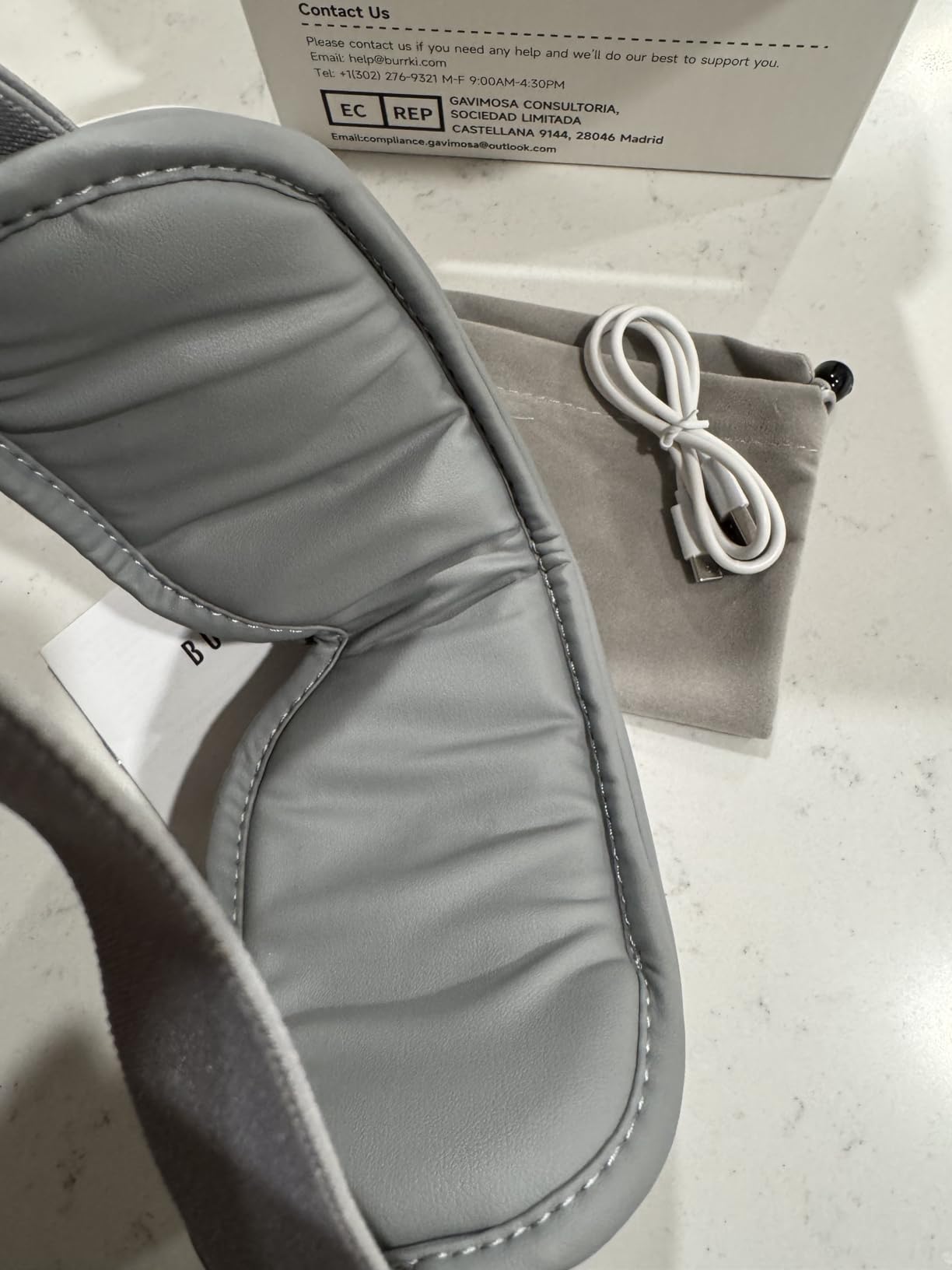
Test compression in the first minute
One buyer received a unit with no working compression at all while heat and music worked fine, and returned it. Check the compression on day one so you can act on it inside the return window.
What it does not do well
Cooling is a weaker function than the heat on this model, so it is not the choice for morning puffiness. If dual temperature matters, the BOQUBOO below does both properly.
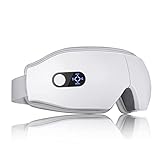
8. NOWWISH 6-Mode Eye Massager – Best for Migraine and Headache Relief
NOWWISH Eye Massager with Heat, Vibration and Bluetooth Music for Migraine Headache Relief, Cordless Heated Eye Mask with 6 Massage Modes, Relaxation -Mothers Day Gifts for Mom Wife -White
104-107F heat in 10 seconds
Six modes, finger-press and tapping
1800mA battery, about six sessions
Pros
- Six modes give more variety than most rivals
- Finger-press and tapping feels close to a hand massage
- Ten-second warm-up
- Adjustable band that does not press the nose
- Folds flat for travel
Cons
- Music cannot be fully disabled
- Three-hour charge for about six sessions
- Less long-term durability feedback available
The massage action here is the closest to a real hand. Instead of a flat buzz it simulates finger touch and rhythmic tapping, and buyers consistently describe the tapping as more hand-like than what cheaper machines produce.
Six massage modes is more variety than most rivals in this price range offer, and the heating pad hits 104 to 107F in ten seconds. The lightest option among the fuller-featured masks at 12.35 ounces, it disappears more easily on your face.
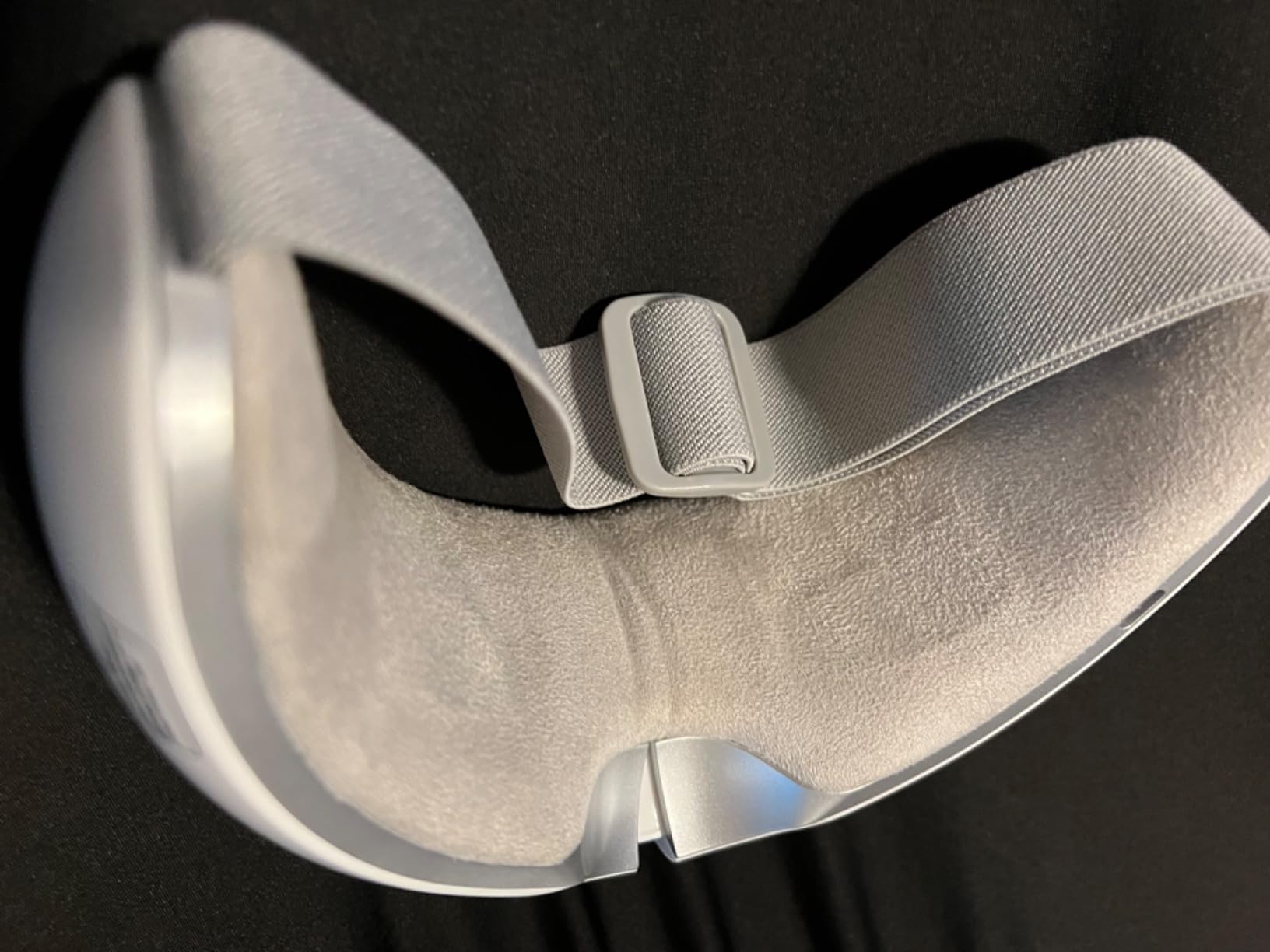
The adjustable headband is a genuine point of difference: reviewers note it does not press on the nose, which removes the most common reason people abandon a mask in week two.
On r/migraine, users report heated massagers helping them sleep through discomfort even when they do little for the pain itself. That is a sleep benefit, not a treatment effect, and it is worth being honest about the difference.
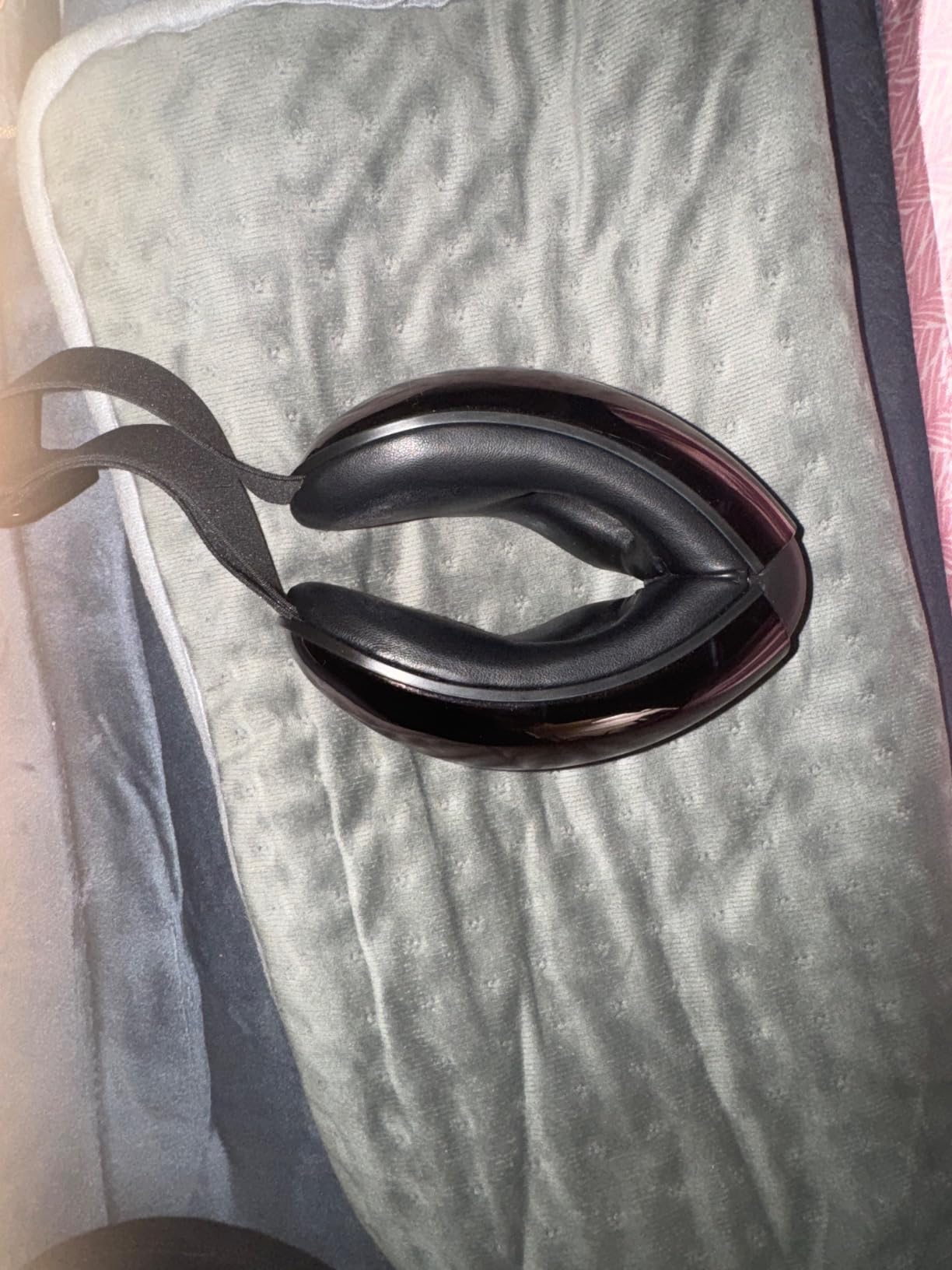
If you get migraines, check the audio first
Music cannot be fully disabled on this model, and reviewers call that out specifically as a drawback for people using it during a migraine. If hum or audio is a trigger for you, this is the wrong pick.
Battery and evidence considerations
A roughly three-hour charge buys about six sessions, and there is less long-term durability feedback here than on the picks with tens of thousands of reviews. Buy it for the massage variety, not for longevity assurance.
9. BOQUBOO Heat and Cooling Mask – Best for Morning Puffiness
BOQUBOO Eye Massager with Heat and Cooling for Migraine Dry Eyes Relief, Rechargeable Bluetooth Music Migraines Relief Eye Massager Improve Sleeping Gifts for Women Men
Heats to 104F and cools to 67F
NTC chip with PID temperature lock
4 modes, 3 compression levels
Pros
- Only mask here that both heats and cools
- Temperature holds steady through the cycle
- Two-button operation with no learning curve
- Lightweight at 1.04 lb with a storage bag
- Groove design protects the eyeballs
Cons
- Highest-end price band in this roundup
- Music cannot be turned off mid-session
- Durability complaints about the heating and cooling element
Evening tiredness and morning puffiness need opposite temperatures, and this is the only mask here that does both. Constant cooling at 67F handles fluid retention under the eyes, while constant heating at 104F handles the end-of-day strain case.
Temperature precision is the standout. An NTC chip running a PID algorithm holds the set temperature through the whole cycle instead of swinging warm and cool, which is a real complaint about heated masks that rely on a simple thermostat.
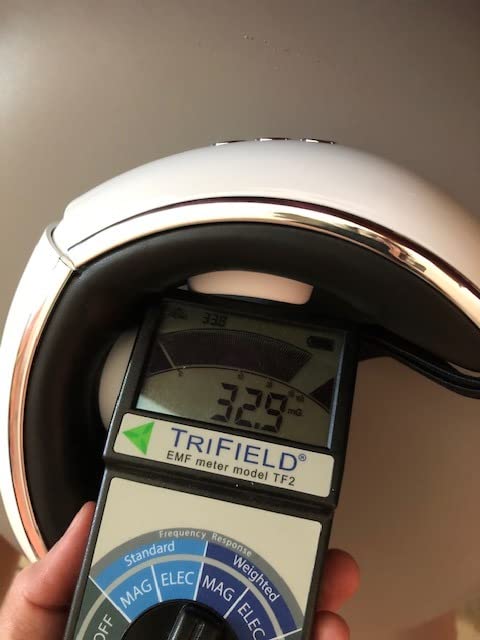
Four massage modes and three air compression intensity levels sit underneath, and the percussion works across the forehead and eyes rather than just the orbital bone. Two-button operation means no learning curve at half past midnight.
At 1.04 lb with a storage bag it is the most travel-friendly device here. A groove design protects the eyeballs and the lining is described as skin-friendly, which addresses the cheekbone irritation some protein leather linings cause.
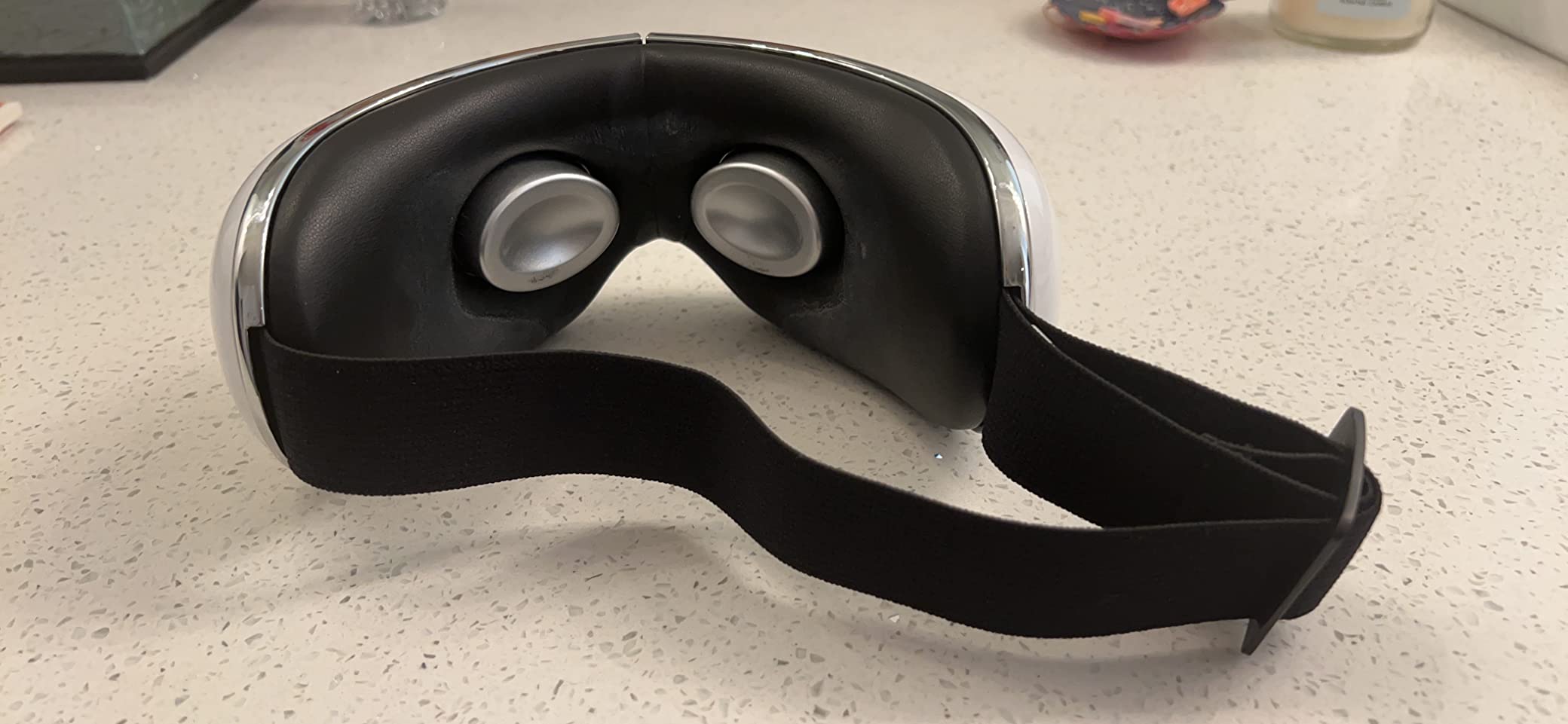
Is the premium tier worth it?
You are paying for dual temperature control with real regulation, not for extra massage power. If you only ever need heat at the end of the day, a heated-only mask gives you the same result for far less.
Two things to weigh first
The audio cannot be turned off during a session, and this carries the highest share of one-star ratings in the group along with durability complaints about the heating and cooling element over time. Test both early.
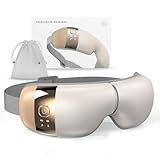
10. HuBDIC HuBiCare Eye Massager – Best for Screen Fatigue on a Budget
HuBDIC HubiCare Eye Massager with Heat, Heated Air Pressure Eye Mask for Migraines with Music, Smart Migraine Massager Reduce Dry Eyes Improve Sleep, Birthday Gifts for Women Men Mom Dad (Beige)
Heated pads at 104-107F
Five modes, percussion and air pressure
Bluetooth with double-press mute
Pros
- Gentle heat plus vibration eases screen fatigue
- Lightweight and comfortable to wear
- Users with dry eyes report less morning grittiness
- Music mutes with a double press on power
- Folds flat and charges quickly
Cons
- Loud motor and a single loud volume level
- Vibration feels too strong for some users
- Presses on the nose bridge during a session
This is the plainest answer to screen fatigue: heated pads at 104 to 107F plus oscillating pressure and rhythmic percussion, with no frills. Users consistently report real relief from screen tiredness, dry eyes and tension headaches.
The rhythm is smooth rather than jarring, and it still delivers genuine temple pressure. That combination is the reason it works for tension headaches without feeling aggressive, though sensitive users may find the vibration too strong.
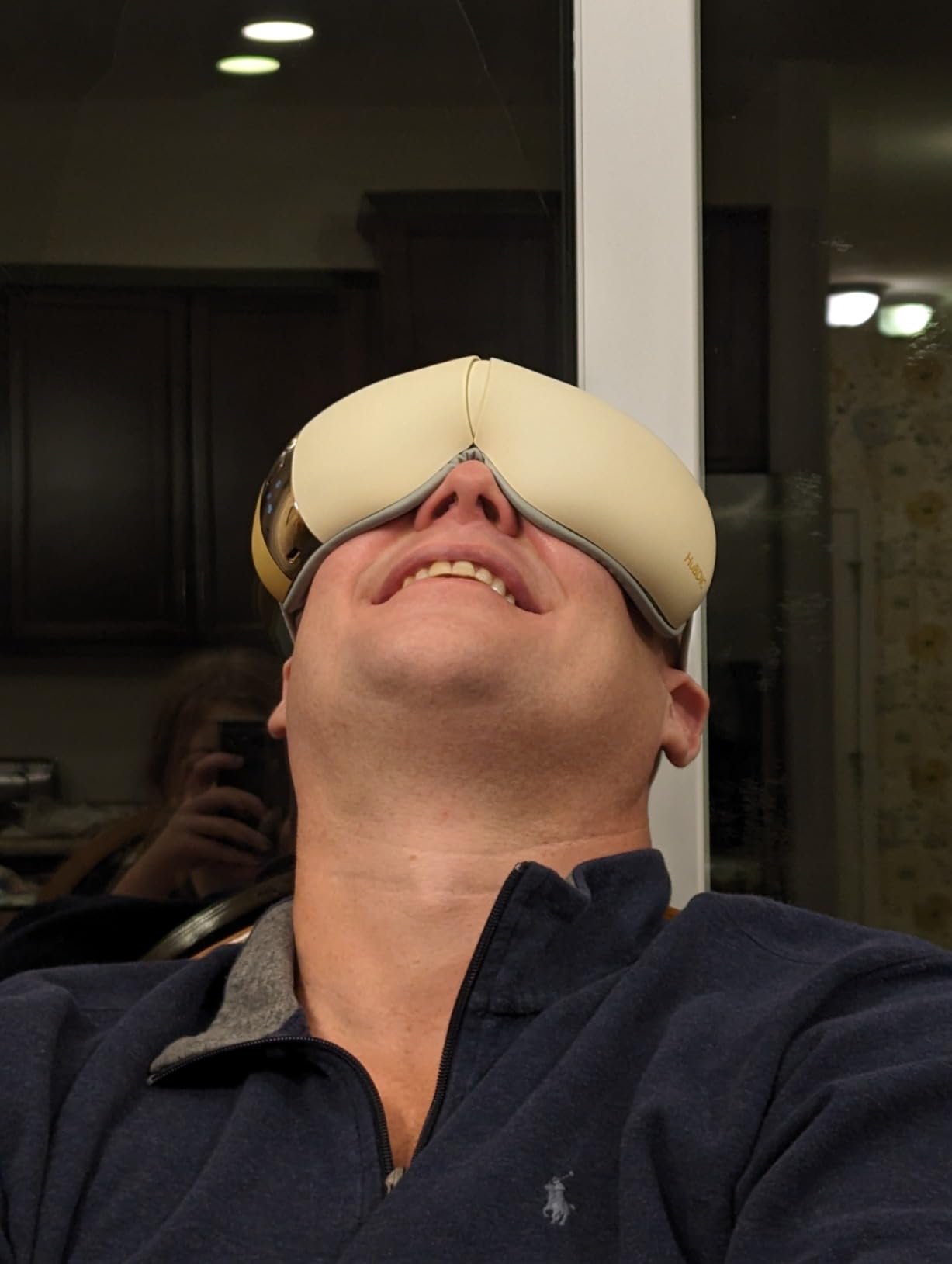
Pressing the power button twice mutes the music, which matters if sound is a headache trigger for you. Users with dry eyes report noticeably less morning grittiness after regular sessions, consistent with the heat softening gland oils.
Battery life holds about five to six sessions per charge and it folds flat, so it lives in a drawer rather than on a shelf. It sits at 12.35 ounces, light enough to forget you have it on.
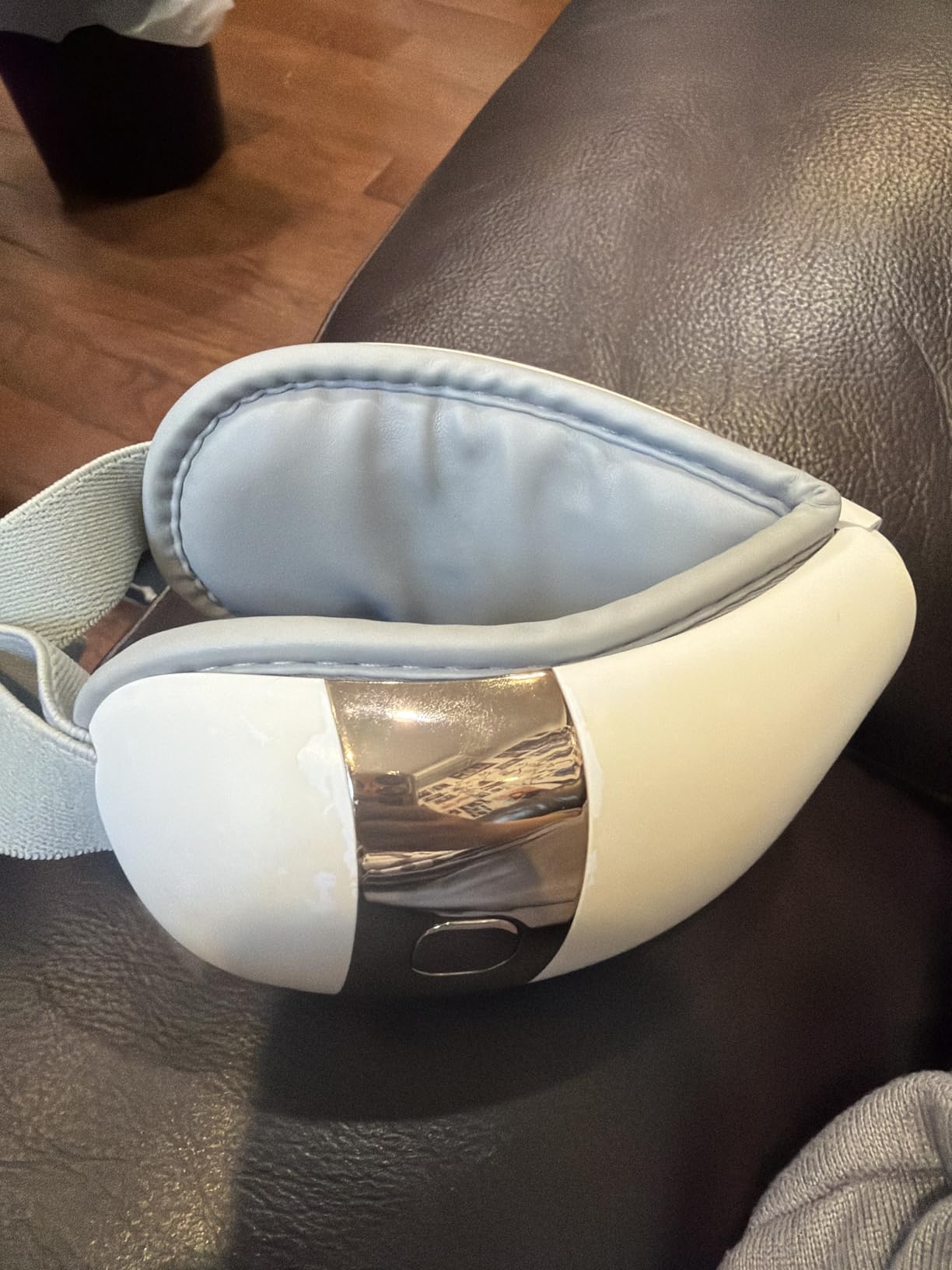
The motor is the deciding factor
The loud motor and a single volume level that reviewers describe as loud cut against the relaxation goal, and this is the most repeated criticism in the set. Trial it in a quiet room before committing.
Fit issues worth checking early
Some users find it slightly heavy and pressing on the nose bridge through a full fifteen-minute cycle, and reviewers report a finicky charging port. Test both in the first few sessions.
How to Use an Eye Massager for Tired Eyes
Get the order right and a mediocre session still works. Six steps, start to finish.
1. Clean your face first. Wipe oils and makeup off the eyelid area so the mask contacts skin rather than a film of product, which also reduces the chance of transferring anything to the lining.
2. Skip the eye cream before the session. Heat drives skincare absorption hard, and anything you apply under the mask will end up much deeper into the skin than you intended. Apply your eye cream afterwards.
3. Fit the band before you power it on. Adjust the strap to snug and never tight. A mask you have to tug at will press harder on your nose bridge as it inflates.
4. Start at the lowest intensity. Lowest heat and lowest compression, for the first three sessions. Forum users repeatedly report that out-of-the-box compression feels far too strong with no clear guidance to ease in.
5. Run ten to fifteen minutes. Fifteen minutes is the standard cycle on most of these devices, and the automatic timer is there for a reason. Do not extend it.
6. Wipe the lining and let it air-dry. A damp lining against the skin is how you get cheekbone irritation and a stale smell over a few weeks.
On timing: expect one session to feel pleasant but not transformative, and expect the useful effect to show up over two to three weeks of consistent use. Forum threads are consistent on this, and it is the single biggest reason buyers rate a device badly after one try.
Can an Eye Massager Improve Your Eyesight?
No. An eye massager cannot improve eyesight, correct myopia, or reverse presbyopia, and no legitimate device claims to.
What it does do is relax the muscles around the eye and warm the eyelid glands, both of which make tired eyes more comfortable. Presbyopia is a loss of lens elasticity that develops with age, and refractive errors are the shape of the eyeball itself. Neither is a muscle tension problem, and no amount of heat or vibration changes either.
We flag this because both of the top-ranking roundups for this topic imply a vision benefit somewhere in their copy, and because that impression is the fastest way to end up disappointed. A mask that claims to improve eyesight is telling you something untrue about itself.
If your eyes tire and the tiredness never fully resolves away from a screen, get your prescription checked. That is the cheapest fix in this entire article.
Eye Massager Buying Guide: Heat, Massage Type, Fit and Noise
Five decisions account for nearly every difference between the devices above.
Heat range. The useful therapeutic band sits between 104 and 113F. That warmth softens hardened oils in the meibomian glands along the eyelids so the oily layer of the tear film spreads properly. Look for a stated range rather than a vague warm setting. TLINNA holds 100.4 to 107.6F, BOB AND BRAD steps between 104F and 113F, and the RENPHO and Burrki models both cover the full band. A listing that never states a number is guessing, and we treat that as a warning.
Massage mechanism. Three mechanisms dominate. Airbag or air compression inflates small cushions in sequence, which feels closest to a hand press and suits people who want kneading. Vibration motors buzz at a fixed or multi-frequency rate, which is gentler and better for sleeping through. Acupressure kneading combines the two and targets trigger points around the orbital bone.
Fit. This decides whether you still use the device in week three. Elastic-only straps stretch, tug hair and drift; buckle or ratchet adjustment holds a set tension. Check the stated headband range against your own circumference, since the narrow ones run out around 55 cm. The Burrki masks are specified at 48 to 70 cm, which is about as broad as they come.
Noise. Anything you use while falling asleep should sit at 45 dB or below. The RENPHO is rated under 45 dB, the BOB AND BRAD runs at 45 dBA, the Burrki A1 lands in a 40 to 45 dB band, and the Lifepro is rated under 55 dB. The TLINNA and HuBDIC models are the loud ones, and reviewers notice.
Mask or wand. Hands-free masks suit a nightly wind-down, blocked glands and better sleep. Wands suit targeted heat on one spot while you keep working, at the cost of holding them. There is no middle ground here, and no mask substitutes for the precision of a wand on a single blocked gland.
Battery and charging. USB-C has become the expectation, and the TLINNA still uses micro-USB without disclosing it. Expect anywhere from a week of nightly use per charge on the heavier masks down to four hours on the Lifepro. Battery life and charging time are the most common long-term complaints in this category.
Cleaning. A removable, wipe-clean lining is worth real money. Protein leather and PU linings cause cheekbone irritation on sensitive skin, and a non-washable, non-replaceable lining is a genuine deal breaker at month four.
Expectations. Treat all of these as comfort devices. The value is a cumulative reduction in daily eye fatigue and a better wind-down routine, not a treatment for anything.
Safety: Who Should Not Use an Eye Massager
These are consumer comfort devices, not medical devices, and the distinction matters when you have a diagnosis.
Do not use one if you have glaucoma, a retinal condition, cataracts or a history of eye surgery without clearance from your eye doctor. Two of the masks in this roundup state this restriction on their own listings, and we treat it as the baseline for every pick here.
Ask a clinician before use if you have severe myopia. The fear that eye massagers worsen a prescription is the most common concern in forum threads, and the honest answer is that a well-fitted device does not change your prescription. But pressure around the eye is not something to experiment with unadvised when your eyes are already under strain.
Remove contact lenses first. Heat and compression against a contact lens is uncomfortable at best and can scratch the cornea. Take them out, use the device, and put them back in afterward.
Lower the intensity or stop if a migraine builds. Users on r/migraine report that an earlier model made their migraine worse because of a humming motor and strong vibration. If you already get migraines, start at the lowest setting with sound off.
Expect temporary blurriness for a few minutes afterward. A very common forum question and a standing PAA topic. Warmth and brief compression change the tear film and the corneal surface temporarily, so vision can look soft for a few minutes and clear up as your tears redistribute. It resolves on its own. Persistent blurring is not normal and means you should stop and speak to an optometrist.
Expect mild redness and a warm sensation. That is normal for a session. Sharp pain, burning that lingers or swelling are not.
Do eye doctors recommend them? Generally they are comfortable with heat and gentle massage as a comfort measure for strain, the same way they are comfortable with a warm compress. They are not a substitute for treatment of dry eye disease, glaucoma, a torn retina or a refractive error, and anyone with those conditions needs care, not a mask.
Frequently Asked Questions
What is the best thing to use for tired eyes?
A heated eye massager with air compression, used for 10 to 15 minutes at the end of a screen-heavy day. The warmth loosens oils in your eyelid glands so your tear film spreads properly, and the compression relaxes the orbital and temple muscles. For one spot rather than the whole area, a handheld heated wand gives more precise lid heat.
Do eye massages and heated eye massagers actually work?
For comfort, yes. Most of the value is cumulative rather than immediate: one session feels pleasant, and the useful effect on daily eye fatigue shows up over two to three weeks of consistent use. Buyers who judge a device after a single try rate it far lower than those who use it nightly.
Can an eye massager improve eyesight?
No. An eye massager cannot improve eyesight, correct myopia or reverse presbyopia. It relaxes the muscles around the eye and warms the eyelid glands, which reduces tiredness and dryness. If your eyes tire even away from a screen, get your prescription checked instead.
Why is my vision blurry after using a heated eye mask?
Warmth and brief compression temporarily change your tear film and the surface of the eye, so vision can look soft for a few minutes after a session before clearing as your tears redistribute. It resolves on its own. Blurring that persists well after you have taken the mask off is not normal and should be raised with an optometrist.
Are heated eye massagers safe, and who should avoid them?
They are comfort devices, not medical devices. Do not use one without medical clearance if you have glaucoma, a retinal condition, cataracts or a history of eye surgery. Remove contact lenses first, and ask an optometrist before use if you have severe myopia. Stop if a session builds a headache or migraine.
How long should I use an eye massager for each session?
Ten to fifteen minutes, once or twice a day, at the lowest intensity for your first few sessions. Most of these devices run an automatic 15-minute cycle and there is no benefit to extending it. Consistency across two to three weeks matters far more than the length of any single session.
Is a heated eye mask better than a warm compress for tired eyes?
A warm compress is cheaper and works about as well for straightforward strain. A heated mask adds sustained, controlled heat plus compression and vibration, stays at a steady temperature instead of cooling, blocks out light and needs no reheating, which is why most people end up preferring it for an end-of-day wind-down.
Do eye doctors recommend eye massagers?
Eye doctors are generally comfortable with gentle heat and massage as a comfort measure for eye strain, much as they are with a warm compress. They are not a substitute for treatment of dry eye disease, glaucoma, retinal problems or a wrong prescription, and anyone with those conditions needs proper care.
Final Word on the Best Eye Massagers for Tired Eyes
The RENPHO Eyeris 1 is the best eye massager for tired eyes overall, because it pairs a documented 104 to 113F heat range with adjustable compression, blocks light for sleep, and has a review base deep enough to show how it holds up over time.
Buy the BOB AND BRAD if your problem is dry eye or blocked glands, the Burrki A1 if comfort across a full session matters most, the Lifepro Oculax if you plan to sleep in it, the Vowleike wand if you need heat on one specific spot, and the BOQUBOO if you want cooling for morning puffiness as well as heat at night.
Whatever you choose, give it two to three weeks at fifteen minutes a night before you judge it. That is how the best eye massagers for tired eyes actually deliver, and it is why most of the buyers who keep theirs are the ones who stopped rating them after one try.