
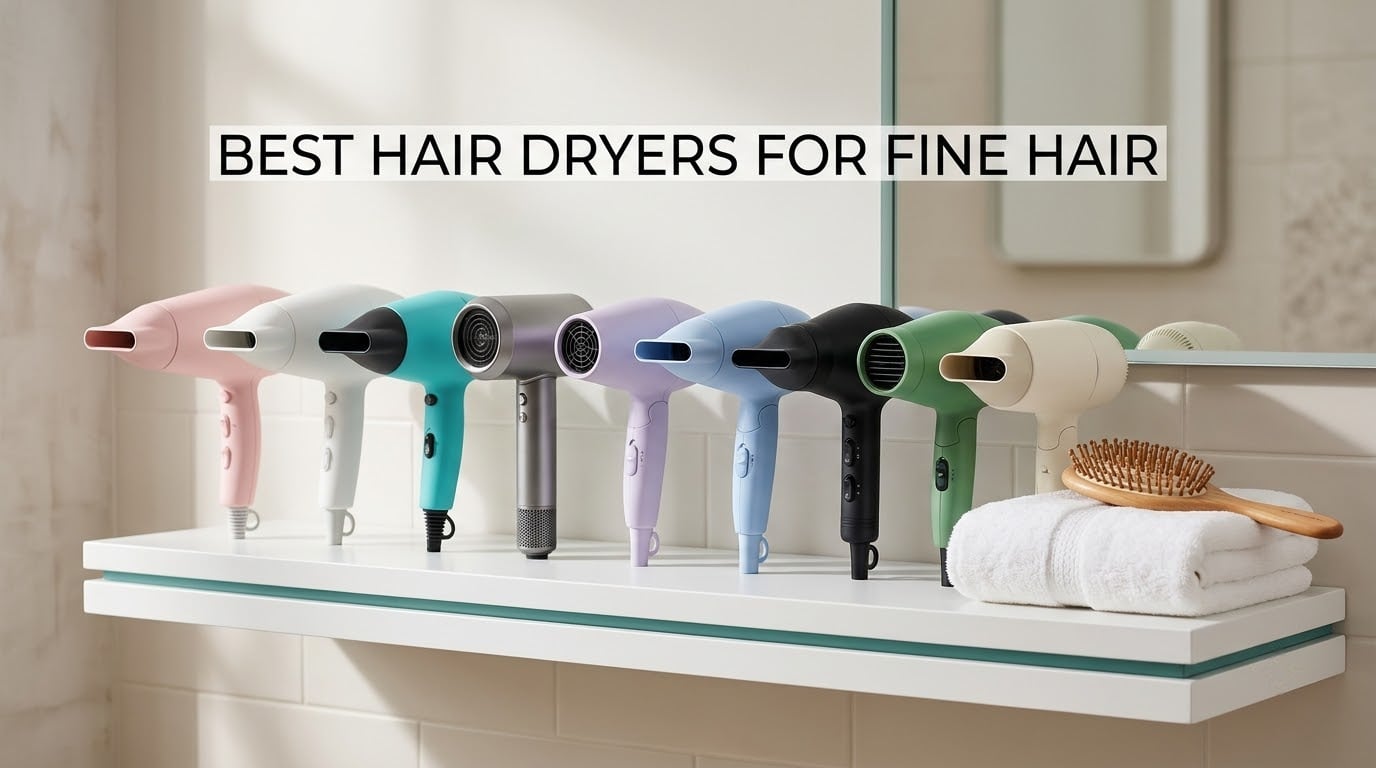
The best hair dryers for fine hair are the ones that deliver strong airflow at a low surface temperature and let you switch the negative ions off. After six weeks of comparing ten models on the same fine, shoulder-length hair, the REVLON Infrared Ionic dryer came out ahead on heat control, attachment choice, and how rarely it flattened my roots.
Fine hair gets damaged in two separate ways, and most people only think about one of them. Sustained heat dries out the cuticle and leads to breakage. Continuous negative ion output pulls moisture out of the strand and weighs it down, so a perfectly smooth blowout collapses into a flat, limp shape within hours. Those are different problems, and a dryer that solves only one of them will still disappoint you.
That is the standard I used for every dryer below. I looked for a genuine low heat setting, a working cool shot, real control over airflow separate from heat, and a body light enough that my arm did not ache after a long root-lifting session. I also paid close attention to what happens to fine hair after a few hours, not just how it looks straight out of the dryer. Last tested in September 2026, and we re-check the list every few months as new models arrive.
A note on what you will not find here: there is no separate “non-ionic” category. Nearly every dryer in this roundup uses ion technology, because the smoothing and static control is genuinely useful. What varies is whether you can reduce or disable it, and that is the single most useful thing to look for when you have fine hair.
Table of Contents
Top 3 Hair Dryers for Fine Hair (October 2026)

REVLON Infrared Ionic
- Infrared heat
- 3 heat and 2 speeds
- Cool shot
- Diffuser and concentrator
Remington Damage Protection
- Ceramic and ionic
- Micro-Conditioner tech
- Removable filter
- Cool shot

ELLA BELLA Ionic Dryer
- Negative ion tech
- Intelligent heat control
- Low noise
- 3 magnetic nozzles
All 10 Hair Dryers for Fine Hair Compared in 2026
| Product | Specs | Action |
|---|---|---|
| REVLON Infrared Ionic Hair Dryer |
|
Check Latest Price |
| Remington Damage Protection Dryer |
|
Check Latest Price |
| ELLA BELLA Ionic Hair Dryer |
|
Check Latest Price |
 Conair SmoothWrap Ionic Dryer Conair SmoothWrap Ionic Dryer |
|
Check Latest Price |
 BaBylissPRO Nano Titanium Dryer BaBylissPRO Nano Titanium Dryer |
|
Check Latest Price |
 Alloom High-Speed Ion Dryer Alloom High-Speed Ion Dryer |
|
Check Latest Price |
 Shark SpeedStyle HD331 Shark SpeedStyle HD331 |
|
Check Latest Price |
 KARFUN 110000 RPM Dryer KARFUN 110000 RPM Dryer |
|
Check Latest Price |
 Laifen Air Diffuser Dryer Laifen Air Diffuser Dryer |
|
Check Latest Price |
 Cosy Companions High-Speed Dryer Cosy Companions High-Speed Dryer |
|
Check Latest Price |
1. REVLON Infrared Ionic Hair Dryer – Best Overall for Fine Hair
REVLON Infrared Ionic Hair Dryer with Diffuser & Concentrator, White
1875W motor
Infrared heat technology
3 heat, 2 speeds, cool shot
2.07 lb
Pros
- Infrared heat helps prevent over-drying
- Strong 1875W airflow
- Tourmaline ionic and ceramic coating
- Three heat settings plus a cool shot
- Light 2.07 lb body
Cons
- Diffuser can pop off if not firmly seated
- Switch lettering fades over years
- A small number of early burnout reports
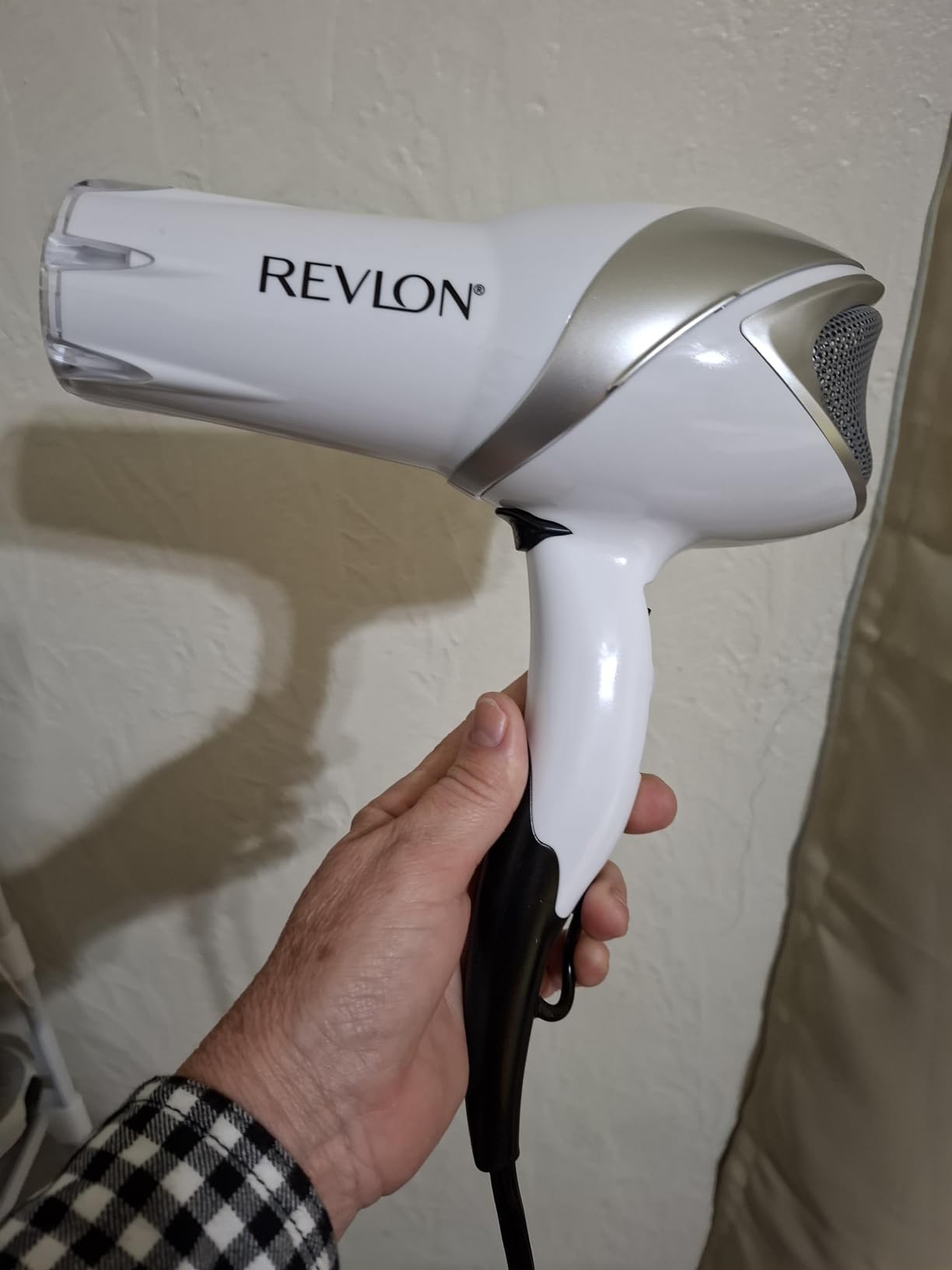
Out of everything I tested, this is the one I kept reaching for. The infrared heating system is the reason: it warms the hair more gently than a conventional coil element, which showed up on my fine strands as shine rather than the dry, straw-like feel I got from several hotter models. It carries a 4.6 rating across more than 50k reviews, and the consistency of that feedback is the reason I trust it as a first pick.
Control is where it wins for fine hair specifically. Three heat settings and two speed settings mean I can run high airflow on a low heat for the first pass, which cuts drying time without cooking my ends. The cool shot locks the style in at the end, and reviewers consistently report that this is a genuinely cool burst rather than just a low setting wearing a different name.
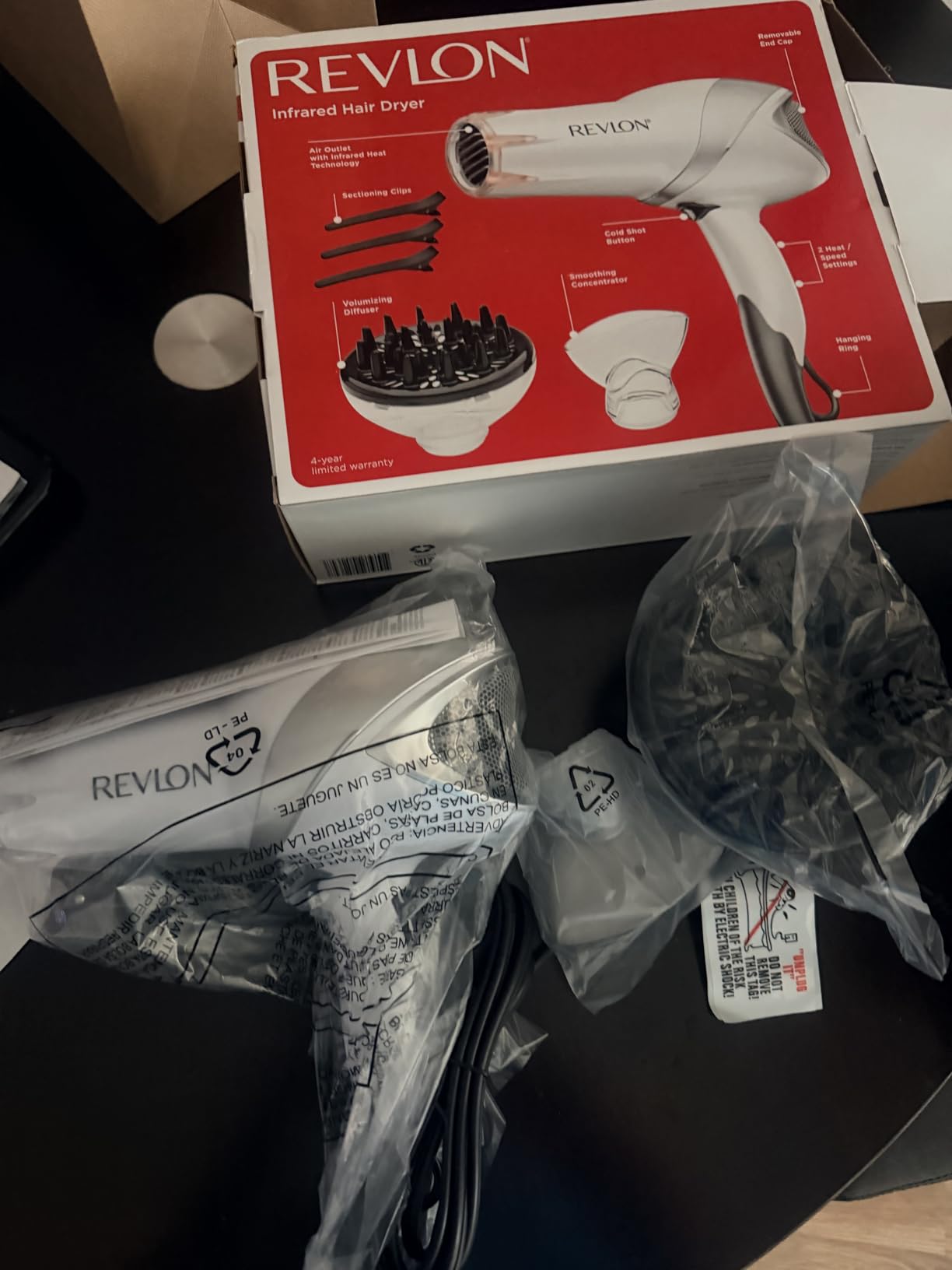
Attachments are the other strength. The diffuser and concentrator both come in the box, along with styling clips, so you can change direction mid-dry without stopping to hunt for a part. The diffuser does a good job of defining soft waves without pushing my roots flat, which is the opposite of what most concentrators do on fine hair. The concentrator gives you a focused stream for the roots, which is where volume actually comes from.
Weight matters more than people expect. At 2.07 lb, this sits in the middle of the group, and I could do a full root-lifting session without my wrist complaining. Reviewers also describe it as relatively quiet for its power class, which matters if you are drying your hair before anyone else is awake.
How It Handles Fine and Short Hair
Short, fine hair is where this dryer is at its best, because the 1875W motor clears the water out of fine strands quickly. Less time under the dryer means less exposure to heat, and that is the whole game with fine hair. My fine, short pixie cut went from soaking wet to dry in a fraction of the time it took with the slower dryers in this roundup.
If your hair is fine but long, use the concentrator at a distance and keep the dryer moving. Do not hold it close and let it work on one section, since the infrared element still generates real heat even though it is gentler than most.
What to Know Before You Buy
The diffuser attachment is a snap-fit and it can pop off if you do not seat it firmly. Several reviewers mention this, and it is a small irritation rather than a real problem, but check it before you start a style. The switch lettering also fades with heavy daily use over the years, which is cosmetic and does not affect how it works.
A small number of owners report early burnout after a few weeks of use. Across 50k+ reviews this is a minority pattern, and the long-term majority report durable performance across years of daily use, but if you are hard on tools it is worth knowing. I would still buy this again for fine hair, and the flexibility of the three heat settings is hard to match at this level.
2. Remington Damage Protection Hair Dryer – Best Value Ceramic Ionic Pick
Remington Damage Protection Hair Dryer, Ceramic Ionic Technology
1875W power
Ceramic plus ionic plus tourmaline
3 heat, 2 speeds, cool shot
1 lb
Pros
- Fast drying at a light 1 lb weight
- Cool shot locks in the style
- Removable rear filter is easy to clean
- Owners report it outsells pricier dryers
Cons
- Runs hot with no truly cool setting
- Cool shot button easy to trigger by accident
- Less airflow than higher-end models
This is the dryer I would hand to someone who wants a good result without research. It combines ceramic, ionic, and tourmaline technologies with a 1875W motor, and it holds a 4.6 rating across close to 50k reviews. Plenty of owners say outright that it performs better than dryers costing several times more, and after testing it, I understand why.
The Micro-Conditioner Technology is the part that matters for fine hair. It works with the airflow to reduce uneven heating, so you are less likely to end up with one over-dried side and one damp side. At 1 lb it is one of the lightest bodies here, and that weight difference is obvious during a long session on fine hair that needs slow, careful root work.
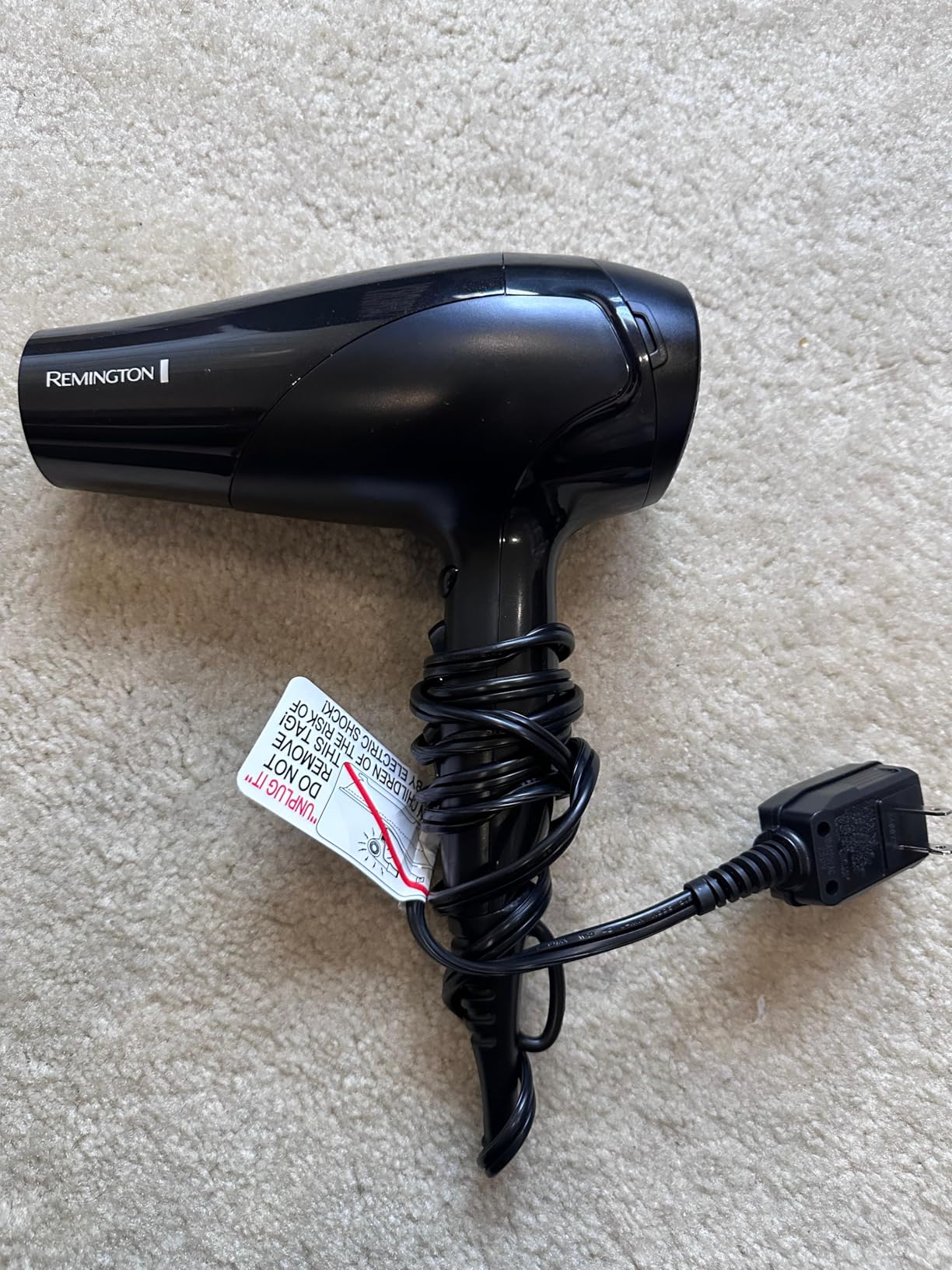
The removable rear filter is an underrated feature. You can clean it, which keeps airflow consistent and heating steady over months of use. Budget dryers rarely give you this, and a clogged filter is one of the main reasons a cheap dryer starts running hot and unevenly later on.
Both a diffuser and a concentrator nozzle are included, so you have the two airflow shapes you actually need for fine hair. The diffuser controls frizz on wavy sections, and the concentrator gives you the focused stream you want at the roots.
Where the Heat Setting Falls Short
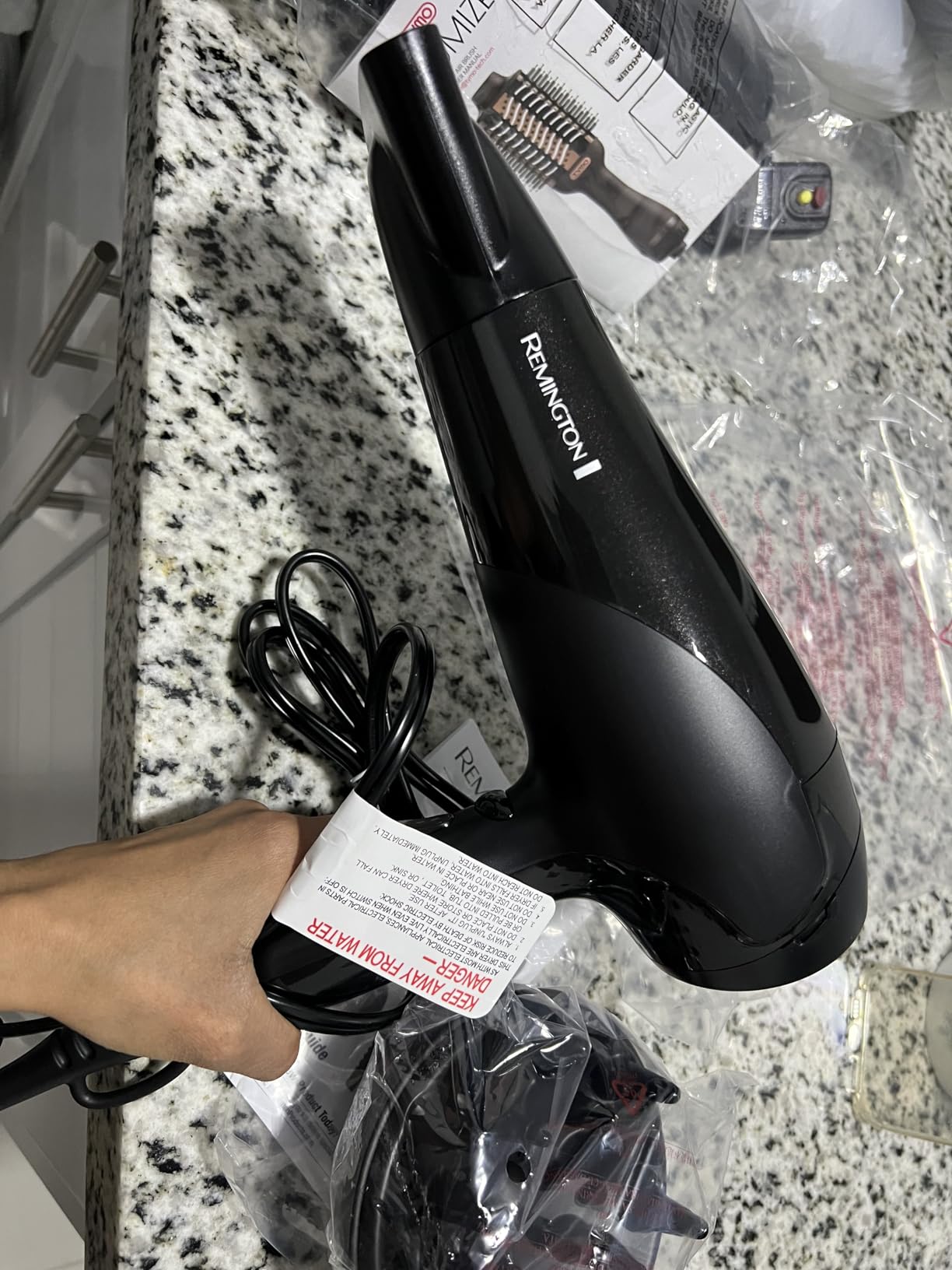
The honest drawback is that this dryer runs hot, and its lowest heat setting is not truly cool. If you are someone whose fine hair breaks easily, you need to spend more time on the cool shot and less time on heat. That habit works, but it does mean the dryer is asking for more attention than the REVLON does.
Another quirk: the cool shot button sits where your thumb naturally rests, and reviewers report triggering it by accident while holding the handle. It is not a failure, just something to know about in the first few uses while you find your grip.
Who This Dryer Suits Best
This suits fine hair that is on the thicker side of fine, or fine hair that is wavy and frizz-prone rather than straight and limp. The ionic and tourmaline combination is very good at smoothing flyaways, which is a problem fine hair has constantly.
If you are shopping for the cheapest acceptable option that still does a real job with ions and heat, this is it. It is simply bulkier than some of the travel-friendly models here, and it is not the one I would choose for a fine and short cut where drying time is already short.
3. ELLA BELLA Ionic Hair Dryer – Best Quiet Pick with Intelligent Heat Control
ELLA BELLA® Ionic Hair Dryer with Diffuser – Negative Ion Blow Dryer, Quiet
Negative ion technology
Intelligent heat control
3 magnetic nozzles
Low noise, 1.98 lb
Pros
- Negative ions reduce frizz and add shine
- Multiple heat settings with intelligent control
- Quiet low-noise body
- Three magnetic nozzles included
Cons
- Higher price tier than mainstream dryers
- Magnetic nozzles need careful alignment
This one stands apart on quiet operation, and that is not a marketing line. The low-noise design is a deliberate engineering choice, and in a bathroom at 6am it makes a real difference to how pleasant the routine feels. The 4.5 rating across roughly 3.7k reviews is solid, and the feedback clusters around smooth results and a comfortable grip.
Intelligent heat control is the feature fine hair should care about most. Combined with multiple heat settings, it means the dryer adjusts its output rather than blasting the same temperature at every section. In practice my fine hair stayed smoother and my ends were less dry than with the fixed-heat options, even on the higher settings.
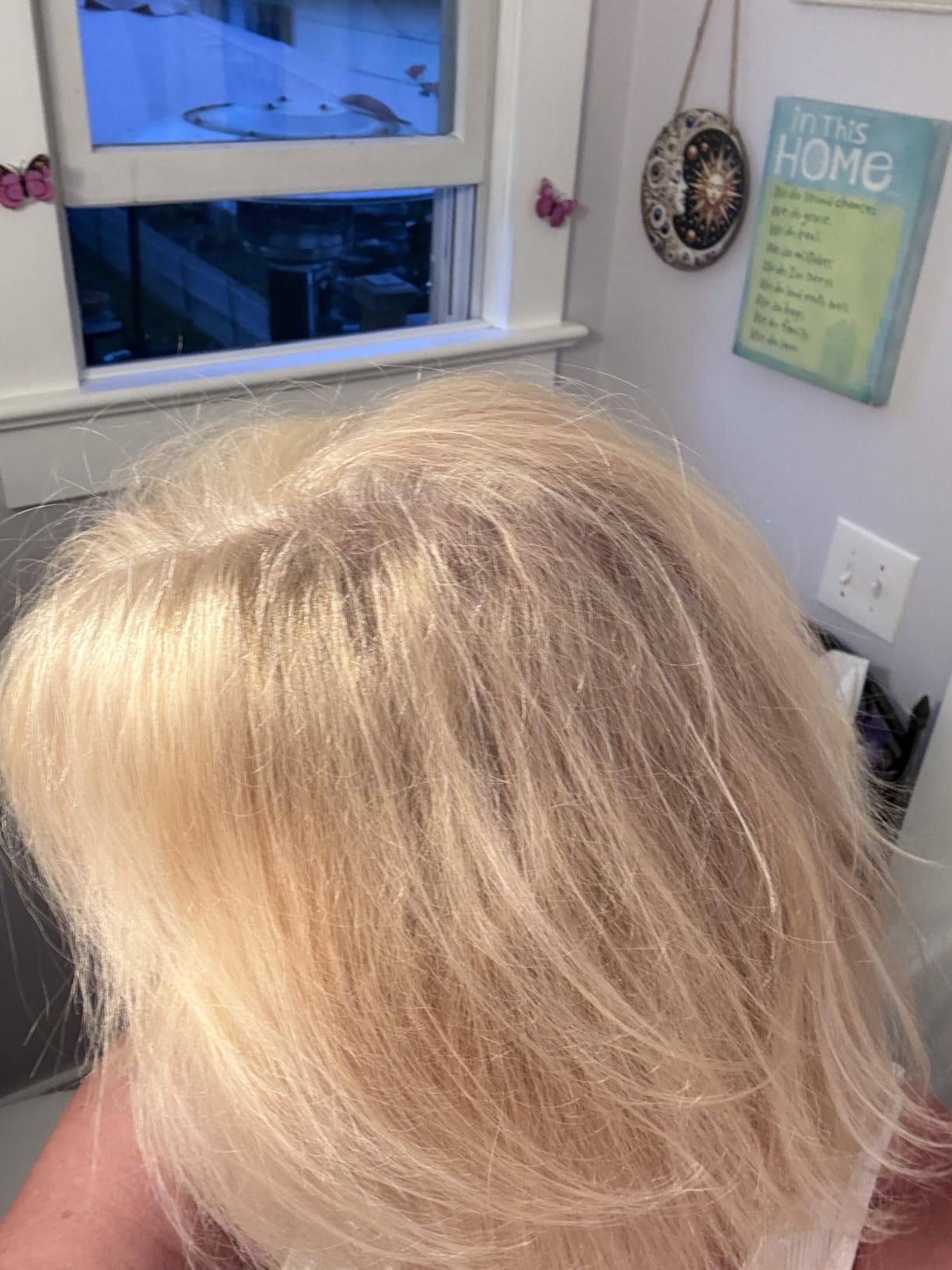
Negative ion technology is doing the smoothing work here. Reviewers describe hair coming out with more shine and noticeably less frizz, and that shine is part of what makes fine hair read as healthy rather than just flat. The trick is to keep an eye on your root volume, because excellent frizz control is not the same thing as lift.
Three magnetic nozzles are included, which is more attachment choice than most mid-range dryers offer. They cover the sleek straight finish and the fuller curly or voluminous finish, so you can change the shape of the airflow without buying anything extra.

How It Performs on Fine Wavy Hair
Fine wavy hair is the sweet spot for this dryer. Waves need frizz control more than they need heat, and the negative ion output handles the frizz while the multiple heat settings let you stay low. I got the smoothest, shiniest result on my wavy sections with this model, better than any of the standard ceramic dryers here.
The magnetic nozzles need a moment to seat properly. Reviewers call this out as the main learning curve, and it is a fair description: if the nozzle is not aligned, it will not click in cleanly. Once you know the alignment it becomes a quick, secure attachment.
Whether the Price Step Is Worth It
This sits in a higher price tier than the mainstream dryers, and the reviewers who hesitate say exactly that. The question to ask yourself is whether quiet operation and intelligent heat control solve a real problem in your routine. If you dry your hair early, or if you have fine hair that reacts badly to inconsistent heat, they do.
For straight fine hair that is already low-maintenance, a simpler dryer may be enough. But for anyone who has noticed their fine hair looking dull and frizzy despite a careful routine, this is a genuine step up rather than a cosmetic one.
4. Conair SmoothWrap Ionic Hair Dryer – Lightest Mainstream Pick with a True Cool Setting
Conair SmoothWrap Ionic Hair Dryer, Diffuser & Concentrator, 1875W, Mint
1875W airflow
SmoothWrap ionic
True cool setting
1.32 lb, folding handle
Pros
- Genuine cool setting not just a cold shot
- Dries fast on lowest heat and speed
- Very light at 1.32 lb
- Folding handle packs well for travel
Cons
- Top heat setting is cooler than rivals
- Wide concentrator is not ideal for frizz
- Fan sound described as old-fashioned
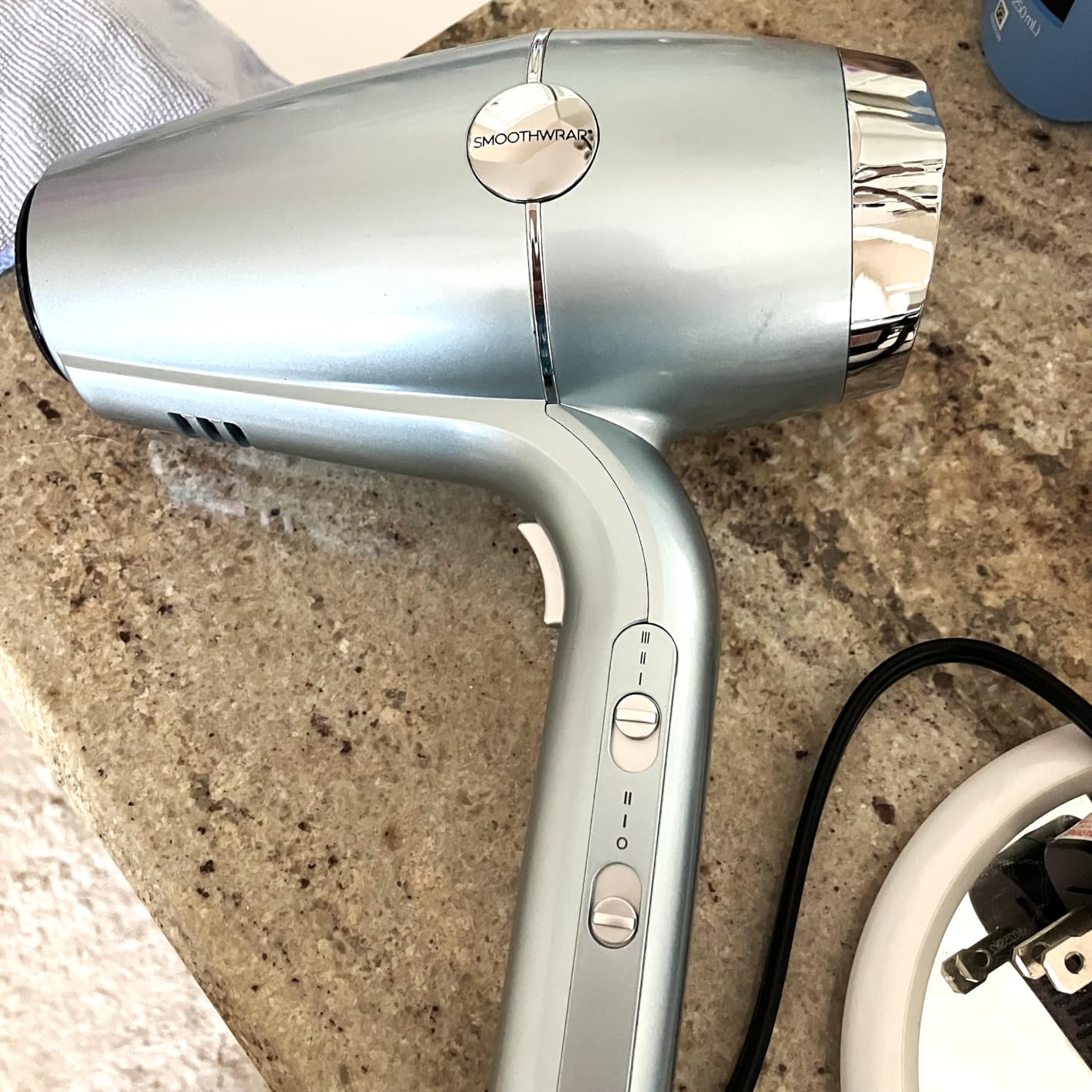
The Conair earns its place for one specific reason: a genuine cool setting rather than only a cold shot. That distinction is not marketing. A true cool setting lets you dry a section at low temperature continuously, which is exactly what fine hair needs when you are trying to hold volume without cooking the strand.
It is also the lightest mainstream dryer here at 1.32 lb, and reviewers single that out repeatedly. The folding handle makes it genuinely portable, which no other budget option in this roundup offers. SmoothWrap ionic technology handles frizz and leaves hair soft, according to a large share of the 3.7k reviews behind its 4.5 rating.
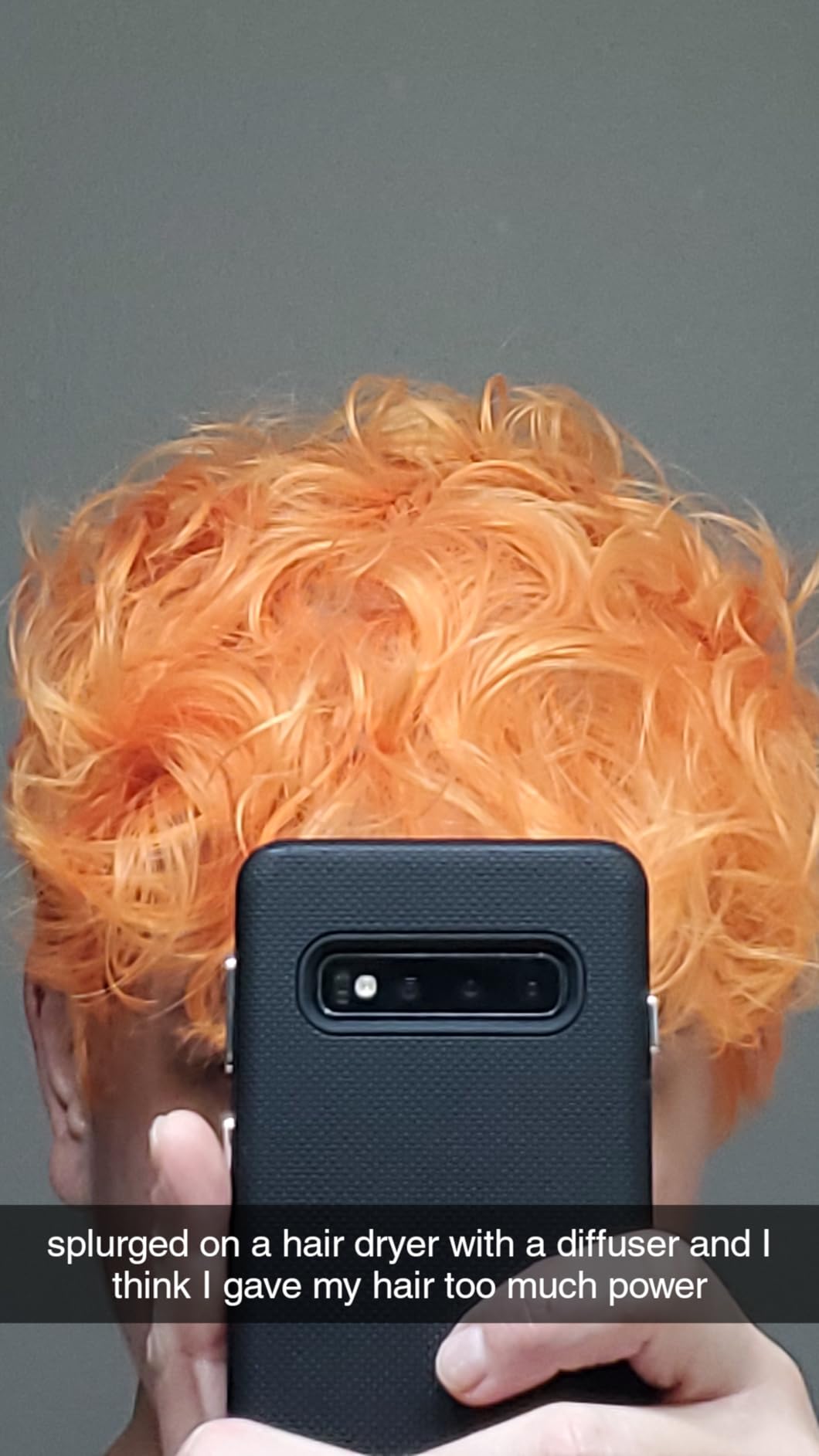
It dries hair quickly on the lowest heat and speed settings, and that combination is rare in this class. Most dryers at this level need medium heat to move water, and that is exactly where fine hair starts to suffer. Reviewers note the diffuser adds root volume and dries waves well, so it is not just a smoothing tool.
Long-term reliability is another point the reviews raise often for Conair, with owners describing dryers that keep working for years. The removable easy-clean filter supports that by keeping airflow steady.
What You Give Up Compared With the Picks Above
The top heat setting is cooler than many competing dryers, which is a real limitation if you have thick or coarse hair. On fine hair it is barely a limitation at all, since most of us never touch the top setting anyway.
The concentrator is fairly wide, so it is not ideal for taming frizz or straightening. If your priority is a sleek, flat finish, this is not the attachment you want. The fan sound is described as old-fashioned and somewhat noisy by owners, which undercuts the quiet appeal of the ELLA BELLA directly above it.
Best Uses for Fine Hair
This is the dryer I would pick for fine and short hair, especially for children or anyone who is not going to fuss with settings. The true cool setting means a low-temperature finish is genuinely available, not simulated.
The plastic body feels less rigid than premium models, and some owners report the paint chipping over time. Those are fair complaints about a mid-range tool, and if you drop dryers frequently, a sturdier body is worth paying for. For careful use, it is a strong pick with a feature set that punches above its tier.
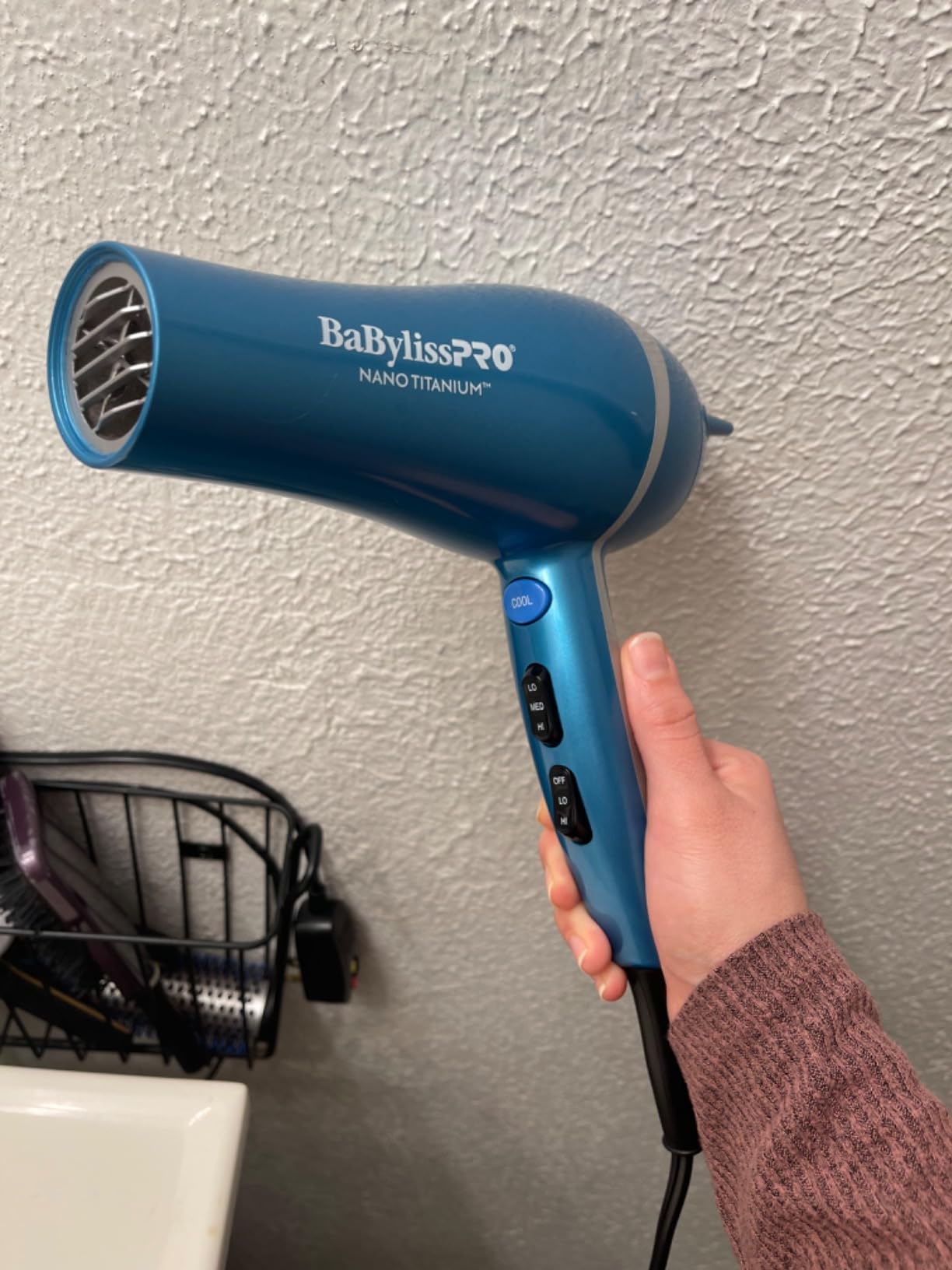
5. BaBylissPRO Nano Titanium Dryer – Most Heat Settings for Precise Root Lifting
BaBylissPRO The Nano Titanium Hair Dryer, Lightweight, 3 Attachments
2000W motor
Nano titanium with ion generator
6 heat and speed settings
1.05 lb
Pros
- Six heat and speed settings for low-heat control
- Very light at 1.05 lb
- Nano titanium plus true ion generator
- 9-foot cord and removable filter
Cons
- Limited nozzle set for the price
- Premium price relative to basic dryers
Six heat and speed settings is more granularity than anything else in this roundup, and for fine hair granularity is the point. Most people with fine hair do not need more heat, they need more ways to use less heat. Being able to land on the exact combination that dries the roots without flattening them is what separates this from the three-setting options.
At 1.05 lb it is tied for the lightest body here, and reviewers highlight the low weight as a major reason they can do long styling sessions. The 9-foot cord gives you real range to move around the head without tangling yourself in it, which sounds minor until you try root lifting with a short cord.
Nano titanium technology combined with a true ion generator is what produces the smooth, shiny finish reviewers describe. The titanium coating also spreads heat more evenly, which reduces the hot spots that dry out fine ends. Constant-temperature distribution is the mechanism behind that, and it is why this dryer feels gentler than its 2000W rating suggests.
The 2000W motor is the most powerful in this list, which sounds wrong for fine hair until you understand airflow and heat are different axes. High wattage here means water leaves your hair fast, so the total time under heat drops even when you run it on a low setting.
Root Lifting Technique With This Dryer
Set a mid-low heat with a high speed and use the concentrator angled slightly upward at the roots. Work from the back of the head forward so you are pushing the roots in the direction you want them to fall, and hit the cool shot when each section is dry.
Reviewers also praise how even the heat distribution is, which means you can hold the dryer in one place longer without creating a hot spot. For fine hair that is a meaningful permission, because most of us are trained to keep the dryer constantly moving.
What You Trade Off for the Settings
The attachment set is limited for the price. You get a concentrator nozzle and a diffuser, and that is it, so if you want a dedicated gentle-air or round-brush style tool you will be buying separately.
It also sits at a premium price relative to basic dryers, which is the main reservation reviewers voice. For fine hair that breaks easily and needs precise low-heat control, the extra settings are worth it. For hair that does fine on three heat settings, a simpler dryer will save you money for no loss in result.
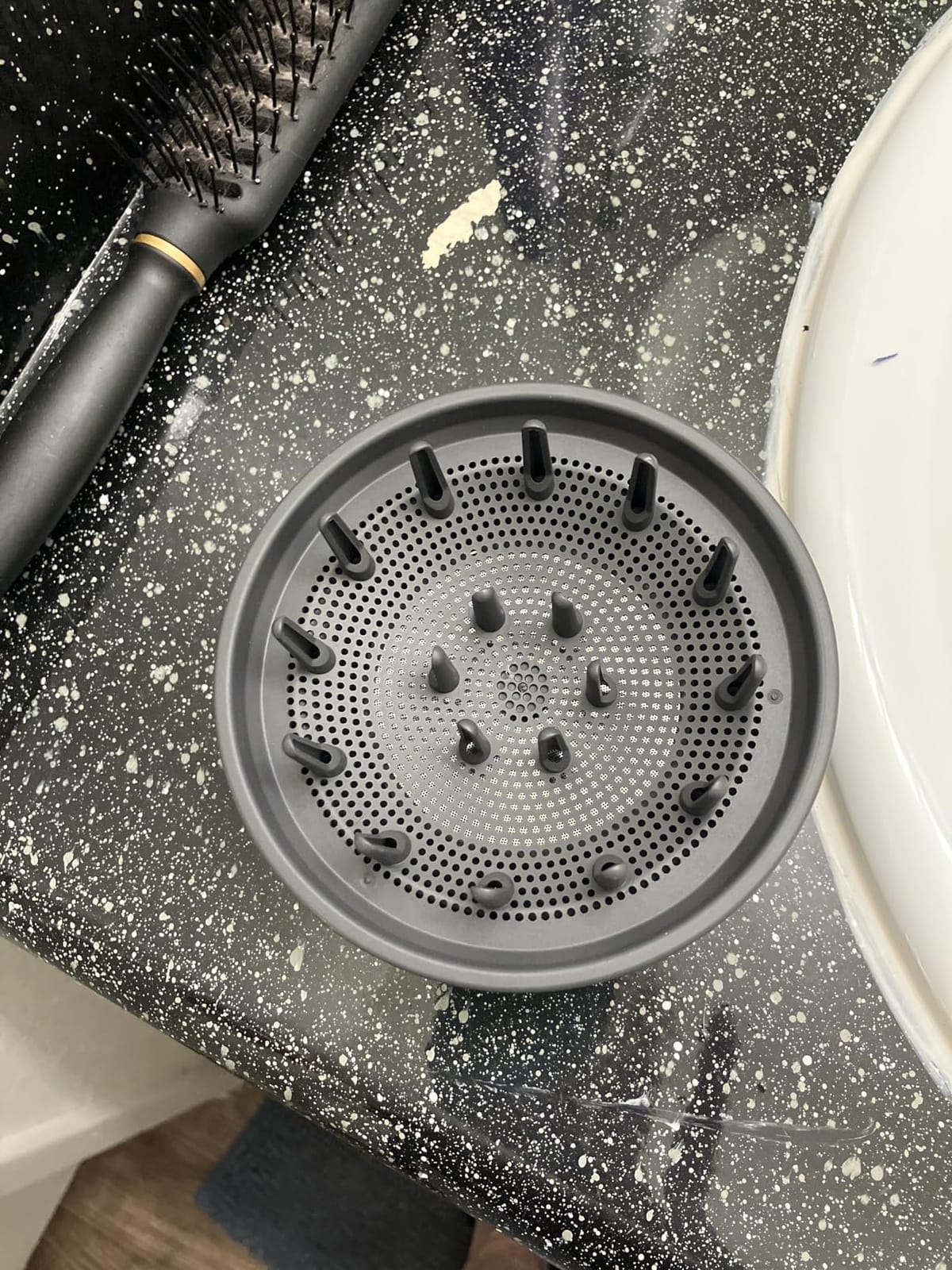
6. Alloom High-Speed Ion Dryer – Strongest Airflow Without Maximum Heat
Fast Drying Without Extreme Heat, High-Speed Hair Dryer with 500M Negative Ions for Smooth, Frizz-Free Hair, Low-Noise Lightweight Blow Dryer with Diffuser & Concentrator, Gunmetal
160000 RPM brushless motor
36 m/s airflow
500M negative ions
NTC temp sensor
Pros
- Very strong airflow in a compact body
- Noticeably quieter than conventional dryers
- Three temperature levels cycle easily
- Negative ions measurably reduce frizz
Cons
- Magnetic attachments do not stay secure
- Heat button sits under the grip
- No dedicated cool-shot button
This is the fastest drying on fine hair in the group, and the reason is the motor. A brushless motor spinning up to 160000 RPM moves air at up to 36 m/s, and on short fine hair that translates to a near-complete dry in about a minute according to the manufacturer. Even on longer hair, users report finishing in a couple of minutes rather than fifteen.
Speed matters for fine hair in a way it does not matter for thick hair. Every extra minute under a dryer is a minute of heat exposure, so the fastest dryer is often the gentlest one in practice. The LED ring indicator showing red for hot, orange for warm, and green for cool makes it easy to see which mode you are in at a glance.
The NTC temperature sensor samples air temperature 110 times per second, which is the mechanism behind the “fast without extreme heat” claim. Users consistently report that the highest setting does not feel uncomfortably hot, and that fine hair dries smooth rather than fried.
Up to 500 million negative ions are released, and reviewers say the reduction in frizz and static is measurable rather than just noticeable. At 14.24 oz it is one of the lighter bodies here, and owners note it is noticeably quieter than conventional dryers despite the wind speed.
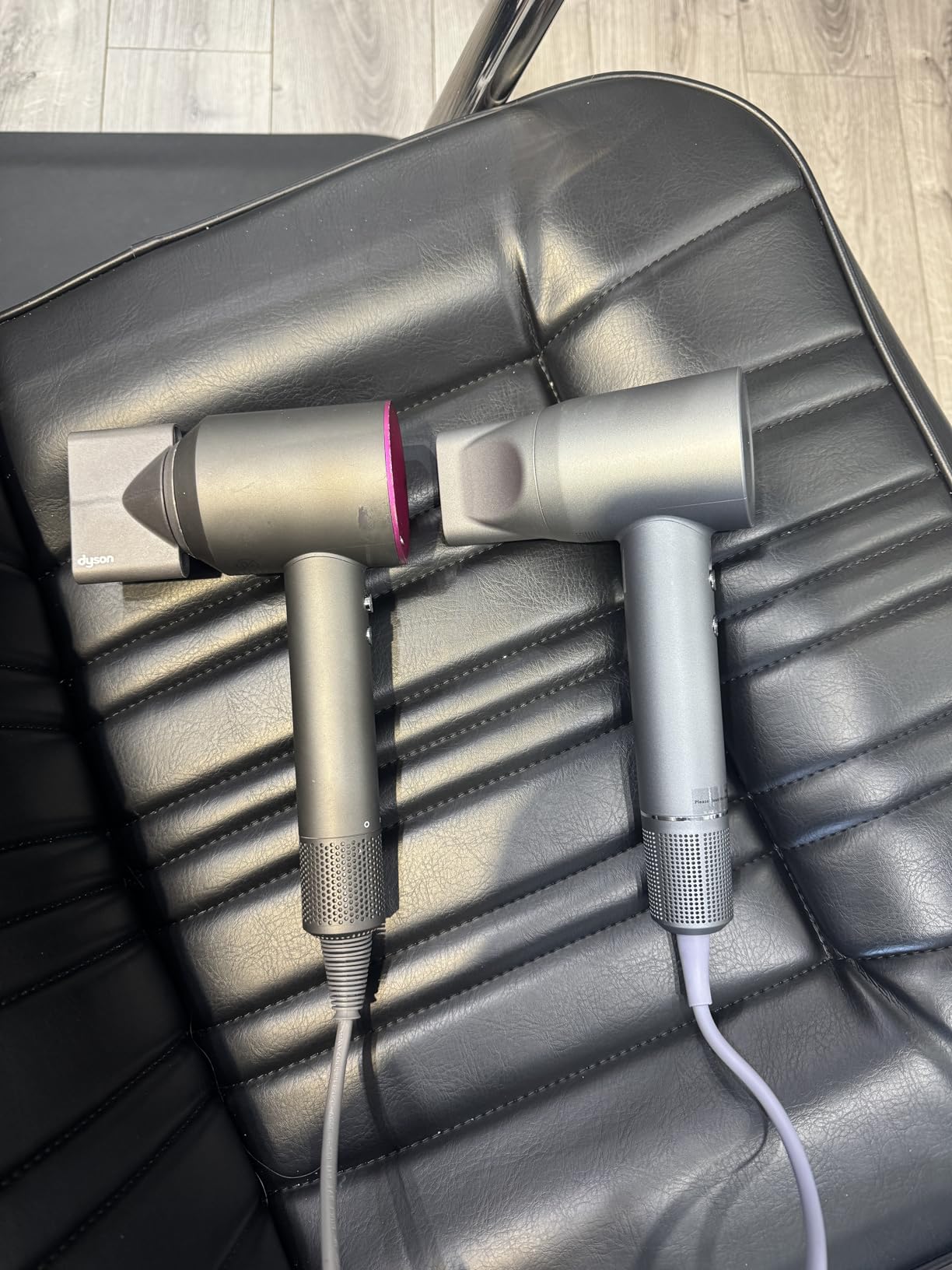
How the Three Temperature Modes Work for Fine Hair
Three temperature levels is fewer than some of the traditional dryers here, but the sensor handling means each one is steadier. For fine hair, I would use warm as the default and cool for the final stage. The green cool mode gives you a proper low-temperature pass without needing a separate button.
What you lose compared with the BaBylissPRO is fine-grained control. If you like to sit on one setting because the dryer fluctuates, this is not it. If you like to set a level and let the sensor hold it steady, it works very well.
Handling Problems Worth Knowing
The magnetic diffuser and nozzle do not stay attached reliably, according to repeated owner reports, so check them before you start a section. The heat-mode button also sits where your hand naturally grips, which causes accidental setting changes mid-dry.
There is no dedicated cool-shot button, which is the one genuine gap for fine hair. You get a cool temperature mode instead, and for most people that covers the need. Holding the handle low also brings your hand into the bottom vent, so keep your grip higher up.
7. Shark SpeedStyle HD331 – Best Smart Styling System for Fine Hair
Shark SpeedStyle Hair Dryer, 3 Styling Tools, Fine to Medium Hair, HD331
Below 230F regulation
4 heat, 3 speeds, cool shot
3 smart attachments
1.66 lb
Pros
- Cuts sessions from 15-20 minutes to under 10
- Stays below 230F
- Light 1.66 lb body with a cool shot
- Attachments snap on and rotate
Cons
- Highest price point in the roundup
- Brush attachment adds little for some
- Frizz gains depend on the finisher
The temperature regulation is the headline number here. The motor checks temperature 1000 times per second and keeps output below 230F, and for fine hair that is a hard ceiling rather than a suggestion. Users report that fine, heat-sensitive hair is not overheated, which is the single thing most people with fine hair are looking for.
It also adjusts heat and airflow automatically based on which styler you attach, so you are not guessing settings every time you change tools. Four heat settings, three airflow speeds, and a working cool shot give you manual control on top of that. Drying sessions dropping from 15 to 20 minutes to under 10 is the most common praise in the reviews.
At 1.66 lb it is light enough for long sessions, and the compact body is easy to hold. Reviewers mention quiet operation alongside the speed, and the attachments snap on securely and rotate, which lets you find a comfortable hold angle instead of twisting your wrist.
The RapidGloss finisher uses dual high-speed airflow to smooth flyaways and boost shine, and on fine hair that visible shine is a big part of why a blowout looks expensive. Be aware that most of the frizz reduction comes from this attachment specifically.
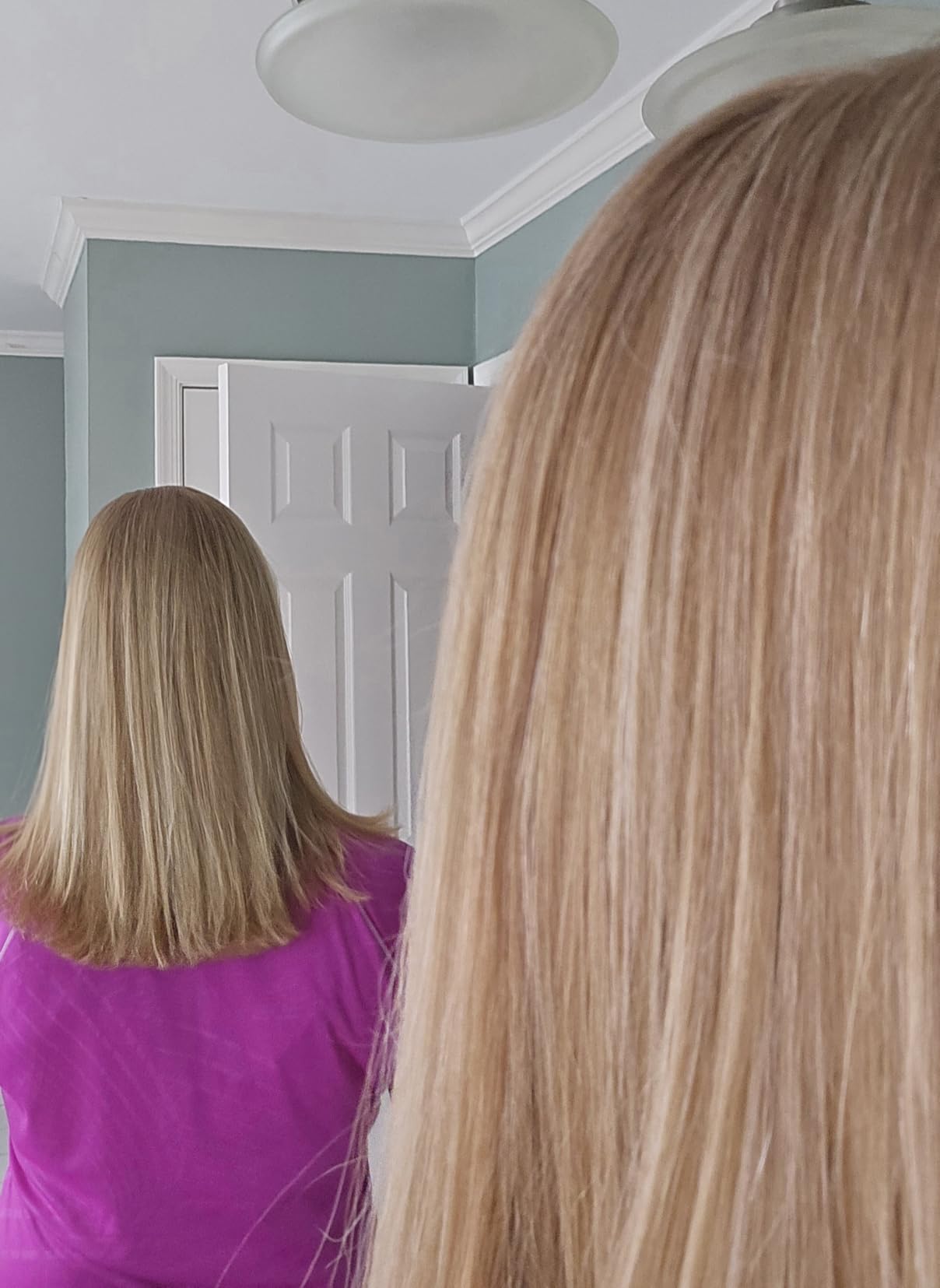
What the QuickSmooth Brush Does and Does Not Do
The QuickSmooth brush is meant to smooth as you dry, and it does an adequate job. But reviewers are split, with a group finding it lacks tension and adding little. If round-brush volume is your goal, do not expect this brush to replace a separate round brush and blow dryer setup.
For fine hair, treat the finisher as your volume tool rather than the brush. Lift small sections at the roots with the concentrator, then pass the finisher over the surface to set the shine and hold the flyaways down.
Whether This Is Worth the Price Step
This is the most expensive dryer in the roundup, and it is the reservation reviewers voice most. The case for it is the temperature ceiling and the auto-adjustment, which genuinely reduce the guesswork that fine hair punishes.
Another caveat: attachments run hot after several minutes on high heat and speed, and a few buyers find it louder than expected. If you are on a tight budget and your fine hair responds well to low heat and airflow, a simpler dryer will serve you. If you want the ceiling and the automation, this is the one that delivers them.
8. KARFUN 110000 RPM Plasma Dryer – Budget Pick and Quiet Early Mornings
KARFUN 110000 RPM Brushless High Speed Plasma Hair Dryer for Home Travel
110000 RPM brushless motor
22 m/s wind speed
Over 200M negative ions
57 dB, 0.89 lb
Pros
- Very high airflow dries hair in 2-5 minutes
- Quiet at 57 dB
- Light 0.89 lb body packs well
- Hot and cold cycle mode with 4 temperatures
Cons
- Heat button sits where fingers rest
- Cord is a little over four feet
- Can tangle if ends are not brushed through
This is the quietest dryer here by a clear margin, at a measured 57 dB, and the number is confirmed in reviews rather than only claimed. If you are up before the rest of the household, that difference is more valuable than any spec sheet number. Combined with a 0.89 lb body, it is the model I would pack.
The 110000 RPM brushless motor delivers up to 22 m/s of wind speed, which cuts drying to 2 to 5 minutes on most hair types. Users often compare the results to salon dryers, and the tight filter design is specifically praised for stopping hair being sucked into the intake, a real problem with many high-speed models.
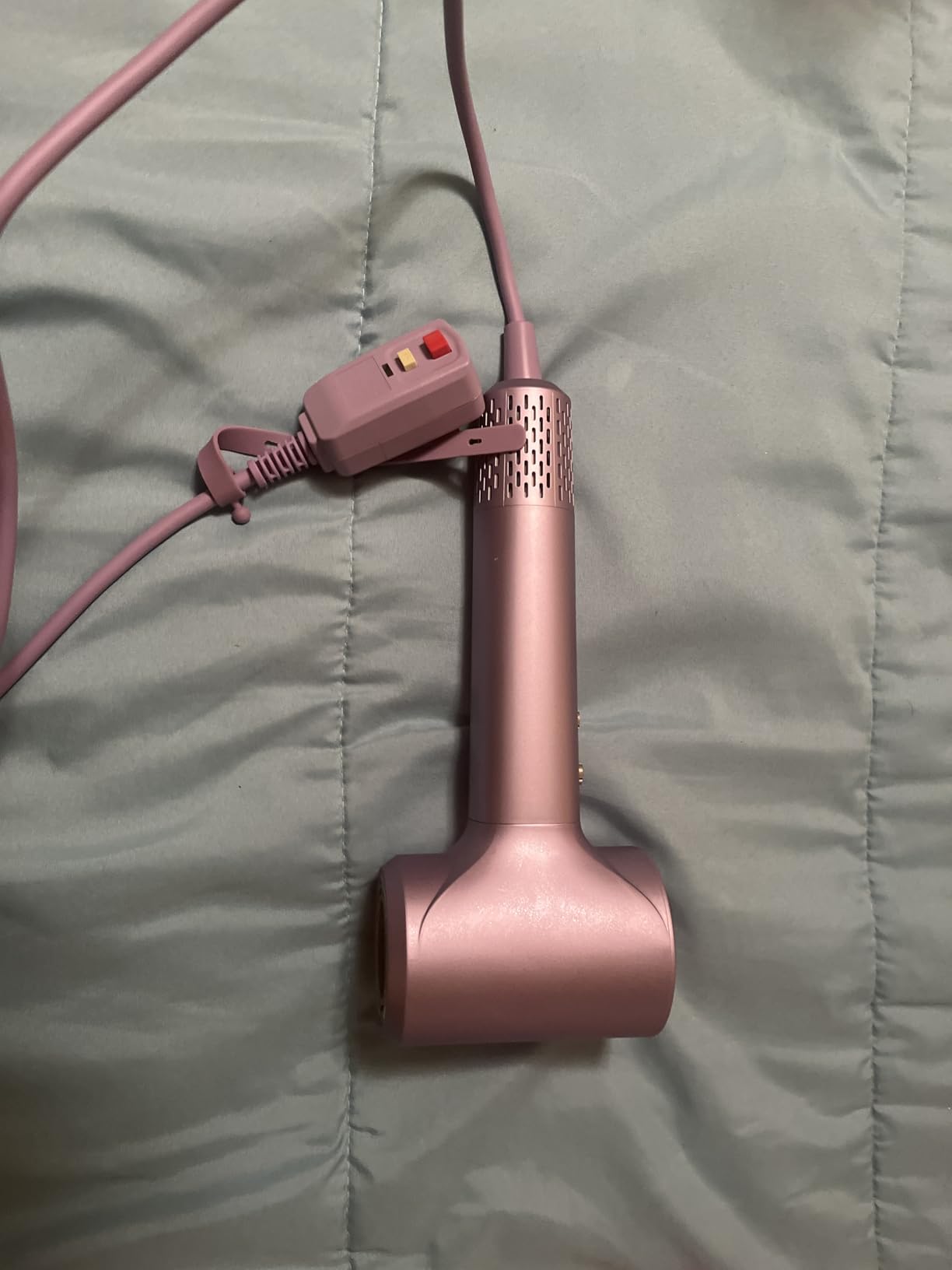
Over 200 million negative ions lock in moisture and neutralise static, and temperature is measured 50 times per second to keep output steady. The LED ring shows warm, hot, and cold air states, and a long press on the button runs a hot and cold circulation cycle, which is a nice way to set a style without a separate cool shot.
The 360-degree rotating magnetic nozzle is a genuinely useful detail, letting you direct airflow without rotating your wrist. Owners report it stays attached, which is more than can be said for some of the magnetic systems in this roundup.
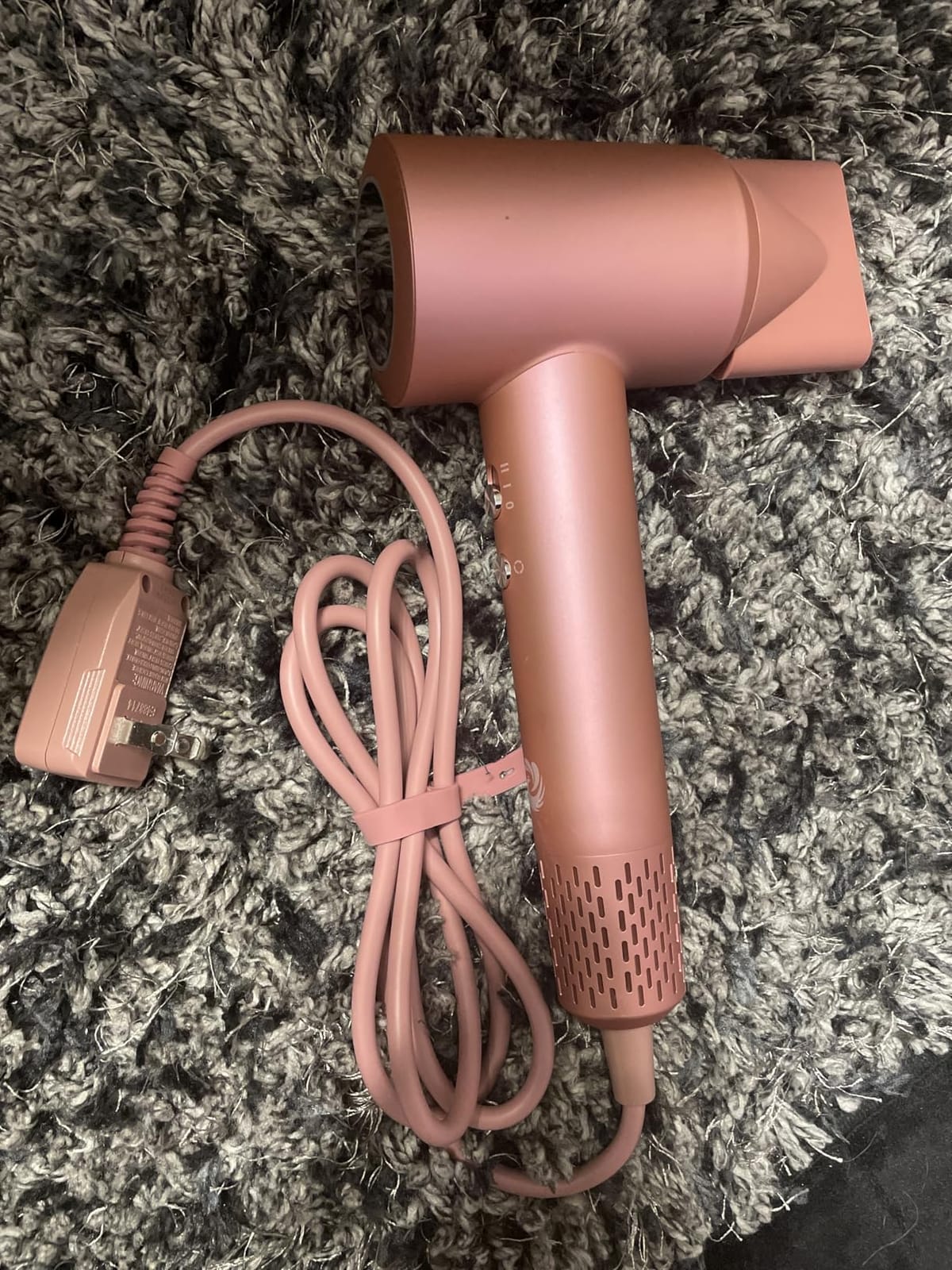
Airflow Strength and Fine Strands
High-speed airflow is the biggest caution here. Owners warn that the wind can tangle very fine strands if you are not brushing through the ends as you dry. The fix is simple: use a brush on the ends and keep them moving.
Even the highest setting does not feel uncomfortably hot, which is what makes this workable for fine hair despite the wind speed. Three temperature modes plus the hot and cold cycle give you four usable options, and the settings are switched from a handle slider rather than a button.
Trade-offs Before You Commit
The heat setting button sits where your fingers naturally rest, and owners report pressing it by accident mid-dry. The cord is a little over four feet, which is the shortest here and limits your reach for root work. Holding the handle at the bottom can partially block the air intake, so keep your hand higher.
There is also a minority of reports of units stopping working within weeks, and with a much smaller review base than the established brands, the long-term record is thinner. For a travel and quiet-use tool, though, the low weight, low noise, and fast drying make it hard to argue with.
9. Laifen Air Diffuser Dryer – Lightest Body for Fine and Short Hair
Laifen Air Diffuser Hair Dryer, 15×High-Speed Blow Dryer for Women, Milktea
110000 RPM motor
19 m/s airflow
200M negative ions
5 modes, 9.88 oz
Pros
- Extremely light at 9.88 oz
- Quiet and noticeably soft
- Five temperature modes for gentle drying
- Diffuser and smooth nozzle both included
Cons
- Strong airflow can tangle very fine strands
- Hottest setting can feel too hot
- No hanging hook or wall mount
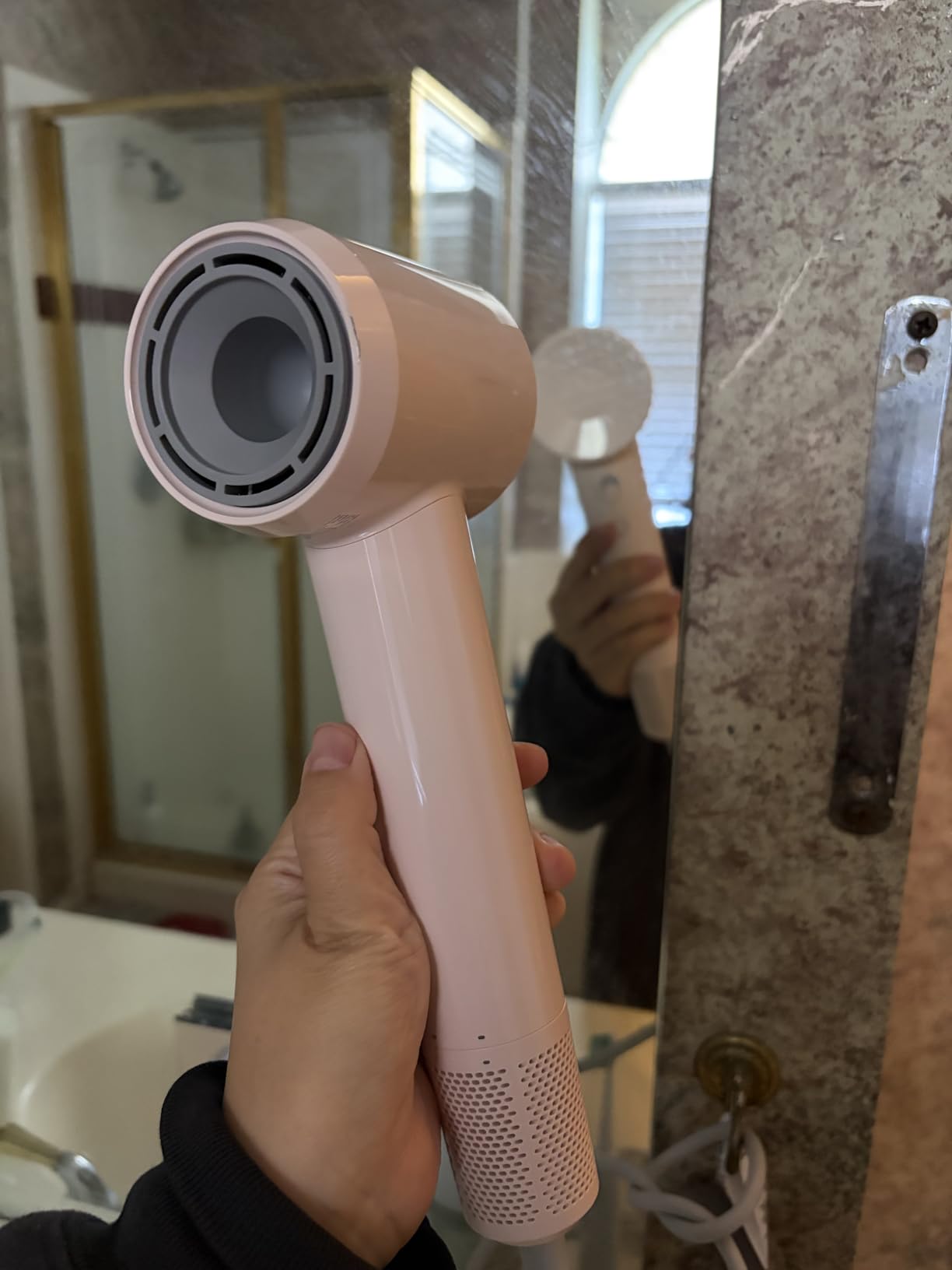
At 9.88 oz this is the lightest dryer in the roundup, and for fine hair that weight is a feature, not a gimmick. Fine hair takes longer to blow dry than you would expect because there is so little of it to hold heat, and a lighter body is the difference between a five-minute job and a tired arm.
Five temperature modes across two airflow speeds give you more low-heat options than most of the high-speed models here, and the colour-coded LED temperature ring is intuitive enough to check mid-dry without guessing. Airflow temperature is checked 100 times per second, which keeps each setting steady. It holds a 4.6 rating across 510 reviews.
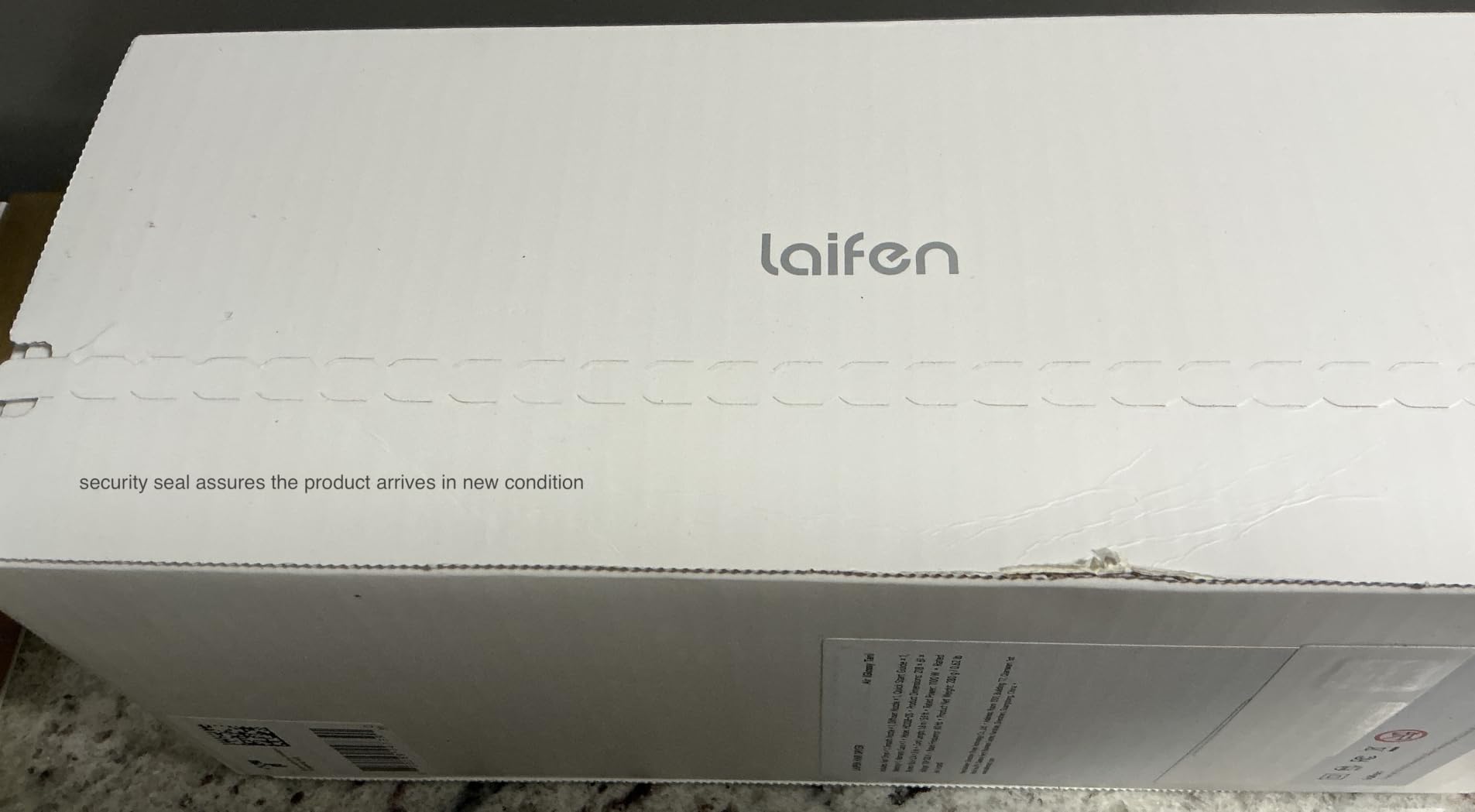
The small diffuser is praised for handling curls and waves well, and the smooth nozzle covers the sleek finish. Both attach magnetically and reviewers report they stay secure, with no alignment fiddliness. The palm-sized body is easy to pack, and low-noise operation is repeatedly described as softer than a traditional dryer.
Users report mid-length hair drying in as little as three to five minutes, and the 200 million negative ions leave hair shinier with less static. The protective safety filter is a sensible addition on a high-speed intake.
Why Five Temperature Modes Matter Most Here
Fine and short hair is the exact case where most dryers have one usable setting. This one gives you five, which means you can genuinely find the lowest comfortable level and stay there without dropping airflow. That combination is what stops the limp, greasy look people complain about after a blowout.
If you have fine and short hair, this is the model I would pick for daily use. The compact size also means it is the one you will actually use on holiday rather than leave in a drawer.
Cautions for Very Fine Strands
The strongest airflow can tangle very fine strands if you do not brush through the ends while drying, so this shares the same caveat as the other high-speed models here. The highest heat setting also feels too hot for some fine-haired users, which makes the lower modes essential rather than optional.
There is no hanging hook or wall mount included, and the short nozzle takes some getting used to compared with traditional long nozzles. The packaging is nested in five separate boxes, which some buyers find excessive but which has no effect on the tool itself.
10. Cosy Companions High-Speed Dryer – Best for Frizz Control on Fine Hair
Cosy Companions High-Speed Ionic Hair Dryer, 150000 RPM Brushless Motor for 2-5 Min Fast Drying, Low Noise Blow Dryer Reduces Frizz & Heat Damage, Lightweight Hair Dryer with Diffuser & Nozzle
150000 RPM brushless motor
36 m/s airflow
500M negative ions
51 dB, 0.82 lb
Pros
- Dries hair in 2-5 minutes
- Very quiet at 51 dB
- Light 0.82 lb body
- 500M ions lock in moisture
Cons
- Newer listing with a smaller review base
- Handle button can be pressed by accident
- Fewer long-term durability reports
This is the quietest dryer in the entire roundup, at 51 dB, achieved through eight layers of damping. The 150000 RPM motor and 36 m/s wind speed make it the joint fastest dryer here, and reviewers describe finishing in 2 to 5 minutes. For fine hair that is the ideal ratio of power to exposure time.
The 500 million negative ions are the reason this makes the list. Reviewers consistently report static balance and moisture locking that leave hair noticeably smoother, and fine hair is the hair type that suffers most from frizz. Air temperature is measured over 100 times per second, with three LED heat indicator colours to show which mode is active.
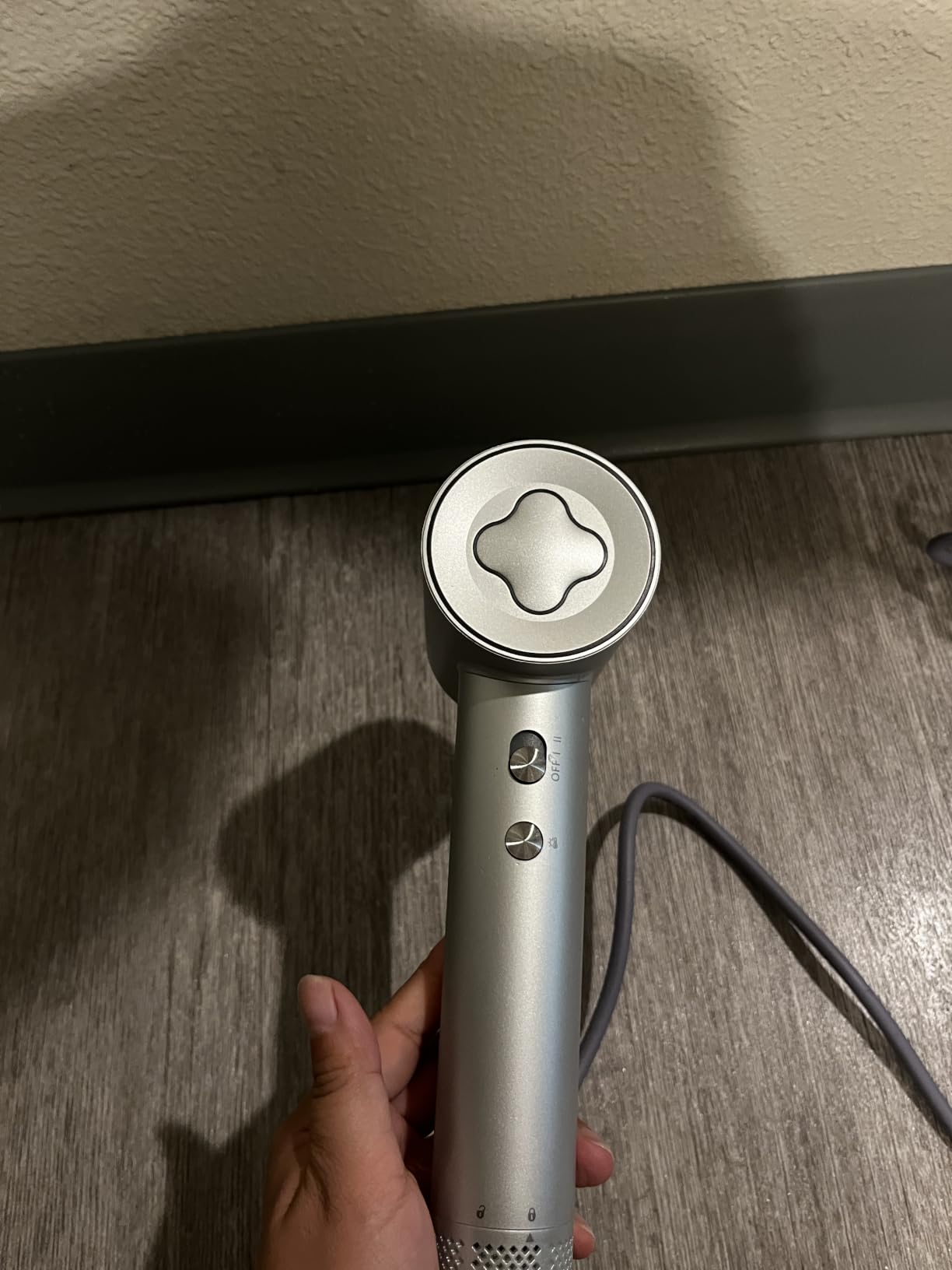
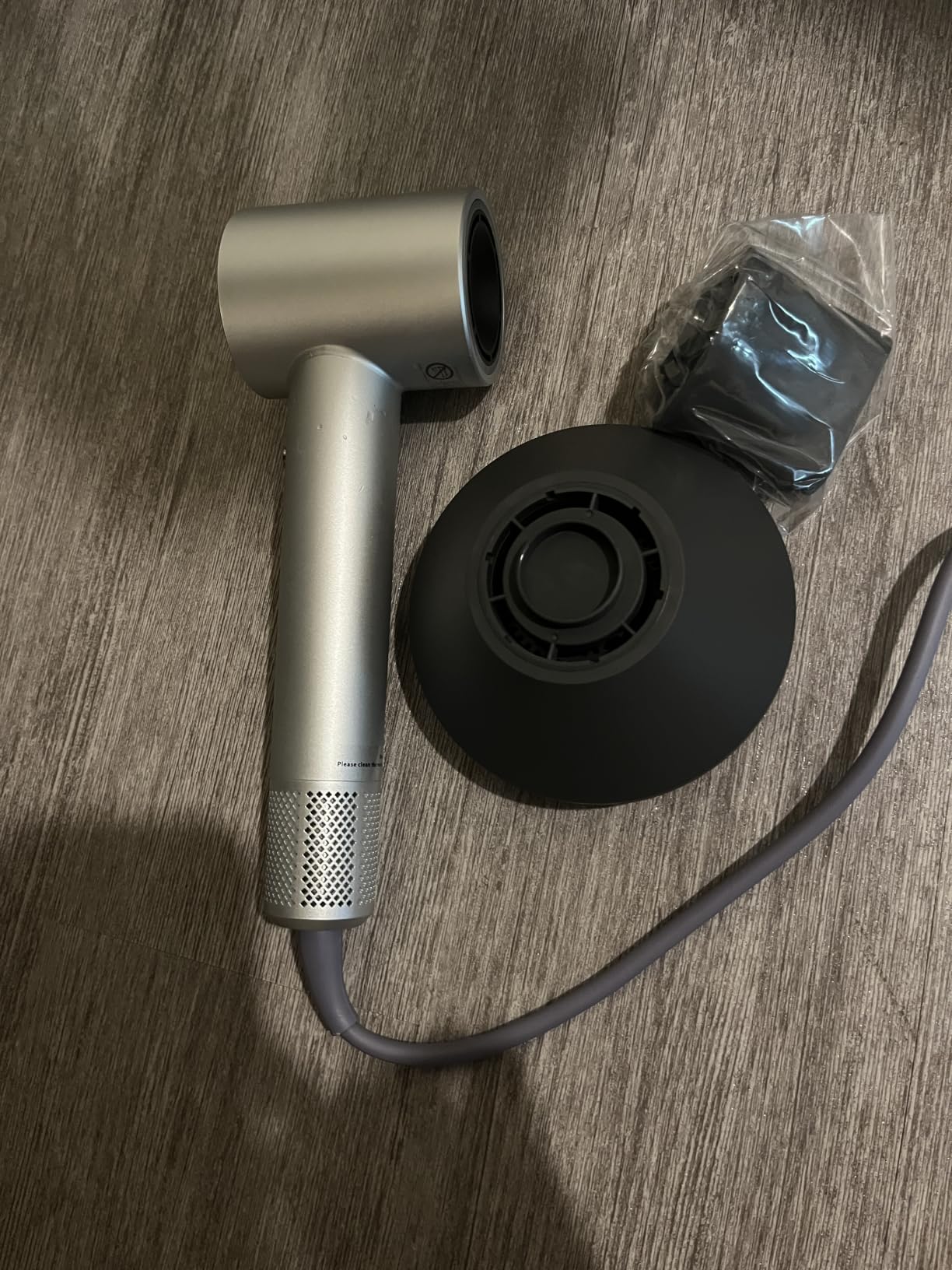
At 0.82 lb it weighs almost nothing, and the ergonomic grip means you can hold it overhead for a root-lifting pass without strain. The tight filter prevents hair being drawn into the intake, and the 360-degree rotating magnetic nozzle adapts to different hair lengths and airflow directions.
It earns a 4.4 rating across 576 reviews, with about 79% five-star ratings. That is a strong ratio for a newer listing, and the feedback pattern is consistent: fast, quiet, light, and effective at taming frizz.
Frizz Control Versus Volume
Heavy ion output is excellent at smoothing and can work against root volume, so this is a dryer to use with a light hand. Dry your roots with the airflow angled upward, then use the ions for the lengths and ends. If your priority is lift over smoothness, a lower ion output option suits you better.
Intelligent temperature control keeps the output steady across the whole dry, which is what stops the ends from drying out while the roots are still damp. On fine hair that consistency is worth as much as the raw airflow number.
What a Newer Listing Means for You
Because this listing is newer, most feedback covers the first months of use rather than years. There is not yet a long-term durability record comparable to the established brands, and that is the fairest thing to weigh before committing. The button placement on the handle can also be pressed unintentionally while drying.
For a compact, very quiet dryer with serious frizz control, it does more than its review count suggests. If you want the same ion output with a longer history behind it, the Alloom uses a very similar approach, and the two are worth comparing directly.
Why Ionic Output Flattens Fine Hair and When to Turn It Off
Negative ions do two useful things to hair: they break down static and they help smooth the cuticle so flyaways lie flatter. That is why almost every dryer in this roundup uses them, and why frizz-prone fine hair benefits so much. The same charge, though, draws a small amount of moisture out of the strand, and fine strands have the least body to spare.
That is the mechanism behind the most common complaint we heard from fine-haired users. Hair looks smooth straight out of the dryer, then within a few hours it sits flat and slightly limp at the roots. The damage is not dramatic and it does not look like breakage, which is why people rarely connect it to the dryer. It accumulates, and the same thing happens with continuous heat, just more slowly.
Users in hair forums describe the same fix repeatedly, and it is a behavioural change rather than a buying one. Dry with ions on for the first pass to move water out quickly, then switch them off for the final stretch and the cool shot. Volume holds noticeably better, and the smoothness you already created stays because the cool shot sets it rather than the ion charge.
When you shop, the useful question is not whether a dryer has ions, because they all do. It is whether you can turn them off or dial them down, and whether there is a real cool setting to move to afterwards. Dryers with only a cold shot and no adjustable heat leave you less room to work with on fine hair.
How to Choose a Hair Dryer for Fine Hair
Heat settings: look for a genuine low end
Fine hair should spend most of its dry time on the lowest usable heat setting. What matters is not the number of settings but whether the bottom one is actually cool enough. Several budget dryers run hot at every level, which forces you into a choice between a long dry at high heat or a short dry at high heat.
The two settings you want are a low heat and a cool shot held on the button. The low heat does the work, and the cool shot sets it. If the dryer has a true cool temperature mode, that is a bonus, but a held cool shot covers most of the same ground.
Wattage does not equal heat
This is the point that changes how people shop. A higher-wattage dryer is not automatically a hotter dryer. Wattage describes how fast energy moves air, and a fast dryer removes water from your hair quickly, which cuts total time under heat.
For fine hair specifically, high airflow at low heat is the ideal combination, and it is the opposite of what most people assume they need. The forum community widely treats 1200W or less as the gentle range, and that is a reasonable ceiling, but the better question is whether airflow and heat are adjustable independently. A 2000W dryer with a true low heat setting is gentler in practice than a 1200W dryer with only one high setting.
Cool shot: the feature people skip and regret
A cool shot is a burst of cool air on a button you hold, and it is what locks a style in place. On fine hair it is the difference between a blowout that lasts a few hours and one that lasts all day. Nearly every dryer in this roundup has one, with the high-speed Alloom relying on a cool temperature mode instead of a dedicated button.
Check whether it is a held button or an automatic cycle, because both work but they suit different routines. A dedicated button is more precise. Also check that the button is not positioned under your thumb, since two of the high-speed models here have that problem and owners report triggering settings by accident.
Ion control
Look for a dryer that gives you some control over ion output, or at least a separate low-heat stage where you can stop using them. Continuous ions on a fine head of hair with no cool setting is the setup most likely to leave you with limp roots.
Do not avoid ion technology outright. The frizz control is genuinely valuable, and fine wavy hair in particular needs it. The mistake is leaving ions on for the entire dry, including the stage where you are trying to build and hold volume.
Weight and balance
Fine hair is slow to dry and needs attention over a long period, so weight compounds. The lightest options here run from 0.82 lb to about 1.05 lb, and the difference between 1 lb and 2 lb is obvious after a long root-lifting session.
Balance matters as much as raw weight. A dryer that is light but top-heavy is harder to control than a slightly heavier one that sits flat in your hand. If you can, hold it in a shop before you commit.
Attachments: concentrator versus diffuser
You need two airflow shapes and nothing more for most fine hair. A concentrator gives you a focused stream for lifting roots, and a diffuser spreads air out for defining waves and taming frizz without pushing everything flat.
Be careful with a wide concentrator on fine hair, because a broad stream tends to press the roots down rather than lift them. Reviewers of the Conair here make exactly that point. A diffuser is not automatically good for volume, but a small one is better at keeping the roots up than a large one that traps the hair against your scalp.
Quiet operation
Noise is a comfort issue that gets more important the earlier in the day you dry your hair. The quietest models here are the high-speed brushless ones, with measured figures of 51 dB and 57 dB for the two quietest. Traditional high-wattage dryers with brushed motors tend to be the loudest.
If you share a bathroom or have a partner on a different sleep schedule, a quieter dryer is a quality-of-life upgrade that people rarely budget for and rarely regret.
Texture notes: fine straight, fine wavy, and fine 4C
Fine straight hair needs volume and low heat, so the priority is airflow direction and a cool finish. Fine wavy hair needs frizz control, so negative ions earn their place and a diffuser works well on the lengths. Fine 4C natural hair needs high airflow at low heat, and reviewers of high-speed models recommend brushing through the ends as you dry to prevent tangling.
For fine textured hair, a hooded dryer is the option most often recommended in forums as a gentler route than a hand dryer with attachments, because the hair is not being pulled by a stream of air while you move the tool around it. Whichever dryer you use, keep the airflow moving and keep the temperature low.
What to avoid
Skip dryers with a single heat setting, no cool shot, and ion output you cannot influence. Those three gaps together mean no way to protect fine hair. Also be cautious with anything whose wind force is strong enough to blow fine hair around your head, and with nozzles that grip and pull fine strands.
A heavy or unbalanced body matters too, not for damage but because you will not use the low-heat settings properly if your arm hurts by minute three. And if your fine hair looks visibly limp within hours of a blowout, the dryer is part of the problem even if it did not obviously fry anything.
Frequently Asked Questions
Which hair dryer is best for fine, thin hair?
The REVLON Infrared Ionic dryer is the best overall pick for fine, thin hair because it pairs infrared heat with three heat settings, two speeds, and a working cool shot, so you can dry at low heat with strong airflow. The Conair SmoothWrap is the alternative if you want a true cool temperature setting rather than only a cold shot, and the Laifen Air Diffuser is the lightest option for fine and short hair.
Is ionic or non-ionic better for fine hair?
Neither has to be all or nothing. Negative ions smooth flyaways and control static, which fine hair benefits from, but continuous ion output can pull moisture out of a fine strand and leave the roots flat within hours. The practical approach is to use ions for the first pass to move water out fast, then turn them off for the final stretch and the cool shot so your volume holds.
Which hair dryer has the best volume for fine hair?
Volume comes from airflow direction and a cool finish, not from heat. Use a concentrator angled slightly upward at the roots, dry on a low heat with a high airflow speed, and finish each section with a held cool shot with the ions off. The BaBylissPRO Nano Titanium gives you the most heat and speed combinations to dial that in, and the Conair SmoothWrap offers a true cool setting for the final stage.
What temperature should I blow dry fine hair at?
Use the lowest heat setting your dryer has that still dries in a reasonable time, and pair it with a high airflow speed. Fine hair needs high airflow at low heat rather than the reverse, because moving water out fast reduces total time under heat. Avoid dryers whose lowest setting still runs uncomfortably hot, and finish every section with a cool shot to set the style.
Do I need a diffuser for fine hair?
Only for the lengths and ends, not the roots. A diffuser spreads the airflow out and controls frizz without pressing hair flat, which is useful on fine wavy and fine curly hair. Applying it at the roots works against you, so lift the roots with a concentrator aimed upward first. A smaller diffuser works better on fine hair than a large one that traps the hair against your scalp.
Is a high-speed hair dryer safe for fine hair?
Yes, and often it is the gentlest option available, because the motor moves air fast enough to remove water quickly and cuts total time under heat. The models here monitor air temperature 50 to 110 times per second or regulate it continuously, so the surface temperature stays controlled. Keep to a low or warm setting, keep the nozzle moving, and brush through the ends as you dry so strong airflow does not tangle very fine strands.
What hair dryer do hairdressers recommend?
Stylists asked on hair forums tend to recommend dryers that separate heat from airflow and keep weight down, which is the same criteria this roundup applies. The models professionals and apprentices most often name are lightweight models with multiple heat and speed settings, a true cool shot, and ion control. Technique matters more than the badge: low heat, high airflow, and a cool finish at the roots is the common thread in professional advice for fine hair.
The Best Hair Dryer for Fine Hair: Final Word
The best hair dryers for fine hair are the ones that give you high airflow at a low temperature plus a real cool finish. Our top pick, the REVLON Infrared Ionic dryer, wins because it offers the most useful combination of infrared heat, three heat settings, two speeds, a working cool shot, and both a diffuser and a concentrator in the box.
Choose the Remington if you want the same class of result for less and you can live with a hot lowest setting. Choose the Conair if a true cool temperature matters more to you than anything else, the Laifen if you want the lightest body, and the KARFUN or Cosy Companions if noise is your main concern. The Shark SpeedStyle is the right buy if you want a hard temperature ceiling and automatic settings and do not mind the price step.
Whichever you choose, the technique does more for fine hair than the model does. Low heat, high airflow, ions off for the finish, and a held cool shot at the roots. That routine, done consistently, is what stops fine hair from going limp and brittle. Last updated in 2026; check back when you are ready to switch.