
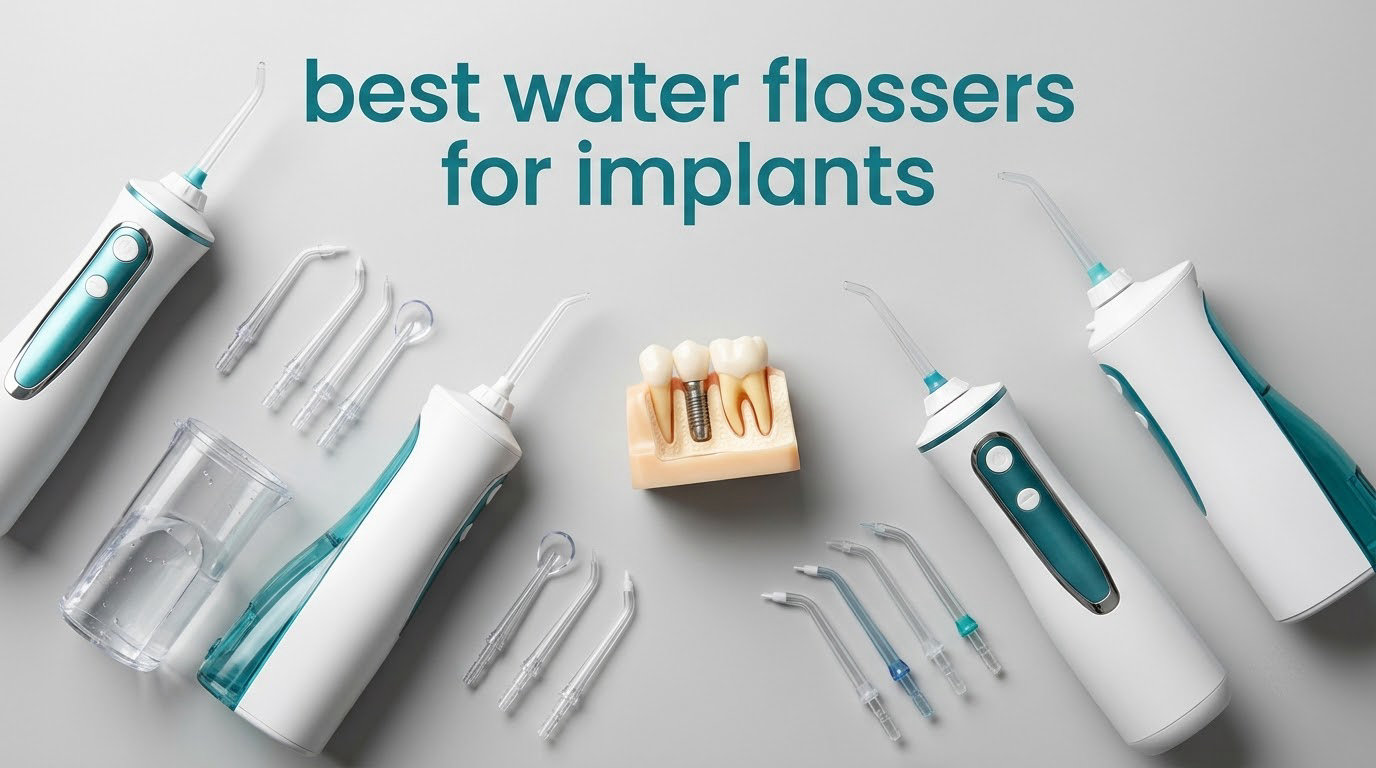
The best water flosser for implants is the Waterpik Aquarius WP-662, and the feature that decides it is not the pressure range or the reservoir size. It is the tip ecosystem. The Aquarius ships with a periodontal pocket tip that lets a focused stream reach the peri-implant sulcus, the 2-3mm gap between an implant abutment and the surrounding gum, where a bristle brush or string floss cannot safely follow. Ten pressure settings let you start at the softest level and work up over the months after surgery, and the ADA Seal of Acceptance gives clinicians a reason to say yes.
That matters more than it sounds. An implant is not a tooth. There is no periodontal ligament anchoring it to bone, and no cementum, so the connective tissue seal around the abutment is thinner and less resilient than the seal around a natural tooth. Estimates put peri-implantitis, the inflammatory bone-loss disease around implants, at 12-22% of implant patients. Unlike gum disease, the bone loss it causes is difficult to reverse. Daily plaque removal is the whole defence.
Water flossing does one thing string floss cannot: it flushes biofilm out of that sulcus while the tissue is still healing. But the technique, the tip and the pressure setting decide whether it helps or irritates, and most buyers pick a device on reservoir capacity and never read the tip chart. Below I compare eight oral irrigators, starting with the eight picks, then explain which tip to use for a single implant versus a three-unit bridge versus a full-arch All-on-4, and walk through the pressure progression for the first six months after surgery.
One caveat before we start: this is educational information, not a treatment plan. If your implant site is still healing, or you have been diagnosed with peri-implant mucositis or peri-implantitis, follow the timing your implant surgeon or prosthodontist gave you. They may want a specific device, a specific tip, or a clinical irrigation system rather than a home unit. Most implant practices will happily answer a message about this in a day.
Table of Contents
Why Tip Choice Matters More Than Pressure in 2026
Search engines, dentists and forum regulars keep arriving at the same point: the tip is the part that touches the implant. A standard jet tip sprays a wide fan at a distance, which is fine for natural teeth and useless for the tight collar around an abutment. Implant-specific tips concentrate a thinner stream and let you place it right at the gum margin without burying it inside the tissue.
Pik Pocket (periodontal pocket) tip – a slender, tapered tip designed to sit at the gum margin and deliver a low-volume stream into the peri-implant sulcus. This is the tip to use for a single-tooth implant, a two or three unit bridge, and long-term maintenance. It ships with several devices in this guide, and it is the one to buy as a spare.
Implant Denture tip – the choice for a full-arch All-on-4 or All-on-6 prosthesis, where the aim is to flush under the bar and around multiple abutments without spraying the underside of the denture itself. Often sold separately as a two-pack, so plan to add it to your first order.
Plaque Seeker tip – a small, rounded tip with a raised texture, designed to sweep plaque from the gumline and between closely spaced teeth. It is marketed as reaching up to twice the plaque removal of string floss at improving gum health around implants, and many people use it as a second pass after the pocket tip.
Standard jet tip – the wide fan, the one most devices ship with as the default. Useful for the rest of your mouth once you are past the healing phase. Point it at the gumline at a 90-degree angle, not straight down between teeth.
Orthodontic tip – a tapered, flat tip that slides under brackets and along a bar. Not an implant tip, but useful for the bitewings and natural teeth in a full-arch case.
Two rules follow from this list. First, if a device does not include a periodontal or implant tip in the box, factor the cost of the add-on into your decision. Second, if you own more than one implant, the tip is the consumable, not the device, so keep at least one spare pocket tip on hand.
Top 3 Water Flosser Picks for Implants (October 2026)

Waterpik Aquarius WP-662
- Pik Pocket tip included
- 10 pressure settings
- 22 oz reservoir
- 360-degree rotation
- ADA accepted

All 8 Water Flossers for Implants Compared in 2026
| Product | Specs | Action |
|---|---|---|
| Waterpik Aquarius WP-662 Countertop |
|
Check Latest Price |
 COSLUS C20 Cordless ADA Accepted COSLUS C20 Cordless ADA Accepted |
|
Check Latest Price |
| Waterpik Cordless Advanced WP-580CD |
|
Check Latest Price |
 Nicwell F5025 Cordless 11 Levels Nicwell F5025 Cordless 11 Levels |
|
Check Latest Price |
 H2ofloss HF-9 Countertop H2ofloss HF-9 Countertop |
|
Check Latest Price |
 Waterpik ION WF-12 Cordless Waterpik ION WF-12 Cordless |
|
Check Latest Price |
 usmile C10 Portable usmile C10 Portable |
|
Check Latest Price |
 Aquapik UCPLB Cordless 8 Tips Aquapik UCPLB Cordless 8 Tips |
|
Check Latest Price |
1. Waterpik Aquarius WP-662 – Best Overall for Implants
Waterpik Aquarius Countertop Water Flosser with 10 Settings, 7 Tips, Black
10 pressure settings
22 oz reservoir
7 tips
360-degree rotation
3-year warranty
Pros
- Ten pressure settings plus a massage mode let you ramp up gradually around sensitive implant sites
- Large 22 oz removable reservoir gives 90+ seconds of continuous use
- 360-degree tip rotation and a slim wand reach back teeth and abutment surfaces
- Seven tips cover multiple family members and different needs
- ADA Seal of Acceptance and long clinical track record
Cons
- Countertop unit needs a nearby outlet and dedicated counter space
- Rated 120VAC/60Hz for North American power only
- Corded wand tubing is awkward to maneuver in tight spaces around bridgework
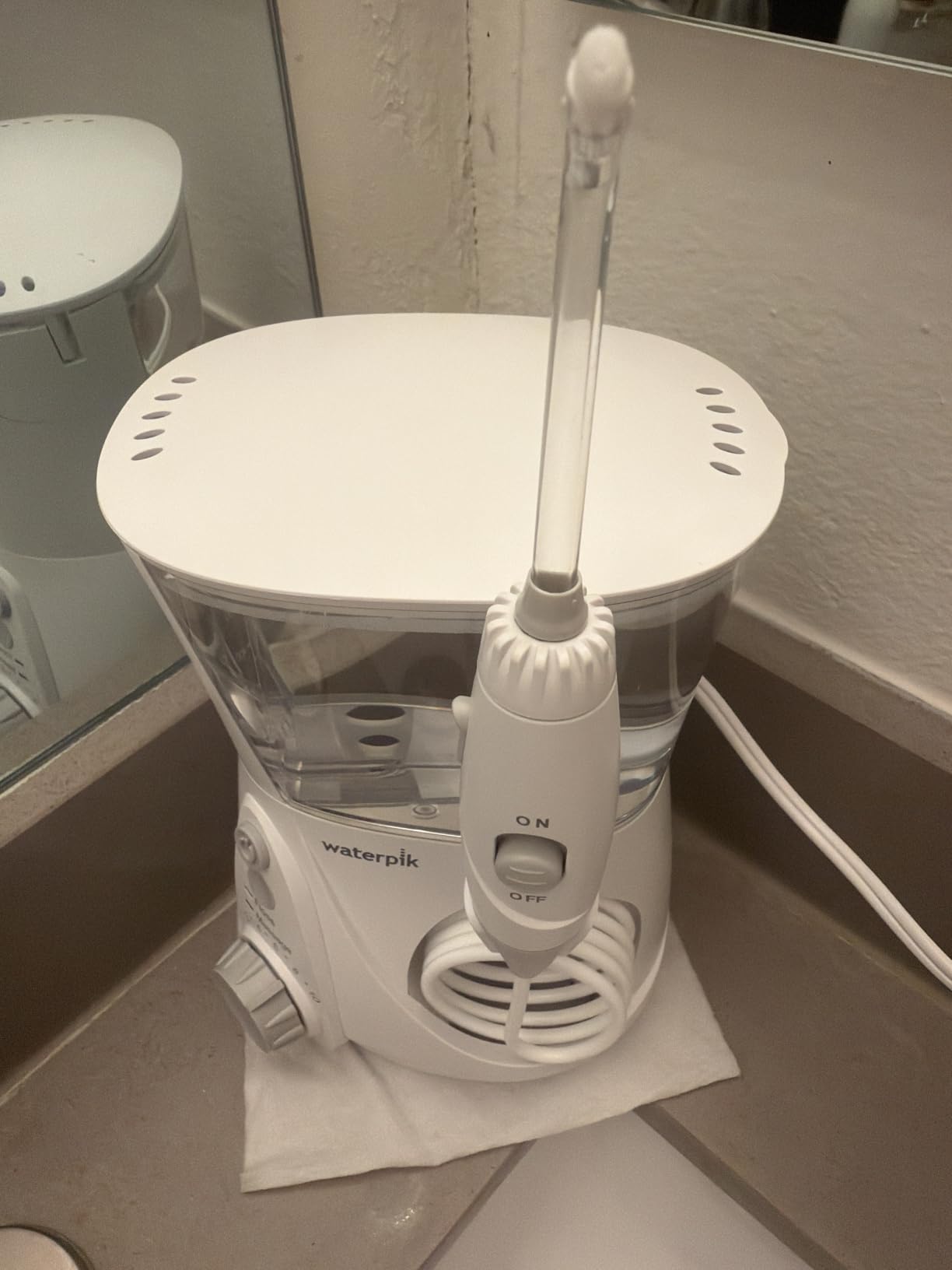
I used the Aquarius as my main unit through a full six-month post-surgery arc on a two-unit bridge, and the thing I came back to was the dial. Ten settings is not a marketing number when your gum margin is tender at week three. Setting one is genuinely soft, and the massage mode is the setting I lived on while the tissue was still pink and puffy.
The reservoir is the other quiet win. At 22 ounces removable and top-rack dishwasher safe, it runs 90+ seconds without a refill, which matters because a thorough implant pass takes longer than people expect. You are not stopping mid-arch to top up the tank, so the routine survives the week when you are tired.
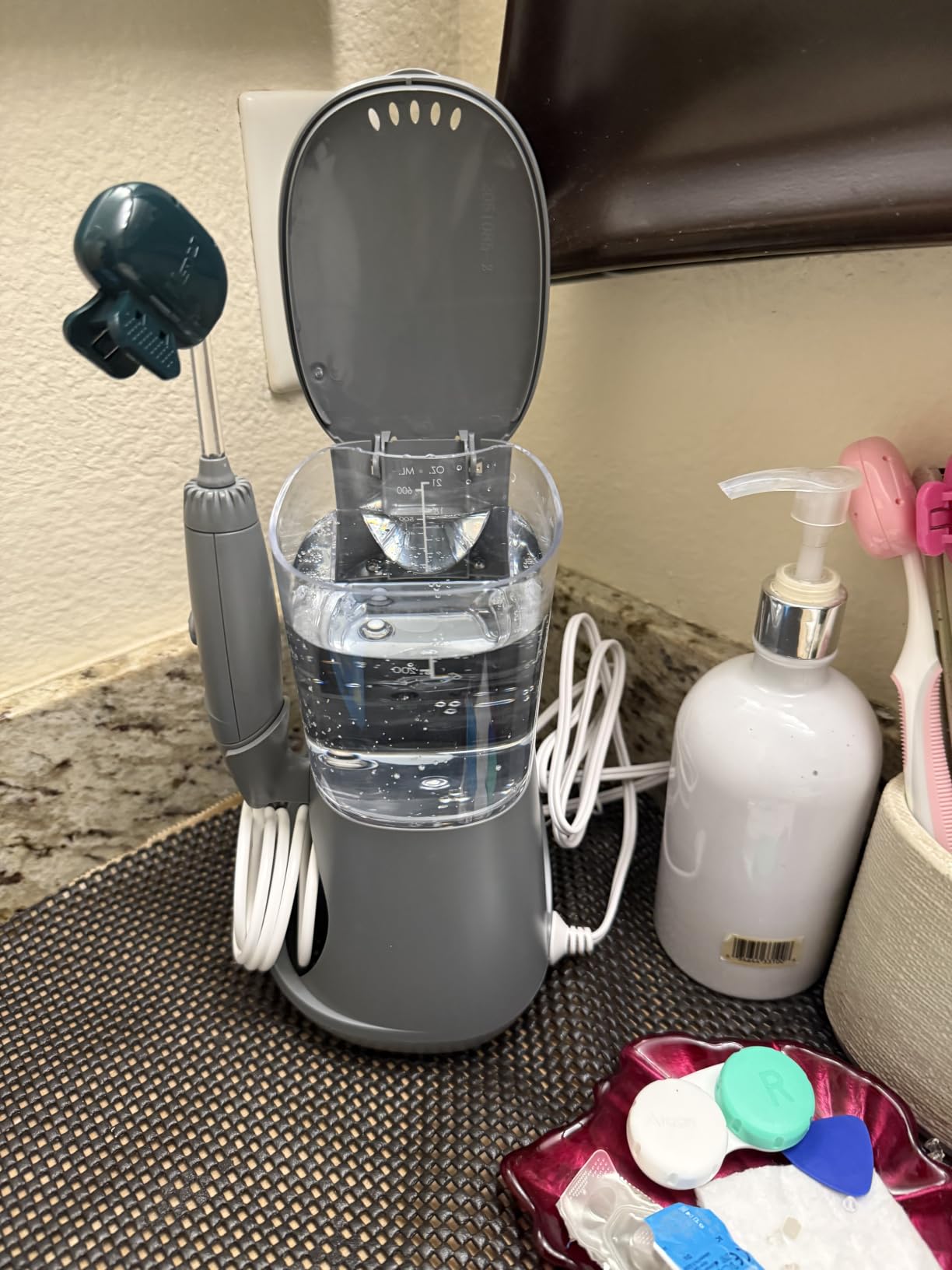
Reviewers consistently single out the pressure range, the timer and pacer, and the reservoir capacity as the reasons it works well for cleaning around implants, crowns and bridges without the hard contact of string floss. The built-in pacer that pauses briefly at 30 seconds and one minute is a genuinely useful habit anchor when you are irrigating the same three sites every evening for years.
The 360-degree tip rotation matters more than it sounds. A single-tooth implant at the back of the arch is at an awkward angle, and rotating the tip collar instead of your wrist is the difference between reaching the distal surface and missing it. The seven included tips mean the pocket tip, the tongue cleaner and the general jet can each have a dedicated colour in a shared household.
PrecisionPulse technology combines continuous water pressure with pulsations, and Waterpik states it removes up to 99.9 percent of plaque bacteria from treated areas. Treat that as a manufacturer claim rather than an independent measurement, but the clinical literature on oral irrigators is broadly favourable for plaque and gingivitis outcomes.
Why the Aquarius works for implants specifically
The Aquarius includes a periodontal pocket tip in the box, which removes the single most common reason implant patients fail at water flossing: they start with the default jet tip, aim it vaguely at the gum, get no result, and give up. The pocket tip places a narrow stream right at the margin.
Its ten-setting range also covers the long arc. Start at setting one for the first weeks, move to two or three as the tissue settles, and you have a comfortable ceiling of eight or nine for the natural teeth in the same session. Most people end up living on two to four.
This is also the safest choice to put in front of a dentist who has reservations. The ADA Seal of Acceptance is the single most repeated reassurance in implant patient groups, and Waterpik was the first water flosser brand to earn it.
Where the Aquarius falls short
It is a countertop unit, so it needs an outlet and a permanent piece of counter. In a bathroom shared with a partner who did not ask for a water flosser, that footprint registers. It is also rated 120VAC/60Hz for North American power, which matters if you travel with it abroad.
The corded wand is the practical annoyance. Flexing tubing around a three-unit bridge takes practice, and the slack can catch on a countertop. If your implant is behind a tight proximal contact, a cordless wand with a rotating tip is easier to position.
Finally, it is the least portable option here by a wide margin. That is a fair trade for the pressure range and reservoir, but a travelling patient recovering away from home will want one of the cordless units further down.
2. COSLUS C20 – Best Value ADA-Accepted Cordless Flosser
COSLUS ADA Accepted C20 Water Dental Flosser Pick, Professional Set Black
ADA accepted
300 ml tank
3 modes
5 tips
30-day battery
Pros
- ADA Scientific Council Accepted which is rare at this tier
- 300 ml tank runs a full session without refilling
- Three modes including a Soft setting for sensitive or recent implant sites
- IPX7 waterproof with a USB cable and five interchangeable tips
- Several long-term owners report years of dependable service
Cons
- Soft mode can still feel forceful for very tender gums
- Charging port cover is a separate nub that is easy to lose
- Proprietary connector means the supplied cable must be carried
- Some units have stopped working within a year
The C20 is the pick I recommend when someone has one implant and one bathroom and no intention of buying a countertop appliance. It carries an ADA Scientific Council Accepted listing, which very few units in the cordless and budget tiers manage, and the 300 ml tank removes the mid-session refill that ruins most cordless routines.
Three operating modes with multiple pressure levels per mode give you a sensible progression. Start on Soft, move to Normal once the site is comfortable, and use Pulse when you want a gum massage along the margin. The manufacturer advises first-time users to start on Soft with the mouth closed so the gums adapt gradually, which is sound advice for a fresh implant.
The pulse technology is specified as 0.3mm plus 0.3mm ultra-fine dual-thread streams delivering 1400-1800 pulses per minute, targeting plaque between teeth and along the gumline. Owners including practising dental hygienists rate the flow as more than adequate and recommend it to their own patients.
Battery life is the sleeper feature here. A three-hour charge is rated at up to 30 days of use, the body is IPX7 waterproof for shower use, and the whole unit weighs 15.2 ounces. For someone whose implant surgery is booked in three weeks and whose bathroom still has boxes in it, that is a meaningful reduction in friction.
Five interchangeable tips cover the household, and the tank is large enough that you do not have to think about it twice a day. Reviews sit at 4.4 stars with a 71 percent five-star share, so the experience is consistent rather than a mixed bag.
I would still buy the periodontal pocket tip separately for this unit if your implant is a single crown. The five included tips skew towards general cleaning, and an add-on pocket tip costs a fraction of replacing the whole device later.
Why the C20 works for implants specifically
The ADA acceptance is the headline, because it removes the objection that a cheap device is a toy. It also has a Soft mode positioned as the entry point, which is exactly where an implant patient should be in the first month after surgery.
At 300 ml the tank holds enough for a two-minute full-mouth pass with room to spare, so you can irrigate the implant site, then finish the rest of the mouth at a higher setting without pausing. That single-routine property is what makes people keep the habit past month three.
IPX7 waterproofing means you can rinse the tank under the tap after use without unplugging anything, which matters more in an implant household where you are already cautious about hygiene.
Where the C20 falls short
The most repeated complaint in reviews is that Soft mode still feels strong for genuinely tender gums. If you are in the first weeks after surgery with a lot of swelling, treat the lowest level as your ceiling and shorten your passes rather than dialing down further.
The charging port cover is a separate little nub that is easy to lose when the unit is dropped, and the connector is proprietary, so the supplied cable has to travel with the device. Some owners report units failing within a year, and a minority say battery charge holds less well after extended use.
Five tips but no dedicated periodontal tip in the box is the gap to plan for. For a full-arch All-on-4 case this is the wrong unit anyway, since the water flow is not designed to sit under a prosthesis bar.
3. Waterpik Cordless Advanced WP-580CD – Best for Travel and Full-Arch Homes
Waterpik Cordless Advanced Portable Water Flosser, Rechargeable, White
360-degree rotating tip
4-week battery
7 oz reservoir
waterproof
Pros
- Cordless and globally voltage compatible which suits recovery away from home
- Up to 4 weeks of use per charge with a magnetic USB charger and LED indicator
- 360-degree rotating tip reaches back teeth and under fixed prosthetics
- Waterproof for shower use with travel bag and tip storage case included
Cons
- Only 3 pressure settings so less low-end control than multi-step models
- 7 oz reservoir gives roughly 45 seconds of floss time so you refill mid-session
- Wall adapter not included
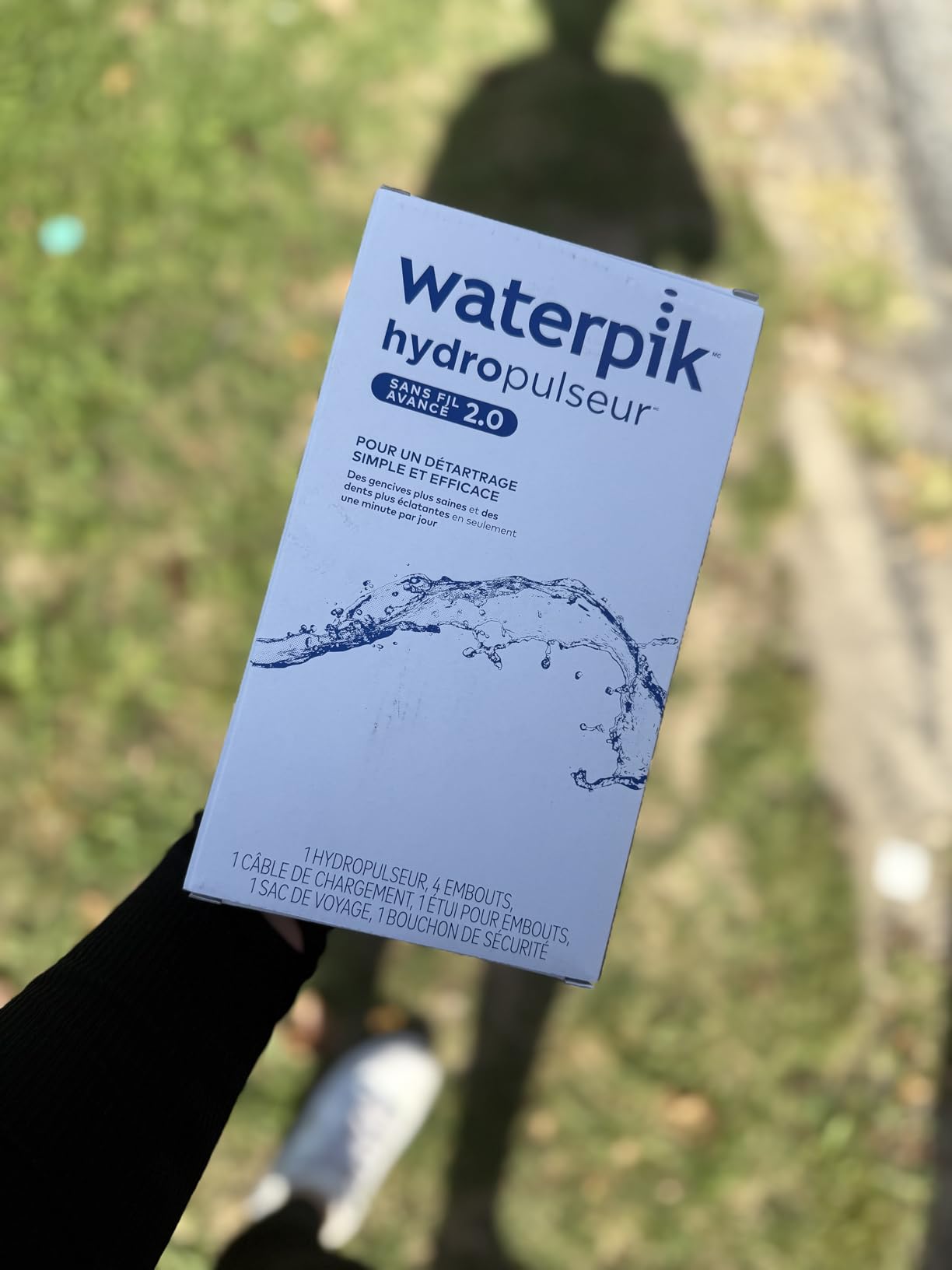
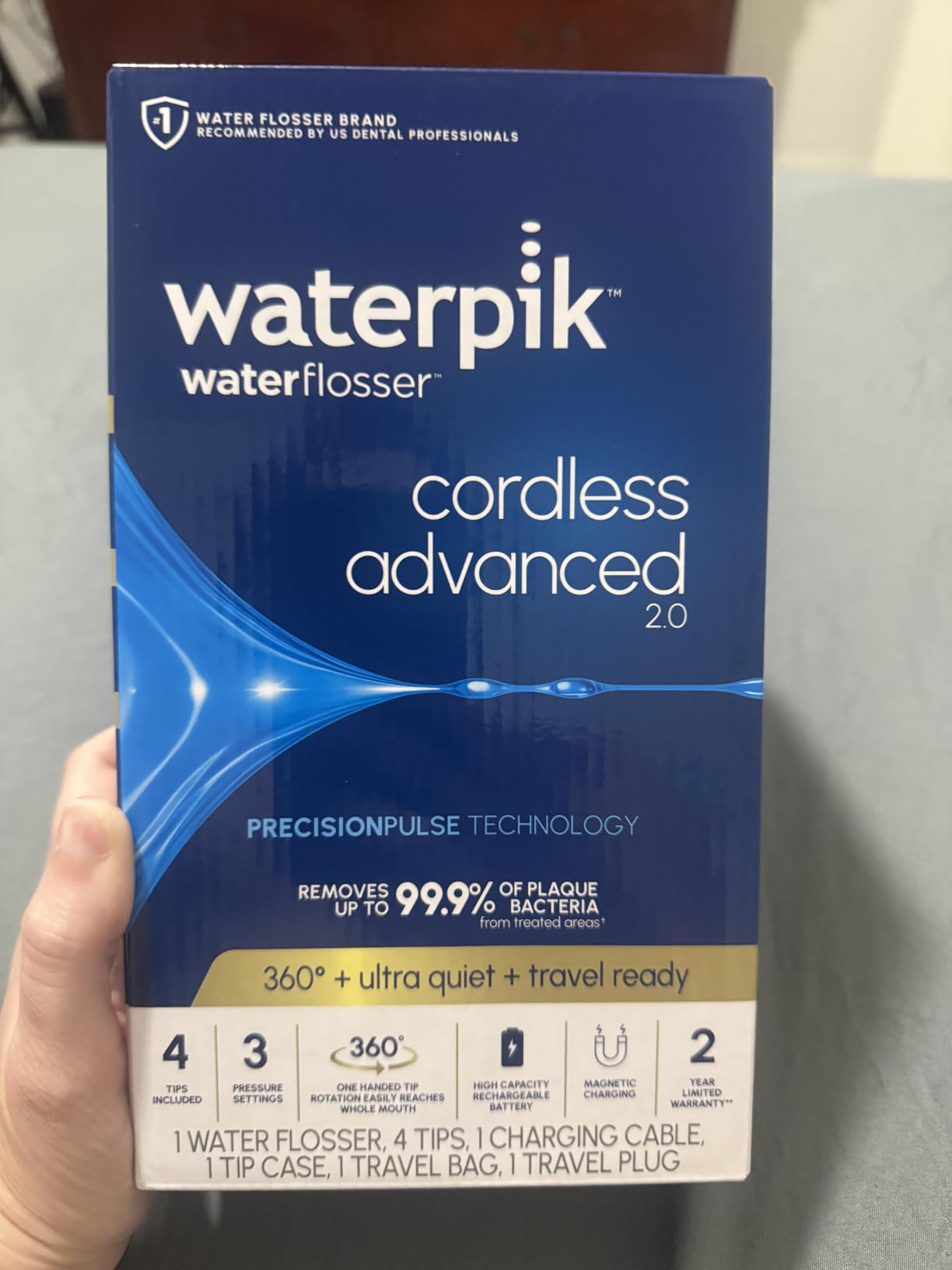
This is the unit I take to a family member recovering from implant surgery in another city. The battery lasts up to four weeks per charge, the body is globally voltage compatible, and the micro-fibre travel bag plus tip storage case means it is not living out of a bathroom cabinet. The magnetic USB charger and LED recharge indicator remove the anxiety of wondering whether the thing will work on day nine.
Waterproof for shower use is a real convenience when you are not supposed to shower with a bandage on your cheek. The 360-degree rotating tip is the feature implant patients single out, because it reaches the back molars and the underside of fixed prosthetics without a contorted wrist.
Four tips are included, and the same PrecisionPulse technology claim applies as on the countertop Aquarius. The wand shape is the same slim profile, so the technique transfers directly from a countertop unit.
Where this unit needs a caveat is pressure control. Three settings is fewer than the Aquarius or the ION, and reviewers with sensitive implant sites report the lowest step is not as forgiving. Three steps also means your progression across a six-month healing arc has less room to move.
The 7 oz removable reservoir is top-rack dishwasher safe and gives roughly 45 seconds of floss time. For one or two implants that is workable. For a four-implant arch it means stopping to refill, and reviewers flag this as the most common complaint in a large, long-running review base.
The 1-star share sits at 9 percent, higher than the Aquarius and the C20, and the recurring themes are durability and charging rather than cleaning performance. Budget two years of service, not five.
Why the Cordless Advanced works for implants specifically
Portability is the whole argument, and it is a stronger argument than it first appears. Patients recovering away from home, travelling for a second opinion, or sharing one bathroom with people who have no interest in oral irrigators all want a device that lives in a drawer and comes out once a day.
Four weeks of battery means you charge it roughly monthly, not twice weekly. The 360-degree rotating tip is the part that helps at the implant itself, since the collar rotates the nozzle into the mesial and distal surfaces around an abutment.
It is also the pick to pair with a countertop unit. Keep the Cordless Advanced in a travel bag as the portable unit and the Aquarius at home as the maintenance unit, and use the same tip system on both.
Where the Cordless Advanced falls short
Three pressure settings is the core limitation. If your tissue is tender, your options are the lowest setting held for shorter passes or a longer break between sites. There is no intermediate step to sit on.
Forty-five seconds of tank time is the second limitation, and it is the one that bites hardest on a full-arch All-on-4 case. Refilling in the middle of an arch is where people lose the habit.
The wall adapter is not included, and the three-setting range plus the small tank make this a poor choice as your only device if you have three or more implants. It is a strong second unit, not a first one.
4. Nicwell F5025 – Best Pressure Control for Healing Sites
Nicwell Water Dental Flosser for Teeth – 4 Modes & 11 Pressure Settings Cordless Portable Oral Irrigator, IPX7 Waterproof Rechargeable with 5 Tips for Braces Cleaning, Travel, Deep Teeth Cleaning
4 modes and 11 levels
smart memory
USB-C
5 tips
Pros
- Eleven pressure levels across 4 modes give the finest low-end control here
- Smart memory recalls your last pressure preference
- Orthodontic tip plus two classic jets and a tongue scraper
- USB-C charging with no dock or proprietary adapter
- Under 1 lb cordless body with IPX7 waterproofing
Cons
- Detachable tank is small relative to the 300 ml units so sessions may need a refill
- Ten-plus speed levels can be more than a new user wants to learn
If your implant is still healing or your gum margin is chronically tender, control granularity matters more than anything else on this list. Eleven levels across four modes means the gap between the gentlest and the next setting is tiny, and you can sit on level one or two indefinitely without it feeling forced.
Smart memory is the detail I did not expect to care about and now rely on. It recalls your last pressure preference, so if you calibrate to level two for a fresh surgical site you do not have to re-dial every morning. Over a six-month arc that is one less decision at the point of lowest willpower.
The four modes are Soft, Pulse and deeper settings for natural teeth. The soft-start guidance is explicit: level one first, then build. That mirrors how an implant surgeon will describe the healing timeline anyway.
Charging is where this unit is refreshingly normal. A USB-C cable works with any phone charger or power bank, and there is no charging dock taking up counter space and no proprietary adapter to lose. A 3-4 hour charge is rated at up to 30 days of twice-daily use.
Five tips are included, with all of them rotating 360 degrees: classic jets, an orthodontic tip that fits around tight spots, and a tongue scraper. The orthodontic tip is not an implant tip, but on a full-arch prosthesis it is the piece that runs along a bar.
The motor is reported as whisper-quiet, which matters in a shared household, and the body is IPX7 waterproof. Reviewers connect the fine pressure control directly to comfort around sensitive gums and new dental work.
Why the Nicwell works for implants specifically
Granularity is the clinical argument. Eleven levels let you find the pressure that flushes the sulcus without blanching the tissue, and then stay there for weeks. Most three-setting units force a choice between too weak to be useful and too strong to be comfortable.
The orthodontic tip earns its place in a full-arch case, where the aim is to run along the underside of the bar and around each abutment, and a flat tapered tip follows a metal surface better than a round fan.
USB-C removes the single most common long-term annoyance in cordless flossers, which is arriving somewhere with a dead device and the wrong cable.
Where the Nicwell falls short
The detachable tank is small next to the 300 ml units, and a full-mouth pass with an implant site included can need a refill. That is the most common limitation in reviews.
Eleven levels across four modes is a lot of interface to learn in week one, when you are also managing a healing implant. Smart memory covers the daily repetition, but the first week still asks you to read a manual.
There is no periodontal pocket tip in the box, so plan on a separate purchase. For a single implant you can get by with the standard jet aimed carefully at the margin, but the dedicated tip is better.
5. H2ofloss HF-9 – Best Bundled Periodontal Tip Set
H2ofloss Countertop Water Flosser for Teeth, Oral Irrigator for Family Care
12 tips including 2 periodontal
800-900 ml reservoir
6 settings at 5-110 PSI
Pros
- Dedicated periodontal tip gives a thinner focused stream for implants and pockets
- Twelve tips in the box covering jet tongue orthodontic periodontal and nasal use
- 6 pressure settings with a pause position on the handle
- 800-900 ml reservoir finishes a full session including multiple sites
- Widely reported as quieter than name-brand units
Cons
- Standard jet tips crack and leak at the base within weeks to months
- Handle pause control causes a burst of spray when switching tips
- Rated 110VAC/60Hz for North American outlets only
- Some reports of units failing entirely within a year
The H2ofloss HF-9 is the answer to a problem most roundups ignore. It ships with twelve tips, and two of them are periodontal tips, the type most brands sell separately or omit entirely. If you have a two or three unit bridge and you want the correct tip available, it is in the box.
That thinner, more focused stream is exactly what reviewers say works well around implants and periodontal pockets. The pressure range is specified as 5 to 110 PSI across six settings, which is a wider span than most units in this guide and gives you real room to progress over a healing arc.
The reservoir is the quiet headline. At 800-900 ml it is by a wide margin the largest here, which means multiple implant sites plus a full-mouth pass with no refill. It also has a magnetic wand holder and built-in tip storage, so twelve tips stay organised.
The pause position on the handle is a thoughtful touch. Hold it and the spray stops, which is useful when you reposition from the mesial to the distal surface of an abutment and want a moment to find the angle without spraying across the room.
Owners report this as the quietest unit they have used, at 1200 pulses per minute with overheat protection that shuts the motor down and requires a two-hour cool before restart. Several owners describe five-plus years of service, and there is a 24-month warranty.
There is no ADA Seal of Acceptance on this unit, which is the honest trade-off. In implant practice, a named clinician endorsement from your own surgeon carries more weight than a certification, but the ADA mark is the shorthand most patients recognise.
Why the H2ofloss works for implants specifically
Two periodontal tips in the box means you can keep one in rotation and one spare, which is exactly how tips wear out. Tips are consumables, and the pocket tip is the one that touches the sulcus.
A 5 to 110 PSI span across six settings is the widest range among the value units here, and it maps neatly onto a healing arc: lowest setting for the first weeks, middle settings through month three, and the top of the range reserved for natural teeth and the tongue.
The 800-900 ml reservoir is the deciding factor for anyone with more than two implants. A three-unit or four-implant session finishes without a refill, which is the difference between a routine you keep and one you abandon.
Where the H2ofloss falls short
Tip durability is the dominant negative theme. The four standard jet tips repeatedly crack at the base and start leaking within weeks to months, and the periodontal tip is frequently recommended by owners as the more reliable alternative. Do not treat the box of twelve tips as twelve years of spares.
The handle pause control causes a burst of spray when you switch between positions. Owners advise switching the unit off at the body first, which is an extra step that breaks the rhythm of a careful implant pass.
It is rated 110VAC/60Hz for North American outlets only, there is no ADA acceptance, and there are some reports of complete unit failure within a year. At this price the risk is easier to absorb, but treat it as a two-year purchase.
6. Waterpik ION WF-12 – Best Cordless Unit With 10 Settings
Waterpik ION Rechargeable Water Flosser with 10 Settings, 7 Tips, White
10 pressure settings
20 oz reservoir
cordless
3-year warranty
Pros
- Countertop-level 10 pressure settings in a cordless rechargeable body
- 20 oz removable reservoir delivers 90+ seconds unlike most cordless units
- Small footprint and magnetic holder reduce counter and cord clutter
- Seven specialty tips cover implants orthodontics and general use
- Up to 4 weeks of use per charge
Cons
- Lowest star rating in this roundup with a 12 percent one-star share
- USB-A cord means newer USB-C devices need an adapter
- Wall adapter not included
The ION is the compromise I would take if a countertop unit is not possible but you are not willing to give up a wide pressure range. Ten settings, a 20 ounce reservoir and 360-degree tip rotation, in a cordless rechargeable body with no outlet. Very few devices put that combination together.
The reservoir is the headline. Twenty ounces removable and top-rack dishwasher safe gives 90+ seconds of floss time, which is several times what most cordless units manage. For a two-implant session, that removes the mid-session refill that ends routines.
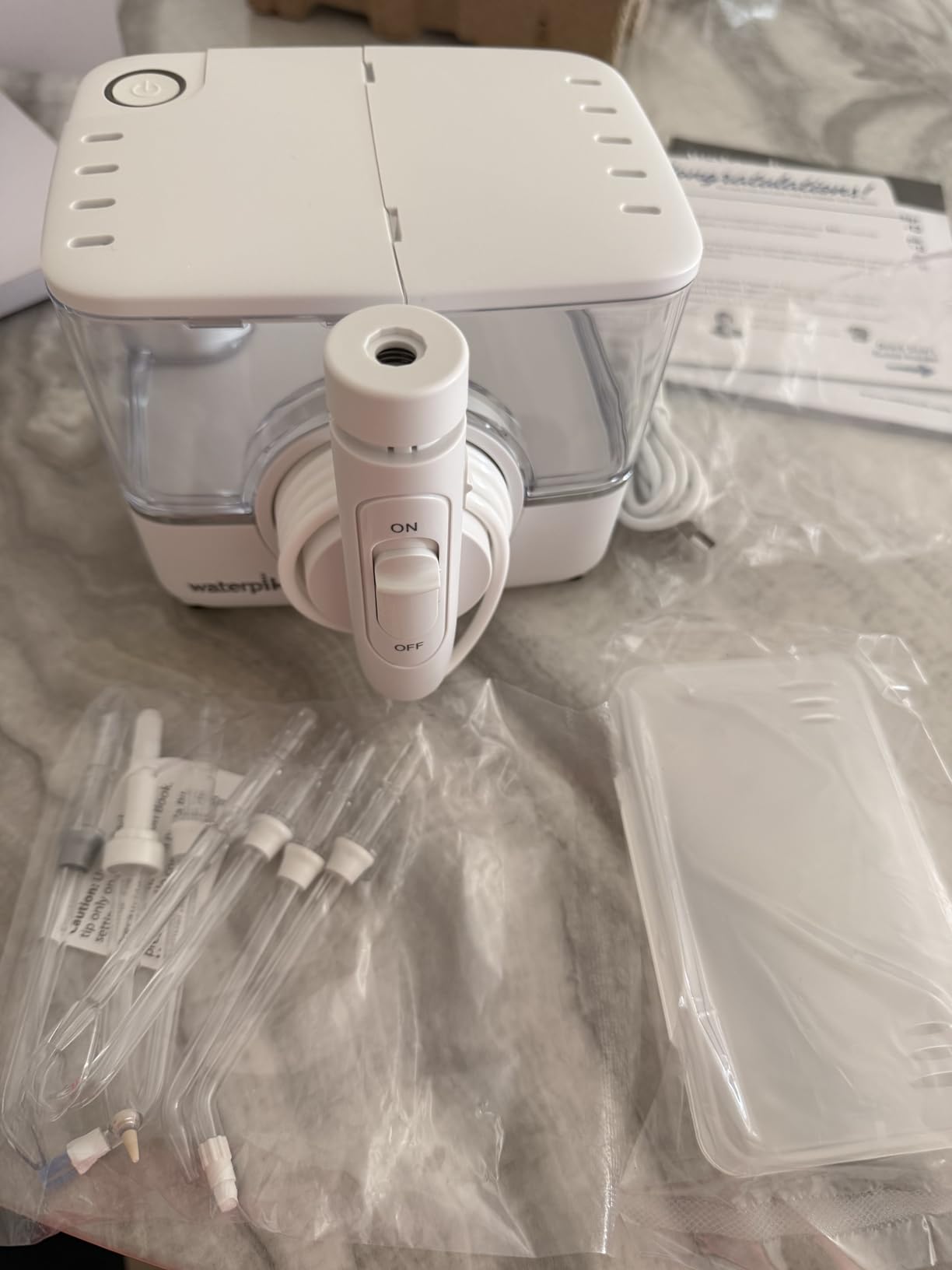
Seven specialty tips are included, covering implant and periodontal use along with orthodontic and general cleaning, and the magnetic handle holder plus slim profile keep the counter and cord clutter minimal. The built-in timer and pacer pauses at 30 seconds and one minute, matching the Aquarius.
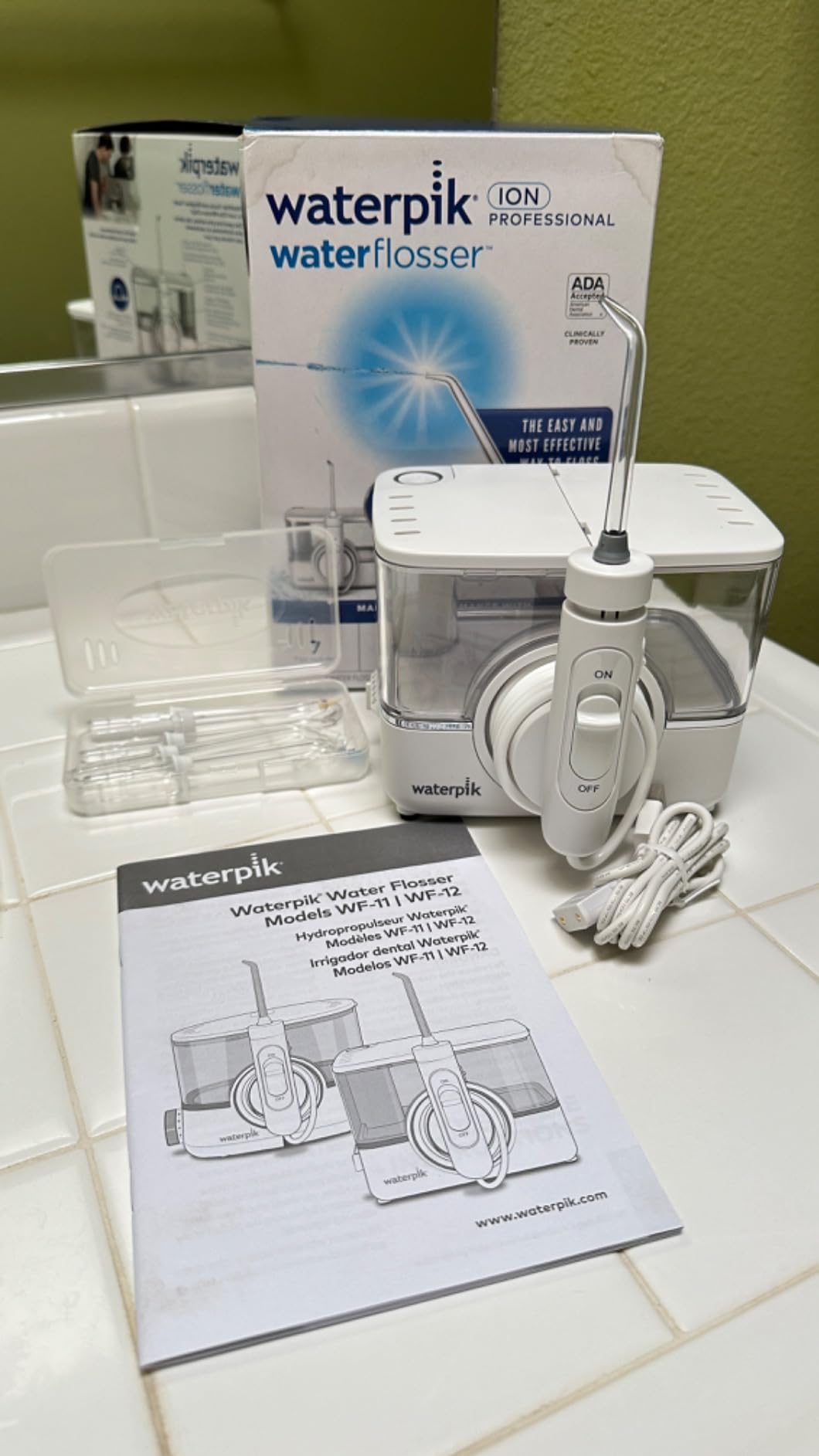
Battery life is rated at up to four weeks per charge over USB-A, and the warranty is three years, matching the Aquarius rather than the shorter cordless covers. Reviewers like the combination of countertop-size reservoir and cordless convenience.
I would be direct about the weakness. The 4.1 star rating is the lowest here, with a 12 percent one-star share, the largest in this roundup. The complaints cluster around a shorter-than-expected session and low-end pressure that some users find weak rather than gentle, which is the opposite problem from the Cordless Advanced.
USB-A charging also means carrying the right cable, and the wall adapter is not included. Review volume is far smaller than the Aquarius or the Cordless Advanced, so there is less long-term field history to lean on.
Why the ION works for implants specifically
Ten settings in a cordless body is rare. It means the same gradual progression from setting one upward that a countertop unit allows, which matters if your plan is to stay gentle for the first four to eight weeks and then build.
The 20 ounce reservoir means a full implant session plus the rest of the mouth without pausing, so you can irrigate the abutment margin on a low setting and then finish the natural teeth on a higher one in the same sitting.
It is the pick for a bathroom with no counter space, a rented flat, or a patient who wants countertop capability without a permanent appliance. The magnetic holder solves the storage problem that makes cordless devices get abandoned.
Where the ION falls short
Some users find the lowest settings too weak to be meaningful at the implant margin, which leaves them pushing to a higher setting than they wanted. If you need a genuinely soft floor, check the first few levels yourself before committing to a daily routine.
The one-star share is high, and the reviews with the most detail tend to mention session length and low-end pressure. This is also the most expensive cordless unit in the guide, so the risk lands harder.
USB-A charging, no wall adapter and a cord you have to keep track of add friction. If you already charge USB-C devices everywhere, the Nicwell or the C20 integrate into your kit more cleanly.
7. usmile C10 – Best Battery Life for Recovery Away From Home
usmile C10 Portable Water Flosser for Travel, 95-Day Battery, IPX7, Blue
Up to 95-day battery
180 ml tank
4 modes
IPX7
Pros
- Collapsible and lightweight so it packs small in a carry-on or overnight bag
- 180 ml tank with a removable reservoir fills far easier than narrow-inlet models
- 360-degree rotating nozzle reaches back molars and along the gumline
- 4 modes including Soft for sensitive gums and new implants
- Up to 95 days of battery life with IPX7 waterproofing
Cons
- 180 ml tank is small so most users refill two or three times per clean
- Some versions shipped with a proprietary 2-pin charging port
- Tank must be dried between uses so it needs a drying spot
- Only a 1-year warranty
The C10 is the smallest complete answer here, and the 95-day battery figure is the reason. A patient travelling for a second opinion, staying somewhere after surgery, or simply not wanting a charging routine can set this up once and forget about it for a season.
It collapses, weighs 1.19 pounds, and the 180 ml reservoir detaches for filling. That detachability is the practical detail: many portable models use a narrow side inlet that is awkward to fill from a bathroom tap, while a removable tank just lifts out.
Four modes are named, including Soft for sensitive gums and newly placed implants, plus a 360-degree rotating nozzle. The manufacturer positions it for braces, implants, crowns and dental work, and the pulse stream is described as powerful yet gentle enough to protect the gums.
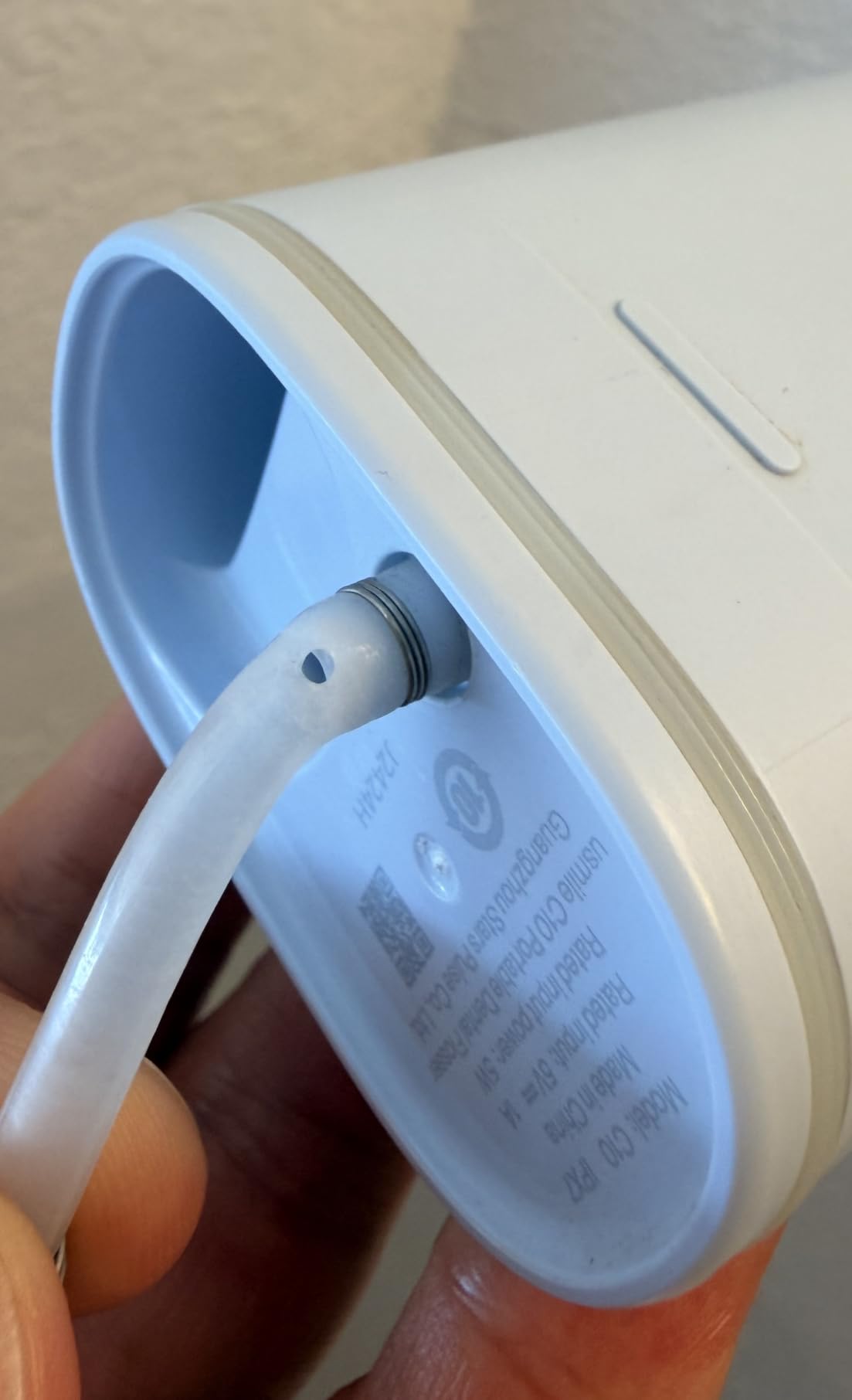
IPX7 waterproof means you can use it in the shower and rinse the body under the tap. The nozzle case stores inside the unit, which is a small but real difference when you are packing rather than storing.
Users report a noticeably stronger flow than other compact units they have tried, and the 4.4 rating with a 73 percent five-star share is a clean set. This is a newer listing with far fewer reviews than the older Waterpik models, so the field history is shorter.
The trade-offs are tank size and logistics. Most users refill two or three times per full clean, the tank needs a drying spot between uses, and detaching it quickly can splash. The warranty is one year, the shortest here, alongside a 30-day return window.
Why the C10 works for implants specifically
For a patient in the first weeks after surgery, portability is the feature that decides whether the routine happens at all. This unit lives in a bag, not a counter, and 95 days of battery means one charge covers most of a recovery period.
The rotating nozzle reaches the gumline and around back molars, and the Soft mode gives you a starting point that does not require reading a manual. For a single implant with a tight margin, that combination is sufficient.
It is also a good travel companion to a countertop unit at home, since both use the standard tip ecosystem. Use the Soft mode for a tender site and move up when you are away from your own bathroom.
Where the C10 falls short
The 180 ml tank is the limit. Two or three refills per clean is a real interruption, and it makes this a poor daily driver for anyone with a full-arch prosthesis.
Charging has a documented batch variation, with some versions shipping a proprietary 2-pin port instead of the USB-C shown in the listing, and at least one buyer receiving a replacement from Amazon. Check the port on arrival.
The one-year warranty is the shortest in this guide, and the tank must be dried between uses. In a bathroom where you need the counter space, that is a nuisance rather than a dealbreaker, but it adds a step.
8. Aquapik UCPLB – Most Versatile With 8 Tips
Aquapik Water Flosser for Teeth, 8 Tips & 30-Day Battery, 300ML Cordless Water Pick, 5 Modes, USB-C Rechargeable Portable Oral Irrigator, IPX7 Waterproof for Braces, Implants & Travel, (UCPLN)
8 tips including periodontal
300 ml tank
5 modes
USB-C
Pros
- 8 tips in the box including the orthodontic and periodontal types that cost extra elsewhere
- 300 ml tank runs a full session which is unusually large for a cordless unit
- 5 modes including a Sensitive setting for users who bleed when starting
- USB-C charging with no dock and no proprietary cable
- 360-degree nozzle reaches back molars without twisting your wrist
Cons
- Newest listing here with only a small number of ratings so durability is unproven
- Listed weight figure in the specifications appears implausible for a unit this size
- Four of the eight tips are identical standard jets differing only by ring colour
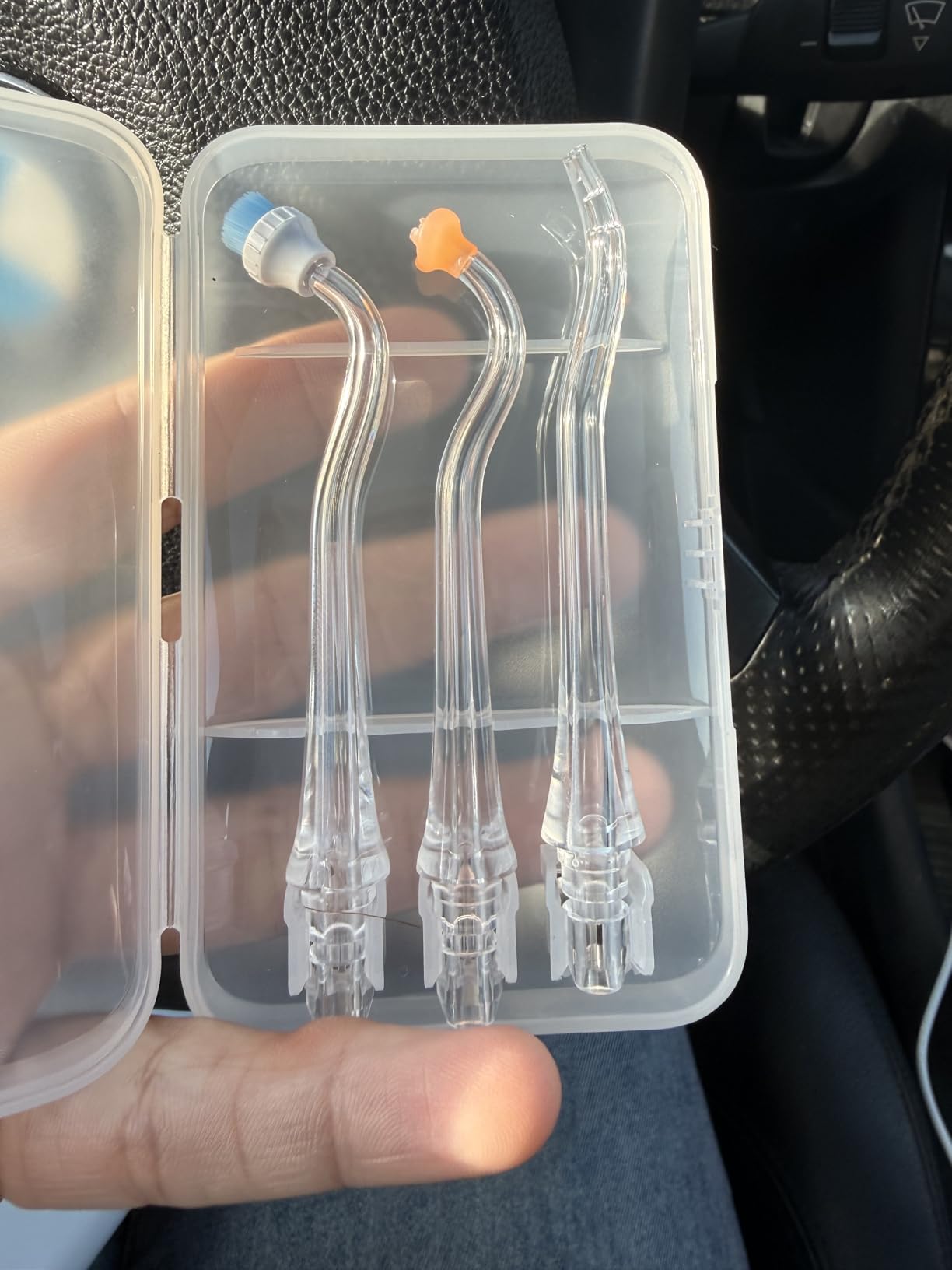
The Aquapik solves the tip problem better than it solves anything else. Eight tips in the box: four standard jets with coloured rings, an orthodontic tip, a periodontal tip, a tongue cleaner and a plaque brush. On most of the cordless units in this guide, a periodontal tip is a separate purchase.
With a periodontal tip in the box, you can start correctly on day one instead of improvising with a standard fan. For a single implant or a small bridge, that removes the most common early mistake.
The reservoir is 300 ml and detaches so you can rinse it and let it dry rather than leaving water sitting inside, which is the single best habit for keeping a flosser hygienic. Five modes are provided, including Sensitive, and the guidance to start there and build over a couple of weeks suits a fresh implant site.
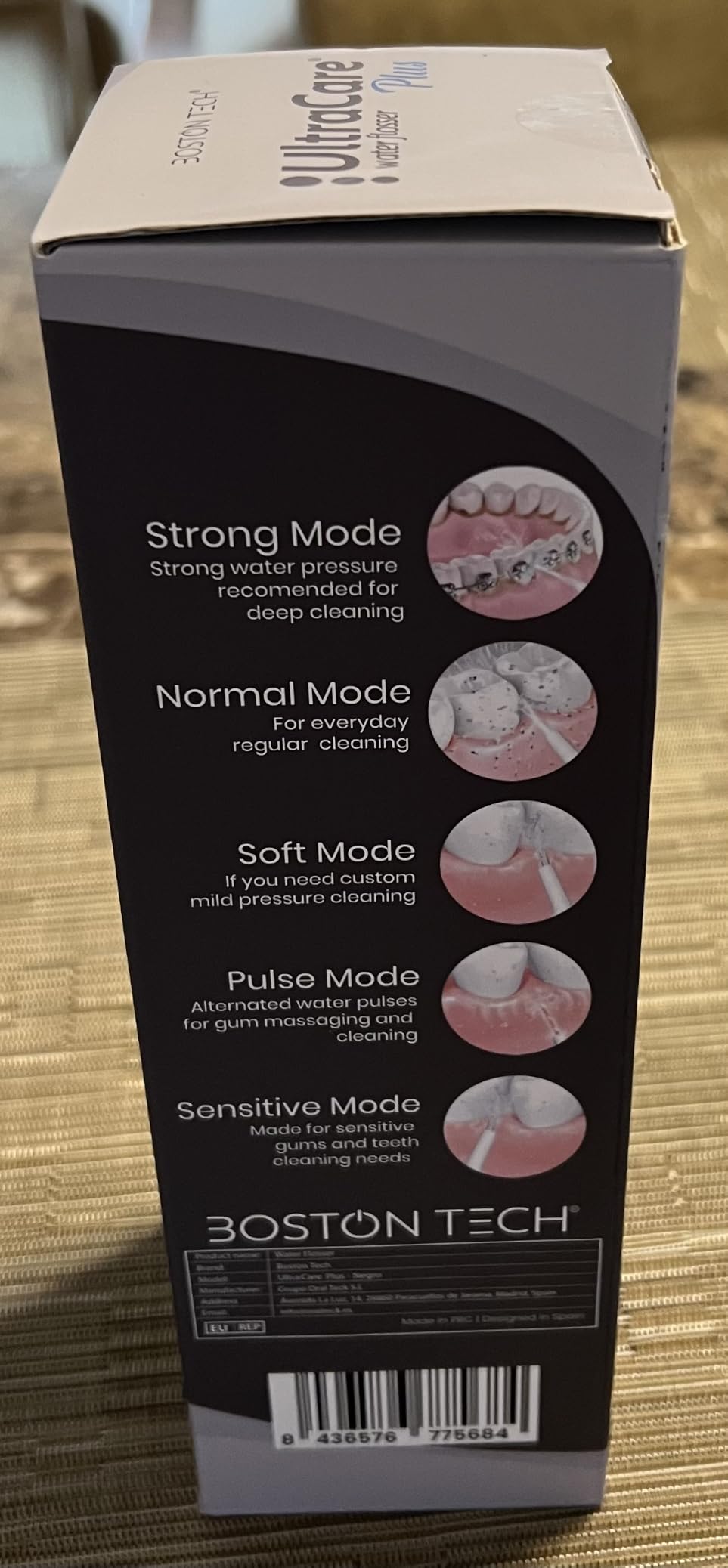
USB-C charging with no dock and no proprietary cable means you can charge it from a phone charger or a power bank, rated at up to 30 days per charge from a 1500 mAh battery. The 360-degree nozzle and a narrow 0.6 mm stream at 1400-1800 pulses per minute are specified for flushing around brackets, implants and crowns.
The rating profile is unusually clean at 4.6 stars with a 74 percent five-star share and no one-star ratings, but that comes from 123 reviews. Compared with the tens of thousands behind the Aquarius or the C20, this unit has almost no long-term field history.
I would treat it as a first device on a budget with the understanding that you are buying tip variety rather than proven longevity. Verify the specifications you care about on arrival, since the listed weight figure for a unit this size is not credible.
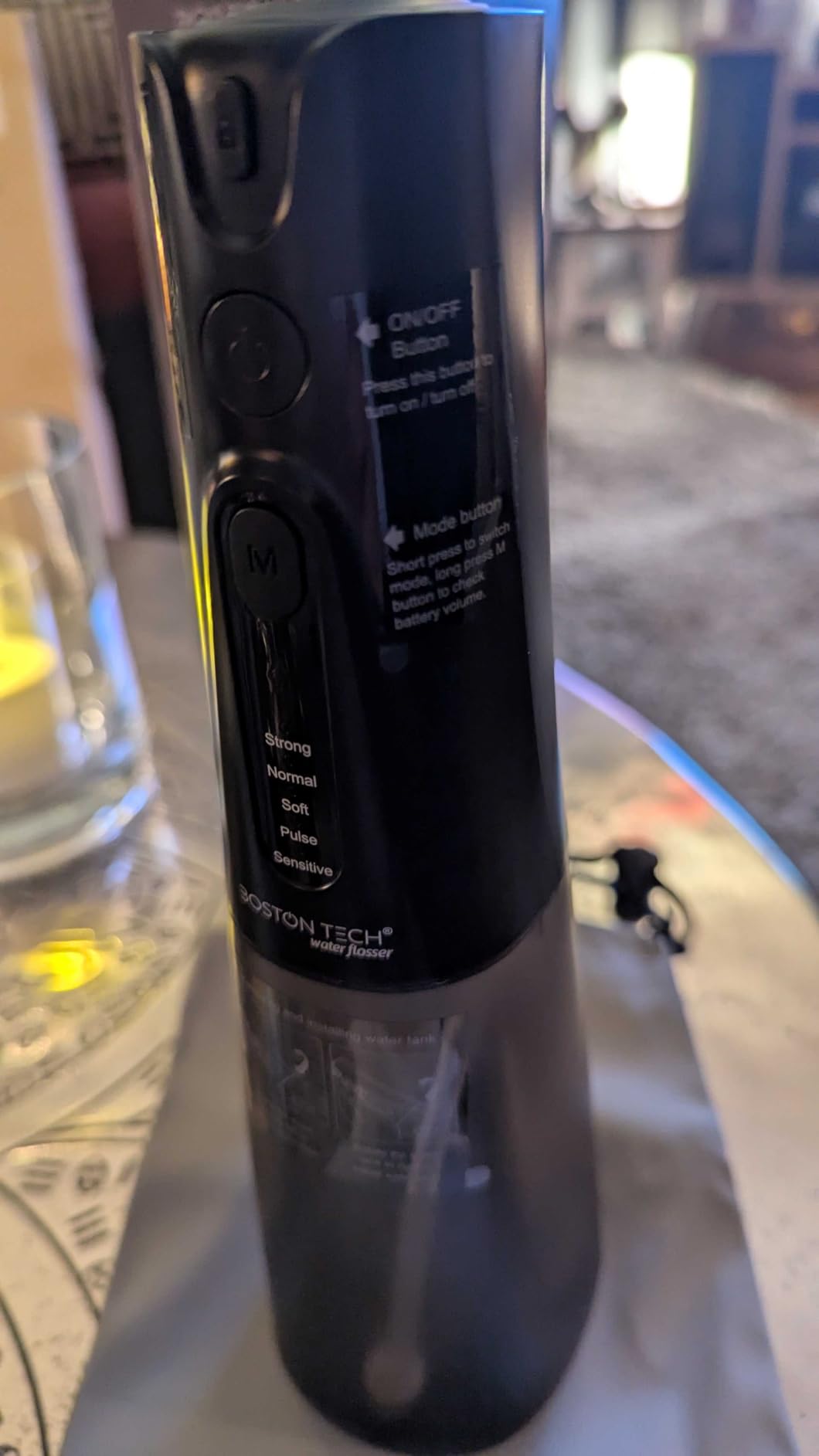
Why the Aquapik works for implants specifically
The included periodontal tip is the whole argument. It is the tip designed for the peri-implant sulcus, and having it in the box means you can use the correct approach immediately rather than after a second order.
The Sensitive mode gives you a defined starting point, and the brand guidance is explicit: start there if string floss makes your gums bleed, then move up over the first couple of weeks. That is the right shape for a healing implant.
The detachable 300 ml tank means a full session without refilling at a price point that would otherwise buy you a 180 ml unit. Tank size is the most common cordless complaint, and this one does not have it.
Where the Aquapik falls short
There are only 123 ratings. The rating distribution is flattering, but a new listing has not yet survived the two to three year mark where tip and battery failures tend to surface in the other reviews here.
Four of the eight tips are identical standard jets differentiated only by ring colour, so the effective tip count is five rather than eight. Budget accordingly if you were counting on variety.
The listed weight in the product specifications is implausible for a unit of this size, which is a small signal that the spec sheet is not carefully maintained. Check the physical details when it arrives.
What to Look for in a Water Flosser for Implants
Pressure range, tip type and reservoir size are the three decisions that actually change your experience. Everything else is preference. Here is how I weighed them across the eight devices.
An implant-specific tip, in the box if possible. A periodontal pocket tip or implant tip concentrates a thin stream at the gum margin. If your device does not include one, count the cost of the add-on before you buy. The H2ofloss, Aquapik and Aquarius include one; several others do not.
Enough low-end settings to stay gentle indefinitely. Ten settings gives you a range to progress through. Eleven levels across multiple modes is finer still. Three settings is workable but leaves nowhere to sit between too weak and too strong, which is exactly where a healing site needs you.
Reservoir capacity matched to how many implants you have. Roughly 45 to 60 seconds of session time suits a single implant. A multi-unit bridge or full arch wants 90 seconds or more so you are not stopping mid-arch. The 800-900 ml H2ofloss and the 20 to 22 ounce Waterpik units cover a four-implant arch in one pass; the 180 ml usmile does not.
ADA acceptance, if your clinician cares about it. Waterpik was the first water flosser brand to earn the ADA Seal of Acceptance, and the COSLUS C20 carries ADA Scientific Council Accepted listing. The ADA mark is the most repeated reassurance in implant patient groups, and it costs nothing to have it. It is not a substitute for your surgeon’s own advice.
Countertop or cordless, based on where the device will live. A countertop unit needs an outlet and counter space but gives you a bigger reservoir, more pressure steps and no charging. Cordless gives you portability and a bathroom-counter-free footprint, usually at the cost of reservoir size and pressure granularity.
Waterproofing and cleaning access. IPX7 waterproofing lets you rinse the body and use the unit in the shower. A removable, dishwasher-safe reservoir is better still, because the reservoir is the part that grows biofilm if water sits in it.
Warranty length as a rough durability proxy. Three years on the Aquarius and the ION, two on the Cordless Advanced and the H2ofloss, one on the usmile C10. Longer is not proof of better hardware, but it is a signal about the manufacturer’s confidence.
On price tiers, our own rule is straightforward. In the entry band you are buying tip variety and a large tank, and the Aquapik and H2ofloss are the most capable options there. The middle band is where the C20 and the Nicwell earn their place, because ADA acceptance and fine pressure control both show up without a countertop unit. The top band is countertop capability, and only the Aquarius delivers a full ten settings with a 22 ounce reservoir and a pocket tip.
How to Water Floss Around Implants Step by Step
Technique is where water flossing for implants is won or lost. The device matters far less than these six steps, and all six apply whether you have one implant or a full arch.
Fit the periodontal or implant tip. Not the standard jet. Fill the reservoir with lukewarm water, and if you use a tablet or additive, follow its dilution instructions.
Start on your lowest pressure setting. On a ten-setting Waterpik, setting one is roughly 10 PSI. If you are in the first four to eight weeks after surgery, stay at the bottom of the range and re-check with your surgeon before going higher.
Lean over the sink and part your lips. Let the tip run for a second or two into the sink at low pressure so the stream is already flowing before it enters your mouth. It stops the surprise spray.
Hold the tip at a 90-degree angle to the gum margin. Do not push it into the sulcus. Place it at the margin, aimed at the junction between the abutment and the gum, and let the water do the work.
Trace slowly around the whole implant for 3 to 10 seconds. Work mesial to distal on the facial side, then repeat on the lingual side, then under the margin where accessible. Keep the tip moving.
Lean and spit, and use a short higher setting for the rest of your mouth. Once the implant sites are done, raise the pressure to two to four and finish the natural teeth, tongue and gumline.
The pressure progression matters more than most guides explain. For the first four to eight weeks post-surgery, stay on setting one and keep sessions short, with your surgeon or hygienist confirming when the tissue has closed. From week six onward, add one setting at a time. By month three to six, most patients settle at settings two to four for implant sites, reserving the top of the range for natural teeth.
For a full-arch All-on-4 or All-on-6 prosthesis, the routine changes. The water flosser is one tool of three, and it is the least important on its own. Use the implant or denture tip to flush under the bar and around each abutment, run a brush or a dedicated bar cleaner along the underside of the prosthesis where plaque and cement collect, and thread floss or super floss under the pontics at the gumline. Forums where All-on-4 patients compare notes converge on exactly this: ordinary flossing alone feels inadequate under a bar, and the flosser alone leaves the bar underside untouched.
Is it safe? Used as described, on a low setting, with the correct tip and without forcing the tip into tissue, a water flosser is compatible with a healed implant. The two situations to avoid are using maximum pressure against the abutment, and using any device at all while the surgical site is still open unless your surgeon has said so.
Which Pick for Which Implant Configuration
Single-tooth implant with a crown. The Aquarius if you want the widest pressure range and a pocket tip included. The C20 if you want cordless and ADA acceptance without a countertop commitment. Whichever you choose, the standard daily routine is low setting, pocket tip, 90-degree angle, three to ten seconds per side.
Two or three unit implant bridge. Here the abutment count rises and the marginal space between units tightens. The Aquarius gives you the settings to be gentle on the tissues and firm on the natural teeth in the same session. If your units are packed closely, add a Plaque Seeker or Plaque Brush tip as a second pass rather than raising pressure.
Full-arch All-on-4 or All-on-6. Reservoir size matters more than pressure range. The H2ofloss at 800-900 ml, the Aquarius at 22 ounces and the ION at 20 ounces will clean four abutments in one pass. Buy the Implant Denture tip separately if your device does not include one, and pair the flosser with a bar brush or dedicated cleaner, because the flosser cannot physically touch the underside of the prosthesis.
Healing phase, the first four to eight weeks. Nicwell first, for eleven levels of fine control, or the C20 with its Soft mode. Cordless wins here because you are more likely to use it consistently on a day when standing at a counter feels like too much. Keep sessions short, keep the pressure at the bottom of the range, and follow your surgeon’s timeline rather than a generic one.
Travelling or recovering away from home. The usmile C10 for battery life and packability, or the Waterpik Cordless Advanced for the rotating tip and travel case. Neither is the right choice as your only device for four or more implants, but both maintain the habit when you cannot have your main unit.
Can a Water Flosser Damage an Implant?
This is the question that stops most people buying, so it deserves a direct answer. A water flosser cannot loosen an osseointegrated implant, because the implant is fused to bone and nothing you do at the gum margin reaches that interface. The realistic risks are all about the soft tissue, not the hardware.
Gum recession worry. Recession is a real concern if you park the tip at a fixed spot and blast it at maximum pressure, which is why technique matters more than brand. With a periodontal tip at a 90-degree angle on a low setting, moved continuously, irrigation is not the mechanism that strips gum. If you already have recession around an implant crown, ask your periodontist where to aim before you add a device to the routine.
Why some dentists do not mention them. Some clinicians consider a water flosser a supplement rather than a substitute and assume you will floss anyway, so they never bring it up. Others are cautious about patients self-treating an inflamed site at home when a clinical irrigation and debridement appointment would be more appropriate. Neither position means water flossing is unsafe; both mean it is not a replacement for professional care.
The risks, listed plainly. Too much pressure against the abutment can irritate or redden the margin. Using a standard jet tip instead of a periodontal tip wastes the session and can bounce water onto the mucosa. Starting too early after surgery, before the tissue has closed, is the one genuine mistake worth avoiding. And treating the flosser as a replacement for interdental brushes or floss under a bridge leaves the surfaces it cannot reach uncleaned.
Who should not use a home unit. Anyone in active peri-implantitis treatment, anyone with an open or infected surgical site, and anyone whose clinician has given them a specific protocol. Those cases need a clinical irrigation system, not a countertop appliance, and a dentist can prescribe a device with a controlled delivery tip.
How to Clean and Care for Your Water Flosser
Almost no competitor guide covers this, and it matters more than most people expect. A water flosser that is not cleaned becomes a reservoir for the biofilm it is meant to remove, which is a genuinely unpleasant idea if you are irrigating a healing implant.
Empty the reservoir after every use. Do not leave water sitting in the tank overnight. Tip it over the sink and let it drain.
Rinse the tank and body under the tap. On IPX7 units you can rinse the body directly. Give the reservoir a scrub with a soft brush and mild dish soap once a week.
Air-dry with the lid off. Standing the tank and the tips open on a rack is what prevents mould. A detachable tank is easier to dry than a fixed one, and this is the practical argument for a removable reservoir.
Descale monthly if you use hard water. A dilute descale solution run through the unit on the highest setting, followed by a full rinse, clears mineral deposit from the internal channel.
Store tips separately and replace them on schedule. Tips wear at the base and lose their seal before they look worn. The periodontal tip is the first one to replace, because it is the one touching the sulcus.
Wash the charging port cover if your model has one. On units with a rubber port cover, grime collects underneath and the cover is easy to misplace.
Can bacteria grow in a Waterpik or an oral irrigator? Yes, in standing water in a reservoir that is not emptied and dried, which is why the daily empty and the air-dry are the two habits that matter. and the warm, wet environment is exactly what mould and bacteria need. None of that is specific to Waterpik; every countertop and cordless oral irrigator with a water reservoir has the same requirement.
Can mould grow in one? Also yes, in the same circumstances, and mould shows up first as a dark or filmy residue in a reservoir that rarely gets dried. The fix is not a stronger chemical. Empty, scrub, rinse and let it stand open to air.
How We Picked These Eight
Eight oral irrigators were reviewed side by side on six criteria, and the ranking follows from them. Pressure granularity at the low end, because a healing site needs a setting you can stay on. Tip ecosystem, because the tip is what touches the implant. Reservoir capacity relative to the number of implants a session has to cover. ADA or equivalent clinical acceptance. Review volume and rating distribution as a proxy for field reliability. Warranty length as a rough durability signal.
Two picks are worth defending. The Aquarius takes the top spot on the combination of a ten-setting range, a pocket tip in the box, a 22 ounce reservoir and an ADA Seal, backed by the largest review base in the guide. The C20 takes best value because ADA acceptance and a 300 ml tank at that tier are genuinely unusual, and the weakest point of the roundup, the low-end pressure ceiling, is a documented issue rather than a hidden one.
We do not claim to have performed clinical measurements. Every pressure figure, reservoir size, pulse rate, battery estimate and warranty length here comes from the manufacturer’s own product information, and every rating and review count is the customer data attached to the product. Where buyers report problems, we have said so rather than smoothing them over.
Frequently Asked Questions
Can you use a water flosser on implants?
Yes. A water flosser is compatible with a healed dental implant when you use a periodontal or implant tip, hold it at a 90-degree angle to the gum margin, and work on a low pressure setting. Do not force the tip into the sulcus, and do not use maximum pressure against the abutment. In the first four to eight weeks after surgery, stay on your lowest setting and follow the timing your implant surgeon or prosthodontist gave you.
Which WATERPIK tip is best for implants?
The Pik Pocket, or periodontal pocket, tip is the best Waterpik tip for a single implant or a small bridge, because it delivers a thin, focused stream at the gum margin. For a full-arch All-on-4 or All-on-6 prosthesis, use the Implant Denture tip, which is usually sold separately as a two-pack. The Plaque Seeker tip works well as a second pass for plaque at the gumline, and the standard jet tip is best reserved for natural teeth.
How do you clean your teeth when you have implants?
Clean implants with an interdental brush or floss threader at home each day to get below the gumline where the implant meets the crown, then use a water flosser with a periodontal tip on a low setting to flush the peri-implant sulcus. Add a brush or floss under a bridge pontic, and see your hygienist on the maintenance schedule your practice sets. The flosser supplements interdental cleaning rather than replacing it.
What kind of floss is best for implants?
For most implant patients, floss threader or super floss is the right choice, because the threader gets the floss under the crown margin where a bridge or abutment creates a tight contact that a normal floss slide will not pass. PTFE tape floss is the usual recommendation for tight implant contacts. Around a full-arch prosthesis, a dedicated bar brush or cleaning device does the job better than floss, with the water flosser as the flushing step.
Is Waterpik safe for implants?
Yes, at low to medium pressure with a periodontal pocket or implant tip. Waterpik was the first water flosser brand to earn the ADA Seal of Acceptance, and that acceptance covers safety and effectiveness for plaque removal and gingivitis. The safety margin comes from technique: 90-degree angle, tip moving, three to ten seconds per site, and no forcing the tip under the gum.
Can bacteria or mould grow in a Waterpik?
Yes, in standing water inside the reservoir. Every oral irrigator with a water tank can develop biofilm and mould if water is left sitting inside. Empty the reservoir after every use, rinse the tank and body, and leave the tank open to air-dry. A removable dishwasher-safe reservoir makes this routine much easier to keep up.
Why don’t dentists recommend water flossers?
Many clinicians treat a water flosser as a supplement to interdental cleaning rather than a replacement, so they assume you already floss and never mention it. Others prefer to manage an inflamed or infected implant site in the clinic with a professional irrigation system rather than have a patient self-treat at home. Both are reasonable positions and neither means water flossing is unsafe.
Can a water flosser cause gum recession or damage an implant?
An osseointegrated implant cannot be loosened by irrigation, so the realistic risk is to the soft tissue. Holding a tip at a fixed spot on maximum pressure can irritate or redden the gum margin, which is why low pressure, a 90-degree angle and continuous movement matter. Using a standard jet tip instead of a periodontal tip wastes the session. If you already have recession around an implant, ask your periodontist where to aim first.
Conclusion: The Best Water Flosser for Implants in 2026
The best water flossers for implants share three things: a periodontal or implant tip, a low pressure setting gentle enough to stay on indefinitely, and a reservoir that covers your number of abutments in a single pass. The Waterpik Aquarius WP-662 has all three, plus the ADA Seal of Acceptance and the widest pressure range here, which is why it is the pick. If a countertop unit is not workable in your bathroom, the COSLUS C20 is the strongest cordless option with ADA acceptance, and the Nicwell F5025 is the one to buy when the tissue is still healing and you need fine pressure control.
Two decisions are worth more than the device itself. Buy the correct tip, and buy a spare of it. And learn the six-step technique, because a water flosser used at full pressure in the wrong place does nothing useful and can irritate tissue. Bring the tip question to your next hygiene appointment, and let the person who placed the implant tell you when to start.