

If you have ever plugged a pair of 300 ohm headphones into a laptop and found them quiet and thin, you already know why this category exists. A DAC amp takes the digital audio coming out of your phone, PC or console, converts it back to an analog signal, and then supplies enough voltage and current to actually move your headphone drivers. Most of the best DAC amps for headphones sold in 2026 do that job in a box you can fit on a desk or in a pocket.
The honest part first, because nobody in this category will say it for you. If your headphones play loudly enough on your phone, with no hiss at low volume and no thinness at high volume, a DAC amp will not fix a problem you have. Most of what people call sound quality differences between budget units are really differences in output power, headphone support and features. I still think it is worth buying the right one, because matching power to impedance is a real, measurable thing.
I have spent the last few months working through twelve of the most-reviewed DAC amps in this category, from tiny dongles to full desktop boxes with XLR outputs, and matching them against real headphone loads. Below is the short version of who each one is for, followed by a full comparison table and a buying framework that explains which specification actually matters for your setup.
Table of Contents
Top 3 DAC Amp Picks for Headphones (October 2026)
All 12 DAC Amps Compared Side by Side
Every unit below appears in the table with the same data I used to write the reviews, so you can scan power, chip and connectivity before reading a single paragraph. Output figures are quoted at 32 ohm unless the manufacturer publishes a full power ladder, in which case I have used their range.
| Product | Specs | Action |
|---|---|---|
 FiiO K11 FiiO K11 |
|
Check Latest Price |
 Fosi Audio ZH3 Fosi Audio ZH3 |
|
Check Latest Price |
 FiiO K7 FiiO K7 |
|
Check Latest Price |
 Fosi Audio Q4 Fosi Audio Q4 |
|
Check Latest Price |
 Fosi Audio K5 Pro Fosi Audio K5 Pro |
|
Check Latest Price |
 iFi hip-dac 3 iFi hip-dac 3 |
|
Check Latest Price |
 Topping DX3 Pro+ Topping DX3 Pro+ |
|
Check Latest Price |
 TOPPING DX5 II TOPPING DX5 II |
|
Check Latest Price |
 SMSL DO400 SMSL DO400 |
|
Check Latest Price |
 Questyle M15i Questyle M15i |
|
Check Latest Price |
 Moondrop Dawn Pro 2 Moondrop Dawn Pro 2 |
|
Check Latest Price |
 FiiO KA13 FiiO KA13 |
|
Check Latest Price |
Do You Even Need a DAC Amp?
A DAC amp is a box that does two jobs. The DAC converts a digital audio stream from your phone, PC or streamer into an analog waveform, and the amplifier stage raises that signal and supplies the current your headphone drivers need to move air. One box does both, which is why they are sold together.
Here is the test I use. Plug your headphones into your phone or laptop and play something you know well. If you have to go past 70 percent volume to get a comfortable level, your source is running out of power and a DAC amp will help. If you hear faint hiss at low volume with sensitive in-ears, your source is too noisy and a DAC amp with a low gain setting will help. If neither applies, keep what you have.
The physics is straightforward. Low-impedance headphones like 16 to 32 ohm models are easy for any source. High-impedance headphones at 250 to 600 ohm, which covers classics like the Sennheiser HD 600 family and most planar magnetics, need real voltage. Phone and laptop jacks simply do not supply it, so those headphones play quiet and lose bass weight. On the other side, very sensitive in-ear monitors can hear the noise floor of a weak source, which sounds like hiss.
Readers on r/HeadphoneAdvice and head-fi.org ask this question constantly, and the recurring theme is regret in both directions. People report spending more on the amplifier than on the headphones and then wondering why nothing changed, and equally, people who swapped a motherboard jack for a desktop unit and could not understand the enthusiasm. Both outcomes are common. The forum consensus is also that differences between mid-tier and premium units are mostly about power and features rather than audible fidelity, which is the honest position I would take.
Where an external DAC amp clearly earns its cost is with demanding planar magnetic headphones, high-impedance dynamic drivers, sensitive in-ears, or any setup where you also want RCA line outputs to drive powered desktop speakers. That is the short list. Everything else is optional.
The 12 Best DAC Amps Reviewed
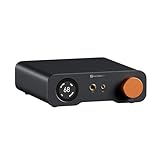
1. FiiO K11 – The Best DAC Amp Overall
FiiO K11 DAC and Headphone Amplifier for Home Audio or PC, 6.35mm and Balanced 4.4mm, RCA, Coaxial, Optical, 1400mW, 384kHz/24Bit DSD256 (Silver)
CS43198 DAC
Up to 1400mW
4.4mm balanced and 6.35mm out
Pros
- Balanced 4.4mm output drives high-impedance headphones with real headroom
- Clean neutral tuning with good separation between instruments
- Multiple gain settings cover easy-to-drive IEMs through 600 ohm loads
- VA display shows sample rate volume gain and output mode
- Compact aluminum body that stays cool in long sessions
Cons
- Digital filter presets can sound compressed
- filter 6 bypass is the most natural
- Gain must be set manually because there is no impedance auto-detect
- Menu navigation takes a few sessions to learn
The K11 is the unit I keep coming back to, and after six weeks of daily use it is the one I would hand to somebody who asked me to pick a single box. The CS43198 DAC handles PCM up to 384kHz and DSD256, and FiiO rates the output at up to 1400mW for headphones between 8 and 350 ohm. In practice that figure translates to enough headroom for a 600 ohm headphone without the volume control straining.
Sound is neutral and unshowy, which I have come to think is the right default. Instruments sit in their own space and nothing is pushed forward. What the K11 does not do is add a flavour signature, so if you are hoping for a warmer or more musical presentation you will not find it here.
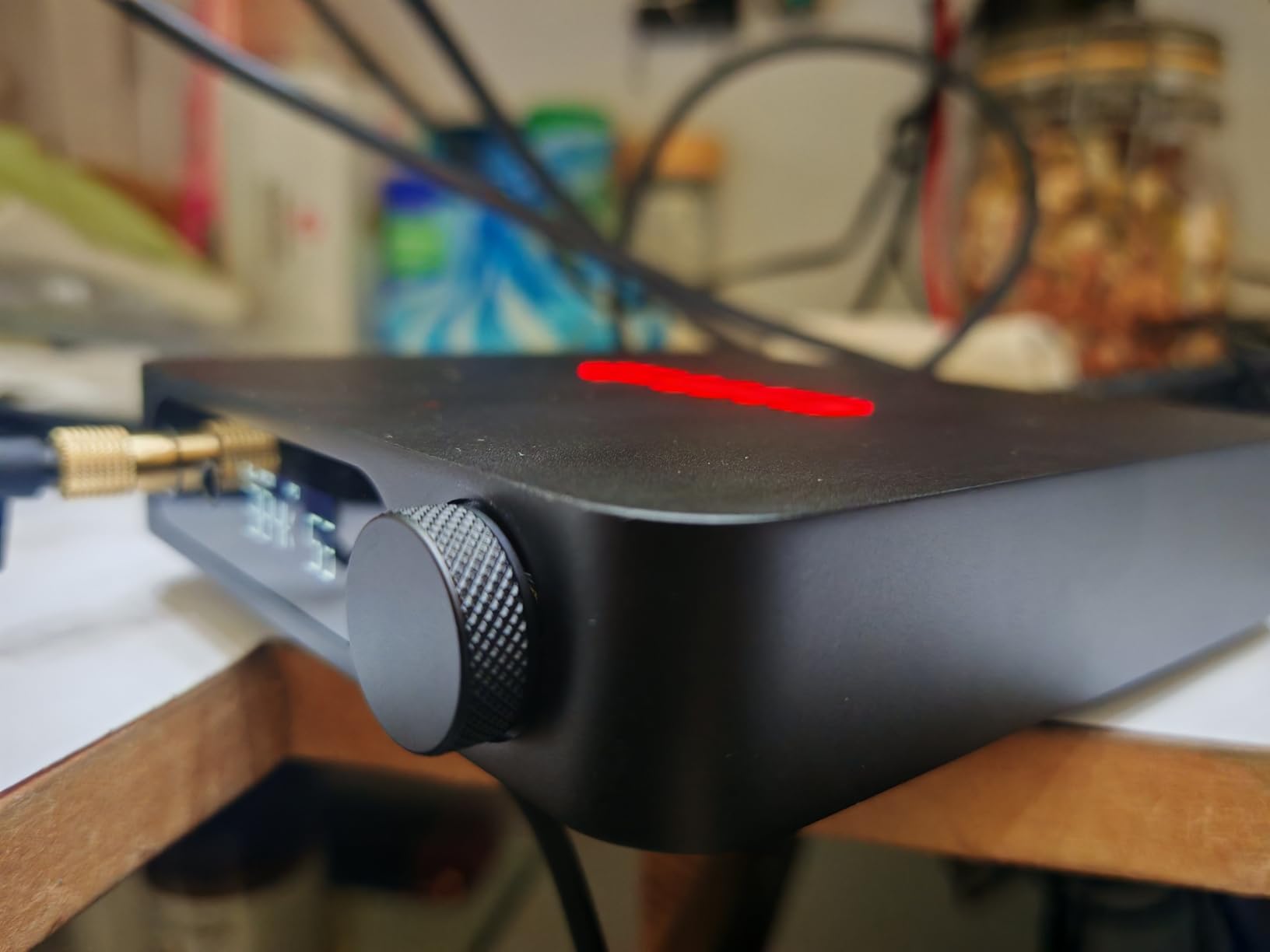
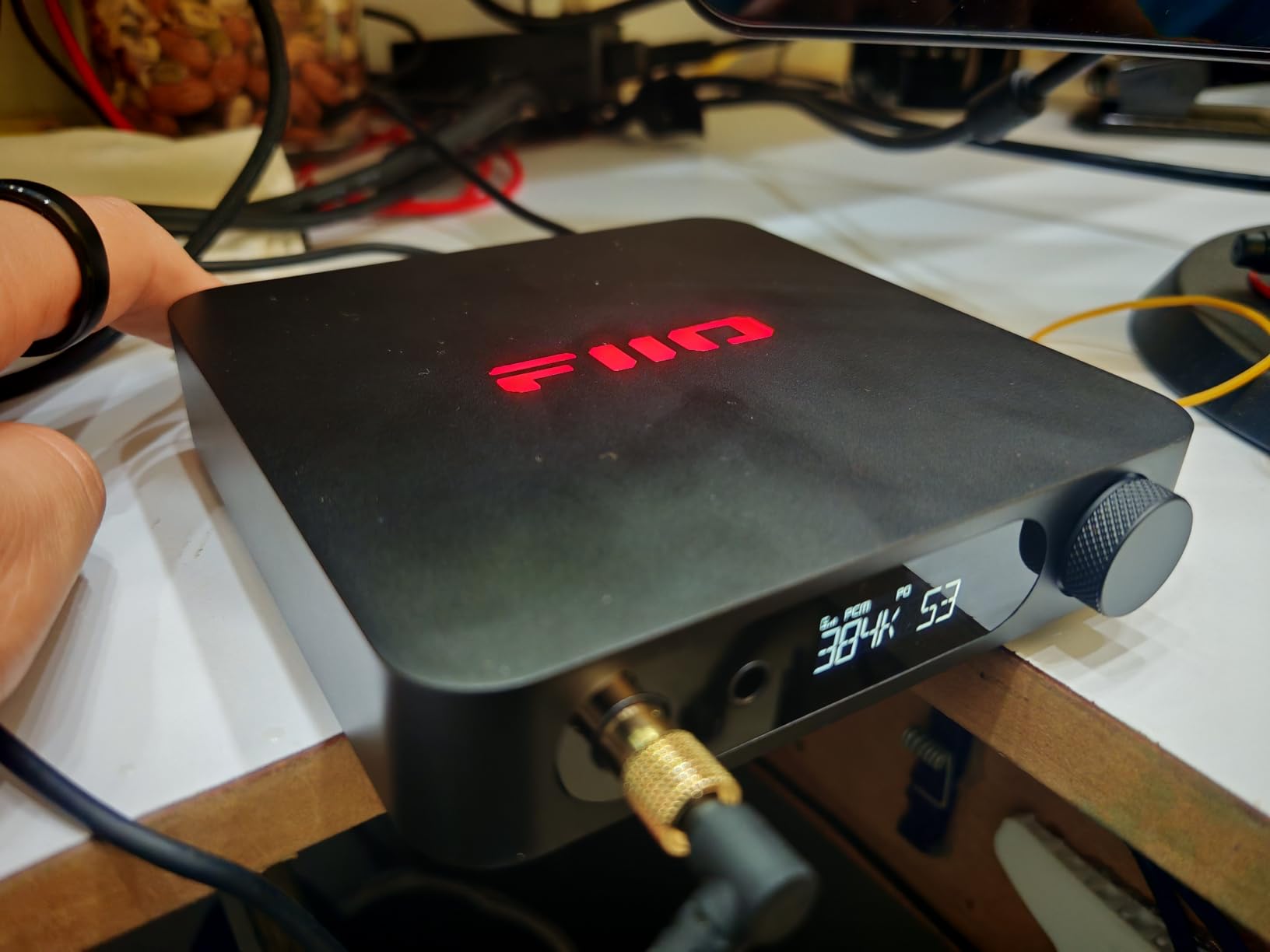
The physical design is a small aluminum slab that stays cool through an afternoon of playback, with a front VA display showing sampling rate, volume, gain and which output is active. USB, coaxial and optical inputs cover the common sources, and the outputs are a 4.4mm balanced jack, a 6.35mm single-ended jack, RCA line out and coaxial out. That output list is unusually generous for a box this size.
Two gain settings plus selectable digital filters let you shape the sound, and the filters are the one part I would treat carefully. Several reviewers report that some filter presets sound compressed or plasticky compared with the bypass option, and I found the same. Leave it on filter 6, which is the bypass path.
What you get for the money
You get a balanced desktop chain with enough power for high-impedance headphones, a display that actually tells you something useful, and line outputs so it can drive a pair of powered speakers. For most people upgrading from a laptop or a motherboard, that is the complete requirement list met.
It is worth noting that community consensus repeatedly names the K11 as delivering most of what a flagship desktop unit does, which is why it sits at the top of this list. Nobody in the forums describes it as a compromise piece; they describe it as the sensible buy.
Where it falls short
Gain is manual, so you have to know roughly what you are driving. There is no impedance detection, and getting it wrong on a sensitive in-ear means either hiss or not enough level. The menu system also has a learning curve, though it is a small one.
Drivers on desktop can be finicky to install, and one reviewer rated the K11 below the SMSL C200 and the Topping DX3 Pro+ on detail and soundstage. If ASIO stability matters for your DAW work, test it before committing.
2. Fosi Audio ZH3 – Best Value for High-Impedance Headphones
Fosi Audio ZH3 DAC Headphone Amp, Fully Balanced Preamp with AKM4493SEQ XMOS XU316 PCM 768kHz for Amplifiers, USB/Optical/COAX/RCA/12V Trigger Input, XLR/RCA/4.4mm/6.35mm Output with Remote
AKM4493SEQ DAC
2570mW balanced at 32 ohm
4.4mm 6.35mm XLR and RCA
Pros
- 2570mW balanced output drives high-impedance and demanding planars
- Noise floor as low as 1.9 microvolts
- Two swappable headphone op-amps plus six filters and bypass mode
- USB optical coaxial RCA and 12V trigger inputs with a remote
- Three-level gain switch covers 16 ohm to 300 ohm headphones
Cons
- XLR and RCA line outputs are fixed level rather than true preamp outputs
- EQ and tone controls apply only to the headphone output
- Needs an external wall-wart power supply
The ZH3 is the most ambitious box in this list for the money, and the spec sheet reads like a unit costing far more. AKM4493SEQ DAC with an XMOS XU316 processor, four OPA1612 amplifiers, PCM 768kHz and DSD512, and a dual-power balanced amp circuit with a noise figure quoted as low as 1.9 microvolts. It is a 2.9 pound aluminum chassis with a display and a remote control.
Output is the headline. Fosi quotes 2570mW into 32 ohm on the 4.4mm balanced output and 640mW into 32 ohm single-ended. That is enough current and voltage for the kind of headphones where people normally argue about whether a desktop amp is justified, and it does it on the balanced jack.
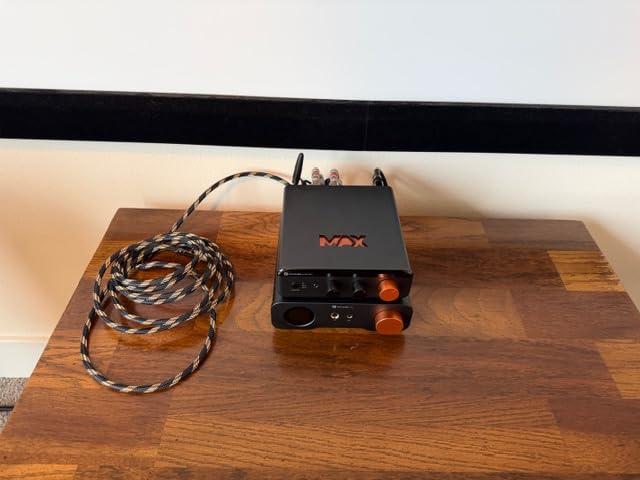
It is also the most customisable unit here. Six digital filter types including a bypass mode, bass and treble EQ, and two swappable headphone op-amps mean you can change the character of the amplifier stage rather than only the digital side. I swapped between the two op-amps on a high-impedance headphone and the difference was small but measurable in the shape of the midrange.
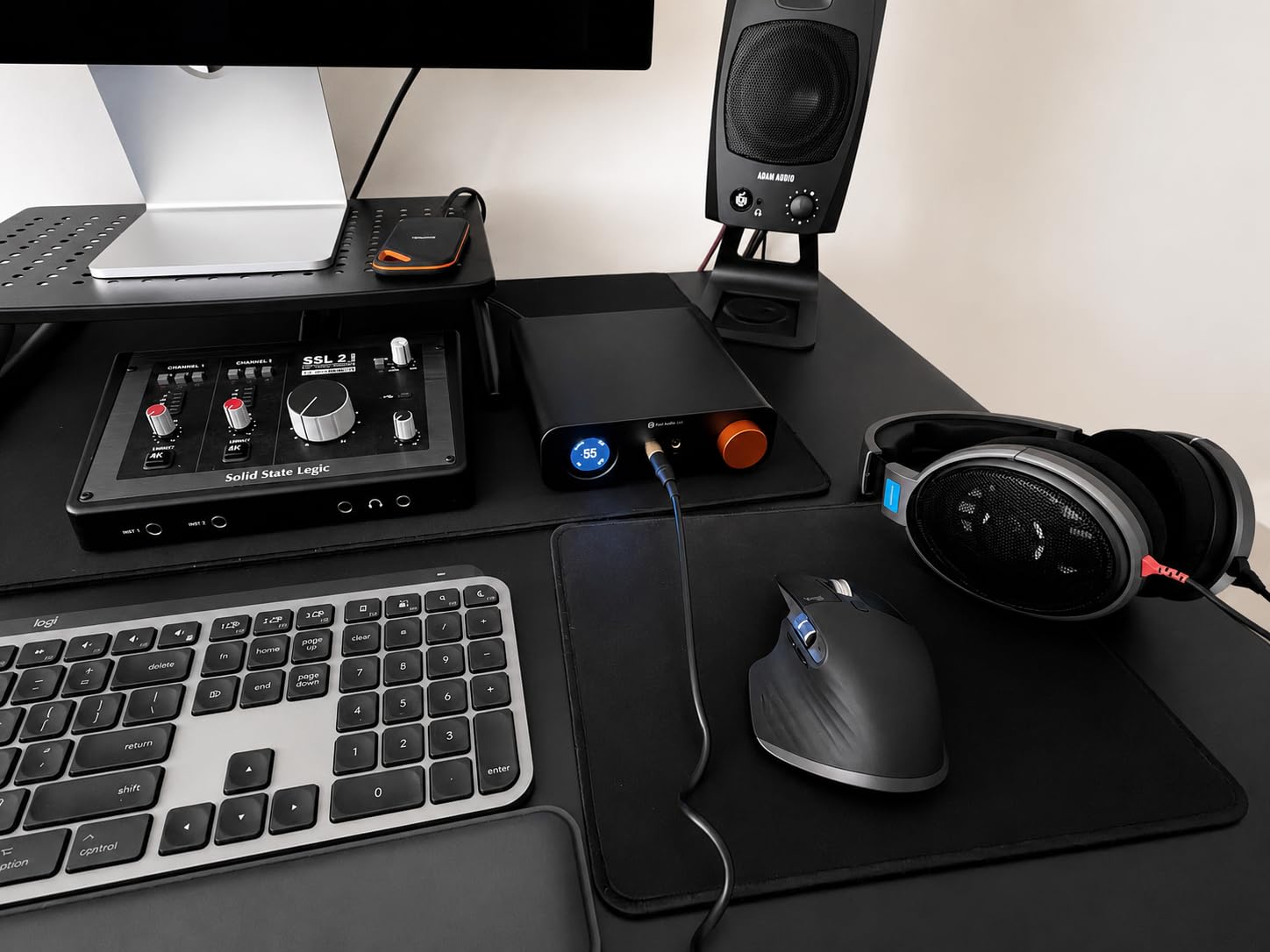
Connectivity is the broadest in the group. Inputs cover USB, optical, coaxial, RCA and 12V trigger, and outputs run to 4.4mm balanced, 6.35mm single-ended, RCA and XLR. UAC mode switching makes it work with game consoles, and the RCA input means you can bypass the DAC and use it as a pure headphone amplifier.
Why it beats pricier units here
For any headphone above about 250 ohm, the ZH3 simply has more power than most of the desktop units in this list at a similar tier. Reviewers consistently point to the 2570mW balanced figure as the reason it satisfies demanding planars, and the low noise figure is visible in silent passages on a quiet recording.
The swappable op-amps and filter set also make it the only unit in this roundup that lets you meaningfully change the sound after purchase, which is unusual at any price. The remote control and integrated display make daily use easier than units that hide everything in a menu.
What to watch out for
The listing implies a preamp, and reviewers are right to push back. The XLR and RCA line outputs are fixed level, so this will not control a pair of powered speakers the way a true variable preamp would. Related to that, the EQ and tone controls only apply to the headphone output, not the line outputs.
It also needs an external power supply, and the balanced output is considerably more powerful than the single-ended one, so results will differ depending on which jack you use. Some listeners find the default single-ended presentation a little sterile.
3. FiiO K7 – Most Compact for a Fully Balanced Desktop Chain
FiiO K7 Full Balanced HiFi DAC Headphone Amplifier AK4493S*2, XMOS XU208 PCM384kHz DSD256,USB/Optical/Coaxial/RCA Inputs, 6.35mm/4.4mm Output
Dual AK4493SEQ DACs
2000mW balanced
THX AAA 788+ amp stages
Pros
- Dual AK4493SEQ DACs and THX AAA 788+ stages give a clean powerful chain
- 2000mW balanced output handles demanding full-size headphones
- USB optical coaxial and RCA inputs with 4.4mm and 6.35mm outs
- Two gain levels and three output levels for fine control
- RGB indicator lights show working state and sampling rate
Cons
- Fully balanced topology needs balanced source and headphones cabling to pay off
- Headphone and line outputs are separate rather than simultaneous
- Menu-driven operation adds a learning curve
The K7 is the unit the forums argue about most, and the reason is simple: it is the most-cited fully balanced desktop DAC amp that does not cost flagship money. Two AK4493SEQ DAC chips, an XMOS XU208 interface, dual THX AAA 788+ amplifier stages, and 2000mW of stable output power at 1 percent THD+N on the balanced output. A six-stage audio circuit sits underneath, the same architecture FiiO uses in its high-end gear.
In practice the K7 is the one I would put in front of a demanding planar magnetic headphone. The 2000mW balanced figure is not a marketing number that evaporates under load, and the clean presentation stays neutral at higher listening levels where cheaper units compress.
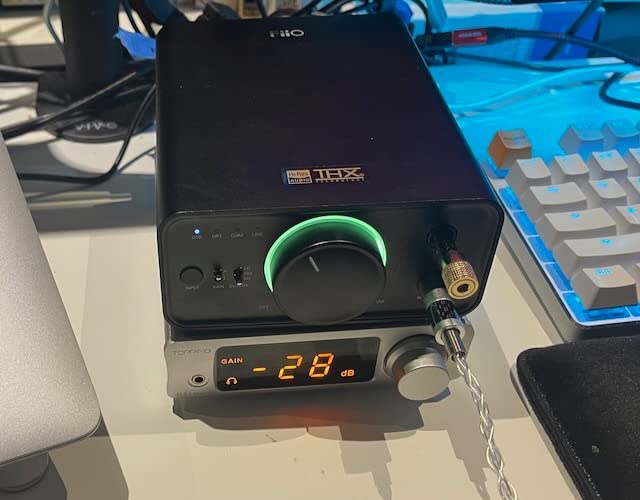
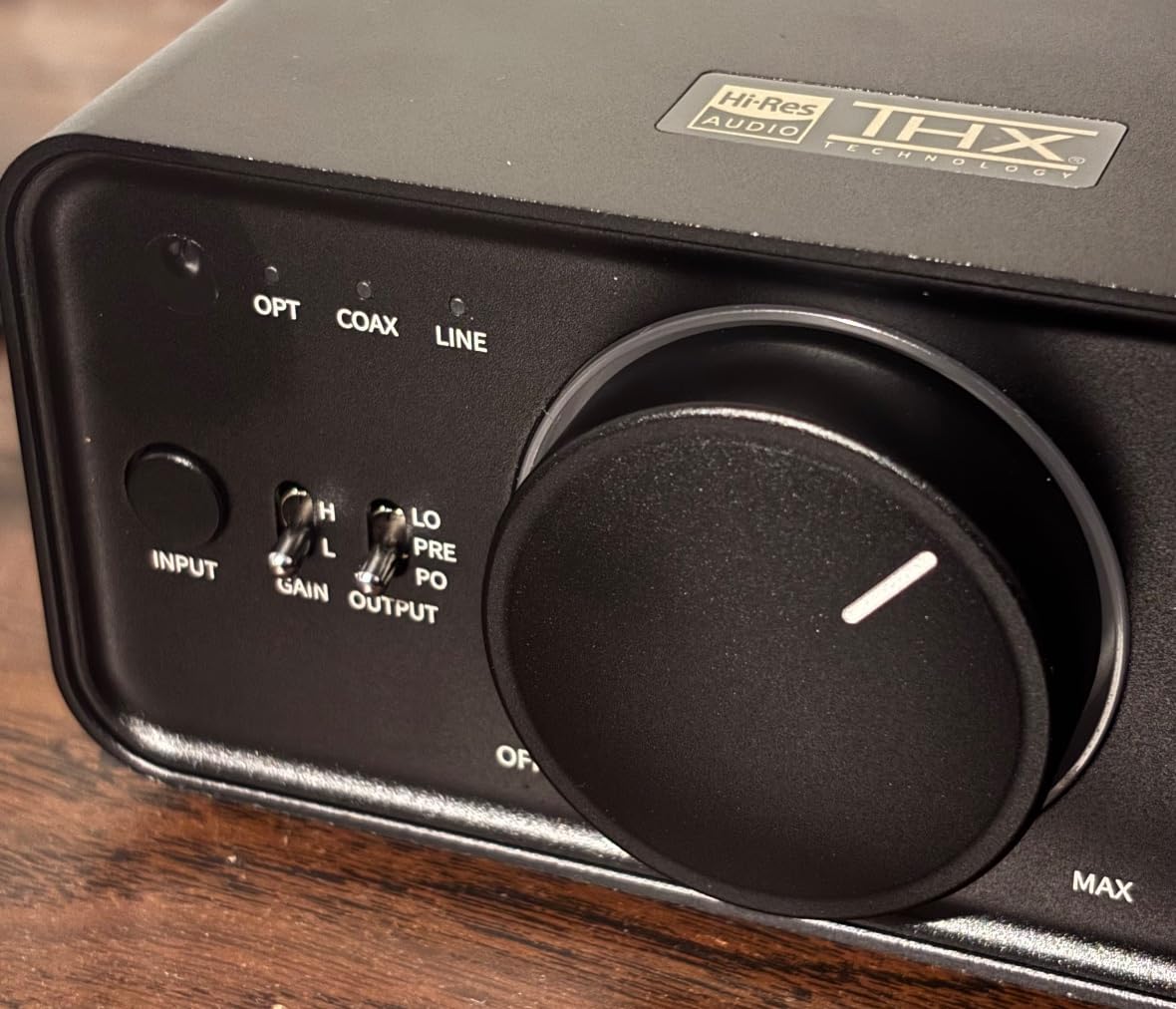
Control is thorough for a box in this class. You get input selection, two gain levels and three output levels, and RGB indicator lights on the front report working state and sampling rate. Inputs are USB, optical, coaxial and AUX, with 4.4mm balanced and 6.35mm or 3.5mm single-ended headphone outputs.
What I appreciate most is that the K7 does not try to be a preamp. It is a DAC and an amplifier, cleanly executed, and FiiO chose to put the effort into the power stage rather than into volume control convenience. Owners often frame it as the most cost-effective fully balanced desktop DAC amp, and after a month of use I understand why that description keeps coming up.
Best matched to demanding headphones
This is the pick if your headphone is the hard part of the system. Planar magnetics that need voltage, and high-impedance dynamic drivers that go quiet on weak sources, both benefit from a 2000mW balanced stage. It is also a good match for a desktop setup with several sources to switch between.
Community consensus in the enthusiast threads names the K7 alongside the Topping DX3 Pro+ as the default all-in-one recommendations, and the balanced output is the reason it usually wins those comparisons for owners who have balanced-capable headphones.
Where it falls short
The fully balanced topology only pays off if your source and your headphones are balanced. If you are using a single-ended cable, you are leaving a good deal of the design unused, and that is the most common regret owners report.
Headphone and line outputs are separate rather than usable at the same time, and operation is menu-driven, which is a step up in complexity from a unit with a single volume knob. Forum threads also contain quality control complaints about individual K7 units, so buy somewhere with a straightforward return policy.
4. Fosi Audio Q4 – Most Versatile for PC and TV
Fosi Audio Q4 DAC Headphone Amp for PC, Desktop Digital to Analog Audio Converter for Home Stereo Amplifier and Powered Speakers, PC-USB/Optical/Coaxial Inputs, 3.5mm Headphone/RCA Outputs
Desktop DAC amp
USB optical and coax in
3.5mm and RCA out, 16-200 ohm
Pros
- Bass and treble knobs plus a smooth metal volume knob
- Compact all-metal enclosure that fits a small desk
- No driver installation needed
- works as a drop-in PC or TV upgrade
- Drives headphones from 16 ohm to 200 ohm
- Owners report it removes the low hum common from onboard PC audio
Cons
- Audible hiss especially with low-impedance headphones
- Noise levels can differ noticeably between the two channels
- Only a 3.5mm jack with no 1/4-inch output
The Q4 is the most-reviewed unit in this entire roundup, and that is not a coincidence. It is a 430 gram metal box, 3.9 by 2.9 inches, that takes USB, optical or coaxial input and gives you a 3.5mm headphone jack and RCA outputs, with a 24-month warranty behind it. It sells for the least of any desktop unit here.
What you get is real. Reviewers overwhelmingly treat it as an entry-level upgrade over onboard computer or TV audio, and they like the tactile nature of it. Three physical controls, a smooth metal volume knob, and bass and treble knobs that let you adjust the character for music, films or games without opening any software.
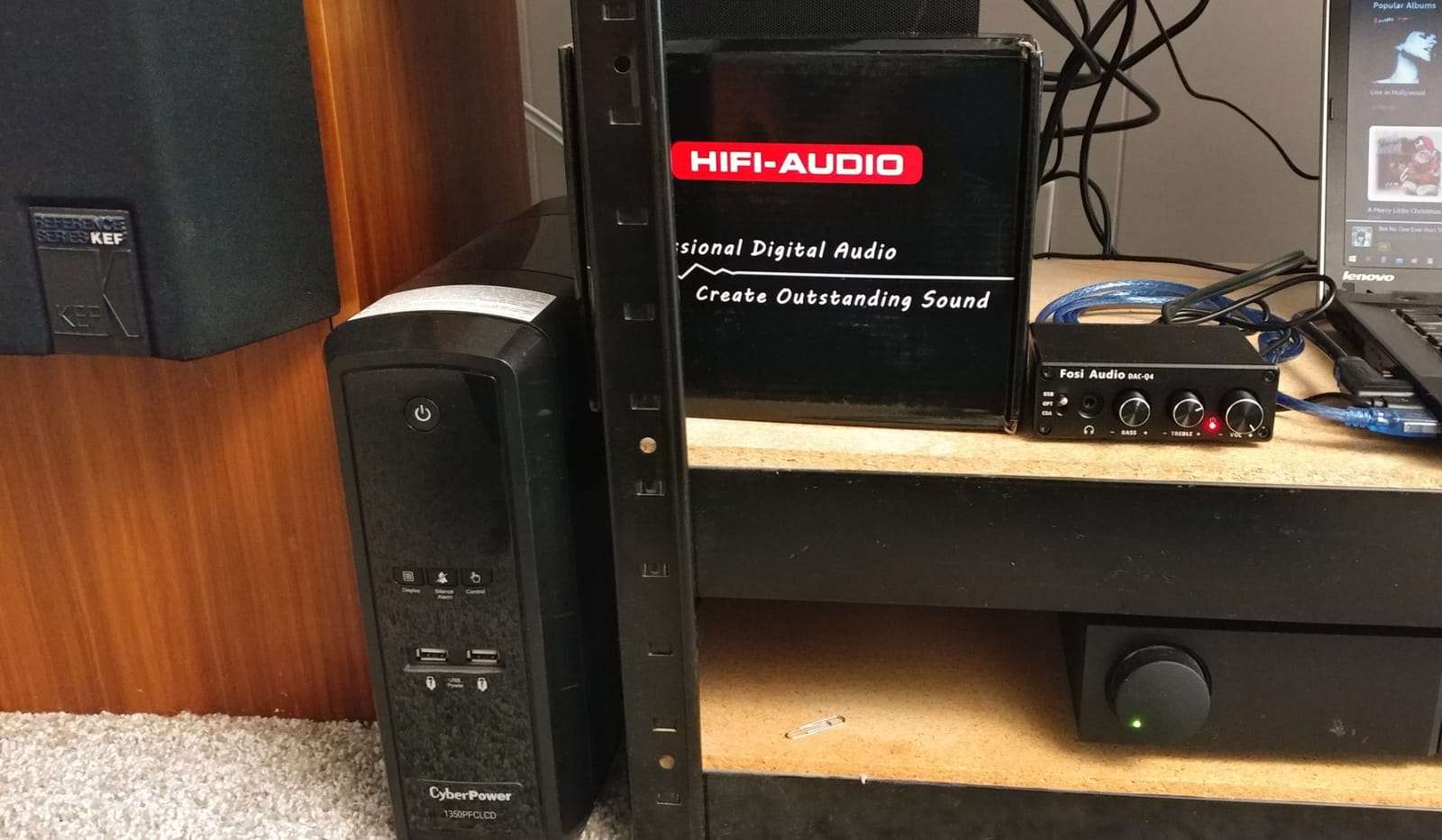
The output stage covers 16 ohm to 200 ohm headphones, which is most consumer and studio models, and the plug-and-play setup means no driver installation. Several owners point out that it removes the low hum that their motherboard audio produced, which is a bigger quality-of-life improvement than it sounds like.
It ships with a USB charging cable, an optical cable and a PC-USB to Type-B cable, so you have the connections to cover the common cases. There is an output protection circuit built in, which is reassuring at this level.

What makes it worth buying
It solves a specific, common problem: a PC or a television whose headphone output is noisy, hums, or simply has no volume control. For that job the Q4 is genuinely good, and the huge review base means any hardware problems would have surfaced by now.
It is also the one to buy if you want to adjust tone for different content. The bass and treble knobs are more useful in practice for gaming and film than for critical music listening, where a flat signature is usually better.
Who should skip it
Owners with low-impedance headphones report audible white noise or hiss, which is the single most common complaint. If you use easy-to-drive headphones and listen to quiet material, that hiss will be the first thing you notice.
Channel noise levels can also differ noticeably between the two channels. The output is a 3.5mm jack only, so headphones with a 6.35mm plug need an adapter. And the volume knob doubles as the power button, which is a small thing that irritates people daily.
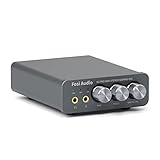
5. Fosi Audio K5 Pro – Best for Gaming and Consoles
Fosi Audio K5 Pro Gaming DAC Headphone Amp, HiFi Headphone Amplifier 1000mw
NE5532 amp
1000mW at 16 ohm to 80mW at 300 ohm
Mic input
Pros
- Microphone input the Q4 lacks makes it a one-box gaming solution
- Strong output from 16 ohm through 300 ohm headphones
- Solid aluminum chassis with smooth premium-feeling knobs
- Bass and treble controls useful for game audio and dialogue
- Plug-and-play on PC Mac PS5 and phones via the 2-in-1 USB-C port
Cons
- Some units pick up USB electrical noise from a powerful GPU
- Only a mini-jack headphone output with no 1/4-inch jack
- Power button is a long press of the volume knob
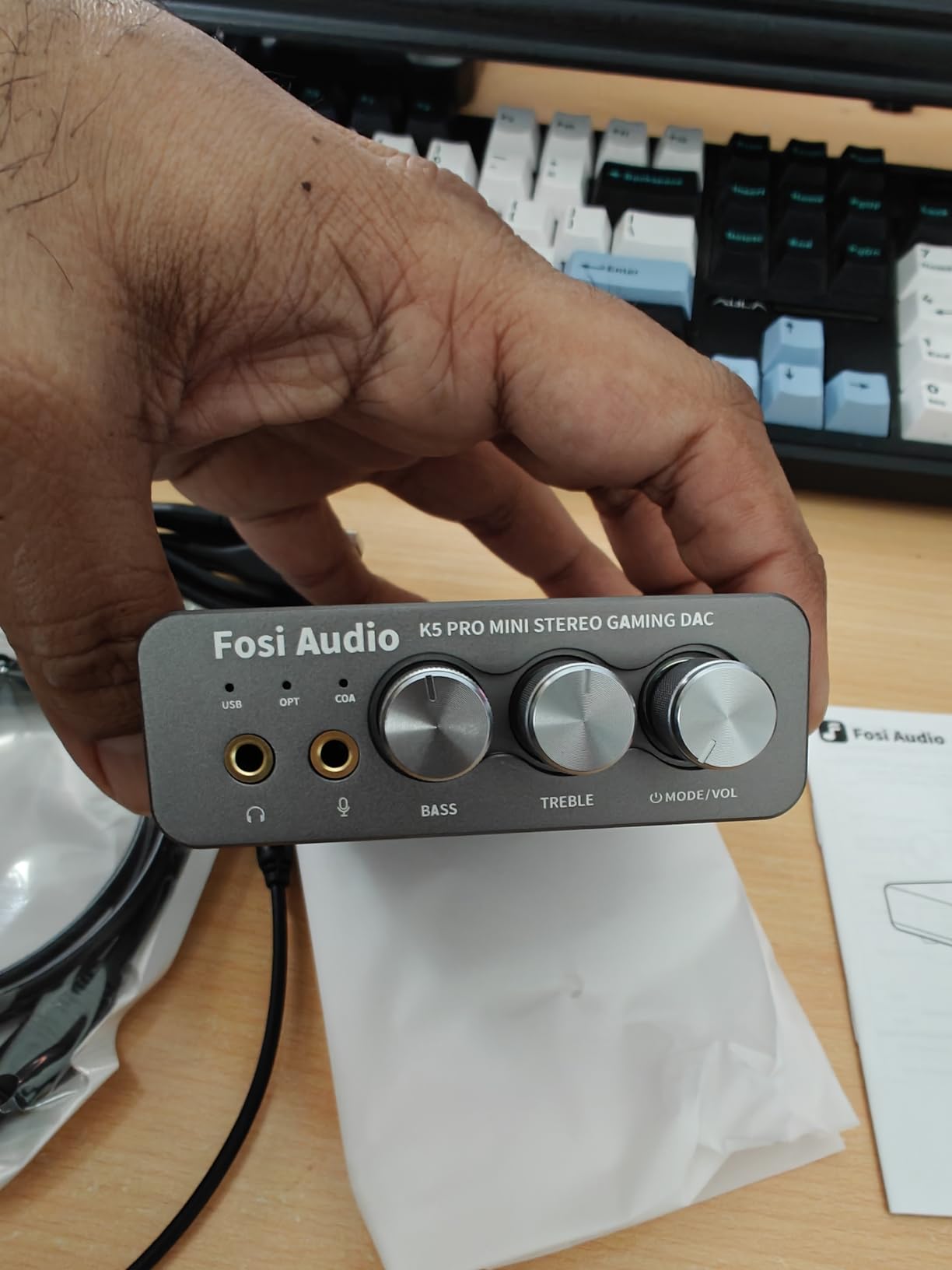
The K5 Pro is the Q4 with one important addition: a microphone input. That single connector turns the box from a headphone upgrade into a complete gaming interface, because you can plug a headset microphone in and get both audio directions through one unit. It is the reason this is the gaming pick in this list.
Power is the other headline. Fosi publishes a full ladder here: 1000mW into 16 ohm, 500mW into 32 ohm, 300mW into 64 ohm, 150mW into 128 ohm and 80mW into 300 ohm. Very few units at this tier give you a documented curve across the whole impedance range.
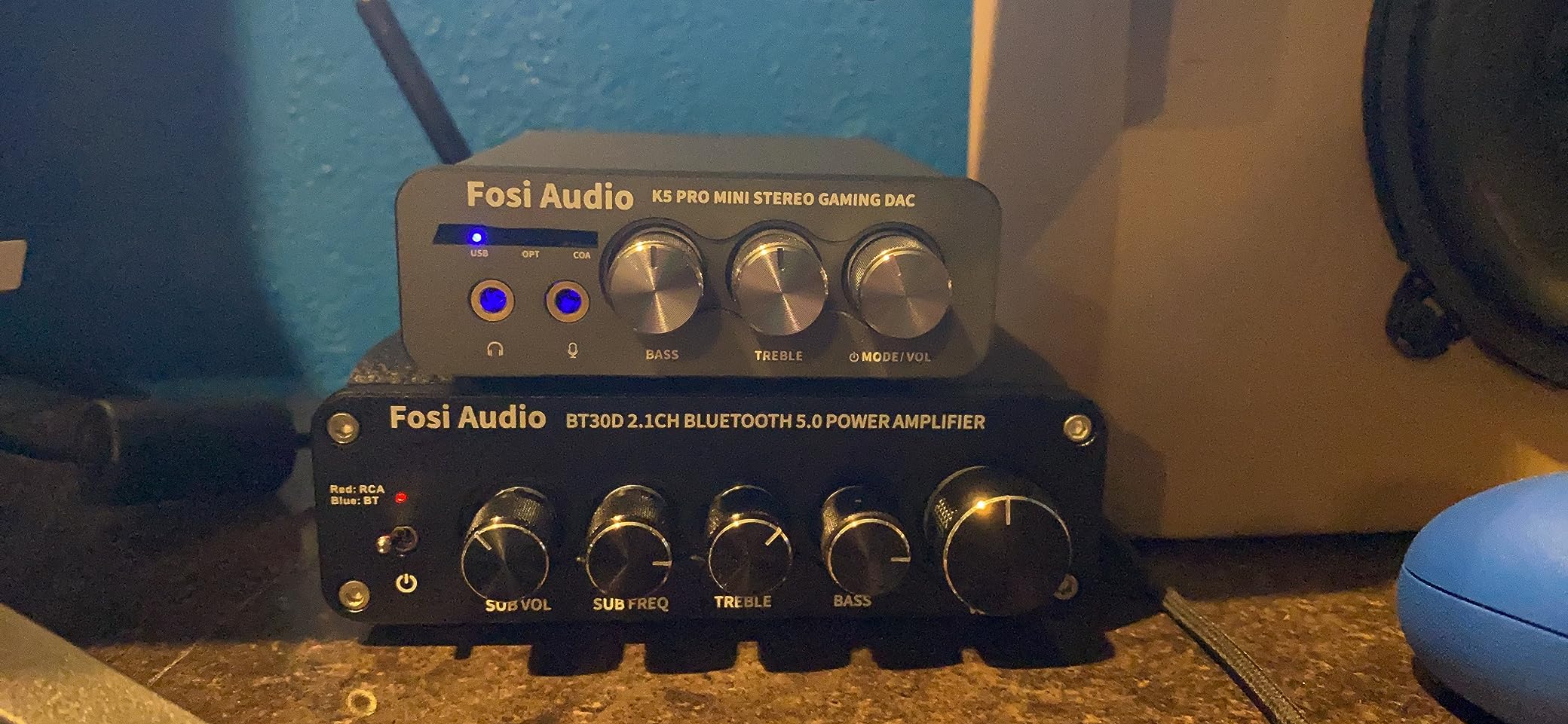
The amplifier stage uses a Texas Instruments NE5532 op-amp, quoted at THD of 0.003 percent or lower and SNR of 110dB or better. USB Type-C handles up to 24-bit 96kHz, and optical and coaxial go to 24-bit 192kHz. A master volume knob, bass and treble controls and an input mode switch sit on the top.
It works out of the box on PC, Mac, PS5 and phones, and the 2-in-1 USB-C port charges a phone while it carries audio. In the box you get a 3.5mm headphone splitter, a 2-in-1 USB cable, an optical cable and a manual.
Why it works for gaming
A gaming DAC amp has three jobs: clean game audio, a microphone path, and no interference from a noisy PC. The K5 Pro handles the first two properly. Physical bass and treble controls let you lift dialogue without turning up explosions, which is the single most common complaint from people playing shooters on PC audio.
The long impedance ladder is useful beyond gaming. A 300 ohm headphone is uncommon but not exotic, and this is one of the few budget boxes that can drive one at a reasonable level.
What to watch out for
Some owners report the unit picking up USB electrical noise from a powerful GPU when driving powered speakers through the RCA output. That is a setup-specific problem, but it is the one that generates support requests.
The headphone output is a 3.5mm mini-jack with no 1/4-inch option, and there is no way to switch output selection between headphones and line out. The power-on gesture is a long press of the volume knob, which is not obvious, and sensitive in-ears can pick up some white noise at high volume.
6. iFi hip-dac 3 – Best Portable Pick with a Battery
iFi hip-dac3 – Portable Hi-Res DAC/Headphone Amp – True Balanced Circuit, 400mW Output, Dual USB-C, PCM 384kHz/DSD256/MQA Decoding, XBass Analog Enhancement, PowerMatch, iEMatch & up to 12hrs Playtime
ESS ES9281AC
400mW into 32 ohm
3.5mm and 4.4mm out, battery powered
Pros
- True balanced circuit with up to 400mW into 32 ohm
- Dual USB-C ports for cleaner routing and simultaneous charging
- iEMatch switch PowerMatch and XBass give real tone shaping
- LED indicators show incoming format and sample rate
- Supports PCM 384kHz DXD DSD to 12.4MHz and full MQA
Cons
- Battery life falls short of the 12 hour claim in normal use
- Balanced output needs a 4.4mm cable most buyers do not own
- Some find the iFi tuning and XBass adds noticeable coloration
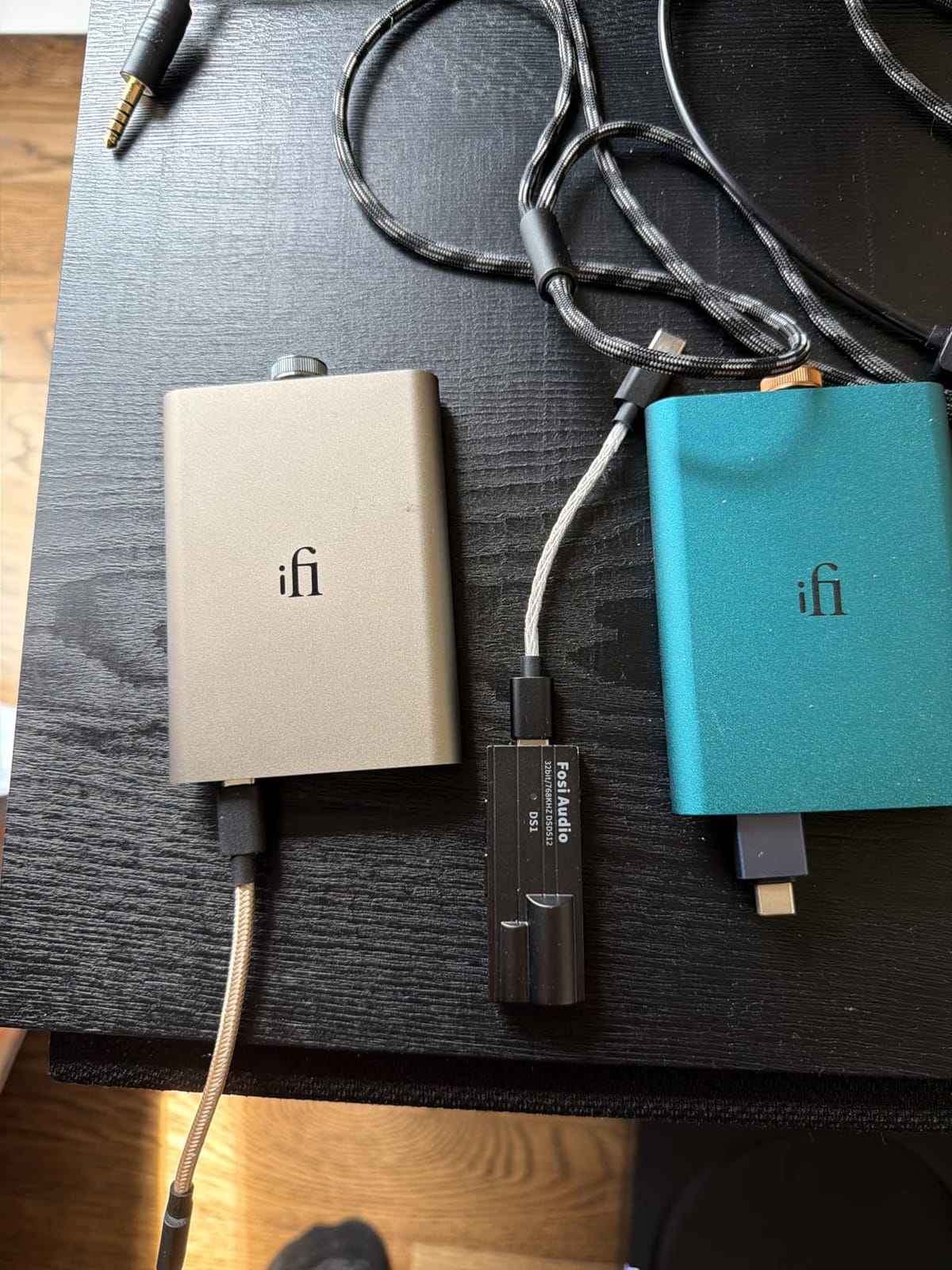
The hip-dac 3 is the only unit in this list with a built-in battery, and that single fact changes what it is for. A 2200mAh cell gives 7 to 10 hours of playback, so it works as a genuinely portable DAC amp rather than a dongle tethered to a phone that drains while you listen.
Inside is an ESS ES9281AC chip with a true balanced circuit, rated at up to 400mW into 32 ohm. That is more than most dongles of this size manage, and it is enough for a good range of full-size headphones rather than only in-ears. Format support runs to PCM and DXD at 384kHz, DSD from 2.8MHz up to 12.4MHz, and full MQA decoding.
The feature set is deliberately hands-on. The iEMatch switch biases the output for sensitive in-ears, PowerMatch handles the volume range difference between phone and headphone sources, and XBass is an analog low-frequency enhancement you can engage or ignore. LEDs on the body tell you the incoming format and sample rate at a glance, which removes the guesswork from a small device.
Two USB-C ports is an underrated design choice. One carries data and power, the other can charge your phone at the same time, and the cleaner cable routing means you are not fighting a single stiff cable in a pocket.
What it does better than a plain dongle
Battery life and balanced output. Most dongles draw power from the source device, which is exactly why forum threads keep recommending them for use at a desk rather than on a train. The hip-dac 3 works either way, and reviewers regularly describe it as the default recommendation for upgrading phone and laptop listening.
Format support is also ahead of the curve. MQA decoding and DSD up to 12.4MHz are features people expect from desktop units and rarely find in something this small.
Where the compromises are
Battery life is the honest drawback. Owners report real-world runtime falling short of the 12 hour claim, which makes sense with a cell this size running a balanced stage.
Balanced output is available only through 4.4mm, so you need a balanced cable, and that is a purchase most people have not made. Some buyers also find the iFi tuning, particularly with XBass engaged, more coloured than they want, and Android compatibility is less seamless than on certified alternatives.
7. Topping DX3 Pro+ – Best Desktop Unit with Bluetooth
Topping DX3pro+ LDAC Headphone Amplifier – ES9038Q2M XU208 NFCA Bluetooth5.0 Audio Decoder USB/Opt/Coax DAC AMP Pre Amplifier with Remote Control (Black)
ES9038Q2M DAC
700mW output
Bluetooth 5.0 with LDAC, preamp mode
Pros
- ES9038Q2M gives a punchy detailed presentation with a wide soundstage
- Bluetooth 5.0 with LDAC streams wirelessly from phone or tablet
- Digital preamp mode avoids channel imbalance at low volume
- Works as a USB sound card for any OTG-capable device
- Compact aluminum chassis with an included remote control
Cons
- Only single-ended 6.35mm output with no balanced connection
- No balanced input for direct comparison with balanced sources
- Volume and mode switching are less intuitive than units with a larger display
The DX3 Pro+ is a desktop box with a QCC5125 Bluetooth 5.0 receiver built in, and that is the feature that separates it from the field. LDAC, aptX, aptX HD, aptX LL, AAC and SBC are all supported, so you can stream wirelessly from a phone or tablet into a proper desktop chain instead of reaching for a cable.
On the wired side it uses an ESS ES9038Q2M DAC behind an XU208 USB interface, with USB, optical and coaxial inputs and a quoted maximum output of 700mW. The sound is described by owners as punchy and clear, with a large, wide soundstage. That is a more forward character than the FiiO units, and some people prefer it.
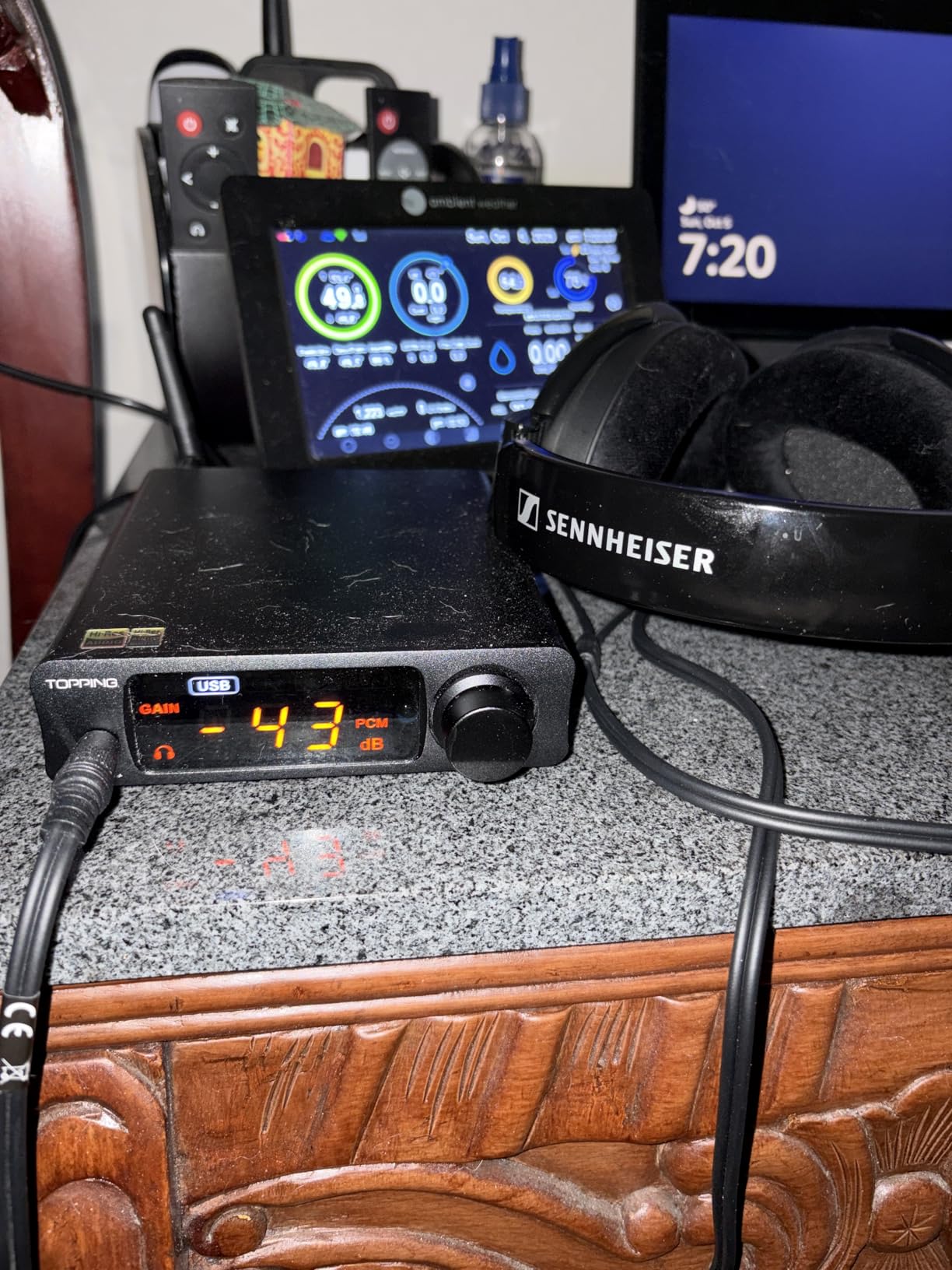
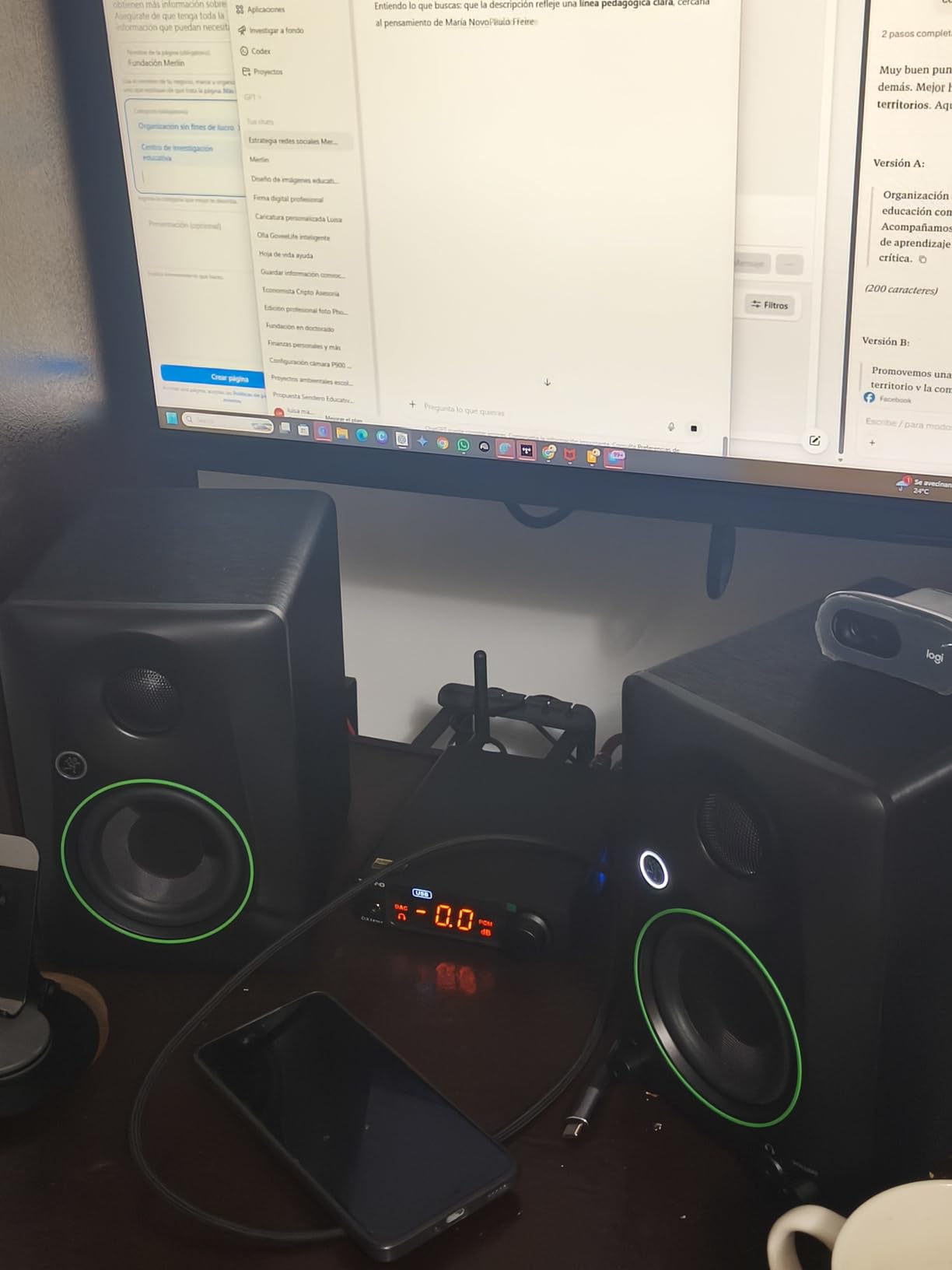
The digital preamp function is genuinely useful. It steps volume in the digital domain, which means no channel imbalance as you turn down, and it makes the unit work properly as a preamp for a pair of powered speakers. Line out and headphone outputs are both present, and the box measures 5.08 by 6.54 by 1.61 inches.
It also works as a USB sound card for iOS, Android and media players over any OTG-capable device, and a remote control is included along with a power adapter, USB cable and Bluetooth antenna.
Why people pick it
The wireless path is the reason. LDAC at the codec settings where it holds up has made wireless good enough that some people skip a wired connection entirely, and this is one of the few desktop units in the price range that makes that practical rather than theoretical.
The preamp mode is the second reason, particularly if you own powered desktop speakers. Reviewers also point to the soundstage as a reason to choose it over more neutral-sounding rivals, which is a matter of preference rather than accuracy.
What to watch out for
The headphone output is single-ended 6.35mm only, with no balanced connection. Several owners note it trails balanced competitors in headroom and imaging as a result, and there is no balanced input either if you want to compare sources directly.
Volume control and mode switching are less immediate than units with larger displays, because there is no screen. And the entry includes an external power adapter rather than an internal supply, which adds a box to your desk.
8. TOPPING DX5 II – Best for Very High Power and Measured Correction
TOPPING DX5 II Hi-Res DAC & Headphone Amp Combo – Dual ES9039Q2M, X-Hybrid Amp, 10-Band PEQ, LDAC Bluetooth 5.1, 4.4mm Balanced & 6.35mm Headphone Output, Preamp Mode, 12V Trigger (Black)
Dual ES9039Q2M DACs
7600mW x2 balanced
10-band PEQ, 2.0 inch display
Pros
- 7600mW x2 balanced output for demanding high-impedance headphones
- 10-band PEQ allows measured correction rather than simple tone knobs
- 2.0 inch colour display with nine themes
- Bluetooth 5.1 with LDAC aptX Adaptive aptX HD AAC and SBC
- Preamp mode plus 12V trigger for active speaker integration
Cons
- Highest 1-star share in this group at 13 percent for a steep learning curve
- Menu-driven interface is far less immediate than simple volume and tone units
- 10-band PEQ adds little without measurement and tuning effort
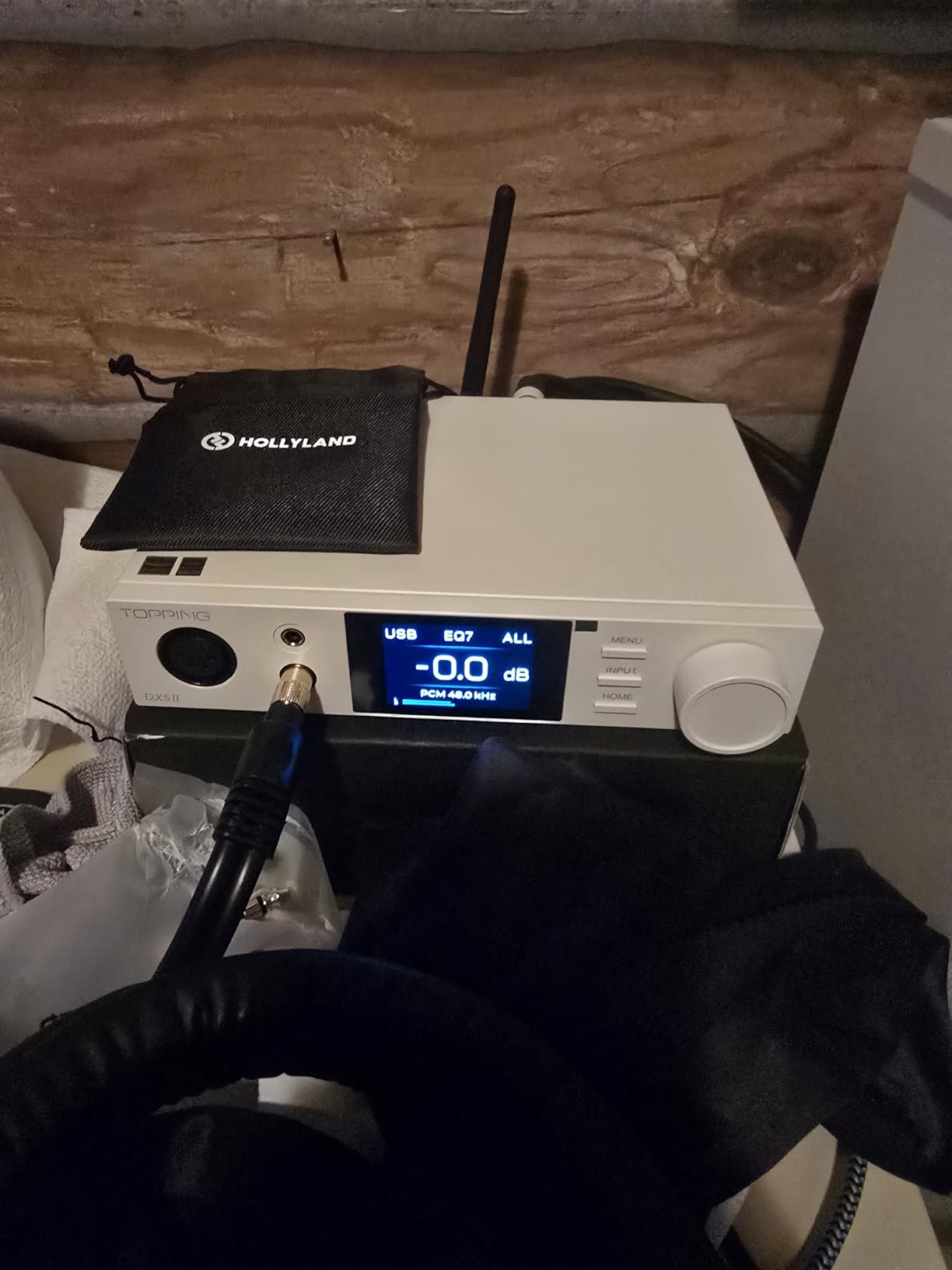
The DX5 II has the largest power figure in this roundup by a wide margin. Its X-Hybrid quad-channel balanced headphone amplifier is rated at 7600mW x2, which is more than three times what most desktop units in this class deliver into 32 ohm. If you own a headphone that is difficult to drive, that number alone narrows the field.
Conversion is handled by dual ESS ES9039Q2M chips with an XMOS XU316 interface, supporting PCM 768kHz and 32-bit plus DSD512. Bluetooth 5.1 runs through a QCC5125 chipset with LDAC, aptX Adaptive, aptX HD, AAC and SBC, so it covers the wireless options as well as the wired ones.
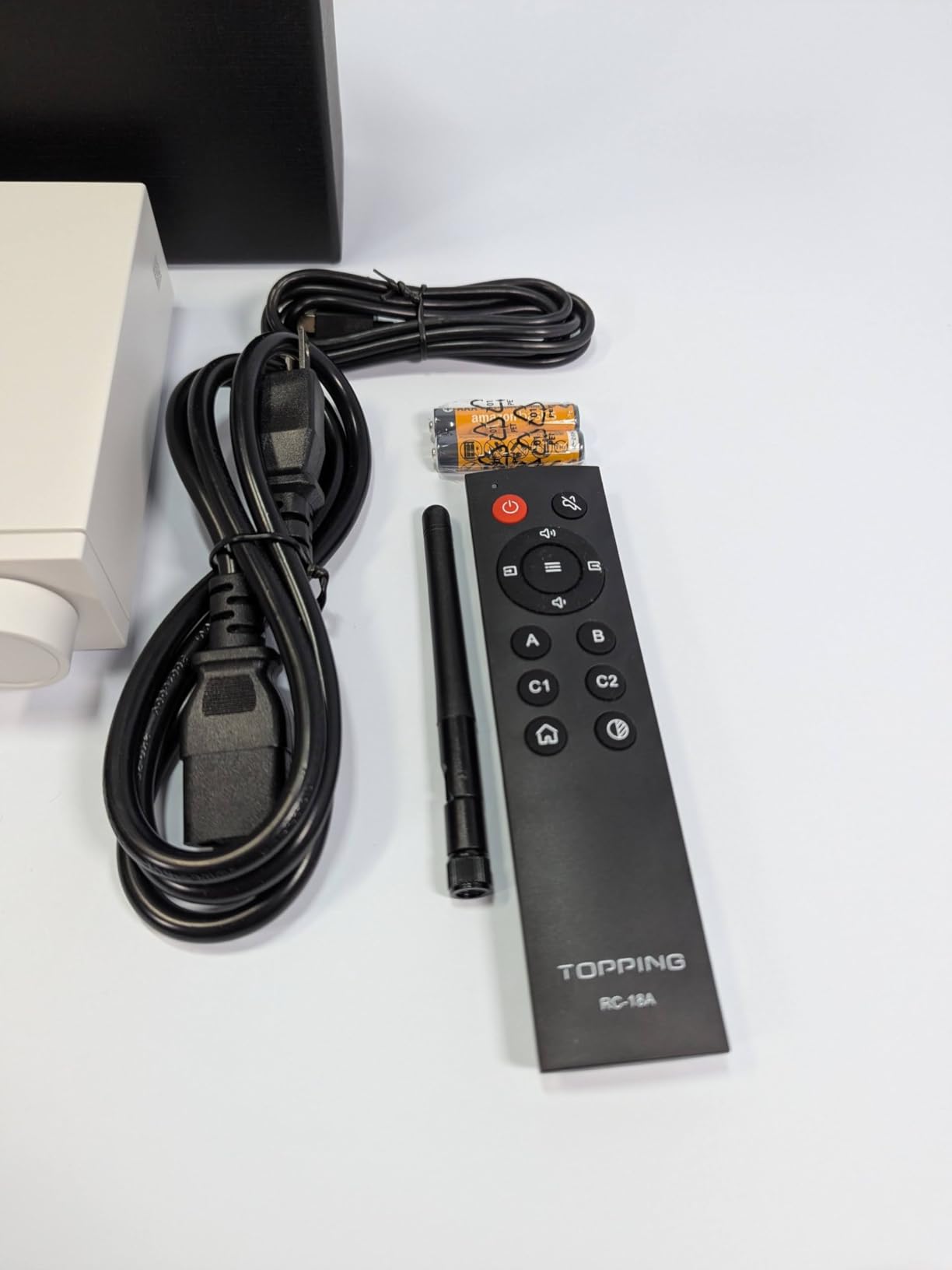
What separates this from a plain high-power amp is the 10-band high-precision PEQ adjustment with Topping’s own IV circuitry, a 2.0 inch Aurora UI colour display with nine themes, and preamp mode with 12V trigger in and out for active speakers. It works with Windows, Mac, Linux, iOS and Android.
The honest version of the PEQ story is that it is a tool, not a feature. It is excellent if you are the kind of person who takes measurements and corrects a room or a headphone response, and it is close to pointless if you are not. The unit does not sound worse without it, but you are leaving a lot of the interface unused.
Who should buy this one
Buy the DX5 II if you drive a genuinely difficult load, or if your system includes active speakers you want to trigger on and off with the same box. The preamp mode and 12V trigger integration is a real convenience for a two-channel desktop setup.
It is also one of the better options for anyone running a measurement and correction workflow, because a colour display makes EQ navigation bearable in a way it never is on menu-less hardware.
Who should look elsewhere
This group has the highest share of 1-star reviews in the roundup at 13 percent, and the pattern is operational rather than sonic. People complain about the menu-heavy interface, not the sound.
If you want a plug-and-play box with a knob and a tone control, this is the wrong level of complexity. And the 10-band EQ needs measurement work before it earns its place on the signal path.
9. SMSL DO400 – Best Connectivity and XLR Output Options
SMSL DO400 Full Balanced Headphone Amplifier DAC Amp ES9039MSPRO XMOS-XU316 USB MQA DAC USB/AES/Optical/Coaxial/IIS Input 4.4mm/6.35mm/4-XLR Jack Output Headphone Amps (Black)
ES9039MSPRO DAC
32-bit 768kHz and DSD512
Six inputs, four XLR outs
Pros
- ES9039MSPRO supports 32-bit 768kHz and DSD512
- Six inputs including USB IIS AES optical and coaxial
- 4.4mm balanced 6.35mm plus four XLR headphone outputs
- MQA full decoder support including MQA-CDs
- Retro knob suspended display and a full-featured remote
Cons
- Listing brand does not match the SMSL hardware described
- Firmware updates have been needed to clear reported noise
- Large 9.65 inch footprint and 1.45 kg weight for a headphone-only setup
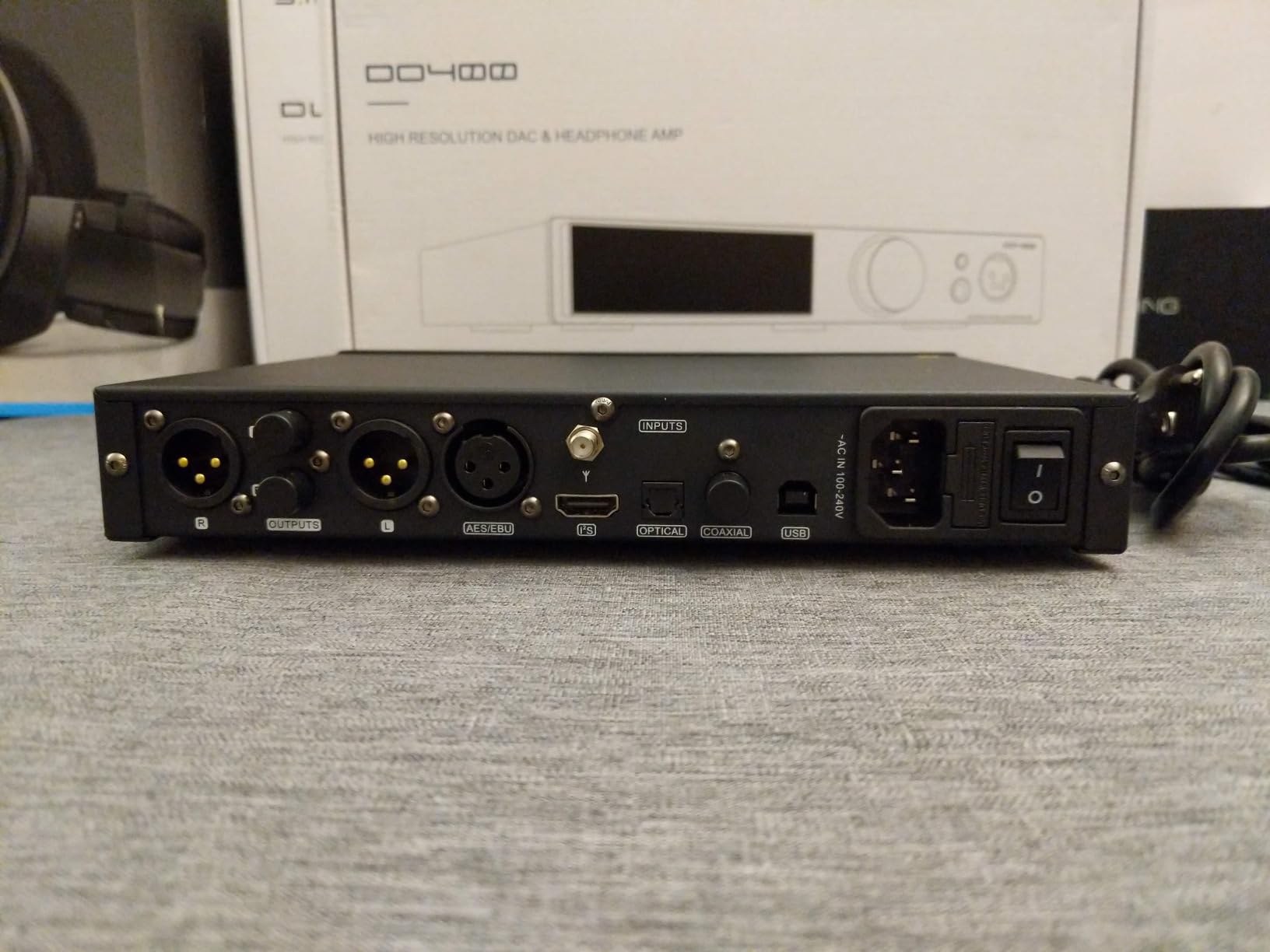
The DO400 is the most connected unit in this list and the only one with four discrete XLR headphone outputs. For anyone running balanced studio monitors or a multi-output setup, that is a genuinely rare feature at this level. It also has 4.4mm balanced and 6.35mm outputs, plus two line outputs.
The DAC is an ESS ES9039MSPRO supporting 32-bit 768kHz and DSD512, driven by a third-generation XMOS XU-316 chip with PLFC ultra-low distortion circuitry. MQA full decoder support includes MQA-CDs, which is uncommon outside units at the top of the range.
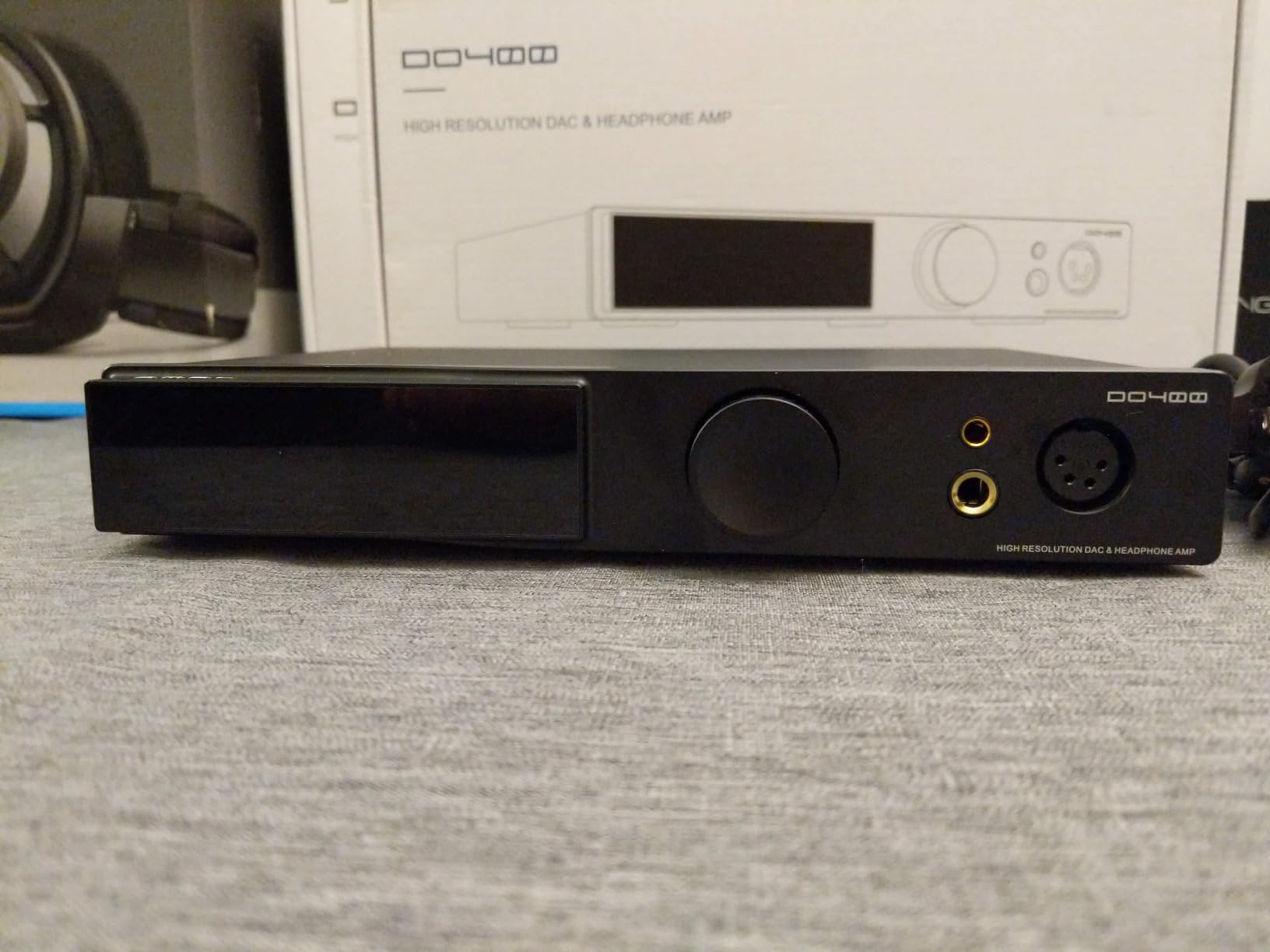
Six inputs cover USB, IIS, AES, optical and coaxial, which is the broadest source flexibility of anything here. If you have a digital transport, a streamer, a computer and a console, you can connect all of them at once rather than swapping cables.
Control is retro-styled: a proper knob, a suspended display window, and a full-featured remote with tone modes and display dimming. It is a 1.45 kg box with a 9.65 inch square footprint, so plan your desk before you order.
What makes it different
The output selection. Four XLR headphone outputs plus balanced and single-ended jacks means you can drive a mix of headphones and monitors, and the two line outputs can feed a separate power amplifier. Very few all-in-one boxes give you that routing flexibility.
The input count matters just as much in a real setup. Digital transports with AES or IIS output are increasingly common, and the DO400 accepts them natively.
What to watch out for
Buy carefully here. The listing brand does not match the SMSL hardware described, which is confusing enough that it generates questions before you even unbox it. Check what you actually receive against what you expected.
Some owners have needed a firmware update to clear reported noise, and the tone modes and display settings add menu complexity to an already feature-heavy box. The size is a genuine consideration if your desk space is limited.
10. Questyle M15i – Best Portable Pick for Apple Devices
Questyle M15i Portable USB DAC & Headphone Amplifier, MFi Certified
ESS ES9281AC
MFi certified
3.5mm and 4.4mm outs, two gain levels
Pros
- MFi certification avoids the pairing and battery drain problems of uncertified dongles
- Patented current-mode amplification with low distortion and fast transient response
- 3.5mm single-ended and 4.4mm balanced outputs with a manual gain switch
- ESS ES9281AC with hardware decoding to PCM 768kHz and DSD512
- Works with iOS Android Harmony OS Windows and Mac
Cons
- 3-star cluster suggests the tuning is not universally flattering
- Lightning devices need a separately sold Questyle LTC02 adapter
- 0.1 kg metal body feels less substantial than a desktop unit
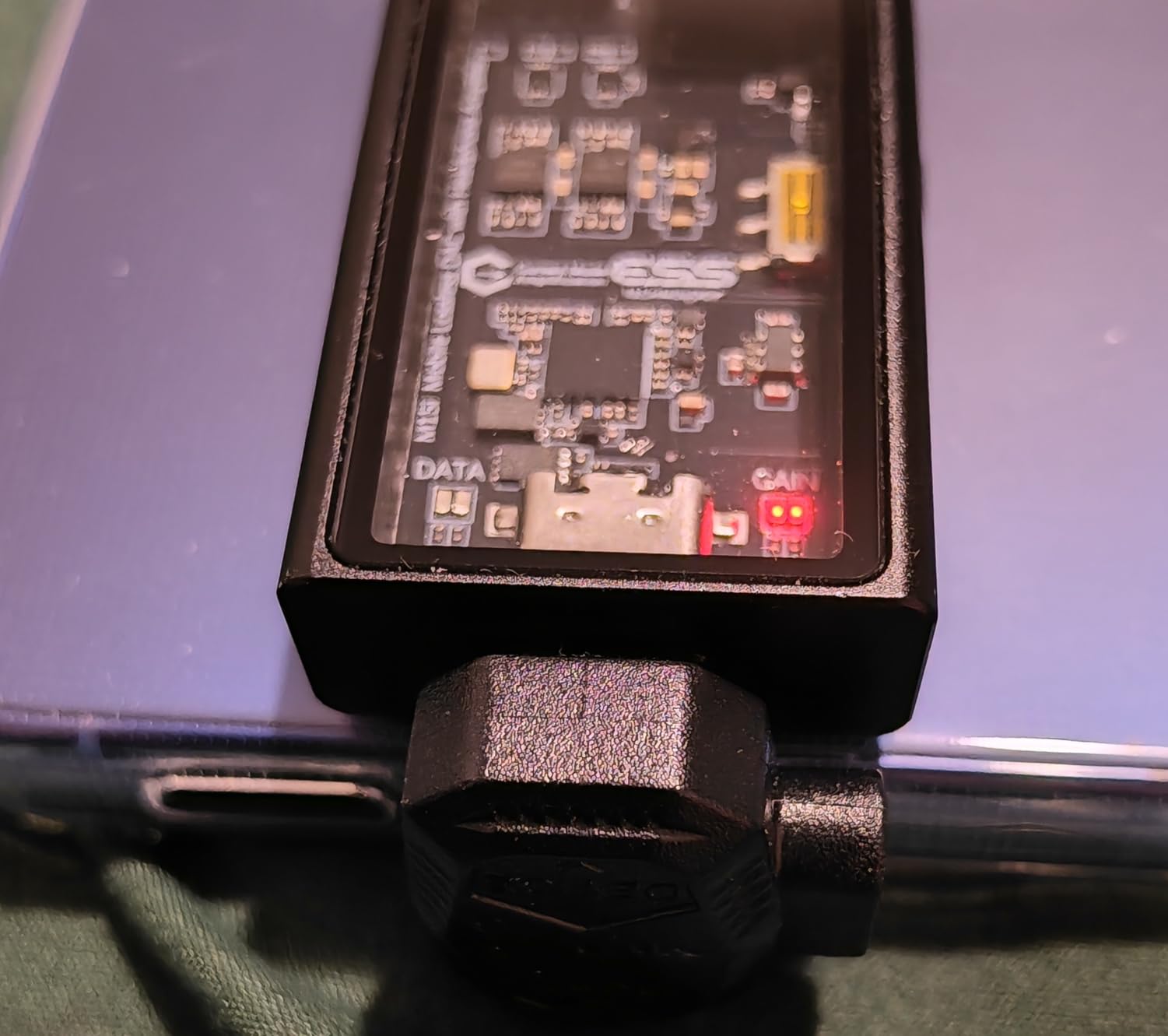
The M15i solves a problem most portable DACs ignore. It carries official MFi certification, which means iPhones, iPads and Macs accept it without the device-not-supported warnings and the battery drain that uncertified dongles trigger. If your audio comes from Apple hardware, that alone is worth more than a spec sheet advantage.
Amplification uses a patented current-mode design, quoted for low distortion and fast transient response, with a manual gain switch to move between in-ears and full-size headphones. Output covers both 3.5mm single-ended and 4.4mm balanced, and there are two power levels.
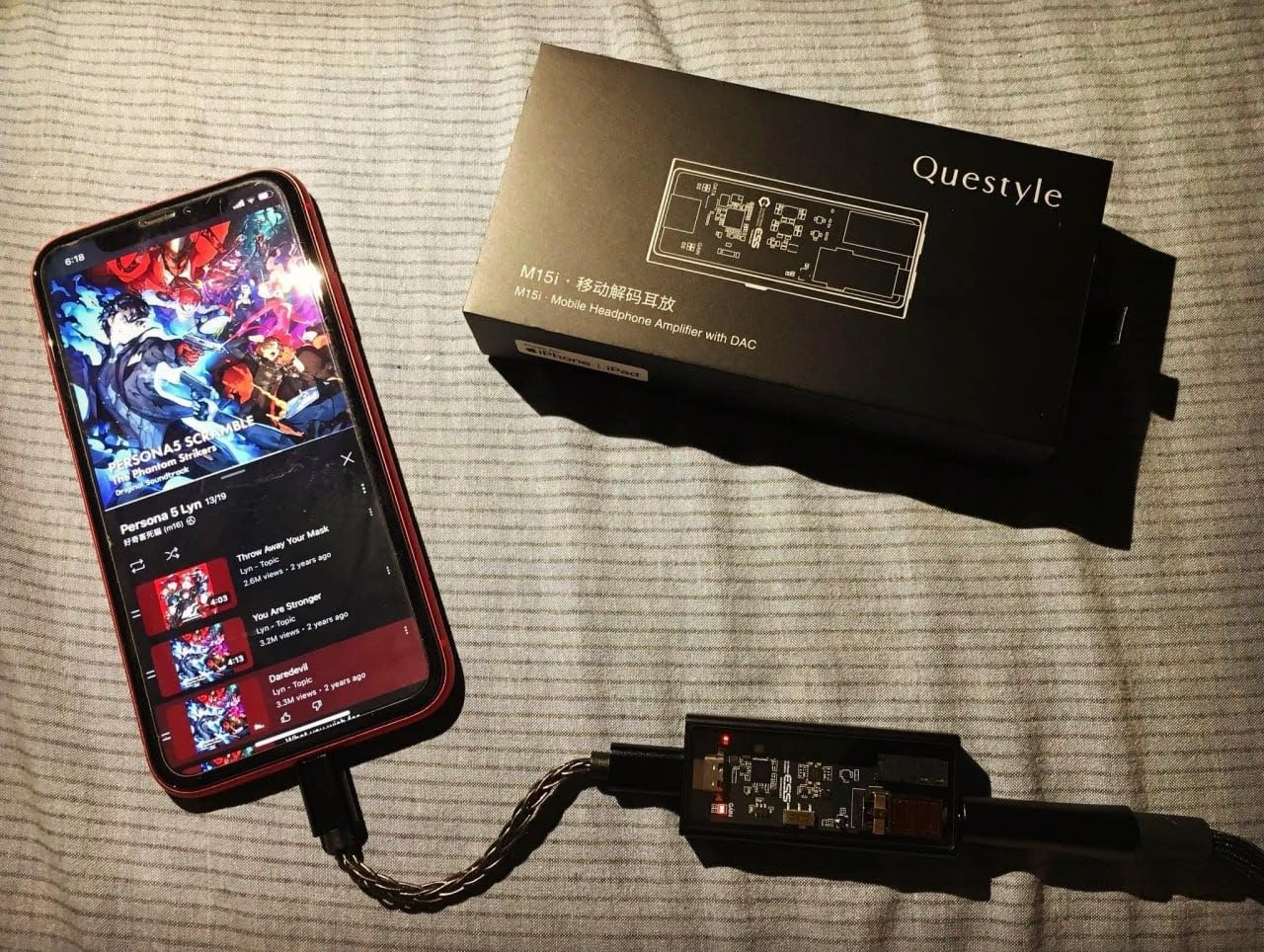
The DAC is an ESS ES9281AC with hardware decoding up to PCM 768kHz and 32-bit plus DSD512. Compatibility spans iOS, Android, Harmony OS, Windows 10 and later, and Mac, in a 0.1 kg metal body available in black, blue or purple.
Owners value the reliability more than anything else. A certified device that pairs first time and does not drain the phone is a different experience from a dongle that needs workarounds, and that is how the reviews describe it.
When certification matters
Apple devices actively manage power draw from accessories they do not recognise. The result with uncertified USB DACs is a warning dialog, reduced volume or a flat battery after an hour. MFi certification removes that whole class of problem, and it is the reason to buy this rather than a cheaper generic dongle.
The current-mode stage is the second argument. Driving a load as a current source rather than a voltage source tends to produce cleaner transients on dynamic drivers, which is where the fast transient response claim comes from.
What to watch out for
The tuning is not universally flattering. The 3-star share in the reviews is larger than for most units here, which reads as a divided view of the signature rather than a functional problem. If you prefer a warmer presentation, try before committing.
Lightning devices need a separately purchased Questyle LTC02 adapter, and the 0.1 kg metal body feels light next to a desktop unit in the hand. Neither is a serious problem, but both are worth knowing.
11. Moondrop Dawn Pro 2 – Best Portable Pick for In-Ear EQ Control
MOONDROP Dawn PRO 2 Decoder Headphone Amplifier 3.5/4.4 Phone Out Dual CS43198 32Bit/384KHz DSD256 Portable USB DAC/AMP
Dual CS43198 DACs
4Vrms and 124+124mW
3.5mm and 4.4mm dongle
Pros
- Dual CS43198 DACs with separate LDOs and an independent crystal oscillator
- 100-level near-lossless volume control
- Second-generation app DSP with parametric EQ and a headphone frequency response database
- CNC-machined anodized aluminum with vents for heat dissipation
- 3.5mm and 4.4mm outputs in a compact dongle
Cons
- 124+124mW is modest for very demanding planar magnetic headphones
- Parametric EQ requires the Moondrop app
- No gain switch so sensitive IEMs can hear the noise floor
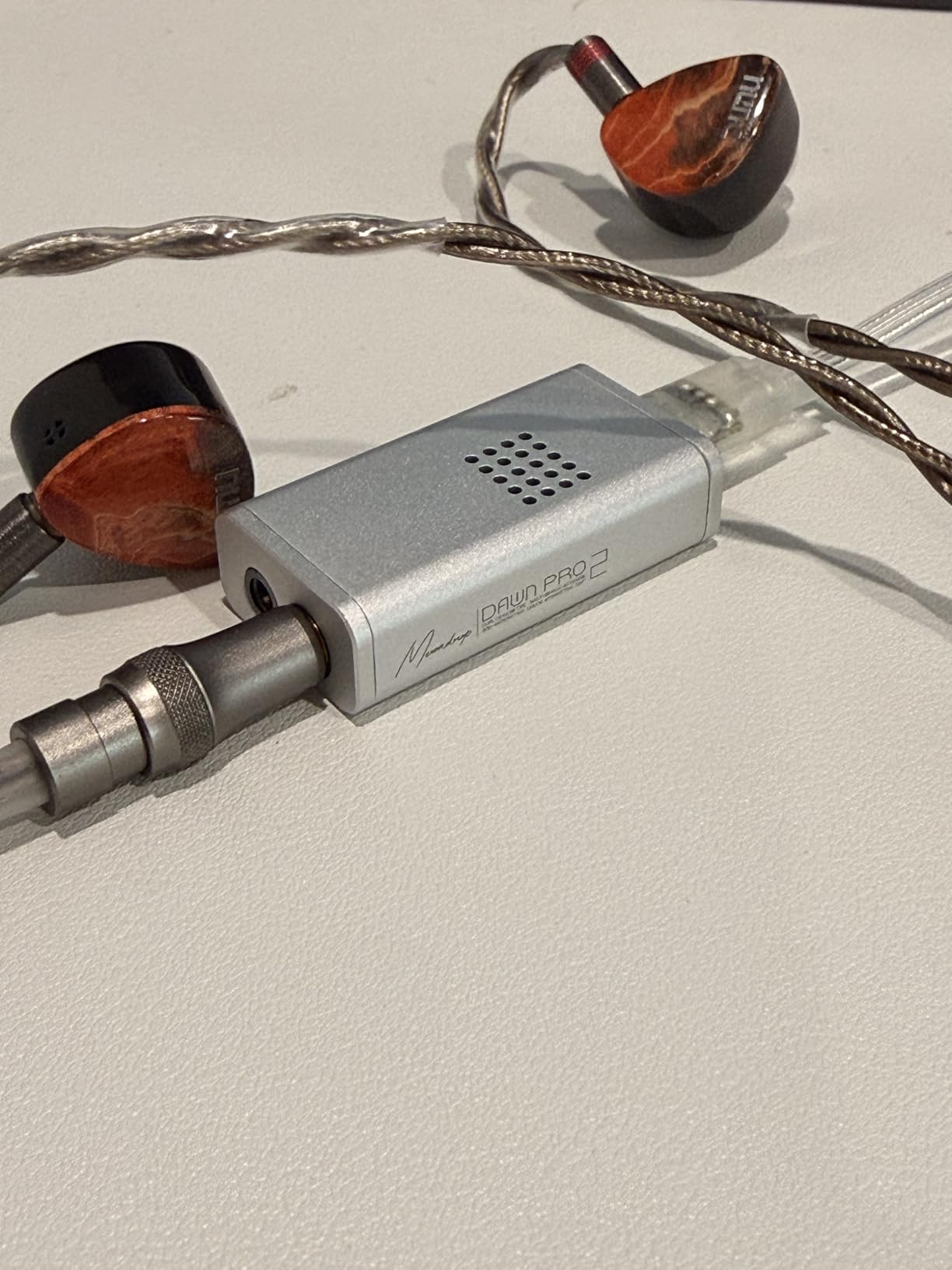
The Dawn Pro 2 is the most software-forward unit in this roundup. It runs dual Cirrus Logic CS43198 DAC chips with an independent crystal oscillator and three separate LDO power chips dividing DAC and digital power, which is careful design for something this small.
The feature that distinguishes it is the second-generation DSP in the Moondrop app. It gives you parametric EQ plus a database of headphone frequency response measurements, so you can load a correction curve for a specific model instead of guessing at a tone control. For in-ear listeners who care about match, that is the whole point of the device.
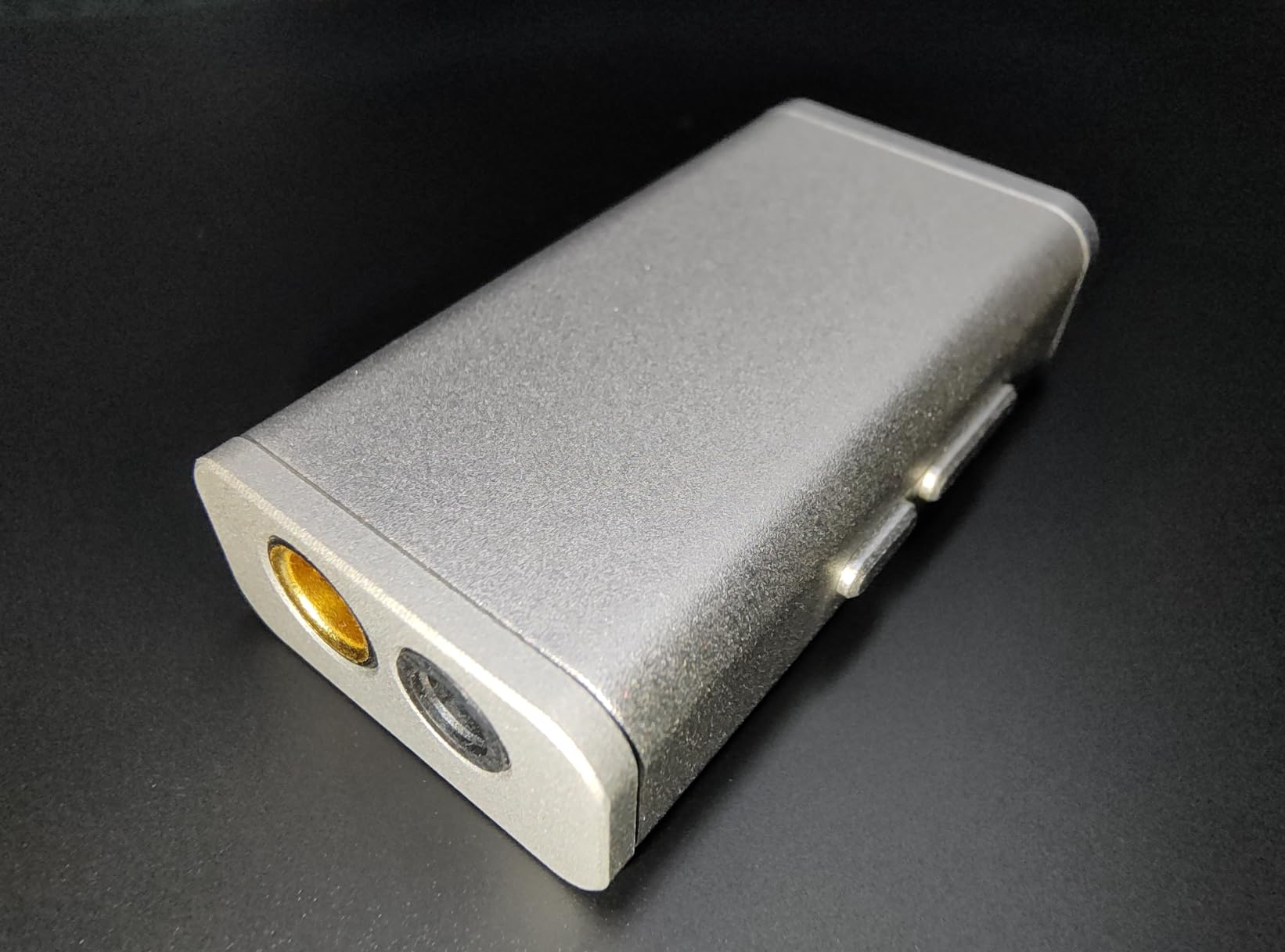
Volume control runs through 100 near-lossless steps, which matters more than it sounds. Phone volume buttons are coarse and often compress the signal, so a fine digital attenuator in the DAC is a real upgrade in control. Output voltage is 4Vrms with 124+124mW of power, and both 3.5mm single-ended and 4.4mm balanced outputs are present.
The body is CNC-machined anodized aluminum with improved venting for heat dissipation, and it comes with a USB cable. Format support runs to 32-bit 384kHz PCM and DSD256.
Who it suits
In-ear listeners who want repeatable, measurable results. A parametric EQ with a headphone database is a genuinely different proposition from a bass and treble knob, and the 100-step volume makes it easy to match levels between sources and compare curves honestly.
It is also a clean, neutral-sounding dongle, and owners describe the presentation that way. If you want flat and adjustable rather than flattering, this fits.
Where it runs out of room
124mW per channel is modest. That is fine for in-ears and easy dynamic headphones, and it is not enough for very demanding planar magnetics, where a dongle with several hundred milliwatts would be a better match.
There is no hardware gain switch, so very sensitive in-ears can pick up the noise floor, which is the main complaint from owners. And the EQ features depend entirely on the Moondrop app, which adds setup complexity if you would rather not deal with software.
12. FiiO KA13 – Best Pocket Pick with Balanced Output
FiiO/JadeAudio KA13 Portable DAC Dongle, USB-C Adapter, 3.5mm and 4.4mm Outputs Compatible with Android/iOS System/PC/Music Players, PCM 384kHz/32bit | DSD256 550mW high Power (Black)
Dual CS43131 DACs
550mW balanced in desktop mode
3.5mm and 4.4mm outs
Pros
- Desktop mode delivers 550mW balanced
- unusually high for a dongle
- Dual CS43131 DACs and dual SGM8262 op-amps give a clean detailed signal
- 3.5mm single-ended and 4.4mm balanced outputs
- App control for RGB lights SPDIF output and audio filters
- 2 percent 1-star share shows high satisfaction
Cons
- No hardware gain switch so very sensitive IEMs can pick up the noise floor
- App-based control means filter and light settings need a phone connection
- Balanced performance and desktop mode depend on source and app support
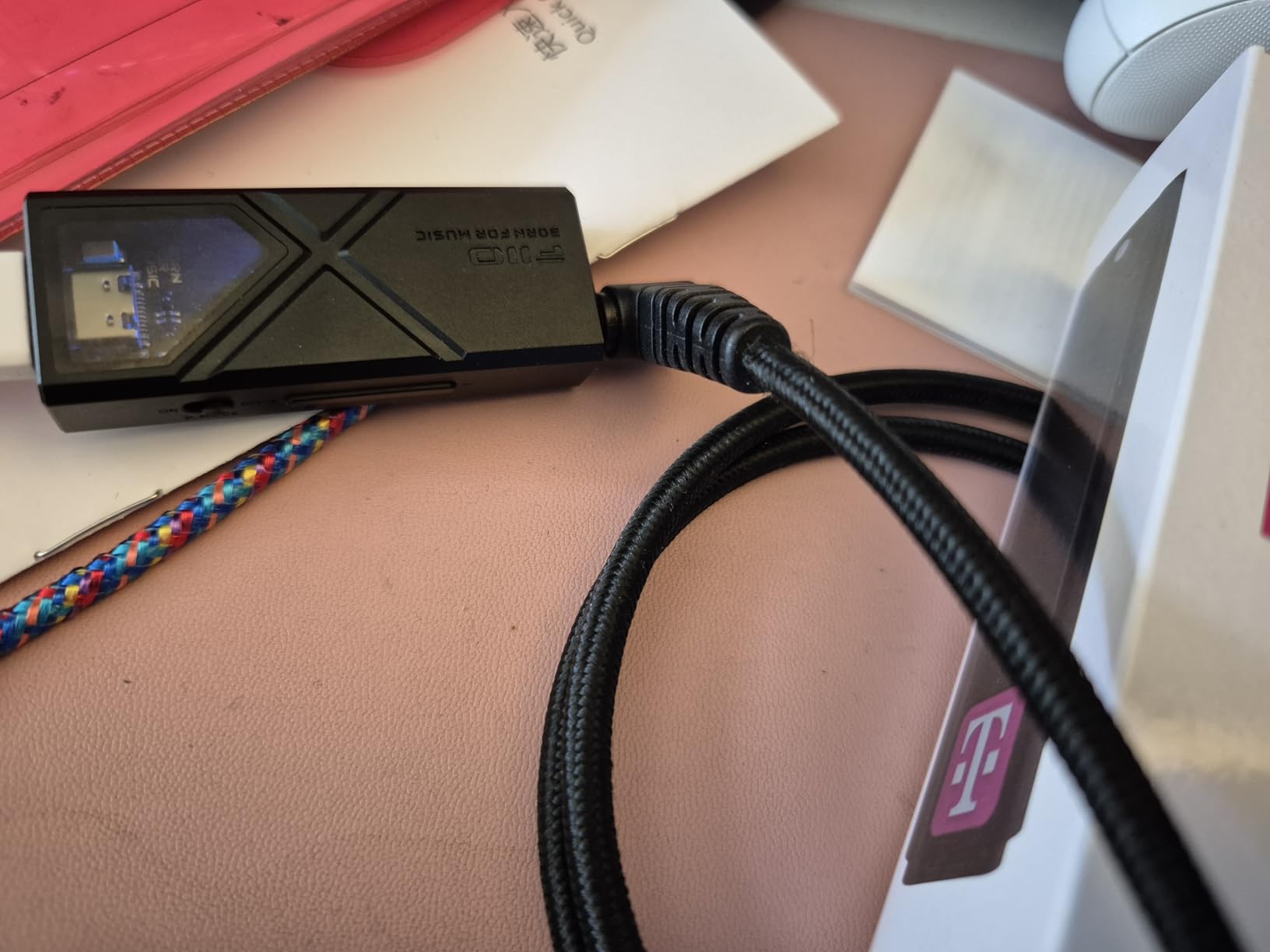
The KA13 solves the two problems that make people avoid dongles. It has a real 4.4mm balanced output, and in desktop mode the balanced power rises to 550mW, which is far more than a dongle of this size is normally capable of. It is a USB-C adapter that plugs straight into a phone, a laptop or a player.
Internally it uses dual CS43131 DAC chips with dual low-noise SGM8262 op-amps. Output is 3.5mm single-ended and 4.4mm balanced, with PCM 32-bit 384kHz and DSD256 support despite the size.
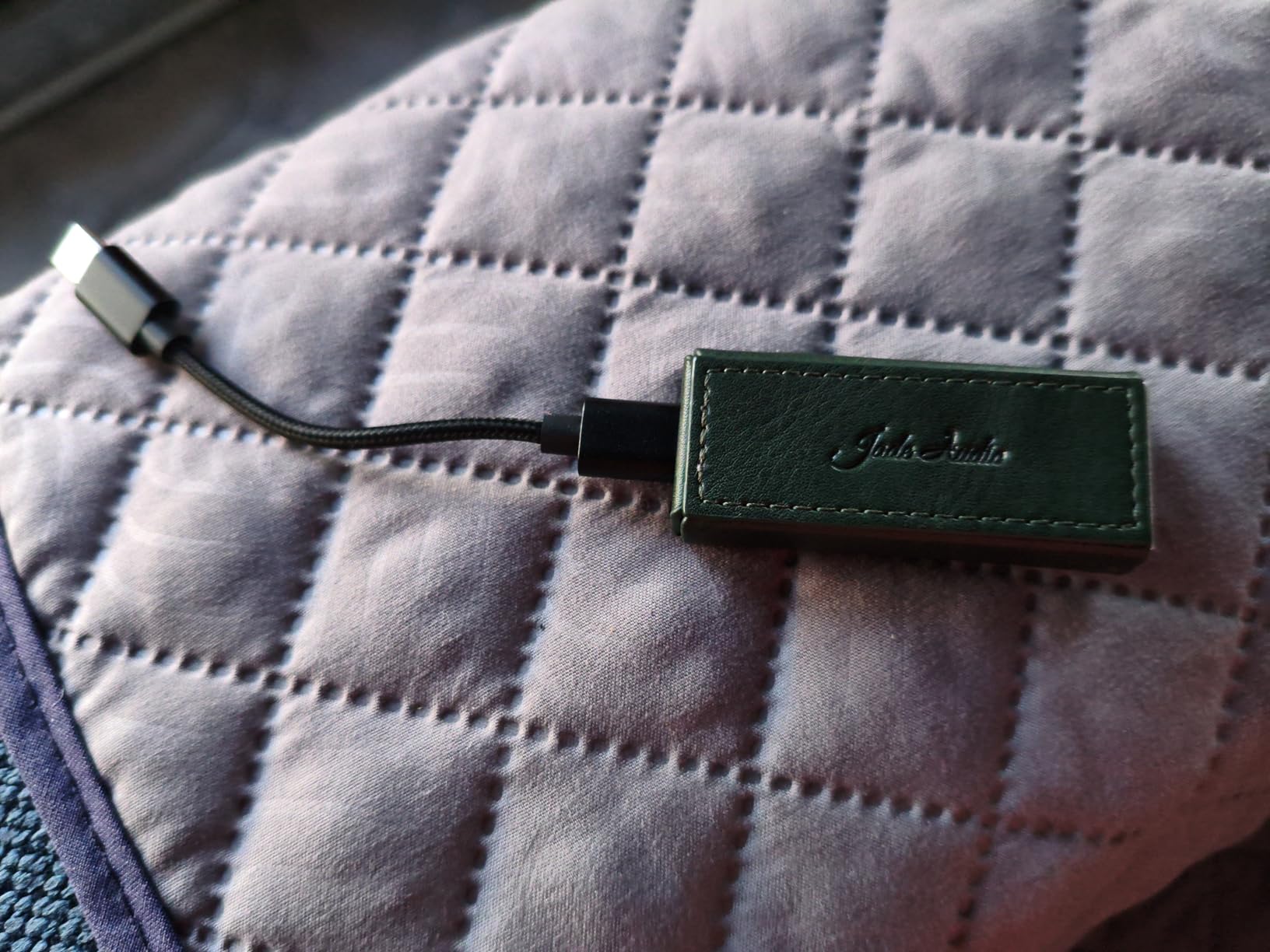
The FIIO Control app handles RGB lighting, SPDIF output switching and audio filters, and it works with Android, iOS, PCs and music players. The 2 percent 1-star share is the lowest in this roundup, which usually signals a product that does what it claims without drama.
What surprised me is how much of a desktop headphone the desktop mode behaves as. A pair of moderately demanding dynamic headphones that struggle on a phone are comfortable from the balanced output, which blurs the line between a dongle and a small desktop unit.
Why it is worth carrying
Balanced output at this price is unusual, and it means you can use a balanced cable with a balanced-capable headphone instead of defaulting to single-ended. The dual DAC and dual op-amp layout keeps the signal clean at higher output levels, which is where smaller dongles tend to compress.
It is available in black and silver, has an aluminum body, and the whole point is that it disappears into a pocket. For travel, it does the job better than units with twice the size and a quarter of the output.
What to watch out for
There is no hardware gain switch. For very sensitive in-ears that means the noise floor can become audible, and this is the most common limitation owners report. The app also means filter and lighting settings need a phone connection, which is friction on a desktop.
Desktop mode and the full balanced performance depend on your source and app support, so check compatibility before you commit. Otherwise this is a well-executed, well-reviewed small unit.
How to Choose a DAC Amp Without Overthinking It
Most people spend more time on this decision than it deserves. Work through these five questions in order and the right product falls out of the list above on its own.
How much power do your headphones actually need
Power need scales with impedance. A 16 to 32 ohm headphone needs very little and will play loudly from almost anything. A 250 to 300 ohm headphone needs roughly ten times the voltage, which is why the Sennheiser HD 600 family and similar models feel quiet on a laptop. Above 600 ohm you are into studio territory and you need a serious desktop unit.
Look for a published power figure at 32 ohm, not a marketing peak. In this roundup the range runs from 124mW on the Moondrop Dawn Pro 2 through 640mW single-ended and 2570mW balanced on the Fosi ZH3, and up to 7600mW x2 on the Topping DX5 II. Anything at the low end of that range is for easy loads; anything in the middle handles most high-impedance dynamic headphones.
Output impedance matters as much as power. The closer a DAC amp gets to zero ohms, the less its behaviour changes with headphone impedance, and every unit in this list uses low output impedance designs. You do not need to check this in detail, but you should avoid very old or very cheap designs where it is a concern.
Balanced output: 6.35mm, 4.4mm and XLR explained
Balanced output carries two independent signal paths with a shared ground, which cancels common-mode noise over long cable runs. In practice it gives more headroom and can reduce interference, and it matters most with high-impedance headphones on long cables.
The connectors are the confusing part. 6.35mm, often called 6.35 or TRS, is a single-ended jack on most units, and it is the standard for quarter-inch headphones. 4.4mm is the modern balanced headphone jack used by Sony and others, and it needs a 4.4mm cable. 4-pin XLR gives balanced output to studio-style headphones, and 3-pin XLR is generally an unbalanced line-level connection.
Before buying a balanced-capable unit, check that your headphones actually have a balanced input. Plenty of headphones sold as balanced do not support it properly, and the gain in that case is small. Buying a DAC amp and then not buying a balanced cable is the single most common wasted purchase described in the forum threads I read.
Does the DAC chip matter
Less than you think, which is why every recommendation above is justified by power, outputs and reliability rather than chip pedigree. The chips here span Cirrus Logic CS43198 and CS43131, AKM AK4493SEQ, ESS ES9281AC, ES9038Q2M, ES9039Q2M and ES9039MSPRO, and a Texas Instruments NE5532 in the amp stage of one budget unit.
Two chip debates come up constantly. The first is delta-sigma versus R-2R resistor ladder designs, with enthusiasts split on whether the older architecture sounds different; no product in this roundup uses an R-2R stage, and the reviewers of the ones that do not use one rarely raise it. The second is sample rate claims such as PCM 768kHz or DSD512, which describe capability rather than audible benefit. Playback above 96kHz PCM or DSD128 is mostly about the file you have, not the sound you hear.
What does affect listening is the noise floor and distortion, and in practice anything in this list clears the bar that reviewers use. If a unit measures well and has enough power for your headphones, the chip name is marketing detail.
Do you need a preamp, or a stack
A preamp exists to control volume for a power amplifier or powered speakers that have none of their own. If you do not own those, you do not need preamp functionality, and you should be suspicious of any listing that implies otherwise. The Fosi ZH3 in this roundup is a good example of the trap: reviewers confirm its XLR and RCA line outputs are fixed level.
A stack is a separate DAC feeding a separate amplifier. It makes sense when you want to change one half of the chain, when you already own a good amplifier, or when your headphones need far more power than any single box provides. Forum consensus is that for most people a modern all-in-one combo closes the gap, and the added flexibility is not worth the extra boxes and cables unless you have a specific reason.
One real reason to look at fixed line outputs rather than a preamp: a digital preamp function inside a DAC, as on the Topping DX3 Pro+, gives you clean low-volume attenuation without an analogue potentiometer, which is useful if you do feed speakers.
Which features matter for gaming and consoles
For gaming, a microphone input is the feature people forget. Most motherboards expose a combined headset jack, which is convenient, but a DAC amp with a dedicated mic input like the Fosi K5 Pro is a cleaner single-box solution and avoids an extra splitter.
Optical input matters for consoles, because the PS5 routes audio through a TV that applies its own processing. An optical input lets you bypass that. UAC mode switching, found on the Fosi ZH3, exists for the same reason: consoles expect a specific USB class. USB-C OTG support is what makes a unit work with a phone or handheld directly.
Bluetooth is a genuine option now. LDAC and aptX HD are good enough that some listeners skip a wired connection entirely, and units like the Topping DX3 Pro+ and DX5 II make that practical on a desktop chain. For a competitive game, though, keep the wired path, because wireless adds latency.
Frequently Asked Questions
What is the best DAC amp combo for headphones?
For most listeners the FiiO K11 is the best overall: a CS43198 DAC, up to 1400mW of output, both 4.4mm balanced and 6.35mm single-ended headphone jacks, plus RCA line outputs. If you drive headphones above 300 ohm and want more power and swappable op-amps, the Fosi Audio ZH3 leads with 2570mW balanced into 32 ohm. For a fully balanced desktop chain with a premium DAC stage, the FiiO K7 uses dual AK4493SEQ chips and 2000mW of balanced output.
What is the best audiophile headphone amp?
Among the units here, the Fosi Audio ZH3 is the strongest match for hard-to-drive audiophile headphones, combining an AKM4493SEQ DAC, 2570mW balanced output at 32 ohm and a three-level gain switch covering 16 to 300 ohm loads. Its noise figure is quoted as low as 1.9 microvolts. The Topping DX5 II goes further on raw power at 7600mW x2 balanced if you own the most demanding planars.
Which DAC has the best sound quality?
No DAC chip wins outright, and the honest answer is that the audible differences between modern chips in this roundup are small. You will see Cirrus Logic CS43198 and CS43131, AKM AK4493SEQ, and ESS ES9281AC, ES9038Q2M, ES9039Q2M and ES9039MSPRO across the list. What you can measure and trust is noise floor and distortion, not the chip badge. Choose on output power for your headphone impedance, output format and reliability instead.
What is the best budget headphone DAC amp?
The Fosi Audio K5 Pro is the best budget pick for most people, and it is also the one to get for gaming because it adds a microphone input the cheaper Q4 lacks. It publishes a full power ladder from 1000mW at 16 ohm down to 80mW at 300 ohm, uses a Texas Instruments NE5532 op-amp, and works with PC, Mac, PS5 and phones. The Fosi Q4 is cheaper still and best for a simple PC or TV upgrade.
Do my headphones need an amp?
Run the phone test: play something you know on your phone or laptop. If you need to go past roughly 70 percent volume for a comfortable level, your source lacks power. If you hear hiss at low volume with sensitive in-ears, your source is too noisy. If neither happens, a DAC amp is optional. Headphones above 250 ohm, including most planar magnetics, are the group that genuinely need one, because phone and laptop outputs cannot supply the voltage.
Is a stack better than an all-in-one combo unit?
Not for most people. A stack, meaning a separate DAC feeding a separate amplifier, makes sense if you want to upgrade one half over time, if you already own a strong amplifier, or if your headphones need more power than any single box delivers. Otherwise a modern combo closes the gap with fewer boxes, fewer cables and usually better measured performance. Check line output behaviour carefully: fixed outputs are not a preamp, and the Fosi ZH3 in this roundup is a good example of that distinction.
Which DAC Amp Should You Buy?
Start with your headphones, not the spec sheet. If they are easy to drive at 32 ohm and already play loudly on your phone, buy nothing, or buy the Fosi Audio Q4 to remove PC hum. If they sit between 250 and 350 ohm, the FiiO K11 is the pick I would make, because it pairs a CS43198 DAC with 1400mW of output and both balanced and single-ended headphone jacks in a box that stays cool.
Go higher only when the load demands it. The Fosi Audio ZH3 gives you 2570mW balanced, the widest input and output selection in the group and swappable op-amps. The FiiO K7 is the balanced desktop specialist, and the Topping DX5 II is for very hard loads or a measured EQ workflow. For travel, the iFi hip-dac 3 has the only battery in this roundup, the Questyle M15i is the safe pick for Apple hardware, and the FiiO KA13 is the most capable dongle.
That is the honest summary of the best DAC amps for headphones in 2026. Twelve boxes, one decision rule: buy the least power you need, the outputs you will actually use, and skip the rest. Check the latest price on any of them before you order, and if you are still unsure, the phone test costs you nothing.