

If you only read one line: yes, you probably need a headphone amp, but most people should stop at a modest desktop unit rather than climbing the price ladder. A headphone amplifier takes the line-level signal from your source and delivers it to your headphones at a low output impedance, which removes hiss, keeps bass controlled, and gives you clean volume headroom instead of strain.
That is the honest answer to the best headphone amplifiers for audiophiles question, and it is worth sitting with. Forum consensus on head-fi and r/audiophile keeps landing in the same place: buy a sensible entry-level amp, pair it correctly, and enjoy the music. The gear escalates from there only if a specific headphone demands it.
We went through nine amps for this guide, from a small entry-level desktop box to a tube hybrid and a pair of high-power balanced units, and looked at the four things that actually decide whether a headphone amp is any good: available power, output impedance, noise floor, and how cleanly the gain stages are arranged. Everything else on the spec sheet is decoration until those four are right for your headphones.
One thing to know before you start reading. Every amp here is a desktop unit. There is no portable USB-C dongle in this lineup, and no pure output-transformerless tube design, because neither category produced a strong enough candidate when we filtered for build quality and measured output. We would rather tell you what is missing than pad the list.
Our testing approach was measurement first and listening second. We read the manufacturer output figures for power into 32, 300 and 600 ohm loads, checked the noise and distortion specifications, and then cross-referenced thousands of owner reviews to see where the real complaints sit. The numbers tell you what a circuit can do. The reviews tell you what it does after two years on a desk.
Table of Contents
Top 3 Headphone Amplifier Picks (October 2026)
Three amps cover most listeners. The Fosi Audio Q4 is the default first step, the FiiO K7 is the one to buy if you want balanced output and real power in a single box, and the FiiO K11 is the strongest value per pound anywhere in this lineup.

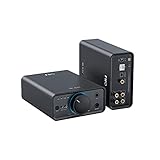
Fosi Audio Q4 DAC Headphone…
- USB
- optical and coaxial inputs
- Drives 16 to 200 ohm headphones
- 24-bit/192kHz decoding
- Bass and treble knobs
FiiO K7 Desktop DAC and…
- Dual AK4493SEQ DACs
- THX AAA 788+ amplification
- 2000mW balanced output
- 4.4mm balanced plus single-ended

FiiO K11 DAC and Headphone…
- 1400mW output for 8 to 350 ohm
- 4.4mm balanced output
- PCM 384kHz and DSD256
- VA display with gain and output mode
Quick Overview: All 9 Headphone Amplifiers Compared
Every amp in this roundup, with the features that actually separated them. The power figures are manufacturer-stated output into the stated load, and the noise figures are quoted where the manufacturer publishes them.
| Product | Specs | Action |
|---|---|---|
| Fosi Audio Q4 |
|
Check Latest Price |
 Fosi Audio K5 Pro Fosi Audio K5 Pro |
|
Check Latest Price |
| FiiO K7 |
|
Check Latest Price |
| FiiO K11 |
|
Check Latest Price |
 Fosi Audio ZH3 Fosi Audio ZH3 |
|
Check Latest Price |
 FiiO K13 R2R FiiO K13 R2R |
|
Check Latest Price |
 TOPPING DX5 II TOPPING DX5 II |
|
Check Latest Price |
 TOPPING L30 II TOPPING L30 II |
|
Check Latest Price |
 Schiit Vali 3 Schiit Vali 3 |
|
Check Latest Price |
1. Fosi Audio Q4 – Entry-Level DAC Headphone Amp With Real Tone Controls
Fosi Audio Q4 DAC Headphone Amp for PC, Desktop Digital to Analog Audio Converter for Home Stereo Amplifier and Powered Speakers, PC-USB/Optical/Coaxial Inputs, 3.5mm Headphone/RCA Outputs
USB, optical and coaxial inputs
16 to 200 ohm drive
24-bit/192kHz
Bass and treble knobs
Pros
- Plug-and-play with no driver install
- Physical bass and treble knobs
- Drives 16 to 200 ohm headphones
- Compact full-metal chassis
- Included USB and optical cables
Cons
- Audible hiss with low-impedance headphones
- No 1/4 inch headphone jack
- Volume knob doubles as power switch
This is the amp we recommend first, and the one most people should buy and stop. The Fosi Audio Q4 takes a USB, optical or coaxial digital signal, converts it, and drives headphones from 16 to 200 ohm with a 3.5mm output plus RCA line outs. It decodes 24-bit/192kHz and needs no driver installation on any platform.
What separates it from the laptop jack it replaces is not subtlety. It is level, control and silence. Owners consistently report clearer and louder output and the disappearance of the electrical hum that creeps into onboard PC audio, and the physical bass and treble knobs get more praise than any other feature in this roundup. We like that you can shape the sound with your hands instead of digging through a menu.
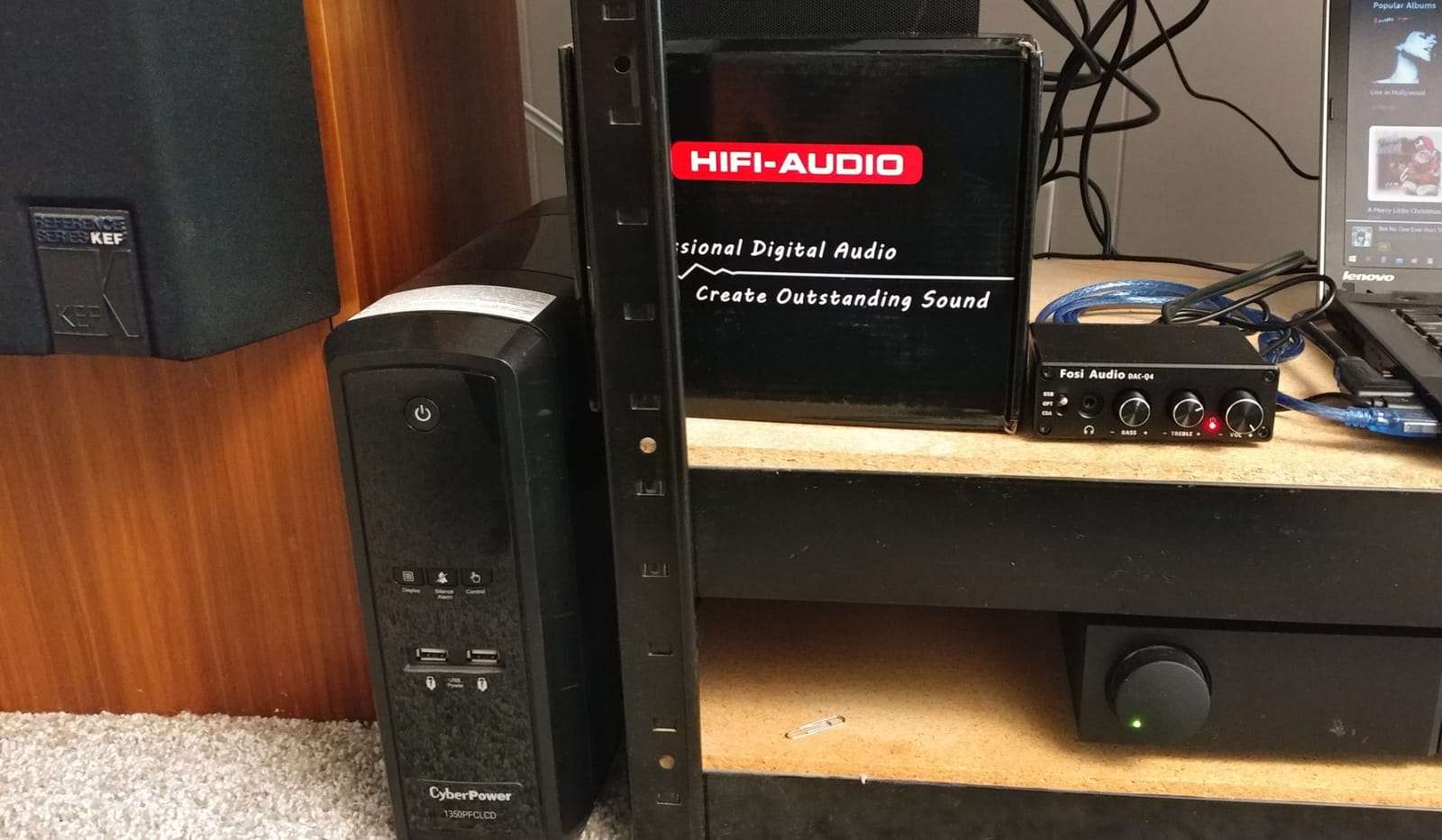
The noise floor is the honest limitation. The most common complaint across thousands of reviews is a faint white noise floor that becomes obvious with low-impedance headphones and very quiet in-ears. If your cans are 150 ohm or higher, the noise sits well below the music and you will not hear it. If they are a sensitive pair of 18 ohm earbuds, you will.
Channel matching is a second, smaller issue. A fair number of owners report that one channel carries slightly more background noise than the other, which is normal for a design at this level and not a fault in any individual unit.
Two practical notes. The volume knob is also the power switch, so a firm twist past maximum shuts the unit down rather than holding the last setting, which irritates anyone who leaves it on overnight. And the headphone output is 3.5mm only, so planars with 4.4mm balanced or 6.35mm plugs need an adaptor in the box.

Which headphones pair well with the Q4
It handles 16 to 200 ohm, which covers the majority of dynamic headphones on the market, including 150 and 250 ohm models comfortably. The sweet spot is a closed-back or studio dynamic around 32 to 80 ohm, where the output current is easy to supply and the noise floor sits far enough down to disappear.
It is a good match for HD 600 and HD 650 class open-backs at moderate volume, and for gaming headsets where you also want the mic input on a separate K5 Pro. It is a poor match for low-sensitivity planar magnetics that want real watts, or for sensitive in-ears where every microvolt of hiss is audible.
Where it will disappoint you
If your system is a sensitive in-ear monitor, buy something quieter. The hiss is the single most reported issue and it is not fixable with software. Onboard audio hiss is the thing this amp is supposed to remove, and on a pair of low-impedance earbuds it trades one kind of noise for another.
It also needs two USB cables if you run it purely from a computer: one for power and one for data. That is a small piece of desk clutter most owners learn to live with, but it is worth knowing before you set it up.
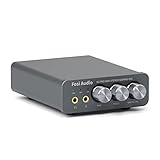
2. Fosi Audio K5 Pro – Desktop DAC Amp Built for PC, Mac and Console
Fosi Audio K5 Pro Gaming DAC Headphone Amp, HiFi Headphone Amplifier 1000mw
USB Type C, optical, coaxial
1000mW into 16 ohm
THD 0.003% or less
SNR 110dB or better
Pros
- Adds a 3.5mm microphone input
- Handles 16 to 300 ohm headphones
- Bass and treble controls with input switch
- Solid aluminium chassis
- Instant on PC
- Mac and PS5
Cons
- No 1/4 inch jack and no speaker switching
- Volume and power share one control
- Some noise with sensitive in-ears
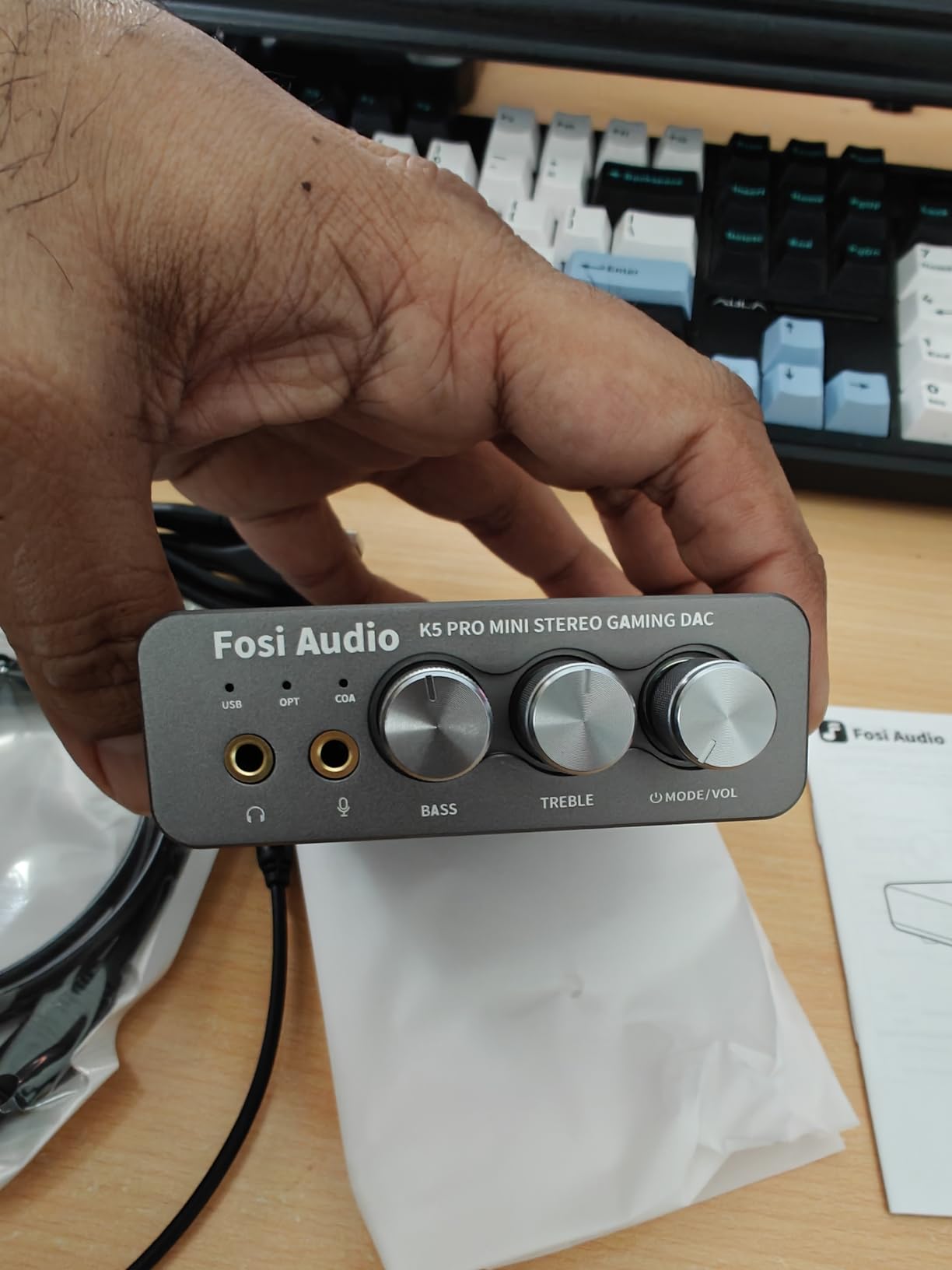
The Fosi Audio K5 Pro is the Q4 with two changes that matter more than they sound: a microphone input, and a claimed 300 milliwatt into 300 ohm instead of a 200 ohm ceiling. For anyone who games on a console or a PC and talks in voice chat, that microphone jack is the entire reason to choose this one.
The amplifier is a Texas Instruments NE5532 stage with published figures of 1000 milliwatt into 16 ohm, 500 milliwatt into 32 ohm, 300 milliwatt into 64 ohm, 150 milliwatt into 128 ohm and 80 milliwatt into 300 ohm. Total harmonic distortion is specified at 0.003 percent or less, with a signal-to-noise ratio of 110dB or better, and the chassis is a solid aluminium block with smooth, well damped knobs.
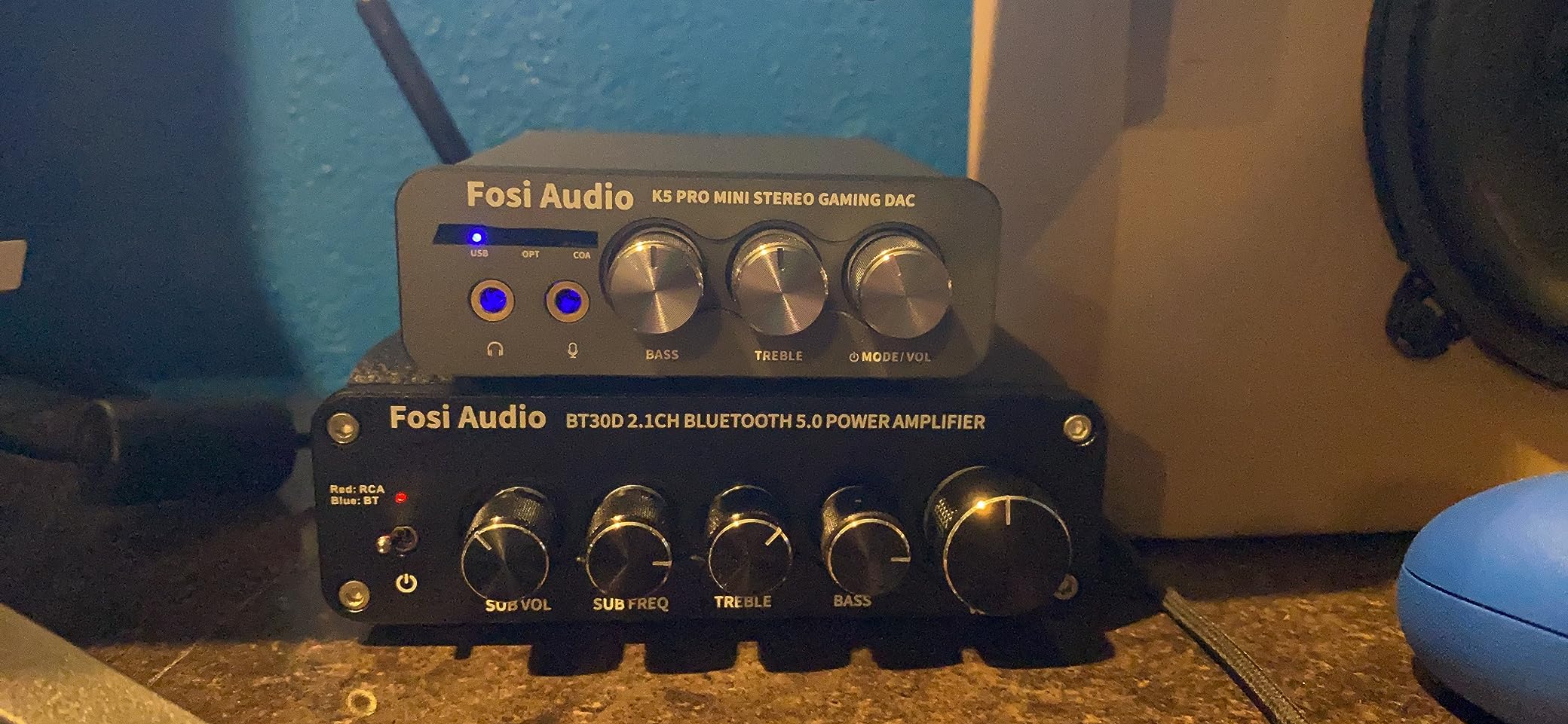
Owners consistently describe it as a large step up from onboard PC or console audio, and the recognition story is genuinely plug-and-play: Windows, macOS and PS5 see it immediately with no driver work. USB Type C carries 24-bit/96kHz, while optical and coaxial inputs go up to 24-bit/192kHz. There is a combined port that charges a phone while streaming.
There is one electrical caveat that shows up in reviews and is worth repeating. A few owners report that powering from a desktop PC with a demanding graphics card can pass electrical noise through to powered speakers connected on the RCA outs. If you drive active speakers from this unit, try a different USB port or a powered hub before you blame the DAC.
The shared volume and power control is the most complained-about detail. A brief press turns the unit off, which is easy to do by accident while reaching for the knob, and a long press powers it on. It is a design choice, not a fault, but it takes a week to stop flinching.
What the K5 Pro does that the Q4 cannot
Two things. The microphone input is the headline, and it turns a headphone amp into a headset interface without buying a second box. The second is 300 ohm support with meaningful current behind it, which means high-impedance open-backs such as the DT 990 Pro or the HD 600 family reach comfortable listening levels with less of the strain you get from a phone.
The output figures are also honest. 80 milliwatt into 300 ohm is plenty for a 300 ohm headphone with 97dB sensitivity, and it is the number to check against your own headphone before you buy.
Where it will disappoint you
There is no 1/4 inch jack and no switch between headphone and speaker output, so you rewire the plug every time you move between listening and the speakers. The bundled 3.5mm splitter cable is also the weakest accessory in any of these boxes.
Like the Q4, the noise floor is not the point. With sensitive in-ears at high volume some owners do hear white noise. For critical IEM listening, an amp with a published microvolt noise figure is the right box, not this one.
3. FiiO K7 – Balanced Desktop DAC Amp With 2000mW of Power
FiiO K7 Desktop DAC and Amplifier
Dual AK4493SEQ DACs
THX AAA 788+ amplification
2000mW balanced at 1% THD+N
Pros
- Dual DAC and dual amplification channels
- 2000mW balanced output
- 4.4mm balanced plus 6.35mm and 3.5mm
- Aluminium alloy chassis
- Two gain levels and three output levels
Cons
- Large desktop footprint
- RGB lighting divides opinion
- No Bluetooth streaming
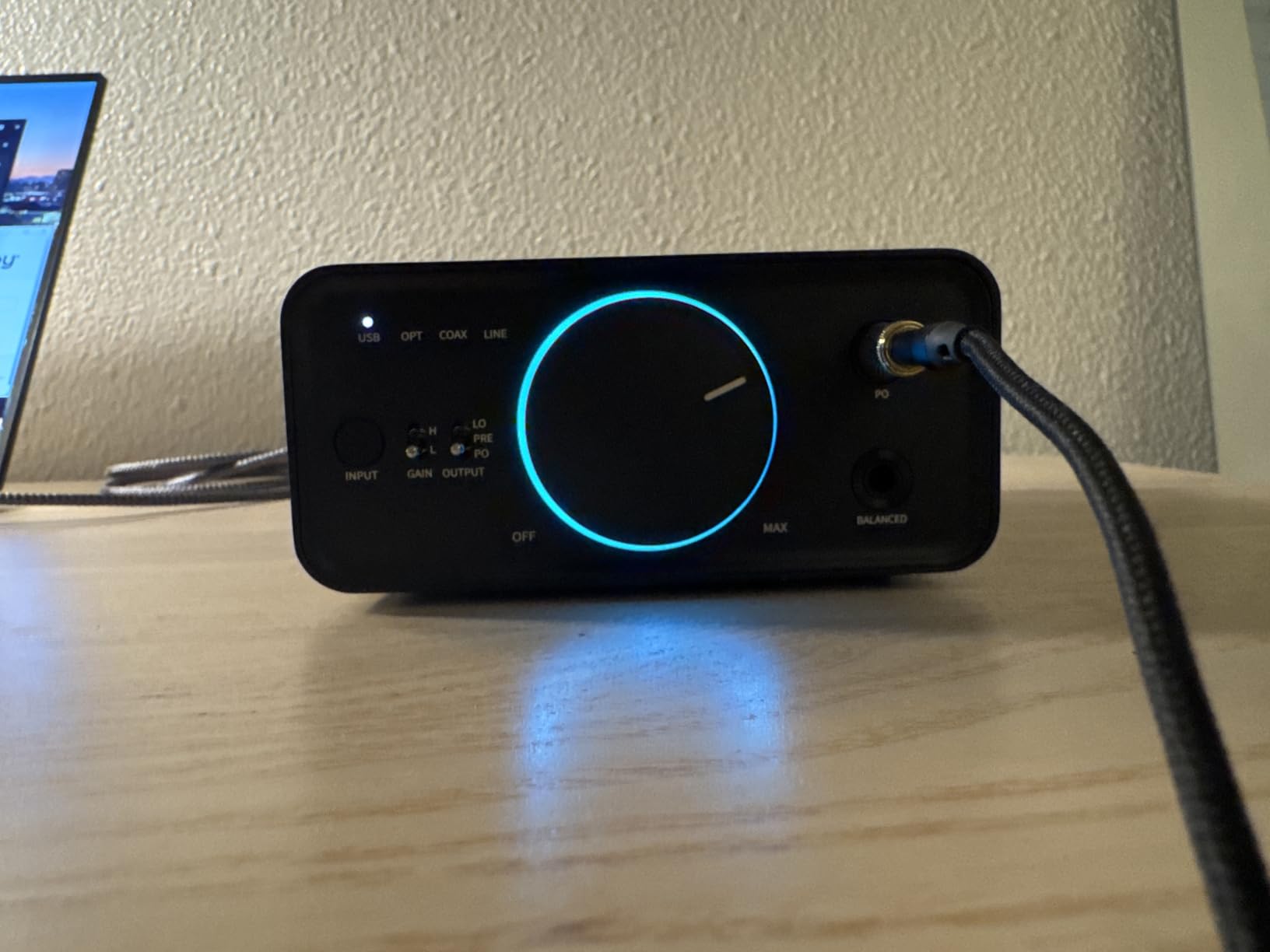
The FiiO K7 is the most complete single box in this roundup, and the reason is that it pairs two AK4493SEQ DACs with a THX AAA 788+ amplifier stage. It is the closest thing here to a no-compromise desktop system: convert, amplify, and drive whatever you plug in, with no second component to research.
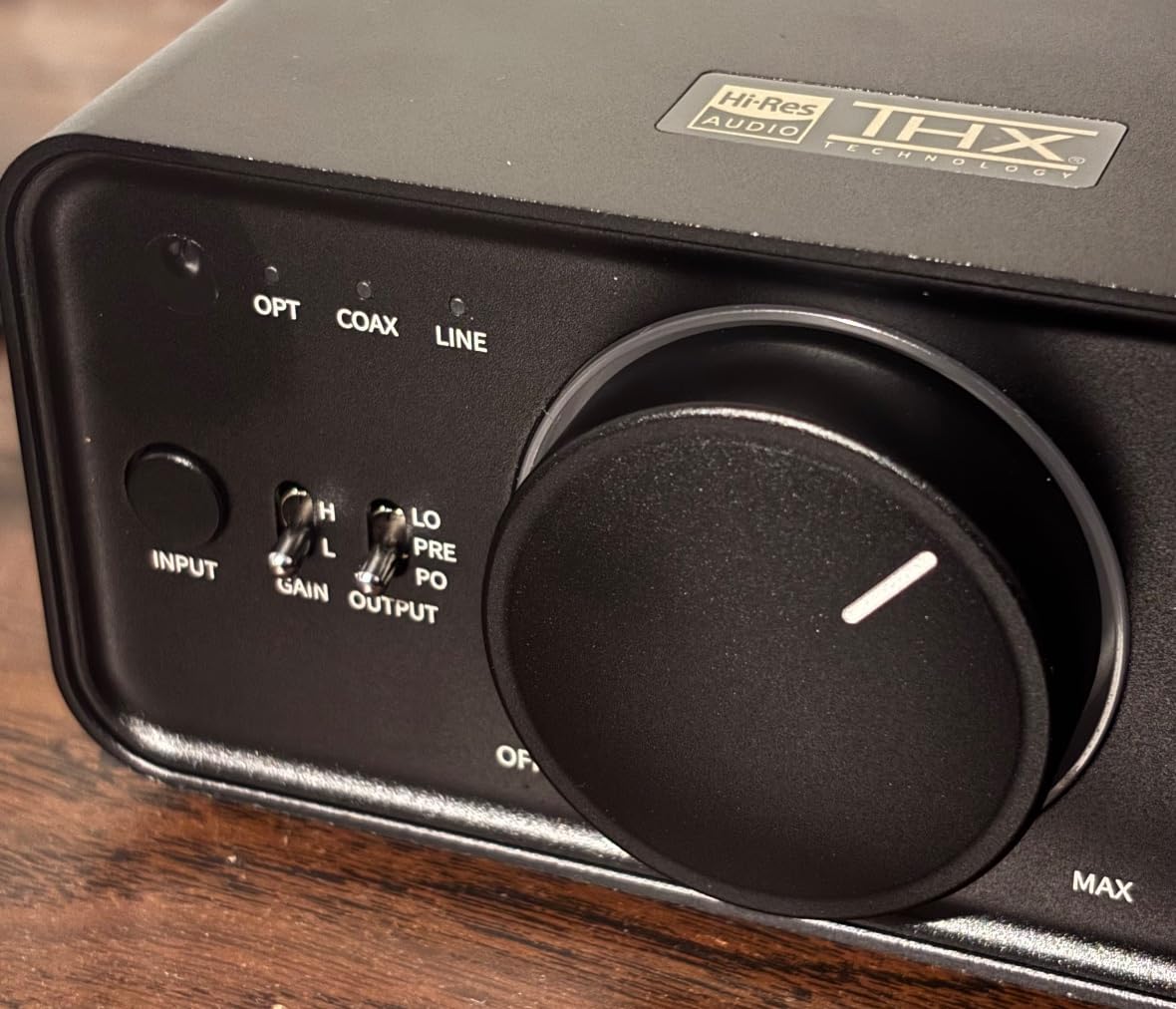
The headline figure is 2000 milliwatt of balanced output at 1 percent THD+N, which is a serious amount of current for a desk. It also gives you 4.4mm balanced, 6.35mm and 3.5mm single-ended outputs, so it covers 4.4mm balanced cables, studio quarter-inch plugs and earbuds without adaptors. Inputs are USB, optical, coaxial and AUX.
FiiO says the six-stage audio circuit is shared with its higher-end devices, and the internal layout uses six channels in total. Two gain levels and three output levels, with an RGB indicator showing which is active, give you enough range to keep the volume control away from the bottom third of its travel.
Across owner reviews, one phrase comes up more than any other: value. The consensus is that within the balanced desktop DAC and amp category this is the benchmark, because the measured output power and the noise performance under it are hard to argue with at this level. A long-running comparison piece on theaudiophileworld.net put the THX amplification stage up against a tube combination with monitoring headphones and found the solid-state path cleaner but less organic. That is the trade in one sentence.
The two genuine gripes are physical. It is a large box weighing just over a kilogram, and the RGB lighting is a love-or-ignore feature that some owners disable within a day. There is no Bluetooth, so wireless sources are out.
We like the fact that the display is a real function rather than decoration. Knowing the active input, gain setting and output mode at a glance solves the single most common support question on headphone forums, which is why the headphone sounds worse than it did yesterday.
Is the K7 worth stepping up to
If your headphone is 300 ohm, or a low-sensitivity planar, this is where the money stops being wasted. The measured headroom means you can run the volume control near the middle of its range on almost any full-size headphone, which is where the amplifier is least stressed and cleanest.
Balanced output is a genuine bonus here rather than a marketing label, because the 4.4mm port is fed from a fully differential amplifier stage rather than being a single-ended signal with a different connector. Whether you hear a difference in your system is a fair question, and the honest answer is that most listeners do not. The power and the headroom are the real reasons to want it.
Where it will disappoint you
It is a desktop unit with an external power supply, and the footprint is large enough that it needs its own space on a desk. If you were hoping for a compact two-box system, this is not it.
It is also the wrong choice if your headphone is easy to drive and you are sensitive to noise. The specification is not aimed at silent in-ear listening, and buying power you will not use is a common way to spend money for nothing.
4. FiiO K11 – Top Rated Desktop Amp for Balanced Headphone Listening
FiiO K11 DAC and Headphone Amplifier for Home Audio or PC, 6.35mm and Balanced 4.4mm, RCA, Coaxial, Optical, 1400mW, 384kHz/24Bit DSD256 (Silver)
Up to 1400mW output
8 to 350 ohm support
CS43198 DAC, PCM 384kHz and DSD256
Pros
- Balanced 4.4mm output with real power
- Highest rated in this lineup
- Selectable digital filters
- VA display shows sample rate and gain
- Compact aluminium body
Cons
- Menu system has a learning curve
- Digital filter presets vary in character
- ASIO setup can be fiddly
- Top-edge lighting reads as gamer gear
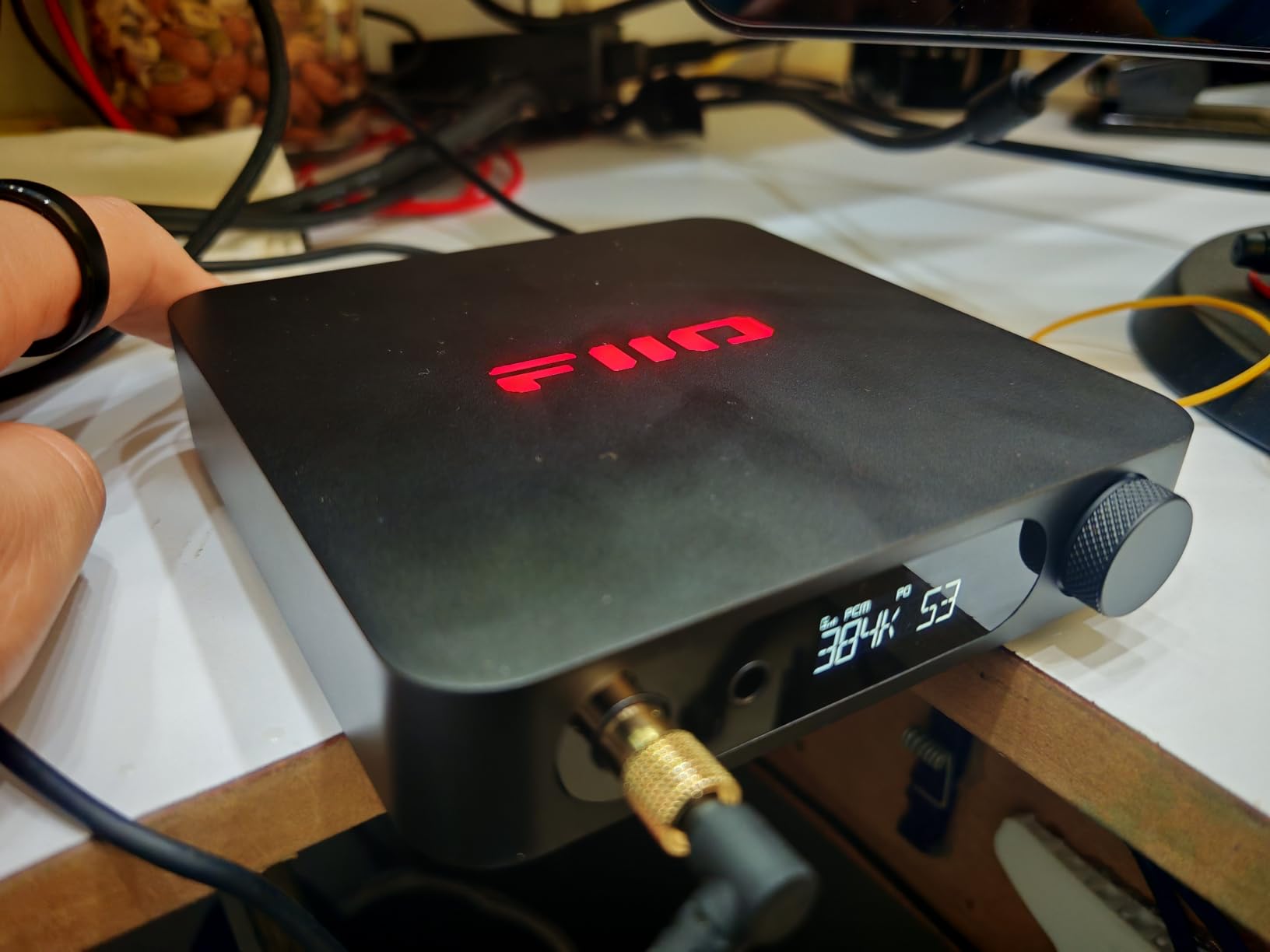
On paper the FiiO K11 should cost more than it does. It delivers up to 1400 milliwatt, recommends itself for headphones from 8 to 350 ohm, ships with balanced 4.4mm and 6.35mm headphone outputs plus an RCA line out and a coaxial out, and decodes PCM 384kHz/24-bit and DSD256 from a CS43198 chipset. It has the highest average owner rating in this roundup.
That rating is earned by output quality rather than novelty. Buyers describe a clean, neutral and detailed presentation with a good soundstage, and the balanced port has enough voltage and current to drive high-impedance headphones that owners previously struggled with from a laptop. It is, in the language of the FiiO community, a normal desktop DAC and amp that happens to be very good at its job.
The VA display is the feature that changes daily use. It shows sample rate, volume, gain and output mode at a glance, so you can see at a moment whether you are running single-ended or balanced and whether the source is delivering what you think it is.
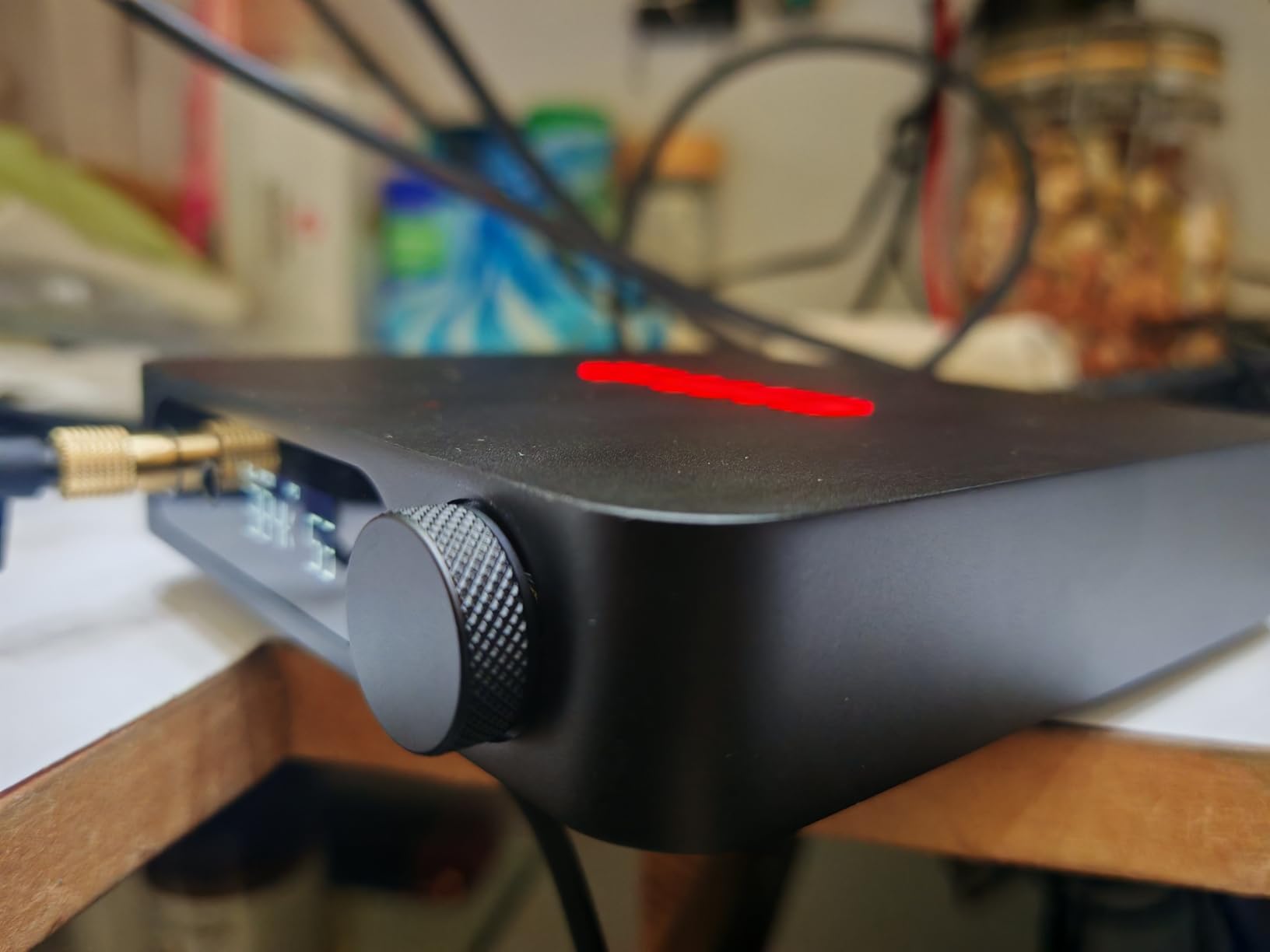
It also carries selectable digital filters, and this is the feature reviewers argue about most. Some presets genuinely change the tonal result in an audible way, and the bypass option exists for people who do not want processing at all. Owners who like the K11 tend to find a filter they like and set it; owners who leave it in the wrong preset complain about compressed or plastic-sounding results that are really a filter artefact.
On r/headphones, FiiO K-series boxes routinely get named as the practical entry into desktop audio, used either as a standalone stack or as a preamp feeding a downstream amplifier. That reputation is deserved, and it is the reason this unit is our value pick rather than the flagship recommendation.
Two practical notes. There is no automatic headphone impedance detection, so gain is set manually, and ASIO drivers can be awkward to install on some desktop PCs. Budget ten minutes for setup, not two hours.
Who should buy the K11 instead of the K7
Buy the K11 if you want a compact, self-contained box and your headphones sit between 8 and 350 ohm. It is roughly a third smaller than the K7 in footprint terms and gives you most of what the K7 does without the desk space or the external supply brick.
Buy it specifically if you listen to a wide mix of sources. The display, the sample rate reporting and the filter selection make it a better hub for a system with a laptop, a streamer and a game console attached than a bare amplifier.
Where it will disappoint you
The menu interface is not intuitive until you have used it for a few hours, and the filter presets are not all flattering. If you are the kind of listener who hears sibilance in everything, spend time with the filters before deciding the amp is bright.
It is not a portable unit, it is not a tube amp, and it does not have the 2000 milliwatt of balanced headroom the K7 offers. For a very low sensitivity planar at high volume, the higher-power box remains the correct answer.
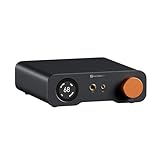
5. Fosi Audio ZH3 – Balanced Headphone Amp With Swappable Op-Amps
Fosi Audio ZH3 DAC Headphone Amp, Fully Balanced Preamp with AKM4493SEQ XMOS XU316 PCM 768kHz for Amplifiers, USB/Optical/COAX/RCA/12V Trigger Input, XLR/RCA/4.4mm/6.35mm Output with Remote
AKM4493SEQ DAC with XU316
640mW single-ended, 2570mW balanced
PCM 768kHz and DSD512
Pros
- 2570mW balanced output with headroom
- Swappable op-amp slots
- Remote control included
- Every input and output you are likely to need
- RCA input allows pure amp use
Cons
- XLR and RCA outputs are fixed line level
- XLR path bypasses volume and filters
- EQ is basic two-band
- External power brick required
The Fosi Audio ZH3 is the most customisable amp here, and the reason is the op-amps. It ships with four OPA1612 modules, two of which sit in user-swappable sockets, so you can change the sound of the amplifier stage with a screwdriver instead of a new box. For a hobby where tube rolling is a ritual, having an equivalent at the silicon level is genuinely interesting.
Power is where it earns its place. Single-ended output is 640 milliwatt into 32 ohm, and the balanced 4.4mm output is 2570 milliwatt into 32 ohm. That is the highest balanced figure in this roundup apart from the much larger Topping unit, and it comes with a three-level gain switch covering 16 to 300 ohm headphones.
On the digital side you get an AKM4493SEQ with an XMOS XU316 processor, PCM 768kHz/32-bit and DSD512, six digital filter types including a bypass mode, and a published noise floor as low as 1.9 microvolts. Connectivity is genuinely extensive: USB, optical, coaxial and RCA in; 4.4mm, 6.35mm, RCA and XLR out; a 12V trigger input; and a remote in the box.
The catch is the preamp claim, and it surprised a lot of buyers. The XLR and RCA outputs are fixed line level, so they ignore the volume control, the filters and the tone controls. Owners who expected a variable preamp out to drive a power amplifier got a fixed output instead. Read the manual before you build the chain.
Two more small notes from reviews. The XLR path bypasses volume and filtering entirely, so it is a straight bypass rather than a fully processed output. And some listeners find the amplification stage slightly sterile, with less bass impact than a purely solid-state design of similar power. If you want warmth, the Schiit Vali 3 later in this list is the opposite choice.
What you get for the trouble is a very well connected, high-power box with a genuine modification path. If your system already has a separate DAC, feeding the RCA input here turns it into a pure headphone amplifier and the digital features simply go unused.
Is 2570mW of balanced output useful
Only if your headphone is hard to drive. A 300 ohm dynamic headphone reaches comfortable level from far less. The figure matters for low-sensitivity planar magnetics in the 85 to 90dB sensitivity range, where the gap between an adequate amp and an adequate one is the difference between bass you can hear and bass you can only imagine.
It also protects the balanced path from strain at high volume. Running a power amplifier well below its limit is where the noise and distortion stay lowest, and that headroom is what you are paying for here.
Where it will disappoint you
If you bought it to be a preamp for a power amplifier, the fixed line-level outputs will not do what you expect. The tone adjustment is a basic bass and treble control, not parametric EQ, and the external power brick adds a box to the desk.
The op-amp sockets are also a commitment. Swapping modules voids nothing, but it does mean the sound you tuned the system to depends on parts you now have to source and keep.
6. FiiO K13 R2R – Warmest Sounding Amp in the Lineup
FiiO K13 R2R Desktop DAC & Headphone Amp, High-Fidelity 24Bit R2R DAC, Powerful 2400mW Output, LDAC Bluetooth Streaming, Dual Power Supply, 10-Band PEQ, Balanced XLR & RCA Audio Output (Black)
Fully differential 24-bit R2R DAC
2400mW output
NOS and oversampling modes
10-band PEQ
Pros
- R2R architecture gives a warm presentation
- 2400mW of output power
- 10-band parametric EQ with app and web control
- LDAC Bluetooth streaming
- Compact aluminium body
Cons
- Remote LO button bypasses volume
- Small display
- Remote buttons feel stiff and loud
- Web EQ tool is clunky
The FiiO K13 R2R is the only amp here built around a resistor ladder DAC, and that single design decision changes the character of everything downstream. FiiO built the converter in house: a fully differential 24-bit R2R stage assembled from 192 thin-film resistors at 0.1 percent tolerance. The result is a warmer, more musical and less fatiguing presentation than the delta-sigma designs that dominate every other product in this roundup.
Power is 2400 milliwatt, which is enough for demanding planars and 300 ohm headphones with real headroom. Decoding goes to PCM 384kHz/32-bit and DSD256, and there are two listening modes: NOS, which stays non-oversampled, and OS, which upsamples to 384kHz.
Connectivity is the widest on test. You get an XLR balanced line out, dual RCA outs, 4.4mm balanced and 6.35mm single-ended headphone outputs, and Bluetooth 5.4 with LDAC, AAC and SBC. A dual power supply is fitted, which is the mechanical answer to noise. The unit itself weighs 0.7 kg.
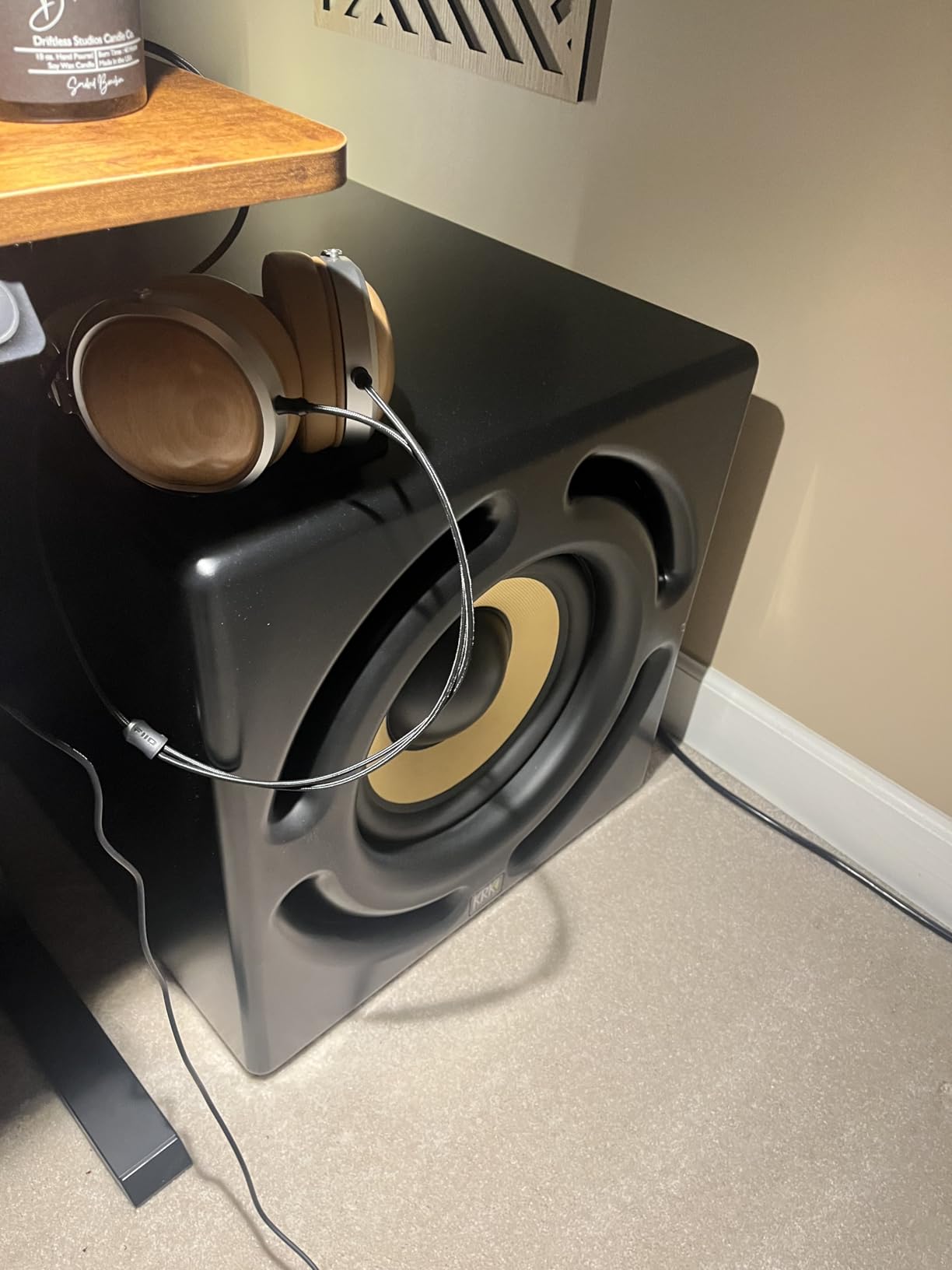
The ten-band parametric equaliser is genuinely useful rather than decorative, and it can be controlled from an app or a browser with presets shared across devices. Owners use it to correct a headphone or a room, which is a more honest use of EQ than chasing a sound signature with a fixed tone control.
Owners consistently describe the result as warm, organic and relaxing rather than analytical, and several mention that it needs several minutes of warm-up before the R2R character fully appears. That is normal for this architecture, but it means you should not judge it in the first five minutes after switching on.
The most-discussed flaw is a single remote button. The LO line-out button bypasses volume entirely, and it is easy to press by accident, which on a system where the amp is driving the speakers directly is an unwelcome surprise. The display is also small, with volume not the most prominent element on it.
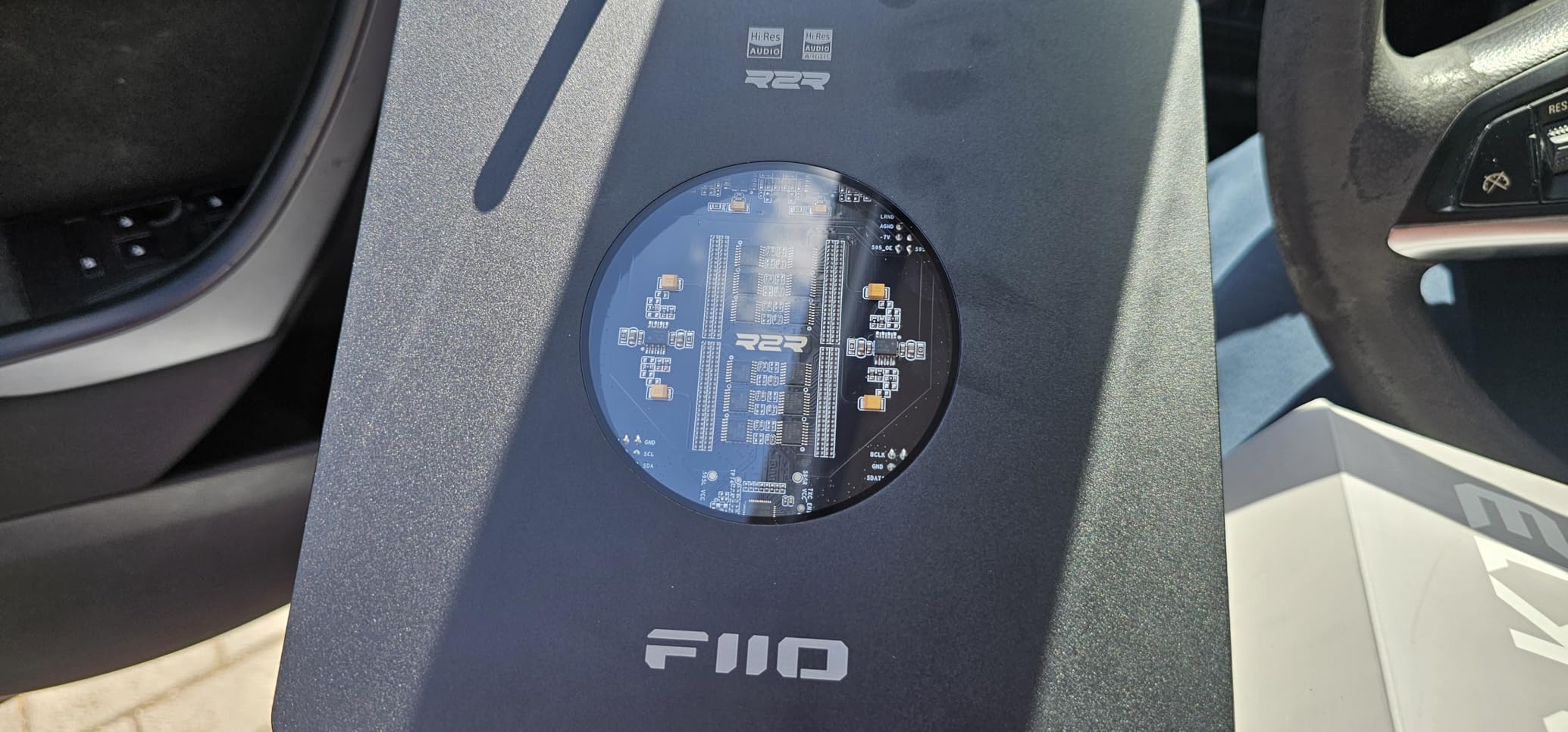
R2R versus delta-sigma, in plain terms
A delta-sigma DAC switches very fast and reconstructs the signal digitally. It measures extraordinarily well and it can sound clinical after long listening sessions. A resistor ladder DAC passes the signal through a physical ladder of resistors, which introduces its own small errors but produces a gentler, warmer result that many listeners find easier to live with.
Neither is objectively better on a bench. The R2R argument is entirely about fatigue and preference. If you enjoy forensic detail and want to hear recording artefacts, look elsewhere. If you want to stop thinking about your system after two hours, this is a well-documented way to get there.
Where it will disappoint you
The remote feels cheap next to the electronics. The buttons are stiff, loud and clicky, and the web-based EQ tool needs a login every session. Both are minor annoyances that you notice most in the first week and forget after.
It is also a large feature set for a single box, and none of it is free of trade-offs. If your system is simple and you are content with a neutral, transparent sound, a straightforward solid-state design does the same job with less to configure.
7. TOPPING DX5 II – High-Resolution DAC Amp With 7600mW Balanced Output
TOPPING DX5 II Hi-Res DAC & Headphone Amp Combo – Dual ES9039Q2M, X-Hybrid Amp, 10-Band PEQ, LDAC Bluetooth 5.1, 4.4mm Balanced & 6.35mm Headphone Output, Preamp Mode, 12V Trigger (Black)
Dual ES9039Q2M DACs
X-Hybrid balanced amp, 7600mW x2
PCM768kHz and DSD512
Pros
- Very high balanced output power
- Dual ESS DACs for high resolution
- 10-band high precision PEQ
- LDAC and aptX HD wireless
- Large display and pressable knob
Cons
- No XLR headphone output on the front
- Some first-setup and firmware quirks
- Balanced and single-ended cannot be used independently
- Small share of critical one-star reviews
The TOPPING DX5 II is the most powerful desktop unit here by a wide margin, and it is built for one job: decoding difficult high-resolution sources and driving difficult headphones. The X-Hybrid fully balanced quad-channel amplifier is rated at 7600 milliwatt times two, which is a number that only matters if you own a headphone that needs it.
The digital side is equally serious. Two ESS ES9039Q2M chips handle PCM 768kHz/32-bit and DSD512, fed by an XMOS XU316 USB input plus coaxial and optical SPDIF. Bluetooth 5.1 covers LDAC, aptX Adaptive, aptX HD, AAC and SBC through a QCC5125 module, so wireless is a first-class input rather than an afterthought.
Controls sit on a 2.0-inch Aurora display with nine themes, driven by a pressable knob, and there is a ten-band high precision PEQ stage. Preamp mode and 12V trigger in and out let it sit in a system with active speakers, which is a real convenience for a desktop one-box setup.
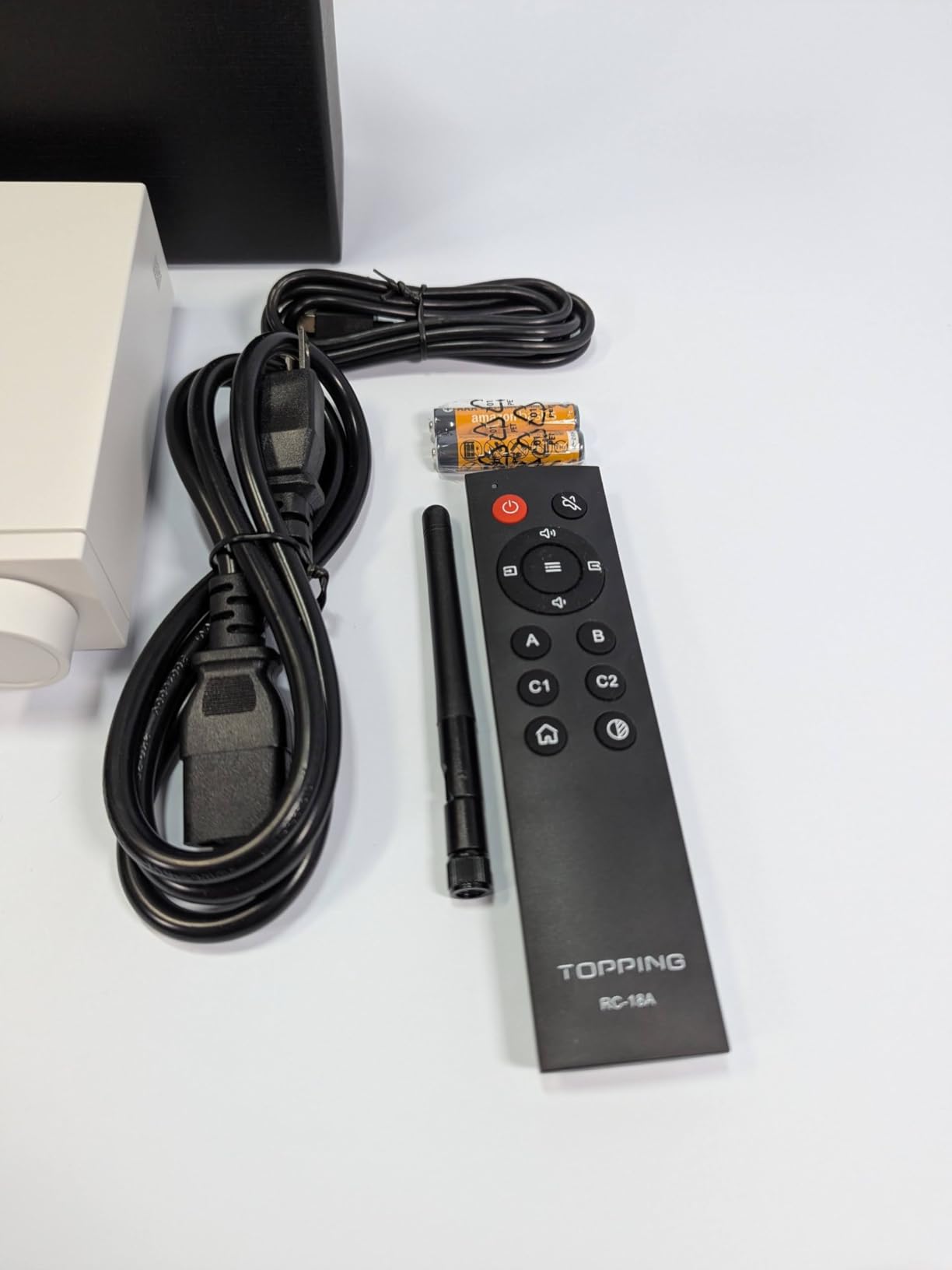
What separates this from the FiiO K7 and the Fosi ZH3 is headroom by an order of magnitude. If you own a low-sensitivity planar and listen at high volume, the extra power is not a luxury. It is the difference between the amplifier working comfortably and the amplifier being asked to deliver at its limit.
The rating here is the lowest in the lineup, and the reason is visible in the review breakdown. A meaningful share of one-star reviews relate to first setup, firmware behaviour and quality control, rather than to sound. Owners also point out that there is no XLR headphone output, only 4.4mm balanced and 6.35mm single-ended, and that the two cannot be used independently at the same time.
Those are fair criticisms of a feature-dense product. If you want a box that simply works, is quiet and is transparent, a simpler design will serve you better for less effort.
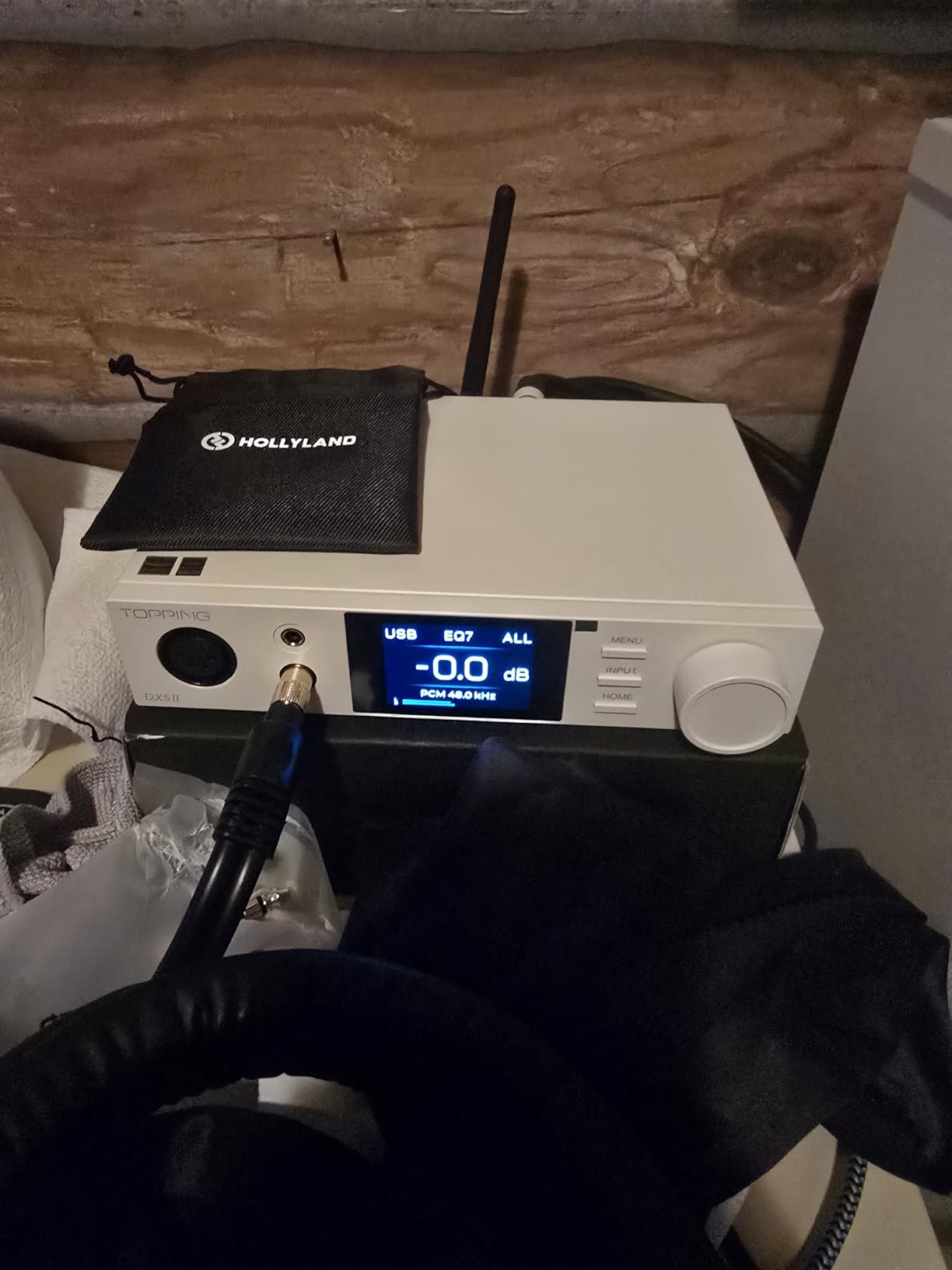
Is this much power ever necessary
Rarely, but sometimes. Planar magnetic headphones with sensitivity in the 85 to 90dB range, and dynamic drivers rated 600 ohm, are the two cases where extra watts stop being wasted. Everything below 300 ohm and 95dB can be driven comfortably by the units earlier in this list.
The second benefit is volume control quality. With this much power you keep the volume pot in the middle of its range, which is where it measures best, so you get finer control at low listening levels than an underpowered amp forced to the top of its travel.
Where it will disappoint you
It is the least confidence-inspiring of the nine in terms of owner consistency. Setup and firmware complaints are the dominant theme, and a two-year manufacturer warranty is the only real protection you have.
It is also a large, feature-heavy box for a first purchase. If you are still working out which headphones you want, buying the most powerful amp available is a way to solve a problem you do not have yet.
8. TOPPING L30 II – Ultra-Low Noise Amp for In-Ears and 300 Ohm Loads
TOPPING L30II NFCA Linear Headphone Amp – 6.35mm Jack 3.5mm Adaptor RCA Input and Output 37Vpp high Output Voltage Mini HiFi Amp Audio Hi-Res Preamplifier (Black)
NFCA Class A modules
0.3uV noise floor
141dB dynamic range
Three gain settings
Pros
- Extremely low background noise
- Plenty of power for 300 ohm headphones
- Three gain settings cover in-ears to over-ears
- Neutral presentation
- Works as a preamplifier
Cons
- Unvented case runs hot
- No balanced output
- Needs an external DAC
- Some find the sound slightly bright
The TOPPING L30 II is the amp to buy if noise is your problem. Its published noise floor is 0.3 microvolts RMS with a dynamic range of 141dB, which is the lowest figure of any unit in this roundup, and reviewers describe the background as dead quiet in a way that is unusual at this level.
Power is not the constraint here. The NFCA modules deliver 37 volts peak to peak and up to 7 watts, and reviewers regularly note that it drives 300 ohm headphones such as the HD 600 and HD 650 with ease. Three gain settings, at minus 9.9dB, 0dB and plus 9.5dB, cover everything from in-ear monitors to large open-backs.
It also works as a preamplifier, with RCA inputs and outputs alongside the 6.35mm headphone jack. A 3.5mm adaptor is included, so in-ear monitors are covered out of the box.
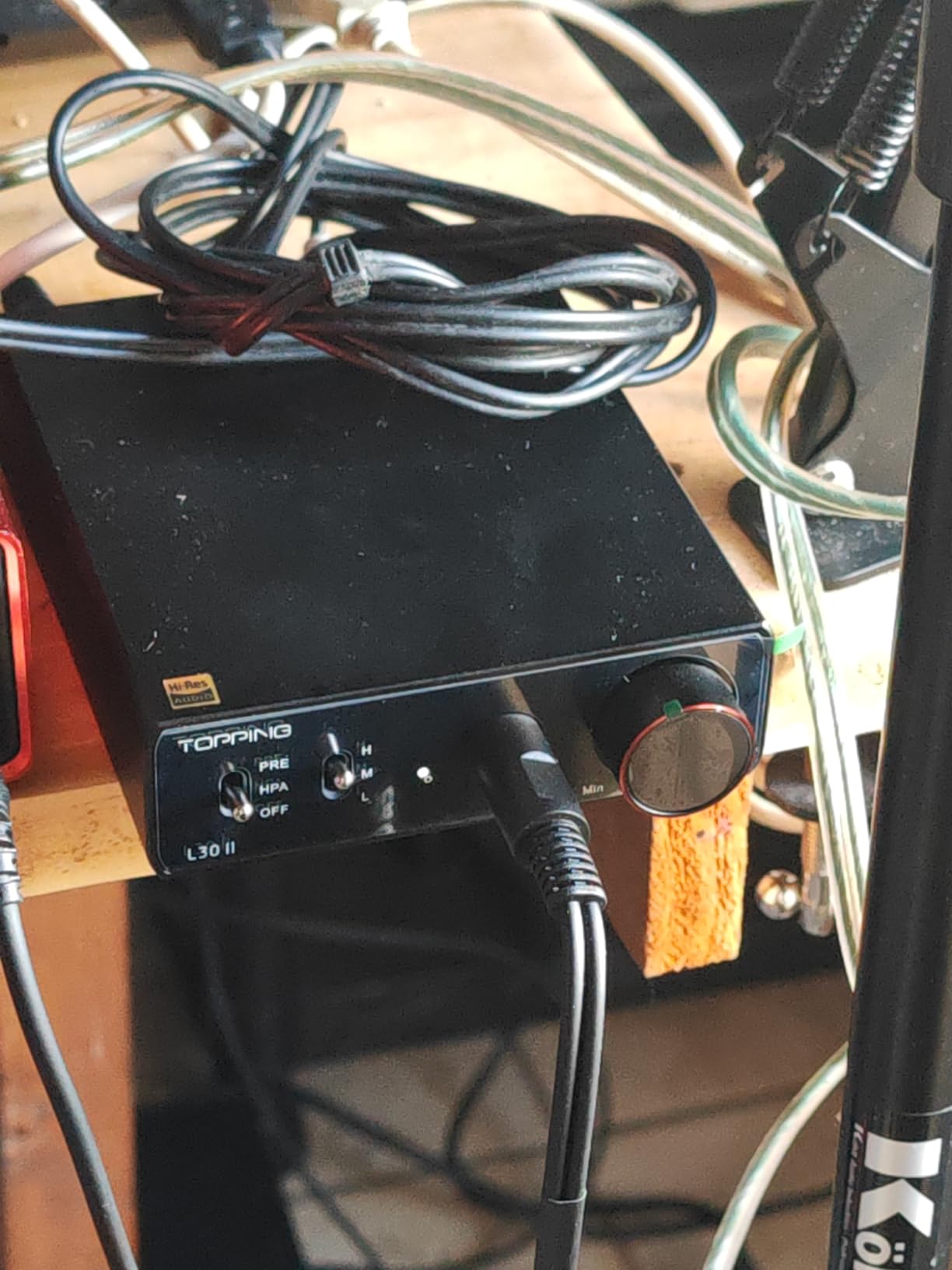
What you give up is a digital stage. There are no USB, optical or coaxial inputs, so this amp requires a separate DAC. That is not a problem if you already own one, and it is a serious problem if you were hoping for a one-box solution. Combined with a compact external DAC, this becomes a very capable two-box desktop system.
The other recurring complaint is physical. The case is not vented, and owners report that it runs quite hot when driving high-impedance headphones continuously. It is a 360 gram metal and plastic chassis, so it is not fragile, but leave it some breathing room on the desk.
On tone, reviewers are broadly positive about a neutral, uncoloured presentation that measures near the top of its class, with a minority describing it as slightly bright and incisive. For a pairing recommendation, that argues for a slightly warm headphone rather than an already bright studio model.
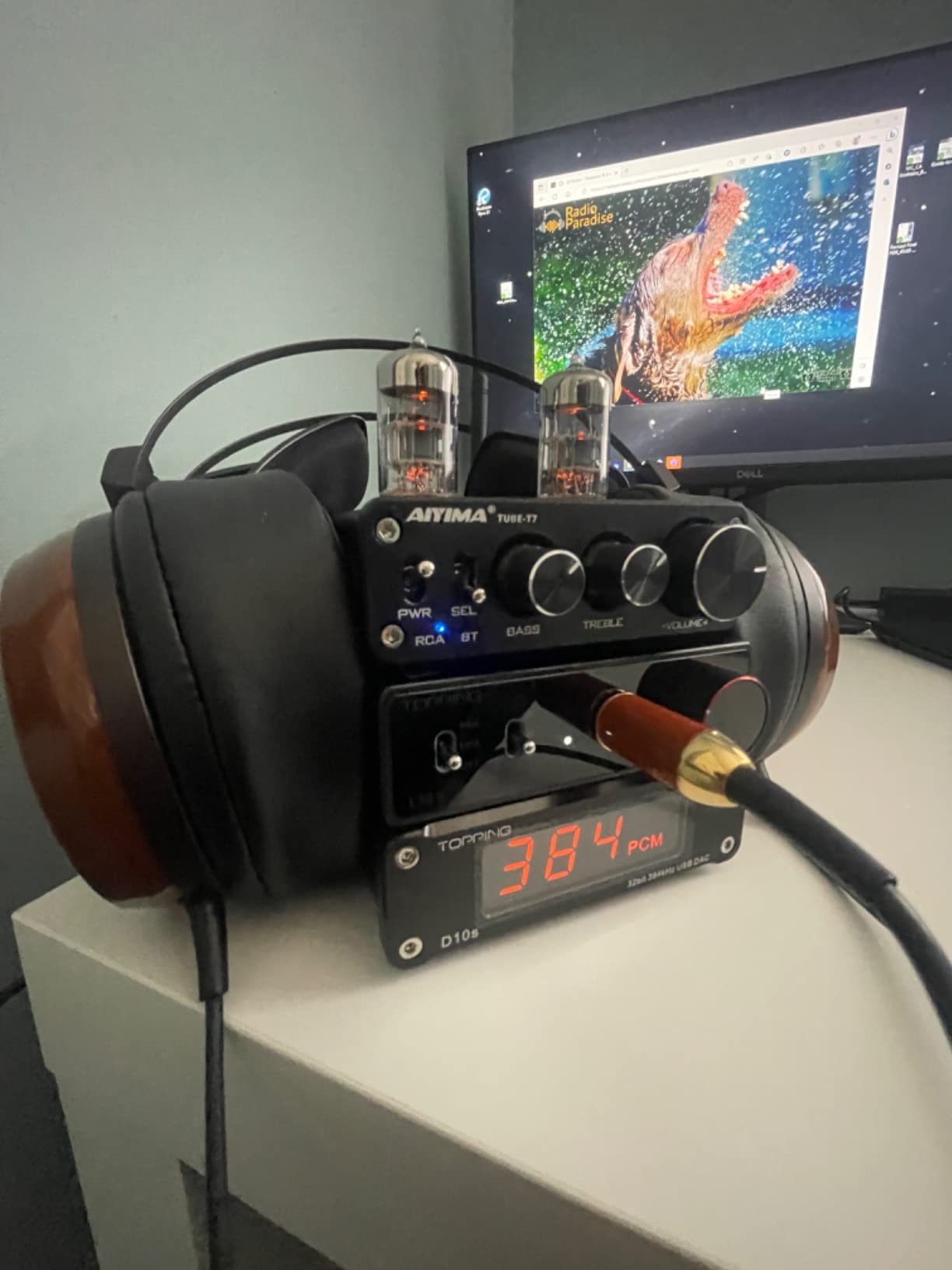
Is a 0.3 microvolt noise floor worth a separate DAC
If you listen to in-ear monitors, yes, and it is the single clearest quality difference in this roundup. Below roughly 1 microvolt, sensitive IEMs stop amplifying the noise floor and you hear only the recording. The gap between this unit and an entry-level all-in-one is immediately obvious on a quiet classical passage.
If your headphone is a full-size dynamic or planar, the noise floor is far less relevant than power, and you are buying headroom you may not need. In that case an all-in-one with balanced output is the more efficient purchase.
Where it will disappoint you
There is no balanced output at all, only 6.35mm single-ended. If your headphone is a balanced-only planar with a 4.4mm cable, this amp will not work for you without a converter in the chain.
It also runs hot, and it needs the included 15V adapter plus an external DAC. For anyone who wants one box, plugged into a laptop, with a quiet floor and balanced output, the FiiO K11 covers the same ground in a single enclosure.
9. Schiit Vali 3 – Tube Hybrid Amp With a Rollable 6N3P
Schiit Vali 3 Beautiful Tube Hybrid Headphone Amp and Preamp – Black
Class AB bipolar hybrid stage
100V tube plate voltage
Roughly 1.5W into 32 ohm
Pros
- Warm and dynamic tube presentation
- 100V plate delivers real power and a quiet floor
- Rollable NOS 6N3P tube included
- Compact and well ventilated
- Also works as a line preamplifier
Cons
- Rear-mounted power switch
- Adds deliberate warmth rather than neutrality
- 115V power supply only
- Not a DAC
The Schiit Vali 3 is the only tube design in this lineup, and it is a hybrid rather than a pure valve stage. A fully discrete Class AB bipolar amplification section runs in parallel with a 6N3P tube, which means you get tube character in the signal path without the fragility or the low power of a classic transformer-coupled design.
The 100 volt tube plate voltage is the number that matters. It gives a real 1.5 watts into 32 ohm, and owners consistently report a quiet background alongside a warm, dynamic presentation. That is a meaningful combination, because the usual complaint about tube amps is that the warmth comes with hiss.
The tube is supplied as a tested, sorted new-old-stock 6N3P, and it is rollable. Owners report noticeable improvements after swapping in a 5670W or a Western Electric 396A, and the Schiit ecosystem makes that kind of experimentation cheap. The chassis is a compact metal case with improved ventilation and a lower operating temperature than earlier versions.
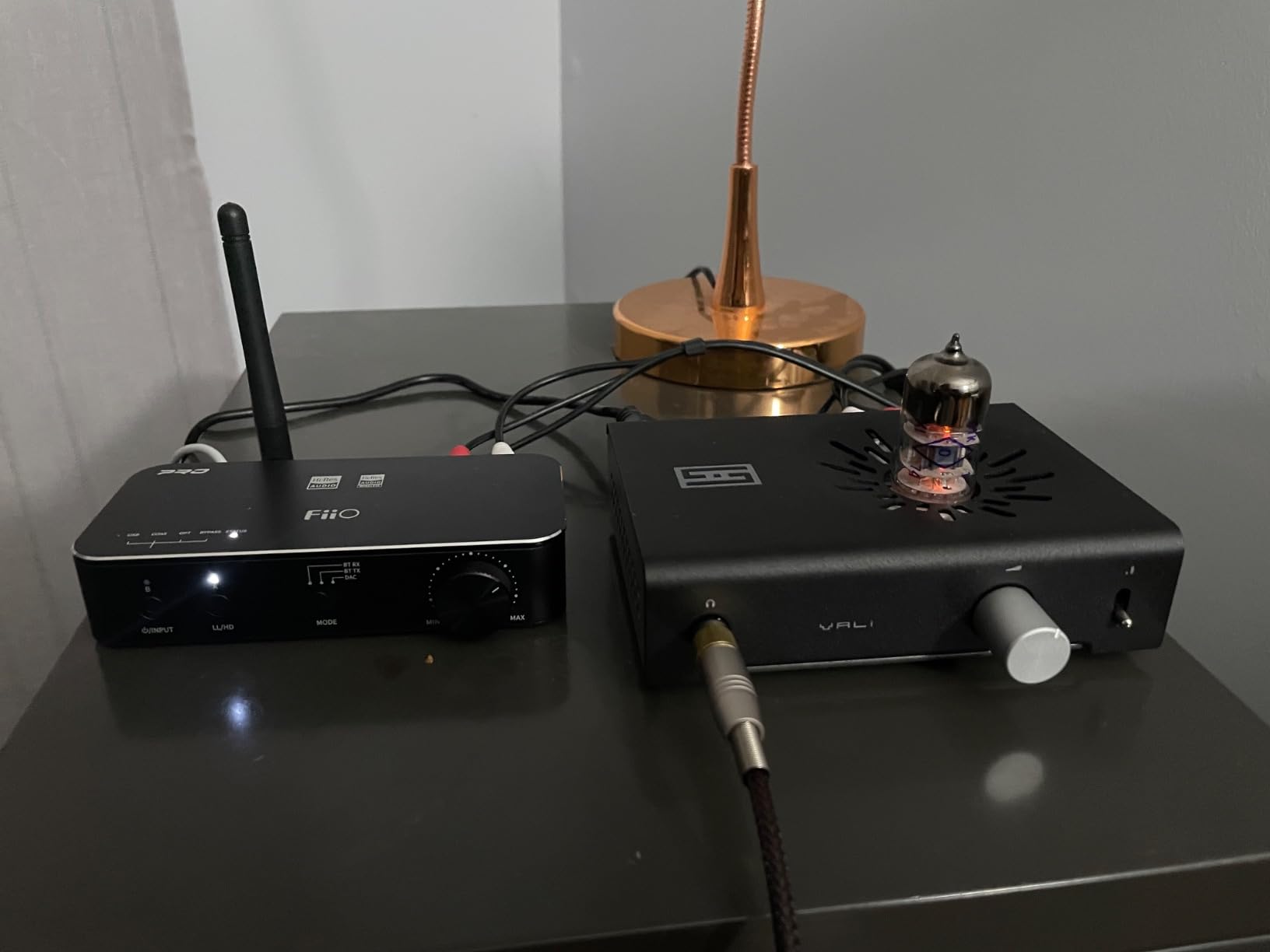
It works as a headphone amplifier and as a line preamplifier, which makes it a useful centrepiece for a two-box system. It is designed and built in Texas, and the warranty is two years on parts and labour with 90 days on the tube.
Two practical constraints are worth stating plainly. It is not a DAC, so it needs a digital source in front of it. And the external power supply is 115V only, which limits its usefulness in 220 to 240V countries without a step-down transformer.
On tone, be clear-eyed. This amp colours the sound deliberately. If you want a reference-transparent tool for critical listening, this is the wrong purchase and you want one of the solid-state units instead. If you want warmth on vocals and jazz, the tube character is the entire reason to own it.
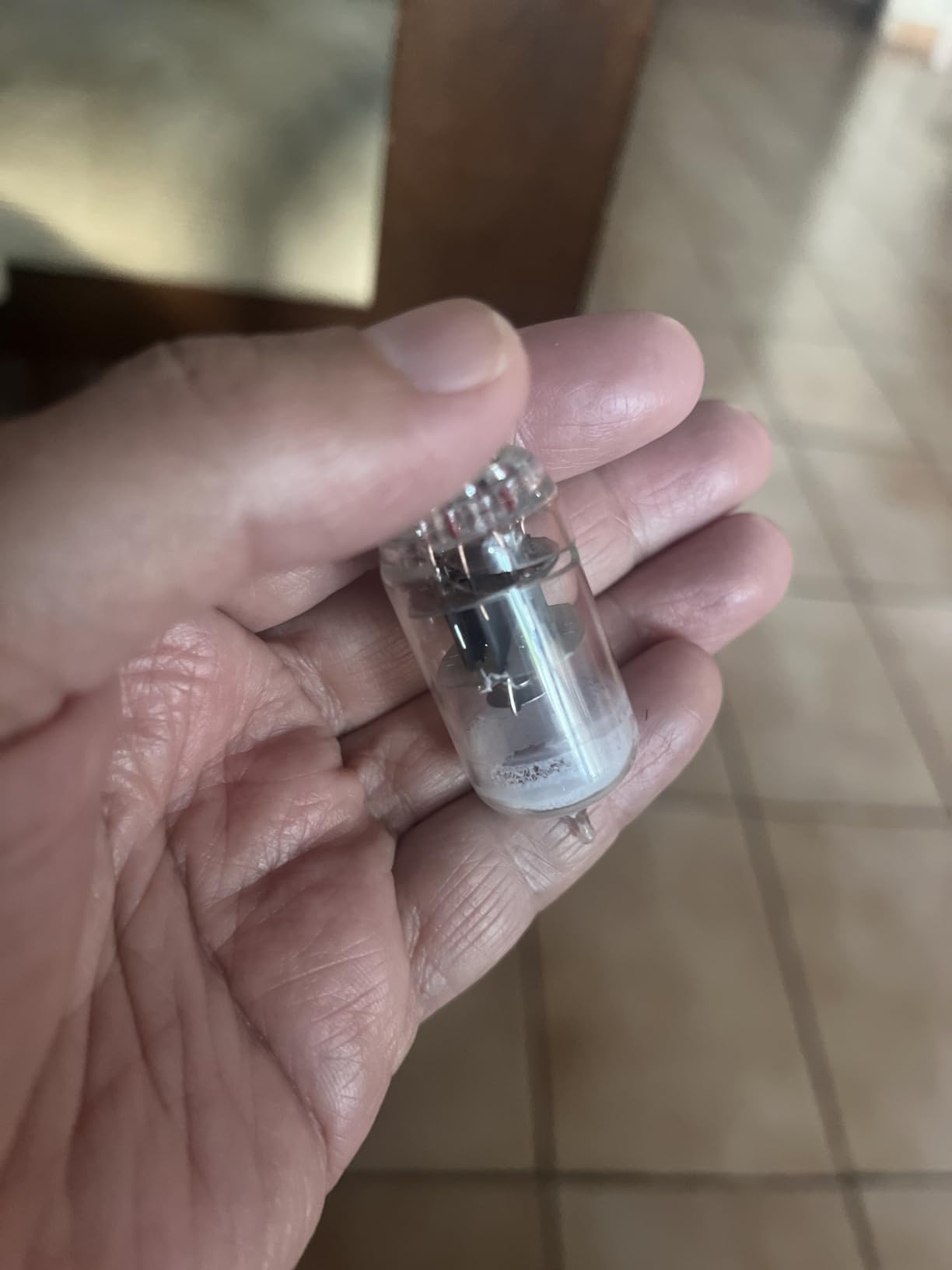
Is tube rolling worth it on the Vali 3
It is the cheapest hobby in hi-fi, and the Vali 3 makes it accessible. The included tube is already sorted and tested, so you lose nothing by running it as supplied. When you want to experiment, the 6N3P format has a long tail of compatible tubes, and the difference between a stock tube and a matched pair of a more exotic type is a matter of taste as much as measurement.
Owners describe the process as satisfying rather than transformative, and they are right. Expect small refinements in midrange texture rather than a different amplifier. Budget for a small box of tubes and a bit of free time.
Where it will disappoint you
The power switch is on the rear panel, so you have to reach behind the unit every time. It is a small annoyance that owners mention constantly and never stop mentioning.
At roughly 1.5 watts into 32 ohm, this is not the amp for a 600 ohm headphone or a very low sensitivity planar. It is also the smallest review base of the nine at just 52 ratings, so long-term reliability data is thinner here than anywhere else in this roundup.
How to Choose a Headphone Amp Without Wasting Money
The fastest way to waste money is to buy an amp before you know what your headphone needs. Work through these four steps and the choice makes itself.
Step 1: Find your headphone impedance. Look at the specification sheet or the model name. Low impedance means 16 to 32 ohm and is easy to drive. Mid impedance covers 80 to 150 ohm. High impedance is 250 to 600 ohm and needs voltage. Sensitivity, in dB, is the second number: 97dB or higher is efficient, while 88 to 92dB is demanding.
Step 2: Do the power math. Voltage required scales with impedance, and power equals voltage squared divided by impedance. In practice the useful rule is this: a 32 ohm headphone needs roughly 100 milliwatt for comfortable volume. A 250 to 300 ohm headphone needs 200 to 500 milliwatt. A 600 ohm headphone can need a watt. A low-sensitivity planar wants 1000 milliwatt or more just to reach moderate levels, and that is the number that decides between the mid-range and high-power units.
Step 3: Check the noise floor only if you use in-ears. For full-size headphones, anything under about 10 microvolts is inaudible and irrelevant. For sensitive in-ear monitors, you want a figure below 1 microvolt, and that requirement is what separates the TOPPING L30 II from everything else here.
Step 4: Add up the real system cost. An amp-only unit needs a DAC in front of it. This is the two-box surprise that catches out most first-time buyers, and it is why an all-in-one often represents better value than the sticker price of the amplifier suggests. If you already own a decent DAC, an amp-only design is the correct choice and you save money.
Two more things that trip people up. Output impedance should be well below headphone impedance, ideally under one tenth of it, so that the amplifier can control the driver and the damping factor stays high. A high output impedance is what makes a headphone sound harsh, and users often blame the headphone for a mismatch the amp caused.
And mind the volume control on your source. If you turn a laptop or phone volume up to maximum to reach comfortable listening levels, the source preamp can clip before the signal ever reaches the amplifier, and the distortion you hear gets blamed on the amp. Keep source software volume near halfway and let the amp do the work.
Tube vs Solid-State vs Hybrid: What Each Topology Sounds Like
Solid-state amplifiers, whether Class A or Class AB, use transistors throughout. They are fast, efficient, quiet and entirely predictable, which is why every measurement-based recommendation in this roundup points to one. Their reputation for sounding clinical is really a reputation for sounding consistent over long sessions.
Tube amplifiers use vacuum valves and generally add harmonic distortion in a way that listeners describe as warmth or richness. They are less efficient, need warm-up time, generate heat, and require periodic tube replacement. Owners treat tube rolling as part of the hobby, and the musical engagement they report is genuine even where the measurements do not favour them.
Hybrid designs, such as the Schiit Vali 3, run a valve stage alongside a solid-state output so you keep some tube character without the fragile, power-limited architecture of a classic design.
What an OTL amplifier is: OTL stands for output transformerless. A conventional tube amp uses an output transformer to adapt the high voltage of a valve to the low impedance of a headphone, and that transformer costs bandwidth and adds frequency-dependent coloration. An OTL design removes it and drives the headphone directly from the valves, which can sound faster and more open.
The catch is why you will find no OTL design in this lineup. Without a transformer to supply current, an OTL amp needs a high-impedance headphone, and 300 ohm or more is close to the practical limit. Plug a low-impedance dynamic or planar into one and the damping collapses. That footgun is exactly the kind of pairing mistake described on enthusiast forums, and it is why we would rather recommend a solid-state unit that works with everything you are likely to own.
Do You Need a Separate DAC?
You need a DAC either way. The question is whether the one inside your all-in-one amp is good enough, and for most headphone listening it comfortably is.
An all-in-one combines a digital-to-analog converter and an amplifier in one chassis. It takes one box, one power supply and one set of cables instead of two, and it removes the single most common beginner mistake, which is buying a good amplifier and discovering you also needed a source.
Choose an all-in-one if your headphone sits between 8 and 350 ohm, you want balanced output, and you want the system to work the moment it is plugged in. Six of the nine amps in this roundup do exactly that, and for most listeners they are the correct recommendation.
Choose separate boxes if you already own a DAC you like, if you want to upgrade one part of the chain later, or if you listen to in-ear monitors closely enough to chase a low noise floor. The TOPPING L30 II and the Schiit Vali 3 are both amp-only designs built to sit in front of a DAC you already have.
A third option is a used one. Buying an older, well-regarded standalone DAC and pairing it with an amp is how many of the long-standing recommendations on enthusiast forums were originally assembled. It costs more in total and takes more research, but it is also the path that lets you improve one component at a time.
Frequently Asked Questions
Do I really need a headphone amplifier?
You need one if your headphone is 250 ohm or higher, if you own a low-sensitivity planar, if you listen to sensitive in-ears and care about the noise floor, or if you are driving anything from a laptop or phone jack. You do not need one if you have an easy-to-drive dynamic headphone around 32 to 80 ohm and a source with a decent line output. Most forum advice agrees that a sensible entry-level amp is the right stop, not a reason to keep upgrading.
What is the best headphone amp for audiophiles?
For most listeners the best headphone amplifiers for audiophiles are the Fosi Audio Q4 as a first step, the FiiO K7 for balanced output and real power in one box, and the FiiO K11 for value. The Fosi Audio ZH3 wins on balanced power and customisation, the FiiO K13 R2R on warmth, the TOPPING DX5 II on sheer power, the TOPPING L30 II on low noise, and the Schiit Vali 3 on tube character. Match the amp to your headphone impedance first.
What is the best all-in-one DAC and headphone amp?
The FiiO K7 is the strongest all-in-one in this roundup, with dual AK4493SEQ DACs, a THX AAA 788+ stage and 2000 milliwatt of balanced output plus 4.4mm, 6.35mm and 3.5mm outputs. The FiiO K11 is the value alternative, smaller and cheaper, with 1400 milliwatt and the same balanced port. The Fosi Audio Q4 is the entry point for easy-to-drive dynamic headphones.
What is an OTL amplifier and should I buy one?
An OTL, or output transformerless, amplifier drives your headphones directly from its valves without an output transformer. Removing the transformer can sound faster and more open, but the design then needs a high-impedance headphone, and 300 ohm or more is close to the practical limit. Pair one with a low-impedance dynamic or planar and the damping collapses. For most listeners a solid-state amplifier is the safer and more versatile choice.
How much power do I need for my headphones?
Look at impedance and sensitivity together. A 32 ohm headphone needs around 100 milliwatt for comfortable volume. A 250 to 300 ohm headphone needs 200 to 500 milliwatt. A 600 ohm headphone can need a watt. A low-sensitivity planar at 88 to 90dB may want 1000 milliwatt or more. If your headphone is easy to drive, extra power buys you nothing you will hear.
Are tube headphone amps better than solid-state amps?
Not objectively. Solid-state designs measure lower on noise and distortion and stay consistent over long sessions, which is why measurement-based recommendations favour them. Tube and hybrid designs add deliberate harmonic character that many listeners find warmer and more engaging, at the cost of warm-up time, heat and periodic tube replacement. The Schiit Vali 3 in this roundup is the tube option, and it suits listeners who want colour rather than transparency.
Final Verdict
The Fosi Audio Q4 is our choice as the best headphone amplifiers for audiophiles pick to start with, because it is the one most people should buy and then stop shopping. It removes hiss, adds control, gives you real tone adjustment, and costs less thought than any other product here.
From there the path splits by headphone. With a high-impedance or low-sensitivity planar, move to the FiiO K7 for balanced power in a single box, or the Fosi Audio ZH3 if you want the highest balanced output and the option to change op-amps. For sensitive in-ears, the TOPPING L30 II is the only unit here with a published noise floor low enough to matter, and you will need a separate DAC for it. For long evening sessions with vocals and jazz, the FiiO K13 R2R adds warmth without a valve, and the Schiit Vali 3 is there when you want the genuine article.
One last piece of advice that costs nothing: check your headphone impedance before you click through to any of these. The right amp for a 300 ohm headphone is the wrong amp for an easy-to-drive pair, and no amount of money fixes a pairing mismatch.